This site is supported by our readers. We may earn a commission, at no cost to you, if you purchase through links.
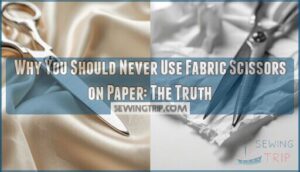
Your sewing teacher wasn’t being dramatic when she warned the class never to touch her fabric scissors—and the same goes for that quilter who keeps theirs under lock and key. There’s real science behind why you should never use fabric scissors on paper, and it boils down to what happens at the microscopic level when those precision blades meet paper fibers.
Paper contains silica and lignin, abrasive compounds that act like sandpaper on the carefully honed edge of fabric shears, creating tiny nicks and burrs that turn butter-smooth cuts into jagged, fabric-snagging disasters. Those $30-$200 scissors aren’t just expensive tools—they’re precision instruments engineered with specific blade angles and micro serrations that paper destroys faster than you’d think.
Understanding the difference between fabric and paper scissors, plus how to protect your investment, can save you hundreds in replacements and countless hours of frustration fighting with frayed edges.
Table Of Contents
Key Takeaways
- Paper contains silica and lignin that act like sandpaper on fabric scissors, creating microscopic nicks and burrs that destroy the precision blade angle (35-55 degrees) engineered specifically for clean fabric cuts.
- Using fabric scissors on paper can slash their lifespan by up to 70% and cost you $40-$60 over three years in replacements and professional sharpening, making dedicated scissors for each material a smart investment.
- Once dulled by paper, fabric scissors lose cutting precision by 5-8% per use, causing fabric fraying, seam distortion, and snagging that ruins projects and wastes hours of work.
- Proper scissor care—storing in protective sheaths, cleaning with rubbing alcohol, lubricating pivot points with mineral oil, and professional sharpening every 3-12 months—keeps high-carbon steel blades performing perfectly for decades.
Fabric Scissors Vs. Paper Scissors: Key Differences
Not all scissors are built the same, and the differences between fabric and paper scissors matter more than you’d think.
If you’re looking to invest in quality blades that’ll last, the best sewing scissors are specifically designed to cut cleanly through fabric without dulling quickly.
From blade material to edge design, each type is engineered with a very specific job in mind.
Here’s what sets them apart.
Blade Material and Sharpness
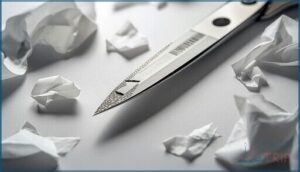
Not all blades are created equal. Fabric scissors use high-carbon steel or titanium-coated metal alloys — engineered specifically for edge sharpness and sharpness retention through countless cuts. Their blade geometry demands careful scissor care and maintenance.
Paper, however, triggers blade dulling fast, destroying cutting efficiency that even a quality scissor sharpener struggles to fully restore through blade sharpening.
| Feature | Fabric Scissors |
|---|---|
| Blade Material | High-carbon/titanium alloys |
| Sharpness Retention | High |
Edge Angle and Design

Edge angle is where things get really interesting. Fabric scissors are ground to a steep 35–55 degree bevel — that blade geometry creates the slicing cutting action that glides through layers cleanly.
Paper scissors? Much blunter. That edge sharpness difference matters enormously for fabric precision.
For a deeper understanding of professional-grade fabric tools, consider reading about their precision-ground blade technology.
| Feature | Fabric Scissors | Paper Scissors |
|---|---|---|
| Blade Angle | 35–55° | ~20° per side |
| Cutting Action | Slicing | Chopping/Pinching |
| Fabric Precision | High | Low |
Purpose-Built Features for Fabrics
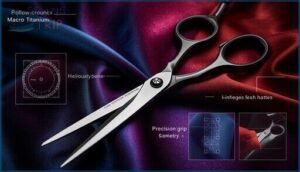
Beyond edge geometry, fabric scissors pack some seriously smart engineering. Micro serrations grip slippery silks. Offset grips reduce wrist fatigue. Hollow-ground edge geometry reduces drag through multiple layers. These purpose-built fabric blade design choices aren’t accidents — they’re precision tools.
| Feature | Fabric Scissors | Paper Scissors |
|---|---|---|
| Fabric Grip | Micro serrations | None |
| Blade Materials | High-carbon/titanium | Standard steel |
| Handle Design | Offset, ergonomic | Straight |
How Cutting Paper Damages Fabric Scissors
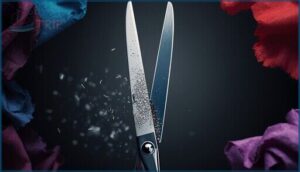
Grabbing your fabric scissors to cut a quick paper pattern might seem harmless, but it’s actually doing real damage every single time.
The difference between fabric scissors and regular scissors comes down to blade sharpness and how each tool treats delicate fibers during cutting.
Paper is surprisingly abrasive — it wears down those razor-sharp blades faster than you’d think. Here’s exactly what’s happening to your scissors the moment they touch paper.
Paper’s Abrasive Effect on Blades
Think of paper as sandpaper in disguise. Every time you use your fabric scissors for paper cutting, you’re inviting serious abrasive damage. Paper fibers act like a gritty slurry, driving blade erosion and surface roughness up by nearly 20%.
That friction causes progressive edge wear and micro scratches — setting the stage for blade dulling that no amount of scissor maintenance can instantly fix.
Microscopic Nicks and Burrs
Invisible damage is the sneakiest kind. Every paper cut leaves behind microscopic nicks — tiny blade edge damage you won’t see until your silk starts snagging.
Here’s what’s happening beneath the surface:
- Burrs form as filamentous ridges, triggering micro scratch formation along the bevel
- Edge wear patterns accelerate, reducing sharpness by 5–8%
- Paper fibers wedge between blades, demanding burr removal techniques fast
Skip the scissor maintenance, and blade dulling wins.
Impact on Cutting Precision and Smoothness
Precision cutting is the first casualty when blade sharpness slips. Once paper dulls your fabric scissors, scissor alignment suffers, and your cuts start drifting. Fabric distortion follows fast.
| Issue | Cause | Fix |
|---|---|---|
| Uneven cuts | Blade dulling | Resharpening |
| Fabric snagging | Edge nicks | Scissor maintenance and care |
| Wandering lines | Scissor alignment loss | Tension adjustment |
Cutting edge maintenance isn’t optional — it’s your scissors’ lifeline.
Consequences of Misusing Fabric Scissors

The damage doesn’t stop at dull blades — it creates a domino effect that hits your wallet, your projects, and your patience.
Once those microscopic nicks take hold, every cut you make pays the price. Here’s what you’re really risking when fabric scissors meet paper.
Reduced Scissor Lifespan
Here’s the hard truth: regular misuse can slash your fabric scissors’ lifespan by up to 70%. That’s not a typo! Every time you cut paper, you’re accelerating blade deterioration and blade dulling through microscopic damage that quietly sabotages cutting efficiency.
Cutting paper with fabric scissors can slash their lifespan by up to 70% through microscopic damage that quietly destroys cutting efficiency
Poor scissor care leads to blade damage that compounds fast—what should last years might need replacing in months, seriously impacting tool longevity and scissor longevity while increasing fabric damage risks.
Increased Replacement and Maintenance Costs
Your wallet takes the hit when misuse accelerates blade dulling. Owning a single pair can cost you $40 to $60 over three years when you factor in blade replacement, scissor sharpening sessions ($8 to $15 each), and maintenance schedules.
That economic impact adds up fast! Smart cost analysis shows dedicating scissors by task dramatically improves tool longevity while slashing your overall tool maintenance expenses.
Uneven Cuts and Fabric Damage
Dull blades from paper cutting don’t just slow you down—they wreak havoc on your projects. You’ll battle fabric fraying along every edge, seam distortion that throws off your measurements, and thread breakage mid-cut.
Blade dulling transforms precision fabric cutting techniques into guesswork, causing fabric tears and cutting errors that ruin hours of work. Proper scissor care prevents this nightmare!
Best Practices for Scissor Care and Use
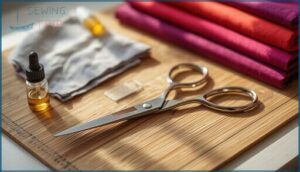
Now that you know what not to do with your fabric scissors, let’s talk about keeping them in top shape.
Proper care isn’t complicated, but it makes all the difference between scissors that last decades and ones that fail you mid-project.
Here are three simple habits that’ll keep your blades sharp and ready for anything.
Storing Scissors Safely
Where you keep your scissors matters just as much as how you use them. Proper scissor storage tips can dramatically extend blade protection and scissor longevity. Here’s how to safeguard your investment:
- Store in a protective sheath to prevent blade damage and nicks
- Choose a dry storage method away from humidity (aim for 60-75°F)
- Keep separate from other tools to avoid accidental contact
- Place within easy reach but guarantee safe handling around kids and pets
For additional tips, be sure to read about which can help prevent residue buildup and protect your scissors from rust.
Cleaning and Lubricating Blades
Once your scissors are safely stored, you’ll want to keep them performing their best with regular scissor care. After each use, wipe blades clean with a soft cloth—blade sanitizing with rubbing alcohol works wonders for rust prevention.
For edge maintenance and scissor longevity, apply a drop of mineral oil or silicone-based lubricant to the pivot point. Proper lubricant selection ensures smooth cuts and lasting sharpness without staining your fabric!
Sharpening and Professional Maintenance
Even with careful lubrication, your blades will eventually need professional sharpening to restore their edge geometry.
High-use scissors benefit from blade honing every 3 to 6 months, while light users can go a year. Professional sharpening uses specialized sharpening tools like diamond abrasives to maintain that critical 60-70 degree angle—ensuring scissor longevity and durability without over-thinning the blade through improper maintenance schedules.
Top Books for Sewing and Crafting Inspiration
Look, I’ll be honest—this list might seem like it wandered in from a totally different article. These books have absolutely nothing to do with sewing, crafting, or keeping your fabric scissors sharp.
But hey, maybe you’re looking for some reading material while your latest project dries?
1. Middle Ages History Book
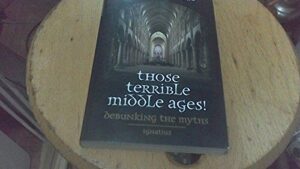
Taking a break from your sewing projects? Régine Pernoud’s For Glory of the Middle Ages offers a fascinating escape into medieval history. Published by Ignatius Press in 2000, this 180-page gem challenges everything you thought you knew about medieval times—from feudalism to the Inquisition.
You’ll discover how monasteries preserved learning and how towns evolved into centers of culture. French historian Pernoud’s fresh perspective makes history feel alive, though fair warning: some readers found the translation a bit clunky. Still, it’s perfect inspiration between stitches!
| Best For | History enthusiasts and students looking to challenge common myths about the Middle Ages, especially those interested in French medieval history and cultural development. |
|---|---|
| Publisher | Ignatius Press |
| Language | English |
| Page Count | 180 pages |
| Publication Year | 2000 |
| Target Audience | History students and teachers |
| Format | |
| Additional Features |
|
- Offers a refreshing perspective that debunks widespread misconceptions about medieval life, women’s rights, and feudalism
- Compact 180-page format makes it accessible for casual readers without being overwhelming
- Provides valuable insights into monasteries, law, and tradition that bring the period to life
- Translation quality issues make some passages difficult to understand and follow
- Heavy focus on France may disappoint readers seeking a broader European perspective
- Writing style can feel verbose, and some readers question the factual accuracy of certain interpretations
2. In Defense Of Capitalism Book

Switching gears from medieval monasteries, Rafe Heydel-Mankoo’s In Defense of Capitalism might seem like an odd companion to your sewing stash—but hear me out! This 464-page powerhouse addresses ten common anti-capitalism myths, from monopoly fears to environmental concerns.
Published by Republic Book Publishers in 2023, it’s packed with historical evidence showing how free markets actually lift people out of poverty. Think of it as intellectual thread for those late-night crafting sessions when your mind wanders beyond fabric and into bigger economic questions.
| Best For | Readers who want a fact-based defense of free markets and capitalism, backed by historical evidence rather than political talking points. |
|---|---|
| Publisher | Republic Book Publishers |
| Language | English |
| Page Count | 464 pages |
| Publication Year | 2023 |
| Target Audience | Economics readers |
| Format | |
| Additional Features |
|
- Tackles ten common criticisms of capitalism head-on with historical evidence and real-world data
- At 464 pages, offers deep dives into complex economic topics like poverty alleviation and market competition
- Provides solid counterarguments for debates about capitalism’s role in prosperity and inequality
- Doesn’t offer concrete policy solutions or address problems like worker exploitation and outsourcing
- May feel one-sided to readers looking for a balanced view of capitalism’s flaws alongside its benefits
- Academic tone and theoretical focus might not appeal to readers wanting practical, actionable insights
3. Globalization Debunking The Myths Book

Still browsing the craft-room bookshelf? Rowman & Littlefield’s Globalization: Debunking the Myths (2016) offers 222 pages examining how global economic and cultural threads weave together—perfect for understanding where your fabric actually comes from!
This concise text explores economic perspectives on interconnectedness, making complex supply chains feel manageable. At just 11.9 ounces, it’s light enough to read while waiting for your serger to finish that marathon hem.
Questions at each chapter’s end spark reflection—ideal for curious crafters, exploring political and environmental perspectives.
| Best For | Students and crafters wanting a quick, readable overview of how globalization affects everything from economics to the origins of their materials. |
|---|---|
| Publisher | Rowman & Littlefield |
| Language | English |
| Page Count | 222 pages |
| Publication Year | 2016 |
| Target Audience | Undergraduates |
| Format | |
| Additional Features |
|
- Lightweight and accessible at 222 pages—covers economic, political, social, environmental, and cultural angles without overwhelming you
- End-of-chapter questions help you think critically and form your own opinions instead of just accepting what’s presented
- Works whether you’re new to the topic or need a fast refresher on globalization’s complexities
- Can feel dry in spots, which might make it harder to stay engaged
- Lacks deep historical context—treats some long-standing trends as if they’re brand new
- Brief format means it won’t satisfy readers looking for thorough, in-depth analysis
Frequently Asked Questions (FAQs)
What happens if you use fabric scissors on paper?
Picture your favorite fabric scissors slicing through silk—then crashing into cardboard. The paper’s gritty fibers act like sandpaper, creating tiny nicks that dull those razor-sharp blades almost instantly.
Why can’t you use fabric scissors on anything else?
Fabric scissors are precision instruments engineered exclusively for cloth. Their ultra-fine edges can’t handle tougher materials like cardboard, plastic, or tape—these substances dull blades just as quickly as paper does, destroying that perfect cutting edge.
They are designed to work with cloth, and using them on other materials can damage the scissors.
Can you use a fabric cutter to cut paper?
Technically, yes—but you’ll dull your fabric cutter fast.
Paper fibers create microscopic nicks and burrs on the blade, reducing precision by up to 30 percent per use.
Save it for textiles only.
Can fabric scissors be sharpened at home safely?
Yes, you can sharpen fabric scissors at home safely using fine-grit stones or honing rods—just maintain a consistent angle, work in good lighting, and wear eye protection to avoid injuries from metal particles.
What materials are safe for fabric scissors?
You can safely cut natural and synthetic fabrics like cotton, silk, linen, polyester, and wool. Avoid paper, cardboard, plastic packaging, or anything abrasive—those materials will dull your blades fast!
How often should fabric scissors be sharpened?
When they start skipping on fabric or snagging threads, it’s time! For moderate use, plan on sharpening every 6 to 12 months—professionals often go by feel, checking edge thickness.
Are expensive fabric scissors worth the investment?
High-quality fabric scissors with high-carbon steel blades and 58–60 HRC hardness can last decades with proper care, making them a smart long-term investment that outlasts cheap pairs by years.
Can dull fabric scissors be professionally restored?
Professional sharpening can restore your dulled blades to factory precision. Most services use specialized honing to realign micro facets and remove tiny nicks—bringing that buttery-smooth cutting action right back.
Conclusion
Think fabric scissors are too expensive to reserve for fabric alone? Imagine this: one afternoon of cutting paper creates damage that would cost $50-$150 to fix professionally—or force you to replace those shears entirely.
Now you know exactly why you should never use fabric scissors on paper: those silica-laden fibers wreck precision edges you can’t get back. Label your tools, educate your household, and those blades will reward you with perfect cuts for decades.