This site is supported by our readers. We may earn a commission, at no cost to you, if you purchase through links.
Your new sewing machine just arrived, and suddenly that exciting purchase feels a bit intimidating. The manual reads like it was translated three times, there are more mysterious knobs than your car dashboard, and you’re not entirely sure which end the thread goes in. Don’t worry—you’re not alone.
Most beginners stare at their machines for a good ten minutes before plugging them in, wondering if they’ve bitten off more than they can hem. The good news is that mastering sewing machine basics for beginners doesn’t require a degree in engineering.
Once you understand a handful of core parts and practice a few fundamental techniques, you’ll wonder why it ever seemed complicated. Let’s break down everything you need to know to go from confused to confidently stitching.
Table Of Contents
Key Takeaways
- Start with hands-on basics like threading, bobbin winding, and practicing straight stitches on scrap fabric—these foundational skills prevent most beginner frustrations and build confidence within the first few weeks.
- Choose a beginner-friendly machine with a drop-in bobbin, automatic needle threader, and 10-30 stitch options, prioritizing ease of use over advanced features you won’t need right away.
- Clean lint from the bobbin area after every few hours of sewing and change your needle every 8-10 hours to avoid 85% of tension problems and keep stitches consistent.
- Safety matters more than speed—unplug during maintenance, keep fingers an inch from the needle, and practice at low speeds until muscle memory kicks in.
Getting Started With Your First Sewing Machine
Opening the box on your first sewing machine can feel a little like Christmas morning and a pop quiz rolled into one. You’re excited to start stitching, but all those parts and buttons might make you wonder where to begin.
Let’s walk through the first steps together, from setting up your machine safely to getting familiar with what everything does.
Unpacking and Setting Up Safely
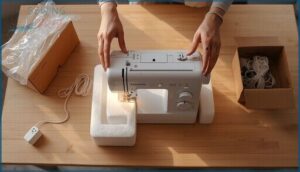
Before you plug in that power cord, take a moment to unpack your beginner sewing machine carefully. Inspect packaging materials and check for any electrical hazards like frayed cords—injury statistics show that about 2,700 sewing-related accidents happened in 2005, many during setup. Safe unpacking protects both you and your warranty.
To prevent damage during transit, remember to carefully insert machine into its packaging. Place your machine on a stable surface and keep those hands clear of moving parts.
Overview of Basic Sewing Machine Parts
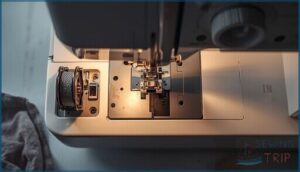
Now that your machine is safely unpacked, let’s identify its key parts. Every machine has a needle (you’ll swap these out for different fabrics), a bobbin system that holds your lower thread, and presser feet that hold fabric steady. The feed dog grips material underneath, pulling it along as you sew. Up top, the tension assembly keeps your thread taut. The balance wheel’s purpose is to manually raise and lower the needle.
Five Essential Sewing Machine Parts You’ll Use Every Day:
- Needle and needle clamp – Standard needles range from size 60/8 to 120/19, matching different fabric weights
- Bobbin and bobbin case – Class 15 bobbins are most common in beginner models, holding your bottom thread
- Presser foot and lever – Interchangeable feet let you tackle straight stitches, zigzags, zippers, and buttonholes
- Feed dogs and throat plate – Those serrated metal bars automatically move fabric under the needle
- Tension assembly and thread guides – Factory-calibrated settings keep both threads balanced for smooth stitches
Understanding Controls and Features
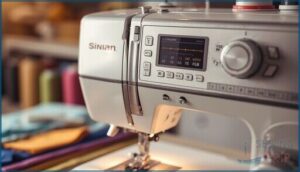
Once you know where things are, you’ll need to understand what they do. Most beginner machines offer 5 to 25 pre-programmed stitches—you’ll select them using a dial or touchpad.
Stitch length (usually 0.5 mm to 7 mm) and width controls let you customize each seam. Speed control, managed through your foot pedal, lets you sew slower while you’re learning.
Thread tension and needle position settings fine-tune stitch quality, while program modes can automate buttonholes or pattern repeats for you.
Essential Sewing Machine Skills for Beginners
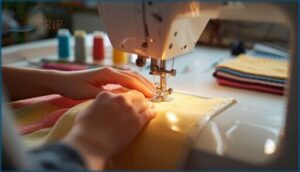
Once your machine is set up, the next step is learning how to actually use it. These core skills form the foundation of everything you’ll sew, from simple hems to more complex projects down the road.
Let’s walk through the essential techniques every beginner needs to master.
Threading The Machine Step by Step
Threading the sewing machine correctly is like connecting the dots—miss one, and your stitches won’t work. Follow these steps carefully:
- Spool placement: Set your thread on the spindle with a cap to prevent snagging
- Thread path: Guide thread through tension discs and take-up lever in the correct sequence
- Needle threading: Pass thread front-to-back through the needle eye
Most thread breakage and bunching stems from skipping these steps.
Winding and Inserting The Bobbin
Your sewing machine won’t stitch smoothly without a properly wound bobbin. Wind thread evenly onto the bobbin using your machine’s built-in winder, then insert it into the bobbin cartridge—usually a drop-in system on beginner models.
Pull both bobbin threads and top thread under the presser foot before you start. Proper bobbin winding and insertion prevent 85% of tension problems, keeping your stitch quality consistent.
Adjusting Stitch Length and Width
With a simple turn of the stitch length or width dial, you can fine-tune how your stitches look and hold. Adjusting for fabric type changes seam strength and stitch appearance—longer stitches for thick canvas, shorter for delicate silk. Tweaking these controls can:
- Improve decorative stitches
- Troubleshoot issues
- Boost seam durability
- Help understand key sewing machine parts
Practicing Straight and Zigzag Stitches
Getting your straight and zigzag stitches right takes practice, but you’ve got this.
Start with a 2.5 mm stitch length for straight stitches and 3 mm width with 1.5 mm length for zigzags. Keep fabric tension between 3 and 4, use a sharp needle, and slow down—speed control matters more than you’d think.
Practice on marked lines first. Most beginners nail both stitches within a week or two of regular practice.
Using Seam Guides for Accurate Seams
Now that you’re practicing straight stitches, let’s talk about keeping them perfectly straight—that’s where seam guides come in. These handy tools, whether magnetic, adhesive, or built into your machine, reduce seam errors by up to 70%.
They mark standard allowances like 1/4″, 1/2″, and 5/8″, so you follow the exact width your pattern needs. Most beginners find guides boost confidence immediately and cut marking time in half.
Choosing The Right Sewing Machine for Beginners
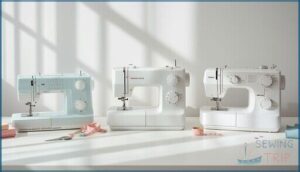
Finding the right sewing machine for your needs can feel overwhelming when you’re just starting out, but it doesn’t have to be complicated. The good news is that once you understand a few key differences between machine types, you’ll know exactly what to look for.
Let’s break down what matters most so you can pick a machine that fits your goals and budget.
Mechanical Vs. Computerized Machines
When you’re picking your first machine, think of mechanical versus computerized as the difference between a reliable workhorse and a smart helper. Mechanical machines offer simplicity and durability—they’re forgiving for beginners and cost less upfront, around $75 to $200.
Computerized machines provide stitch customization and automation benefits, starting at $150 but requiring more maintenance expertise. Repair complexity is lower with mechanical models; you can often fix them yourself.
Consider your budget, patience with technology, and what projects excite you most.
Drop-in Vs. Front-Loading Bobbin Systems
Think of the bobbin system as your sewing machine’s secret engine. For most beginners, a drop-in bobbin is pure relief—it’s easy to load, visibility comparison is a breeze, and fewer jams simplify maintenance.
Front-loading bobbins hold more thread and offer fine-tuning, but they’re trickier during sewing machine setup.
Drop-in systems now set the beginner sewing machine standard for cost and ease.
Key Features to Look for in Entry-Level Models
Beyond bobbin systems, you’ll want stitch options—around 10–30 patterns enable clothing and quilting projects. Threading ease saves frustration; look for a built-in needle threader. Speed control lets you cap the pace while you’re learning. Machine weight matters for portability: 12–17 pounds balances stability and moveability. Lighting quality near the needle means fewer mistakes, especially as projects grow.
Choosing a sewing machine? Prioritize these features:
- Multiple stitch options for adaptable projects
- Automatic needle threader for quick setup
- Adjustable speed control for safer learning
- Built-in LED lighting for accurate stitching
Considering Maintenance and Local Support
A machine with generous warranty support—often 2 years on electronics, 25 years on mechanicals—protects your investment.
Check that local repair shops exist in your area; most U.S. counties average 3–5 service providers per 100,000 residents.
For DIY maintenance, needle replacement every 8–10 hours and monthly cleaning cut breakdowns by 30%. Annual service frequency keeps most machines humming, with repair costs around $125–$165 per visit.
Top 4 Sewing Machines and Tools for Beginners
Now that you know what to look for in a beginner machine, let’s talk about some solid options that won’t let you down.
I’ve picked out three reliable sewing machines and one must-have cutting tool that beginners actually use and love. These aren’t fancy or expensive, just dependable gear that’ll help you build your skills without breaking the bank.
1. Brother CS7000X Sewing Quilting Machine
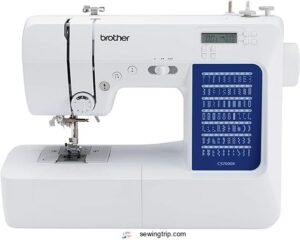
Let’s pull back the curtain on the Brother CS7000X—a star pupil for sewing beginners. This sewing machine stands out for its 70 built-in stitches and jam-resistant drop-in bobbin, both big wins if you’re just getting your feet wet.
The CS7000X features an easy-to-read LCD and a table made for quilting projects, making it adaptable for everything from pillowcases to baby quilts.
Known for machine reliability and easy-to-handle controls, it often outshines rivals in this price range for everyday sewing projects.
Best For: Beginners and intermediate sewers who want a reliable, easy-to-use machine with plenty of stitch options for garment making, quilting, and decorative projects without breaking the bank.
- 70 built-in stitches and 10 included presser feet give you tons of creative options right out of the box, so you won’t need to buy extras as you learn.
- The automatic needle threader and jam-resistant top-loading bobbin make setup quick and frustration-free, especially if you’re new to sewing.
- Lightweight and portable at 10.5 pounds with a hard case included, making it easy to take to classes or store away when you’re done.
- Maximum speed of 750 stitches per minute is slower than some comparable Brother models, which might feel limiting as your skills improve.
- Automatic buttonhole quality can be inconsistent compared to pricier competitors, based on independent testing and user feedback.
- Not built for heavy-duty work like thick denim or leather—it’s designed for regular home use, not industrial-level projects.
2. Janome Blue Couture Easy Sewing Machine
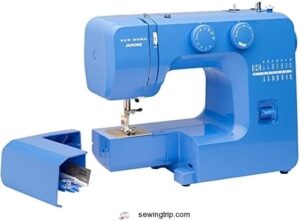
If you want something even simpler, the Janome Blue Couture offers 15 stitches, a four-step buttonhole, and a front-loading bobbin that’s a breeze for beginners mastering sewing machine basics. It sews up to 800 stitches per minute and weighs just 13 pounds—light enough to tuck away after sewing for beginners sessions.
A heavy-duty metal frame keeps it steady, and the 25-year warranty shows solid build quality. Users rave about its clear instructions and snap-on presser feet, though it lacks an automatic needle threader.
Great stitching performance for everyday garments and mending.
Best For: Beginners and hobbyists who want a straightforward, reliable machine for basic sewing, mending, and simple garment projects without a steep learning curve.
- Lightweight at 13 pounds with a sturdy metal frame, making it portable yet stable during use
- Front-loading bobbin system with clear diagrams and tutorial videos help new sewers get started quickly
- Backed by a 25-year warranty and consistently praised for ease of setup and smooth operation right out of the box
- No automatic needle threader or built-in thread cutter, which means more manual steps during sewing
- Limited to 15 stitches with no speed control dial, restricting versatility for advanced projects
- Some users report quality control issues like blown light bulbs and voltage compatibility problems for international use
3. Singer Fashion Mate Sewing Quilting Machine
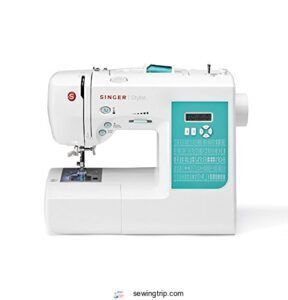
Curiosity meets confidence with the Singer Fashion Mate Sewing Quilting Machine—a go-to for anyone just starting their sewing journey. Packed with 32 stitches, an easy-to-use bobbin system, and a sturdy metal frame, it guides you through every project with ease.
Built-in accessories and clear guides simplify sewing machine basics, making tricky things like buttonholes approachable.
Strong customer reception comes from everyday sewers who love its smooth operation, reliability, and value. For a beginner sewing guide, it’s a standout workhorse.
Best For: Beginners and hobbyists who want an affordable, easy-to-use machine with enough stitches and features to grow their skills without feeling overwhelmed.
- 32 built-in stitches and 110 applications give you plenty of creative options for garments, quilts, and home decor projects
- Drop-in bobbin system and automatic needle threader make setup quick and frustration-free, even if you’ve never sewn before
- Heavy-duty metal frame keeps everything stable and handles thick fabrics like denim without skipping stitches
- Reverse stitch button can be slow and awkwardly placed, which gets annoying during longer projects
- Bobbin thread sometimes jams under the plate, requiring you to stop and fix it mid-project
- Not built for heavy-duty or industrial work—it’s best suited for small to medium home sewing tasks
4. Fiskars Titanium Rotary Cutter 45 mm
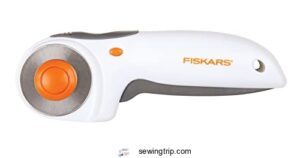
Scissors and shears get the job done, but a rotary cutter transforms how you slice through fabric. The Fiskars Titanium Rotary Cutter (45 mm) glides through multiple layers of cloth, felt, and even vinyl with a blade three times harder than steel.
Its ergonomic design reduces hand fatigue during long cutting sessions, while the titanium coating extends blade durability. Material compatibility spans quilting cotton to heavier textiles, and usage trends confirm beginners love its precision.
Backed by a lifetime warranty, routine maintenance keeps it sharp project after project.
Best For: Quilters, sewers, and crafters who need to cut through multiple fabric layers quickly and comfortably, especially those working on large projects where hand fatigue is a concern.
- Titanium-coated blade is three times harder than steel and stays sharp longer, cutting through various materials like fabric, felt, vinyl, and paper with ease
- Ergonomic SoftGrip handle with curved design reduces hand strain during extended use and works equally well for right- and left-handed users
- Backed by a lifetime limited warranty and features easy blade changes, making it reliable for both beginners and experienced crafters
- Beginners may need practice to master the blade locking mechanism and get comfortable with the tool
- Directions for use aren’t always clear or detailed, which can frustrate first-time rotary cutter users
- May struggle with very thick materials like heavy denim or leather without multiple passes or a larger blade size
Sewing Machine Safety and Maintenance Tips
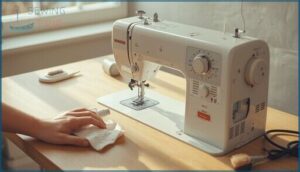
Now that you’ve got your machine and know how to use it, let’s talk about keeping yourself safe and your machine running smoothly. Good habits from the start will prevent injuries and save you from frustrating breakdowns down the road.
Here’s what every beginner needs to know about safety and basic care.
Safe Operating Practices for Beginners
Your sewing machine isn’t a toy—it demands respect and attention. Unplug during needle changes or maintenance to avoid Electrical Precautions disasters. Keep your Needle Guard installed and maintain at least an inch between fingers and the moving needle for Accident Prevention.
Practice good Workspace Organization by clearing pins and scissors from the machine bed. Always begin at low speed until you’ve mastered control—beginner sewing thrives on patience, not haste.
Preventing Common Sewing Injuries
Did you know that most injuries at the sewing machine come down to habits? Build beginner sewing skills for Needle-stick Prevention by keeping hands clear of the needle. Maintain Workspace Safety—tidy tools matter.
Prioritize Ergonomic Posture to fight muscle aches. And don’t forget Eye Protection, because a broken machine needle can fly faster than you think.
Respect electrical hazards and maintenance, too.
Cleaning and Oiling Your Sewing Machine
Think of lint buildup as sawdust in a workshop—it gathers fast and gums up the works. Clean your sewing machine after every few hours of use, focusing on the bobbin area and needle plate.
Lint clogs your sewing machine like sawdust in a workshop—clean the bobbin area and needle plate after every few hours of use
Follow oiling intervals in your manual; mechanical machines need a drop or two, while computerized models often don’t. Environmental conditions matter—dust covers prevent trouble.
Skip user errors like wrong oils, and consider professional servicing yearly.
Troubleshooting Basic Machine Problems
Machine won’t cooperate? Skipped stitches usually mean a dull needle, wrong threading, or mismatched needle-fabric pairing. Thread tension problems cause loops or bunching—check your bobbin threads and upper path for lint.
Bobbin issues stem from incorrect insertion or uneven winding. Poor fabric feeding signals low presser-foot pressure or pulling while stitching.
When troubleshooting sewing fails repeatedly, professional repair becomes necessary.
Frequently Asked Questions (FAQs)
What is the first thing a beginner should sew?
Start with a pillowcase—it’s the go-to choice for 41% of beginners. You’ll practice straight seams on manageable fabric while gaining confidence. Tote bags and simple drawstring pouches work wonderfully too.
Can I teach myself to use a sewing machine?
Many crafters started alone at their kitchen tables with just a manual and determination.
You can absolutely teach yourself using video tutorials and practice—beginners who dedicate regular time usually master basic stitches within weeks.
How do you teach a beginner to use a sewing machine?
Teaching a beginner to use a sewing machine starts with safe setup, hands-on threading practice, gentle stitch control, and reinforcing “safety first.” Building confidence comes from step-by-step guidance.
This Beginners Guide lays the groundwork for essential Sewing for Beginners skills.
How to use a sewing machine step by step?
Using a sewing machine involves unpacking safely, threading techniques through tension discs, bobbin insertion, adjusting stitch length and width for your fabric, positioning fabric under the presser foot, and guiding it using seam guides for accuracy. Practice makes perfect.
How do I clean and maintain a sewing machine?
Think of your sewing machine like a car—it needs regular care to run smoothly. Lint removal after every few bobbin changes and light oiling every 5-10 hours prevent most maintenance issues beginners face.
What types of sewing machine needles should I use?
Your machine needle choice depends on fabric weight and fiber type. Universal needles work for most projects, but ballpoint suits knits, while jeans needles handle denim best—using the right needle prevents skipped stitches and fabric damage.
How do I fix tension issues while sewing?
An ounce of prevention beats a pound of cure. Re-threading your machine and cleaning bobbin threads around tension discs often solve thread mismatch.
Check needle size, adjust stitch tension dials, and match upper and bobbin thread weights.
Can I use any thread in my sewing machine?
Not every thread works well. All-purpose polyester thread suits most fabric types and machine needles, but specialty threads—like heavy upholstery or metallic—need specific needle thread pairing and tension adjustments to avoid poor thread effects.
How do I troubleshoot a noisy sewing machine?
Start by unplugging your machine and checking for lint buildup. Threading problems and needle issues often cause noise. Try proper lubrication next.
If vibration dampening doesn’t help, seek professional repair for internal mechanical problems.
What fabric types work best for beginners?
Choose stable cottons like quilting cotton or poplin—their natural fibers make fabric selection easier. Prints hide mistakes better than stripes. Delay slippery satins and stretchy knits until your understanding of fabric improves.
Conclusion
You came to this guide wondering if you’d ever figure out your machine. Now you’ve got the sewing machine basics for beginners down cold—threading, bobbin loading, stitch selection, and safe operation.
That intimidating contraption on your table? It’s just a tool waiting for your creativity. Start with simple projects, keep practicing those straight seams, and don’t overthink it. Before long, you won’t remember what felt so confusing. Your next creation is already waiting.
- https://blog.hubspot.com/sales/how-to-stitch-together-your-share-of-the-6.8b-sewing-boom
- https://www.globalgrowthinsights.com/market-reports/household-sewing-machines-market-110317
- https://www.consumerreports.org/appliances/sewing-machines/buying-guide/
- https://www.jacksew.com/reliable-2700sz-high-speed-rotary-3-step-zig-zag-direct-drive-lockstitch-industrial-sewing-machine-complete-with-fully-assembled-table-and-stand/
- https://www.reddit.com/r/sewing/comments/183vzun/does_it_worth_buying_a_machine_as_a_really_really/