This site is supported by our readers. We may earn a commission, at no cost to you, if you purchase through links.
You’ve just invested time and money into a gorgeous sew-in, and now you’re wondering how long you can rock it before heading back to the salon. Most sew-ins last anywhere from six to twelve weeks, but that range isn’t set in stone—it depends on the hair quality you choose, how your stylist installs it, and how well you care for it.
Some people push theirs to three months with the right maintenance routine, while others notice loose tracks or buildup after just four weeks. Your hair type, lifestyle habits, and even how often you sweat all play a role in whether your sew-in stays sleek or starts looking tired.
Understanding what affects longevity helps you protect your investment and keep your style looking fresh.
Table Of Contents
- Key Takeaways
- How Long Does a Sew-in Last?
- Factors Affecting Sew-in Longevity
- Types of Sew-Ins and Their Durability
- Impact of Hair Quality on Lifespan
- Importance of Professional Installation
- Maintenance Tips for Longer-Lasting Sew-Ins
- Signs Your Sew-in Needs Removal
- How Lifestyle Influences Sew-in Longevity
- Products to Extend Sew-in Wear
- Preventing Damage During Sew-in Removal
- Frequently Asked Questions (FAQs)
- Conclusion
Key Takeaways
- Your sew-in typically lasts six to eight weeks with proper care, though high-quality human hair extensions and expert installation can push that window to twelve weeks if you’re diligent about maintenance.
- The longevity of your sew-in depends heavily on three factors: the quality of hair you choose (human hair outlasts synthetic by months), your stylist’s skill with tension and stitching, and your natural hair texture’s ability to grip the braided foundation.
- You’ll know it’s removal time when you experience excessive itching beyond two weeks, notice loose tracks with visible shedding, or detect persistent odor from buildup—ignoring these signs risks scalp damage and hair breakage.
- Protecting your investment means washing every one to two weeks with sulfate-free products, moisturizing your scalp consistently with lightweight oils, and wrapping your hair at night with a satin cap to prevent friction damage.
How Long Does a Sew-in Last?
If you’re wondering how long your sew-in will hold up, you’re not alone—it’s one of the first questions I get from clients. The answer depends on several factors, but there’s a general timeframe most people can expect.
Let’s break down what you need to know about sew-in longevity and when it’s time for a refresh.
Average Duration of Sew-Ins
Generally, a sew-in weave lasts six to eight weeks with a solid hair care routine and sew-in maintenance. Hair extension tips and extension longevity depend on your hair extension methods and installation quality. Here’s what affects your sew-in removal timeline:
Proper installation makes all the difference—if you’re new to this, learning how to sew down a track correctly will help your weave last the full duration.
- Traditional sew-ins hold strong for 6–8 weeks
- Partial styles need adjustment around 4–6 weeks
- Closure installations can push 8–12 weeks
- Your texture and care shift duration by about two weeks
Typical Lifespan Range (6–12 Weeks)
Most sew-ins hold up anywhere from six to twelve weeks, depending on your hair extension care routine and protective styling approach. That range gives you flexibility—six weeks keeps things fresh, while twelve weeks maximizes your investment if you’re diligent about sew-in maintenance.
Extension durability really comes down to how you treat your weave and your natural hair underneath.
When to Consider Removal
You’ll know it’s time for removal when the signs start stacking up—excessive itching beyond two weeks, hair shedding from loose tracks, or a noticeable odor clinging to your scalp.
These removal signs point to compromised scalp health and possible extension damage. If more than 20% of your sew-in feels loose or you’re experiencing scalp pain, don’t push it. Schedule that takedown.
Factors Affecting Sew-in Longevity
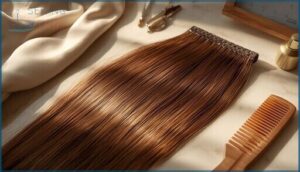
Not all sew-ins are created equal, and the lifespan of yours depends on more than just wishful thinking. The quality of your extensions, how they’re installed, and even your natural hair texture all play a role in how long your style stays fresh.
Let’s break down the three biggest factors that determine whether you’re rocking your sew-in for six weeks or stretching it to twelve.
Your hair texture plays a major role here, so matching your installation technique to your natural hair is key for longevity.
Hair Quality (Human Vs. Synthetic)
The hair fiber you choose makes all the difference. Human hair—especially virgin hair or higher human grade options—can hold up for three to six months, tolerating heat and styling like your own. Synthetic hair, though budget-friendly, hits synthetic limits faster, fraying and losing luster within four to eight weeks.
For sewin hair extensions for weddings or long-term wear, human grade fiber durability wins every time with proper extension care and hair care and maintenance. Understanding hair extension types is essential for making an informed decision.
Installation Technique and Stylist Skill
Even perfect hair won’t save a sew-in if your hairstylist skips fundamentals. Braiding methods, tension control, and hair sectioning determine whether tracks stay put for eight weeks or slip after three.
Stitching patterns and weft attachment must distribute weight evenly across cornrows, preventing breakage at stress points. Stylist expertise in sewin technique and sewin weave installation—lock stitches through each braid, uniform knot tightening, proper sewin method—transforms extensions from temporary fix to durable protective style.
Proper hair extension care is essential to maintain the quality and longevity of the sew-in.
Hair Texture and Type
Your natural texture dictates how long tracks hold tight. Type 4 hair—coily, dense—grips braids with friction, often lasting the full eight weeks, while fine or straight strands slip faster and may need tightening by week four.
Curl patterns and hair density affect track stability, and matching extension texture to your hair porosity reduces frizz control headaches. Texture matching isn’t vanity; it’s smart sewin hair maintenance that protects your investment.
Types of Sew-Ins and Their Durability
Not all sew-ins are created equal, and the type you choose directly affects how long your install will last. Each method has its own braiding pattern, coverage area, and maintenance needs that impact durability.
Let’s break down the most common sew-in styles so you can see what to expect from each one.
Traditional Sew-In
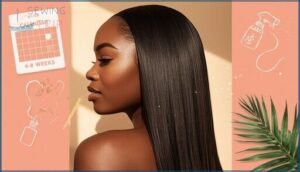
A traditional sew-in weave is your go-to protective style when you want full coverage and natural length. You’ll find your stylist braiding all your hair into cornrow braid patterns, then stitching hair extensions directly onto those braids using secure sewing methods.
With proper hair extension maintenance, including a solid hair care routine, your traditional sew-in weave usually lasts:
- 4–6 weeks for active lifestyles or frequent sweating
- 6–8 weeks as the standard safe wear period
- Up to 8 weeks maximum to prevent matting and scalp issues
- Regular touch-ups around week 4 for freshness
Quality human hair and consistent sew-in weave maintenance make all the difference.
Partial Sew-In

You’re leaving some of your own hair out with a partial sewin, blending natural texture with extensions for versatility. This style benefits from showing off your edges, but your hair growth considerations mean faster lifting at the tracks.
Most partial sew-in weave installs last 6–8 weeks with solid hair extension maintenance and proper sew-in hair care. Braid patterns matter here—skilled sew-in methods keep everything secure while your natural hair breathes.
Full Sew-In
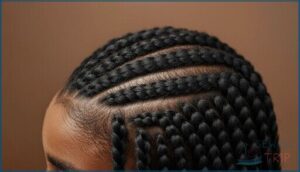
Your complete protective coverage with a full sew-in means all natural hair gets braided down, creating the base for your extension bundles. This installation gives you total freedom for flexible styling without worrying about blending your natural texture. When properly installed with quality human hair, full sew-in weave durability typically reaches 6–8 weeks before professional removal becomes necessary.
Key factors determining your full sew-in lifespan:
- Braiding patterns create the foundation—tighter cornrows hold longer but shouldn’t cause scalp tension
- Hair texture compatibility between your natural hair and extensions affects how seamlessly tracks stay secured
- Sewing techniques used by your stylist determine track stability and overall wear comfort
- Bundle weight from multiple wefts can increase tension, making 8 weeks the comfortable maximum for most clients
- Hair weaving techniques that distribute weight evenly across your scalp prevent premature loosening
Professional stylists emphasize removal timing even when your install still looks fresh—matting and buildup at braid bases happen after 8 weeks regardless of appearance. If you’re sweating regularly or living an active lifestyle, you’ll notice your tracks lifting earlier, sometimes around week 4.
Proper sew-in weave maintenance extends your wear time within that 6–8 week window. Regular scalp cleansing prevents buildup while lightweight moisturizers keep both your natural hair and extensions healthy underneath. Some high-quality full sew-ins can push toward 10–12 weeks with strict upkeep, but that’s the absolute upper limit before risking damage.
Closure and Frontal Sew-Ins

Lace closures and frontals give you that natural hairline blending you’ve been wanting, but they operate on different maintenance schedules. Closures stay sewn in place and can last 6–12 weeks when you refresh them every 2–3 weeks, while lace frontal installs need adhesive reapplication every 2–4 weeks as glue breaks down from styling and daily wear.
Your lace material quality and the adhesive types your stylist chooses directly impact how long your hairline stays secured between touch-ups.
| Sew-In Methods | Maintenance Interval | Primary Attachment |
|---|---|---|
| Closure Sew In | 2-3 weeks for refresh | Sewn with installation tools |
| Lace Frontal | 2-4 weeks for adhesive | Glue and adhesive types |
| Both Hair Extensions Maintenance | 6-8 weeks max continuous wear | Professional sew-in weave techniques |
Impact of Hair Quality on Lifespan

Not all hair is created equal, and the quality of your extensions can make or break how long your sew-in stays looking fresh. Human hair and synthetic options each come with their own trade-offs, and even within human hair, the grade you choose matters more than you might think.
Let’s break down what you need to know about hair quality so you can get the most mileage out of your install.
Benefits of Human Hair Extensions
Human hair quality makes all the difference when you’re looking at extension longevity and natural appearance. You’ll get six to twelve months of wear—sometimes longer—because the cuticles stay aligned and resist tangling.
Plus, you can heat style, color, and switch up your sewin weave without worry. That styling versatility and hair comfort mean you’re investing in something that actually moves and breathes like your own hair.
Drawbacks of Synthetic Hair
Synthetic hair extensions come with serious trade-offs you need to know. They generally last only one to three months before fiber degradation kicks in—tangling, matting, and losing shape fast.
Heat damage limitations mean no curling irons without melting risk, and some people experience scalp sensitivity from chemical coatings.
Plus, flammability risks and environmental impact from petroleum-based plastics make them a less sustainable choice for your sewin weave and long-term hair care.
How Hair Grade Affects Durability
If you’re chasing durability, Hair Grade isn’t just a label—it’s a promise. High-grade Remy Hair with aligned cuticles, double drawn bundles, and Virgin Extensions all boost your sew in weave’s lifespan. For real results, look for:
- Consistent cuticle alignment
- Double drawn density
- Virgin hair origin
- Minimal processing
- Reliable vendor transparency
Importance of Professional Installation
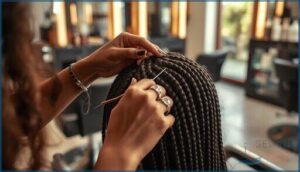
Getting your sew-in installed by a skilled professional isn’t just about aesthetics—it’s about protecting your natural hair and maximizing how long your style will last. The right stylist knows how to create a foundation that won’t slip, cause damage, or unravel prematurely.
Here’s why professional installation makes all the difference, and what happens when you skip this essential step.
Stylist Experience and Results
When you book with a hairstylist who’s been perfecting sew in weave techniques for three-plus years, you’re getting more than just hair extension know-how—you’re investing in your hair’s future.
Experienced stylists see far less track slippage (around 2–5%), better client satisfaction, and longer-lasting results. That expertise in stylist training translates directly to smarter sew in weave maintenance and stronger hair care tips that keep your style fresh.
Risks of DIY Sew-Ins
Why risk your crowning glory on a DIY sew-in weave? Tight braids can trigger traction alopecia and scalp irritation, while amateur stitching invites hair breakage and infection risk.
You might save money upfront, but weave maintenance disasters and hair damage prevention failures will cost you more later.
Smart hair care tips start with trusting trained hands, not YouTube tutorials.
Proper Braiding and Stitching Methods
Precision matters when your stylist sections your hair—clean spacing and controlled tension keep your scalp comfortable and your tracks secure. Proper braiding techniques create an even foundation, while flat stitching patterns near the skin prevent bulk and slipping.
Smart hair sectioning distributes weight evenly across your head, and reinforced stitching at the base extends your sew-in weave’s lifespan while protecting your natural braids underneath.
Maintenance Tips for Longer-Lasting Sew-Ins

You’ve invested in a beautiful sew-in, and now you want it to last as long as possible. The good news is that with the right care routine, you can stretch your style well beyond the average wear time.
Let’s walk through three essential maintenance practices that’ll keep your sew-in looking fresh and your natural hair healthy underneath.
Washing and Conditioning Frequency
You’ll want to wash your sew-in weave every 1 to 2 weeks with a sulfate-free shampoo to keep your scalp clean and prevent buildup without loosening those tracks.
This protective hairstyle needs gentle detangling and conditioning focused on the mid-lengths and ends, not the roots, to maintain hair moisture while avoiding hair damage.
Between washes, lightweight leave-in treatments help with scalp care and hair care without compromising your installation’s stability.
Moisturizing Scalp and Extensions
Your scalp health depends on consistent hydration, even when you’re rocking a sew-in weave. Think of extension care like tending a garden—regular moisture keeps everything thriving without the weight. Lightweight hair care products give you that balance between scalp hydration and keeping your tracks secure, which directly fosters hair growth and health through smart aftercare tips.
- Apply oil-based serums to your scalp 2-3 times weekly using an applicator bottle for precision
- Choose water-based leave-ins with glycerin to boost hair moisture without causing slippage
- Avoid heavy creams that create buildup along your tracks and braids
- Massage gentle products into your scalp using fingertips, never scratching with nails
- Focus hair care and maintenance tips on your natural hair underneath, not just the extensions
Protecting Hair at Night
You wouldn’t sleep on a silk blouse without protecting it, so why treat your sew-in any differently at night? Friction from cotton pillowcases destroys your protective style faster than anything else, causing frizz prevention nightmares and actual hair damage that requires serious repair work.
Your nighttime routine makes or breaks your sew-in weave longevity. Gentle wrapping with a satin or silk sleep cap locks in moisture while reducing tangling, and if caps aren’t your thing, swap your pillowcase for a satin one instead. These simple hair care and maintenance tips protect both your extensions and natural hair underneath from unnecessary stress.
| Protection Method | Key Benefit |
|---|---|
| Satin/Silk Sleep Cap | Reduces friction, prevents frizz, retains moisture in sew-in hair |
| Satin Pillowcase | Gentle on extensions, maintains style smoothness overnight |
| Loose Braid or Twist | Prevents tangling, keeps tracks secure during sleep |
| Avoid Tight Ponytails | Reduces tension on braids, prevents premature loosening |
Sleep cap benefits extend beyond just keeping your style fresh—they’re essential hair damage prevention tools that add weeks to your sew-in’s lifespan.
Signs Your Sew-in Needs Removal

Your sew-in won’t last forever, and your hair will give you clear signals when it’s time for removal. Ignoring these warning signs can lead to damage, discomfort, or even scalp issues that aren’t worth the risk.
Here are the key indicators that tell you it’s time to take that sew-in out.
Excessive Itching or Irritation
If itching turns from a minor nuisance into a constant distraction, that’s your scalp waving a red flag. Scalp sensitivity and irritation—caused by tight braids, skin allergies to hair care products, or buildup under sew-in hair—mean it’s time for removal.
Persistent reactions can lead to hair damage if ignored, so don’t tough it out. Itch relief starts with listening to your body and protecting your natural hair.
Shedding and Loose Tracks
When shedding causes noticeable thin spots or tracks start shifting around, your sew-in weave is telling you it’s time for removal. Hair extension shed happens naturally over weeks, but excessive loss signals poor track tensioning or worn-out installation.
Loose track repair might buy you days, but continuing sew-in maintenance past this point risks hair damage prevention and repair needs later.
For healthy hair growth and care with any hair extension types, don’t push a failing sew-in hairstyle beyond its limit.
Noticeable Odor or Buildup
Beyond loose tracks, another red flag demands attention: a funky smell creeping from your scalp. That scent means oils, sweat, and products have trapped bacteria under your braid maintenance routine, compromising your sew-in weave.
Odor prevention and buildup removal aren’t optional regarding scalp hygiene and hair freshness. Proper hair care fosters hair growth and health, while hair damage prevention and repair start with knowing when your sew-in hair needs a break.
How Lifestyle Influences Sew-in Longevity

Your daily routine plays a bigger role in your sew-in’s lifespan than you might think. Everything from how much you sweat to how you style your hair can either extend or cut short your protective style.
Let’s look at the key lifestyle factors that directly affect how long your sew-in stays fresh and secure.
Exercise and Sweat
If you’re hitting the gym regularly or sweating through your workday, that moisture can definitely shorten your sew-in’s lifespan if you’re not careful with how you manage it. Sweat buildup creates the perfect environment for odor, itching, and even loosening tracks, which isn’t what you want from this protective style.
Here’s how to keep your sew-in weave fresh during active styling:
- Tie your hair back in gym hairstyles that minimize sweat absorption
- Use a moisture-wicking headband for sweat reduction during workouts
- Rinse your scalp with cool water post-exercise for better hair care
These exercise tips help maintain your weave while supporting natural hair growth underneath.
Swimming and Water Exposure
Chlorine and saltwater are even tougher on your sew-in than sweat, since they can dry out both your extensions and natural hair faster than you’d think. If you’re planning to swim, throw on a swim cap for pool safety and hair protection.
That simple step prevents water damage and shields your sew-in hair from harsh chlorine effects. After swimming, rinse thoroughly and apply a leave-in conditioner to restore moisture your hair extension methods desperately need.
Daily Styling Habits
You mightn’t realize it, but how you handle your sew-in every single day—whether you’re pulling it into a ponytail, reaching for the flat iron, or just running your fingers through it—has a huge impact on how long those extensions actually last.
Tight hair ties stress your sew-in weave, while daily braiding and excessive styling tools weaken the tracks.
Your morning routine and nightly wrapping practices matter more than any product for hair maintenance and proper hair care.
Products to Extend Sew-in Wear

The right products can make or break how long your sew-in stays fresh and manageable. You don’t need a bathroom full of expensive bottles, but a few key staples will protect both your extensions and your natural hair underneath.
Here’s what I always recommend to my clients who want their sew-ins to go the distance.
Sulfate-Free Shampoos
Sulfate-free shampoos are your sew-in’s best friend, because harsh sulfates strip moisture and can loosen your tracks faster than you’d think.
Look for gentle cleansers with sulfate alternatives that maintain moisture balance while keeping your scalp healthy. These formulas provide essential hair nourishment without compromising your weave, so you’re protecting your investment with every wash.
Your hair maintenance routine starts with choosing products that actually work with your sew-in, not against it.
Lightweight Leave-in Conditioners
After you’ve washed with a sulfate-free shampoo, a lightweight leave-in conditioner becomes your secret weapon for keeping both your natural hair and extensions soft, manageable, and tangle-free without weighing down your tracks. These gentle formulas provide daily hydration and frizz control while maintaining moisture balance throughout your sew-in weave.
Choose products that offer:
- Water-based formulas that won’t create buildup on your tracks or scalp
- Hair softening ingredients like aloe or glycerin for smooth, touchable texture
- Spray or mist applications for easy distribution without disturbing your hair styling
Recommended Serums and Oils
The right serum or oil acts like a protective shield for your sew-in, locking in moisture and adding that healthy shine without leaving your tracks greasy or heavy.
Look for lightweight options like argan or jojoba oil that penetrate your hair texture without buildup, offering scalp treatments and hair renewal benefits.
Apply sparingly to ends and edges, focusing on moisture lock for healthier hair styling and maintenance throughout your sew-in hair journey.
Preventing Damage During Sew-in Removal
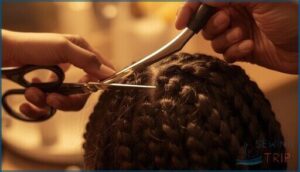
Removing your sew-in the wrong way can undo all the protective work it did for your natural hair. Rushing through removal is one of the fastest ways to cause breakage and damage. You want to take your time with this process. Here’s what you need to know to safely take down your sew-in and care for your hair afterward.
Safe Takedown Techniques
Taking out a sew-in the wrong way can undo all the protective benefits you worked so hard to maintain, so let’s make sure you do it right.
Start with gentle removal by carefully snipping the thread—not your hair—and working slowly to loosen each track. This takedown method protects your scalp and preserves both your natural hair and the hair extensions, so your weave installation effort wasn’t for nothing.
Post-Removal Hair Care
Once your sew-in weave is out, scalp recovery and hair restoration become your top priorities. Start gentle detangling from the ends up using a wide-tooth comb, then cleanse with a sulfate-free shampoo to remove buildup without stripping oils.
Deep condition 1–2 times weekly for the first month to restore moisture and support hair health.
These post-removal tips help your hair rejuvenation process and prepare you for your next protective style.
When to Seek Professional Help
If you notice matting, severe breakage, or tracks that won’t budge no matter how carefully you snip, it’s time to call your stylist instead of pushing through on your own. Professional guidance can prevent further damage control issues with your sew-in weave and protect your natural hair.
Emergency fixes a hair salon services expert should handle:
- Tangled or locked extensions that resist gentle detangling and threaten hair repair needs
- Extreme scalp irritation or swelling that suggests infection requiring a stylist consult
- Extensive shedding during removal, indicating your hair extensions need professional attention for safe weaving removal
Frequently Asked Questions (FAQs)
What type of hair extensions are best for sew-ins?
Human virgin hair—especially remy or virgin options—gives you the most natural movement and longest wear.
Synthetic weave is more prone to tangling faster, so investing in quality hair extensions for your sew in weave really pays off.
How often should I visit the salon for sew-in maintenance?
Most stylists recommend scheduling Sew-in Checkups every 4 to 6 weeks to keep your Hair Extension secure and healthy.
Salon Visits for your Maintenance Routine help prevent loosening tracks and protect your natural hair underneath.
How much does a sew-in installation typically cost?
Prices swing wildly depending on where you live and who’s holding the needle. Full sew-in installation fees usually range from $150 to $600, with urban salon pricing often landing between $250 and $500 for quality hair extensions.
Can I color or bleach my sew-in extensions?
Generally, color and bleach aren’t recommended for sew-in extensions since chemical processing weakens hair, causing tangling and shedding.
If you’re determined to dye, consult a professional colorist who understands extension dyeing and hair coloring risks.
How much does a professional sew-in installation cost?
You’re probably looking at around $150 to $600 for professional sew-in installation, depending on your location, the stylist’s experience, and whether you’re getting a full or partial weave with closure options.
Will a sew-in damage my natural hair?
When installed correctly and maintained properly, your sew-in won’t cause hair damage or breakage.
Poor installation, tight braiding, or neglecting scalp care can lead to hair shedding, scalp irritation, and weakened natural hair strands.
Can I reuse my sew-in hair extensions?
Absolutely, you can reuse quality human hair extensions if they’re still in good shape. After sewin removal, proper extension cleaning and careful hair storage make reinstallation tips easier, preserving your weave hair investment for future wear.
Whats the difference between a sew-in and weave?
A sew-in is one type of weave technique where wefts are stitched onto cornrowed hair with thread.
Weave is the broader term for all hair extension types, including glued, taped, or clipped methods.
Conclusion
Your sew-in can thrive for months or fall apart in weeks—the difference comes down to choices you make before, during, and after installation. Invest in quality hair, find a stylist who respects proper tension, and commit to a maintenance routine that treats your scalp and extensions with care.
Understanding how long a sew-in lasts means recognizing the signs of wear early and acting before damage sets in. Protect your investment, and your style will protect you right back.
- https://www.oreateai.com/blog/how-long-should-a-weave-sew-in-last/6fe252e848f86b29e89d81816b8fa216
- https://www.advancedhairstudioindia.com/blogs/synthetic-hair-vs-human-hair-extensions-a-comparison-guide
- https://www.ontheavenuewaco.com/how-long-do-hair-extensions-last-2/
- https://www.juliahair.com/blog/human-hair-vs-synthetic-hair/
- https://usahair.com/blog/how-much-do-sew-in-hair-extensions-cost-a-comprehensive-pricing-guide.html