This site is supported by our readers. We may earn a commission, at no cost to you, if you purchase through links.
You walk into a fabric store for curtains and spot cotton at $8 per yard next to polyester at $4. Same width, similar feel—but one costs double. Fabric pricing isn’t random. Material content, weight, print complexity, and sourcing conditions create price gaps that stretch from $3 bargain bins to $40 luxury bolts.
Understanding these differences protects your budget whether you’re sewing a single pillowcase or outfitting an entire home. Smart shoppers compare per-yard costs across fabric types, spot seasonal promotions, and know exactly when bulk purchases deliver real savings versus marketing hype.
Table Of Contents
Key Takeaways
- Fabric prices range from $2 per yard for basic polyester to $40+ for premium materials like wool and designer prints, with most quality fabrics costing $8–$20 per yard.
- You’ll save 20–60% by buying bolts or bulk quantities instead of single yards, especially when you need 20+ yards for multiple projects.
- Natural fibers like cotton ($5–$12/yard) cost more than synthetics ($2–$10/yard), while specialty outdoor fabrics like Sunbrella run $15–$40 per yard due to UV resistance and durability.
- Smart shoppers combine seasonal sales (20–40% off), wholesale accounts (saving 50–60% versus retail), and price matching to maximize savings without sacrificing quality.
How Much Does Fabric Cost in 2026?
Fabric prices in 2026 depend on what you’re buying and where you shop. You’ll find everyday materials starting around $2 per yard, while premium options can run much higher.
Most sewers budget between $8 and $20 per yard for quality materials, though costs can shift based on what you’re charging for custom sewing work and your project needs.
Let’s break down the typical costs you can expect across different fabric types.
Natural fibers like cotton and linen tend to be more affordable, while specialty options such as viscose and rayon sit in the mid-range with slight price variations.
Average Price Per Yard by Fabric Type
Fabric costs vary widely by material. Cotton fabrics typically run $5 to $12 per yard, making them adaptable for apparel and home decor projects. Polyester blends offer budget-friendly options at $3 to $10 per yard. Fleece fabric prices hover around $4 to $9 per yard for cozy blankets.
For beginners looking to master fabric selection and budgeting, sewing lessons for starters cover essential cost-saving techniques alongside foundational skills.
Linen ranges from $10 to $25, while wool can reach $40 per yard for premium selections.
Price Ranges for Common Fabrics (Cotton, Polyester, Fleece, Etc.)
Understanding specific price bands helps you plan projects wisely. Cotton fabric ranges from $3 to $15 per yard for basic quilting fabrics, while premium organic varieties reach $12 to $25. Polyester keeps material costs low at $2 to $10 per yard. Fleece fabric runs $3 to $12, perfect for cozy creations.
Wholesale pricing and seasonal discounts at your fabric depot can greatly reduce bulk purchasing expenses.
Cost Differences for Designer and Luxury Fabrics
Designer fabrics usually cost 2 to 10 times more than standard options, reflecting brand prestige and limited runs. Luxury fabrics push prices even higher—20 to 60 percent above designer fees—thanks to rare fibers and exclusive prints.
Scarcity drives fabric prices upward during peak fashion cycles. When textile and fabric sales dip, you’ll find better deals on premium fabric selection without sacrificing quality.
Factors That Affect Fabric Prices
Your fabric bill doesn’t just depend on what you’re buying. Several factors determine whether you’ll pay $3 or $30 per yard. Let’s break down what actually drives those price tags.
Material and Fiber Content
Your fabric selection starts with what’s woven inside. Natural fibers like cotton fabric offer breathable fabrics that feel soft against your skin, while synthetic materials bring resilience you can count on. Fiber blends merge both worlds—60% cotton, 40% polyester delivers fabric durability without sacrificing comfort. Check those labels:
- Pure cotton for hypoallergenic fabrics
- Wool and silk from textile science traditions
- Polyester for wrinkle-resistant performance
- Spandex blends for stretch
- Natural fibers for moisture control
Fabric Weight and Quality
Weight determines whether your project drapes like a dream or stands firm under pressure. Fabric weight classes range from lightweight voile (2-4 oz.) to heavyweight canvas (12+ oz.).
Choosing the right weight for your budget matters—smart fabric planning helps you balance quality with cost across every project.
Higher fabric density means stronger material strength—your cotton fabric for quilts needs a different thread count than curtain sheers.
Check fabric quality markers: tight weave patterns resist wear, while looser constructions offer breathability. Smart fabric selection matches weight to purpose.
Print Complexity and Dyeing Techniques
Color choices make serious price swings in your printed fabric budget. Multi-color designs can spike production costs by 30 percent due to extra passes and ink consumption.
Reactive dyeing methods deliver excellent color fastness on cotton fabric, but slower curing times add expense.
Digital print resolution allows stunning textile arts, yet per-yard costs stay higher than traditional weaving for fabric crafting projects.
Regional Market and Sourcing Conditions
Global trade shifts and freight costs reshape what you’ll pay at fabric stores today. Tariff impact on supply chains drives price gaps between wholesale fabrics sourced overseas and local options.
Textile shopping platforms offer online fabric shopping advantages, yet regional regulations and port delays add unpredictable expenses.
Smart buyers track fabric wholesale markets across continents to secure the best value.
Fabric Price Comparison: Popular Types
You’ll find fabric prices vary widely depending on what you’re buying. Cotton muslin might cost a few dollars per yard, while specialty outdoor fabrics can run much higher.
Let’s compare the most popular fabric types so you know what to expect when you shop.
Cotton Muslin and Quilting Fabrics
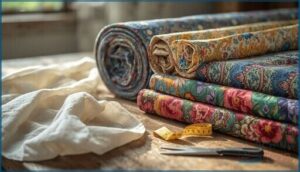
Looking for everyday sewing wins? Cotton muslin runs $3 to $8 per yard in standard widths—perfect for testing patterns or crafting natural garments. Quilting fabrics sit between $5 and $12, with designer prints pushing past $15. Check out these quick comparisons:
| Fabric Type | Price Per Yard |
|---|---|
| Basic Muslin | $3–$8 |
| Standard Quilting Cotton | $5–$12 |
| Designer Quilting Prints | $15+ |
| Bulk Quilting (Sale) | 20–40% off |
Fabric stores offer countless muslin textures and quilting patterns. Cotton blends deliver versatility across fabric weights—you’ll find options for every sewing technique.
Fleece, Flannel, and Felt
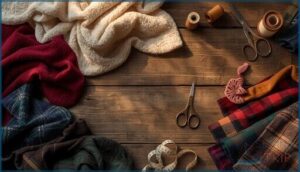
Need cozy winter textiles for your next project? Fleece fabric runs $5 to $12 per yard—perfect for crafting warm blankets. Flannel sewing fans find quality brushed varieties at $4 to $10. Felt making enthusiasts grab adaptable sheets for crafting and DIY work. Check seasonal sales for 25–50% off these soft furnishings and sewing supplies.
| Fabric Type | Price Range |
|---|---|
| Fleece Fabric | $5–$12/yard |
| Flannel Fabric | $4–$10/yard |
| Novelty Fleece Prints | $12–$15/yard |
Specialty and Outdoor Fabrics (e.g., Sunbrella)
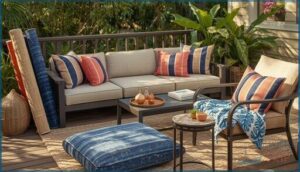
Update your patio furniture with Sunbrella fabric and outdoor upholstery that resist fading. UV-resistant outdoor fabrics price $15 to $40 per yard, while marine canvas and waterproof materials for crafting and DIY run $20 to $30. Specialty weaving and home decor fabrics offer durability you can trust. Bulk buying cuts costs substantially for fabric crafts.
| Fabric Type | Price Range | Best For |
|---|---|---|
| Sunbrella Style | $15–$40/yard | Patio furniture, cushions |
| Marine Canvas | $20–$30/yard | Outdoor gear, boat covers |
| UV Resistant Textiles | $15–$25/yard | Awnings, outdoor decor |
Upholstery and Home Decor Fabrics

Transform your living space with upholstery and home decor fabrics that blend style with durability. Domestic upholstery cotton fabric and linen blends range $10 to $40 per yard, while velvet and jacquard patterns exceed $40. Textile design choices like damask increase costs 20–60% over plain weaving. Bolt purchases save 10–25% on home decor projects, making quality upholstery tips more affordable.
| Fabric Type | Price Range | Best For |
|---|---|---|
| Cotton/Linen Upholstery | $10–$40/yard | Chairs, sofas, cushions |
| Velvet & Drapery | $40+/yard | Statement pieces, curtains |
| Jacquard/Damask | $15–$50/yard | Accent pillows, home decor trends |
Buying Fabric: Yard, Bolt, or Bulk?
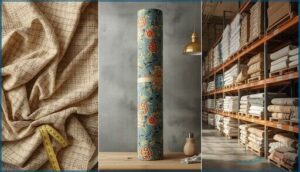
You don’t always need to buy fabric by the yard. Buying larger quantities—like bolts or bulk rolls—can save you serious money if you’re planning multiple projects.
Here’s what you need to know about each purchasing option and when it makes sense to buy big.
Price Differences Between Yard and Bolt Purchases
Bolt savings stack up fast when you’re ready to commit. Buying fabric by the bolt from online fabric stores like FabricDepotcom cuts your per-yard cost substantially compared to yard pricing, since bulk discounts spread handling expenses across more material. Here’s what drives the difference:
- Fabric wholesale rates reward larger fabric quantity purchases with lower per-yard pricing
- Professional sewers access exclusive bolt savings through wholesale shopping memberships
- Heavier specialty fabrics show smaller per-yard reductions despite bulk discounts
- Online fabrics retailers often require account setup to reveal true bolt pricing
- Cost gaps vary by material—cotton bolts offer steeper savings than luxury blends
Wholesale Versus Retail Fabric Costs
Wholesale markets significantly reduce fabric sourcing costs, offering savings of twenty to sixty percent compared to retail prices. This gap widens when you open trade accounts at online fabric stores like FabricDepotcom. For instance, cotton fabric priced at eight dollars retail can drop to three dollars wholesale.
Retail pricing typically includes additional costs for display and customer service, whereas wholesale shopping provides direct access to manufacturer rates, favoring volume purchases.
| Purchase Type | Cotton Per Yard | Markup Factor |
|---|---|---|
| Wholesale account | $3.00–$5.00 | Base cost |
| Retail store | $6.00–$12.00 | 2x–3x wholesale |
| Designer boutique | $15.00–$25.00 | 5x+ wholesale |
This cost analysis highlights the advantages of wholesale shopping, making it a more economical choice for those buying in bulk.
When to Buy in Bulk for Savings
You’ll want to stock up on fabric when your projects call for twenty yards or more—that’s the sweet spot where bulk discounts really start adding up. Cotton fabric and weaving supplies become more affordable through wholesale discounts. Calculate your savings before buying.
Proper fabric storage tips guarantee your crafting supplies stay fresh. Consider bulk buying benefits when planning multiple sewing projects that need similar materials.
Tips to Save Money on Fabric Purchases

You don’t have to spend a fortune on fabric. Smart shoppers know how to stretch their budgets without sacrificing quality.
Here’s how you can save money on your next fabric purchase.
Finding Discounts and Sales
Watch for seasonal promotions around Memorial Day and holidays—discount codes can slash 10–40% off fabric and sewing supplies. Check email newsletters for exclusive deals on everything from muslin to specialty weaving materials.
Sign up for loyalty rewards programs to access flash sales on crafting supplies and DIY projects.
Combine coupon strategies with price matching at major retailers to boost your savings on sewing notions.
Shopping Online Vs. In-Store
Compare your options before you buy. Online reviews and digital swatches let you preview fabric from home, while store locations offer hands-on fabric sampling and instant fabric cutting.
- Convenience: Online delivers 24/7 access; stores provide same-day pickup
- Price: Web retailers often beat in-store base costs
- Support: Physical shops offer expert sewing notions advice and customer support
- Assessment: Digital swatches versus tactile inspection for crafting projects
- Returns: Policies vary—check before ordering sewing supplies
Choosing Quality Without Overspending
Match your fabric to your project’s real demands. Smart shopping starts with quality control—check fiber content, weight, and finish before you commit to any sewing materials.
| Priority | Budget Choice | Performance Trade-off |
|---|---|---|
| Apparel | Cotton blends | Durability meets cost efficiency |
| Quilting | Mid-range solids | Color selection, lower waste |
| Home decor | Poly blends | Easy care, lasting value |
Skip designer lines unless crafting materials justify premium costs. Value analysis beats impulse buying every time.
Frequently Asked Questions (FAQs)
How can I find the best deals on fabric?
Sign up for fabric sales alerts at your favorite stores. Check discount codes before checkout.
Compare bulk buying options for better prices on sewing materials and crafting supplies you’ll use often.
What is the difference between retail and wholesale fabric prices?
Retail margins pack a punch—fabric markups usually double wholesale prices, meaning you’ll pay two to four times more per yard at stores.
Wholesale discounts release bulk savings through lower price gaps and minimum orders.
Grasping the differences in wholesale vs retail pricing is vital for making informed purchasing decisions.
What are the most common widths of fabric used in sewing projects?
Most quilting cottons measure 44 to 45 inches wide, while apparel fabrics stretch to 54 to 60 inches. You’ll find narrower specialty options at 36 to 42 inches for specific sewing projects and cutting guides.
How much extra fabric should I buy for seams and hems?
Buy 5–8% extra fabric for seam allowance and hem depth. Add 1–2 inches per seam line.
Plan your pattern layout carefully to improve cutting efficiency and minimize fabric waste in sewing and quilting projects.
Does fabric price vary by season or holiday?
Yes, fabric prices shift with the seasons. You’ll find holiday sales slashing costs by 20% to 60%, while spring and fall bring higher demand. Watch for clearance events offering serious savings on seasonal inventories.
How much do fabric remnants typically cost?
Fabric remnants run $2 to $25 per piece, with small cuts costing $2–$7 and larger yardage reaching $10–$ Discount bundles and fabric swaps offer steep savings.
Check remnant sizing carefully to stretch your sewing supplies and crafting budget.
Are there cheaper alternatives to luxury fabrics?
You don’t need to break the bank for elegance. Budget fabrics like cotton fibers, synthetic blends, and eco-friendly alternatives offer soft texture and absorbent qualities—affordable textiles that mirror luxury without the premium price tag.
Whats the cost difference between natural and synthetic?
Synthetics usually run $1 to $5 per yard at retail, while cotton fibers and other natural options range $2 to $12 due to labor-intensive farming versus automated petrochemical production.
The cost difference is largely due to the use of sustainable materials in natural fiber production.
Conclusion
A penny saved is a penny earned—and that principle transforms every fabric purchase you make. Knowing how much fabric costs by type, weight, and source equips you to stretch your budget without sacrificing quality.
Compare per-yard prices across stores. Wait for seasonal sales. Buy bolts when projects demand volume.
Your next sewing project deserves smart spending, not guesswork. Start shopping with confidence today.
- https://x.com/godofprompt/status/1990526288063324577
- https://www.sciencedirect.com/science/article/pii/S0749208123000268
- https://github.com/vinhphunguyen/how-to-write-a-paper/blob/master/how-to-write-paper.out
- https://www.studioefabrics.net/policies/
- https://www.joor.com/insights/markup-vs-margin-a-guide-for-wholesale-fashion-brands