This site is supported by our readers. We may earn a commission, at no cost to you, if you purchase through links.
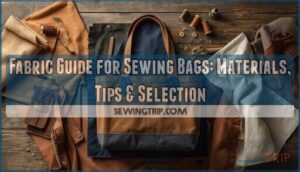
The wrong fabric ruins a bag before you ever load it with groceries, books, or gear. I’ve watched gorgeous handmade totes blow out at the seams after one season because someone chose quilting cotton where canvas belonged—heartbreaking, and completely avoidable.
Fabric choice isn’t just an aesthetic decision; it’s structural engineering disguised as creativity. The difference between a bag that lasts two years and one that lasts twenty often comes down to understanding how fiber strength, weight, and finish interact under real-world stress.
This fabric guide for sewing bags cuts through the overwhelming options so you can match material to purpose with confidence.
Table Of Contents
- Key Takeaways
- Essential Factors in Bag Fabric Selection
- Top Natural Fabrics for Sewing Bags
- Leading Synthetic Fabrics for Bags
- Specialty and Technical Fabrics for Bags
- Sustainable and Eco-Friendly Bag Fabrics
- Choosing Fabrics for Bag Exteriors and Linings
- Practical Tips for Sewing Bag Fabrics
- Frequently Asked Questions (FAQs)
- Conclusion
Key Takeaways
- Fabric choice is structural engineering, not just aesthetics — picking canvas over quilting cotton is the difference between a bag that survives two years and one that survives twenty.
- Match fabric weight and fiber to the bag’s real-world job: lightweight ripstop nylon for packable daytrippers, 14–24 oz canvas or Cordura for gear that takes daily punishment.
- Water resistance isn’t automatic — even “waterproof” fabrics leak through needle holes, so seam sealing is a non-negotiable final step for any weatherproof build.
- Sustainable options like RPET, cork, and organic cotton aren’t compromise materials anymore — they perform on par with synthetics while cutting environmental impact significantly.
Essential Factors in Bag Fabric Selection
You can’t just grab any fabric off the shelf and expect it to work for the bag you’re making—trust me, I’ve learned that the hard way! The right fabric choice depends on several key factors that’ll make or break your finished piece (literally, in some cases).
If you want to save yourself some trial-and-error, these sewing project material sourcing tips break down exactly what to look for before you buy.
Let’s look at what really matters when you’re standing in front of that fabric wall trying to decide.
Durability and Strength
Your bag needs to shrug off daily beatings—that’s where fabric abrasion and tear resistance come in. Look for materials with high Martindale ratings (30,000+ rubs for everyday use) and strong fiber strength, like nylon or polyester canvas.
Check coating options too, since polyurethane finishes boost abrasion-resistant fabrics and material longevity. Tensile strength matters at stress points, so dense weaves and waterproof fabrics with protective layers handle rough treatment best.
For a deeper understanding of how durability is measured, you can read about the Martindale abrasion resistance standard.
Weight and Flexibility
Durability is half the equation—weight and flexibility decide whether your bag feels like armor or flows with you. Fabric weight categories span lightweight (100–170 GSM), midweight (170–340 GSM), and heavyweight (340+ GSM). Here’s how material density and fabric thickness shape your fabric choice:
- Lighter fabrics (200–300 GSM) sew easier, bend around curves, and keep structural integrity without straining your machine
- Heavy canvas (340–400 GSM) stands upright but stacks thick at seams—test flexibility before committing
- Breathable materials in the midweight range balance abrasion-resistant fabrics with drape
- Fabric selection hinges on matching weight to function: promotional totes use 70–120 GSM; travel bags demand 300–400 GSM for load-bearing strength
When several layers meet at strap anchors, even midweight material choice can challenge home machines—plan your seam allowances accordingly! Choosing fabric with the appropriate is vital to guarantee your project meets durability expectations.
Water Resistance and Weatherproofing
Weight keeps your bag standing tall — but water resistance decides whether your stuff survives the storm. Ripstop nylon and waxed cotton are my personal go-tos for weatherproof builds.
Waterproof coatings and DWR finishes bead rain right off, while hydrostatic testing (ratings above 5000mm handle serious downpours) proves a fabric’s real limits.
Don’t skip seam sealing — even waterproof canvas leaks through needle holes without it.
Style and Aesthetic Considerations
Once your bag can handle the weather, let it turn heads. Your color palette is a power move — neutrals play timeless, jewel tones scream luxury.
Fabric texture and bag silhouette have to agree (stiff canvas for structured shapes, soft twills for slouchy hobo vibes). Style matching and aesthetic details in your fabric selection guide the whole personality of your finished piece.
Maintenance and Care Requirements
Longevity is honestly where fabric choice gets real. Cotton canvas? Toss it in a cold gentle cycle — done. But waxed canvas is a different beast: machine washing strips that protective coating right off, so spot-clean only. Nylon and polyester handle cold washing fine but skip the dryer.
For leather conditioning, once or twice yearly keeps panels supple. Store everything breathable, never plastic — moisture is your worst enemy.
Top Natural Fabrics for Sewing Bags
Natural fabrics are honestly where bag-making gets really interesting — each one brings its own personality to the table. You’ve got options that are rugged, refined, sustainable, or somewhere beautifully in between.
Here’s a look at the top natural fabrics worth keeping in your rotation.
Cotton Canvas
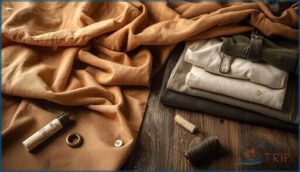
Cotton canvas is honestly the workhorse of bagmaking — and I mean that as the highest compliment. Its tight cotton weave and impressive fabric density give you textile strength you can actually feel. Smart material selection starts here, because canvas treatment options (wax, DWR, PU coatings) make this fabric choice incredibly adaptable for serious sewing projects.
- 10–12 oz: Perfect everyday totes and shopping bags
- 12–14 oz: Solid choice for structured everyday carry
- 14–24 oz: Heavy-duty travel and outdoor bags
- Waxed canvas: Natural water resistance without plastic stiffness
- Untreated natural canvas: Dyeable, paintable, fully customizable
Linen
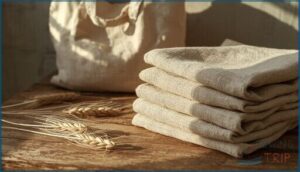
Linen is the quiet rebel of natural textiles — underestimated, but seriously tough. Made from flax production’s finest bast fibers, this breathable fabric carries tensile strength that rivals synthetics.
Linen is the quiet rebel of natural textiles — underestimated, breathable, and built with the tensile strength of a synthetic
For your fabric selection guide, linen’s eco-friendly credentials, moisture-wicking behavior, and lightweight feel make it a genuinely smart bag-making choice. Add a water-resistant lining, and you’re unstoppable.
Jute and Hemp
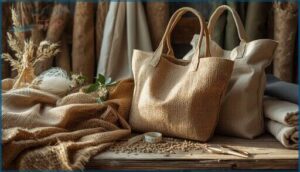
Jute fiber and hemp textiles are the workhorses of sustainable fabrics — and honestly, they’re having a moment. Jute is stiff and coarse, perfect for structured market totes, while hemp canvas softens beautifully with washing.
Both are eco-friendly, biodegradable natural materials that grow with minimal pesticides. Your fabric selection just got a serious sustainability upgrade.
Leather (Natural)
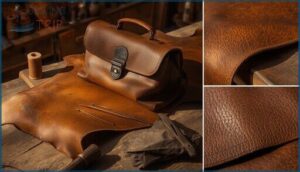
Natural leather is the definitive power move in material selection for bag making. Full grain cowhide — straight from the hide selection and tanning process — builds bags that last decades, not seasons. Watch that leather grain develop a gorgeous patina over time (I love this!).
Leather finishing determines your final look: structured satchel or slouchy crossbody. Faux leather gives you similar vibes, minus the aging magic.
Natural Fiber Pros and Cons
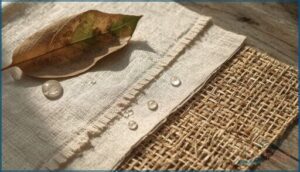
Here’s the honest truth about natural fiber: it’s beautiful, breathable, and genuinely sustainable — but it asks something of you in return.
Cotton, linen, and hemp all biodegrade, shed zero microplastics, and offer real eco benefits that synthetics simply can’t match. The trade-off? They absorb moisture, fade in harsh sun, and wear faster under heavy loads.
Know your bag’s job before committing.
Leading Synthetic Fabrics for Bags
Synthetic fabrics have completely changed the bag-making game, and honestly, it’s hard to go back once you discover what they can do.
They bring durability, weather resistance, and a range of textures that natural fibers simply can’t match on their own.
Here are the top synthetics worth knowing before your next project.
Cordura Nylon
Cordura nylon is the workhorse of serious bag making materials — tough, dependable, and built to take punishment. Made from high-tenacity nylon 6,6 fibers, it’s engineered to outlast almost everything else in your fabric selection guide.
- Cordura properties include extreme abrasion testing results — thousands of cycles before visible wear
- Nylon fabrication uses 500D–1000D denier for structure without stiffness
- Water resistance comes from a polyurethane fabric coating on the back
- Ideal for sewing bags that genuinely need to survive daily life
Ripstop Nylon
If Cordura is the tank, ripstop nylon is the nimble scout — lighter, packable, and surprisingly tough. The secret? That ripstop weave: a grid structure of reinforcement threads woven every 5–8mm to stop tears dead.
Nylon properties shine here, especially when fabric coatings add water resistance. Tear resistance without the bulk — your fabric selection guide for sewing bags just leveled up.
Polyester
From lightweight scout to workhorse — polyester fibers are honestly the unsung hero of bag-making materials. Don’t sleep on this one.
- Fabric durability: 600D polyester withstands serious abrasion and daily abuse
- Water resistance: hydrophobic fiber structure sheds moisture fast
- Fiber structure: crystalline polymer chains = serious tensile strength
- Sewing techniques: size 80/12 needle, steady speed, polyester thread always
Your fabric selection guide just got a reliable, UV-stable, budget-friendly powerhouse.
Faux Leather and Vinyl
Polyester keeps things practical — but faux leather and vinyl? That’s where bagmaking gets a serious edge. With faux leather types ranging from soft PU to structured vinyl coatings, your options are bold and beautiful.
Just remember: no seam ripping (those holes are permanent), use a longer 3.5mm stitch, and swap to a non-stick foot. Material durability wins when your sewing technique does too.
Neoprene and PVC-Coated Textiles
Neoprene and PVC-coated textiles are the heavy hitters of waterproof materials — and honestly, they deserve your attention.
Neoprene’s closed-cell foam gives you built-in cushioning and shock absorption (laptop sleeves, anyone?), while PVC coating creates a nearly impenetrable barrier against moisture.
Both synthetic textiles bring serious fabric durability, but skip the iron — heat is their enemy. Your fabric selection guide just leveled up.
Specialty and Technical Fabrics for Bags
Some fabrics don’t just do the job — they completely change what your bag can handle. We’re talking materials engineered for extreme conditions, professional use, and serious longevity.
Here’s what’s worth knowing about the specialty and technical options.
Ballistic Nylon
Think of ballistic nylon as the tank of bag fabrics — built from high-tenacity nylon 6,6 in a dense 2×2 basket weave that distributes force in every direction.
Denier ratings from 840D to 1680D give you real choices in weight vs. toughness.
It beats Cordura on tear strength, offers solid water repellency, and rewards smart thread selection with bonded nylon or heavy polyester.
Sailcloth and Laminated Fabrics
Racing sails don’t just cut through waves — they inspired some of the toughest bag fabrics alive. Sailcloth Materials and X Pac Variants like VX21 use ingenious Laminate Construction: woven face, X PLY grid, polyester film, taffeta backing, all fused into one waterproof sheet.
- X Pac VX07: ultralight, 70D ripstop face, ideal for daypacks
- VX21: 210D nylon, perfect Waterproof Fabric balance for travel bags
- VX25: all-polyester Fabric Lamination, stiffer, great for panniers
- X50: 500D Cordura Nylon face, built for brutal daily abuse
Waxed Cotton
Waxed cotton is bag-making magic in a bolt — tightly woven cotton canvas saturated with paraffin wax, giving you serious water resistance without sacrificing breathability.
Your fabric selection gets real character here: the fabric patina that develops (those gorgeous crackle lines) is a badge of wear.
Sewing techniques matter too — use a size 14-16 denim needle, polyester thread, and slow your pace through bulky seams.
Fire-Retardant and UV-Stabilized Options
Some bags literally need to survive sparks flying — and that’s where fire-retardant fabrics and UV-stabilized fabrics step up hard. Treated cotton duck or polyester canvas meeting NFPA 701 safety standards gives your tool bags and gear organizers real flame resistance (self-extinguishing when heat removes).
UV protection built into high-denier polyester prevents fiber breakdown outdoors. These technical fabrics are your unfair advantage.
Sustainable and Eco-Friendly Bag Fabrics
Making a bag that looks good and does right by the planet? That’s not a compromise anymore.
The fabric world has caught up, and there are some genuinely exciting options that hold up in real construction. Here’s what’s worth knowing.
Organic Cotton
Organic cotton is where sustainable textiles actually start making sense. Grown without synthetic pesticides, it’s safer for farmers, your skin, and the planet — and because it’s a renewable material, it biodegrades instead of haunting landfills forever. For your fabric selection guide, here’s why it earns a spot:
- Cotton Farming stays chemical-free, reducing environmental damage
- Organic Weaves feel soft but hold up beautifully with light interfacing
- Eco Friendly credentials — biodegradable and breathable
- Sustainable Fashion wins when one durable organic cotton tote replaces hundreds of plastic bags
Recycled Polyester (RPET)
Now, if organic cotton is the earth-first classic, RPET is the bold rebel — it’s literally melted-down plastic bottles spun into durable fabric. That’s circular economy thinking in action.
RPET production cuts greenhouse emissions by over 70% versus virgin polyester, and for eco-friendly bags, it performs just as tough. Sustainable textiles don’t have to sacrifice strength, and RPET proves it beautifully.
Cork Fabric
Cork fabric is where sustainable materials get genuinely exciting. Harvested from cork oak bark — no tree-cutting needed — this cork textile innovation is renewable by nature.
It’s naturally water resistant, surprisingly lightweight (about 50% air!), and tough enough for real bag making.
Cork fabric care is simple too: just wipe clean. Bold choice, beautiful results.
Piñatex and Plant-Based Leathers
Pineapple leaf fibers powering your next bag? That’s Piñatex — and honestly, it changed how I think about plant leather entirely. These sustainable materials turn agricultural waste into something genuinely beautiful.
- Piñatex benefits: textured, structured, mimics grain leather perfectly
- Vegan alternatives to faux leather with traceable supply chains
- Lower carbon footprint than conventional leather — real sustainable fashion
Your fabric selection just leveled up.
Choosing Fabrics for Bag Exteriors and Linings

Picking the right fabric for your bag’s outside and inside makes all the difference between something that lasts and something that falls apart after a few uses. The exterior takes the daily beating, while the lining quietly holds everything together — and both deserve a deliberate choice.
Here’s what actually works for each layer.
Best Exterior Fabric Options
Your exterior materials set the tone for everything — durability, vibe, and how hard your bag works. Canvas is your reliable workhorse, while Cordura nylon brings serious fabric durability and abrasion resistance.
Need weatherproofing? Waterproof canvas and ripstop nylon handle rain beautifully. For bag reinforcement on high-stress panels, waxed cotton adds structure with character.
Smart fabric finishes and water resistance make all the difference.
Lining Fabric Choices
The lining is where your bag’s soul lives. Choosing the right fabric here controls everything from breathable materials to structure. Your lining materials guide the whole interior experience — here’s what actually works:
- Quilting cotton — breathable, printable, personality-packed
- LinerTex — durable, easy to sew, saves real time
- Polyester taffeta — smooth, lightweight, moisture-wicking fabrics win here
- Nylon ripstop — strong, tear-resistant, featherlight
- PU-coated polyester — wipeable, stiff, stands upright beautifully
Fabric weight and color selection matter more than you’d think — light interiors literally help you find your keys faster. That’s your fabric selection guide in action.
Interfacing and Structure Materials
Structure is what separates a bag that holds its shape from one that collapses after a week. Fusible interfacing, like Pellon SF101, uses woven interfacings to add body without bulk — perfect for quilting cotton.
Foam stabilizers keep backpacks crisp and upright. Firm stabilizers like Decovil Light bring luxury structure to flaps. Match your stabilizer weight to your fabric — canvas, faux suede, or cork fabric — and your sewing techniques will thank you.
Practical Tips for Sewing Bag Fabrics
Knowing your fabrics is only half the battle — how you actually sew them is where things get real. The right needle, a little prep work, and a few smart tools can mean the difference between a bag that looks handmade (in the bad way) and one that looks genuinely professional.
Here’s what you need to know before you cut a single piece of fabric.
Needle and Thread Selection
Getting your needle and thread combination right is honestly the secret weapon of bag making techniques. For most sewing projects, start with a size 90/14 needle — but bump up to 100/16 or 110/18 for heavy canvas.
Thread weight matters too: pair Tex 70 with those bigger needles. Always test on scrap fabric first. That small step saves entire bags.
Cutting and Preparing Fabrics
Precision cuts make or break a bag — full stop. Before any fabric cutting happens, prewash your materials so nothing surprises you later with shrinkage. Then:
- Press everything flat before grain alignment checks
- Use a rotary cutting setup for clean, straight edges
- Fuse interfacing tips before assembly, not after
- Match grainline arrows to selvedge precisely
- Baste stabilizers inside seam allowances to reduce bulk
Managing Fraying and Stretch
Fraying and stretch are the two gremlins that’ll sabotage your bag if you ignore them. Your seam finish choices matter enormously — serging, zigzag, or bias binding all tackle different fabrics differently.
For anti-fray products, liquid sealers work beautifully on strap ends. And when stabilizing stretch? Fuse Pellon SF101 to knits before cutting. Material science, honestly, is your secret weapon here.
Tools for Sewing Specialty Fabrics
Your tools make or break specialty fabric work. Swap in nonstick feet when sewing vinyl or cork — they glide where standard metal feet drag and scuff. Walking attachments keep thick canvas and foam layers feeding evenly.
Use fabric clips instead of pins on faux leather (no holes!). Leather specialty needles slice cleanly, and heat-erasable marking tools keep your placement lines precise.
Frequently Asked Questions (FAQs)
What fabric for sewing bags?
Your best bag starts with smart fabric selection. Canvas, nylon, and quilting cotton each bring different material weights, finishes, and bag durability — so matching the right textile materials to your project is everything.
How to make a bag out of fabric with a sewing?
Want to make a bag that actually holds up? Prewash your fabric, press it flat, cut your panels, sew the seams, attach straps, and add a clean lining finish.
How many yards of fabric do I need to make a bag?
Bag size drives everything. A small pouch needs just 25 yard, a medium tote around 25 yards, and a larger bag roughly 2 yards — always add 25 yard extra for smart material allowances.
What is the best fabric for sewing bags?
No single fabric wins every time — it depends on your bag’s purpose. Canvas manages everyday totes beautifully, while Cordura nylon dominates backpacks. Match your material durability to the job, and you’re golden.
How many meters of fabric do I need for a tote bag?
For a medium tote, plan on roughly 75 to 1 meter of fabric. Add another 75 meters for lining. Fabric width, seam allowance, and tote bag sizes all affect your final yardage.
What is the best stitch to sew a bag?
The straight lockstitch is your go-to for most bagmaking — aim for a 5–5 mm stitch length on canvas or denim.
At stress points, a box-X stitch keeps straps from ever ripping free.
What material to make a bag out of?
The right material to make a bag out of depends on its purpose — canvas manages daily loads beautifully, nylon overcomes outdoor abuse, and leather ages like a fine story.
What fabrics provide the best weather resistance?
Waxed canvas, PU-coated nylon, and PVC-coated polyester lead the pack for weather resistance.
Waxed canvas breathes and beads rain beautifully, while PVC delivers near-total waterproof materials protection — ideal for serious wet conditions.
How do different fabrics affect bag structure?
Your fabric density is the silent architect of every bag you build. Dense canvas stands upright; quilting cotton collapses.
Shape retention lives in material flexibility, weight distribution, and smart structure reinforcement across all textile materials.
Which fabrics are ideal for lightweight bags?
Ripstop nylon (70D–210D) and lightweight polyester are your best bets. Cotton canvas works for casual totes.
Technical fabrics and waterproof materials shine when you need packable, weather-ready bags without the bulk.
Conclusion
Picture the bag you’ll build next—seams holding firm after years of heavy use, fabric aging beautifully instead of failing fast. That vision becomes real the moment you treat material selection as your first, most critical design decision.
This fabric guide for sewing bags exists to hand you that control. You now know how fiber, weight, and finish work together under pressure.
Trust what you’ve learned, pick your material deliberately, and sew something that genuinely lasts.
- https://tbfbags.com/blogs/news/fabric-weights-in-tote-bags
- https://www.allieolson.com/blogs/blog/fabric-files-demystifying-fabric-weight
- https://vancharlioutdoor.com/blog/a-complete-guide-to-18-top-fabrics-for-bag-making/
- https://www.applegreencottage.com/what-fabrics-to-use-for-bagmaking/
- https://www.getasquiltingstudio.com/2025/07/bag-sewing-made-easy-the-ultimate-interfacing-guide-every-bag-maker-needs.html