This site is supported by our readers. We may earn a commission, at no cost to you, if you purchase through links.
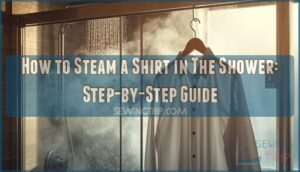
You’ve probably been there: you’re minutes away from walking out the door, and your shirt looks like it survived a wrestling match with your suitcase. No iron in sight, no time to spare, and the clock’s ticking.
Steaming a shirt in the shower isn’t just some college dorm hack—it’s a legitimate fabric care technique that uses trapped humidity to relax wrinkles without the risk of scorch marks or the hassle of setting up bulky equipment. The method works because steam penetrates fabric fibers more gently than direct heat, making it particularly effective for delicate materials that would buckle under an iron’s pressure.
When you understand the mechanics of shower steaming and execute it properly, you can transform a wrinkled garment in about fifteen minutes using nothing more than hot water and strategic positioning.
Table Of Contents
- Key Takeaways
- Why Steam a Shirt in The Shower?
- Choosing The Right Shirt for Shower Steaming
- Preparing Your Bathroom for Steaming
- How to Hang Your Shirt for Best Results
- Step-by-Step Guide to Shower Steaming
- Tips to Maximize Wrinkle Removal
- Drying and Finishing After Steaming
- Common Mistakes to Avoid When Shower Steaming
- Alternatives to Shower Steaming for Wrinkle Removal
- Frequently Asked Questions (FAQs)
- Conclusion
Key Takeaways
- Shower steaming works by trapping bathroom humidity to relax fabric fibers gently without direct heat, making it safer for delicate materials than ironing while delivering modest wrinkle reduction in 10-15 minutes using only hot water and strategic positioning.
- Cotton blends and synthetic fabrics like polyester respond best to shower steam, while you should avoid this method entirely for silk, viscose, leather, and embellished garments since excess moisture causes irreversible damage like shrinkage, water spots, and melted adhesives.
- Proper setup demands sealing your bathroom tight, running water at maximum heat (but below 120°F), and hanging your unbuttoned shirt on a sturdy hanger 3+ feet from direct spray where rising steam reaches every crease without soaking the fabric.
- The technique delivers quick wrinkle softening for travel emergencies and light creases but won’t match the crisp, pressed finish of traditional ironing—expect several hours of wrinkle-free wear rather than all-day sharpness, especially on heavier fabrics.
Why Steam a Shirt in The Shower?
You might be wondering why anyone would bother steaming a shirt in the shower when irons and handheld steamers exist. The truth is, this technique offers some unexpected advantages that can save you time, effort, and even money in the right situations.
For delicate fabrics like velvet that can’t handle direct heat, the gentle moisture from shower steam provides a safer wrinkle-release method than traditional pressing.
Let’s break down exactly when and why shower steaming makes sense, so you can decide if it’s worth adding to your wrinkle-fighting arsenal.
Benefits of Shower Steaming
Shower steaming delivers wrinkle removal without plugging in another appliance, letting hot water vapor work fabric relaxation into fibers while you prep for your day. This method is particularly effective for addressing fabric wrinkles that occur during shipping.
You’ll dodge scorch marks that irons leave on delicate garments, preserve texture through gentler clothing care, and even reduce light odors through steam sanitizing—all with energy efficiency that skips the wattage a traditional garment steamer demands.
If you’re wondering how to iron cashmere without damaging it, steamers offer a safer alternative that protects those delicate fibers.
Comparison to Ironing and Steamers
Unlike steam ironing or a garment steamer that concentrates heat around 100 to 200 degrees Celsius for sharp wrinkle removal, shower steaming delivers diffuse vapor at lower effective temperatures, softening light creases without the crisp finish irons provide.
You’ll trade fabric safety and steaming benefits for speed—ironing techniques achieve professional results in minutes, while bathroom humidity offers modest dewrinkling when steamer efficiency isn’t available. For best results, consider using a steamer vs iron to remove wrinkles effectively.
Situations When Shower Steaming is Useful
When circumstances block conventional fabric care, shower steaming becomes your quick fix. You’ll appreciate the benefits of steaming when:
- Travel wrinkles crumple your shirt after unpacking in a hotel without a travel steamer
- Last minute events demand presentable attire in 10 minutes
- Light creases from packing need softening, not full pressing
- No equipment exists in dorms or small spaces
- Risky irons threaten delicate fabrics with scorching
Removing wrinkles this way saves you when steaming clothes in the shower beats waiting for traditional tools—steaming shirts works fastest for moderate wrinkling on clean garments.
Choosing The Right Shirt for Shower Steaming
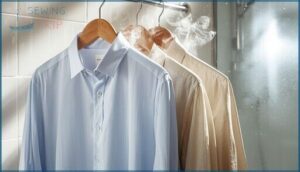
Not every shirt in your closet will respond the same way to shower steam, and knowing which ones work best can save you from disappointment when you’re racing against the clock.
Delicate fabrics like velvet require extra care during steaming—learning how to remove wrinkles from velvet safely helps you avoid crushing the pile or causing water spots.
The fabric type makes all the difference between a crisp, refreshed shirt and one that stays wrinkled or, worse, gets damaged in the process.
Here’s what you need to know about choosing the right candidate for this quick fix.
Best Fabric Types for Shower Steaming
Lightweight cotton blends and synthetic fabrics like polyester respond beautifully to shower steam, relaxing their fibers just enough to release those frustrating wrinkles without needing direct heat or pressure. Steaming shirts made from breathable wovens gives you real fabric relaxation without the iron-shaped burn marks you’d get from rushed pressing jobs.
| Fabric Type | Steam Response | Best For |
|---|---|---|
| Cotton Blends | Excellent | Dress shirts, casual button-ups |
| Synthetic Fibers | Very Good | Travel clothing, quick touch-ups |
| Linen Mixes | Good | Summer shirts, lightweight layers |
| Rayon | Moderate | Blouses, flowing styles |
| Jersey Knits | Good | T-shirts, casual wear |
Natural cotton blends work exceptionally well because their structure opens up when moisture hits, while synthetic fibers like polyester practically shake wrinkles loose in steam-filled bathrooms.
Fabrics to Avoid
Caution matters when you’re steaming clothes in the shower because delicate textiles like silk simply don’t tolerate prolonged moisture and heat, leading to water spots and weakened fibers.
Viscose risks serious shrinkage—sometimes irreversibly—while embellished fabrics with sequins or beads can melt or lose their adhesive grip, turning your garment steaming session into a disaster that no amount of fabric care can reverse.
Pre-Steaming Fabric Care
Before you hang that shirt, check the care label during your fabric inspection—symbols like “don’t iron” warn against heat damage, while brushing removes lint that moisture would embed deeper into fibers.
Smart stain removal comes first, since protein-based marks set permanently under steam, and proper moisture management means starting with slightly damp fabric for faster fiber preparation and easier wrinkle removal through effective clothing maintenance.
A quality handheld garment steamer combines all these techniques to refresh clothes quickly without damaging delicate fibers.
Preparing Your Bathroom for Steaming

Before you turn on the water, you’ll want to set up your bathroom to trap as much steam as possible and keep your shirt safe from direct spray.
The right setup makes the difference between a wrinkled mess and a crisp result, so don’t skip these prep steps.
Here’s how to create the ideal steaming environment in three quick moves.
Creating Optimal Steam Conditions
Transforming your bathroom into a wrinkle-busting steam room starts with sealing the space tight—close the door, shut the windows, and turn off the exhaust fan to trap every bit of humidity.
You’re aiming for near-saturated air, like a commercial steam enclosure, where moisture surrounds the fabric and coaxes out creases.
The shower steam you generate becomes your personal garment steaming weapon when ventilation systems stay silent and humidity control works in your favor.
Setting Water Temperature and Duration
Crank the shower to its hottest setting without exceeding 120°F—hot enough to fill the room with thick steam but safe enough to prevent scald risk or fabric damage. You’ll want to let the water run for 10 to 15 minutes before hanging your shirt, creating a humid cocoon that relaxes fibers without soaking them.
Here’s your temperature control checklist for effective wrinkle removal:
- Set water near maximum heat while staying at or below the 120°F safety threshold
- Run the shower for 10 to 15 minutes to build steam levels before garment placement
- Monitor total steaming time, keeping fabric exposure between 10 and 20 minutes
- Adjust water pressure to boost steam production without oversaturating the air
Once steam fills the space, your shirt will absorb just enough moisture for wrinkle release—no direct contact needed.
Ensuring Proper Ventilation and Safety
Steam cleaning your shirt demands more than hot shower heat—it requires smart humidity control to protect your bathroom and your health. Run your exhaust fan during and after garment steaming to prevent mold growth and maintain air quality below 65% relative humidity, the threshold where microbial risks spike.
| Safety Measures | Ventilation Systems Action | Mold Prevention Benefit |
|---|---|---|
| Run exhaust fan | Remove moisture-laden air | Keep humidity under 65% |
| Open door after | Boost air exchange | Reduce condensation buildup |
| Wipe wet surfaces | Eliminate standing water | Stop spore proliferation |
| Limit steam duration | Control total moisture | Protect walls and ceilings |
Short steaming sessions with active ventilation give you wrinkle-free results without turning your bathroom into a breeding ground for trouble.
How to Hang Your Shirt for Best Results
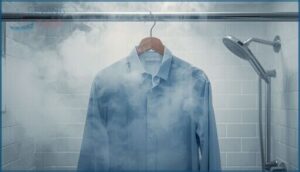
The way you hang your shirt makes all the difference between a crisp, wrinkle-free result and a damp mess that ruins the entire purpose. You need the right hanger, the right spot in your bathroom, and a strategic position that keeps your shirt safe from direct water while maximizing steam exposure.
Here’s how to set everything up so the steam can work its magic without turning your shirt into a soggy disaster.
Selecting a Sturdy Hanger
Your hanger choice makes or breaks bathroom steaming, especially since a damp shirt gains surprising weight. You need a sturdy foundation to hold that wet fabric without sagging, bending, or leaving weird shoulder bumps that sabotage all your wrinkle-removal work.
- Hanger materials: Heavy-duty plastic or thick-gauge metal (around 13-gauge wire) resists bending better than flimsy dry-cleaner wire
- Hanger thickness: Coat-style hangers about 1¾ inches thick distribute weight evenly, preventing localized stress on softened seams
- Shoulder fit: Match hanger width to your shirt’s actual shoulder measurement—roughly 17 inches for adults—so fabric drapes naturally without stretching outward or bunching inward
Choose a hanger with smooth, flash-free edges and non-slip grip to keep your shirt stable while steam does its magic, and prioritize rust-resistant options since humidity above 70 percent accelerates corrosion on unprotected steel.
Positioning The Shirt in The Bathroom
You’ve got your hanger sorted—now find the sweet spot in your bathroom layout.
Hang your shirt inside the shower enclosure or within 30 to 60 cm of the showerhead, angling the fabric so steam direction hits the front panel where creases love to hide.
Keep it high on a curtain rod or wall hook, letting gravity pull the fabric taut while rising vapor works its wrinkle-busting magic, ensuring full garment steaming without a single water droplet landing on the cloth.
Avoiding Water Contact and Soaking
Position matters because even a few stray droplets can sabotage your wrinkle removal plan and turn fabric safety into a soaking nightmare. Keep that steam distance right—hang your shirt where humidity swirls freely but the spray can’t reach, ensuring shower steam works without water contact.
- Hang outside the direct shower cone to protect fabric from droplet impact and pooling.
- Angle the showerhead away from your garment to minimize splashing during steaming a shirt.
- Avoid drip zones beneath ceiling edges, fixtures, or wet towels that defeat water minimization.
- Monitor fabric texture throughout; if it feels damp rather than warm, adjust placement for better humidity control and drying techniques.
Step-by-Step Guide to Shower Steaming
Now that your shirt is hanging in the right spot, it’s time to walk through the actual steaming process from start to finish. Getting the setup right matters, but knowing exactly what to do once that hot water starts running makes all the difference in how your shirt turns out.
Here’s how to work through each step so you get smooth, wearable results without guesswork.
Opening Buttons and Adjusting Collars
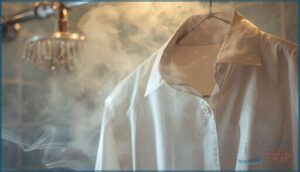
Before you crank the hot water, take a moment to unbutton your shirt completely and flip the collar upward so every fold and crease gets equal exposure to the rising steam. This button management step allows moisture to reach every layer of fabric, promoting thorough fabric relaxation and wrinkle removal.
Opening closures transforms your garment into a wide-open canvas for steam penetration, maximizing your steaming techniques for efficient clothing care and maintenance.
Placement Relative to Shower Stream

Once your shirt is unbuttoned and prepped, hang it on the back of the bathroom door or a towel bar positioned at least three feet away from the direct spray. This steam distance protects delicate fibers while the shower head sends rising clouds toward your collar and sleeves, ensuring effective wrinkle removal without fabric damage from water spray.
Timing and Monitoring The Process
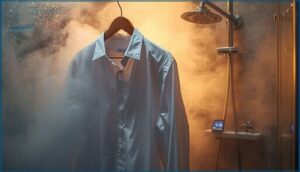
Run your shower on the hottest setting for ten to fifteen minutes—that’s your ideal steam duration window for effective wrinkle removal without excessive water waste. Monitor your shirt’s progress by checking these key details:
- Sleeves and plackets visibly relax as fabric monitoring reveals fibers softening
- Collar feels warm but not soaked, confirming proper steaming techniques
- Deep creases lighten gradually through timing optimization
- No water spots appear, protecting garment integrity during the process
Tips to Maximize Wrinkle Removal
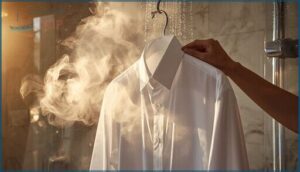
You’ve got your shirt hanging in the steam, but that doesn’t mean you’re stuck waiting around with your fingers crossed. There are a few smart moves you can make during and after the process to coax out those stubborn wrinkles and get the results you’re after.
Here’s how to take control and make shower steaming work harder for you.
Handling Stubborn Creases
Some wrinkles won’t quit without a fight, so you’ll need to bring reinforcement. For stubborn creases, hold the fabric gently taut while directing steam at the problem zone for about 30 seconds—this combination of localized heat and controlled tension accelerates fiber relaxation and wrinkle reduction.
Focus extra steaming time on collars, cuffs, and thick seams where layered fabric resists your usual crease removal methods.
Lightly Shaping or Smoothing During Steaming
Precision wins when you combine steam with hands-on fabric relaxation. While moisture softens fibers, light manual input speeds wrinkle removal and promotes better drape:
- Slide your palm down warm panels to encourage fiber realignment and smooth surface ripples.
- Gently pull fabric taut along the vertical grain to stretch out stubborn lines.
- Pinch steamed collar edges between fingers for refined shaping without sharp creases.
- Glide fingertips over plackets and cuffs to flatten bunching and maintain alignment.
- Allow shaped areas to cool fully before releasing tension, locking in your gentle shaping work.
Keep contact brief to avoid burns—steam often exceeds 160 degrees.
When to Repeat The Process
Sometimes one round of steam won’t cut it, and that’s when you need to trust your eyes more than the clock. Check your shirt after each steam cycle—if wrinkle reappearance signals stubborn fabric memory, fire up another round with adjusted repeat intervals.
Heavy cotton demands longer steaming frequency than synthetics, so tailor your garment steaming approach to what the fibers actually show you, not arbitrary timing rules.
Drying and Finishing After Steaming
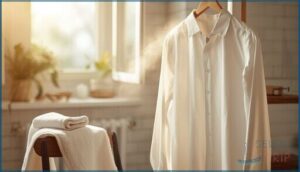
Once the steam has done its job, you’re not quite finished—how you handle your shirt in the next few minutes will determine whether those wrinkles stay gone or creep back in.
Proper drying and a few simple finishing steps guarantee your garment looks fresh and stays ready to wear without developing that damp, musty smell that ruins all your effort.
Here’s what you need to do to lock in those results and get your shirt from bathroom to body.
Air Drying The Shirt on a Hanger
After shower steaming techniques for fabrics finish their work, you’ve got to let your shirt breathe properly to dodge wrinkle prevention setbacks and fabric shrinkage drama. Garment steaming and cleaning demands smart hanger types and moisture control through these drying times essentials:
- Use a wide hanger that sustains shoulder seams without creating pressure points
- Space shirts generously to boost airflow and speed evaporation
- Position near circulating air or a fan to cut drying times notably
Preventing Musty Odors and Mold
That lingering dampness after shower steam wrinkle removal creates the perfect breeding ground for mold and stale smells if you don’t act fast. Boost humidity management by cracking a window or flipping on the exhaust fan immediately, pulling moisture away from your fabric refresh zone.
For serious odor control and mold prevention, toss silica gel packets nearby or wipe down bathroom surfaces regularly to keep fabric freshness locked in and microbial invaders out.
Final Touches Before Wearing
Once your shirt’s bone-dry, give it a final wrinkle inspection before you slip it on—those last-minute creases can derail your entire fabric renewal session.
Here’s your garment storage and odor control checklist:
- Check collars and cuffs for any remaining wrinkles that escaped the steam technology treatment
- Secure loose buttons to avoid wardrobe malfunctions mid-stride
- Confirm zero damp spots remain for proper clothing renewal
- Store away from moisture for ongoing steaming safety and garment rejuvenation
Common Mistakes to Avoid When Shower Steaming

Shower steaming works brilliantly when you follow the basics, but a few common slip-ups can leave your shirt soaked, damaged, or smelling like a damp basement. Most mistakes happen because people either underestimate how much moisture accumulates or assume every fabric responds the same way to steam.
Let’s cover the main pitfalls so you can sidestep them and get crisp, wearable results every time.
Overwetting or Soaking Fabrics
One of the biggest fabric damage risks you’ll face is letting your shirt get soaked rather than gently steamed. Excess moisture can create water spots, trigger dye bleed, and leave you with prolonged drying times that invite musty odors.
Focus on moisture control by positioning the garment away from direct spray, checking frequently, and blotting with a clean towel if needed to prevent overwetting.
Steaming Unsuitable Materials
Not all materials can handle shower steam without suffering fabric damage, so you’ll want to skip this method for heat-sensitive items like synthetic blends, leather, suede, and silk.
These fabrics face serious steam hazards—melting, water stains, or color bleeding—that no amount of careful garment steaming can prevent, making material limits a non-negotiable part of your wrinkle removal strategy.
Creating Excessive Humidity
Trap too much moisture in your bathroom and you’re not just fighting wrinkles anymore—you’re inviting mold, mildew, and that unmistakable damp smell that clings to everything. Smart humidity control protects both your fabric steaming results and your bathroom maintenance routine, so don’t skip ventilation systems when you’re done with that hot shower steam session.
Three mold prevention rules for shower steam:
- Crack a window or run your exhaust fan immediately after steaming techniques for fabrics to manage condensation buildup
- Limit steam ironing sessions to one garment at a time, preventing excessive moisture accumulation
- Wipe down walls and mirrors to stop condensation management problems before they start
Alternatives to Shower Steaming for Wrinkle Removal

If shower steaming doesn’t fit your situation or you’re working with fabrics that need a different approach, you’ve got plenty of other wrinkle-fighting options worth considering. Each method offers its own balance of speed, convenience, and effectiveness, so you can choose what works best for your schedule and wardrobe.
Let’s look at three practical alternatives that give you more control over how you tackle those stubborn creases.
Handheld Garment Steamers
Craving precision in removing wrinkles? A portable steamer, especially a travel steamer, puts you firmly in charge—without the drama of a hotel iron.
These handheld devices deliver targeted clothing steaming, making quick work of delicate fabrics.
With the right Steaming Techniques and regular Steamer Maintenance, you’ll boost Fabric Safety and Energy Efficiency in every garment steaming session.
Wrinkle Release Sprays
Want instant wrinkle removal without the hassle of a steamer or shower? Spray formulations blend fabric softeners, silicones, and conditioning agents to relax fibers fast, especially on cotton and polyester—just mist, tug lightly, and let it hang. Eco-friendly, plant-based versions skip harsh chemicals for chemical safety, while conventional picks power through stubborn creases. It’s clothing care tips you can toss in your travel bag and deploy anywhere.
- Spray evenly across wrinkled areas while the garment hangs
- Gently smooth and stretch the fabric with your hands
- Allow several minutes for fibers to relax as moisture evaporates
- Test on an inconspicuous spot first to protect delicate dyes
Quick Ironing Hacks
When time’s tight and wrinkles won’t quit, a few clever iron shortcuts can rescue your shirt faster than you’d think—no extended setup required. Flip the garment inside out to protect outer fibers during wrinkle removal, or press through a thin cotton cloth for delicate fabric prep. Steam settings on modern irons release moisture that mimics garment steaming, delivering wrinkle reduction in seconds.
| Ironing Tips | Why It Works |
|---|---|
| Inside-out pressing | Shields visible fabric from scorch marks and shine |
| Damp cloth barrier | Provides gentle steam cleaning and technology for delicates |
| Burst-steam function | Targets stubborn creases with focused moisture for ironing alternatives |
Frequently Asked Questions (FAQs)
Is steaming a shirt in the shower better than ironing it?
Ironing removes wrinkles more completely than shower steaming because direct heat and pressure flatten fibers better than vapor alone, delivering that crisp, pressed finish you’d expect from a professional-looking shirt.
What is the best way to hang a shirt while steaming it in the shower?
Like positioning a sail to catch the wind, you’ll want to hang your shirt on a sturdy hanger several inches from the shower stream, letting steam direction do the work while fabric relaxation manages stubborn wrinkles.
Does the steam from the shower damage the fabric of the shirt?
Most fabrics won’t suffer damage from brief shower steam exposure, since residential steam temperatures stay well below thresholds that degrade cotton, polyester, or wool fibers, making this wrinkle removal method generally safe.
Can I steam a cotton shirt in the shower?
You can steam a cotton shirt in the shower, but lighter weaves respond better than thick dress shirts.
Deep creases often resist full removal without pressing, so expect modest wrinkle softening rather than crisp results.
Can shower steaming damage shirt buttons or embellishments?
Yes, prolonged exposure can soften plastic buttons and loosen glued rhinestones, especially on delicate embellishments.
Shower steaming temperature stays low, but high humidity over time may weaken adhesive bonds and dull decorative finishes.
How long does a steamed shirt stay wrinkle-free?
Your shirt usually stays smooth for several hours to a full day, depending on fabric type, how you store it, and movement during wear. Synthetics and wrinkle-resistant treatments extend that window notably.
Does shower steam work on linen shirts effectively?
Flax fibers love a good steam bath. Shower steaming techniques can soften light wrinkles in linen shirts, but heavier creases need a garment steamer or iron for proper fabric wrinkle removal and fabric smoothing.
Can you steam multiple shirts in one session?
You can handle multiple shirts in one bathroom session, but steam capacity and Multi Shirt placement matter.
Crowding limits wrinkle removal, extends Steaming Time, and creates Humidity Control issues that affect clothing maintenance quality.
Will bathroom mirrors fog up during shirt steaming?
Mist meets mirror when moisture saturates bathroom air during hot showers. Ventilation keeps humidity under control and prevents that foggy film from blocking your reflection while steaming wrinkles away. Crack open a window or run your exhaust fan.
Conclusion
Necessity truly is the mother of invention, and steaming a shirt in the shower proves that resourcefulness beats expensive equipment every time. You’ve just mastered a technique that transforms bathroom humidity into your personal wrinkle-removal system, giving you control over presentation without sacrificing freedom or time.
When executed correctly, this method delivers professional-looking results using nothing but hot water and fifteen minutes—proof that the best solutions often hide in plain sight, waiting for you to claim them.
- https://www.citiwashandclean.com/how-to-remove-wrinkles-without-iron
- https://www.dorsali.com/blogs/dorsali-ethical-fashion-guide-blog/iron-vs-steamer-key-differences
- https://www.southernliving.com/home/how-to-remove-wrinkles-without-an-iron
- https://www.salisburylaserclinic.org.uk/neither-ironing-nor-steaming-this-folding-mistake-makes-wrinkles-permanent/
- https://www.bathroomtakeaway.com/radiators/blog-drying-clothes-on-a-radiator-is-a-bad-idea-heres-why