This site is supported by our readers. We may earn a commission, at no cost to you, if you purchase through links.
Most sewists don’t fail because they lack talent—they fail because they’re piecing together advice from a dozen different sources, none of which agree. A YouTube tutorial here, a Pinterest hack there, and suddenly your seam allowances are a guessing game.
That scattered approach costs you fabric, time, and confidence.
A good sewing pattern book cuts through the noise by giving you one coherent system to follow, where each skill builds on the last. Understanding how sewing pattern books help improve skills isn’t just about having a reference on your shelf—it’s about finally having a roadmap that takes you from your first running stitch to a finished, well-fitted coat.
Table Of Contents
- Key Takeaways
- How Sewing Pattern Books Solve The Skill Gap Problem
- Pattern Books Build Skills From Beginner to Advanced
- Visual Instructions Make Complex Techniques Easy to Follow
- Top Sewing Pattern Books Worth Adding to Your Shelf
- Using Pattern Books as Everyday Troubleshooting Tools
- Frequently Asked Questions (FAQs)
- Conclusion
Key Takeaways
- A structured sewing pattern book replaces scattered online advice with a clear, progressive system where each skill builds directly on the last.
- Visual instruction—step-by-step photos and labeled diagrams—does more to cement techniques like dart shaping and buttonhole placement than written descriptions alone ever could.
- Pattern books double as troubleshooting guides, giving you a fast, reliable way to diagnose problems like seam puckering or skipped stitches without losing momentum mid-project.
- Fit and alteration sections are where pattern books earn their keep the most—walking you through ease calculations, dart placement, and seam adjustments so your finished garment actually fits your body.
How Sewing Pattern Books Solve The Skill Gap Problem
Most sewists hit a wall at some point — they know how to thread a machine, but can’t figure out why their seams pucker or their sleeves won’t sit right. That gap usually comes down to one thing: no structured foundation to build on.
Learning how to achieve perfect garment fit is often the missing piece that turns frustrating projects into clothes you’ll actually wear.
Here’s how sewing pattern books close that gap and give you a real path forward.
Why Many Sewists Struggle Without Structured Guidance
Most sewists hit a wall early — not from lack of talent, but from fragmented resources and terminology gaps that leave them guessing.
Vague measurements, absent checklists, and no milestones make progress feel invisible.
Without solid sewing reference resources for all skill levels, beginner sewing tutorials stay incomplete, sewing skill development stalls, and patternmaking and garment drafting techniques become harder to trust than they should be.
How Pattern Books Provide a Clear Learning Roadmap
Pattern books fix exactly that fragmented feeling. Their sequential chapter design maps your learning path from basic stitches to full construction methods — no guessing where to start. Progressive difficulty levels and key checkpoints keep you moving forward with purpose.
Whether you’re working through beginner sewing tutorials and fundamentals or exploring patternmaking for fashion design, the structured project flow and stepwise instruction make every stage feel manageable.
The Difference Between Guessing and Following Proven Methods
Guessing your way through a project burns time, wastes fabric, and chips away at your confidence. Proven methods — standardized seam allowances, consistent construction fitting and finishing methods, and stepwise instruction — eliminate that uncertainty.
Proven methods eliminate the guesswork that wastes fabric, burns time, and quietly destroys your confidence
Error reduction happens naturally when you follow the same construction order every time. That consistency gains you cleaner results, less material waste, and the kind of confidence building that actually sticks.
Pattern Books Build Skills From Beginner to Advanced
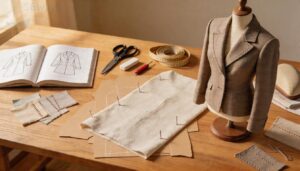
Good sewing books don’t just teach you one thing and stop there. They’re built to grow with you, from your very first straight stitch all the way to hand-finishing a custom jacket.
Here’s how that progression actually works.
Starting With Basic Stitches, Hems, and Simple Projects
Every great sewist starts the same way — one stitch at a time. A solid Stitch Selection Guide walks you through the running stitch, back stitch, and slip stitch before anything else. From there, a Hem Types Overview and Fabric Choice Basics set your foundation.
Once you’re comfortable with those basics, pairing them with sewing pattern alteration guides with visual instruction makes the jump to real projects a lot less intimidating.
Books like Sewing For The Absolute Beginner pair beginner sewing tutorials and fundamentals with step‑by‑step photos, making Simple Project Ideas like aprons genuinely achievable.
Progressing to Pockets, Fastenings, and Garment Construction
Once you’ve nailed the basics, garment construction opens up fast. Pattern books walk you through Pocket Placement, welt pockets, and patch styles — then move into Fastening Hardware like buttons, zippers, and buttonholes.
You’ll learn Interfacing Choices, Layering Techniques, and seam finishes that hold everything together. Patternmaking for Fashion Design treats Stitch Selection as foundational to building real tailoring skills with confidence.
Reaching Advanced Techniques Like Couture Hand-Finishing and Tailoring
Once you reach this level, the work gets genuinely rewarding. Books like Couture Sewing Techniques and Classic Tailoring Techniques guide you through:
- Pad Stitching for silhouette shaping on collars and lapels
- Basting Precision to hold pieces before final hand‑finishing techniques
- Fabric Behavior Mastery for delicate seam control
- Couture Quality Control checks like micro‑stitching and staged pressing
These refined sewing techniques build real tailoring skills that last.
How Project Examples Scale With Your Growing Confidence
As your skills sharpen, the projects in pattern books grow right alongside them. Here’s how that progression usually looks:
| Project Stage | Example Projects | Key Skills Practiced |
|---|---|---|
| Beginner | Aprons, tote bags | Straight seams, basic hems |
| Early Intermediate | Simple skirts, pillowcases | Key Checklists, Confidence Metrics |
| Intermediate | Shirts, elastic-waist pants | Progressive Project Templates, Risk Log Integration |
| Higher‑level | Lined jackets, custom trousers | Adaptive Pattern Adjustments, pattern drafting |
| Expert | Structured coats, menswear | Couture finishing, full fit control |
Step‑by‑step photos, sewing tutorials, and project inspiration keep each stage approachable and motivating.
Visual Instructions Make Complex Techniques Easy to Follow
Reading about a technique is one thing — seeing it broken down visually is something else entirely. The right illustrations can turn a confusing step into something you actually understand and remember.
Here’s how visual instructions in sewing books make that happen.
How Step-by-Step Photos Clarify Seams, Darts, and Buttonholes
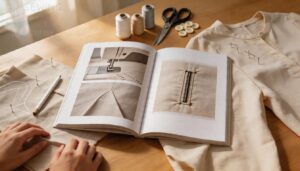
A picture really is worth a thousand seam rippers. Step-by-step photos remove the guesswork that trips up even motivated sewists. Here’s what good visual instruction actually shows you:
- Seam Alignment — photos mark exact fabric edge placement, preventing misaligned seams before you stitch.
- Dart Taper Visualization — close-ups reveal how the dart narrows precisely to its tip.
- Buttonhole Placement Guides — images confirm stitch density and securing points clearly.
Labeled Diagrams for Thread Tension, Pressing, and Stitch Types
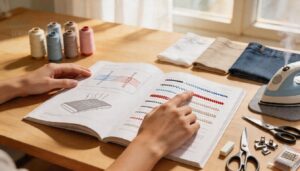
Labeled diagrams go beyond what step-by-step photos alone can show.
Color-Coded Tension markings instantly tell you whether your thread balance is off for light, medium, or heavy fabrics. Pressure Symbol Legends clarify iron heat and steam levels. Stitch Iconography Guides separate zigzag from straight stitch at a glance. Fabric Interaction Labels pair needle size with fabric weight — no guessing needed.
Why Visual Learners Benefit Most From Illustrated Sewing Books
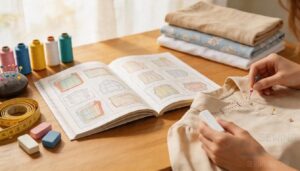
Some people simply learn better when they can see it done. Illustrated sewing books — some packed with over 1,000 detailed photographs — are built for exactly that.
As a sewing reference guide, visual learning works through:
- Color Coding for instant pattern recognition
- Step-by-step photos that build Muscle Memory naturally
- Spatial Awareness of grain lines and seam placement
- Confidence Boost from seeing each stage clearly
Top Sewing Pattern Books Worth Adding to Your Shelf
Some books earn a permanent spot on your sewing table, and a few stand out above the rest.
Knowing which ones actually deliver helps you spend your money wisely and your time even better.
Here are the titles worth considering.
Reader’s Digest Complete Sewing Guide for All-Round Reference
If you want one book that covers nearly everything, The Reader’s Digest Complete Guide to Sewing delivers. This all-rounder sewing reference guide spans beginner to expert sewing skill progression across 384 pages.
Its Equipment Checklist, Fabric Glossary, and Project Index keep you organized at every stage.
Durable Binding holds up to daily studio use, and Digital Searchability makes the digital edition a fast, practical companion.
Sewing Book Step-by-Step Techniques for Hands-on Learners
While the Reader’s Digest guide casts a wide net, The Sewing Book by Alison Smith goes deeper into hands-on execution.
Its step-by-step photos and step-by-step techniques walk visual learners through over 300 methods — from Fabric Preparation Tips and Tool Setup Guides to hand finishing techniques.
Stitch Count Charts, Project Planning Templates, and Safety Precautions make it a genuinely practical workbench companion.
What to Look for When Choosing a Sewing Pattern Book
Not every sewing book deserves shelf space. After exploring hands-on technique books, here’s what actually matters when choosing:
- Pattern Layout clarity — grainlines, notches, and seam allowances must be clearly marked
- Size Grading across multiple sizes for a true beginner to intermediate sewing skill progression
- Glossary Inclusion for quick terminology reference
- Paper Quality and printable pattern options
- Digital Integration for modern pattern making instruction
A solid sewing book comparison guide checks every box.
Best Formats — Hardcover, Softcover, or Digital Editions
Once you’ve identified what a good sewing book contains, the format you choose shapes how you actually use it. Each option suits a different workflow.
| Format | Best For | Trade-Off |
|---|---|---|
| Hardcover durability | Studio shelf reference | Heavier, costs more |
| Softcover portability | Classes, travel, everyday use | Wears faster over time |
| Digital convenience | Instant search, small spaces | Screen fatigue during projects |
| Cost comparison | Budget-conscious beginners | Digital/softcover wins here |
| Collectibility value | Building a lasting sewing library | Hardcover holds resale value |
Your sewing book comparison guide gets stronger when the format matches habit.
Using Pattern Books as Everyday Troubleshooting Tools
Pattern books earn their shelf space when things go sideways mid-project. Beyond teaching techniques, the best ones act as a steady reference you can flip open the moment something looks off.
Here’s how they help you troubleshoot, reference, and adjust with confidence.
Fixing Common Problems Like Seam Puckering and Skipped Stitches
Seam puckering and skipped stitches aren’t random — they each have a cause. Good pattern books walk you through troubleshooting techniques systematically, covering Needle Selection, Thread Tension, Stitch Length, and Fabric Support in one place.
- Swap to a fresh needle first — dull points cause most skipped stitches
- Adjust upper tension in small steps, testing on scrap fabric
- Lengthen your stitch on fine fabrics to reduce puckering
- Support fabric weight to prevent drag and seam distortion
- Check bobbin seating and lint buildup for persistent Machine Maintenance issues
Quick-Reference Indexes for On-the-Fly Problem Solving
When you’re mid-project and something goes wrong, you don’t want to flip through 300 pages. That’s where a solid Alphabetical Tab Index, Color-Coded Search Cues, and Fault Quick Index save you.
Good sewing reference guides use Thematic Topic Grouping and Cross-Reference Links to connect sewing problems fast. These tools turn technical decision-making into quick, confident action — no guesswork needed.
How Fit and Alteration Sections Help You Adjust Garments Accurately
Fit and alteration sections take the guesswork out of garment fitting.
They walk you through Ease Calculations, Dart Placement, and Seam Allowance adjustments with clear diagrams.
You’ll learn Pinning Techniques for basting test fits before committing to permanent changes.
Fit Testing, fit analysis, and pattern interpretation guides show exactly where to tweak — so your pattern alterations produce a garment that actually fits your body.
Frequently Asked Questions (FAQs)
Why are sewing patterns important?
Sewing patterns matter because they bring standardized measurements and consistent fit into every project.
They support pattern interpretation, guide garment construction, enable fit adjustments, and deliver real time efficiency and material savings — making skill transferability far more achievable.
Understanding grainline and notch markings ensures proper fabric orientation.
What are the benefits of pattern making?
Pattern making sharpens your design efficiency, facilitates material optimization, and ensures consistent sizing across projects.
It creates opportunities for creative exploration, strengthens technical drafting skills, and builds a professional portfolio — all essential to confident garment construction and precise fit adjustments.
Is sewing a skill or talent?
Both skill and talent. Most sewists build ability through deliberate practice, not innate aptitude.
The nature vs nurture debate aside, consistent effort and the right guidance close the learning curve faster than raw talent ever could.
Are sewing books useful for serger machine techniques?
Yes, sewing books are genuinely useful for serger techniques.
They cover Serger Tension Guides, Stitch Type Selection, Fabric Compatibility, and Specialty Foot Attachments — giving you structured, reliable guidance that random online clips simply can’t match.
Which books suit aspiring fashion designers specifically?
Aspiring fashion designers benefit most from books covering Design Foundations, Patternmaking Essentials, and Couture Construction.
Patternmaking for Fashion Design by Helen Joseph‑Armstrong, spanning over 800 pages, remains the strongest technical resource for serious fashion design students.
How do couture books differ from standard sewing guides?
Couture books go deeper than standard guides — focusing on custom fit, hand finishing, fabric selection for luxury garments, and historical context of haute couture methods, rather than everyday construction basics.
Conclusion
Scattered tutorials teach you tricks. Scattered advice builds frustration. A structured book builds a sewist.
Understanding how sewing pattern books help improve skills isn’t a passive exercise—it’s a deliberate choice to stop guessing and start progressing with intention.
Every technique you master compounds into the next. Every finished project proves you’re capable of more than you thought.
Put the right book in your hands, and the craft stops feeling overwhelming. It starts feeling like yours.
- https://books.google.com/books/about/Fashion_Design_Course.html?id=xggqtAEACAAJ
- https://www.scribd.com/document/882341356/Fashion-Design-Course-Principles-Practice-And-Techniques-a-Practical-Guide-for-Aspiring-Fashion-Designers-Steven-Faerm-Z-Library
- https://www.goodreads.com/work/editions/749940-patternmaking-for-fashion-design
- https://mayaschoolofdesigns.com/top-fashion-design-books-for-beginners-in-2024/
- https://www.slideshare.net/slideshow/bina-abling/63926620