This site is supported by our readers. We may earn a commission, at no cost to you, if you purchase through links.
Your sewing machine starts grinding halfway through a canvas tote seam, the needle bends like a paperclip, and suddenly you’re wondering if you need an industrial rig just to finish a simple project. Working with denim, canvas, leather, or upholstery fabric doesn’t require a factory-grade setup—it just demands a different toolkit and smarter technique.
The secret to conquering thick materials isn’t brute force; it’s understanding how fabric weight, needle strength, and machine settings work together. With the right heavy duty sewing tips, you’ll breeze through 14-oz canvas and layered seams without breaking needles, skipping stitches, or wrestling your presser foot.
Once you master a few key adjustments and preparation tricks, thick fabrics become just another satisfying challenge instead of a frustrating roadblock.
Table Of Contents
Key Takeaways
- The secret to sewing thick fabrics isn’t brute force—it’s pairing the right needle size (90/14 to 110/18) with proper thread weight and machine adjustments like stitch length (2.0-3.5mm) and tension control.
- Fabric prep makes or breaks your project: pre-wash to handle shrinkage, use rotary cutters with sharp blades for clean edges, and grade seams at staggered depths to reduce bulk without losing strength.
- Your standard presser foot won’t cut it—switch to a walking foot for even feeding through multiple layers, a Teflon foot for vinyl or leather, and always match your foot to your fabric weight.
- Heavy-duty success demands the right toolkit from the start: chrome-plated needles that resist deflection, polyester or nylon thread with high tensile strength (Tex 120-180), and specialized attachments that prevent shifting and puckering.
Choosing The Best Heavy Fabrics
Your fabric choice makes or breaks your heavy-duty project, plain and simple. The wrong material won’t hold up, and you’ll end up redoing everything from scratch.
Choose the wrong fabric for heavy-duty work, and you’ll be redoing the entire project from scratch
Let’s walk through the top fabric types that can actually handle the job, plus what you need to know about weight and structure before you make that first cut.
Durable Fabric Types (Denim, Canvas, Twill)
Choosing the right heavy fabrics starts with understanding textile science basics. Denim’s twill weave creates that signature diagonal rib, with fabric density ranging from 8 to 22 oz per square yard. Canvas uses a plain weave pattern, offering weights up to 36 oz. Don’t overlook twill varieties like herringbone—they balance durability with drape.
Here’s what matters most:
- Fabric density directly affects your needle choice and thread count requirements.
- Weave patterns determine how thick fabrics handle stress and wear.
- Thread count influences tear resistance—higher counts mean tougher material.
- Fabric finishes like sanforized or waxed treatments change sewing performance completely.
Assessing Fabric Structure and Weight
Now that you understand fabric types, let’s talk numbers. Fabric structure boils down to yarn weave or knit—tighter weaves like twill and canvas pack higher thread count and fabric density, which means better break strength.
Weight measurement matters too: 10-12 oz (350-400 gsm) manages medium jobs, while 14 oz and up manages upholstery.
Check fabric thickness with caliper testing, or just squeeze it—stiffness tells you everything about managing thick fabrics during cutting.
Selecting Fabrics for Home Décor and Upholstery
Home décor fabric weight sits higher—upholstery materials range 12 to 28 oz per yard, with furniture applications needing 16 to 22 oz midweights.
Thread count and drape analysis matter for curtains and cushions, while colorfastness tests (20,000+ rub cycles) protect your investment from fading.
Test fabric thickness with swatches first, checking edge fray and friction resistance before committing to full yardage.
Essential Tools for Heavy Duty Sewing
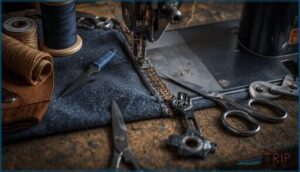
You can’t wrestle thick fabrics into submission with standard gear—you need the right heavy-duty tools in your corner. The difference between a smooth project and a frustrating mess often comes down to using needles, thread, and attachments built for the job.
Here’s what you need to set yourself up for success.
Heavy Duty Needle Selection
Your heavy duty sewing success lives and dies by needle selection—pick wrong, and you’re wrestling breakage and skipped stitches.
Here’s what matters:
- Needle sizing: Use 90/14 to 110/18 for denim and canvas, matching fabric weight for proper fabric penetration
- Needle material: Choose chrome-plated or reinforced shanks to resist deflection through multiple layers
- Point design: Denim needles handle woven fabrics; leather needles feature chisel points for dense materials
- Thread compatibility: Larger needle eyes reduce friction with thick threads, improving stitch formation
Choosing Strong Thread Types
Thread strength separates successful projects from frustrating failures, so you’ll want polyester thread or fiber blends with high tensile testing ratings. Upholstery weight thread in Tex 120–180 manages denim and canvas beautifully, while nylon yarn weight options outperform standard polyester by 15–25% for leather work.
Material durability depends on thread quality—sturdy thread construction matters as much as your thread selection itself.
Must-Have Sewing Machine Attachments
Your sewing machine needs backup when tackling heavyweight projects. A walking foot feeds multiple layers evenly, preventing slip and puckering—it’s your best friend for thick seams.
Pair it with a Teflon foot for vinyl or leather to avoid gumming, and add a roller foot for faux leather.
Don’t forget an edge stitching foot and seam guide for consistent, professional topstitching every time.
Specialized Cutting Tools and Accessories
Rotary cutters with 60-mm sharp blades slice through denim and canvas like butter—pair them with cutting mats for clean, drift-free edges. Fabric shears with self-sharpening blades prevent fraying, while sewing awls punch through leather with ease.
Swap your presser foot for a walking foot when layers shift, and keep a heavy-duty needle handy. These sewing tools transform fabric handling from wrestling a stubborn bear into smooth, confident cutting.
Preparing Thick Fabrics for Sewing
Getting your thick fabric ready before you even touch the pedal makes the difference between smooth sewing and a frustrating fight with your machine. You can’t just toss denim or canvas under the presser foot and hope for the best—prep work saves you from puckered seams, broken needles, and wasted time.
Here’s how to set yourself up for success from the very first cut.
Cutting Techniques for Clean Edges
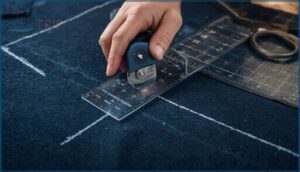
A clean cut is your foundation for every seam that follows, especially with thick fabrics. Precision cutting and blade maintenance make all the difference in fabric handling and edge alignment.
- Use a sharp rotary cutter with a non-slip ruler to prevent fabric shearing and maintain straight cut line management
- Mark your cutting lines clearly with chalk before making the pass
- Keep your blade fresh; dull tools create frayed edges on heavy fabrics
- Press fabric lightly before cutting to flatten layers for better fabric preparation
Using Clips Vs. Pins for Securing Layers
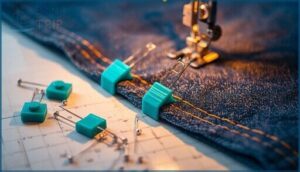
When you’re wrestling bulky layers, clips are your best friend for securing thick fabrics without leaving holes. Spring-loaded quilting clips grip fabric with even pressure, giving you better layer control than pins on heavy fabrics. They prevent shifting during sewing and won’t indent delicate materials.
Still, keep pins handy for tight corners where clip alternatives can’t reach during fabric preparation.
Pre-washing and Pressing Tips
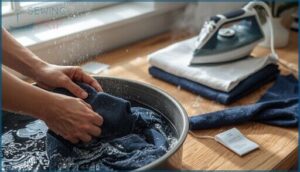
Your fabric preparation starts before you even thread your machine—pre-wash methods prevent surprises later. Denim shrinks 3-5% in length after the first wash, so handle fabric shrinkage upfront with a gentle cold cycle. Air-dry flat, then use pressing techniques with a cotton cloth to avoid shine marks.
Set iron settings based on your care label, and you’re ready to cut with confidence.
Reducing Bulk With Seam Grading
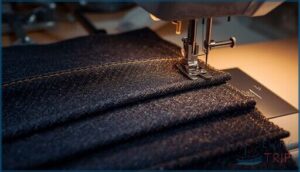
After pressing, you’ll face another challenge with thick fabrics—seam construction that creates lumps thicker than a sandwich. Seam grading is your best friend here, trimming layers at staggered depths to reduce bulk without sacrificing strength. This fabric layering technique keeps heavy fabrics flat and your needle happy.
Here’s your graded edges playbook for stitch optimization:
- Trim the top layer to ½ inch from your seam line for lighter bulk reduction
- Cut the bottom layer to ¼ inch to create that staggered effect
- Test on scraps first—canvas and denim need deeper grading than twills
- Press after grading to flatten seam finishing and reduce residual thickness
Machine Adjustments and Stitch Settings
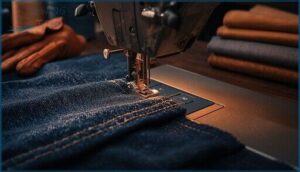
Your machine settings can make or break your heavy-duty sewing project. Getting the tension, stitch length, and presser foot right means you’ll glide through thick layers instead of fighting them every inch.
Let’s dial in those adjustments so your machine manages canvas and denim like it was built for it.
Adjusting Stitch Length and Tension
Your sewing machine settings can make or break heavy fabric projects. Start with a stitch length between 2.0–3.0 mm to prevent seam gaps and fabric creep. Adjust thread tension slightly higher for dense materials, securing stitch balance on both sides. Always test on scraps first—tension control and fabric feed must work together for sewing precision.
| Fabric Type | Stitch Length (mm) | Tension Adjustment |
|---|---|---|
| Denim | 2.5–3.0 | Increase slightly |
| Canvas | 2.0–2.5 | Moderate increase |
| Twill/Wool | 2.5–3.0 | Test and adjust |
| Upholstery | 3.0–3.5 | Higher tension |
Proper thread selection and sewing techniques ensure your seams stay strong under stress.
Choosing The Right Presser Foot
Your sewing machine needs the right presser foot to handle thick fabrics without drama. A walking foot is your best friend for even feeding on heavy fabrics—it keeps layers aligned and prevents shifting.
Teflon feet and nonstick surfaces work wonders with vinyl or synthetic materials, cutting friction and skipped stitches.
Match foot compatibility to your machine model and fabric weight for perfect results every time.
Preventing Skipped Stitches and Puckering
Now that your presser foot is sorted, let’s tackle those frustrating skipped stitches and puckering.
Start by checking thread tension—bump it up 2–3 units for dense fabrics. Switch to a heavy-duty needle matched to your fabric weight, then adjust stitch length to 2.5–4 mm.
Reduce presser foot pressure slightly and slow your sewing speed for better feed control and needle alignment.
Advanced Heavy Duty Sewing Techniques
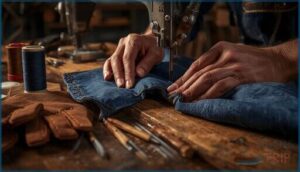
Once you’ve got your machine dialed in, it’s time to level up your skills with techniques that’ll handle the toughest projects. These sophisticated methods give you more control, especially when machine sewing just won’t cut it or when you need rock-solid durability.
Let’s walk through the go-to tricks that’ll make thick fabrics feel manageable, from hand-stitching hacks to finishing touches that last.
Hand Sewing Tips for Thick Materials
When machine stitching won’t cooperate, hand sewing becomes your best friend for conquering thick fabrics. Here’s your battle plan:
- Needle Selection: Grab a heavy-duty needle (size 90-110) or upholstery needle to punch through dense layers without bending.
- Thread Conditioning: Apply wax or conditioner to reduce friction and prevent frustrating breakage mid-stitch.
- Hand Stitching Technique: Use backstitch for seam reinforcement—it locks layers tight and prevents unraveling.
- Fabric Manipulation: Work slowly with even tension to avoid fabric distortion and puckering on bulky seams.
Seam Finishing for Durability
You’ll want overlock stitches or serging for fray prevention on denim and canvas—these edge binding techniques keep seam reinforcement solid. Topstitching along seams adds stitch reinforcement and boosts durability testing results, especially on bags and upholstery.
Grade your seam allowances to cut bulk and prevent puckering under your presser foot. French seams work beautifully for thick fabrics when you bump up stitch length during heavy duty sewing.
Using a Sewing Awl for Leather and Canvas
When your machine won’t push through leather or canvas, a sewing awl becomes your best friend. You’ll pierce holes first, then saddle stitch for bulletproof seams—thread preparation with beeswax cuts friction like butter.
Master diamond-point awl techniques for clean stitch patterns on thick fabrics, and remember leather conditioning 24 hours early prevents cracking. Awl maintenance keeps your heavy-duty needle sharp between projects.
Safe and Efficient Sewing Practices
Your workspace setup can prevent 40% of repetitive strain injuries, so clear loose objects before you start and keep upright lighting on thick layers.
Take regular breaks during long runs, adjust presser foot pressure for consistent stitch quality, and maintain sewing speed control on dense fabrics.
Thread tension checks on scraps prevent fabric pooling—fire extinguisher accessibility matters when heat-applying heavy materials.
Frequently Asked Questions (FAQs)
How do I avoid breaking needles on thick seams?
Switch to a heavy-duty needle sized for your fabric thickness, reduce your sewing speed, and adjust thread tension slightly lower.
Test on scraps first, and use a walking foot to distribute layers evenly.
Can I sew multiple heavy fabric layers together?
Yes, you can sew multiple heavy fabric layers together using a heavy-duty needle, walking foot, and proper stitch optimization.
Layer management and fabric compatibility matter—test on scraps first for bulk reduction and reliable multi-layer sewing.
Whats the best way to topstitch heavyweight materials?
Topstitch heavyweight fabrics using a heavyduty needle, specialized topstitch thread, and a walking foot. Increase your stitch length to 5–0 mm, adjust tension control carefully, and test stitch formation on scrap thick fabrics before sewing.
To achieve professional results, consider using topstitch techniques for your projects.
How do I maintain my machine after heavy projects?
After heavy projects, clean lint from the bobbin area, check tension and stitch quality, replace your needle, and inspect the belt for wear.
Schedule regular servicing every one to two years.
Should I use different bobbin thread for heavy fabrics?
For thick fabrics, matching bobbin thread weight to your top thread creates balanced tension and stronger stitch quality.
Polyester works great on denim and canvas, improving fabric compatibility and reducing skipped stitches.
Conclusion
Over 60% of sewers abandon thick fabric projects after their first broken needle—but you’re not one of them anymore. You’ve got the needle strength, tension tweaks, and cutting precision to handle canvas, denim, and leather without flinching.
These heavy duty sewing tips transformed intimidating materials into your creative playground. Next time you face a 14-oz beast, you won’t hesitate—you’ll thread up, adjust that presser foot, and stitch through it like the pro you’ve become.
- https://bit.ly/3CpmiYn
- https://www.sewingpartsonline.com/blogs/education/which-sewing-machine-needle-to-use
- https://www.blog.wawak.com/post/choosing-a-top-stitch-thread
- https://madamsew.com/blogs/sewing-blog/tips-tricks-for-topstitching-like-a-pro
- https://blog.cashmerette.com/2015/02/tutorial-6-tips-for-nice-jeans.html