This site is supported by our readers. We may earn a commission, at no cost to you, if you purchase through links.
Your sewing machine isn’t just a needle that goes up and down—it’s a precision instrument with dozens of moving parts working in perfect sync. Each dial, lever, and setting controls a specific function, from how tight your thread pulls to how your fabric moves beneath the presser foot.
Understanding sewing machine capabilities and functions transforms you from someone who pushes buttons and hopes for the best into a confident operator who knows exactly which feature solves which problem.
Once you grasp how mechanical, electronic, and computerized systems differ, you’ll stop fighting your machine and start using it as the powerful tool it was designed to be.
Table Of Contents
Key Takeaways
- Sewing machines fall into three main categories—mechanical, electronic, and computerized—each offering progressively more automated control over stitching, tension, and fabric handling to match different skill levels and project complexity.
- Essential features like adjustable stitch length/width, tension control, presser foot options, and speed regulation determine what you can create, transforming guesswork into precise control when you match settings to your fabric’s specific needs.
- Modern computerized machines use microprocessors, LCD screens, and programmable memory to automate threading, store custom stitch sequences, and provide real-time diagnostic feedback that turns complex adjustments into simple button presses.
- Regular maintenance—cleaning feed dogs, replacing needles after each project, and properly adjusting tension—prevents common issues like thread breakage, skipped stitches, and fabric puckering while extending your machine’s lifespan and performance quality.
Key Types of Sewing Machines
You can’t master sewing until you understand which machine fits your goals. Each type—mechanical, electronic, and computerized—offers distinct advantages that match different skill levels and project demands.
Let’s break down the main categories so you can identify the right tool for your creative vision.
Mechanical Vs. Electronic Vs. Computerized
Your machine comparison starts with mechanical machines—hand-cranked workhorses relying on purely manual control without electronic components.
Electronic machines add motorized precision through electronic controls, delivering programmed stitch lengths and integrated speed regulation.
Computerized machines take sewing automation furthest, using microprocessors to manage computerized stitching databases, automatic tension, and computerized settings displayed on LCD screens.
Each level expands sewing machine features while mechanical limits gradually disappear.
Specialty Machines (Embroidery, Serger, Quilting)
Beyond general-purpose models, specialty machines target specific sewing machine features. Embroidery machines handle intricate embroidery techniques through USB design transfers and automatic color changes. Serger machines finish edges using 3-5 threads with differential feed for fabric handling, requiring careful serger maintenance. Quilting machines offer expanded worktables for quilting patterns, walking feet, and ruler-compatible systems.
Each specialty optimizes thread management and fabric handling for its craft, building on computerized sewing machines’ foundations.
Choosing The Right Type for Your Needs
Start by defining your sewing goals and the fabric types you’ll handle most. Machine comparison reveals that mechanical models suit straightforward projects, while computerized sewing machines excel at complex stitches.
User experience matters—test controls before buying. Budget considerations shouldn’t override sewing machine features you actually need.
Smart sewing machine selection matches your projects to sewing machine types through honest sewing machine classification, not flashy extras.
Essential Sewing Machine Features
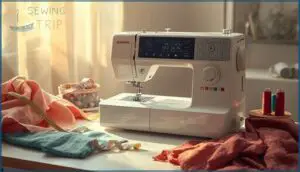
Your sewing machine’s features determine what you can create and how smoothly your projects come together. Whether you’re stitching straight seams or tackling complex patterns, the right combination of controls puts precision at your fingertips.
Let’s explore the essential features that separate a frustrating experience from one that helps you master every stitch.
Adjustable Stitch Length and Width
You’ll transform fabric into masterpieces once you master adjustable stitch length and width—the heart of sewing precision. Most domestic machines let you dial in stitch length from 0 to 5 millimeters and width up to 6 millimeters, giving you complete thread control.
Here’s what you need to know:
- Longer stitches strengthen woven fabric seams under stress
- Shorter lengths prevent puckering in delicate materials
- Greater width secures decorative and buttonhole stitches robustly
Always test on scrap fabric first—stitch quality depends on matching your settings to your material’s needs.
Tension Control and Presser Foot Options
Perfect thread balance starts with understanding tension adjustment and presser foot types—two controls that work as a team. You’ll dial in thread tension using a numbered scale while selecting from universal, rolled-hem, or walking feet to match your fabric.
When presser foot pressure syncs with tension control, your feed dogs advance material smoothly and deliver stitch consistency every time.
Speed Regulation and Reverse Function
You control stitch speed with precision through variable motor management—either by foot pedal position or hardware speed limiters that prevent runaway stitching at high RPMs. Reverse stitching activates via a dedicated lever, engaging feed regulation for backstitch reinforcement. Here’s what these sewing machine features deliver:
- Variable motor drive responds instantly to your pedal pressure
- Speed limiters cap maximum RPMs during high-speed runs
- Reverse lever temporarily flips feed dogs for backward stitching
- Sequential control returns to forward motion when you release
- Slower reverse speeds prevent thread breakage and fabric puckering
Adjustable stitch length pairs with tension control to lock seams securely. Understanding the importance of clear science writing is essential for effective communication of sewing techniques.
User-Friendly Controls and Interface
Modern interface design puts sewing machine features at your fingertips through button controls and LCD screens that display real-time stitch settings.
Computerized machines now offer touch panels with straightforward menu navigation, memory recall for favorite patterns, and color-coded icons that simplify sewing machine classification.
Automatic threading completes the accessible package, letting you focus on creating instead of wrestling with controls.
Understanding Sewing Machine Parts
Your sewing machine isn’t just a box with a needle—it’s a system of carefully designed parts working together to transform fabric into finished projects. Each component plays a specific role, and knowing what they do helps you sew with confidence and fix problems quickly.
Your sewing machine is a system of carefully designed parts working together, and knowing what each does helps you sew with confidence
Let’s break down the key parts you’ll use every time you sit down to stitch.
Needle, Presser Foot, and Throat Plate Functions
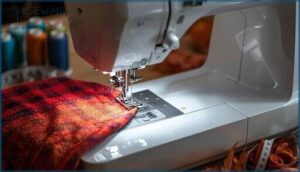
Understanding sewing machine anatomy starts with three foundational components. Your needle creates the stitch pathway and requires proper alignment for balanced fabric control. The presser foot maintains fabric contact—different presser foot types handle zippers, hems, or quilting. Meanwhile, the throat plate provides guidelines and protects inner machinery.
Regular throat plate maintenance removes lint that disrupts stitch formation. Mastering these sewing machine parts identification skills unlocks precise, professional results.
Feed Dogs and Fabric Advancement
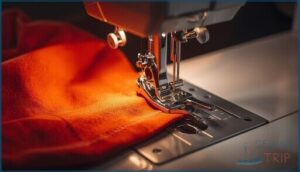
Think of feed dogs as your fabric’s personal transport system—those metal teeth beneath the throat plate advance material with tortoise-shell precision. By adjusting stitch length control, you determine how far fabric moves per stitch.
Drop feed mechanism settings disengage feed dogs for free motion sewing, letting you guide quilting projects by hand. Mastering these sewing machine features transforms fabric advance from mystery into power.
Stitch Selector Dials and Control Panels
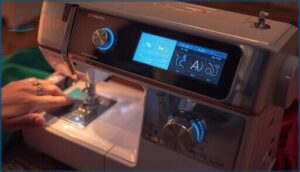
Your sewing machine’s command center—the stitch selector and control panel—puts dozens of stitch options at your fingertips. LCD displays on computerized machines show stitch length, width, and presser foot guidance in real time.
Here’s what you’ll find:
- Dial navigation for browsing stitch families (straight, zigzag, decorative)
- Backlit keypads improving visibility during evening projects
- Icon-based interface design eliminating guesswork across sewing machine types and models
These sewing machine features transform complexity into clarity. Understanding research methodology is essential for evaluating the capabilities of sewing machines.
Free Arm, Light Source, and Thread Cutter
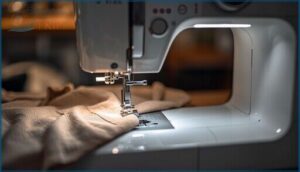
Beyond digital displays, three physical sewing machine features deserve your attention. The free arm—exposed by removing the accessory tray—facilitates circular stitching in sleeves and trouser legs. Bright LED lighting reduces eye strain during fine work. Built-in thread cutters near the presser foot eliminate scissors fumbling.
Together, these sewing machine parts exemplify ergonomic design, streamlining thread management and boosting accuracy across all sewing machine types and models.
Advanced Functions in Modern Machines
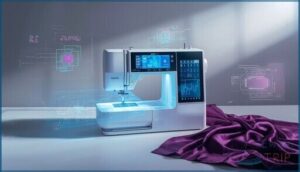
Modern sewing machines pack serious power under the hood—think microprocessors, touchscreens, and automation that would’ve seemed like science fiction a generation ago.
These sophisticated functions don’t just make sewing faster; they open up creative possibilities you couldn’t access with purely mechanical controls.
Let’s explore the game-changing features that separate today’s smart machines from their simpler predecessors.
Computerized Controls and LCD Screens
Modern computerized sewing machines transform fabric into masterpieces with microprocessor-powered precision. LCD displays show you real-time stitch previews, tension settings, and diagnostic tools that troubleshoot problems before they derail your project. Touchscreen interfaces put complete control at your fingertips, making electronic machines feel user-friendly rather than intimidating.
These sewing machine features deliver serious benefits:
- Visual stitch preview lets you see patterns before needle meets fabric
- Automatic threading sequences eliminate eyestrain and wasted time
- Error codes guide maintenance, turning mysterious problems into simple fixes
Drop Feed Dog Levers and Free-Motion Sewing
When you flip the drop feed mechanism lever, you release free motion techniques that put complete control in your hands. Feed dogs lower beneath the throat plate, letting you guide fabric in any direction for quilting methods like stippling and meandering.
This sewing machine feature transforms your machine into a drawing tool—fabric manipulation becomes an art form where you control every curve. Practice on scraps first to master stitch control systems.
Programmable Stitch Memory and Specialty Stitches
Once you’ve mastered fabric manipulation, computerized sewing unlocks stitch customization through programmable memory storage. Your machine remembers complex stitch sequencing—decorative florals, precise buttonholes, stretch stitches—saving hours of manual adjustment. Pattern editing lets you modify saved designs before stitching begins.
- Store user-defined sequences in kilobytes to megabytes for quick recall
- Transfer specialty stitches between machines via USB or SD cards
- Preserve all settings: type, length, width, tension when you reload patterns
- Preview stitch paths on screen to prevent fabric misalignment before sewing
These sewing machine mechanisms enhance stitch quality while expanding your creative possibilities.
Automatic Threading and Cutting Systems
Convenience is key when building sewing efficiency. Auto threading systems streamline the process by guiding the thread from the spool through the needle eye, utilizing lever-assisted mechanisms or servo-driven shuttles. This innovation saves 30–60 seconds of setup time per seam change. Cutting systems, activated by a simple button press, ensure consistent thread tension and clean fabric edges through built-in guillotine blades. These sewing machine mechanisms revolutionize thread management, enhancing precision in sewing machine design and development.
| Feature | Mechanism | Benefit |
|---|---|---|
| Auto threading | Lever or servo shuttle | Saves 30–60 seconds per seam |
| Thread cutting | Guillotine blade activation | Consistent trim length |
| Sensor feedback | Confirms engagement | Prevents skipped stitches |
| Blade maintenance | Periodic sharpening/replacement | Maintains clean cuts |
Maintenance, Troubleshooting, and Accessories
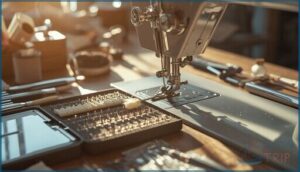
Your machine won’t perform at its best without proper care, and even the most sophisticated features can’t compensate for neglected maintenance. Knowing how to clean, troubleshoot, and upgrade your equipment transforms frustrating setbacks into quick fixes you can handle confidently.
Let’s walk through the essential practices that keep your machine running smoothly and the smart solutions that solve common problems before they derail your projects.
Cleaning, Oiling, and Regular Care
Your machine craves attention like a garden needs water—neglect it, and stitch quality suffers. Establish maintenance schedules based on usage: weekly cleaning for heavy sewers, monthly for casual crafters.
Use recommended oil types sparingly on moving sewing machine parts, avoiding fabric-staining over-application. Proper cleaning tools—soft brushes and lint-free cloths—preserve delicate components.
This consistent sewing machine maintenance and repair routine directly impacts machine longevity, preventing costly sewing machine troubleshooting down the road.
Common Sewing Issues and Solutions
Frustration dissolves when you decode typical stitch struggles with targeted fixes. Sewing Machine Troubleshooting demands matching needle size to fabric weight, balancing tension between bobbin and upper thread, and cleaning feed dogs regularly.
- Thread Breakage: Replace bent needles immediately and validate spool tension to prevent fraying
- Skipped Stitches: Use correct needle type for dense fabrics and maintain clean needle plate paths
- Fabric Puckering: Adjust tension settings for your fabric-thread combination or add a walking foot
- Bobbin Tangles: Wind bobbins with proper tension and seat the bobbin case fully
- Machine Jams: Clear lint from shuttle race and follow threading sequence precisely
Master these Sewing Machine Maintenance and Repair fundamentals, and you’ll transform obstacles into opportunities for skill refinement.
Essential Accessories and Upgrades
Your machine’s potential multiplies with smart Thread Management tools—spool caps prevent unwinding, while bobbin cases stabilize tension.
Quilting Tools like walking feet and Embroidery Hoops expand creative range.
Invest in Machine Stabilizers for delicate fabrics and specialty presser feet that reshape Sewing Machine Design.
These Sewing Aids transform basic Sewing Machine Parts into professional-grade equipment, enhancing Sewing Machine Features and Benefits while simplifying Sewing Machine Repair and Maintenance.
Needle Replacement and Tension Adjustment
Perfect stitches depend on two critical skills: swapping needles and dialing in Tension Settings. Master these Sewing Machine Repair and Maintenance fundamentals to enhance Stitch Quality across any Fabric Compatibility challenge.
- Match Needle Selection to thread weight and fabric type for impeccable Thread Management
- Replace your Needle after each project to prevent snags and skipped stitches
- Adjust the Tension Dial incrementally, testing on scrap fabric until upper and bobbin threads lock perfectly
These Sewing Machine Parts demand your attention—they’re the difference between frustration and precision.
Frequently Asked Questions (FAQs)
How do I thread the bobbin correctly?
Start by winding thread evenly onto your bobbin, then insert it into the bobbin case following your manual’s direction arrows. Pull the thread tail securely and test on scrap fabric to verify proper stitch formation.
What fabric types work best for beginners?
You’ll thrive with cotton fabrics, linen blends, and stable wovens like quilting cotton or polycotton.
These beginner textiles resist slipping, show clear grainlines, and forgive minor mistakes—making fabric selection straightforward as you master essential sewing techniques.
Can I sew leather with my machine?
Your machine can become a leather workshop with the right needle—90/14 or 100/16 sharp leather needles, heavy polyester thread, and a walking foot transform machine capability for leather stitching on medium-weight hides.
How do I prevent fabric puckering while sewing?
You’ll conquer puckering by matching needle size to fabric weight, adjusting thread tension control, testing seam finishing on scraps, and using stabilizers on delicate materials—essential sewing techniques that transform frustrating gathers into smooth, professional stitches.
Whats the difference between universal and specialty needles?
Universal needles handle most woven fabrics with standard point types and sizing from 60/8 to 90/14, while specialty needles use ballpoint, reinforced shafts, or coatings for knits, leather, denim, and decorative techniques.
Conclusion
Think of your sewing machine as a musical instrument—raw potential until you understand which keys release which sounds. Understanding sewing machine capabilities and functions means you’re no longer guessing at settings or blaming the machine for poor results.
You know what each dial controls, which feature solves which problem, and how to adjust on the fly. That knowledge transforms every project from a frustrating experiment into a controlled, confident creative act.