This site is supported by our readers. We may earn a commission, at no cost to you, if you purchase through links.

You’ve probably wrestled with a buttonhole that split open after a few wears or struggled to fit a button through an opening that seemed perfectly sized. The culprit isn’t always sloppy construction—it’s often choosing the wrong stitch for your fabric and button combination.
Different buttonhole stitch options deliver wildly different results depending on whether you’re working with silk chiffon or heavyweight denim. A bartack buttonhole that saves your coat closure from years of stress won’t work the same magic on a delicate blouse.
Understanding how bound, keyhole, and straight buttonholes perform across various fabrics gives you the power to match technique to material with confidence.
Table Of Contents
Key Takeaways
- Match your buttonhole stitch to fabric weight—bartacks strengthen heavy coats while bound buttonholes suit delicate materials that need finesse without bulk.
- Machine buttonholes deliver speed and consistency across multiple garments, but hand-sewn options give you complete control over thread tension and precise adjustments for tricky fabrics.
- Stitch density determines durability—higher thread counts per centimeter prevent fraying and width growth, especially when paired with bar tacks at stress points.
- Horizontal buttonholes handle lateral pull on shirts and blouses, while vertical orientations provide better seam security for coats and jackets where fabric stress runs vertically.
Overview of Buttonhole Stitch Options
You can’t master buttonholes until you understand your options. The right stitch makes the difference between a buttonhole that holds strong and one that falls apart after a few wears. Mastering the right stitch ensures durable buttonholes, and understanding couture finishing techniques elevates your craftsmanship to professional standards.
Let’s break down the main types you’ll encounter so you can pick the perfect match for your project. Let’s explore the main types so you can choose the ideal heavy-duty home sewing machine for your project.
Types of Buttonhole Stitches
You’ve got options regarding buttonhole security and sewing techniques. Bound buttonholes use dense stitching around fabric slits for strength. Keyhole types feature rounded ends that handle larger button types beautifully. Bartack buttonholes add reinforced anchor points for serious durability. Blind buttonholes hide stitching behind fabric. Straight buttonholes deliver basic functionality. A specialized buttonhole presser foot ensures consistent stitch density and precise sizing for professional-quality results.
Each stitch variation caters to specific fabric considerations and embroidery stitch needs. Your fabric choice and project needs help you decide which serger stitch variations will work best for your embroidery.
Hand-Sewn Vs. Machine-Made Buttonholes
When you’re deciding between handsewn and machine buttonholes, consider your priorities. Hand-sewn buttonholes give you complete control over thread tension and fabric compatibility but demand markedly more time. Machine sewing delivers lightning-fast buttonhole creation with excellent stitch consistency across multiple garments. Machine buttonholes offer speed and consistency, though mastering sewing machine buttonhole techniques requires matching stitch settings to your fabric weight and button dimensions.
- Hand-sewn methods require manual reinforcement at buttonhole ends
- Machine buttonholes include automatic bar tacks for instant buttonhole durability
- Sewing speed increases dramatically with machine-made options
- Hand techniques allow precise thread density adjustments for delicate fabrics
- Machines produce uniform sizing that’s tough to match by hand
Decorative Vs. Functional Buttonholes
Beyond construction methods lies a fundamental choice that shapes your garment’s future. Decorative buttonholes emphasize buttonhole aesthetics through embroidery-like stitches that may skip reinforced backing to preserve drape. Functional buttonholes prioritize load bearing with reinforced edges for garment longevity.
Your sewing decision impacts how long your garment withstands daily wear. Choose decorative for show, functional for durability.
Your choice between decorative and functional buttonholes determines whether your garment prioritizes beauty or long-lasting durability
Comparing Buttonhole Stitches by Fabric Type
Your fabric choice controls which buttonhole stitch will actually work. Different materials need specific stitches to prevent puckering, stretching, or fraying at the edges.
Here’s how to match the right stitch to your fabric weight and texture.
Best Stitches for Lightweight Fabrics
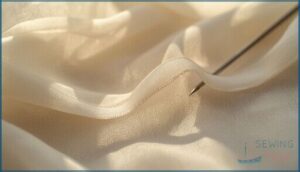
Lightweight fabric demands a gentle touch to prevent fabric distortion and tearing. Small, fine stitches create clean buttonholes that won’t damage delicate weaving.
- Use shorter stitch length (2.0–2.5 mm) to minimize holes
- Choose narrow buttonhole stitch settings for clean edges
- Add reinforcement techniques at stress points for durability
- Consider French seams for edge finishing and seam security
These steps protect your delicate materials beautifully!
Suitable Stitches for Stretch Fabrics

Flexibility matters when you’re working with jersey, knit, or stretch fabric. Choose a reinforced buttonhole stitch that mimics the fabric’s natural give. Elastic thread choices and interlock stitch patterns prevent breakage during wear. Test your knit seam construction on scraps first—this ensures fabric recovery techniques work perfectly. Stretch fabrics demand stitches that move with the weaving, not against it!
Ensuring methodological rigor is essential in scientific studies of fabric properties.
Durable Options for Heavy and Thick Fabrics

Heavy duty stitches deliver superior buttonhole durability when tackling dense textiles. Thick fabric reinforcement demands strategic planning and the right techniques. Bar tacks at stress points resist tearing while maintaining fabric edge security through reinforced seams. Your buttonhole construction determines whether your garment withstands daily wear or falls apart at the seams.
Master these proven strategies for thick fabric reinforcement:
- Apply bartack stitches at entry points to prevent tearing under tension
- Choose keyhole buttonholes for bulky buttons requiring reinforced openings
- Add interfacing layers underneath buttonhole areas to prevent distortion
- Increase stitch density to match your fabric’s weight class and loft
- Select stronger thread blends like polyester or cotton-poly for lasting strength
Buttonhole Choices for Delicate Materials

Delicate fabrics demand precision and a gentle touch. Choose smaller buttonholes with fine thread weights between 50 and 75 to minimize stress on fragile fibers. Back your fabric with lightweight interfacing to stabilize edges and prevent fraying during construction.
Hand-finished buttonholes often create smoother results on silk and chiffon than machine stitching alone can deliver.
Machine Vs. Hand Buttonhole Techniques
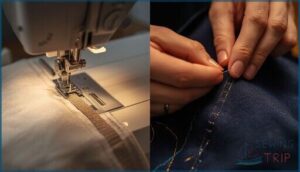
You’ve got two main paths for making buttonholes: let your machine handle it or do the work by hand. Each method has its own set of features and benefits that’ll affect your final results.
Let’s break down what automatic settings bring to the table, how manual techniques give you more control, and why stitch density matters for strength.
Automatic Buttonhole Features
Modern machines take the guesswork out with automatic buttonholes that sequence stitches for you! Fabric detection sensors adjust stitch density and length, while reinforcement options add bar tacks at each end. You’ll find programmable profiles that remember your settings and error detection that pauses if the thread breaks.
| Feature | Benefit |
|---|---|
| Buttonhole sensors | Auto-adjust to fabric thickness |
| Stitch sequencing | Creates consistent holes every time |
| Reinforcement options | Adds durability to high-stress areas |
Manual and Hand-Stitched Buttonholes
Hand stitching puts complete control in your hands! You’ll cut a customized slit after fabric preparation, then work the buttonhole stitch around the opening with consistent stitch tension. Edge finishing creates a reinforced barrier that stops fraying cold. Handsewn buttonholes demand practice but reward you with couture-level results.
| Hand Sewing Methods | Best For | Skill Level |
|---|---|---|
| Blanket stitch | Lightweight fabrics | Beginner |
| Traditional buttonhole stitch | Most buttonhole types and uses | Intermediate |
| Tailor’s buttonhole | Buttonhole reinforcement on jackets | Expert |
| Welt finish | Professional buttonhole making | Expert |
Stitch Density and Reinforcement Options
Stitch density is crucial for buttonhole durability and fabric thickness compatibility. Higher density means more threads per centimeter, which increases tensile strength and prevents width growth during laundering cycles. Pairing dense stitching with bar tacks at each end provides maximum reinforcement. Adjust thread tension and stitch patterns to match your fabric—lighter materials require less bulk, while heavyweight fabrics demand tighter weaving for long-lasting buttonhole making.
| Reinforcement Techniques | Application |
|---|---|
| Bar tacks with dense zigzag | Heavy outerwear and jackets |
| Moderate density with backstitch | Stretch and knit fabrics |
| Satin stitch edge finish | Lightweight delicate materials |
Buttonhole Styles and Garment Applications
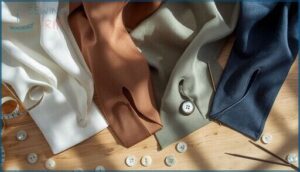
You’ve got the technique down, but choosing the right buttonhole style makes all the difference in how your garment looks and holds up.
Different styles serve different purposes, and knowing when to use each one puts you in control of your finished piece.
Let’s break down the four main buttonhole styles and how to match them to your projects.
Bartack, Keyhole, Rounded, and Square Styles
Each buttonhole style fulfills a distinct purpose when sewing buttonholes. Bartack reinforcement strengthens fabric durability with dense stitches at both ends. Keyhole buttonhole designs include a rounded opening for thicker button shanks. RoundEnd buttonhole options feature curved edges ideal for lighter materials. Square corners create clean lines in formal garments. Bound buttonhole treatments add decorative flair. Your choice impacts both function and finish.
Placement: Horizontal Vs. Vertical Buttonholes
After you pick your buttonhole style, orientation determines garment silhouette and fabric stress. Horizontal buttonholes handle lateral pull and suit shirts or blouses perfectly. Vertical buttonholes provide seam security in coats and jackets where fabric stress runs vertically.
Buttonhole alignment along grain lines affects durability when sewing buttonholes. Your choice reshapes how buttonhole types perform and influences orientation effects across all buttonhole stitches you select.
Matching Stitch Styles to Garment Types
Your garment silhouette guides fabric selection and buttonhole stitch density for each project. Bartack stitches reinforce denim jackets and workwear where seam reinforcement matters most.
Rounded or keyhole options suit blouses when button placement emphasizes ease and visual appeal. Square buttonholes match custom-fitted suits perfectly.
Dense zigzag patterns on coats handle repeated use during garment construction without compromising sewing integrity.
Factors to Consider When Choosing a Stitch
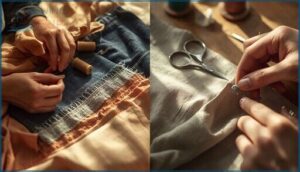
Choosing the right buttonhole stitch isn’t just about what looks good. You need to think about how your fabric behaves and what you can handle as a sewist.
Let’s break down the key factors that’ll help you make the best choice for your project.
Button Size and Buttonhole Length
Getting your button size matched to the right hole length is where precision meets practicality. Measurement accuracy makes the difference between a professional finish and a sloppy one when sewing buttonhole techniques.
- Standard buttons need 0.5–0.75 inch buttonholes for secure closure
- Fabric thickness affects stitch density and final dimensions
- Larger buttons require 1.0–1.25 times diameter for proper fit
- Types of buttonhole stitches adapt to different measurement needs
Fabric Fraying and Edge Security
Fraying destroys your hard work faster than you think. Edge reinforcement with dense bartack stitching or zigzag finishes stops threads from unraveling along buttonhole edges.
Fusible stabilizers boost fabric stability for woven materials, while proper needle choice protects delicate fibers during sewing.
Combine interfacing with secure seams and tight stitch density for fray prevention that lasts through countless wears and washes.
Ease of Construction and Skill Level
Confidence grows with repetition. Beginners usually master basic hand buttonholes in one or two practice sessions on stable fabrics. Automatic machine features eliminate guesswork for sewing beginners, while manual buttonhole techniques demand careful tension control and expert sewing techniques.
Start with lightweight materials and simple bartack styles to build skill levels quickly. Stretch fabrics and keyhole designs increase stitch complexity, so practice garment construction techniques on scrap fabric before tackling your finished project.
Aesthetic and Professional Finish
A polished appearance separates beginner work from professional standards. Your buttonhole stitch creates visual quality that buyers and judges notice first, so choose techniques that showcase your fabric responsiveness and embroidery skill.
- Match thread sheen to your fabric weight for smooth edge finishing
- Test stitch density on scrap material before sewing the final buttonhole
- Align topstitching precisely with seam lines for crisp, tailor-made results
- Press interfacing behind each opening to maintain shape through repeated wear
Frequently Asked Questions (FAQs)
How do you prevent buttonhole stretching over time?
Like armor protecting weak spots, reinforced bar tacks at buttonhole endpoints resist stretching over time.
You’ll also want fabric stabilization with interfacing, consistent thread tension, and proper stitch density for lasting edge security.
Can buttonholes be repaired after they rip?
You can repair ripped buttonholes through fabric reinforcement and resewing techniques. Use matching thread to rebuild torn edges, then add interfacing behind the buttonhole for strength and rip prevention going forward.
What thread type works best for buttonholes?
Choose polyester machine embroidery thread for strong, colorfast buttonholes with great durability.
For hand-stitched work, cotton perle gives you excellent fabric compatibility.
Match your thread color to the fabric for minimal stitch visibility.
How does interfacing affect buttonhole stitch quality?
Think telegraph operator tapping urgent news: interfacing materials provide fabric stability that stops stitch distortion cold. Edge finishing stays crisp, buttonhole reinforcement holds firm, and sewing buttonholes techniques deliver clean results through proper fabric selection for sewing.
Are there specialized feet for keyhole buttonholes?
You’ll find dedicated keyhole buttonhole feet for many sewing machines. These specialized accessories guide fabric to create that signature teardrop shape with even spacing.
Check your machine’s brand for compatible feet and accessory kits.
Conclusion
The devil’s in the details, and your buttonhole stitch options comparison proves it. Match bartacks to heavyweight coats that face daily abuse. Save bound buttonholes for fitted pieces where elegance matters. Choose stretch stitches for knits that need flexibility.
Your fabric dictates your stitch, not the other way around. Master this connection and you’ll never face a failed closure or frayed opening again.
Take control of your construction choices and watch your garments transform from homemade to handcrafted.