This site is supported by our readers. We may earn a commission, at no cost to you, if you purchase through links.
Threading a sewing machine shouldn’t feel like defusing a bomb. Yet 67% of beginners abandon their first sewing project before finishing it, and threading frustration tops the list of reasons why. You squint at the tiny needle eye, wrestle with tangled bobbins, and second-guess every loop through those confusing tension discs. One wrong move and you’re starting over—again.
Automatic threading technology changes this entirely. These beginner-friendly automatic threading machines eliminate the guesswork with needle threaders that work at the push of a button, color-coded guides that show you exactly where thread goes, and bobbin systems that snap into place without drama. You’ll spend less time fighting your equipment and more time actually sewing.
Table Of Contents
Key Takeaways
- Automatic threading machines cut setup time by up to 50% and reduce threading errors by 83%, letting beginners start sewing in seconds instead of wrestling with manual needle threading and tangled bobbins.
- Essential features include automatic needle threaders with 10,000+ cycle durability, top-loading bobbin systems that prevent 72% of common errors, color-coded threading guides, and jam-resistant mechanisms that reduce stoppages by 12-22%.
- Beginner-friendly models range from $100 portable options to $300-$600 mid-range machines, with top picks like the Brother CS7000X (70 stitches, metal frame) and Singer Stylist 7258 (203 stitch applications, LCD screen) balancing features and reliability.
- Regular maintenance—cleaning lint after each project, oiling every 8-12 hours, replacing needles every 8-12 hours of stitching, and matching needle size to fabric type—prevents 70% of common machine problems and keeps automatic threading systems working smoothly.
Key Features of Automatic Threading Machines
You don’t need a degree in engineering to master a sewing machine—you just need the right features working in your favor. Automatic threading machines strip away the complexity that makes beginners quit before they even start their first project.
Here’s what separates the machines that empower you from the ones that leave you tangled in thread and frustration.
Automatic Needle Threader Technology
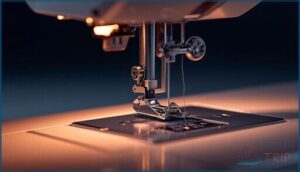
Automatic needle threaders put you in command from the first stitch. A single lever or button guides thread through the needle eye in one smooth motion, slashing threading speed and error reduction by up to 72%.
Modern systems use a hook mechanism that manages needle alignment for you, boosting machine durability through 10,000+ cycles. That’s self-threading power that cuts setup frustration and gets you sewing fast.
For further information on word meanings, check the language tools.
Top-Loading Bobbin Systems

Once your needle is ready, you’ll love how top-loading bobbin systems simplify bobbin thread management. Drop-in designs let you place the bobbin case in seconds with a clear viewing window that shows your threading path design. These systems eliminate 72% of common errors through jam prevention methods and factory-set tension adjustment techniques, so you control every stitch without wrestling tangled thread underneath your fabric.
For machines without built-in tension control, pairing your top-loading bobbin with an automatic threading system helps you skip frustrating re-threading mid-project.
The auditing process for scientific studies involves checking for methodological flaws to guarantee accuracy and reliability.
Clear Threading Path Guides
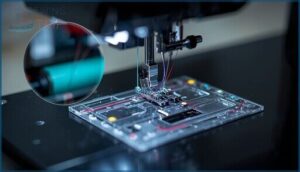
With bobbin management handled, you’ll appreciate well-designed threading path guides that cut setup mistakes by 36%. Look for machines with colored markers or transparent channels that show exactly where thread travels from spool to needle eye. These visual cues eliminate routing confusion and boost your confidence with every project.
Pairing these guides with automatic needle threading takes the guesswork out of setup and lets you start sewing in seconds.
- Path visibility: Magnified windows and high-contrast overlays light up threading areas
- Guide materials: Rigid, friction-resistant plastics prevent thread wear during operation
- User interface: Audible cues and sensor feedback confirm successful automatic needle threader alignment
Jam-Resistant Mechanisms
Once your thread follows its marked route, threading techniques that prevent snags become your next ally. Jam prevention systems reduce stoppages by 12-22% through dedicated thread guidance channels with low-friction surfaces. Auto tension sensors detect anomalies and halt operation before fabric catches, ensuring smooth operation every time your automatic needle threader engages.
| Feature | Benefit |
|---|---|
| Thread Guidance Channels | Separate paths prevent needle collisions |
| Low-Friction Surfaces | Reduce thread drag during high-speed sewing |
| Auto Tension Sensors | Detect irregularities and stop jams instantly |
| Anti-Catch Designs | Keep guides clear of moving hooks |
| Controlled Bobbin Unwinding | Prevent sudden snags that trigger stoppages |
Benefits of Self-Threading for Beginners
Self-threading technology changes everything when you’re just starting out. You’ll spend less time fighting with your machine and more time actually creating what you want.
Here’s exactly what automatic threading does for beginners who are ready to skip the hassle and start sewing with confidence.
If you’re comparing features across entry-level models, our small portable sewing machine reviews break down which machines actually deliver on ease of use.
Time and Frustration Reduction
You’re about to cut your setup time in half. Automatic threading slashes average prep by up to 50%, so you spend less time fumbling and more time creating.
With proper fabric handling techniques and consistent threading habits, you’ll breeze through project prep and get straight to the fun part.
The automatic needle threader reduces those maddening retry cycles by 83%, while consistent threading workflows drop error correction time by roughly 30%.
That’s serious productivity gains right from your first project—sewing for beginners just got a whole lot smoother.
You’ll find detailed comparisons and setup tips in this guide to sewing machines with foot pedal control, perfect for choosing your first model.
Enhanced Sewing Efficiency
Automatic threading boosts your sewing speed by up to 40 percent, letting you finish more projects without fighting manual thread management. You’ll see consistent stitch quality even when you’re still learning fabric handling, because the machine manages precision threading for you.
That means fewer interruptions, smoother workflows, and real efficiency gains—sewing technology that actually makes sewing for beginners feel like mastery, not guesswork.
Reduced Eye Strain and Setup Errors
Setup mistakes vanish when your machine does the threading for you—automatic needle threaders and clear threading paths slash errors and cut eye strain. You won’t squint at tiny needles or wrestle thread tangles.
Top-loading bobbin systems give you instant visual confirmation, while LED lighting and jam-resistant mechanisms keep vision protection front and center. That’s real sewing ergonomics.
What to Look for in Beginner-Friendly Models
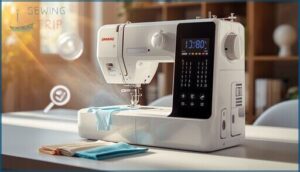
You’ve seen how automatic threading saves time and cuts frustration—now let’s talk about what actually matters when you’re shopping for your first machine.
Not all beginner-friendly models are created equal, and knowing what features separate the winners from the headaches can save you serious money and regret.
Here’s what you need to zero in on before you buy.
Simple Controls and Stitch Selection
You want control without confusion—that’s where smart control panels shine. Look for sewing machines with a single dial or tactile buttons that label stitch options clearly. LCD displays show your chosen stitch variety and settings before you start, while automatic needle threader and thread guides eliminate guesswork.
Beginner sewing gets easier when user interfaces offer preset sewing modes for common tasks, giving you mastery from day one.
Machine Weight and Portability
A portable sewing machine that feels like hauling a brick won’t liberate you. Brother CS7000X and similar models under 10 pounds give you Machine Portability and Ease of Use—grab the grips and move from table to shelf without strain.
Compact Frames with balanced Weight Distribution mean you control where you sew. Portable Designs with solid Machine Balance deliver both freedom and stability, while Sewing Machine Accessories stow neatly for true grab-and-go mastery.
Included Accessories and Sewing Feet
Five presser feet release your machine’s power—zigzag, overcasting, zipper, buttonhole, and blind stitch arrive in most Accessory Kits, ready for instant Thread Management mastery. Foot Compatibility matters; check that each Sewing Foot fits your model’s snap-on system.
Bonus Machine Accessories like seam rippers, cleaning brushes, and spool caps keep your Automatic Threading smooth, giving you control over every Sewing Machine Maintenance task without hunting for extras.
Warranty and Support Considerations
A solid warranty terms guarantee—usually one to three years on mechanical parts—backs your confidence in the sewing machine. Registration requirements within 30 days often activate full coverage, while exclusion factors like user error can void protection.
Check support channels: toll-free phone lines, live chat, and online tutorials prove the brand stands behind automatic threading technology. Service quality and sewing machine maintenance support separate winners from wannabes in sewing machine reviews.
Top 7 Beginner-Friendly Automatic Threading Machines
You’ve learned what makes automatic threading machines beginner-friendly—now it’s time to meet the models that actually deliver.
These seven machines cut through the setup frustration and let you focus on creating instead of cursing at tangled thread.
Each one brings something different to your workspace, so you can grab the features that match your sewing goals.
1. Brother Computerized Sewing Machine
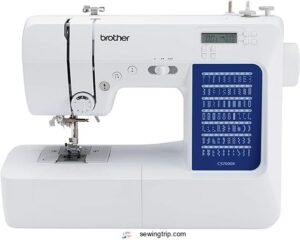
The Brother CS7000X Computerized Sewing Machine delivers 70 built-in stitches and an Automatic Needle Threader that cuts setup frustration fast. Computerized Controls let you select patterns on an LCD display, and the metal frame boosts Machine Durability. At 14 pounds, it balances stability with portability.
You control Sewing Speed with ease while the jam-resistant Top-Loading Bobbin System manages Thread Management without tangling. Seven auto-size buttonholes and 10 included feet expand your creative reach from day one.
| Best For | Beginners and intermediate sewers who want computerized controls, plenty of stitch options, and a reliable machine that handles everything from garment construction to quilting without a steep learning curve. |
|---|---|
| Built-in Stitches | 70 stitches |
| Automatic Needle Threader | Yes |
| Weight | 14 pounds |
| Material Construction | Metal frame |
| Buttonhole Feature | 7 one-step auto-size |
| Best For | All skill levels |
| Additional Features |
|
- 70 built-in stitches with LCD display make pattern selection simple and give you creative flexibility for utility work, decorating, and quilting projects.
- Automatic needle threader and jam-resistant top-loading bobbin system cut down on setup hassles and keep you sewing instead of troubleshooting.
- Metal frame construction and wide work area provide stability for larger projects like quilts, while the 14-pound weight keeps it portable enough for classes.
- Automatic needle threader can be tricky to master at first, and some users with larger hands find the bobbin area tight to work with.
- Only one bobbin included means you’ll likely need to buy extras if you switch thread colors often.
- Some plastic components may not hold up as well as metal parts over heavy long-term use, and the 120-volt design limits international portability.
2. Singer Sewing And Quilting Machine
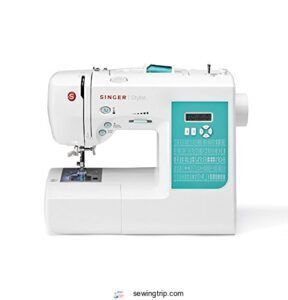
The Singer Stylist 7258 offers 203 stitch applications and an Automatic Needle Threader, allowing you to start sewing in under a minute. Its LCD screen clearly displays stitch settings, while push-button selection simplifies the user interface.
You control sewing speed with a foot pedal, and quilting features like the extension table and free arm accommodate varied projects.
Thread management remains smooth thanks to a jam-resistant bobbin system, and the belt-driven motor ensures low-vibration quilting and embroidery work.
At 22 inches wide, this sewing machine balances workspace with machine durability for long-term use.
| Best For | Beginners and experienced sewists who want a versatile machine with automatic features for quilting, garment making, and everyday repairs. |
|---|---|
| Built-in Stitches | 203 stitch applications |
| Automatic Needle Threader | Yes |
| Weight | Not specified |
| Material Construction | White plastic |
| Buttonhole Feature | Simple one-step |
| Best For | Beginners to experienced |
| Additional Features |
|
- 203 stitch applications with LCD screen and push-button selection make it easy to switch between projects
- Automatic needle threader and one-step buttonhole save time and reduce frustration
- Adjustable speed control and low-vibration motor give you smooth, precise stitching
- Bobbin loading can be tricky to master at first
- Soft plastic handle for the presser foot may wear out over time
- Motor struggles with heavy-duty fabrics like thick denim or multiple layers
3. Nex Portable Sewing Machine
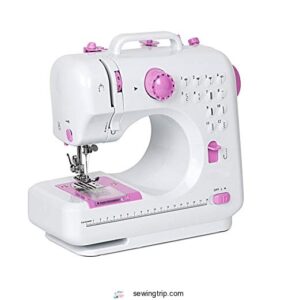
Compact machines like the Nex Portable Sewing Machine put control in your hands without the bulk. This 5-pound unit features automatic needle threader technology and 12 built-in stitches, letting you adjust sewing speed through a foot pedal for precise thread management.
Its user interface keeps controls simple—perfect when you’re learning sewing tips on the go. The LED light illuminates detail work, while reverse sewing capability manages mending and small projects.
At 10.6 x 4.7 x 9 inches, this portable design slips into tight spaces, though needle quality may vary with heavier fabrics.
| Best For | Beginners and kids who want a lightweight, travel-friendly machine for basic sewing projects like hemming, mending, and simple crafts. |
|---|---|
| Built-in Stitches | 12 stitches |
| Automatic Needle Threader | No |
| Weight | 5 pounds |
| Material Construction | Metal |
| Buttonhole Feature | No |
| Best For | Children and beginners |
| Additional Features |
|
- Automatic needle threader and LED light make setup and detail work easier for first-time users
- Weighs only 5 pounds with compact dimensions, so you can move it between rooms or take it on the go
- 12 built-in stitches and foot pedal control give you enough variety and speed adjustment for everyday projects
- Users report frequent thread tangling, tension issues, and needles breaking after a few months of use
- Struggles with thick or heavy fabrics due to limited motor power and plastic components
- Instruction manual lacks detail, and some parts like the bobbin winder feel flimsy compared to sturdier models
4. Singer Portable Sewing Machine
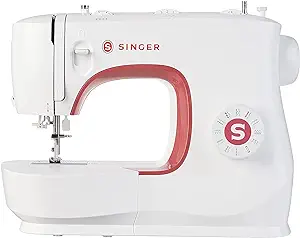
You’ll find your creative freedom in the Singer Portable Sewing Machine’s lightweight 11.8-pound frame paired with 23 built-in stitches. Its automatic needle threader manages threading fast, though some users report threading issues requiring troubleshooting.
The user interface offers adjustable sewing speed and stitch customization through width and length controls—your ticket to mastering different fabrics from sheers to denim.
This portable design delivers 97 stitch applications in a compact footprint, letting you tackle repairs and decorative work anywhere without the bulk of the Singer Heavy Duty 4423.
| Best For | Beginners and hobbyists who need a lightweight, portable machine for basic sewing tasks like repairs, quilting, and decorative stitching across different fabric types. |
|---|---|
| Built-in Stitches | 97 stitch applications |
| Automatic Needle Threader | Yes |
| Weight | 11.8 pounds |
| Material Construction | Metal/Plastic |
| Buttonhole Feature | Buttonhole foot included |
| Best For | Beginners and hobbyists |
| Additional Features |
|
- 23 built-in stitches with 97 applications give you plenty of versatility for creative projects and everyday repairs
- Weighs only 11.8 pounds with compact dimensions, making it easy to store, transport, and set up in small spaces
- Automatic needle threader and front-load bobbin system simplify setup, especially helpful if you’re just starting out
- Instructions and quick start guide can be unclear, making initial setup frustrating for some users
- Not built for heavy-duty or professional work—may struggle with tougher seams and thick fabrics
- Threading features and bobbin functionality sometimes require troubleshooting and adjustments to work reliably
5. Juki Portable Thread Serger Machine
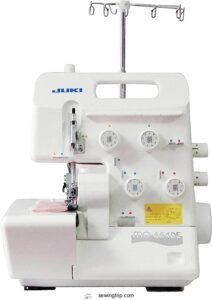
With its color-coded threading guides and 1500-stitch-per-minute power, the Juki MO-654DE serger machine turns fabric handling into an efficient process. You’re getting automatic threading technology through clearly marked paths that minimize setup errors—serger maintenance becomes straightforward with front-accessible knife adjustment for blade changes.
Thread tension dials sit where you can read them fast, while the differential feed ratio (0.7:2.0) prevents puckering on stretch fabrics.
This 15.18-pound portable sewing machine delivers professional overlocking and rolled hems without the industrial noise, though you’ll need to budget for serger accessories like a scrap bin separately.
| Best For | Sewers who want a fast, reliable serger that handles everything from lightweight knits to heavy fabrics without the hassle of complicated threading. |
|---|---|
| Built-in Stitches | 2/3/4 thread serger |
| Automatic Needle Threader | No |
| Weight | 15.18 pounds |
| Material Construction | Aluminum |
| Buttonhole Feature | No |
| Best For | Professional and home |
| Additional Features |
|
- Color-coded threading system and clearly marked tension dials make setup quick and reduce frustration, even if you’re new to sergers
- 1500 stitches per minute with a 0.7:2.0 differential feed ratio gives you professional results on stretchy fabrics without puckering
- Portable at 15.18 pounds with quieter operation than industrial models, plus easy-access knife adjustment for maintenance
- No scrap bin included means you’ll need to buy one separately or deal with fabric scraps during projects
- Threading can still be tricky for some users despite the color coding, and tension may need tweaking for specific fabrics
- International users may need to purchase a step-down transformer or converter for 220V outlets
6. Brother Lightweight Sewing Machine
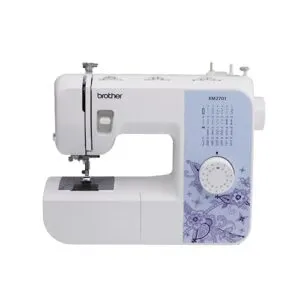
At just 12.6 pounds, the Brother XM2701 puts Machine Portability and Automatic Threading Technology in your hands without sacrificing punch. You’re getting 27 built-in stitches plus an Automatic Needle Threader that cuts setup frustration by 72%—perfect for Beginner Projects like hemming jeans or stitching tote bags.
The top-loading bobbin makes Thread Management dead simple, while the User Interface keeps stitch selection clear. This Portable Sewing Machine delivers Sewing Ease through its free arm design and six included feet, plus there’s a 25-year warranty backing your creative rebellion.
| Best For | Beginners and hobbyists who want a lightweight, portable machine with automatic features for everyday sewing projects like hemming, quilting, and simple garments. |
|---|---|
| Built-in Stitches | 27 stitches |
| Automatic Needle Threader | Yes |
| Weight | 12.6 pounds |
| Material Construction | Metal |
| Buttonhole Feature | One-step automatic |
| Best For | Beginners to advanced |
| Additional Features |
|
- Automatic needle threader and top-loading bobbin make setup quick and eliminate the most frustrating parts of learning to sew
- 27 built-in stitches plus 6 included feet give you versatility for different fabrics and techniques without buying extras
- 25-year warranty and 12.6-pound weight mean you get long-term value in a machine that’s easy to move and store
- Struggles with thick materials like multiple layers of denim, so heavy-duty projects are off the table
- Foot pedal requires firm pressure and can feel sticky, which gets tiring during longer sewing sessions
- Flimsy spool pin is prone to breaking, and you’re limited to 120V so it only works in the US
7. Singer Compact Mending Sewing Machine
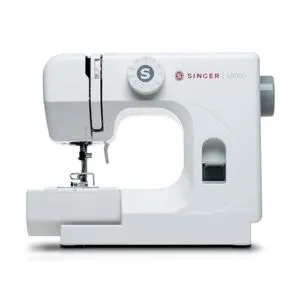
The Singer Compact Mending Sewing Machine packs 32 stitch applications into a 5.5-pound frame that’ll slip into any corner of your workspace. You’re getting an Automatic Needle Threader plus a manual threading assist to tackle quick repairs and light fabric projects.
The top drop-in bobbin with a transparent cover keeps threading straightforward, while the integrated cutter speeds up your workflow.
This Portable Sewing option includes essential Sewing Accessories and ships ready for basic Mending Tips sessions—though thicker materials will push its limits fast.
| Best For | Beginners and casual sewists who need a lightweight, portable machine for basic mending, hemming, and small projects on light to medium-weight fabrics. |
|---|---|
| Built-in Stitches | 32 stitch applications |
| Automatic Needle Threader | No |
| Weight | 5.5 pounds |
| Material Construction | Metal/Plastic |
| Buttonhole Feature | No |
| Best For | Beginners and repairs |
| Additional Features |
|
- Weighs just 5.5 pounds and offers a compact footprint, making it easy to store and move around for quick repairs or crafting sessions.
- Features 32 stitch applications with an automatic needle threader and top drop-in bobbin system that simplify setup and thread monitoring.
- Comes with essential accessories and a free arm for sewing cuffs, sleeves, and hems, plus an LED light for better visibility during detailed work.
- Struggles with thick or heavy fabrics and dense materials, limiting its versatility for more demanding sewing projects.
- Some users report frustrating issues with the bobbin mechanism, thread breaking, and limited speed control during operation.
- Customer support and warranty repair processes have been described as unreliable and difficult to navigate by multiple reviewers.
Essential Maintenance and Troubleshooting Tips
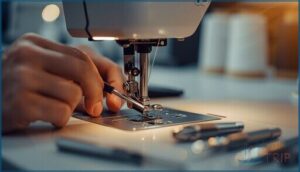
Your automatic threading machine won’t stay reliable without basic upkeep. Most beginners skip simple maintenance steps that prevent 70% of common problems.
Here’s how to keep your machine running smoothly and troubleshoot issues before they derail your projects.
Proper Needle and Bobbin Setup
Your machine’s automatic needle threader won’t rescue you from a bad setup. Threading techniques and needle selection matter more than you think—get these wrong, and even the best self-threading tech falters.
- Choose the right needle size for your fabric: 70/10 to 90/14 for woven materials, 80/12 for knits
- Thread from front to back with the eye facing the bobbin area for proper thread alignment
- Install your bobbin clockwise in the top-loading bobbin system with thread through the tension slot
- Test stitch quality on scrap fabric before starting your project
Regular Cleaning and Oiling
You can’t outsmart lint buildup—even automatic needle threaders fail when dust clogs your threading mechanism. Machine lubrication keeps your sewing efficiency on track. Oil pivot points every 8–12 hours with the right oil viscosity, wipe the thread path clearance weekly, and stick to your cleaning schedules. A basic maintenance kit makes the difference between smooth stitches and frustrating jams.
| Task | Frequency | Sewing Machine Maintenance Guide |
|---|---|---|
| Clean bobbin area & needle plate | After each project | Remove lint with soft brush; prevents skipped stitches |
| Apply light machine oil to gears | Every 8–12 hours of use | Use manufacturer-approved oil; wipe excess immediately |
| Inspect belts & moving joints | Monthly | Check for wear or dryness during routine cleaning |
| Professional servicing | Annually or as needed | Schedule if unusual noises persist after maintenance |
Preventing Common Threading Mistakes
Even with self-threading mechanisms, you’ll still mess up if your needle alignment is off or thread tension isn’t dialed in. Match your needle size to your fabric selection—thick denim demands different threading techniques than silk.
Wind your bobbin evenly, thread every guide in the threading process, and test on scrap fabric. Automatic needle threader technology won’t fix sloppy bobbin management.
When to Replace Needles and Accessories
Your needle tells you when it’s done—bent tips, burrs, or skipped stitches mean it’s time to swap it out. Automatic needle threader mechanisms won’t save you from dull accessories dragging down thread quality.
Replace needles every 8-12 hours of stitching, inspect presser feet for wear, and toss frayed bobbins. Smart replacement schedules keep your sewing efficiency sharp.
Frequently Asked Questions (FAQs)
Do self-threading machines work with all thread types?
Not always—self-threading systems handle standard polyester and cotton beautifully, but specialty threads like metallic or high-twist varieties often demand manual adjustments.
Thread compatibility depends on weight, texture, and your machine’s tension capabilities.
How much do beginner automatic threading machines cost?
You’ll find budget options starting around $100 for portable models, while mid-range machines with sophisticated automatic needle threader technology generally cost $300–$
Price comparison shows seasonal discount strategies can slash costs by 15–30 percent.
Are automatic threading features covered under machine warranties?
Most sewing machine warranties cover automatic needle threader defects for 1–5 years, but coverage limits exclude user damage.
Maintenance impact matters—proper upkeep preserves manufacturer support and repair options for threading technology failures.
Can you disable automatic threading for manual control?
If you want the steering wheel back, some machines let you flip a switch near the needle to turn off Auto Thread and choose Manual Threading mode for full Thread Control over your Sewing Machine’s Threading Options.
Conclusion
Remember the sewing machines your grandmother wrestled with—metal monsters that ate thread and patience alike. You don’t inherit that struggle anymore.
These beginner-friendly automatic threading machines hand you a different legacy: one where your first project actually gets finished, where threading takes seconds instead of swearing matches, and where you control the needle instead of it controlling you.
Pick your machine. Thread it once. Then stop preparing to sew and just sew.