This site is supported by our readers. We may earn a commission, at no cost to you, if you purchase through links.
Your stitches start skipping for no clear reason. The fabric puckers where it should lie flat. Thread breaks mid-seam, and you’re left wondering if you’ve suddenly forgotten how to sew. Most of the time, the culprit isn’t your technique—it’s a dull needle quietly sabotaging your work.
A needle loses its sharp point gradually, worn down by friction, heat, and thousands of punctures through fabric. The tip rounds off or develops tiny burrs that catch threads instead of gliding through cleanly.
Learning how to tell if a sewing needle is dull saves you from frustration and ruined fabric, and the signs are easier to spot than you might think.
Table Of Contents
- Key Takeaways
- What Does a Dull Sewing Needle Mean?
- Common Signs Your Sewing Needle is Dull
- How to Inspect Your Needle for Dullness
- When to Replace Your Sewing Needle
- How to Replace a Sewing Machine Needle
- Tips for Extending Needle Life
- Can You Sharpen a Dull Sewing Needle?
- Frequently Asked Questions (FAQs)
- Conclusion
Key Takeaways
- A dull needle reveals itself through skipped stitches, fabric puckering, frequent thread breaks, and unusual popping sounds—signals that appear long before you see visible damage to the tip.
- You can confirm dullness by holding the needle at a 45-degree angle under bright light to spot a rounded tip or flat spot, then running your fingertip across it to feel for burrs that snag thread.
- Replace your needle after 8-10 hours of sewing, when switching between fabric types, immediately after hitting pins, or whenever performance issues appear—waiting costs you more in ruined fabric than in needle replacement.
- Extending needle life comes down to matching the right needle type to your fabric, removing pins before they reach the presser foot, maintaining steady sewing speed to prevent heat buildup, and storing needles in labeled, humidity-controlled containers.
What Does a Dull Sewing Needle Mean?
A dull sewing needle isn’t just slightly less sharp—it’s a tool that’s lost its ability to pierce fabric cleanly and consistently. You mightn’t notice the gradual decline at first, but a dull needle creates a cascade of sewing problems that can frustrate even experienced sewers.
Let’s break down what needle dullness really means, how it happens, and why it matters for your projects.
Understanding Needle Dullness
A dull needle has a worn, rounded tip instead of a fine, sharp point. This change in needle geometry happens gradually through friction and wear patterns that affect both needle sharpness and stitch quality. When dullness sets in, you’ll see its effects in your work:
- Skipped stitches that leave gaps in seams
- Poor stitch quality with uneven tension
- Fabric damage like snags or enlarged holes
Recognizing these signs means you know when needle replacement becomes essential rather than optional. Regular maintenance and checking for needle troubleshooting can help identify issues early on.
How Needles Lose Their Sharpness
Every time your needle pierces fabric, mechanical abrasion wears down that fine point bit by bit. Thermal effects from friction heat the tip, softening the metal. Material fatigue sets in after thousands of stitches, creating tiny cracks. Chemical corrosion from moisture adds surface pitting. These needle wear patterns combine over hours of sewing, gradually stealing your needle sharpness and making needle replacement necessary for proper needle care and maintenance.
A sewing needle dulls through mechanical wear, friction heat, material fatigue, and moisture corrosion—all gradually stealing its sharpness over hours of use
To prevent further damage, you should rust prevention methods when storing your sewing needles.
Why Dull Needles Cause Problems
A blunt tip forces its way through material instead of slicing cleanly, causing fabric damage and stitch errors. Poor stitch quality, skipped stitches, and thread breakage all stem from a dull needle that can’t pierce fabric precisely.
Learning how to use a sewing threader properly helps you spot needle eye damage early and thread more easily with sharp, intact needles.
Industrial tests show that needle wear increases penetration force, putting machine stress on your equipment and raising the risk of breakage. That’s why regular needle maintenance protects both your projects and your sewing machine needle.
Common Signs Your Sewing Needle is Dull
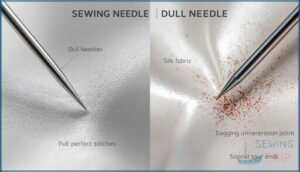
Your sewing machine will tell you when something’s wrong—you just need to know what to listen for. A dull needle sends clear signals through your fabric, stitches, and even the sounds your machine makes.
Watch for these telltale signs that it’s time for a fresh needle.
If you’re working with thick layers or multiple fabrics, consider upgrading to a walking foot for your quilting machine to prevent skipped stitches and uneven feeding.
Skipped or Uneven Stitches
When your machine suddenly produces a seam full of gaps, you’re likely working with a dull needle. Skipped stitches happen because a worn point can’t reliably pierce fabric and form consistent loops with the bobbin thread, even when your thread tension is spot-on.
Switching to a fresh, sharp point usually solves the problem immediately—and if you’re unsure which type suits your fabric best, check out this guide to choosing the right sewing needle for every project.
After about 8 hours of sewing, poor stitch quality often signals it’s time for needle maintenance and a fresh replacement.
Fabric Snagging or Pulling
A blunt point no longer glides smoothly between fibers—it pushes and distorts them instead, leaving visible pulls or rough tracks on your fabric. You’ll notice fabric damage especially on tightly woven cottons and knits, where needle wear creates small holes or runs at every entry point.
When resistance builds as fabric advances under the presser foot, that’s your signal for immediate needle maintenance and snag prevention.
Thread Breaking Frequently
When your thread snaps repeatedly despite correct tension and machine calibration, a worn sewing machine needle is often the culprit. Needle friction increases as the tip dulls, creating burrs that catch and weaken thread fibers with every pass through fabric.
This resistance leads to poor stitch quality and skipped stitches—problems that disappear the moment you install a fresh needle after those essential 8-10 hours of sewing.
Replacement is always the solution—check out these essential sewing tips to keep your machine running smoothly and your stitches consistent.
Puckering or Dimpling Fabric
When lightweight fabric ripples or gathers around your stitch line, fabric distortion signals needle damage that even perfect fabric tension can’t fix. A dull needle drags fibers down into the throat plate instead of piercing cleanly, creating dimples and waves that compromise stitch quality.
This sewing technique problem shows up most clearly on delicate materials, requiring a visual inspection and fabric test to confirm skipped stitches aren’t also present.
Unusual Clicking or Popping Sounds
Your ears often catch needle trouble before your eyes do. When a dull needle punches through fabric instead of gliding smoothly, you’ll hear distinct popping or clicking sounds with each stitch. This unusual noise means the blunt tip is forcing fibers apart rather than piercing cleanly between them.
Sewing machine troubleshooting starts with sound diagnosis—that rhythmic thudding signals it’s time for needle care and immediate replacement.
How to Inspect Your Needle for Dullness
Once you suspect your needle might be dull, it’s time to give it a closer look. You don’t need fancy equipment to check for wear—just good lighting and a few simple tests will tell you what you need to know.
Here’s how to inspect your needle and confirm whether it’s ready for replacement.
Visual Inspection of The Needle Tip

You can spot a dull needle by holding the tip toward bright light at a 45-degree angle. A sharp sewing needle shows a clean, tapered point, while dull needles reveal a tiny flat spot or rounded tip.
Check for burrs—those jagged edges that snag thread—and rotate the needle slowly to confirm point alignment. This simple tip inspection catches blunting before it ruins your fabric.
Using a Magnifying Glass
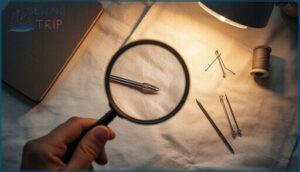
When your eyes aren’t enough, grab a magnifying glass for precise needle inspection. A 2x to 3x magnifier with good lighting reveals what naked vision misses—tiny burrs, rounded tips, and surface scratches that signal dullness.
Here’s what magnification benefits your sewing needle maintenance routine:
- Center the needle tip in the lens to reduce distortion and catch flaws clearly
- Use daylight LED lighting to highlight scratches and wear on the metal surface
- Compare used needles side-by-side with new ones to spot subtle rounding
- Check after striking pins to identify damage before it ruins your fabric
- Read size markings easily to confirm you’re reusing sharp needles correctly
Glass lenses outperform cheap plastic for sewing needle care—you’ll spot dull needles faster and protect both your fabric and machine.
Checking for Burrs and Nicks
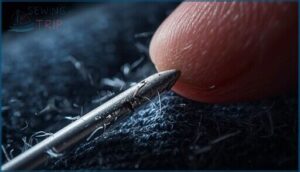
Beyond visual inspection, damage assessment requires touch. Lightly run your fingertip across the needle tip—roughness signals burrs from striking pins or metal fixtures. Under magnification, nicks appear as tiny indentations along the shaft.
These flaws increase thread fraying and cause skipped stitches during sharpness testing. For proper sewing needle care, burr detection means immediate replacement.
Dull needles with hidden damage ruin fabric faster than you’d expect.
The Fabric Test Method
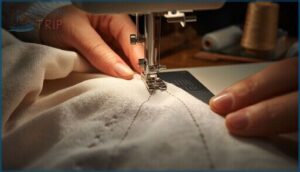
If you’re unsure about needle sharpness after checking for burrs, try a fabric assessment. Stitch a straight line on scrap cotton at a steady pace. Watch for these signs:
- Uneven stitch quality
- Skipped stitches
- Audible popping or thudding
- Increased fabric resistance
- Rough, enlarged needle holes
These reveal dull needles and poor fabric and needle interaction.
When to Replace Your Sewing Needle
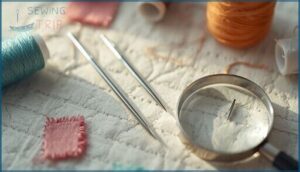
Knowing when to swap out your needle isn’t about guessing—it’s about following a few reliable guidelines that keep your stitching smooth and your fabric safe. Some situations call for an immediate change, while others depend on how much you’ve been sewing.
Let’s look at the specific times when a fresh needle makes all the difference.
After 8-10 Hours of Use
Generally, you’ll want to swap your sewing machine needle after 8-10 hours of continuous use—this is when needle wear patterns become significant enough to affect stitch quality.
Even if you don’t see visible damage, the tip dulls from repeated fabric impact, and those sharpness tests we discussed earlier will reveal declining performance.
Think of it as preventive needle maintenance that protects both your projects and your machine.
When Switching Fabric Types
Switching between cotton and denim, or silk and canvas? That’s your signal for a fresh sewing machine needle. Different fabrics demand specific needle sizes and points to prevent snagging, skipped stitches, and thread tension issues.
Using the wrong needle during material shift causes fabric distortion and increases needle deflection. Test your fabric selection on a scrap first—it’ll confirm your needle size choice matches your sewing technique perfectly.
After Hitting Pins or Hard Objects
That familiar ping means trouble—when your needle hits a pin or hard object collision, the damage runs deeper than you might think. Pin impact creates invisible burrs and bent shafts that guarantee skipped stitches and fabric snags.
Don’t risk sewing machine wear or torn material. Replace your sewing machine needle immediately after any strike, even if the needle damage isn’t visible yet.
When You Notice Performance Issues
Performance issues don’t fix themselves—they’re your machine’s way of flagging needle wear. When skipped stitches, puckering, or fabric damage appear suddenly, swap your sewing machine needle before tackling tension adjustments.
Those popping sounds and thread breaks signal that the needle’s done its job. Fresh needle maintenance tips prevent sewing problems from multiplying, and immediate replacement protects both stitch quality and your fabric.
How to Replace a Sewing Machine Needle
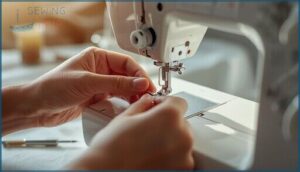
Replacing a sewing machine needle isn’t complicated, but doing it right keeps you safe and your machine running smoothly. You’ll want to follow a few simple steps in the proper order to avoid any mishaps.
Here’s how to swap out that dull needle with confidence.
Safety First: Unplugging Your Machine
Before you touch that needle, turn off your sewing machine and pull the plug from the wall. This simple step of electrical safety is your best defense for accident prevention and equipment protection.
Even with the power switch off, machines can accidentally activate if the foot pedal is bumped during machine maintenance. Unplugging eliminates that risk entirely, protecting both you and your machine from injury or damage during sewing machine maintenance.
Removing The Old Needle
With your machine safely unplugged, raise the needle to its highest position by turning the handwheel toward you. Lift the presser foot to give yourself clear access to the clamp mechanism.
Now you’re ready for safe handling and needle extraction:
- Locate the needle clamp screw on the needle bar just above the needle shank.
- Hold the needle firmly at its flat side while loosening the screw counterclockwise with a small screwdriver.
- Pull the needle straight down and place it immediately in a rigid container for sharp disposal.
These needle removal tips protect both you and your sewing machine during needle care and replacement.
Choosing The Right Replacement Needle
The right sewing needle makes all the difference in your finished project. Match needle size to your fabric—smaller sizes for lightweight materials, larger for heavyweight.
Use ballpoint needles for knits to prevent snagging, and sharp universal needles for woven fabric types.
This careful needle care and replacement approach ensures clean stitches and protects your needle materials from premature wear.
Installing and Securing The New Needle
Once you’ve chosen your replacement, slide the new sewing needle up into the clamp until you feel a gentle stop—that’s proper needle alignment. The flat side should face the back for correct needle orientation.
Tighten the screw firmly but don’t overdo it; clamp security matters, but stripped threads don’t help anyone.
Check thread clearance by manually turning the handwheel to verify smooth operation.
Tips for Extending Needle Life

You don’t have to replace needles constantly if you treat them right. A few smart habits can double or even triple how long each needle stays sharp and effective.
Here’s what makes the biggest difference in keeping your needles working their best.
Match Needle Type to Fabric
Pairing the right sewing needle with your fabric selection is like choosing the proper tool for any precision task—it prevents damage and extends needle life. Match your needle type and size to what you’re sewing:
- Woven fabrics (cotton, linen) work best with universal or sharp needles in sizes 80/12 to 90/14
- Knit fabrics require ballpoint needles (70/10 to 80/12) to slip between yarns without cutting
- Heavy materials (denim, canvas) need reinforced jeans needles in sizes 90/14 to 110/18
When you align needle materials and thread compatibility with fabric density, you reduce friction and premature dulling.
Avoid Sewing Over Pins
One of the fastest ways to dull or break your sewing machine needle is hitting a pin mid-stitch. This simple mistake chips the needle tip, damages fabric, and compromises sewing accuracy.
For better needle protection and fabric damage prevention, pull pins out just before they reach the presser foot. If you’re concerned about shifting seams, try pinless methods like fabric clips or strategic basting for improved sewing safety precautions.
Maintain Consistent Sewing Speed
Just as avoiding pins protects your sewing machine needle, controlling your sewing speed prevents heat buildup and wear. Erratic speed changes create machine vibration and uneven force load management that stresses the needle, while racing along at top speed can spike needle temperature high enough to damage synthetic fabrics and compromise stitch length consistency.
Here’s how speed control devices and steady pacing boost sewing machine performance:
- Use a speed limiter or servo motor to cap maximum speed, giving you better control and reducing stress on your needle during precision work.
- Keep your foot pressure steady on the pedal so the machine maintains consistent rhythm, which improves sewing efficiency and prevents jerky movements that bend needles.
- Slow down for thick fabrics or multiple layers to reduce friction and heat, protecting both your needle and the material from damage.
Following these needle maintenance tips helps you avoid skipped stitches, thread breaks, and premature needle replacement.
Proper Needle Storage Methods
Beyond managing your sewing speed, proper needle storage methods protect your investment from rust and damage. Store sewing needles in labeled containers with humidity control to prevent corrosion. A dedicated needle organizer keeps different types separated—universal, ballpoint, and sharp needles each get their own compartment. This needle organization system ensures you’ll grab a fresh needle every time, not a dull one hiding among the good ones.
| Storage Element | Protective Benefit |
|---|---|
| Labeled containers | Prevents accidental use of wrong needle type |
| Humidity control | Minimizes rust and material degradation |
| Separate compartments | Avoids confusion between sharp and dull needles |
| Regular inspection | Catches damage before it affects your sewing |
| Proper disposal system | Keeps workspace safe from bent or broken needles |
Check your storage cases regularly for loose pins or damaged hinges that compromise needle protection.
Can You Sharpen a Dull Sewing Needle?
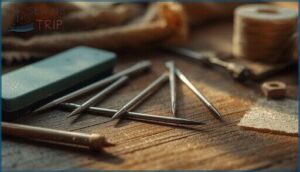
You might’ve heard that you can sharpen a dull sewing needle instead of tossing it out. While a few methods claim to restore sharpness, they don’t all work the same way.
Let’s look at your options and when it’s actually worth the effort.
Using an Emery Pincushion
An emery pincushion offers a traditional approach to needle restoration. These cushions contain aluminum oxide, which gently removes burrs from your sewing machine needle tip with light, controlled strokes.
Remove the needle first, rotate it slightly while sharpening, then clean off metal dust. This needle sharpening technique extends needle life, though it won’t fix severely bent needles or work well on titanium-coated varieties.
Needle Sharpeners and Their Effectiveness
Compact needle sharpeners work similarly to emery pincushions but in a portable format. These maintenance tools use abrasive materials like aluminum oxide to smooth burrs and clean oxidation from hand sewing needles.
They’re effective refurbishment methods for minor dullness, helping you sharpen needles that pierce fabric smoothly again. However, they can’t fix severely damaged needle geometry or restore a sewing machine needle to factory sharpness—sharpening techniques have limits.
When Replacement is Better Than Sharpening
Most of the time, replacing your sewing machine needle makes more sense than trying to sharpen it. Sharpening limitations become obvious when you consider that removing material weakens the needle’s structure and risks fabric damage. New sewing needles cost only $0.10 to $0.30 each, making replacement costs minimal.
Here’s when you should skip sharpening and replace instead:
- Bent or severely blunt needles won’t regain their precision geometry through sharpening
- Specialized needles like ball points lose their engineered design if sharpened
- Titanium-coated needles that already offer five times the needle longevity
- Industrial sewing machine needles built for 10,000 stitches per minute require factory precision
Understanding needle wear patterns helps you make smarter choices. A truly dull needle shows visible burrs under magnification—damage that crude sharpening techniques can’t fix without creating stress fractures. You’re better off investing those minutes in proper sewing machine maintenance and learning sewing techniques that extend needle life naturally.
Safe needle disposal matters too. Wrap used needles in tape before throwing them away to protect sanitation workers.
Frequently Asked Questions (FAQs)
What causes needles to dull faster than normal?
Several factors speed up needle wear. High sewing speeds, dense synthetic fabrics, and metallic threads create excessive friction.
Polyester thread, poor storage in humid areas, and repeatedly hitting pins also accelerate dullness in sewing machine needles.
Do different needle brands last longer than others?
Quality varies, paradoxically—premium needle brands often outlast budget options due to finer steel and precision manufacturing.
Though proper sewing technique and thread quality matter more than the brand name alone for needle performance metrics.
Can a dull needle damage my sewing machine?
Yes, a dull needle can damage your sewing machine. Increased fabric resistance causes friction and heat, bending the needle and straining the bobbin mechanism. This accelerates wear on the presser foot and needle plate.
How do I dispose of old needles safely?
Think of old needles like tiny daggers—they deserve respect.
Drop them in a sharps container or rigid puncture-proof bottle, seal it tight, and check your local waste management guidelines for safe disposal options.
Should I keep a needle replacement log or schedule?
A needle replacement log isn’t essential for casual sewers, but it helps serious stitchers track wear patterns and prevent performance issues.
Record fabric type, hours used, and any skipped stitches to fine-tune your sewing machine maintenance.
Conclusion
Think of a dull needle like driving with a flat tire—you’ll get there eventually, but the ride will be rough and something’s bound to break. Now that you know how to tell if a sewing needle is dull, you can catch problems before they ruin your fabric.
Check your needle regularly, trust what your machine tells you through sound and stitch quality, and swap it out without hesitation. Sharp tools make confident sewers.
- https://www.gatheringthread.com/how-to-tell-if-sewing-machine-needle-is-dull/
- https://www.fibre2fashion.com/industry-article/5381/avoiding-fabric-holes-caused-by-needle
- https://jdc.jefferson.edu/cgi/viewcontent.cgi?article=1051&context=radoncfp
- https://www.satra.com/bulletin/article.php?id=2027
- https://www.schmetzneedles.com/pages/sewing-machine-needle-troubleshooting-guide