This site is supported by our readers. We may earn a commission, at no cost to you, if you purchase through links.
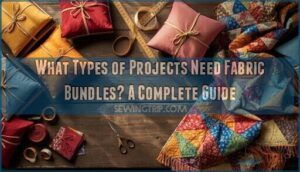
You buy a fabric bundle because you fall in love with the prints, then it sits in your stash for months because you’re not sure what to make with it. Sound familiar?
Here’s the thing: bundles aren’t just pretty fabric collections—they’re designed with specific projects in mind, from the number of pieces to how they’re cut.
Fat quarters shine in cushion covers and small quilts, while jelly rolls transform into stunning strip-pieced throws in half the time of traditional cutting. Once you match the bundle type to your project, that stack of coordinated prints becomes your shortcut to finished work that actually looks intentional, not chaotic.
Table Of Contents
- Key Takeaways
- What Are Fabric Bundles Used For?
- Why Quilting Projects Need Fabric Bundles
- Home Decor Projects That Use Fabric Bundles
- Sewing Crafts and DIY Projects Requiring Bundles
- Garment Projects That Benefit From Bundles
- Tips for Choosing and Using Fabric Bundles
- Frequently Asked Questions (FAQs)
- Conclusion
Key Takeaways
- Fabric bundles work best when you match the precut format to your project first—fat quarters for cushions and small quilts, jelly rolls for strip-pieced throws, and charm packs for patchwork—rather than buying bundles and hoping to find a use later.
- About 40% of purchased fabric bundles never get used because buyers don’t start with a specific project in mind, making it essential to identify what you’re making before selecting your bundle type.
- Bundles eliminate the guesswork of color coordination and fabric selection while teaching you design principles through pre-curated collections that already balance light, medium, and dark values across coordinated prints.
- Beyond quilting, fabric bundles streamline home decor projects like table runners and wall hangings, plus practical crafts like tote bags and fabric baskets, giving you professional-looking results without hours spent matching fabrics at the store.
What Are Fabric Bundles Used For?
Fabric bundles are pre-coordinated collections of fabric that take the guesswork out of choosing colors and patterns that actually work together. They’re designed to give you variety without the headache of matching fabrics yourself, which is why they’ve become a go-to for quilters, sewists, and crafters who want professional-looking results without spending hours at the fabric store.
Most bundles include anywhere from a quarter-yard to a half-yard of each fabric, though bundle sizes and yardage can vary depending on the manufacturer and intended project.
Let’s look at what makes them tick and the different types you’ll find.
Definition and Key Features
A fabric bundle is your shortcut to color-coordinated magic—precut pieces sold together so you don’t second-guess your choices. Here’s what makes bundles work:
- Fabric Types: Most feature quilting cotton, though some mix blends like cotton-linen for specific sewing projects.
- Bundle Sizes: Total yardage ranges from 3 to 6 yards, with pieces cut to standard 42-44 inch widths.
- Color Coordination: Assembled around a color story—warm tones, cool neutrals—with balanced contrast for patchwork.
- Precut Options: Charm packs, fat quarters, and other precuts optimize variety within fixed totals.
- Project Alignment: Bundles match common cutting plans for quilting, home decor, or apparel projects.
Common Types of Fabric Bundles
You’ll see bundles sold in four main precut formats. Fat quarters—eight to twelve inches of fabric—come in sets of 10-12, giving you roughly five yards total.
Charm packs offer 5-inch squares, layer cakes deliver 10-inch blocks, and jelly rolls provide 2.5-inch strips. Most are labeled by color family or theme, with cotton quilting weight dominating the market for its durability and forgiving sew-ability.
Why Quilting Projects Need Fabric Bundles
Fabric bundles and quilting go together like coffee and Sunday mornings—they just work. When you’re piecing together squares, strips, or blocks, having pre-coordinated fabrics saves you from that “do these even match?” panic at the cutting table.
Let’s look at the quilting projects where bundles really shine.
Patchwork and Block Quilts
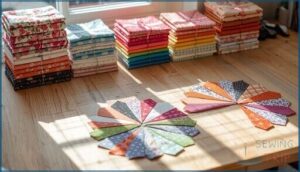
Patchwork quilts are where fabric bundles really shine. You’ll get coordinated prints that work together without the headache of hunting down matching fabrics across different lines.
Here’s what bundles do for your block quilts:
- Nine Patch blocks come together fast when you’ve got pre-cut charm squares already coordinated.
- Churn Dash and Log Cabin patterns use fat quarters efficiently, giving you enough variety for visual interest.
- Flying Geese blocks benefit from bundles that balance light, medium, and dark values automatically.
- Dresden Plate designs shine when you pull from a curated collection with complementary prints.
- Scrappy quilt designs get instant harmony from bundles while maintaining that vibrant, high-contrast look.
The real magic? Bundles teach you color balance and fabric selection without the guesswork. You’re learning quilting methods and patchwork techniques while the bundle manages the coordination. It’s like training wheels for your fabric eye—except these wheels actually make your quilt look better.
Once you’ve built that intuition, a beginner guide to using fabric bundles can help you start mixing your own prints with confidence.
Fabric bundles teach color balance and coordination while you learn—training wheels that actually make your quilt look better
Strip Piecing and Jelly Roll Quilts
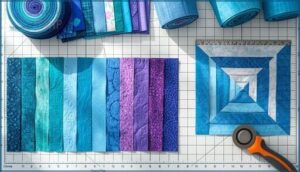
Long, thin strips make short work of complicated quilts. Jelly rolls—bundles of 40 to 42 strips 2½ inches wide—turn strip piecing into a fast-track method for assembling quilt blocks.
You sew strips together, then cut across the sewn unit to create blocks without piecing individual squares. You can discover tips for working with jelly rolls in this helpful guide on the benefits of pre-cut strips.
| Project Type | Strip Count Needed | Finished Block Size |
|---|---|---|
| Jelly Roll Race | 40 strips | Varies by layout |
| Rail Fence Quilt | 30–36 strips | 6–8 inches |
| Bargello Design | 42 strips | Custom width |
This technique slashes cutting time and keeps your color coordination locked in from start to finish.
Beginner-Friendly Quilt Patterns
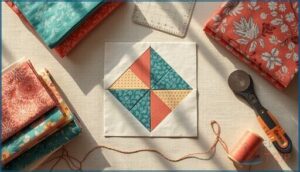
Start with simple block patterns—four-patch or nine-patch quilts use just two to three fabrics from your bundle, keeping contrast clear while you learn. These beginner-friendly quilting basics build confidence fast.
Patchwork projects sized 36 by 40 inches to 60 by 80 inches give you room to practice fabric selection and block patterns without overwhelming your workspace. Press seams to one side for easier sewing tips and less bulk.
Home Decor Projects That Use Fabric Bundles
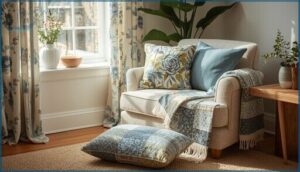
Fabric bundles don’t just belong in the sewing room—they’re perfect for giving your home a fresh, coordinated look without breaking the bank.
When you’ve got pre-matched fabrics at your fingertips, you can knock out beautiful pieces for every room in the house. Let’s look at three home decor projects where bundles really shine.
Cushion Covers and Pillow Shams
You can transform a fabric bundle into matching cushion covers and pillow shams that pull a room together. Standard cushion filling measures 18 by 18 inches, so plan your fabric selection accordingly.
Fabric bundles give you coordinated prints for home decor DIY without the guesswork. Add decorative trims like piping or tassels to boost fabric durability and style.
These sewing projects let you practice fabric crafting while creating custom pillow inserts covers.
Table Runners and Placemats
Fabric bundles bring your dining decor to life through coordinated table runners and placemat designs.
Standard runner lengths span 36 to 108 inches, while placemats usually measure 12 by 18 inches—perfect for patchwork layouts.
Strip-piecing techniques from quilting turn jelly rolls into stunning table settings fast.
Your fabric choices shine when you mix prints from a single bundle, creating cohesive fabric crafting projects that transform everyday meals.
Wall Hangings and Mini Quilts
You can turn charm packs and fat quarters into stunning wall art in sizes ranging from 12 to 24 inches square. Mini quilts showcase patchwork in modern geometric patterns or applique designs that pop on any wall.
- Cotton quilting fabric from bundles creates flat, frame-ready surfaces
- Jelly rolls work perfectly for strip-pieced hanging techniques
- Fabric selection from coordinated bundles eliminates color-matching headaches
- Quilting designs gain depth through trapunto or minimalist block layouts
Sewing Crafts and DIY Projects Requiring Bundles
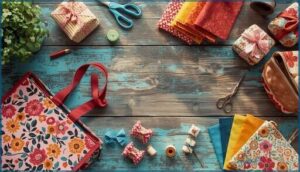
Fabric bundles aren’t just for quilts—they’re perfect for quick, practical projects that add personality to your everyday life. You can whip up tote bags, organizers, and gift toppers without spending hours hunting for coordinating fabrics.
Let’s look at a few craft projects where bundles really shine.
Tote Bags and Pouches
You can knock out a coordinated tote bag and matching pouch in an afternoon using a single fabric bundle. Patchwork panels from charm packs create eye-catching bag construction that stands out at the farmers market, while coordinated prints work beautifully for tote bag linings and accessory pockets.
Fat quarters give you enough yardage for pouch organization without buying full cuts—no more mismatched sewing projects cluttering your stash. For more inspiration, consider exploring cotton tote bag options that are durable and great for personalization.
Fabric Baskets and Organizers
Your craft room won’t organize itself—that’s where fabric storage baskets step in. Mix prints from a charm pack to create stackable organizer systems for your craft stations, or use layer cake squares for larger sewing containers.
Quilting bundles let you test basket patterns without buying full yardage, turning fabric selection into part of the fun instead of a chore.
Gift Wraps and Gift Toppers
Skip the last-minute store runs—you can make stunning reusable gift toppers from fat quarters. Layer coordinating prints into fabric bows sized 2.5 to 3 inches, or cut charm pack squares into decorative embellishments that beat paper crafts every time.
- Mix seasonal themes with year-round patterns for adaptable gift box designs
- Practice wrapping techniques using bundled prints before major occasions
- Combine fabric selection with sewing projects for coordinated presentation
- Master basic crafting techniques that transform bundles into memorable toppers
Garment Projects That Benefit From Bundles
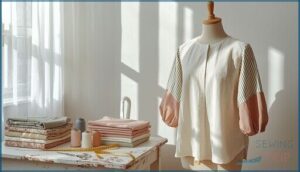
Fabric bundles aren’t just for quilts and home decor—they’re also a secret weapon for garment projects.
You can use them to build coordinated wardrobes, add unexpected details to your sewing, or make matching outfits without the headache of hunting down fabrics that play nice together.
Here’s where bundles really shine in clothing projects.
Coordinated Outfits and Accessories
You’ll build a personal style from the ground up when fabric bundles guide your wardrobe planning. Color harmony flows naturally—bundles deliver coordinated fabrics that take the mystery out of accessory matching and fabric coordination.
Think matching scarves, belts, and contrast trims across sewing projects. That fabric selection stress? Gone. You’re working with clothing projects that already speak the same language, creating style consistency without second-guessing every choice.
Kids’ Clothing and Patchwork Apparel
Patchwork designs for kids sewing become almost foolproof with fabric bundles. You’re working with 5-inch squares that already play nice together—no color coordination panic attacks required.
Those bright character prints and soft cotton blends? They’re sized for small garments, usually fitting ages 2 to 10. Textile mixing happens naturally when bundles guide your fabric selection, creating playful pullovers without the usual fabric shopping headache.
Accent Details and Trims
Beyond clothes, fabric bundles let you add edge piping with that narrow 1/4 inch channel for polish, or stitch satin ribbons (3/8 to 1 inch wide) along seams using your zipper foot.
Fringe accents spaced every 12 inches bring boho vibes, while embroidery details and beaded trims with seed beads create eye-catching focal points—fabric selection simplified through coordinated bundles.
Tips for Choosing and Using Fabric Bundles
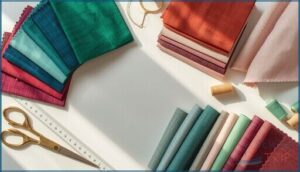
Getting the most out of fabric bundles isn’t rocket science, but a few smart choices upfront can save you headaches later.
You’ll want to think about how colors work together, which precut size fits your project, and what tools you actually need on hand. Let’s walk through the essentials so you can shop with confidence and jump straight into sewing.
Selecting Colors and Patterns
Think of color harmony as your roadmap—start with one dominant hue, then add two or three supporting tones for visual balance.
Mix pattern scales like you’re layering flavors: small prints fill backgrounds, medium ones add texture, and large motifs become focal points.
Don’t forget fabric coordination through color theory—warm colors energize while cool tones calm. Pattern mixing works best when you vary scale and keep design principles simple.
Precut Sizes and Project Suitability
Match your bundle sizes to your ambitions: fat quarters (18 by 21 inches) tackle small quilts and cushions, while layer cakes (10-inch squares) conquer king-size mystery quilts.
Jelly rolls work magic on lap quilts with their 2.5-inch strips, and charm packs (5-inch squares) shine in wall hangings. Smart fabric selection means precut fabrics that fit your project planning without wasting a single scrap.
Essential Tools and Fabric Care
You’ll need proper quilting tools and fabric prep to protect your bundle investment. Start with these sewing notions:
- A 45mm rotary cutter paired with a self-healing cutting mat for slicing through multiple layers
- Sharp fabric scissors for detailed work and curves
- Clear acrylic rulers for precise measurements
- Temporary fabric glue for accurate alignment
Pre-wash your fabric bundles to remove sizing agents, then store them in cool, dry spaces away from direct light.
Frequently Asked Questions (FAQs)
What are the 10 uses of fabric?
Like building blocks in a child’s hands, fabric paves the way to endless creation.
From quilting and patchwork to home decor and garment construction, fabric bundles simplify textile arts while teaching fabric selection and sewing basics through coordinated crafting ideas.
What to do with a bunch of fabric?
You can transform fabric scraps into textile art, patchwork cushions, or quilted wall hangings.
Fabric upcycle projects include tote bags, fabric baskets, and gift toppers—perfect for using up bundles while exploring new crafting ideas.
What crafts can you make with fabric?
Think fabric bundles only suit serious Quilting? Toss that rulebook.
You can sew Soft Toys, weave Appliqué Art, craft Fabric Flowers, or jazz up Scrapbooking Embellishments—endless DIY Projects and Sewing Crafting Projects await.
Can fabric bundles be used for upholstery?
Most fabric bundles aren’t suited for upholstery—they lack the heavy duty materials and fabric durability needed for furniture restoration.
You’ll want upholstery fabric with proper colorfastness testing and reinforced weaves instead.
How do you mix bundles from different collections?
Start with colors that share a common thread—maybe all warm tones or cool shades.
Then layer in patterns at different scales.
This collection curation approach creates color harmony while letting you practice pattern mixing without clashing.
Are fabric bundles suitable for historical costume reproduction?
A Victorian ballgown needs precise silk taffeta draping—something bundles rarely deliver.
Fabric bundles can work for costume accuracy if you verify fiber content and era authenticity, but most lack the vintage textiles and reproduction methods true historic fabric demands.
Whats the difference between pre-washed and unwashed bundles?
Pre-washed bundles arrive soft and shrink-ready, reduce dye bleeding—perfect for quilting accuracy.
Unwashed options need laundering first to prevent later puckering, but they’re budget-friendly. Choose based on your project timeline and fabric selection guide needs.
Can you dye or overdye fabric bundle pieces?
You can absolutely transform bundle pieces with dye—it’s like giving your stash a second life.
Use fiber reactive dyes for cotton, test swatches first, and always prewash to guarantee even color absorption.
Conclusion
Here’s a stat that surprises most sewers: about 40% of purchased fabric bundles never get used because the buyer didn’t have a project in mind first. That’s backward thinking.
When you start with the project—whether it’s a jelly roll quilt or fat quarter cushions—you’re matching what types of projects need fabric bundles to the actual bundle format. The fabric becomes your tool, not your problem. Pick your project, then grab your bundle.
- https://www.poundametre.com/blogs/sewciety-fabric-blog/fabric-bundles-a-smart-way-to-buy-fabric-for-multiple-projects
- https://www.cottoneerfabrics.com/a-guide-to-precuts-and-bundles
- https://mrsquilty.com/blogs/news/coordinated-fabric-bundles-matter-quilting
- https://sewmuchonline.com/blogs/sewing-tips-quilting-inspiration/fat-quarter-bundle-benefits
- https://www.thimblesquilts.com/blogs/news/thimbles-guide-to-precut-fabrics