This site is supported by our readers. We may earn a commission, at no cost to you, if you purchase through links.
Your first fabric scissors aren’t just tools—they’re the difference between clean, professional-looking edges and frayed disasters that make you want to quit sewing altogether. Many beginners grab whatever scissors are lying around, then wonder why their patterns don’t line up or their seams look chewed.
The truth is, regular household scissors crush fabric fibers instead of slicing through them cleanly. Quality fabric scissors for beginners don’t require a massive investment, but they do demand understanding what separates a $15 breakthrough from a $50 regret.
Whether you’re cutting delicate silk or thick denim, the right pair transforms frustrating, jagged cuts into smooth, accurate lines that actually match your pattern pieces.
Table Of Contents
- Key Takeaways
- Best Fabric Scissors for Beginners
- 1. Gingher Stainless Steel Dressmaker Scissors
- 2. Amazon Basics Stainless Steel Scissors
- 3. Mazbot Curved Embroidery Scissors
- 4. Hisuper Sewing Embroidery Scissors
- 5. Deeinn Sewing Scissors
- 6. Mr Pen Pinking Shears Scissors
- 7. Clover Button Hole Cutter Tool
- 8. Gingher Knife Edge Applique Scissors
- 9. Handi Quilter Batting Scissors
- 10. Fiskars Orange Handled Scissors
- Types of Fabric Scissors Explained
- Key Features to Look For
- Choosing Scissors for Different Fabrics
- Proper Care and Maintenance Tips
- Safe Handling and Usage Guidelines
- Comparing Popular Scissor Brands
- Common Mistakes Beginners Should Avoid
- Tips for Smooth and Accurate Cutting
- Frequently Asked Questions (FAQs)
- Conclusion
Key Takeaways
- Your fabric scissors will stay sharp and deliver professional cuts only if you never use them on paper—even one sheet dulls the blade and ruins the edge for sewing.
- Match your scissors to your fabric weight: embroidery scissors for delicate work and thread trimming, dressmaker’s shears for medium fabrics, and heavy-duty or tailor’s scissors for denim and canvas.
- Beginner-friendly scissors should have 6-8 inch stainless steel blades, ergonomic grips that prevent hand fatigue, and proper blade alignment—you don’t need to spend $50 to get clean cuts on your first projects.
- Regular maintenance extends scissor life dramatically: wipe blades after each use, oil the pivot point monthly, sharpen every 50-100 cutting hours, and store in a dry place with blade guards to prevent rust and damage.
Best Fabric Scissors for Beginners
You need scissors that cut cleanly without fighting you on every stroke. The right pair won’t cost a fortune, but it’ll make the difference between frustration and confidence as you tackle your first projects.
A solid pair of beginner-friendly sewing scissors will give you the control and precision you need without breaking the bank.
Here are ten beginner-friendly options that deliver sharp performance without the learning curve.
1. Gingher Stainless Steel Dressmaker Scissors
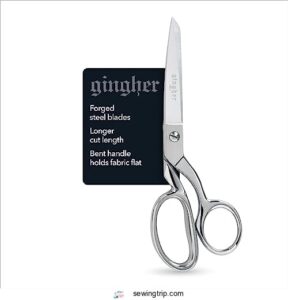
You’ll find precision and control with Gingher Stainless Steel Dressmaker Scissors, your first step toward mastering fabric cuts. These 8-inch shears feature a knife edge blade that slices through multiple layers without struggle, while the bent handle keeps your fabric flat against the table for clean, mistake-free cuts.
The stainless steel construction resists rust and maintains sharpness over time, and you get a protective sheath for safe storage. They’re built for patterns, seams, and long swaths of fabric—exactly what you need to take command of your sewing projects.
| Best For | Sewers, quilters, and tailors who need reliable scissors for cutting fabric patterns, trimming seams, and handling multiple layers with precision. |
|---|---|
| Material | Stainless Steel |
| Length | 8 inches |
| Primary Use | Cutting fabric |
| Handle Design | Bent handle |
| Color | Silver |
| Storage | Nylon sheath included |
| Additional Features |
|
- Knife edge blade cuts through multiple layers smoothly without snagging or fraying
- Bent handle design keeps fabric flat on your work surface for cleaner, more accurate cuts
- Stainless steel construction stays sharp longer and resists rust
- Not ideal for thick or heavy-duty materials like leather or canvas
- Higher price point compared to basic fabric scissors
- Requires proper storage in the included sheath to maintain blade quality
2. Amazon Basics Stainless Steel Scissors
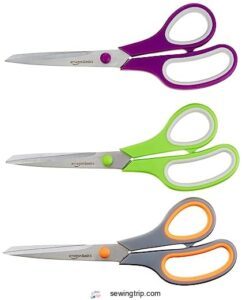
When budget and versatility matter, Amazon Basics Stainless Steel Scissors deliver the essentials. This three-pack gives you 8-inch blades with PVD coating that stays sharp through repeated cuts on paper, cardboard, fabric, and photos.
The soft grip grips work for both hands and reduce fatigue during long sessions, while the stainless steel construction resists rust.
They won’t replace specialized shears, but you’ll appreciate having backups for your workspace—especially when you’re just learning proper cutting techniques and don’t want to risk expensive tools.
| Best For | Budget-conscious users who need reliable everyday scissors for office work, crafts, and general household tasks without breaking the bank. |
|---|---|
| Material | Stainless Steel |
| Length | 8 inches |
| Primary Use | Multipurpose cutting |
| Handle Design | Comfort grip |
| Color | Multicolored |
| Storage | No cover |
| Additional Features |
|
- Three-pack provides great value and ensures you always have a backup pair on hand
- PVD-coated blades stay sharp longer than standard scissors and handle multiple materials well
- Ambidextrous soft-grip handles make them comfortable for extended use regardless of hand dominance
- Blade sharpness may decline with heavy use over time
- Not durable enough for industrial or heavy-duty cutting tasks
- Quality inconsistency reported after prolonged periods of use
3. Mazbot Curved Embroidery Scissors
Those curved blades on Mazbot Embroidery Scissors aren’t just for show—they let you trim threads inside a hoop without pulling your work out every five minutes. At 6 inches and 0.8 ounces, they’re light enough for detail work and sharp enough to snip close to stitches without snagging fabric.
The bent handle design gives you clean access to tight corners, and the nickel finish resists rust. You’ll appreciate them for appliqué trimming and punch needle projects, though they’re not built for heavy fabric.
| Best For | Embroiderers and crafters who need precise thread trimming inside hoops without constantly removing their work. |
|---|---|
| Material | High-quality steel |
| Length | 6 inches |
| Primary Use | Embroidery and crafts |
| Handle Design | Ergonomic bent handle |
| Color | Nickel |
| Storage | No cover |
| Additional Features |
|
- Curved blade design reaches tight spots and trims close to stitches without fabric damage
- Lightweight at 0.8 ounces with ergonomic handle that reduces hand strain during long sessions
- Sharp steel blades with rust-resistant nickel finish hold up well for appliqué and punch needle work
- Not strong enough for thick or heavy-duty fabrics
- Handle grip can put uncomfortable pressure on your thumb during extended use
- Performance doesn’t match pricier name-brand scissors if you’re looking for professional-grade quality
4. Hisuper Sewing Embroidery Scissors
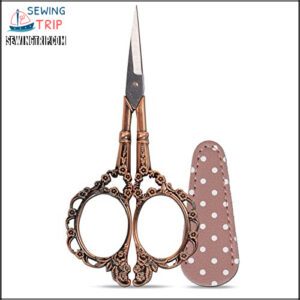
At 4.5 inches, Hisuper Embroidery Scissors fit right in your palm for close-up thread work. The pointed stainless steel tips reach into tight spots around your stitches without pulling fabric, and the polished blades cut clean lines through embroidery floss and fine threads without fraying edges.
You get a leather protective cover that prevents rust and keeps the sharp points safe in your sewing kit. They’re hand-polished for precision cutting, though you’ll want to wipe them dry after use and avoid thick materials to preserve that edge.
| Best For | Embroiderers and detail-oriented sewers who need precise control for cutting thread and floss in tight spaces. |
|---|---|
| Material | Stainless Steel |
| Length | 4.5 inches |
| Primary Use | Embroidery and sewing |
| Handle Design | Standard handle |
| Color | Red Copper |
| Storage | Leather cover included |
| Additional Features |
|
- Sharp pointed tips reach into small areas without snagging fabric
- Leather cover protects the blades from rust and keeps them safe in your kit
- Compact 4.5-inch size fits comfortably in your hand for close work
- May arrive with oil residue on the tips that needs wiping off
- Too small for cutting thicker materials or general fabric work
- Requires careful storage and drying to prevent rust despite the protective cover
5. Deeinn Sewing Scissors
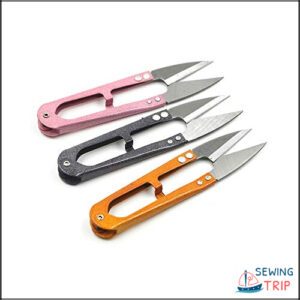
This three-pack gives you lightweight alloy steel scissors at 4.1 inches—perfect for snipping threads and trimming small fabric pieces when you’re learning the basics. Each pair manages cotton blends and lightweight materials with clean cuts, and the stainless steel blades resist rust when you dry them after use.
You’ll find them handy for opening packages or clipping herbs too.
Watch for quality control issues, though—some packs arrive with a defective pair that won’t close properly, so inspect them right away.
| Best For | Beginners and casual sewers who need affordable, compact scissors for basic thread trimming, lightweight fabric cutting, and general crafting tasks. |
|---|---|
| Material | Alloy Steel |
| Length | 4.1 inches |
| Primary Use | Sewing and trimming |
| Handle Design | Standard handle |
| Color | Multicolored |
| Storage | No cover |
| Additional Features |
|
- Three-pack offers great value and extras for different workspaces
- Lightweight alloy steel construction resists rust when properly maintained
- Versatile enough for sewing, crafts, package opening, and herb trimming
- Quality control issues reported with defective scissors that won’t close properly
- Small 4.1-inch size may be too limited for larger cutting tasks
- Not suitable for heavy-duty fabric work or thick materials
6. Mr Pen Pinking Shears Scissors
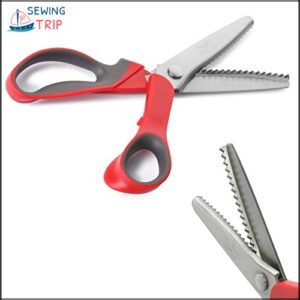
These 9.25-inch scissors cut precise zigzag edges that stop fabric from fraying—essential when you’re finishing seams or adding decorative borders to your first projects.
The stainless steel blades stay sharp through cotton blends and lightweight linens, while the red and black grips give you control during extended cutting sessions.
You’ll notice the ergonomic grip reduces hand strain, though people with mobility issues might find the tension stiff at first.
Clean the blades after each use and store them closed to protect those pinking teeth.
| Best For | Home sewers and crafters who need clean, fray-free fabric edges for garment finishing and decorative projects. |
|---|---|
| Material | Stainless Steel |
| Length | 9.25 inches |
| Primary Use | Zigzag pattern cutting |
| Handle Design | Ergonomic grip |
| Color | Black and Red |
| Storage | No cover |
| Additional Features |
|
- Sharp stainless steel blades cut precise zigzag patterns that prevent fraying on various fabrics
- Ergonomic red and black grip design reduces hand fatigue during extended use
- 9.25-inch length provides good leverage and control for cutting straight lines
- Stiff tension may be difficult to operate for users with hand mobility issues
- Can cause hand strain during prolonged cutting sessions
- May require manual tension adjustment out of the box for smoother operation
7. Clover Button Hole Cutter Tool
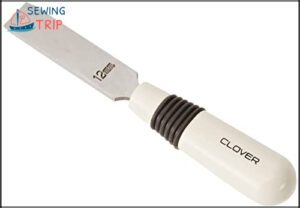
You’ll slice open buttonholes with precision using this chisel-edge tool—just press it through your fabric over a wooden block, and the sharpened blade cuts clean openings without fraying.
Before you start, review these fabric cutting tips for beginners to ensure your buttonhole tool works on properly prepared material.
The flat, wide edge starts and widens holes smoothly, handling various buttonhole widths with gentle pounding force.
A protective sheath covers the blade between uses, keeping you safe from that razor-sharp edge.
Store this tool away from kids and pets, and apply occasional silicone spray to maintain peak performance on all your garment projects.
| Best For | Sewers who need clean, precise buttonhole cuts on garments without fraying or ragged edges. |
|---|---|
| Material | Steel |
| Length | 7.5 inches |
| Primary Use | Opening buttonholes |
| Handle Design | Ergonomic rubber grip |
| Color | Not specified |
| Storage | Vinyl slip cover |
| Additional Features |
|
- Sharp chisel-edge blade cuts through fabric cleanly in one press
- Ergonomic steel construction with rubber grip makes it comfortable and secure to hold
- Includes protective vinyl cover for safe storage between projects
- Extremely sharp blade requires careful handling and storage away from children and pets
- May struggle with very wide buttonholes beyond its cutting width
- Needs occasional silicone spray maintenance to keep performing at its best
8. Gingher Knife Edge Applique Scissors
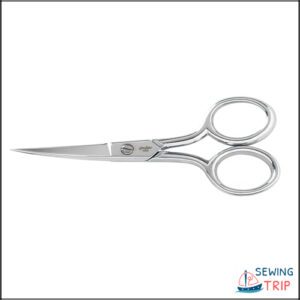
You’ll master tight appliqué cuts with this paddle-blade design—it slides under your top fabric layer while protecting what’s underneath, keeping your cutting path visible and mistake-free. The offset handle lifts your hand above the work surface, giving you pinpoint control when trimming close to embroidery stitches or sculpting wool in hooked rugs.
Forged from high-carbon steel with a double-plated chrome-over-nickel finish, these 6-inch scissors maintain their knife-edge sharpness through multiple fabric layers. The ambidextrous double-loop handle fits both right and left hands comfortably.
| Best For | Quilters, embroiderers, and fabric crafters who need precision when trimming appliqués, seams, or embroidery work without cutting into the base fabric. |
|---|---|
| Material | Alloy Steel |
| Length | 3.5 inches |
| Primary Use | Seam trimming |
| Handle Design | Offset handle |
| Color | Silver |
| Storage | Leather sheath included |
| Additional Features |
|
- Paddle-shaped blade slides under top fabric layers to protect what’s underneath while keeping your cutting line visible
- Offset handle design lifts your hand above the work surface for better control during detailed cuts near stitching
- Durable chrome-over-nickel finish and precision-ground blade stay sharp through repeated use on multiple fabric layers
- Handles can feel hard and uncomfortable during extended use, especially if you have smaller hands
- May leave red marks or cause finger discomfort after long cutting sessions
- Can still damage surrounding stitches if you’re tired or not careful, despite the protective blade design
9. Handi Quilter Batting Scissors
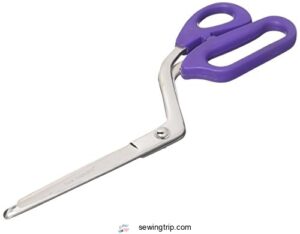
When you’re squaring off finished quilts or slicing through stacked batting layers, you need scissors that won’t buckle under pressure. The Handi Quilter Batting Scissors deliver a 5-inch stainless steel blade with a rounded tip that glides through multiple layers without snagging delicate fibers.
Ergonomic grips reduce hand fatigue during extended cutting sessions, whether you’re working at your long-arm machine or a cutting table. At 0.6 pounds, they strike the right balance between substantial cutting power and comfortable control for bolt fabric and batting prep work.
| Best For | Long-arm quilters and frequent batting cutters who need to slice through multiple layers cleanly without fabric snags. |
|---|---|
| Material | Stainless Steel |
| Length | 5 inches |
| Primary Use | Cutting batting |
| Handle Design | Ergonomic handles |
| Color | Purple |
| Storage | No cover |
| Additional Features |
|
- 5-inch stainless steel blade cuts through stacked batting layers without buckling
- Rounded tip prevents snagging on delicate fibers during cuts
- Ergonomic handles reduce hand fatigue during long cutting sessions
- May feel too large for quilters with smaller hands
- Requires more effort to operate if you have smaller hands
- Not necessary for quilters who rarely cut batting
10. Fiskars Orange Handled Scissors
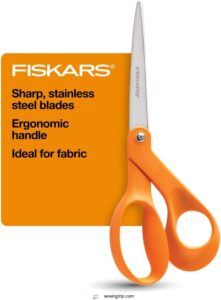
Since 1967, those bright orange grips have been the first scissors most sewers ever touch—and that’s no accident. Fiskars Orange Handled Scissors pack precision-ground stainless steel blades into an 8.41-inch frame that cuts clean through cotton, linen, and craft fabrics without ragged edges.
The bent grip design keeps your material flat against the cutting surface, giving you accurate lines every time. At under half a pound, they won’t tire your hand during long pattern-cutting sessions, and the lifetime warranty backs up their durability claims.
| Best For | Sewers, quilters, and crafters who need reliable everyday scissors that handle fabric, paper, and wrapping materials without breaking the bank. |
|---|---|
| Material | Stainless Steel |
| Length | 8.41 inches |
| Primary Use | Fabric and crafts |
| Handle Design | Bent handle |
| Color | Orange |
| Storage | No cover |
| Additional Features |
|
- Precision-ground stainless steel blades deliver clean cuts through multiple fabric types
- Bent handle design keeps materials flat for accurate cutting lines
- Lifetime warranty and lightweight construction make them a dependable long-term tool
- Blades may dull over time with heavy use and require careful maintenance
- No protective blade cover included with purchase
- Manufactured in China, which some users feel may impact long-term durability
Types of Fabric Scissors Explained
You can’t master fabric cutting until you know which tool does what. Each type of fabric scissor fulfills a specific purpose, and using the wrong one will leave you frustrated with jagged edges and frayed seams.
Let’s break down the seven main types you’ll encounter so you can choose the right blade for every project.
Dressmaker’s Shears
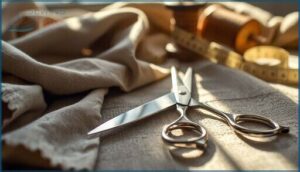
You’ll reach for dressmaker’s shears when cutting long, straight lines through cotton, linen, or wool. Their beveled blade sharpness (Rockwell 54-60) grips fabric fibers with micro serration while slicing cleanly.
These fabric scissors feature offset grips and ergonomic designs that reduce fatigue during dressmaking projects. The stainless steel construction resists rust, and adjustable tension maintains blade alignment for precise fabric compatibility across hundreds of yards.
Embroidery Scissors
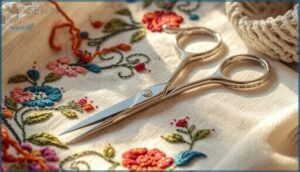
Embroidery scissors put thread trimming power directly in your palm with their 3 to 4-inch blades and fine points. You’ll snip close to stitches without snagging fabric, thanks to hardened stainless steel edges that maintain scissor sharpness through countless embroidery projects.
Their lightweight design keeps your hand steady during detailed work, while compact grips give you the stitch precision you need for intricate embroidery tips and techniques.
Appliqué Scissors
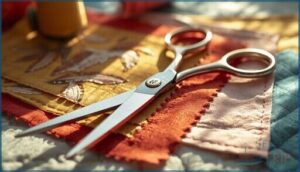
Appliqué scissors deliver the control you need for intricate appliqué techniques with their signature duckbill design that glides beneath your work. The curved bill protects your base fabric while you trim right up to satin stitching, and sharp blades handle fabric trimming without snags.
Regular blade maintenance and scissor sharpening keep these sewing scissors performing like new, so you’ll master precise cuts every time. For a deeper look at the, including their specialty blades and uses on delicate fabrics, visit this resource.
Pinking Shears
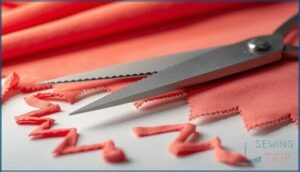
Pinking shears command your workspace with their zigzag edges that tackle fabric fraying head-on. These sewing scissors create serrated cuts on woven cotton and linen, giving you edge finishing power that standard fabric scissors can’t match. Your fabric cutting gains new confidence when you master pinking shear tips like smooth, long strokes and regular scissor sharpening to maintain those aggressive teeth.
- Zigzag blades gripping lightweight fabrics as you slice clean decorative edges
- Serrated teeth preventing unraveling on seam allowances and raw hems
- High-carbon steel construction holding its edge through repeated fabric cutting sessions
- Pivot points requiring light oiling for smooth scissor maintenance between projects
- Consistent tooth alignment delivering uniform zigzag patterns across every cut
Tailor’s Scissors
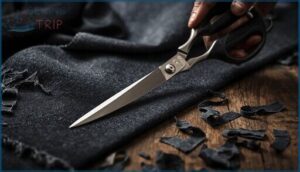
Tailor’s scissors demolish thick wool, canvas, and heavyweight denim with blade sharpness that cuts through dense fibers in one confident stroke. You need these heavy-duty fabric scissors when dressmaker’s shears just won’t cut it—literally.
Their ergonomic grips and excellent scissor balance reduce wrist strain during long cutting sessions, while high-carbon steel construction demands minimal scissor maintenance.
Master proper cutting techniques and fabric selection to harness their full power.
Rotary Cutters

Rotary cutters wield a spinning circular blade that slices fabric with rolling precision—perfect for long, straight cuts and smooth curves your traditional scissors can’t match. Master these fabric cutting tools and you’ll transform your sewing speed.
- Blade replacement keeps cuts clean; swap 45 mm or 60 mm blades when dull
- Cutter safety features include blade guards and protective latches
- Fabric precision improves with self-healing mats and marked ruler edges
- Rotary maintenance requires wiping blades clean and storing in dry cases
For more details on proper usage and safety, check out this guide to rotary cutter essentials and safety.
Heavy-Duty Scissors
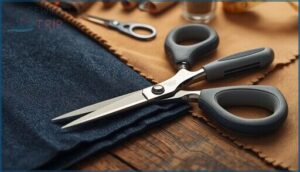
When thick denim, canvas, or multiple fabric layers challenge your regular shears, heavy-duty scissors deliver the muscle you need. These powerhouse fabric cutting tools feature stainless steel blades 8 to 12 inches long with reinforced blade tips that resist chipping.
Scissor ergonomics matter—soft grips and balanced weight prevent hand fatigue during tough cutting techniques, while high-grade metal durability maintains blade sharpness through demanding sewing projects.
Key Features to Look For
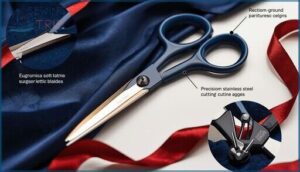
Not all fabric scissors are created equal, and knowing what separates a solid pair from a frustrating one saves you time and money. The right features make cutting fabric feel smooth instead of like a workout. Here’s what you need to evaluate before you buy.
Blade Material and Sharpness
Your scissors won’t cut worth a damn if the blade composition is wrong. High carbon stainless steel gives you edge retention that lasts between sharpening sessions, with chromium content around 13-18 percent balancing hardness and corrosion resistance.
Test sharpness with a light glide cut across fabric—clean edges mean you’re ready to work. Micro beveling reduces catch on fibers during fabric cutting.
Handle Comfort and Ergonomics
Your grip is the command center of every cut you make. Ergonomic design with contoured grips reduces finger fatigue by 40 percent during long sewing sessions, while soft silicone or textured grip styles cushion pressure points at your thumb and forefinger.
Look for neutral thumbholes that keep your wrist aligned to avoid carpal tunnel strain when cutting through multiple fabric layers.
Scissor Length and Weight
A blade length between 5.5 and 6.5 inches gives you mastery over most beginner projects without feeling clunky. Longer dressmakers shears offer reach but increase hand fatigue if you’re building cutting stamina.
Weight distribution matters more than total ounces—a well-balanced pair between 2.5 and 4.5 ounces keeps cutting efficiency high while your grip stays relaxed through scissor selection and maintenance decisions that shape every future project.
Safety Features
Your confidence builds when sewing scissors protect you from rookie mistakes. Look for beginner-friendly sewing tools and equipment with these safeguards:
- Safety locks that keep blades closed during storage and transport
- Blade guards covering sharp tips to prevent puncture injuries
- Non slip grip surfaces that maintain control even with wet hands
- Ergonomic grips with palm rests keeping fingers away from blade edge design
Smart scissor selection and maintenance starts with built-in protection.
Corrosion Resistance
You want fabric scissors that laugh in the face of moisture and stay sharp for years. Stainless steel construction matters most—anything with 12 percent or more chromium content resists rust naturally through surface passivation.
| Brand | Material | Rust Prevention |
|---|---|---|
| Gingher | High-carbon stainless | Chromium oxide layer |
| Fiskars | Stainless steel | Corrosion-resistant coating |
| Kai | Japanese steel | Enhanced passivation |
Metal coatings and corrosion testing confirm long-term durability.
Price and Value
Don’t let price tags intimidate you—budget analysis shows solid fabric scissors run 10 to 25 dollars, while premium Gingher models hit 40 to 70.
For cost efficiency and value assessment, match quality evaluation to your sewing frequency. Amazon Basics under 15 dollars handle light work, but frequent sewers benefit from mid-range tools with better edge retention and ergonomic grips that justify the investment.
Choosing Scissors for Different Fabrics
Your fabric choice dictates which scissors will give you clean cuts versus frustrating snags and pulls. Delicate silks demand different blade characteristics than heavy canvas that fights back with every snip.
Let’s match your scissors to your fabric so you can cut with confidence instead of wrestling with the wrong tool.
Lightweight Fabrics (Cotton, Silk)
When you’re cutting delicate cotton poplin or silk charmeuse, you need embroidery scissors or lightweight fabric scissors with razor-sharp blades—these fabric weaves demand precision.
Cotton’s breathable fibers handle moisture well but wrinkle easily, while silk blends offer a luxurious lightweight drape at the cost of more careful handling.
Master your fabric cutting and preparation, and these sewing tools will transform your sewing techniques and methods.
Medium-Weight Fabrics (Linen, Polyester)
Linen and polyester blends balance breathability with wrinkle resistance—that’s why medium weight fabric blends shine in home textiles and summer garments. Linen fibers crease naturally, while polyester properties include excellent crease recovery.
You’ll master fabric cutting and preparation when you pair standard dressmaker’s shears with your understanding of textile science. These sewing tools handle both pure fibers and modern fabric blends with confidence.
Heavy Fabrics (Denim, Canvas)
Denim weaving creates a diagonal twill that measures 14 to 16 ounces per square yard, while canvas durability comes from a tight plain weave reaching 22 ounces.
You need heavy-duty scissors or sharp dressmaker scissors to power through that fabric thickness without blade deflection. Tailor’s scissors handle these tough materials best, giving you clean cuts through multiple layers where standard shears fail.
Specialty Fabrics (Knit, Leather)
Knit fabric stretches up to 20 percent through its looped structure, so you need sharp embroidery scissors or fabric scissors that won’t snag those fibers during cutting. Leather crafting demands different tools entirely—use fabric scissors or tailors scissors for thin leather, but switch to specialized cutting tools for thicker hides.
Consider these specialty material essentials:
- Cut knits with the fabric drape relaxed, not stretched
- Use rotary cutters for stretchy materials to prevent distortion
- Apply tissue paper under leather for smoother cutting fabric passes
- Clean blades immediately after cutting leather to prevent residue buildup
Proper Care and Maintenance Tips
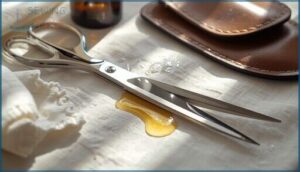
Your scissors won’t stay sharp forever, but you can extend their life dramatically with the right care routine. A few simple maintenance habits will keep your blades cutting cleanly for years and save you from constantly replacing dull tools.
Here’s what you need to know to protect your investment and maintain peak performance.
Cleaning and Disinfecting
You don’t want fabric fibers and adhesive buildup turning your best blades into dull disasters. Start with proper cleaning techniques: wipe scissors with a lint-free cloth after every use, then apply mild soap and water when residue appears.
Sanitizing methods matter—alcohol-based disinfectants evaporate quickly, offering blade protection without moisture damage. For rust prevention, dry completely before storing, and skip abrasive cleaners that scratch surfaces.
Lubricating and Oiling
Smooth blades cut like they’re slicing through butter, and that’s where scissor lubrication comes in. Apply a drop of household machine oil directly to the pivot point, working it in by opening and closing the blades.
This friction reduction keeps your fabric scissors and embroidery scissors moving smoothly. Oil every few hours during heavy use for ideal blade smoothing and pivot maintenance.
Sharpening Techniques
A sharp blade gives you total control over every cut, so regular blade sharpening is non-negotiable. Use a fine whetstone or ceramic sharpening stone for edge honing—angle your fabric scissors at 10 to 15 degrees and stroke from heel to tip. Remove the burr with light finishing strokes.
Proper scissor maintenance transforms dull sewing tools into precision instruments that slice effortlessly through any fabric.
Safe Storage Practices
After sharpening, protect your investment with smart storage solutions. Store your fabric scissors in a dry environment—ideally a dedicated drawer or case with blade guards or protective covers. Keep sewing tools separated to prevent nicks and damage.
- Use padded scissor cases or sheathes to cover blades completely
- Store in a low-humidity area between 60-75°F
- Keep sewing accessories organized by type to avoid cross-contamination
- Position blades closed and angled downward
- Place scissors out of reach of children and pets
Preventing Rust and Damage
Beyond smart storage, rust prevention keeps your fabric scissors performing like new. Wipe blades dry immediately after cleaning—moisture is metal’s enemy. Apply light oil every few weeks to create a protective blade coating that blocks corrosion. Store with silica gel packs in your case to absorb humidity.
High-carbon stainless steel resists corrosion naturally through chromium content, but no scissor lubrication routine beats consistent care.
| Prevention Method | Frequency | Why It Works |
|---|---|---|
| Wipe blades dry after use | Every time | Removes moisture before rust forms |
| Apply light oil coating | Every 2-4 weeks | Creates barrier against corrosion |
| Use silica gel packs | Replace monthly | Absorbs humidity in storage |
| Inspect pivot hardware | Monthly | Catches early rust on brass/steel parts |
| Clean with dry cloth | After each session | Prevents mineral buildup and oxidation |
Safe Handling and Usage Guidelines
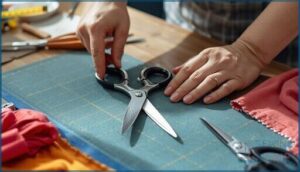
You’ve invested in quality scissors—now it’s time to use them the right way. Proper handling protects both your tools and your fingers, turning cutting from a risky chore into a controlled skill.
Here’s how to work safely and avoid the mistakes that dull blades and cause injuries.
Correct Cutting Techniques
Position yourself with relaxed shoulders and your forearms parallel to the cutting line—this cutting posture reduces wrist strain when cutting fabric. Keep your scissor grip light but steady, and use one hand to maintain fabric tension while the other executes smooth cutting motions.
Check blade alignment regularly to verify your fabric scissors slice cleanly through layers without snagging, and master these fabric cutting techniques to own every sewing project.
Preventing Accidents and Injuries
You’ll slash risk by always cutting away from your body—blade kickback is real and won’t care about your skill level. Use a stable, flat cutting surface and keep fingers behind blade lines with finger shields or guides.
Wear cut-resistant gloves during maintenance, and pause the moment fabric shifts to realign.
Scissor safety isn’t optional; injury prevention starts with respect for cutting hazards and smart fabric handling every single time.
Keeping Scissors Away From Children
Lock fabric scissors in a dedicated drawer or high cabinet where children can’t reach sewing tools—accident prevention means never assuming little hands won’t explore crafting supplies.
During supervised use, teach kids that sharp scissors are adult-only sewing project equipment.
Remove safety education from guesswork by storing blunt-tip alternatives separately, reinforcing child safety tips through consistent action every time you cut.
Storing Scissors Safely
Store your fabric scissors in a designated locked container on a high shelf—blade protection starts with keeping sewing tools out of reach. Use fitted sheaths over exposed edges and choose a dry location away from humidity that promotes rust. Label your storage solutions clearly, and always return scissors with blades closed.
These safety precautions transform accident prevention from afterthought into habit, protecting both your crafting supplies and household members.
Comparing Popular Scissor Brands
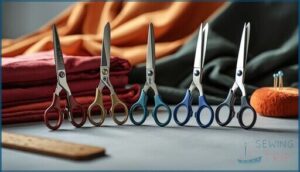
You’ll find a few standout brands that beginners trust for quality and performance. Each manufacturer brings something different to the table, whether it’s precision engineering, ergonomic design, or unbeatable value.
Let’s break down what makes these five brands worth your attention.
Gingher
Gingher has built a solid reputation in fabric cutting since its founding, and you’ll quickly see why serious sewers trust this brand. Their dressmaker scissors feature high carbon stainless steel blades that stay sharp longer, usually measuring 1.8 to 2.0 mm thick for clean cuts through woven fabrics. The offset handle design reduces hand fatigue during extended sessions.
- Lifetime warranty on many models shows they’re built to last
- 8 to 9 inch blades offer excellent control for precision work
- Ergonomic design keeps your hand comfortable during long projects
- Appliqué scissors with knife edges navigate tight curves smoothly
- Premium blade materials maintain sharpness through countless cuts
Fiskars
Fiskars brings lightweight fabric scissors into your hands without emptying your wallet, making them perfect for taking control of your first sewing projects. Their 8 to 9 inch blades deliver cutting precision on cotton and linen, while the orange grips with soft grips provide an ergonomic design that fights hand fatigue.
Blade sharpness comes from straight bevel grinding, and the grip material offers comfortable scissor balance during extended cutting sessions.
Kai
When you crave edge retention that won’t quit mid-project, Kai fabric scissors give you Japanese steel precision that keeps you slicing through fabric like butter. Here’s why Kai sharpness sets you free from dull blade frustration:
- High-quality Japanese steel delivers excellent blade durability for years of confident cutting
- Convex edge design maintains sharpness through tight curves and detailed work
- Blade thickness of 1.7 to 2.0 mm ensures stable scissor balance and control
- Sculpted grips provide comfortable finger placement during extended sewing sessions
- Wide availability through specialty retailers makes upgrading your toolkit easy
These sewing scissor reviews consistently praise Kai scissors for professional-grade performance at accessible prices.
Clover
When appliqué techniques and needlework tips demand pinpoint accuracy, Clover precision tools help you master intricate fabric scissors cuts that bolder brands overlook. Here’s why Clover history proves embroidery scissors matter:
- Fine-tipped blades navigate buttonholes and tight curves with craft safety confidence
- Mid-range pricing balances quality sewing tools with beginner accessibility
- Ergonomic grips deliver control during detailed sewing tips and techniques work
- Coordinated kits simplify your toolkit setup
Sewing scissor reviews confirm Clover’s niche dominance.
Mazbot
While Clover refines your precision work, Mazbot scissors deliver beginner value through curved design innovations that prevent snags during delicate embroidery and appliqué challenges. Here’s what makes these sewing tools stand out:
- Curved tips access tight corners without fabric damage
- Stainless steel blades resist corrosion through frequent use
- Lightweight handling (0.5-1.0 pounds) reduces hand fatigue
- Lower pricing welcomes new sewers confidently
- Corrosion-resistant finishes extend blade lifespan
Your embroidery scissors shouldn’t cost a fortune.
Common Mistakes Beginners Should Avoid
You’re ready to start cutting fabric, but a few common mistakes can dull your scissors, ruin your projects, and turn sewing into a frustrating experience. These errors seem harmless at first, but they’ll cost you time and money down the road.
Here’s what to watch out for so you can protect your investment and cut with confidence from day one.
Using Fabric Scissors on Paper
You’ll wreck your fabric scissors if you use them on paper. Even a single sheet transfers fiber residue to the blade and dulls the edge faster than fabric ever will. This costs you blade sharpness and edge quality when you return to sewing.
Using fabric scissors on paper—even one sheet—dulls the blade and ruins the edge for sewing
Keep a separate pair for paper cutting—your embroidery scissors and shears will thank you with years of clean cuts.
Ignoring Blade Maintenance
Skipping blade maintenance sabotages your sewing tools. Rust prevention and edge retention demand regular attention—wipe your fabric scissors after each use and oil the pivot point monthly. Blade dulling sneaks up when you ignore corrosion control and scissor sharpening. Here’s what maintenance involves:
- Clean blades with alcohol wipes weekly
- Oil hinges with sewing machine oil
- Sharpen edges every six months
- Inspect for rust spots regularly
- Store in protective cases always
Choosing The Wrong Scissor Type
Grabbing pinking shears for straight cuts or dressmaker scissors for heavy canvas destroys your results before you start. Fabric damage and cutting errors multiply when you mismatch tools—fine-tipped embroidery scissors bend on thick denim, while rotary cutters compress delicate silk.
Quilting scissors lack the blade sharpness for precise appliqué work. Scissor durability crashes when you force the wrong scissor material against stubborn fabrics that demand specialized edges.
Overlooking Handle Comfort
Comfort features determine whether you finish that three-hour cutting session or quit at forty minutes with aching hands. Your grip texture and handle materials matter more than blade length when fatigue sets in.
- D-shaped grips reduce hand fatigue by about 20 percent during extended fabric cutting
- Rubberized coatings on embroidery scissors prevent slippage in warm sewing rooms
- Ergonomic design with contoured grips promotes natural wrist position and reduces strain
Scissor balance affects control—lightweight dressmaker scissors with proper weight distribution let you cut accurately without fighting the tool.
Tips for Smooth and Accurate Cutting
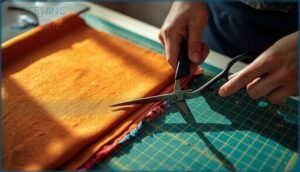
You can have the sharpest scissors in the world, but if your cutting technique is off, you’ll still end up with wonky edges and wasted fabric.
The difference between a clean cut and a mess often comes down to a few simple habits that most beginners overlook.
Here’s what you need to master for professional-looking results every time.
Marking Fabric Before Cutting
Marking your cutting lines takes the guesswork out of every slice. Use washable fabric markers or tracing tools to transfer notches and seam allowances directly onto your material before you pick up your fabric scissors. Test your marker on a scrap first to confirm it disappears after washing.
This step is a sewing fundamental that transforms cutting fabric from stressful to surgical during fabric preparation.
Cutting on a Stable Surface
A flat, rigid cutting mat anchored on a stable table gives you the control you deserve when slicing through fabric. Surface preparation matters—clear away threads and pins that snag your scissors or shift material mid-cut.
Ergonomic positioning at the right table height keeps your wrist aligned and your elbow steady, turning every stroke into a confident, straight line.
Safety features like non-slip mats prevent fabric drift during cutting.
Maintaining Even Pressure
Even pressure across both blades turns every cut into a straight, clean edge. Blade alignment ensures smooth scissor balance, so you’ll feel less fatigue during long sessions with fabric scissors or embroidery scissors.
Proper grip control distributes force evenly, preventing tugging and fraying on woven fabrics.
Master this cutting technique by keeping your wrist neutral and your fingers relaxed—pressure distribution separates amateurs from confident sewers.
Practicing on Scrap Fabric
Before you touch your best fabric, pin scrap pieces to a cutting mat and run daily 15-minute practice routines. Light-colored scraps let you mark straight lines and curves with chalk, then test your fabric scissors against those guides.
Vary fabric tension and weight across drills—edge finishing quality reveals if your embroidery scissors need sharpening. Label each scrap with notes about cutting drills so you track real progress with your sewing tools.
Frequently Asked Questions (FAQs)
What are the best scissors for beginners?
You need fabric scissors with 6 to 8 inch stainless steel blades, ergonomic grips, and smooth blade alignment. Look for an ambidextrous design that offers beginner versatility across lightweight to medium fabrics.
What to look for when buying fabric scissors?
Sharp blade alignment and handle size matter most—your hand shouldn’t cramp after twenty minutes.
Check brand reputation, warranty options, and cutting power to guarantee your sewing scissors deliver clean cuts every time.
How often should fabric scissors be sharpened?
You’ll want to sharpen your fabric scissors every 50 to 100 cutting hours, or when frayed edges and increased hand pressure signal dulled blades—regular sharpness testing on scrap fabric keeps your cutting efficiency consistent.
Do fabric scissors work on felt and fleece?
Yes, fabric scissors cut both felt and fleece effectively when blades stay sharp. Use long strokes for fleece to reduce drag, and embroidery scissors for detailed felt shapes, cleaning tools after each project.
Should beginners buy scissor sets or individual pairs?
Which purchase strategy fits your sewing journey? Scissor set value offers multiple blade variety and lower bundled prices, while individual pair benefits let you invest in longevity factors and match fabric scissors, embroidery scissors, and sewing tools to your actual projects.
Whats the difference between shears and scissors?
Shears feature offset blades with extended length past the pivot for enhanced lever mechanics and cutting action on heavy materials.
Scissors have symmetric, shorter blades optimized for precision work and detailed fabric trimming.
Conclusion
The best fabric scissors for beginners aren’t the ones that cut everything—they’re the ones you never use on anything but fabric. That single rule protects your investment and ensures every cut stays clean.
You’ve learned which blades match your projects, how to maintain them, and why cheap shortcuts cost more in ruined materials.
Now you’re ready to cut with confidence, knowing your scissors will deliver professional results instead of amateur frustration. Your edges will show the difference immediately.
- https://sewcanshe-sewingbee.mn.co/
- https://www.sewcanshe.com/blog/unboxing-tula-pink-bernina-770qe?rq=Bernina
- https://threadsmonthly.com/how-to-clean-fabric-scissors/
- https://ldhscissors.com/blogs/news/how-to-oil-your-scissors
- https://www.redhandledscissors.com/2014/01/04/crafting-101-oil-clean-scissors/