This site is supported by our readers. We may earn a commission, at no cost to you, if you purchase through links.
A clean slice through fine cotton feels seamless with sharp fabric scissors, while dull blades leave behind frustration and ragged edges. You know the difference in your hands: one cut glides, the other tugs and stutters, risking both your fabric and your patience.
The results show up fast—snagged threads, uneven lines, that creeping ache in your hand after forcing each pass. Recognizing how to tell if fabric scissors need sharpening saves time, preserves materials, and restores confidence in every project.
Give your scissors the care they deserve, and the satisfying snip returns, project after project.
Table Of Contents
Key Takeaways
- Dull fabric scissors show warning signs like frayed edges, snagging, uneven cuts, and the need for extra pressure when cutting.
- Simple tests, such as cutting through paper or fabric and inspecting for blade nicks or dull spots, reveal when scissors need sharpening.
- Regular maintenance—cleaning, oiling, and using your scissors only on fabric—helps keep blades sharp and effective longer.
- Sharpen scissors yourself using a proper technique and tools, or seek professional help if they have deep nicks, persistent dullness, or alignment issues.
Why Sharp Fabric Scissors Matter
Sharp fabric scissors aren’t just a luxury item—they’re a must for anyone who wants clean cuts.
If you’re interested in perfecting your fabric prep, this practical guide to lightweight sewing fabrics highlights why a sharp pair of shears truly matters.
The right edge protects your fabric and makes every cut feel smooth.
Here’s what you gain when your scissors stay sharp.
Impact on Cutting Accuracy
Cutting precision depends on sharp fabric scissors and correct scissor alignment. When your blades glide smoothly, you get clean, accurate edges—every layer lines up.
Even slight blade wear or poor edge quality means your scissors drift, veer, or skip, leading to measurement errors. That’s why consistently sharp blades are essential if you want professional cutting accuracy and peak cutting performance.
Preventing Fabric Damage
You don’t just want neat edges; you want your fabric to stay intact and beautiful. Dull blades can snag threads, cause frayed edges, or stretch your project out of shape.
Sharp fabric scissors prevent frayed edges, snags, and fabric damage, keeping every project clean and beautiful
Here’s how sharp scissors keep fabric safe:
- Improve overall Fabric Protection
- Support proper Cutting Techniques
- Aid Edge Preservation
- Simplify clean Scissor Handling and Blade Maintenance
Reducing Hand Fatigue and Effort
Sharp fabric scissors do more than slice clean—they look out for your hands. With proper scissor care and maintenance, features like an ergonomic grip and good scissor balance mean less effort and fatigue.
Combine that with mindful hand positioning and wrist alignment, and your cutting technique improves. Here’s how the parts work together:
| Feature | Benefit | Tip |
|---|---|---|
| Ergonomic Grip | Reduces hand fatigue | Adjust hand holding |
| Balanced Design | Eases cutting accuracy | Stabilize your wrist |
| Sharp Blades | Lower force required | Sharpen regularly |
Common Signs Fabric Scissors Need Sharpening
Before you reach for your next cut, it’s worth checking if your fabric scissors are letting you down. You might notice a few warning signs when they start to lose their edge.
If you’re unsure what counts as a serious problem or want tips on choosing new tools, you’ll find expert guidance in this handy guide to top-rated fabric scissors and care tips.
Here’s what to watch for as you handle your scissors.
Frayed or Jagged Fabric Edges
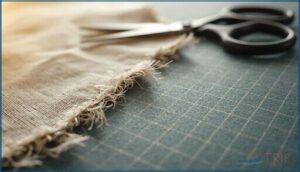
Ever notice your fabric edges bursting with tiny threads after a cut? That’s one of the first clues your blades are losing their edge. Frayed or jagged cuts come from blunt scissor tips or neglected blade maintenance.
Accurate fabric scissor sharpness testing lets you spot problems, prevent fabric damage, and improve results. Edge finishing and careful cutting techniques help with fray prevention.
Snagging or Pulling While Cutting
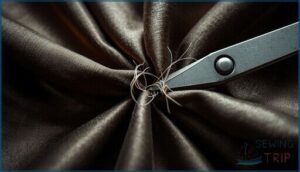
Tension rises the moment your scissors snag or pull instead of gliding. That’s not random—it’s fabric friction and cutting resistance at play.
Dull blades, poor blade geometry, or skipped scissor maintenance turn smooth Fiber Interaction into battle. Sharp fabric scissors slip through; but the wrong edge grabs, twists, and damages fabric, leaving frustrating pulls or unexpected fabric damage.
Uneven or Missed Cuts
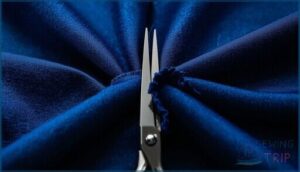
Precision in cutting techniques quickly unravels when uneven or missed cuts appear, usually a red flag for blade alignment or subtle edge wear. Your fabric scissors may veer off course or skip entirely, thanks to fabric slippage, outdated scissor maintenance, or poor blade sharpness.
Notice these issues in your fabric cutting techniques:
- Inconsistent seam allowances appear
- Cuts drift off marked lines
- Threads remain uncut along the edge
- Portions of fabric show skipped snips
- Edges develop scalloped or wavy shapes
Needing Increased Pressure to Cut
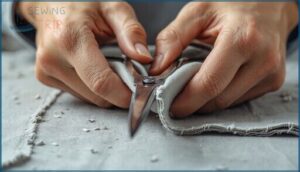
When you have to push harder to get scissors through fabric, it’s usually a sign that blade sharpness is slipping. This pressure increase doesn’t just tire your hand—it ramps up Cutting Resistance, speeds up Blade Wear, and makes ragged edges or Fabric Fraying more likely.
Missteps in Scissor Alignment or dull blades mean clean cuts become noticeably tougher to achieve.
Visible Nicks or Dull Spots on Blades
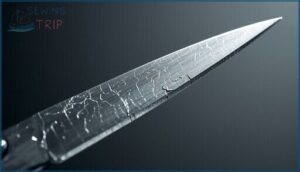
Think of blade nicks as potholes in a city street—small at first, but disruptive if ignored. During blade inspection, look for cloudy dull spots and visible nicks along the edge.
Scissor maintenance isn’t just about comfort—tiny flaws cause snagging and rough cuts. Visual inspection and regular scissor care are the backbone of blade sharpness, edge refurb, and blade quality.
Simple Tests for Scissor Sharpness
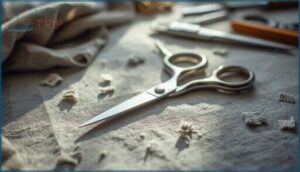
Knowing when your fabric scissors need sharpening starts with a few easy at-home checks.
These quick tests help you spot dullness before it slows you down.
Here’s how you can tell if your scissors are still up to the job.
The Paper Test Method
Can a single sheet of paper reveal the true sharpness of scissors? The Paper Test says yes. For test calibration and scissor care, use quality paper and pay attention to these essentials:
- Consistent blade alignment
- Steady cutting speed
- Smooth, clean paper edge
- Lack of raggedness or curls
- Repeatable, reliable results
Sharp scissors produce perfect, straight cuts.
The Fabric Cutting Test
Want a clear answer on blade sharpness? Put your fabric scissors through a real-world Fabric Test. Guide them along woven cotton or silk, watching for smooth, pucker-free cuts.
Evaluate Fabric Edge Quality—sharp blades cruise with minimal resistance, leaving clean lines. Honest Cutting Motion Analysis reveals wear patterns and tests balance, helping you decide if it’s time for a sharpen.
Visual Blade Inspection
After working through a Cutting Edge Test on fabric, take a closer look—this Blade Edge Check reveals a lot. Hold your scissors up to bright light for a Visual Inspection.
Examine for Blade Surface Review: nicks, discoloration, or dull spots betray wear. Double-check Scissor Alignment. A smooth, polished edge signals proper Blade Quality and Maintenance—while gaps or rough patches mean sharpening is overdue.
What to Do if Scissors Are Dull
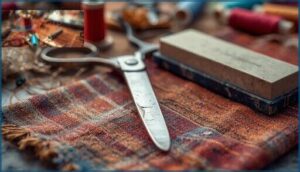
Once you know your scissors are dull, you’ve got a few options to get them back in shape. Depending on your tools and comfort level, some fixes you can handle yourself, while others are best left to professionals.
Here’s what to think about next.
DIY Sharpening Techniques for Fabric Scissors
Start by securing your fabric scissors in a padded vise for scissor stability. Use sharpening stones or a sharpening kit, holding each blade at a steady 15–20 degree angle. Apply smooth, even strokes to hone the edge.
Alternate sides to keep the blade sharpness balanced, then test the edge on fabric. Proper maintenance ensures lasting, precise cuts and peak sharpness.
When to Seek Professional Sharpening
If sharpening at home isn’t bringing your scissors back to peak form, it’s time for professional sharpening.
Some signs you need scissor sharpening services include:
- Deep nicks that need expert Nick Removal.
- Consistent uneven cuts—your Edge Geometry is likely off.
- Blades with persistent burrs despite DIY Burr Fixing.
- Noticeable edge instability.
- Ongoing dull blades after all sharpening techniques.
Regular sharpening also helps to maintain optimal cutting performance and ensures safety in your workspace.
Choosing The Right Sharpening Tools
If DIY sharpening left your scissors dull, it’s time to match the tool to the job. For quick touch-ups, Sharpening Stones, Sandpaper, or Diamond Plates save time.
When you want precision, Honing Guides and Whetstone Types offer full control. Electric Sharpeners and Sharpening Gadgets are fast, while pros often rely on Sharpening Services or specialized DIY Sharpening Kits.
Tips for Maintaining Fabric Scissor Sharpness
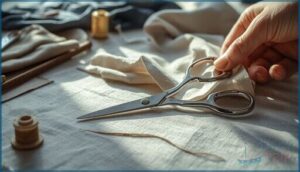
Keeping your fabric scissors sharp isn’t complicated, but it does take a bit of regular care. A few smart habits will help them last longer and work better every time you reach for them.
Here’s what you need to know to make sure your scissors stay sharp and ready for any project.
Proper Cleaning and Storage
Think of scissor care and maintenance as the backbone of sharp blades. To keep yours cutting cleanly, follow these steps:
- Wipe blades after use with mild soap and water—no harsh cleaning products.
- Dry thoroughly to avoid rust.
- Apply a light oil coat.
- Use handle maintenance checks for comfort.
- Rely on smart storage solutions for scissor organization.
Your sharpness lasts longer with simple habits.
Only Using Scissors on Fabric
Discipline is at the heart of Fabric Care and Scissor Maintenance. Using fabric scissors strictly for textiles—never for paper or packaging—preserves blade sharpness and integrity. Each fabric type responds differently; cotton, silk, or denim demand specialized Cutting Techniques.
Stay mindful of your tools’ purpose for consistent performance.
| Blade Selection | Fabric Types | Cutting Techniques |
|---|---|---|
| Micro-serrated | Cotton | Smooth, straight cuts |
| Carbon steel | Silk | Gentle pressure |
| Titanium-coated | Denim | Firm, steady motion |
| Hardened edge | Lawn | Light, guided motion |
How Often to Test and Sharpen
Regular scissor inspection matters more than you might expect. Sharpening schedules aren’t guesswork—adjust them for your cutting frequency and project load.
For best Blade Maintenance, use these intervals:
- Schedule Sharpness Intervals: every 6–12 months, or sooner for heavy use.
- Do a visual Scissor Inspection every two to four weeks.
- Touch up blades after big fabric projects.
Preventing Blade Rust and Damage
Moisture is the enemy of blade sharpness. Rust Prevention begins with Dry Handling after every cut—thoroughly wipe down the blades and store them in a closed case with silica packs for proper Storage Solutions.
Blade Maintenance isn’t just about sharpening; cleaning the blades and applying a protective oil layer helps with Corrosion Control and keeps scissor care and maintenance simple.
Frequently Asked Questions (FAQs)
How often should I sharpen my fabric scissors?
For most home sewing, sharpening fabric scissors every 6 to 12 months works well.
Sharpening frequency depends on use, scissor maintenance, and blade inspection. Frequent cutting or dense fabrics call for more regular sharpness testing and care.
How to fix dull fabric scissors?
A pair of dull fabric scissors can feel as useless as a butter knife. Restore their performance with proper sharpening tools, edge honing, and careful blade maintenance.
DIY scissor sharpening keeps cuts smooth—precision results depend on disciplined sharpening and care. Regular attention to scissor care basics helps extend their life and maintain peak performance.
Can left-handed users test scissors the same way?
Yes, but left handed testing requires left handed scissors for accurate results.
Blade visibility, grip comfort, and mirrored cutting motion all affect sharpness assessment. Using right handed scissors can falsely indicate dullness due to reversed scissor orientation.
Do fabric scissors require oiling after sharpening?
Not every pair of fabric scissors needs oiling after sharpening—Blade Material and Storage Methods matter.
For carbon steel, a light touch of Sewing Machine Oil wards off rust.
Stainless options often skip oil, focusing instead on regular Maintenance Routines.
How can you tell if alignment is off?
Wondering about fabric scissor alignment? Look for uneven blade gaps, a pivot screw out of center, or off-axis edges.
If the blades drag, cut unevenly, or need constant screw adjustment, alignment—and blade sharpness—need checking.
Should scissors be sharpened differently for thick fabrics?
Scissors used on thick fabrics benefit from sharpening at a slightly steeper blade angle.
Adjusting for fabric density improves edge retention and cutting tool sharpness, delivering clean cuts and better control over your fabric cutting technique and results.
Are there ways to prevent scissor blades from loosening?
Ever wondered why even sharp fabric scissors eventually loosen? Focus on the Pivot Screw—regular tightening techniques, proper blade alignment, and regular lubrication are part of effective scissor maintenance.
Clean storage and careful handling prevent dull blades and preserve edge quality.
Conclusion
Imagine a single, clean glide through fabric—no snags, no uneven lines, just a perfect cut that splits the fibers without resistance. That’s the reward when you know exactly how to tell if fabric scissors need sharpening.
Attention to the signs, regular tests, and careful maintenance keep your tools precise and reliable. With every project, your confidence grows, and your scissors feel as sharp as your skills. Care leads to mastery, and mastery begins with every thoughtful snip.