This site is supported by our readers. We may earn a commission, at no cost to you, if you purchase through links.
A garment’s inside tells the truth about its maker. Frayed seam allowances, unfinished edges, stretched-out necklines—these details separate a sample rack from a runway. The right serger machine changes that equation entirely, trimming, overlocking, and sewing in a single pass at speeds that would take a conventional machine three separate steps to match.
For fashion designers working under deadline pressure with stretch knits, delicate chiffons, or structured wovens, choosing the wrong serger means fighting your equipment instead of building your collection.
These ten machines represent the strongest options available right now, evaluated across stitch versatility, fabric handling, and real-world performance in a professional design workflow.
Table Of Contents
- Key Takeaways
- Best Serger Machines for Fashion Designers
- 1. Singer Metal Frame Serger Machine
- 2. Juki Mo 50e Serger Machine
- 3. Feiyue Serger Overlock Machine
- 4. Singer Professional Serger Machine
- 5. Janome Serger Machine With Differential Feed
- SINGER S14-78 Serger Machine
- 6. Brother Cover Stitch Serger Machine
- 7. Brother Air Serger Machine
- 8. Singer Heavy Duty Serger Machine
- 9. Brother Heavy Duty Serger Machine
- Key Features to Look for in Sergers
- Sergers Vs. Sewing Machines in Fashion Design
- Choosing The Right Serger for Your Needs
- Advanced Serger Techniques for Designers
- Maintenance Tips for Serger Longevity
- Frequently Asked Questions (FAQs)
- Conclusion
Key Takeaways
- A serger’s differential feed is the single most important feature for fashion designers, controlling fabric stretch and preventing wavy seams across knits, sheers, and wovens in one pass.
- Thread count shapes everything — 3- and 4-thread setups handle most garment work, but 5-thread models add a safety chain stitch that significantly boosts seam strength on heavier fabrics.
- The right machine depends on your actual workflow: beginners benefit most from color-coded threading and auto-tension, while professionals need higher stitch speeds, broader fabric compatibility, and manual tension control.
- Maintenance isn’t optional — replacing blades every 2–3 months, oiling metal contact points every 8–10 hours of use, and scheduling annual professional servicing are what keep your serger performing at a professional level.
Best Serger Machines for Fashion Designers
Picking the right serger can make or break your workflow as a fashion designer. With so many options on the market, it helps to know which machines actually hold up to the demands of real garment construction.
Knowing what features to look for in a serger — like stitch versatility, threading ease, and fabric compatibility — helps you narrow the field fast.
Here are ten sergers worth considering in 2026.
1. Singer Metal Frame Serger Machine
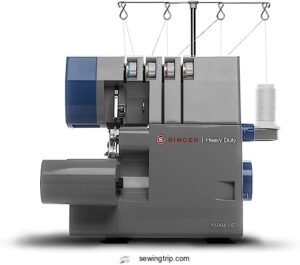
The Singer X5004-HD is a workhorse built for designers who need consistent results across demanding fabrics. Its heavy-duty metal frame keeps everything stable at up to 1,300 stitches per minute, so your seams stay even on long production runs.
You get 2-3-4 thread capability, eight built-in stitches, and a differential feed that manages everything from stretchy jersey to thick denim.
Two LED lights improve visibility, and the larger cutting knife makes quick work of heavy materials. It’s a practical, powerful choice.
| Best For | Sewists and designers who regularly work with heavy fabrics like denim, upholstery, or canvas and need a reliable machine that can keep up. |
|---|---|
| Stitch Speed | 1,300 SPM |
| Thread Capability | 2-3-4 thread |
| Frame Material | Metal |
| Differential Feed | Yes |
| Weight | 15.52 lbs |
| Threading System | Manual color-coded |
| Additional Features |
|
- Heavy-duty metal frame keeps the machine steady even at top speed, so your stitches stay consistent
- Handles a wide range of fabrics thanks to adjustable differential feed and a beefed-up cutting knife
- Sews and finishes edges in one pass, which saves a ton of time on bigger projects
- Threading the machine can be a real headache, especially if you’re new to sergers
- Doesn’t come with a manual, so expect some trial and error getting started
- Only 8 built-in stitches, which might feel limiting if you’re looking for more variety
2. Juki Mo 50e Serger Machine
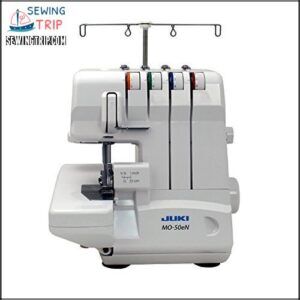
Where the Singer leans on brute strength, the Juki MO-50E focuses on precision and smart design. It runs at up to 1,300 stitches per minute and switches between 3 and 4 thread configurations, giving you flexibility for both seam finishing and structural stitching.
The lay-in tension system and automatic lower looper threader save real time when you’re rethreading mid-project. Differential feed adjusts from 0.8 to 2.0, so knits stay flat and sheers don’t pucker. Clean results without the fuss.
| Best For | Home sewists who want professional-looking finishes on knits and apparel without needing a separate machine for edge work. |
|---|---|
| Stitch Speed | Not specified |
| Thread Capability | 3-4 thread |
| Frame Material | Aluminum |
| Differential Feed | Yes |
| Weight | 16 lbs |
| Threading System | Automatic lower looper |
| Additional Features |
|
- The automatic lower looper threader is a genuine time-saver—less fumbling, more sewing.
- Adjustable differential feed handles knits and delicate fabrics without stretching or puckering.
- Switches between 3 and 4 thread setups, so you’ve got options for both seam finishing and structural stitching.
- Threading is a real learning curve, and it can feel overwhelming if you’re just starting out.
- Loopers can come unthreaded mid-project, which means starting the threading process all over again.
- Not the best pick if you want something quick to set up and go—this one asks for some patience upfront.
3. Feiyue Serger Overlock Machine
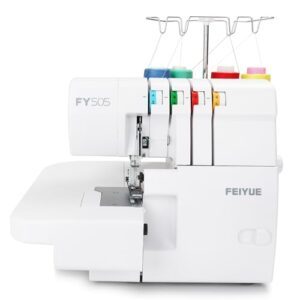
If budget is part of your planning, the FEIYUE FY505 is worth a serious look. It accommodates 2, 3, and 4 thread configurations, topping out at 1,100 stitches per minute — solid performance for small studio or home use.
The heavy-duty metal frame keeps vibration low, and the adjustable differential feed controls knits and wovens without much fuss. Color-coded threading guides make setup less intimidating.
Just note that thread cone spacing is tight, which can cause occasional breakage if you’re not careful.
| Best For | Home sewers and small studio owners who want serger performance without spending a fortune. |
|---|---|
| Stitch Speed | 1,100 SPM |
| Thread Capability | 2-3-4 thread |
| Frame Material | Metal |
| Differential Feed | Yes |
| Weight | 13.57 lbs |
| Threading System | Color-coded guides |
| Additional Features |
|
- Handles 2, 3, and 4 thread setups, so you’ve got flexibility for different projects
- Heavy-duty metal frame cuts down on vibration and feels solid during use
- Color-coded threading guides make setup way less stressful, especially for beginners
- Thread cones sit close together, which can cause threads to touch and snap mid-project
- The manual isn’t great — first-timers may struggle to troubleshoot on their own
- Some users had trouble with thin fabric getting eaten by the machine or needles coming unthreaded
4. Singer Professional Serger Machine
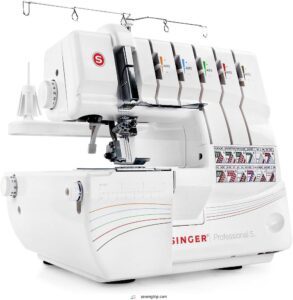
Step up from the FEIYUE’s 4-thread limit, and you’ll appreciate what the SINGER Professional 5 14T968DC brings to the table. This machine accommodates 2, 3, 4, or 5 thread configurations — about 12 built-in stitch options in total — including overlock, flatlock, rolled hem, and coverstitch.
It runs at 1,300 stitches per minute on a heavy-duty metal frame, so high-speed production stays smooth and stable. The automatic self-adjusting tension system does a lot of the guesswork for you, which is a real time-saver on fabric-heavy days.
| Best For | Sewists who want professional-grade versatility — from lightweight fabrics to heavy materials — and need a machine that can handle serious fashion or design projects at speed. |
|---|---|
| Stitch Speed | 1,300 SPM |
| Thread Capability | 2-3-4-5 thread |
| Frame Material | Metal |
| Differential Feed | Yes |
| Weight | 18.6 lbs |
| Threading System | Easy threading diagram |
| Additional Features |
|
- Handles 2-3-4-5 thread configurations, giving you real flexibility across stitch types like rolled hems, flatlock, and coverstitch
- Runs at 1,300 stitches per minute on a solid metal frame, so it stays stable even during long, fast sessions
- The automatic tension system adjusts on its own, which takes a lot of the frustration out of switching between fabrics
- Threading can be a real learning curve, especially if you’re newer to sergers
- Swapping thread colors or configurations takes a few minutes each time, which slows down your workflow
- Needs regular mechanical upkeep — things like tightening screws and adjusting the arm assembly — to stay running smoothly
5. Janome Serger Machine With Differential Feed
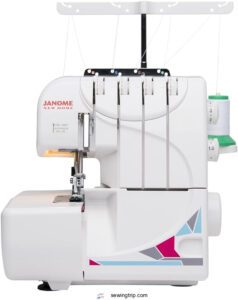
The Janome MOD-8933 is a smart pick if you’re constantly switching between knit dresses and structured denim pieces. Its differential feed adjusts from 0.5 to 2.25, so you can prevent wavy seams on jersey or intentionally gather chiffon ruffles without swapping machines.
If you want to dig deeper into how those feed dog ratios actually work, this guide on serger differential feed settings and techniques breaks it down in a really practical way.
The lay-in, color-coded threading system cuts setup time markedly. At 14.3 pounds with a metal build, it’s solid enough for regular use — ideal whether you’re a developing designer or a seasoned pro tackling mixed-fabric collections.
| Best For | Beginners and experienced sewists who work with a mix of fabrics like knits, denim, and canvas and want a reliable serger that’s easy to set up. |
|---|---|
| Stitch Speed | Not specified |
| Thread Capability | 3-4 thread |
| Frame Material | Metal |
| Differential Feed | Yes |
| Weight | 14.3 lbs |
| Threading System | Lay-in color-coded |
| Additional Features |
|
- Color-coded, lay-in threading makes getting started way less frustrating
- Differential feed keeps stretchy fabrics from warping or puckering
- Solid metal build at 14.3 lbs means it stays put and holds up over time
- No storage case for accessories, so things can get lost in the shuffle
- Threading still has a learning curve, especially if you’re brand new to sergers
- Can get noisy at higher speeds, which might be annoying in a quiet space
SINGER S14-78 Serger Machine
If versatility is the name of the game, the SINGER S14-78 delivers without compromise. Its 2/3/4-thread capability gives you 12 built-in overlock stitches, while the differential feed accommodates everything from viscose jersey to fine mesh. The heavy-duty metal frame keeps sewing speed consistent, and color-coded threading paths simplify setup considerably. For more information about its professional features, see the available on this model.
Why designers rely on the SINGER S14-78:
- Switches between 2, 3, or 4 threads for flexible fabric selection
- 12 stitch options including rolled hems and flatlock overlock stitches
- Differential feed prevents wavy seams on stretch knits
- Built-in upper knife trims and finishes in one clean pass
- Color-coded guides make thread tension adjustments faster and less frustrating
6. Brother Cover Stitch Serger Machine
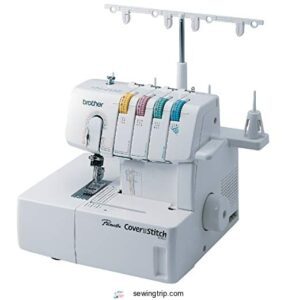
Precision hemming gets a real upgrade with the Brother Cover Stitch Serger Machine. If you want truly professional hem finishes on stretch knits and everyday basics, this workhorse gives you 2-, 3-, or 4-thread cover stitches and decorative topstitching in one compact unit.
With easy color-coded threading and fast looper access, you’ll move from idea to completed edge in less time. Adjustable stitch length and differential feed let you tackle thick cuffs, lightweight jerseys, or layered details without missing a beat.
| Best For | Sewists who regularly work with stretch fabrics and want clean, professional-looking hems on knits, activewear, and dancewear without taking their garments to a tailor. |
|---|---|
| Stitch Speed | 1,200 SPM |
| Thread Capability | 2-3-4 thread |
| Frame Material | Metal and plastic |
| Differential Feed | Yes |
| Weight | 13.89 lbs |
| Threading System | Standard threading |
| Additional Features |
|
- Handles 2-, 3-, and 4-thread cover stitches so you can switch between narrow, wide, and decorative finishes without swapping machines
- Color-coded threading and a fast looper system make setup way less frustrating, even if you’re not a serger expert
- Differential feed (0.7–2.0mm) keeps stretch fabrics from bunching or stretching out while you sew
- Some users run into thread breakage and tension issues, which means you may need to experiment before getting consistent results
- Removing fabric after finishing a seam can be tricky and might require some extra patience
- Only works on 120 volts, so it’s not a great fit if you’re outside the US or need a travel-friendly option
7. Brother Air Serger Machine
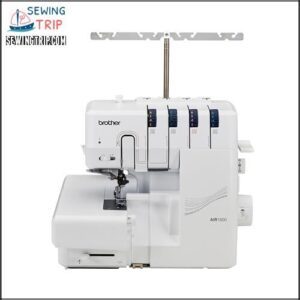
Threading loopers used to be the slowest part of any serger session — the Brother AIR1800 changes that completely. Its jet air threading system pushes thread through the loopers at the press of a button, cutting setup time dramatically.
You get up to 1,300 stitches per minute, adjustable stitch length from 1mm to 4mm, and a differential feed ratio of 0.7 to 2.0 for clean results on knits and stretchy fabrics.
Color-coded guides, LED lighting, and a built-in safety sensor make this machine genuinely practical for serious designers.
| Best For | Sewers of all levels who want faster setup and cleaner edges on knits, stretchy fabrics, and garment construction. |
|---|---|
| Stitch Speed | 1,100 SPM |
| Thread Capability | 2-3-4 thread |
| Frame Material | Metal |
| Differential Feed | Yes (0.7-2.0mm) |
| Weight | 12.35 lbs |
| Threading System | Color-coded lay-in |
| Additional Features |
|
- The jet air threading system makes looper threading almost instant — no more squinting and poking thread by hand.
- Up to 1,300 stitches per minute with adjustable stitch length and differential feed means it handles tricky fabrics really well.
- Color-coded guides and bright LED lighting make it easy to stay organized and see exactly what you’re doing.
- The air threading system has a reputation for breaking down after a while, which kind of defeats its main selling point.
- It’s only compatible with 120V outlets, so if you travel or move internationally, you’re out of luck without voiding the warranty.
- You may need to buy extras like a thread catcher to get the most out of it, which adds to the overall cost.
8. Singer Heavy Duty Serger Machine
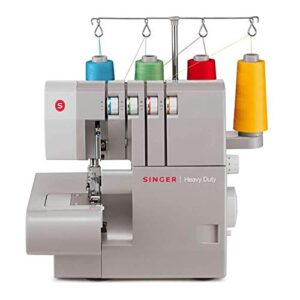
When durability is non-negotiable, the Singer 14HD854 delivers. Its metal interior frame keeps everything stable at up to 1,300 stitches per minute, even through thick seams or multiple layers.
You get six stitch types, 2/3/4 thread capability, and a cutting knife roughly 60 percent larger than standard Singer models — a real advantage on heavier fabrics.
The color-coded threading system and dual LED lights make daily use faster and less frustrating, while the free arm manages cuffs and hems with ease.
| Best For | Sewers who work with heavy fabrics and need speed, durability, and clean professional finishes all in one machine. |
|---|---|
| Stitch Speed | 1,300 SPM |
| Thread Capability | Not specified |
| Frame Material | Plastic |
| Differential Feed | Yes |
| Weight | 21.5 lbs |
| Threading System | Air-assisted threading |
| Additional Features |
|
- Handles up to 1,300 stitches per minute with a solid metal frame that stays stable under pressure
- Six stitch types and 2/3/4 thread capability give you real versatility across different projects
- Color-coded threading and a free arm make it easier to use day to day, even on tricky areas like cuffs
- Can get noisy, which might be a problem if you’re working in a shared space
- The presser foot lever sits in an awkward spot and doesn’t lift very high
- No built-in thread cutter, and manual threading takes more time than it should
9. Brother Heavy Duty Serger Machine
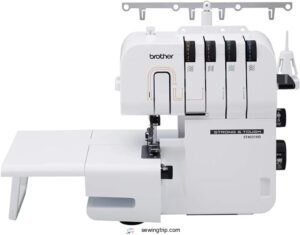
The Brother ST4031HD is built like a workhorse — and it performs like one too. Its heavy-duty metal frame holds steady at 1,300 stitches per minute, even through denim, canvas, or stacked layers that would stall a lesser machine.
The extra-hard carbon steel blade cuts clean every time, reducing frayed edges on even the toughest materials. Color-coded thread guides simplify setup, and the large extension table keeps bulky projects under control.
For serious studio work, this machine earns its place.
| Best For | Sewing enthusiasts, professionals, and small businesses tackling heavy-duty projects like denim, thick fabrics, and layered materials. |
|---|---|
| Stitch Speed | 1,300 SPM |
| Thread Capability | 2-3-4 thread |
| Frame Material | Metal |
| Differential Feed | Yes |
| Weight | 13.46 lbs |
| Threading System | Color-coded system |
| Additional Features |
|
- Metal frame keeps things solid at 1,300 stitches per minute — even through tough, heavy fabrics
- Extra-hard carbon steel blade cuts clean and reduces fraying on thick or layered materials
- Color-coded thread guides and a large extension table make setup and handling bigger projects easier
- Threading can be tricky, so it’s not the best fit for beginners just starting out
- Needs regular oiling to stay quiet and run smoothly — skip it and you’ll notice
- May come with a noticeable oil smell out of the box that takes a little time to fade
Key Features to Look for in Sergers
Picking the right serger comes down to knowing which features actually matter for fashion work. Not every spec on the box will affect your day-to-day sewing, but a handful of them will make or break your results.
Here are the key ones worth paying attention to before you buy.
Number of Threads and Stitch Versatility
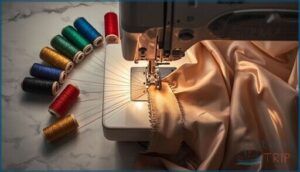
Thread options shape everything about your stitch variety and sewing efficiency. Most home sergers offer 3 or 4 thread capabilities, but a 4-thread overlock gives you stronger, more durable seams — ideal for garment construction.
Five-thread models expand your stitch capability even further, combining a chainstitch with an overlock for medium to heavy fabrics. More threads mean better fabric compatibility and broader overlock techniques at your fingertips.
Learning about the different serger stitch types and uses can help you make the most of these features.
Differential Feed and Fabric Handling
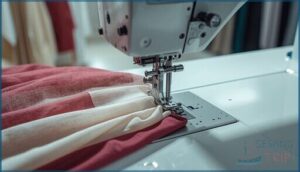
Differential feed is the feature that separates a capable serger from a frustrating one. It controls two sets of feed dogs that move fabric at different rates — dial it between 0.7 and 2.0 to prevent fabric slippage, eliminate wavy seams on jersey, or gather lightweight sheers.
For seam stability on stretch fabrics, adjustable differential feed is non-negotiable.
Ease of Threading and User-friendly Design
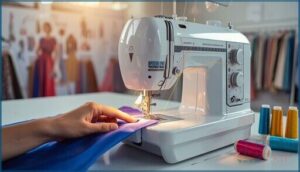
Once you’ve mastered differential feed, threading becomes your next real test. Color-coded threading paths take the guesswork out of setup, and air threading systems push threads through the loopers instantly — no manual fishing required. Better thread management means less downtime when switching colors mid-project.
Look for these easy-to-use design features:
- Color-coded threading systems with clear path guides
- Air threading for fast, consistent looper setup
- Front-panel tension adjustment dials grouped for quick access
Cutting Mechanism and Blade Quality
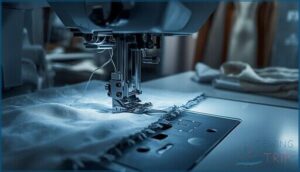
A serger’s cutting mechanism is where precision really earns its keep. Two knives — one moving, one stationary — handle all your fabric trimming in a single pass, and knife alignment directly affects edge finishing quality.
For raveling wovens or thick materials, heavy-duty metal frames and sturdy blade quality maintain cutting precision over long production runs. Dull blades compromise everything downstream.
Adjustable Tension Controls
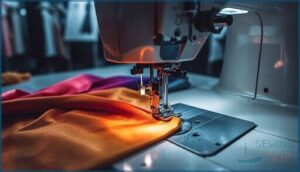
Tension is where good seams either come together or fall apart. Each thread — upper looper, lower looper, and both needles — needs its own fine-tuned setting for true stitch balance. Getting fabric tension right prevents tunneling, looping, and puckering across every fabric type.
- Numbered dials give you precise tension adjustment for each thread path
- Pre-set overlock settings speed up fabric switches without guesswork
- Balanced thread tensioning keeps overlock stitches flat exactly at the edge
- Looper tension shifts enable rolled hems and flatlock effects
- Professional serger machines combine ease of use with adjustable differential feed for consistent results
Sergers Vs. Sewing Machines in Fashion Design
A serger and a sewing machine aren’t interchangeable — they’re built for different jobs, and knowing the distinction can change how you work.
For fashion designers, choosing the right tool comes down to stitch quality, speed, and how your fabric behaves under pressure.
Here’s how the two compare across the areas that matter most.
Differences in Stitch Types and Seam Finishes
Your regular sewing machine uses two threads locked inside the fabric — clean, but limited. Serger stitches change everything.
| Stitch Type | Seam Finish Quality | Best Use |
|---|---|---|
| Overlock stitch | Dense, fray-resistant edge | Knits, wovens |
| Rolled hem stitch | Narrow, high stitch density | Sheers, chiffon |
| Flatlock stitch | Open, low-bulk finish | Activewear, stretch |
Edge trimming, fabric stretch, and thread tension all work together — giving your seams a factory-quality result.
Speed and Efficiency for Garment Construction
Think about how much time slips away when you’re finishing seams separately. A serger’s stitch velocity — reaching up to 1,700 stitches per minute — transforms your Construction Workflows and Production Timelines dramatically.
| Operation | Standard Machine | Serger |
|---|---|---|
| Seam + finish | Two passes | One pass |
| Stitch speed | ~600 SPM | ~1,700 SPM |
That Seam Optimization and Fabric Flow keep your sewing project efficiency at its peak.
Handling Specialty and Stretch Fabrics
Stretch fabrics will expose every weakness in your technique — and your machine. A standard sewing machine simply can’t deliver the Stretch Control and Fabric Stability that knits and sheers demand. Your serger machine uses differential feed to prevent Fabric Distortion, while Serger Tension settings and proper Edge Finishing keep every seam clean.
| Fabric Type | Challenge | Serger Solution |
|---|---|---|
| Lightweight knits | Wavy, distorted seams | Differential feed above 1.0 |
| Sheer/delicate fabrics | Edge fraying, stretching | Narrow 3-thread overlock |
| Heavy/bulky knits | Feed resistance, waviness | Differential feed toward 1.5 |
Enhancing Professional Appearance of Clothing
The difference between handmade and professionally made often lies in the seam. Clean-finished seams, consistent seam finishing, and professional hemming are what separate a polished garment from one that looks rushed. Your serger delivers professional-level stitching that a standard machine simply can’t match, making garment construction faster while keeping every edge refined.
A serger turns handmade into professional by finishing every seam with speed and precision
| Finish Type | Standard Machine Result | Serger Advantage |
|---|---|---|
| Seam Finishing | Zigzag, visible bulk | Clean-finished seams, less bulk |
| Edge Embellishment | Limited decorative options | Rolled hems, flatlock detailing |
| Professional Hemming | Uneven, heavy folds | Narrow, crisp, consistent edges |
| Fabric Selection | Limited stretch handling | Works across knits and sheers |
| Professional Garment Construction | Slower, inconsistent | Immaculate Finish, production-ready |
Choosing The Right Serger for Your Needs
Picking the right serger comes down to more than just price — it’s about matching the machine to how you actually work. Your fabric choices, skill level, and long-term goals all point you toward different features.
Here’s what to keep in mind before you buy.
Matching Serger Features to Fabric Types
Your serger machine is only as good as how well it matches your fabric types. Thread-fabric pairing shapes every decision — from cutting width to tension adjustments and differential ratios.
- Silk and chiffon need narrow cutting width and low tension
- Denim demands a heavy-duty metal frame with wider stitch capability
- Knits require differential feed adjustments around 0.7–2.0
- Activewear benefits from four-thread overlock with balanced differential ratios
Selecting Sergers for Beginners Vs. Professionals
Fabric type shapes your choice, but so does your skill level. A beginner tips toward simpler controls — color-coded threading, basic tension dials, speeds around 1,200 stitches per minute. A professional needs sophisticated fabric handling, auto tension, and memory settings.
This serger machine selection guide matters: the right user experience accelerates your growth, while the wrong machine just slows you down.
Budget Considerations for Fashion Designers
Your budget shapes every decision in this serger machine buying guide. Entry-level models run $200–$300, offering solid value for sample work. Mid-range options ($500–$1,000) handle daily production better.
This serger machine selection guide tip matters: factor in ongoing expenses like blades, needles, and cone threads. Financing options can spread costs, while buying supplies in bulk delivers real cost savings.
Evaluating Durability and Long-term Performance
Once you’ve sorted your budget, the next question is how long your machine will actually last.
Frame Quality makes a real difference — a heavy-duty metal frame, like the one in the Brother ST4031HD, resists vibration and warping through years of daily use.
Motor Longevity, Component Wear, and Warranty Coverage all signal durability and construction built for professional garment making. Service records matter too.
Advanced Serger Techniques for Designers
Once you’ve found the right serger, the real fun begins. Knowing how to push that machine beyond basic overlocking is what separates a good designer from a great one.
Here are the key techniques worth adding to your skill set.
Creating Rolled Hems and Decorative Edges
A rolled hem can transform an ordinary scarf or ruffled sleeve into something that looks runway-ready. Nailing your Rolled Hem Setup starts with removing the left needle, engaging the stitch finger, and dialing your stitch length near 1mm.
For Fabric Selection, lightweight options like chiffon and organza curl beautifully. Decorative Threads like woolly nylon or metallics in the upper looper add stunning professional finishes.
- Set right needle tension to 3–4, lower looper to 5–6
- Use Lettuce Edges on stretch knits by pulling fabric while stitching
- Seal thread tails with fray sealant on delicate fabrics
Flatlock Seams and Fashion Detailing
Flatlock seams are where function meets fashion detailing — and once you understand them, your garment finishing reaches a whole new level. Unlike a rolled hem stitch, flatlock seams butt fabric edges together, creating a nearly smooth, skin-friendly join. Smart fabric selection and thread choices transform these seams into bold design statements.
| Design Element | Flatlock Application |
|---|---|
| Stitch Patterns | Ladder or looped visible lines |
| Thread Choices | Neon, metallic, or contrast colors |
| Seam Construction | Flat, stretch-friendly, no bulk |
| Garment Finishing | Reversible, decorative panel joins |
Overlocking Stretchy and Delicate Fabrics
Stretchy and delicate fabrics demand precision from both your hands and your serger machine. For fabric stretch control on jersey or spandex, set differential feed between 1.3 and 2.0 and use woolly nylon in the loopers for stretch seam stability.
Delicate edge finishing on sheers calls for size 60/8 needles, reduced presser foot pressure, and careful overlock tension tips to prevent tunneling or tearing.
Speeding Up Production With Sergers
A serger can nearly triple your stitch speed — reaching up to 1,700 stitches per minute compared to a regular machine’s 700. That kind of high-speed sewing transforms your production workflow fast.
- Batch processing similar seams reduces tension adjustments
- Fabric efficiency improves when trimming and stitching happen simultaneously
- Serger optimization through assembly-line sequencing cuts garment time in half
- A heavy-duty metal frame professional serger machine maintains consistent stitch speed under pressure
Maintenance Tips for Serger Longevity
A serger is an investment, and like any good tool, it needs consistent care to stay at its best. Skipping maintenance doesn’t just slow you down — it can cut your machine’s life short and cost you far more in repairs.
Here’s what you should be doing to keep yours running like it did on day one.
Cleaning and Regular Oiling Routines
Think of your serger like a high-performance tool — skip daily maintenance, and it’ll let you down mid-project.
After each session, brush out lint from the knife area and looper bed using a small nylon brush. Apply a drop of clear sewing machine oil to metal contact points after every 8–10 hours of use.
Preventive care keeps your machine maintenance consistent and your seams perfect.
Replacing Blades and Needles
Dull blades and worn needles are silent project killers. For serger machine maintenance, replace standard steel blades every 2–3 months with daily use, or every 1–2 years for occasional sewing — carbide blade materials extend that lifespan considerably.
Replacement timing also applies to needles: swap them every 6–8 hours of active sewing. Always match needle selection to your fabric weight for clean, skip-free stitches.
Using Quality Threads for Best Results
Your thread choice matters more than most sewists realize. Polyester core-spun thread, rated Tex 25 to Tex 40, gives the ideal balance of strength, stretch, and thread ease for fashion serging.
Thread quality directly affects colorfastness, lint buildup, and tension consistency. Prioritize OEKO-TEX certified options for childrenswear.
Smart fiber types and thread selection from trusted cones keep your machine running clean and your seams lasting.
Annual Professional Servicing and Troubleshooting
Even with quality thread protecting your machine, a yearly professional service is what keeps everything dialed in long-term. A qualified technician manages looper timing, lubrication, and feed dog calibration — tasks no home troubleshooting guide covers fully.
Before booking, document stitch problems with fabric swatches. Staying on a consistent maintenance schedule also protects your warranty and helps you avoid unexpected repair costs.
Frequently Asked Questions (FAQs)
Which machine is best for fashion designing?
For fashion design, the Juki MO-50E stands out. Its 1,300 stitches per minute, adjustable differential feed, and built-in looper threader simplify your design workflow and deliver professional-grade finishes across most fabric types.
What equipment do fashion designers need?
The whole kit and caboodle matters in fashion design — you’ll need Design Tools, Fabric Cutters, Measuring Tapes, Sewing Notions, Studio Furniture, a sewing machine, serger, dress form, iron, and pattern-making rulers for garment construction.
What sewing machine does Dior use?
Dior’s couture ateliers prioritize handwork above all, but Janome models like the 1600P QC and My Style 22 appear in public behind-the-scenes content, confirming machine adaptations do support select construction tasks.
Can sergers handle both knit and woven fabrics?
Yes — a serger manages both knit and woven fabrics beautifully. Adjust thread tension and differential feed for proper stitch balance, clean seam finish, and reliable fabric stretch control across all fabric types.
How many threads does a serger typically use?
Most sergers use 3 or 4 threads for standard overlock techniques, but 5-thread models add a safety chain stitch. Your thread count directly shapes your stitch options and seam strength.
Are sergers suitable for sewing leather or vinyl?
You can serge light leather and vinyl, but thickness matters. Soft faux leather manages well; stiff or heavy hides don’t. For heavy fabrics, switch to an industrial machine.
Can beginners learn to use a serger quickly?
Once you get the hang of it, a serger isn’t as intimidating as it looks. Most beginners sew clean seams after just one or two practice sessions using basic Serger Basics and easy-to-use sewing machine features.
Conclusion
Every seam you finish cleanly is a quiet declaration of intent—that your work meets the standard before anyone else sees the label. The right serger machines for fashion designers don’t just speed up production; they raise the baseline of what your garments promise.
Frayed edges are a choice you’ll never have to make again. Invest in the machine that matches your ambition, and your collection will speak with the precision your vision deserves.
- https://idcustomapparel.com/role-of-overlock-stitch-in-clothing/
- https://sewingmachineman.substack.com/p/sewing-knit-fabric-and-differential
- https://www.qualitysewing.com/products/brother-air1800-air-thread-serger
- https://stitchinheaven.com/blogs/howdy/our-serger-machine-rundown
- https://www.premierstitching.com/baby-lock-celebrate-serger-with-jet-air-threading/