This site is supported by our readers. We may earn a commission, at no cost to you, if you purchase through links.
That tangled mess under your fabric has a name: birdnesting. It shows up without warning, ruins a seam, and sends most sewists straight to frustration.
The culprit behind bobbin thread bunching underneath is almost never the bobbin itself—it’s usually a tension problem hiding somewhere in your upper thread path. A loose thread guide, a skipped step during threading, a dull needle—any one of these can throw off the delicate balance your machine needs to form a clean stitch.
The good news? Every cause has a fix, and most take less than five minutes once you know where to look.
Table Of Contents
- Key Takeaways
- What Causes Bobbin Thread Bunching Underneath
- How to Diagnose Thread Bunching Issues
- Step-by-Step Fixes for Thread Bunching
- Preventing Bobbin Thread Bunching
- Material and Thread Factors Impacting Bunching
- When to Seek Professional Machine Servicing
- Top Tools and Accessories to Prevent Bunching
- Frequently Asked Questions (FAQs)
- Conclusion
Key Takeaways
- Bobbin thread bunching almost always traces back to upper thread tension or a missed threading step — not the bobbin itself.
- A dull or wrong-size needle quietly causes more bunching than most sewists ever suspect.
- Cleaning lint from the bobbin case, feed dogs, and tension discs every 8–10 hours prevents most recurring thread jams before they start.
- When rethreading, tension adjustments, and a fresh needle still don’t fix the problem, internal timing or spring wear is likely the real culprit — and that calls for a professional.
What Causes Bobbin Thread Bunching Underneath
Thread bunching underneath your fabric almost always traces back to one of a handful of fixable problems. Most of them have nothing to do with the bobbin itself — which surprises a lot of people. Here’s what’s actually causing the mess.
If the fix isn’t obvious, connecting with a professional sewing machine repair service online can save you hours of guesswork.
Upper Thread Tension Imbalance
Most thread bunching starts here — with upper thread tension imbalance. When your tension dial calibration is off, the tension discs grip too loosely, dragging thread below the fabric.
Watch for these signs:
- Loops forming under the fabric
- Stitches pulling out easily
- Uneven stitch length consistency
- Thread path alignment disruption near the presser foot
A simple tension adjustment fixes most cases fast. Remember that incorrect threading issues are a common cause of tension imbalance.
Incorrect Threading Path
Even with tension set right, a wrong threading path causes just as much chaos.
Presser Foot Position matters — always raise it before threading. That opens the tension discs.
Skip the Take Up Lever? You’ll get slack loops fast.
Guide Path Misses and a Tension Disc Bypass both pull thread downward.
Threading path mastery means following every step, every time.
Following the proper thread guide path prevents bobbin bunching.
Bobbin Insertion Errors
Getting the threading path right is only half the battle. Bobbin insertion errors cause just as many headaches.
- Bobbin Orientation: Thread must unwind counterclockwise, wrong direction disrupts thread tension instantly
- Case Seating: An incomplete click means shifting, uneven delivery, and bobbin thread bunching
- Overfilled Bobbin: Past 80–90% capacity, thread collapses and jams
Check bobbin area first during any sewing machine troubleshooting.
Needle Problems and Compatibility
Bobbin errors sorted? Now check your needle — it causes more bunching than most sewists realize.
A bent needle wobbles on a flat surface. A dull one scorches fabric. Wrong shank system compatibility completely throws off hook timing.
| Needle Problem | Effect | Fix |
|---|---|---|
| Bent needle detection | Thread loops underneath | Replace immediately |
| Needle size matching | Fraying, nesting | Match thread weight |
| Ballpoint vs sharp | Skipped stitches on knits | Use correct type |
Lint or Debris in Machine
Lint is the silent saboteur of smooth stitching. It sneaks into your bobbin case, tension discs, feed dogs, hook race, and needle plate — then quietly wrecks your thread tension adjustment from the inside.
Bobbin Case Cleaning every 8–10 hours removes the clumps blocking that tension spring. Feed Dog Maintenance sweeps packed debris from grooves. Hook Race Lubrication after clearing buildup keeps hook rotation smooth. A Needle Plate Vacuum pulls stubborn lint that no brush reaches.
How to Diagnose Thread Bunching Issues
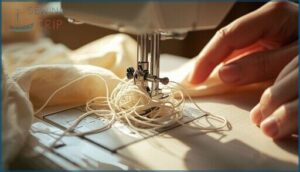
Diagnosing thread bunching doesn’t have to feel like guesswork. Most problems leave clear clues if you know where to look.
Start by working through these four areas one at a time.
Common Signs of Birdnesting
Your machine is trying to tell you something — you just need to know the language. Birdnesting rarely appears without warning. Watch for these dead giveaways:
- Thread loops underside forming in the first 1–3 stitches
- Handwheel resistance when you try turning it manually
- Rattling noise right before a full jam hits
- Fabric drag or uneven stitches with inconsistent tension
That’s bobbin thread bunching doing its thing.
Inspecting Thread Paths and Guides
Tracing your thread path from spool to needle catches most problems fast. Start at the upper guides — check each one for nicks or burrs.
If you’re also struggling with fabric that shifts or stretches during stitching, sewing with knit fabrics walks you through the techniques that keep everything on track.
Raise your presser foot, then seat the thread through the tension discs. Run a quick take‑up lever check next. Finally, confirm lower needle guide alignment is clean and snag‑free. Guide damage detection takes two minutes but saves your project.
Evaluating Fabric and Thread Choices
Your fabric and thread pairing matters more than most sewists realize. Thread Weight Matching alone fixes a surprising number of bunching problems.
Check these four combinations first:
- Denim: 30wt thread, Denim Needle Size 100.
- Knit fabrics: Polyester Stretch Benefits shine here — use polyester to match the stretch.
- Cotton quilting: Watch Cotton Lint Impact; clean often.
- Knit Fabric Tension: Keep it light to avoid under-loops.
Checking for Hidden Machine Damage
Sometimes the real culprit isn’t visible at first glance.
Run your finger along the bobbin case edges — Bobbin Case Burrs feel like tiny snags.
Check Hook Alignment where the tip should just clear the needle eye.
Tension Disc Corrosion leaves a dull, rough feel.
Feed Dog Wear means smooth teeth that can’t grip.
Timing Gear Slack causes that subtle grinding — classic sewing machine troubleshooting territory.
Step-by-Step Fixes for Thread Bunching
Good news — most thread bunching fixes don’t require a repair shop. You just need to work through a few specific steps in the right order. Here’s exactly what to do.
Rethreading Upper and Bobbin Threads
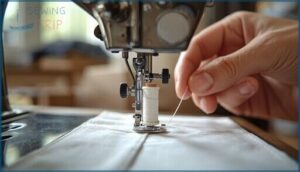
Start fresh — lift the presser foot fully. This disengages the tension discs so upper thread tension seats correctly.
Place your spool, follow every thread guide alignment point down to the take‑up lever height, then loop through the needle front‑to‑back. For the bobbin, directionality matters: counterclockwise on top‑loaders. Thread the guides, pull a tail, turn the handwheel, and draw both threads back together.
Adjusting Thread Tension Settings
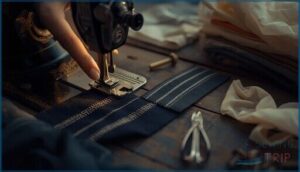
Now that your threads are seated correctly, tension is next. Set your upper thread tension dial to 4 — the standard starting point for medium fabric. Use a Tension Test Scrap with contrasting colors to spot loops fast. Make Quarter‑Turn Adjustments only.
Fabric Weight Matching matters too: chiffon needs 2.0–3.5, denim needs 5.0–6.0. Dial Calibration Tips and Bobbin Screw Tuning rarely need touching unless shirring.
Replacing or Reseating The Needle
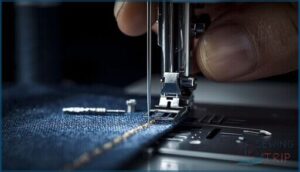
Even perfect tension won’t save you from a bad needle. A dull or bent needle is one of the sneakiest causes of bunching — is easy to miss.
Watch for these Needle Wear Indicators:
- Skipped stitches or loose loops forming below
- Snagging sounds as it pierces fabric
- Thread fraying near the eye
For needle replacement, loosen the clamp screw, hold the old needle, then push your new one up until it stops. Nail your Needle Flat Orientation — the flat side faces back. Match size to fabric using Needle Size Matching: size 70/10 for lightweight, 90/14 for denim.
Cleaning The Bobbin Area and Feed Dogs

A clean machine is a happy machine. Once the needle is sorted, check under the hood.
Needle Plate Access is simple — power off, unplug, then remove the plate.
| Task | Frequency |
|---|---|
| Bobbin area lint brush | Every project |
| Feed dogs cleaning | Weekly (daily sewers) |
| Routine Cleaning Schedule check | Every 8–10 hours |
| Sewing machine oil application | Monthly |
Use a lint brush to sweep debris forward. Canned Air Cautions apply here — it can push lint deeper. Tweezers beat the air every time for lint buildup around feed dogs.
Preventing Bobbin Thread Bunching
Fixing a bunching problem is satisfying — but stopping it from coming back is even better.
A few consistent habits are all it takes to keep your machine running clean. Here’s what actually works.
Regular Machine Maintenance Tips
Think of your machine like a car — skip the upkeep, and it’ll break down mid‑project. A solid Lint Brush Routine every 8–10 hours of sewing keeps the bobbin area clear. Stick to this simple schedule:
- Bobbin Case Inspection every 2–3 bobbins
- Oil Schedule using one drop of sewing machine oil per point
- Needle Change Frequency every 8–10 hours
Tension Disk Cleaning prevents hidden buildup that throws off thread tension adjustment without warning.
Proper Thread and Needle Selection
Matching your needle size to fabric weight isn’t optional — it’s half the battle.
A size 80/12 manages most quilting cotton well, while denim needs a 100/16 minimum.
Needle and thread selection go hand in hand: pair 40-weight polyester with that same medium needle for clean thread tension adjustment.
Polyester vs cotton matters too — polyester stretches slightly, cotton doesn’t.
Sharpness maintenance and thread quality seal the deal.
Best Practices When Starting a Seam
Before needle touches fabric, your startup routine decides everything.
Lower the presser foot fully — raised presser foot positioning kills upper tension instantly.
Use Hand Wheel Initiation to set the first stitch manually.
Try the Leader Fabric Technique with scrap fabric to stabilize threads before your main seam.
An Offset Seam Start, combined with a clean Backtack Sequence, locks stitches without pulling.
Holding Thread Tails at Startup
Holding both thread tails at startup is one of the simplest ways to stop bobbin thread bunching before it starts.
The Tail Tension Technique works like this:
- Pull tails 4–6 inches behind the Presser Foot Position
- Apply light Hand Holding Methods for the first 2–4 stitches
- Follow Tail Length Guidelines, then release
- Use slow Startup Stitch Speed to let thread tension stabilize
That one habit eliminates most nesting instantly.
Material and Thread Factors Impacting Bunching
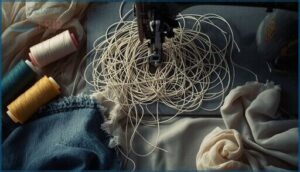
Your thread and fabric choices affect tension more than most people realize.
Before you troubleshoot the machine itself, it’s worth looking at what you’re actually sewing with.
Here are the key material factors that could be working against you.
Choosing The Right Thread Type
Thread choice matters more than most sewists realize. Polyester vs Cotton isn’t just a preference — it’s a bunching decision. Cotton produces lint that clogs your machine and disrupts thread tension fast. Polyester resists that.
For rayon tension, go lower or birdnesting follows. Nylon elasticity manages stress well but test it first.
Thread weight matching between upper and bobbin is non‑negotiable. Mismatched weights cause bobbin issues almost every time.
Finish coating effects matter too — waxed threads run cleaner.
Fabric Type and Its Effect on Tension
Your fabric is the boss — it tells your machine what tension to use.
- Heavy Fabric Tension: Denim and canvas need tension around 4–6 to lock threads mid-layer.
- Sheer Fabric Adjustment: Chiffon and organza stay flat at tension 1–3, preventing puckering.
- Knit Stretch Balance: Jersey sews cleanly near 3–5, moving with the fabric’s stretch.
- Dense Weave Settings: Tight weaves need slightly higher tension to pull bobbin thread through fully.
- Fuzzy Texture Tension: Fleece and wool need a small tension bump to stop bobbin thread from floating loose underneath.
Always test on scrap first.
Thread Quality and Brand Considerations
Cheap thread is the hidden troublemaker most sewers overlook.
| Brand | Type | Key Benefit |
|---|---|---|
| Gutermann | Mercerized Cotton | Low lint, smooth feed |
| Aurifil | Egyptian Cotton | Minimal fuzz, even tension |
| Mettler | Mercerized Cotton | Silky flow, precision stitching |
| Isacord | Polyester | Wash-resistant, tension-stable |
| Madeira | Polyester Blend | Reliable multi-layer performance |
Cotton vs polyester both work — but mercerized finish benefits matter most.
Low‑lint premium threads prevent clogged tension discs.
Match thread weight to your fabric and needle size.
Brand consistency standards keep your bobbin thread locked cleanly every seam.
When to Seek Professional Machine Servicing
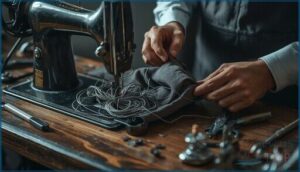
Sometimes you do everything right and the bunching just won’t quit. That’s usually your machine telling you it needs more than a quick fix at home.
Here’s how to know when it’s time to hand things off to a pro.
Persistent Thread Bunching After Troubleshooting
When you’ve rethreaded, cleaned, changed the needle, and adjusted tension — and bunching still won’t quit — your machine is telling you something deeper is wrong. This isn’t a user error anymore. It’s a mechanical conversation worth listening to.
When rethreading and tension fixes still fail, your sewing machine isn’t misbehaving — it’s asking for help
Here’s what often hides beneath persistent fixing bobbin thread bunching attempts:
- Machine Timing Drift shifting hook pickup
- Bobbin Spring Wear disrupting bobbin tension adjustment
- Thread Path Friction from dry or worn hook parts
- Needle Eye Burrs fraying thread mid‑stitch
- Fabric Lift Issues from weak presser foot springs
Signs of Internal Machine Issues
Problems speak louder than others. Hook grinding, feed‑dog slip, tension‑disc lint buildup, needle wear, and gear backlash are your machine’s way of waving a red flag.
| Sign | What You Notice | Likely Cause |
|---|---|---|
| Hook grinding | Scraping noise on needle rise | Hook timing drift |
| Feed‑dog slip | Wavy, uneven stitch lines | Worn feed-dog teeth |
| Tension‑disc lint | Thread slips at high speed | Debris between discs |
| Needle wear | Consistent thread bunching | Burred or dull needle eye |
| Gear backlash | Knocking at 800+ SPM | Cracked internal gear teeth |
Benefits of Professional Cleaning and Adjustment
When grinding and slipping point to internal trouble, a professional isn’t just a convenience — they’re your machine’s reset button.
Deep cleaning clears hidden lint and metal shavings that silently cause reduced wear damage. Sophisticated tension calibration restores consistent tension balance across every fabric. Enhanced timing alignment fixes hook drift.
The result? Improved stitch quality, extended machine lifespan, and fewer ruined projects.
Preventive maintenance through regular sewing machine repair keeps birdnesting rare.
Top Tools and Accessories to Prevent Bunching
The right tools make a real difference in keeping your stitches clean and consistent.
A few well-chosen accessories can stop bunching before it even starts.
Here’s what’s worth having on hand.
1. Singer 6 Inch Sewing Gauge
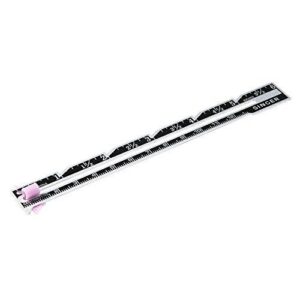
Small tools fix big problems. The 6‑inch sewing gauge keeps your seam allowances consistent — and consistent seams mean balanced tension.
It’s lightweight aluminum, easy to handle near your machine.
The sliding marker locks at your chosen measurement, so you’re not eyeballing the same distance repeatedly.
Set it once to 5/8 inch, and every seam stays identical.
That steady, even fabric placement removes the guesswork that leads to birdnesting before it even starts.
| Best For | Seamstresses, tailors, and DIY sewers who want fast, accurate measurements for hems, buttonholes, tucks, and pleats. |
|---|---|
| Primary Use | Sewing & tailoring |
| Build Material | Metal ruler |
| Weight | 0.32 ounces |
| Target User | Seamstresses & tailors |
| Durability | Affordable, some flex |
| DIY Suitability | Yes |
| Additional Features |
|
- The sliding marker locks in place, so you can repeat the same measurement without second-guessing yourself
- Printed in inches and centimeters, so it works however you like to measure
- Tiny and light — easy to keep right at your machine and grab when you need it
- The build feels a bit flimsy, so it’s not something you’d lean on for heavy daily use
- The edges can be rough, which gets uncomfortable after a while
- The slider can shift if you’re not careful, which throws off your measurement
2. Brightlylit Brother Sewing Machine Pedal Cord
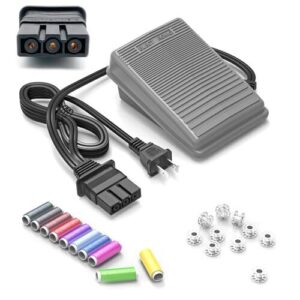
Speed control matters more than most sewists realize. Jerky pedal response throws off your rhythm — and inconsistent speed is a fast track to birdnesting.
Brightlylit foot controller gives you smooth, variable speed from the first stitch to the last. Press lightly for tight corners. Press harder for long straight seams.
It connects directly to most Brother machines without adapters, and the generous cord length keeps everything tidy on your table.
Stable speed means stable tension — and that’s half the battle right there.
| Best For | Sewists who need a reliable replacement pedal for their Brother machine and want smooth, consistent speed control without the hassle of a complicated setup. |
|---|---|
| Primary Use | Sewing machine operation |
| Build Material | Copper core wiring |
| Weight | 14.9 ounces |
| Target User | Brother machine owners |
| Durability | Full copper core |
| DIY Suitability | Yes |
| Additional Features |
|
- Smooth, responsive speed control that keeps your rhythm steady from slow corners to long straight seams
- Works with a wide range of Brother machines and comes with extras like thread and bobbins
- Solid build with a full copper core, good cord length, and a 2-year replacement warranty to back it up
- Not universal — you’ll need to double-check your machine’s model and plug shape before buying
- Mainly limited to Brother and select Kenmore machines, so it won’t work for everyone
- Some users may need an adapter depending on their setup, which adds an extra step
3. Groz Beckert 134MR Titanium Quilting Needles
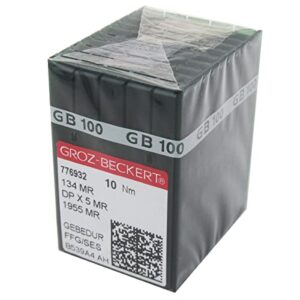
A dull or wrong needle is one of the sneakiest causes of thread bunching — and most sewists overlook it completely.
The Groz-Beckert 134MR Titanium needles fix that. Their titanium nitride coating stays sharp longer than standard needles, even through dense batting and thick quilts. The FFG light ball point glides through fabric without cutting fibers. That means fewer skipped stitches and less tension chaos underneath.
They come in sizes 80 through 160. Match your needle to your fabric — and bunching drops dramatically.
| Best For | Long arm quilters who work with a range of fabric weights and want a durable, sharp needle that cuts down on skipped stitches and tension problems. |
|---|---|
| Primary Use | Quilting & sewing |
| Build Material | Titanium nitride steel |
| Weight | 2.89 ounces |
| Target User | Long arm quilters |
| Durability | Titanium finish |
| DIY Suitability | Yes |
| Additional Features |
|
- Titanium nitride coating keeps the needle sharp longer, even through heavy batting and dense quilts
- Comes in multiple sizes (80–160), so you can match the needle to whatever fabric you’re working with
- The FFG light ball point glides through fabric cleanly without shredding fibers
- Not compatible with every long arm quilting machine, so you’ll want to double-check before buying
- Needles still need to be swapped out regularly depending on your project and fabric type
- The pack is specific to round shaft machines, which limits who can use them
4. Savina Wooden Quilting Seam Roller
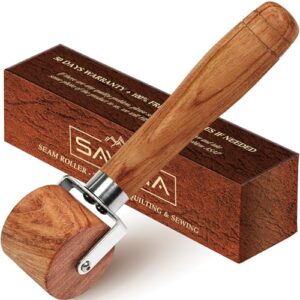
Flat seams are your first defense against birdnesting. The Savina Wooden Quilting Seam Roller (model SVN_SR001) lets you press seams open right at your machine — no iron needed.
Its smooth hardwood roller flattens bulky intersections before you sew the next pass, so layers feed evenly under the presser foot. That consistent thickness keeps your tension balanced and stops the bobbin thread from looping underneath.
Lightweight at 3.52 ounces, it won’t fatigue your hand during long quilting sessions.
| Best For | Quilters, sewers, and DIY crafters who want a quick, no-iron way to press seams right at the machine. |
|---|---|
| Primary Use | Sewing & quilting |
| Build Material | Hardwood |
| Weight | 3.52 ounces |
| Target User | Quilters & sewers |
| Durability | Hard wood construction |
| DIY Suitability | Yes |
| Additional Features |
|
- Hardwood build feels solid and holds up well over time
- Easy to grip and light enough to use for long sessions without hand strain
- Works great for pressing open seams before ironing, saving you trips to the ironing board
- Finger pressing or a hot iron still edges it out for tricky fabrics or stubborn seams
- Not the right tool if you’re working on large-scale projects that need more coverage
- Some users prefer plastic seam rollers and find those smoother to work with
Frequently Asked Questions (FAQs)
Why is my sewing machine looping on the underside?
Like a kite with too much string, your upper thread has gone slack.
Loose tension lets it get pulled beneath the fabric, where it tangles into loops — that’s your machine’s way of crying for help.
Does sewing speed affect thread bunching frequency?
Yes, sewing speed directly affects how often thread bunches. Faster stitching pulls upper thread through tension discs quickly, so even slight looseness shows up as loops underneath far more often.
Is thread bunching more common on older machines?
Thread bunching hits older machines roughly 80% more often. Worn tension springs, dried lubricants, and degraded bobbin cases all stack up over time — turning small quirks into chronic birdnesting problems.
Can humidity or temperature cause thread to bunch?
Humidity and temperature absolutely can affect your thread. Moisture makes fibers swell, increasing friction through guides and tension discs.
Heat weakens synthetics fast. Both shift tension balance enough to cause real stitching trouble.
Does presser foot type influence thread bunching?
Swapping feet is like changing shoes for a race — the fit matters.
A zigzag foot on fine fabric risks bunching.
A walking foot may need higher upper tension to stay balanced.
Conclusion
The most frustrating problems are often the simplest ones hiding in plain sight.
Bobbin thread bunching underneath rarely means something is broken beyond repair—it means something small got skipped. One missed thread guide. One dull needle. One lint-packed bobbin case.
Now you know exactly where to look and what to fix. Your machine hasn’t turned against you. It’s just waiting for the right adjustment. Make it and watch clean stitches follow.
- https://www.maggieframes.com/blogs/embroidery-blogs/why-thread-bunches-under-fabric-causes-and-permanent-fixes
- https://www.hooptalent.com/ro/blogs/news/why-is-my-bobbin-thread-looping-underneath-expert-solutions-prevention-guide
- https://topnotchsewvac.com/blogs/sewing-machine-blog/why-bobbin-thread-bunches-up-top-7-common-causes-and-solutions
- https://www.bernina.com/en-US/Support-US/The-best-sewing-tips/The-best-tips-tricks-for-sewing/How-to-prevent-thread-bunching
- https://www.magnetichoop.com/blogs/news/how-to-fix-tangled-bobbin-thread-step-by-step-solutions-for-smooth-sewing