This site is supported by our readers. We may earn a commission, at no cost to you, if you purchase through links.
Sewing machines get all the glory, but plenty of tailors throughout history did their finest work with nothing but a needle and thread.
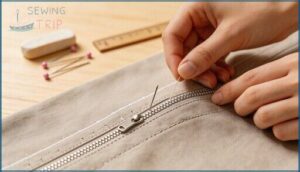
Hand-sewn zipper isn’t a compromise—done right, it sits flatter, looks cleaner, and gives you control no machine can match.
The prick stitch alone creates a subtle, almost couture-level finish that machines simply can’t replicate.
Whether your machine is out of commission or you’re working with a delicate fabric that deserves a gentler touch, installing a zipper by hand is a skill worth having in your toolkit.
Table Of Contents
Key Takeaways
- Hand-sewn zippers aren’t a downgrade at all; with techniques like the prick stitch, they can sit flatter, look cleaner, and give you more control than a machine, especially on delicate fabrics.
- Choosing the right materials—zipper type and length that match your fabric, proper needle size, strong polyester thread, and simple marking and measuring tools—sets you up for a clean, accurate install.
- A professional result comes from careful prep and stitching: measure and mark the opening, align and pin or baste the zipper tape, then sew with tiny, even prick stitches, backstitches at the ends, and hemming or ladder stitches to keep everything secure and nearly invisible.
- You can fix most common issues and boost durability by stabilizing with interfacing, managing tension to avoid puckers, adjusting or replacing sliders, adding bar tacks and double stitching at stress points, trimming threads neatly, and doing light maintenance like occasional lubrication and rust prevention.
Essential Tools for Hand-Sewing Zippers
Before you start stitching in a zipper by hand, you’ll want the right tools laid out and ready to go.
If you don’t have a zipper foot on hand, check out these zipper foot alternatives for hand and machine sewing that can still help you get crisp, even stitches.
The good news is you don’t need anything fancy, just a few basics that actually make the job easier and neater.
Let’s walk through the key tools you’ll want on your side next.
Choosing The Right Zipper Type and Length
Smart sewing means picking Zipper Types that fit Fabric compatibility.
In your Sewing Tools kit, nylon coil suits dresses, metal grips jeans, and Invisible vs decorative decides if the teeth show.
Choose Separating vs closed by the opening, Zipper width and Zipper Length by strain, leaving a small length tolerance.
That alone gives powerful Hand Sewing Tips for clean Zipper Installation.
A 3mm zipper size is common for light fabrics.
Hand-Sewing Needles and Thread Selection
Once you’ve nailed your zipper choice, your hand sewing needle and thread do the heavy lifting.
Follow a simple Needle Size Guide: size 7–8 sharps handle most cotton and light wool, while size 10–12 suit fine silk.
For Thread Weight Matching, 50wt polyester covers general use — its Thread Tensile Strength and Material Compatibility make it a reliable all-around pick for clean, durable Hand Sewing Tips.
Marking Tools and Measuring Supplies
Once needle and thread are sorted, your marking kit does the steering.
Fabric pens or Tailors Chalk/Tailor’s chalk give you thin, temporary lines for zipper centers.
Lean on smart Ruler techniques plus a Seam gauge to keep distances exact.
A Tracing wheel manages long guides.
Keep Pins, Sewing Clips, Seam Ripper, and Thimble nearby but waiting patiently.
Remember to use the back stitch technique for secure attachment.
Pins, Thimbles, and Scissors for Precision
Good pins, a solid thimble grip, and sharp scissors quietly do the heavy lifting in any zipper installation guide.
- Use glass head pins — their smooth pin head material glides through tape without snags.
- Keep pin spacing around 2–3 cm for steady control.
- Fit your thimble snugly; thimble finger pressure drives the needle cleanly.
- Mind your scissor blade angle for crisp cuts.
- Trim threads with small embroidery snips.
Preparing Fabric and Zipper for Installation
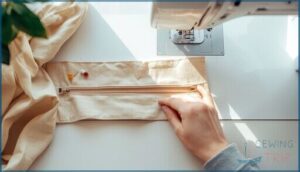
Before you ever take a stitch, you want fabric and zipper set up the right way. This is where you mark your spot, line things up, and get the pieces under control so the sewing part feels easy instead of stressful.
In this next section, you’ll see exactly how to prep everything step by step.
Measuring and Marking The Zipper Placement
Think of this as the blueprint stage of your Zipper Installation Guide.
Start with Opening length calculation: your zipper opening should be 1/2 inch shorter than the Zipper Length.
Mark the center fold for accurate Center line alignment, add Top stop positioning, Seam allowance marking, clear Seam Lines, and tiny Notch anchoring marks—perfect for Hand Sewing for Beginners using Pins.
Aligning and Pinning The Zipper Tape
Aligning the zipper tape starts with Tape Edge Alignment: center the tape so both sides sit evenly.
Use Pins or Sewing Clips and a Pin Spacing Technique, placing them perpendicular every 1–2 centimeters.
Practice Fabric Tension Control—flat, not stretched.
For Curved Opening Alignment, pin segments, then add Basting Before Stitching for secure Zipper Alignment. Hand Sewing Zipper Installation Sewing Tips.
Prepping Fabric Edges for Hand-Sewing
Smart Fabric Preparation starts at the Seam Allowance: baste the opening, then press it flat.
Do your Edge finishing first, trimming and grading seam allowances to reduce bulk near Zipper Teeth and zipper stops.
Follow with Interfacing application; a narrow Stabilizer strip keeps things from stretching.
Finish by pressing seam allowances again and securing with Pins or Sewing Clips firmly.
Step-by-Step Guide to Hand-Sewing a Zipper
Now that your fabric and zipper are pinned and ready, it’s time to actually sew the thing. Hand-sewing a zipper breaks down into a few simple steps, and each one builds on the last. Here’s exactly how to work through it.
Starting With The Prick Stitch Technique

prick stitch is your secret weapon for sewing a zipper by hand like a pro. Press your fabric first — edge alignment starts before the needle even touches the cloth.
Bring your needle up at a shallow angle, prick just one or two threads back, then travel 1/8 inch forward underneath. Keep thread tension firm but gentle, and maintain consistent stitch spacing for that clean, nearly invisible finish.
Securing Zipper Ends With Backstitch

Nothing locks a zipper in place like a tight Backstitch at each end. For Sewing Zipper by Hand and Zipper Repair, use these Sewing Techniques:
- Mark Backstitch Placement 2–3 mm from teeth.
- Choose polyester thread and sharp Needle Choice.
- Keep Stitch Length about 3–4 mm.
- Stack 6–8 passes for a Thread Bar Tack.
- Do thorough Durability Testing for Garment Repair.
Reinforcing With Hemming or Ladder Stitch
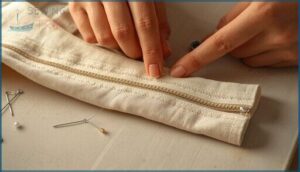
Think of hemming and ladder stitches as your zipper’s safety net.
For real Stress Distribution, place hemming stitches 3–4 mm apart along the tape — that’s your secret to Invisible Finish and solid Tape Alignment.
The ladder stitch disappears into the fold completely.
Smart Stitch Density and the right Thread Choice make all the difference for lasting Garment Repair and serious DIY Fashion cred.
Tips for Even, Nearly Invisible Stitches
hemming stitch is solid, focus on keeping each prick stitch between 1–2 mm — that’s your ticket to stitch length consistency.
Thread tension control matters too: snug, not tight.
Use fabric marking techniques to draw a straight guideline first.
Watch your needle angle adjustment — a slight diagonal keeps thread tucked inside the seam allowance, not sitting on top where it will show.
Troubleshooting Common Hand-Sewn Zipper Issues

Even with careful hand‑stitching, zippers can still act up a bit.
Maybe the fabric ripples, the zipper sits a little crooked, or a spot feels like it might give way.
Next, you’ll walk through the most common problems and the simple fixes that will help your zipper look clean and stay strong.
Preventing Fabric Puckering and Uneven Zipper Lines
While puckers are annoying, you can stop them with habits.
- Fuse Fusible Interfacing or use Stay Tape Application so Fabric and Seam Allowance stay stable beside the Zipper Teeth.
- For Tension Balancing, stretch the zipper tape slightly, never the fabric.
- Use a Steam Pressing Technique and Seam Alignment Strategy—Sewing Techniques and Tips in any Zipper Replacement Guide.
Fixing Loose or Crooked Zippers
Even a well-pinned zipper can go rogue — suddenly it’s loose, crooked, or separating mid‑seam. Start with slider clamp adjustment: gently squeeze the slider’s back end with pliers. Then work on teeth realignment, pressing bent teeth back into line. Rub on some lubrication methods, like pencil graphite, for smooth gliding, and handle tape untwisting before re‑zipping.
| Problem | Fix | Tools Needed |
|---|---|---|
| Loose slider | Slider clamp adjustment | Pliers |
| Crooked teeth | Teeth realignment | Fingers/pliers |
| Twisted tape | Tape untwisting | Hands, iron |
Reinforcing Weak or High-Stress Areas
Once the Zipper Slider behaves, protect stress points with Stress-Relief Reinforcement using smart Sewing Tools.
- Fuse Interfacing Strips along the opening to stop stretching.
- Stitch Bar Tacks at ends to anchor seams.
- Use Double Stitching at hips or waist for strength.
- Temporary Basting keeps zipper tape flat and line straight.
- Fabric Glue, Sewing Tips and Tricks, Garment Care and Maintenance.
Tips for a Professional, Durable Finish

You’ve made it to the finish line — now let’s make sure it actually holds up.
A few small habits separate a zipper that looks homemade from one that looks like it came off a store shelf.
A few small habits are all that stand between a zipper that looks homemade and one that looks store-bought
Here’s what to focus on for a clean, long-lasting result.
Trimming Threads and Securing Knots
Think of finishing your zipper like sticking the landing — the stitches got you here, but the knots seal the deal. Smart Knot Placement means burying them inside the Seam‑Allowance Burial zone so nothing shows outside.
A little Thread Waxing beforehand keeps securing knots from slipping loose. Use sharp snips for clean Snip Techniques — trim just 1–2 mm from the knot.
| Knot Types | Best Use | Placement |
|---|---|---|
| Locking Backstitch | Medium fabrics | Seam allowance |
| Overhand Knot | Light zippers | Wrong side |
| Tailor’s Knot | High‑stress areas | Between layers |
Maintaining Zipper Strength Over Time
Keeping your zipper strong long-term is honestly easier than you’d think. A simple routine goes a long way.
- Lubrication Schedule: Wax or silicone every 6–12 months keeps zipper teeth sliding smoothly
- Corrosion Prevention: Rinse metal zippers after exposure; vinegar treats rust spots
- Storage Conditions: Cool, dry, and away from sunlight protects thread and zipper pulls
- Wear Monitoring: Catch tooth alignment issues early—before zipper replacement becomes your only option
Frequently Asked Questions (FAQs)
Can you make a no-sew zipper without a needle & thread?
Yes, you can! Fabric glue method, fusible tape bonding, prong ring technique, hot glue pouches, and knitting latch hook all work beautifully for no‑sew zipper replacement in DIY fashion projects.
How do I choose a zipper for a sewing project?
Match your zipper to your fabric weight and use.
Nylon coil suits light dresses; metal teeth handle heavy denim.
Consider weather resistance, aesthetic style, and the right size selection for a clean, durable fit.
How do you secure a zipper?
Want your zipper to actually stay put?
Use backstitch at the ends, add thread stops near the teeth, and throw in bar tacks at stress points.
Slider locks and pull upgrades help too.
How do you sew a zipper?
Pin the zipper tape to your seam allowance, then use a prick stitch to secure it — small, even stitches close to the teeth.
Match your thread tension carefully, and you’re done.
Can I replace a broken zipper slider by hand?
Absolutely, replace a broken Slider by hand using Sewing Tools and Accessories.
Slider size matching for Zipper Types.
Stop removal methods.
Slider insertion tips.
Fabric tension control.
Quick test procedures.
Zipper Pulls.
DIY Sewing.
How do I hand-sew a zipper on leather?
Think of leather like a stubborn friend — it doesn’t bend to your rules.
Use contact cement, a diamond chisel, and saddle stitch technique to hand‑sew a zipper cleanly into any leather slot.
What stitch works best for stretchy knit fabric?
For stretchy knit fabric, the prick stitch or a narrow backstitch works great by hand.
Keep stitches small and even so the thread stretches slightly with the fabric instead of snapping.
How do I add a zipper to an existing seam?
add a zipper, baste seam closed, then Seam reinforcement, Seam allowance adjustment, Zipper stop placement, Fabric edge finishing, Thread tension control, Sewing Zippers.
Clothing Alteration and Modification, Sewing Tools and Materials, Sewing for Beginners.
Conclusion
If you’re still worried hand‑sewn zippers look "homemade," remember: control beats speed every time.
Now you know how to install zipper without machine. You’re not stuck waiting on a finicky presser foot or fighting bulky seams.
You can slow down, shape every stitch, and fix issues before they turn into disasters.
Think of each zipper as proof you’re the boss of your fabric, not the other way around—and that confidence travels into every project everywhere.