This site is supported by our readers. We may earn a commission, at no cost to you, if you purchase through links.
The wrong presser foot can turn a clean leather project into a frustrating mess of skipped stitches, drag marks, and crooked seams. Leather doesn’t forgive the way cotton does—it grips, slips, and compresses differently depending on whether you’re working with supple lambskin or stiff veg-tan. Most sewers discover this the hard way, mid-project, when switching feet would have solved everything from the start.
The right sewing machine feet for leather crafting change how hides move under the needle, how layers feed together, and how cleanly your finished edges look. From walking feet that sync every layer to PTFE-coated feet that glide over waxed surfaces without sticking, the difference comes down to matching the foot to the leather in front of you.
Table Of Contents
Key Takeaways
- Matching your presser foot to your leather type—whether it’s waxed, textured, or layered—is the single biggest factor in getting clean, consistent stitches.
- Walking feet, roller feet, and PTFE-coated feet each solve a different problem, so keeping all three on hand means you’re never fighting your materials mid-project.
- Before you buy any foot, check your machine’s shank height and bar width—compatibility matters more than features if the foot won’t snap on.
- Always test stitch tension on matching leather scraps first; it’s the one habit that protects your real project from costly, permanent mistakes.
Best Leather Sewing Foot Types
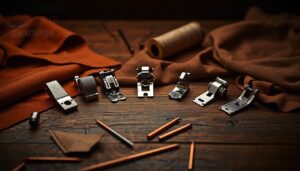
Not all presser feet handle leather the same way, and choosing the wrong one can ruin a project fast. The good news is that there’s a foot type built for nearly every leather challenge you’ll face.
From Teflon to walking feet, the right sewing machine type for leather makes all the difference between clean stitches and a ruined hide.
Here are the five types worth knowing before you buy anything.
Walking Feet for Layered Leather and Even Feeding
When you’re stitching through stacked hides, a heavy-duty walking foot is your best ally. Its Triple Feed Synchronization coordinates the needle, inner foot, and feed dogs simultaneously, giving you Seam Consistency Control across every layer.
The Adjustable Toe Height and Layer Clearance Design handle uneven thickness without crushing fibers. That Multi Layer Grip is what keeps leather stitching straight and helps reduce slip for good.
The walking foot mechanism provides excellent feeding of dense, thick leather layers.
Roller Presser Feet for Textured or Sticky Hides
Roller presser feet are built for hides that fight back. Two front rollers feed textured leather smoothly, while Rear Roller Stabilization keeps uneven layers from shifting mid-stitch.
Adjustable Pressure Settings let you dial in grip without crushing soft surfaces.
Composite Body Durability and Interchangeable Shank Options make these feet a long-term investment.
Most snap onto low-shank machines, turning sticky, embossed leather stitching into clean, controlled work.
PTFE/Teflon Feet for Waxed or Oily Leather
When waxed or oily leather keeps slipping under your foot, a Teflon-coated nonstick presser foot changes everything.
Its Oil-Resistant Coating manages Waxed Leather Glide without picking up residue, and the Friction Reduction Mechanics keep stitch length consistent. Thread Tension Optimization stays stable because drag nearly disappears.
Using nonstick Teflon feet on slick materials is one of the smartest leather crafting accessories upgrades you can make.
Knurled and Smooth Feet for Specialty Leatherwork
Not every hide plays by the same rules. On veg-tan or suede, a knurled foot gives you Texture Specific Grip that keeps thick leather feeding straight — ideal for Edge Stitch Control on long seams.
Soft Leather Handling calls for a smooth foot set instead, since Grip vs Marking becomes a real concern.
Lighter Pressure Fine-Tuning helps both feet perform without leaving impressions.
Zipper and Piping Feet for Bag Details
Bag details demand precision — and that’s where zipper and piping feet earn their keep. A Left Zipper Foot or Right Zipper Foot lets you stitch tight against zipper teeth, achieving a clean Invisible Zipper Seam even on Heavy-Duty Bag Fabrics.
For decorative edges, the Double Cording Foot Set manages Upholstery Piping with Piping Cord Alignment built right in:
- Adjustable Zipper Width manages 3–12 mm zippers without swapping feet
- Low-Profile Piping Foot keeps cord channels consistent and neat
- Zipper foot applications in leather bag making reduce that frustrating gap between stitch and teeth
Top 6 Leather-Friendly Presser Feet
Not all presser feet are built the same, and that gap really shows when you’re working with leather.
The six options below cover the most common leather-sewing challenges, from thick layered hides to slick waxed surfaces.
Here’s what each one does and who it’s best for.
1. Huffekiss Heavy Duty Walking Foot
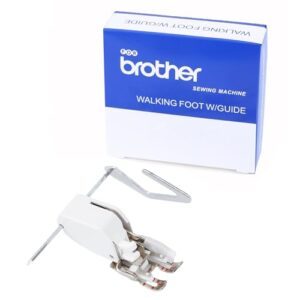
The Huffekiss Heavy Duty Walking Foot is built for the work that breaks ordinary feet. It uses a unison feed mechanism to sync needle and fabric motion, so your leather layers advance together without slipping or bunching.
The PTFE-coated contact area processes waxed hides cleanly, and the hardened steel base stays rigid through long sessions.
It fits low- to mid-shank machines and accommodates needles up to size 22 or 24, making it a reliable choice for serious leather projects.
| Best For | Quilters, DIY sewers, and hobbyists working with thick fabrics, denim, or multiple layers who want consistent, even stitching without breaking the bank. |
|---|---|
| Shank Type | Low-shank |
| Material | Plastic with metal |
| Foot Count | 1 |
| Price | $9.99 |
| Leather Compatible | Yes |
| Snap-On Attachment | No |
| Additional Features |
|
- Built-in 1/4-inch quilting guide makes spacing rows a breeze—no measuring, no guessing.
- Even-feed mechanism keeps thick or layered fabrics moving together smoothly, which cuts down on bunching and slipping.
- Works with a wide range of low-shank machines, including many Brother, Singer, and Janome models.
- The plastic dog teeth and attachment points can wear down or break under heavy use, and some packages show up short on screws.
- There’s a gap under the foot that can snag fabric edges—a few users have had to tape it off as a workaround.
- Only handles straight stitches, so if you’re planning on zigzag or decorative patterns, this one won’t cut it.
2. Singer Nonstick Presser Foot for Specialty Fabrics
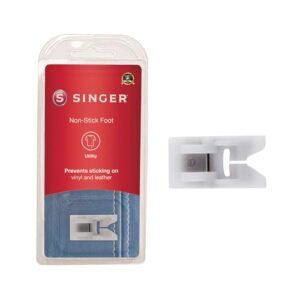
Singer’s Nonstick Presser Foot keeps sticky materials moving without drag or skipped stitches. The PTFE-coated underside glides over leather, vinyl, and oilcloth smoothly, so your seams stay clean from start to finish.
It snaps onto most low-shank machines — Singer, Brother, Janome, and more — and retails around $16.49.
Use medium to long stitch lengths to avoid perforating thin hides. For light to mid-weight specialty leathers, this foot performs the job reliably without fuss.
| Best For | Sewers working with leather, vinyl, oilcloth, or other sticky fabrics on a low-shank machine who want clean stitches without the drag. |
|---|---|
| Shank Type | Low-shank |
| Material | Plastic with Teflon |
| Foot Count | 1 |
| Price | $16.49 |
| Leather Compatible | Yes |
| Snap-On Attachment | No |
| Additional Features |
|
- The PTFE coating lets slippery or sticky materials glide through without bunching or sticking
- Fits a wide range of low-shank machines, so you’re not locked into one brand
- At $16.49, it’s an affordable upgrade for specialty fabric projects
- Won’t work on high-shank or walking foot machines, so check your machine type first
- Short stitch lengths can tear or perforate thin hides — you’ll need to adjust your settings
- Very thick or heavyweight leather may still need a dedicated leather or walking foot
3. CESUSME Roller and Teflon Presser Foot
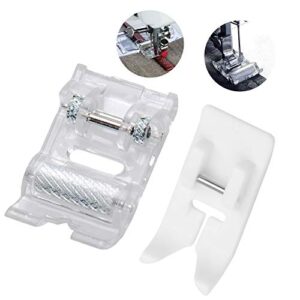
The CESUSME set gives you two tools in one $6.99 pack — a metal roller foot and a Teflon zigzag foot. That’s a serious value for tackling leather, vinyl, and waterproof fabrics without breaking the bank.
The roller feeds both fabric layers together, cutting down on slippage and puckering. The Teflon foot keeps sticky materials gliding smoothly, even on waxed or oiled hides.
It snaps onto most low-shank machines — Brother, Singer, Janome, and similar brands. Just verify your bar width before ordering.
| Best For | Sewists who work with leather, vinyl, or other tricky fabrics and want an affordable alternative to pricey specialty feet. |
|---|---|
| Shank Type | Low-shank |
| Material | Plastic with metal roller |
| Foot Count | 2 |
| Price | $6.99 |
| Leather Compatible | Yes |
| Snap-On Attachment | Yes |
| Additional Features |
|
- Two feet for $6.99 is hard to beat — great value for budget-conscious makers.
- The metal roller keeps layers feeding evenly, so you get cleaner seams on slick or heavy materials.
- Snaps onto most low-shank machines, so it’ll likely work with whatever you’ve already got.
- Only works on low-shank snap-on machines — double-check your bar width before buying.
- The Teflon foot can still stick on stretchy vinyl; some users need a paper layer underneath to get smooth feeding.
- Not ideal for thick leathers like saddle leather, and a few users have noticed sanding marks on the Teflon surface.
4. Aiskaer Universal Sewing Presser Feet Set
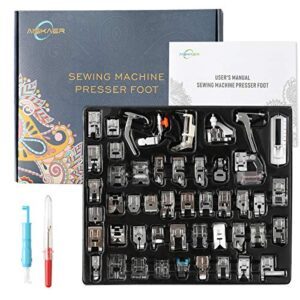
Want one kit that covers almost everything? The Aiskaer Universal Sewing Presser Feet Set packs 50 pieces — 48 metal presser feet plus 2 handheld tools — into one affordable box.
You get walking feet for thick layered hides, nonstick options for waxed leather, and zipper feet for clean bag edges.
It snaps onto most low-shank machines, including Brother, Singer, and Janome.
The full-color guide helps you identify each foot fast, so you spend less time searching and more time stitching.
| Best For | Hobbyists and beginners who want a versatile, all-in-one presser foot kit without spending a fortune buying individual feet. |
|---|---|
| Shank Type | Low-shank |
| Material | Metal |
| Foot Count | 48 |
| Price | Not specified |
| Leather Compatible | Yes |
| Snap-On Attachment | Yes |
| Additional Features |
|
- 48 metal presser feet cover everything from zipper installation to embroidery, so you rarely need to shop for extras.
- Works with most popular low-shank machines — Brother, Singer, Janome, and more.
- The full-color manual makes it easy to identify the right foot quickly, even for newcomers.
- Won’t fit industrial or mini sewing machines — low-shank domestic only.
- Some feet can feel loose on certain holders, and you may need an adapter or friction fix to keep them secure.
- The box offers little organization, and a few users have reported missing or duplicate feet in their set.
5. Narrow Roller Teflon Presser Foot
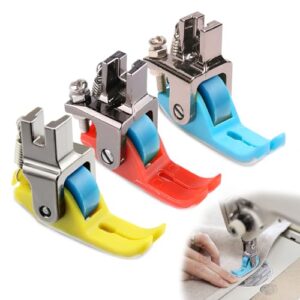
Sticky leather meeting a plain foot is a recipe for skipped stitches and crooked seams.
Narrow Roller Teflon Presser Foot solves both problems at once. Its PTFE coating glides over waxed or oily hides without dragging, while the bottom roller keeps your top and bottom layers feeding in sync. You get cleaner seam lines, less bunching near edges, and minimal surface marking on delicate pieces. It’s a smart, focused tool for anyone serious about consistent leather stitching.
| Best For | Sewers working with leather, vinyl, or denim who need clean, drag-free stitching on thick or sticky materials. |
|---|---|
| Shank Type | High/Low-shank |
| Material | Plastic, Teflon, metal |
| Foot Count | 3 |
| Price | Not specified |
| Leather Compatible | Yes |
| Snap-On Attachment | Yes |
| Additional Features |
|
- The Teflon coating glides over leather and vinyl without sticking, so you get smoother, more consistent seams.
- The roller design keeps fabric layers feeding evenly, which cuts down on skipped stitches and crooked lines.
- Tool-free snap-on attachment makes swapping feet quick and easy mid-project.
- Designed mainly for high-shank and industrial machines, so it may not fit standard home sewing machines.
- Some buyers report all three feet look and function the same, making the "three different feet" claim feel a bit misleading.
- Compatibility isn’t guaranteed across all machine models, so you’ll want to double-check your shank type before buying.
6. Fbshicung Sewing Presser Feet Set
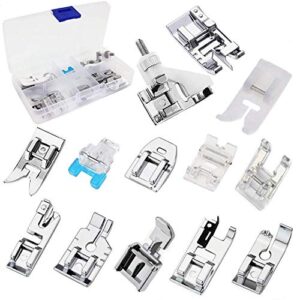
Sometimes one focused tool isn’t enough. The Fbshicung Sewing Presser Feet Set gives you 13 snap-on feet for $12.99, covering everything from roller and Teflon feet for leather to zipper, piping, and quilting options.
It fits Brother, Singer, Janome, Kenmore, and Babylock low-shank machines. You can switch feet fast without a screwdriver.
Just know it won’t work on high-shank, vintage, or slant-shank machines, and the leather finish wears more quickly than solid metal under heavy use.
| Best For | Hobbyists with low-shank machines (Brother, Singer, Janome, Kenmore, or Babylock) who want one affordable set that handles leatherwork, zippers, quilting, and more. |
|---|---|
| Shank Type | Low-shank |
| Material | Leather-finished |
| Foot Count | 13 |
| Price | $12.99 |
| Leather Compatible | Yes |
| Snap-On Attachment | Yes |
| Additional Features |
|
- 13 feet for $12.99 — seriously hard to beat for the price
- Snap-on design means you’re switching feet in seconds, no screwdriver needed
- Covers a wide range of projects, from quilting and zipper insertion to beadwork and curtain making
- Won’t fit high-shank, slant-shank, vintage, or industrial machines — check your machine before buying
- The leather finish wears down faster than solid metal under heavy or abrasive use
- No screwdriver-style compatibility, so it’s not a fit for every domestic machine out there
Shank Types and Machine Fit
Getting the right foot means nothing if it doesn’t fit your machine. Before you buy, you need to understand how shank type and attachment style affect compatibility.
Here’s what to check so you don’t end up with a foot that won’t snap on.
Low-shank Vs High-shank Compatibility
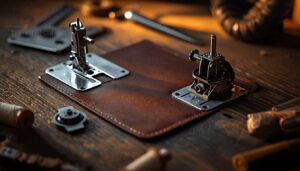
Your shank height determines everything about presser foot compatibility in leather crafting.
Low-shank machines, like most Singer, Brother, and Janome models, measure roughly ½ inch and handle the majority of home leather projects well. High-shank industrial machines offer greater machine clearance differences for thick hides.
Always reference a compatibility chart before buying, and consider adapter usage tips when foot stability impact matters most.
Snap-on Vs Screw-on Attachment Methods
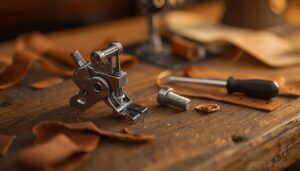
Once you’ve nailed your shank height, your next call is how the foot actually attaches.
- Attachment Speed — snap‑on feet click into place instantly, no tools needed
- Locking Mechanism — screw‑on feet thread onto the bar for vibration resistance under heavy leather
- Compatibility Range — snap‑on fits most low‑shank machines; screw‑on suits worn or nonstandard bars
- Maintenance Frequency — inspect snap‑on lips regularly; re‑tighten screw‑on fittings after heavy use
- Security — both work in leather crafting when properly seated
Brother, Singer, and Janome Fit Checks
Once you know how your foot attaches, matching it to your machine brand keeps everything running cleanly.
Brother snap-on low-shank feet align easily with standard needle groove alignment.
Singer fits both low and high-shank systems, but always verify brand-specific foot numbers against your model.
Janome often needs its own series for ideal foot pressure adjustment.
Cross-brand compatibility exists, but adapter kit availability varies—check your manual first.
Bernina Proprietary Foot System Limits
Bernina stands apart from the pack — its proprietary system uses Coded Foot Sensors that communicate directly with the machine. Non-coded feet trigger Stitch Width Restrictions, limiting you to default settings.
Here’s what that means for leather work:
- Dual Feed Compatibility requires coded feet on supported models.
- Needle Plate Alignment must match the foot’s sensor precisely.
- Software Version Constraints affect which feet your specific Bernina recognizes.
Measuring Presser-foot Bar Width Before Buying
Before you buy a single leather foot, measure your presser bar width with a caliper or precision ruler — this one step saves frustration later.
Most domestic low-shank machines fall between 1.0 and 2.0 mm; high‑shank industrial bars run wider.
Cross‑reference your result against a bar width chart, perform a quick foot mounting check, and confirm shank compatibility before committing to any presser foot selection for leatherworking.
Reduce Slippage on Leather
Slippage is one of the sneakiest problems you’ll face when sewing leather — one shift and your seam allowance is gone. The good news is that the right presser foot does most of the heavy lifting for you.
Here’s what to know before you start stitching.
Use Walking Feet to Control Top-layer Movement
Walking feet solve the top-layer creep problem through Grip Teeth Optimization — the foot’s teeth engage your leather at regular intervals, delivering Synchronized Layer Feed that matches the feed dogs below.
This Edge Alignment Control keeps your panels from drifting along curves, giving you Curve Stitch Stability on every pass.
For Pressure Fine-tuning on thick hides, a heavy-duty walking foot for Brother sewing machines offers reliable layer feeding control and fabric slippage reduction.
Choose Roller Feet for Smoother Feeding on Hides
Roller presser feet are your secret weapon for textured or uneven hides. Instead of dragging leather under pressure, the rollers glide it through — no bunching, no skipping.
With the right Roller Compatibility Guide, low shank machines handle heavy duty hides smoothly.
Dial in your Roller Pressure Adjustment and Roller Feed Speed, pick smart Roller Material Choices, and keep up a simple Roller Maintenance Routine for consistent, smooth feeding every time.
Select Non-stick Feet for Waxed Leather Surfaces
Waxed leather has a way of making ordinary presser feet seize up mid-seam. That’s where PTFE Coating Advantages shine — Using nonstick Teflon feet on slick materials keeps your stitch line moving without drag or skipping.
- Choose Teflon-coated feet over silicone — Teflon vs Silicone comes down to durability on waxy hides
- Pick Open Toe Design for edge visibility
- Use Narrow Profile Fit on tight curves
- Run your Compatibility Checklist before buying — SINGER NonStick Presser Foot fits most low-shank machines
Pair with waxed threads for clean, consistent results.
Match Foot Width to Seam Allowance Needs
Getting your Seam Width Calculations right starts with one rule: your foot should be slightly wider than your seam allowance. Foot Width Guides suggest a 3/8-inch allowance needs roughly a 6/8-inch foot.
Use Layer Count Adjustments when stacking hides — add at least 1/8-inch for bulk.
For Curved Edge Solutions, slim-profile feet keep Edge Proximity Tips honest without catching mid-turn.
Test Stitch Tension on Leather Scraps First
Once your foot width is locked in, don’t touch your good leather yet. Scrap Tension Testing saves projects before they start.
Use the Balanced Tension Method — stitch 6–8 inches per setting on matching scraps, adjusting in 0.5-unit steps.
- Match scrap grain, thickness, and finish to your project hide
- Check Stitch Quality Metrics: flat thread, no loops, no puckering
- Log every setting in a Tension Logbook for Sample Consistency
- Confirm thread tension management holds across multiple layers
Care Tips for Leather Feet
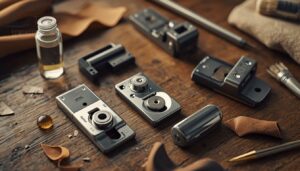
Your presser feet work hard, so they deserve a little maintenance in return. A simple habits can keep them performing like new and protect your leather projects from unwanted damage.
Here’s what you need to know.
Pair Leather Needles With Waxed Thread
Your needle and thread work as a team—get either wrong, and your leather seams will show it. Nail Needle Size Matching by pairing size 16–20 leather needles with waxed thread (Tex 90–135). The right Needle Point Choice pierces clean holes, while Thread Lubrication from the wax coating keeps everything gliding.
Pair size 16–20 leather needles with waxed thread — the right match pierces clean and glides smooth
| Needle Size | Waxed Thread Weight |
|---|---|
| Size 16 | Tex 90 |
| Size 18 | Tex 110 |
| Size 20 | Tex 135 |
Dial in Thread Tension carefully—Waxed Thread Compatibility shines brightest when tension is balanced for your hide’s thickness.
Clean PTFE Feet With Mild Soap and Water
Once your thread tension is dialed in, don’t overlook your Teflon-coated feet. A leather nonstick foot picks up oils fast.
- Soak Duration: 1–3 minutes in warm, soapy water
- Gentle Agitation: Swirl to loosen lint and residue
- Rinse Thoroughly: Flush under clean running water
- Drying Method: Pat dry, then air-dry completely
- Storage Practices: Keep in a dust-free container
These maintenance tips for leather sewing accessories extend the life of your leather craft accessories and foot sets.
Prevent Surface Marking on Soft Leather
Soft hides show marks easily, so your setup choices matter more than you’d think. A Teflon-coated, minimal contact foot reduces drag and embossing on delicate surfaces.
Align a grain-aligned needle path and keep a midrange stitch length to avoid deep troughs.
Always confirm your approach with scrap leather testing first—your leather craft accessories and foot sets deserve that extra care.
Adjust Pressure for Thick or Uneven Layers
Thick or uneven layers demand real Adaptive Pressure Control — not guesswork. Dial pressure up in small Pressure Increment Steps, one or two points at a time, and test each pass.
Your heavy-duty walking foot manages multilayer leather projects best when Feed Dog Synchronization stays balanced. Too much force risks Edge Compression Management failures, cracking edges or bunching seams.
Adjust, test, repeat.
Keep Spare Feet for Denim, Vinyl, and Leather
One well-stocked foot kit saves you mid-project scrambling. Keep three types ready:
- A heavy-duty walking foot for layered denim and thick leather seams.
- A roller presser foot for textured or sticky vinyl surfaces.
- A Teflon-coated foot for waxed leather glide.
Use a simple labeling system and inventory tracking sheet for your storage solutions. Budget planning matters — a starter set runs around $15.95.
Frequently Asked Questions (FAQs)
Can I use leather feet on a serger machine?
Yes, you can use leather feet on a serger, but check your manual first.
Serger compatibility isn’t guaranteed, and using the wrong overlock foot adapters risks feed system damage or voiding your warranty.
How do I store presser feet long-term?
Store presser feet in labeled, climate-controlled storage with acid-free wrapping, color-coded labels, and separate hardware bags. Do quarterly inventory checks to catch wear early and extend tool longevity.
What stitch length works best for thick leather?
For thick leather, start at 3–4 mm and adjust up in 5 mm steps. Pair heavier thread with longer stitches. Always run a scrap testing procedure before cutting your final piece.
Can leather feet handle faux leather or pleather?
Leather feet handle faux leather and pleather well. Walking feet prevent slippage on multi-layer pleather, while PTFE feet glide over waxed synthetic surfaces.
Adjust foot pressure to maintain seam consistency on lighter synthetic material.
Do leather feet work with computerized sewing machines?
Most leather feet work seamlessly with computerized sewing machines.
Your machine’s Electronic Feed Sync and Motor Timing Compatibility handle the coordination automatically, making leather sewing accessories a straightforward upgrade requiring no Software Settings Adjustment.
Conclusion
The right leather grips, the right needle bites, and the right foot glides—that’s when everything clicks. Choosing the best sewing machine feet for leather crafting isn’t guesswork once you understand how each foot solves a specific problem.
Match your foot to your hide, check your shank fit, and test on scraps before committing.
Your seams will show the difference. Precision tools don’t just make the work easier—they make it unmistakably yours.