This site is supported by our readers. We may earn a commission, at no cost to you, if you purchase through links.
An invisible zipper can make a dress look polished, or turn sewing day into a muttering session at your machine.
One crooked seam allowance, a zipper that’s too heavy for the fabric, or stitches parked too close to the teeth can leave you with puckers, gaps, and a slider that refuses to budge.
The good news is that most of these headaches have clear causes, and even better, they have workable fixes. Once you know how to spot the trouble early, troubleshooting invisible zipper problems stops feeling like guesswork and starts feeling like solid, reliable sewing from the first stitch.
Table Of Contents
Key Takeaways
- Most invisible zipper problems trace back to a handful of fixable causes: wrong zipper type for your fabric weight, stitching too close to the teeth, uneven seam allowances, and skipping fabric stabilization before you sew.
- A stuck or stiff zipper usually just needs trapped fabric freed, a light lubricant applied, or the slider gently squeezed tighter with needle-nose pliers — no seam ripping required.
- Stabilizing your fabric with lightweight interfacing strips before installing the zipper is the single most effective way to prevent puckers, waviness, and gaps from showing up on the outside.
- When teeth are bent, the tape is fraying, or the slider keeps detaching no matter what you try, it’s time to replace the zipper entirely rather than keep patching a problem that won’t hold.
Common Invisible Zipper Problems and What Causes Them
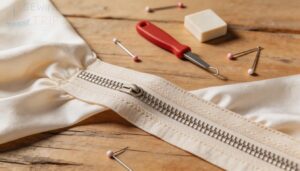
Invisible zippers are finicky by nature, and even small missteps during installation can cause big headaches later. Most problems trace back to a handful of predictable culprits — the good news is they’re all fixable once you know what to look for.
If you’re just starting out, this guide to sewing zippers for beginners walks through each common mistake and exactly how to avoid it.
Here are the most common invisible zipper problems and what’s actually causing them.
Wrong Zipper Type for The Project
Not all invisible zippers are created equal — and grabbing the wrong one is where most projects go sideways. Fabric weight match matters more than people realize.
A lightweight coil zipper will buckle under upholstery fabric, while a heavy vislon or molded plastic zipper creates unwanted bulk in delicate garments.
Check tape width selection and topstitching compatibility before you cut a single thread.
Incorrect Zipper Length or Placement
Once you’ve matched the right zipper type, selecting proper zipper length is your next hurdle. If you ignore Precise Tape Measurement or skip Edge-to-Edge Alignment, you’ll end up with gaps or bulky seams.
Stop: Positioning Accuracy matters—too high or low, and the slider won’t close cleanly.
Use Zipper Placement Guides and pattern measurement matching for perfect zipper alignment every time.
Uneven Seam Allowances Along The Tape
If you’ve ever noticed uneven seams where the zipper meets the regular seam, seam allowance consistency is likely the culprit.
Tape Edge Parallelism and Stitch Length Uniformity matter more than you’d think—one side drifting just a millimeter throws everything off. Keep these in check with:
- Needle Centering Technique
- Consistent Feed Foot Pressure
- Fabric tension control
- Careful seam reinforcement
Fabric Not Stabilized Before Sewing
If seam allowances are sorted but your zipper still waves, take a closer look at fabric stretch control.
Skipping lightweight interfacing strips or seam stabilizer means the fabric shifts and puckers.
Using interfacing to stabilize lightweight fabrics—paired with the right stabilizer weight and pre‑starch application—keeps edges flat.
Here’s a quick comparison:
| Interfacing Choice | Edge Reinforcement |
|---|---|
| Lightweight strips | Prevents curling |
| Pre‑Starch Application | Controls fabric stretch |
Stitching Too Close to The Teeth
Stitching too close to the teeth is one of those mistakes that is easy to make and annoying to undo.
If you’re also wrestling with slider sizing issues, this guide on how to put a zipper back on walks through why track width matters so much when getting everything lined up right.
needle gap and foot choice matter more than you’d think — a standard foot can shove fabric right into the coil. Use a zipper foot, keep edge clearance at least 1/8 inch, and watch your stitch length and fabric tension to avoid stitching over teeth entirely.
How to Fix a Stuck or Stiff Invisible Zipper
A stuck invisible zipper is frustrating, but it’s usually a fixable problem once you know where to look. Most of the time, it comes down to trapped fabric, dried-out teeth, or a slider that’s lost its grip.
Work through these five steps in order, and you’ll know exactly what’s wrong and how to correct it.
Step 1: Diagnose The Problem Before You Start

Before you reach for the seam ripper, let’s get clear about what’s really going on. Diagnosing zipper malfunction symptoms is half the battle in any zipper repair guide.
Use this quick checklist:
- Visual Inspection Checklist
- Fabric Tension Test
- Zipper Tape Alignment
- Slider Mobility Evaluation
- Seam Allowance Measurement
Troubleshooting zipper operation starts here—don’t skip these common problems with invisible zippers.
Step 2: Gently Free Any Trapped Fabric
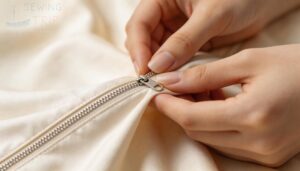
When you spot a snag, pause and use Snag Identification to pinpoint exactly where the fabric’s caught—sometimes it hides under the tape. With Edge Gripping Techniques, hold the cloth close to the slider, then use Gentle Pull Direction and Light Tension Control to free fabric trapped in the slider.
Afterward, Post‑Release Testing ensures smooth movement before you continue your invisible zipper repair guide.
For a detailed guide on the bottom‑stop method, see the bottom‑stop method instructions.
Step 3: Lubricate a Stiff or Sticky Zipper
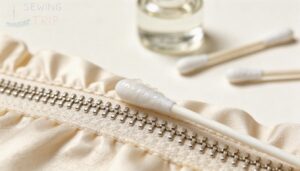
Ever notice how a zipper can feel like it’s grinding sand? That’s your cue for Choosing Lubricant—something light, like Starbrite clear nonstaining snap zipper lubricant.
Applying Lubricant with a cotton swab keeps things precise. Always follow Safety Precautions and check Material Compatibility.
After lubricating and maintaining zipper teeth, run a Slider Motion Test—quick fixes for stuck zippers often start here.
Step 4: Realign Teeth That Won’t Stay Closed
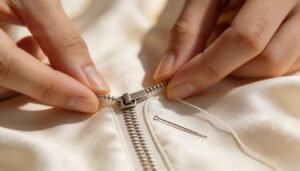
If your zipper teeth won’t stay closed, think of it like misaligned teeth in a smile—only a bit more stubborn. Here’s how you tackle realignment:
- Use Bite Stabilization Techniques to gently squeeze the slider sides.
- Realign zipper tape before resewing for a smooth path.
- Try Interproximal Reduction (trimming stray threads).
- Apply Elastic Chain Adjustments for stubborn gaps.
Step 5: Tighten The Back of The Slider
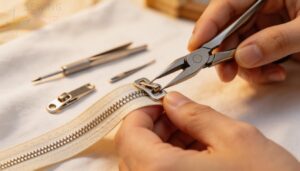
Think slider is just loose? Sometimes, tightening the back of the slider is the fix you need.
Grab needle-nose pliers for precise Pressure Calibration, smoothing any burrs for better Back Plate Alignment.
Check Slider Back Compatibility—too wide, and you’ll jam. A zipper repair kit makes Tool Selection easy.
Test slider adjustment after tightening; smooth movement means your Invisible zipper repair guide worked!
Fixing Visible Zipper Tape or Teeth From The Outside
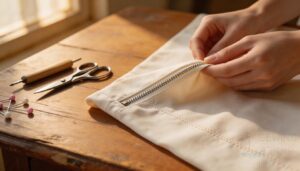
When your invisible zipper shows through on the outside, it’s usually a fixable installation issue — not a reason to start over.
A few specific problems tend to cause this, and each one has a clear solution once you know what you’re looking at.
Here’s what to check and how to correct it.
Invisible Zipper Looks Twisted or Wavy
When invisible zipper looks twisted or wavy, it’s usually a mix of fabric tension control, presser foot pressure, and zipper tape weight gone sideways.
You can tame that wavy zipper by focusing on:
- Stitch Length Adjustment for smooth seams
- Fabric Grain Alignment to keep edges flat
- Stabilizing Spray Use before sewing
- Choosing tape weight that matches your fabric
Uneven Seams Where The Zipper Meets The Regular Seam
Fix uneven seams where the zipper meets the regular seam by checking seam allowance first. Then use Seam End Marking, Pinning Alignment Technique, and Tape Tension Balance for better fabric tension control.
A zipper foot helps the join stay neat.
Finish with Gradual Bulk Reduction, smart interfacing selection, and a Pressed Seam Opening so the seam blends smoothly below it.
Methods to Prevent Wavy Seams With Interfacing
After you smooth the seam join, stop the waviness at its source with fabric stabilization techniques before zipper sewing.
Use lightweight interfacing and interfacing selection, especially Weight‑Matched Interfacing.
Follow clean Fusible Application Steps, add Staystitch Placement just off the seam allowance, use the Pressing Cloth Technique, and rely on Walking Foot Feeding to keep a wavy seam from creeping back.
Correcting Stitch Placement Near Zipper Teeth
Once interfacing has tamed the fabric, stitch placement near zipper teeth decides whether the zipper disappears or misbehaves.
Use an invisible zipper foot or zipper foot, set your needle position beside the coil, and check Needle Height.
Keep Foot Positioning steady, use seam guide usage, confirm Pinning Alignment, shorten Stitch Length to 2.5 mm, and practice Backstitch Avoidance near teeth.
Top 3 Products for Invisible Zipper Repair
When your invisible zipper acts up, the right tools can make all the difference. There are a few products that stand out for quick fixes and reliable repairs.
Here’s what you should know before choosing the best option for your project.
1. Starbrite Clear Nonstaining Snap Zipper Lubricant
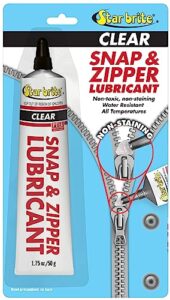
Ever wrestled with a zipper that just won’t budge, no matter how gently you coax it? Starbrite Clear Nonstaining Snap Zipper Lubricant is your secret weapon.
This clear, synthetic spray doesn’t leave a mark, even on delicate fabrics, and keeps both metal and plastic zippers gliding smoothly.
It’s made for salty, wet conditions—think boat covers, jackets, and backpacks—so you won’t have to worry about corrosion or sticky teeth.
The tube’s small, but a little goes a long way.
| Best For | Anyone who spends time outdoors or on the water and needs their zippers and snaps to keep working reliably—especially sailors, campers, divers, and gear-heavy travelers. |
|---|---|
| Price | ~$10–12 |
| Origin | Made in USA |
| Zipper Compatible | Yes |
| Sewing Required | No |
| Units Included | 1 tube |
| Repair Type | Lubrication |
| Additional Features |
|
- Clear formula leaves zero residue, so your gear looks just as good after you use it
- Works on both metal and plastic zippers and snaps, in wet or salty conditions
- A small amount goes a long way, and it stays effective for years after opening
- The 1.75 oz tube can run out fast if you’ve got a lot of gear to treat
- Won’t clean out rust or gunk—it lubricates, but it doesn’t fix existing damage
- Doesn’t wash out, which can be a drawback for clothes that hit the laundry often
2. Zlideon Plastic Zipper Repair Kit
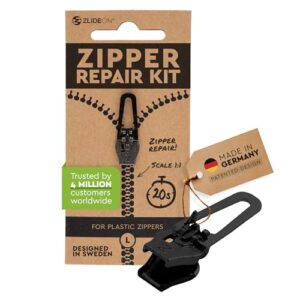
When a broken slider is your only problem, don’t trash the whole zipper. The Zlideon Plastic Zipper Repair Kit clips a brand-new slider onto your existing tape in about 30 seconds—no sewing, no tailor visit.
It’s made for plastic zippers only, so check your teeth first.
Measure your tooth width and pick the right size (the "L" fits 5.8–6.2 mm). A quick snap, a test slide, and you’re back in business.
| Best For | Anyone who needs a fast, no-sew fix for a broken plastic zipper on jackets, backpacks, or kids’ clothing without replacing the whole zipper or visiting a tailor. |
|---|---|
| Price | $13.99 |
| Origin | Made in Germany |
| Zipper Compatible | Yes |
| Sewing Required | No |
| Units Included | 1 slider |
| Repair Type | Slider Replacement |
| Additional Features |
|
- Clips on in about 30 seconds—no sewing or special tools needed
- Works on a wide range of everyday items like sportswear, backpacks, and camping gear
- Made in Germany from high-strength plastic, so it holds up when you get the right size
- Only works with plastic zippers—metal, coil, and waterproof zippers are out
- Sizing has to be exact, or the slider won’t engage properly
- The small locking bar can be sharp, and some users report the slider breaking under heavy stress
3. Zlideon Metal Zipper Repair Kit
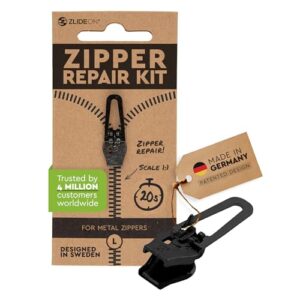
Swapping out a worn metal slider can feel like wrestling a stubborn jar lid—frustrating, but fixable.
The Zlideon Metal Zipper Repair Kit snaps right onto your zipper teeth, no sewing or seam ripping required. It’s made from tough zinc and steel, comes in sizes for everything from jeans to luggage, and installs in under 30 seconds.
Measure your zipper teeth first; fit is everything. If you’re tired of tossing out gear for one faulty slider, this tool saves time, money, and your patience.
| Best For | People who want a quick, no-sew fix for broken metal zippers on heavy-duty gear and clothing. |
|---|---|
| Price | $13.99 |
| Origin | Made in Germany |
| Zipper Compatible | Yes |
| Sewing Required | No |
| Units Included | 1 slider |
| Repair Type | Slider Replacement |
| Additional Features |
|
- Installs in under 30 seconds without sewing or stitching
- Saves money by avoiding full zipper replacements or tailor fees
- Works on a wide range of items, from jeans to backpacks
- Getting the correct size is crucial and can be tricky
- Removing the old slider often needs extra tools and effort
- Price is high for a single slider compared to bulk hardware
When to Replace Your Invisible Zipper Entirely
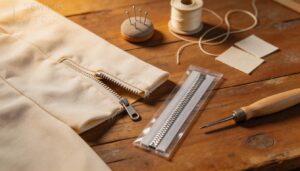
Sometimes a zipper just can’t be saved, no matter how much you fiddle with it. Knowing when to let go — and what to do next — saves you time, fabric, and frustration.
Here’s what to watch for, how to swap it out, and how to keep it from happening again.
Signs The Zipper is Beyond Repair
You know it’s time to throw in the towel when your invisible zipper acts more like a stubborn gate than a smooth closure.
Watch for these deal‑breakers:
- Bent Teeth or zipper teeth won’t align
- Rust Corrosion flaking onto fabric
- Tape Fraying or severe fabric damage
- Slider Detachment, broken slider, or gap at the bottom—zipper won’t close smoothly
No fix will restore a distorted invisible zipper.
How to Remove and Replace an Invisible Zipper
Is your invisible zipper refusing to cooperate? Start with seam rip removal—use a seam ripper to free the zipper tape without harming the fabric.
Next, stabilize fraying edges with interfacing preparation.
Employ a stop removal technique using pliers, then follow slider reattachment steps.
Align the new zipper using a zipper foot, and finish with final pressing tips for a crisp, professional look.
Tips to Prevent Future Invisible Zipper Problems
Ever wonder why some zippers last for years while others twist and pucker after a few washes?
Some zippers stay smooth for years, while others twist and pucker after just a few washes
The secret’s in your preventive checklist: Proper Interfacing Choice, Matching Zipper Weight, Pre‑sewing Stabilization, Accurate Tape Measurement, and a Regular Lubrication Schedule.
Treat preventive care for invisible zippers like routine maintenance—these steps keep your seams smooth, preventing future zipper issues before they start.
Frequently Asked Questions (FAQs)
Can an invisible zipper be replaced easily?
Replacing an invisible zipper is surprisingly doable—armed with a Tool Checklist, a sense of Fabric Compatibility, and smart Thread Selection, you’ll tackle it with DIY Confidence.
Most projects take under an hour; follow a step‑by‑step invisible zipper repair guide.
How to fix an invisible zipper that splits?
When your zipper splits, try realigning the teeth with small pliers and check the slider for wear. Reinforce tape edge, install a new bottom stop, and extend zipper length if needed.
Seam tape and adjust seam overlap for lasting repair.
Can I install an invisible zipper by hand?
Think of hand sewing an invisible zipper like threading a secret path—yes, you can do it!
Use a fine handsewing needle, match your thread, stabilize fabric edges, handbaste, and mark carefully.
Practice hand stitch techniques for smooth, hidden results.
What thread type works best for invisible zippers?
For invisible zippers, polyester thread strength is your best friend—it’s colorfast and reliable. Nylon thread flexibility helps prevent puckering. Silk blend invisibility is ideal for lightweight fabrics.
Use 40–50 weight, adjust needle thread tension, and select needle size carefully.
How do I store garments with invisible zippers?
Storing garments with invisible zippers is like tending a delicate bridge—use padded hangers, breathable garment bags, and partial zipper closure.
Keep them in a climate controlled closet for moisture management, ensuring preventive care for zippers and refined garment fit.
Can invisible zippers be used on stretch fabrics?
You absolutely can use an invisible zipper on stretch fabrics—just don’t skip stabilizing interfacing behind the zipper area.
Careful fabric compatibility assessment, zipper weight matching, and pre‑sewing basting all help manage fabric stretch and maintain a smooth finish.
How long do invisible zippers typically last?
Most invisible zippers last 20 to 50 wash cycles.
Wash Cycle Limits, Fabric Stress Impact, and Slider Wear Rate all shorten that range quickly, without regular zip maintenance tips and proper Interfacing Benefits.
Conclusion
Invisible zipper woes are like that one family member who always seems to show up uninvited—frustrating but manageable. With these troubleshooting tips, you’ll be well on your way to taming the beast.
Remember, spotting trouble early is key. By mastering the art of troubleshooting invisible zipper problems, you’ll sew with confidence, creating polished garments that make you proud.
Say goodbye to puckers and gaps, and hello to smooth, professional-looking finishes every time.