This site is supported by our readers. We may earn a commission, at no cost to you, if you purchase through links.
Kids who learn to sew score higher on fine motor assessments than those who don’t—and they stick with creative hobbies longer too. There’s something about needle and thread that builds patience in a way screens simply can’t replicate.
However, handing a child the wrong kit kills that spark fast: too hard, and they quit; too easy, and they’re bored by Tuesday. The right sewing kits for kids must match the child’s age, attention span, and skill level from the very first stitch.
Here’s what actually works—and why these five kits keep showing up on crafters’ favorites lists.
Table Of Contents
Key Takeaways
- Matching a sewing kit to your child’s age and attention span — not just his or her interest — is what keeps them stitching past day one.
- Safety features like plastic needles, pre-punched holes, and non-toxic-certified materials aren’t extras; they’re what make independent crafting actually possible for young kids.
- Quick wins matter: pre-cut, pre-punched projects that finish in 15–20 minutes build the confidence kids need before tackling anything more complex.
- The best kits grow with your child — look for ones that introduce new stitch types and project complexity as his or her skills improve.
5 Best Sewing Kits for Kids
Finding the right sewing kit can feel overwhelming when every option looks the same.
A quick look at top-rated home sewing machines can help you cut through the noise and find what actually fits your needs.
These five picks stand out for their quality, safety, and age-appropriate designs. Here’s what made the cut.
1. KRAFUN Kids Beginner Sewing Kit
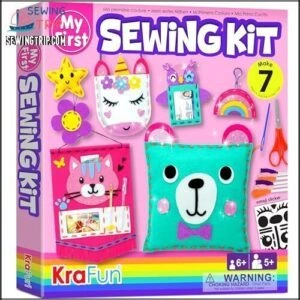
The KRAFUN My First Sewing Kit is a solid starting point for kids ages 5 and up. For just $19.99, it includes seven pre-designed projects — such as a unicorn bag, bear pillow, and owl card holder — with pre-punched felt pieces ready to stitch. No cutting or glue is required.
Safety features include plastic safety needles to protect small hands, while the reusable storage box keeps supplies organized.
Clear step-by-step graphics guide each project, allowing children to work independently with minimal assistance.
| Best For | Kids ages 5 and up who are just getting into crafting and need a safe, beginner-friendly way to learn basic sewing skills. |
|---|---|
| Price | $19.99 |
| Age Range | 5+ |
| Needle Type | Plastic safety needles |
| Project Count | 7 projects |
| Skill Level | Beginner |
| Instructions Included | Graphical step-by-step |
| Additional Features |
|
- Seven fun, ready-to-stitch projects with pre-punched fabric — no cutting or glue needed
- Plastic safety needles make it genuinely safe for little hands
- Everything stores neatly in the reusable box, so pieces don’t go missing
- Younger kids (5–6) may need adult help on the trickier projects
- Only seven designs included — once they’re done, you’ll need to buy more
- Plastic needles don’t feel like real ones, so the transition to standard sewing tools might take some adjustment
2. Kullaloo Betsy Bear Sewing Kit
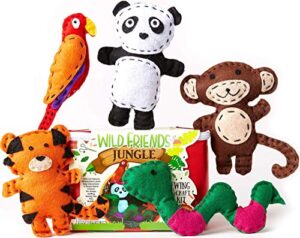
The Kullaloo Betsy Bear Sewing Kit is designed for older kids and teens who already have sewing machine experience. It centers on a single 61×31-inch cotton panel, pre-printed with 11 projects—including Betsy Bear, outfits, bags, headbands, and a baby bear with a honey pot.
Expect 6–7 hours of sewing time in total. You’ll need to supply thread, stuffing, and elastic separately, but video tutorials on YouTube guide you through every step.
| Best For | Teens and adults with some sewing machine experience who want a structured, hands-on project to build their skills or make a handmade gift. |
|---|---|
| Price | Not specified |
| Age Range | Teens & Adults |
| Needle Type | Standard sewing needle |
| Project Count | 11 mini-projects |
| Skill Level | Intermediate |
| Instructions Included | Video instructions |
| Additional Features |
|
- Everything’s printed right on the fabric panel — no fussing with separate paper patterns
- Video tutorials walk you through all 11 projects step by step
- You end up with a cute, personalized keepsake or gift when you’re done
- Thread, stuffing, and elastic aren’t included, so expect a quick supply run before you start
- The fabric can fray if you’re not precise with your cuts, and some people find the quality a bit thin
- A few steps (like the backpack drawstring and horse ears) can get confusing and may need some improvisation
3. Krafun Kids Easy Sewing Kit
If the Betsy Bear kit is built for seasoned stitchers, the Krafun Kids Easy Sewing Kit goes in the opposite direction — and that’s exactly what younger beginners need.
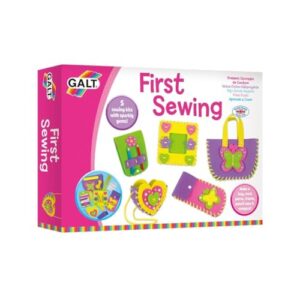
At $19.99, it includes eight pre-cut, pre-punched felt animal patterns (puppies and kittens), blunt plastic needles, and stuffing. The kit requires no glue, no cutting — children simply thread, stitch, and stuff. Picture-only instructions cater to non-readers, though younger kids may need assistance with knots.
| Best For | Kids ages 5–9 who are just starting out with sewing and need a simple, low-frustration project they can actually finish. |
|---|---|
| Price | $19.99 |
| Age Range | 5+ |
| Needle Type | Plastic blunt-tip needles |
| Project Count | 8 animal projects |
| Skill Level | Beginner |
| Instructions Included | Pictorial only |
| Additional Features |
|
- Everything’s pre-cut and pre-punched, so kids can jump straight into sewing without any prep work
- No glue or scissors needed — just thread, stitch, and stuff, which keeps things safe and simple
- Eight projects in one box means plenty of material to practice on and share with friends
- Picture-only instructions can be confusing, especially for kids who do better with written steps
- Knots and thread tangles can trip up younger children, so an adult nearby is pretty much a must
- The finished animals aren’t super durable — stitching can be loose and felt edges tend to look a bit rough
4. Serabeena Kids Felt Sewing Kit
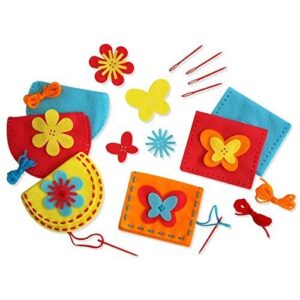
The Serabeena Kids Felt Sewing Kit lets children sew six mini purses — and gift them, priced at $24.99. Designed for ages 4–8, it offers simple, satisfying results and is a Dr. Toy award winner.
Each purse comes decorated with 12 sew-on shapes like hearts, making it a great starting point before exploring more sewing accessories for kids.
Each kit includes six pre-cut, pre-punched felt purses, 12 sew-on accessories, yarn strings, and a plastic needle per purse. Kids can choose from blue, red, yellow, or orange color options.
The purses come individually wrapped, making them ideal for party favors. This feature combines creativity with convenience for group activities or celebrations.
| Best For | Kids ages 4–8 who love crafts and hands-on creative play, especially for group settings like birthday parties, Girl Scout meetups, or classroom activities. |
|---|---|
| Price | $24.99 |
| Age Range | 4–8 years |
| Needle Type | Plastic needle per purse |
| Project Count | 6 purses |
| Skill Level | Beginner |
| Instructions Included | Step-by-step written |
| Additional Features |
|
- Comes with 6 individually wrapped purses — perfect for party favors or sharing with friends right out of the box.
- Builds real skills like fine-motor coordination and basic sewing, all without a screen in sight.
- Won the Dr. Toy "10 Best Creative Toys" award, so it has some solid credibility behind it.
- No handles included, so the finished purses are more decorative than actually functional.
- Yarn strings run short, leaving little room for mistakes — younger kids may find that frustrating.
- Experienced crafters or older kids might breeze through it too fast and find it underwhelming.
5. Klever Kids Sewing Kit
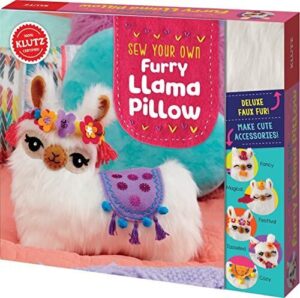
The Klever Kids Sewing Kit packs seven beginner-friendly projects into one slim, gift-ready box — all for $15.99. Your child gets a unicorn pillow, mermaid pillow, keychain, cup sleeve, and more.
Pre-cut fabric and pre-punched holes mean no scissors needed. Jumbo plastic needles with CE and UKCA certification keep little hands safe.
Graphical step-by-step instructions make each project easy to follow independently. It’s ideal for ages 6–10, building patience and fine motor skills one stitch at a time.
| Best For | Kids ages 6–10 who are curious about crafting and ready to learn their first sewing skills with a little guidance. |
|---|---|
| Price | $15.99 |
| Age Range | 6+ |
| Needle Type | Jumbo plastic needles |
| Project Count | 6–7 projects |
| Skill Level | Beginner |
| Instructions Included | Graphical step-by-step |
| Additional Features |
|
- Seven fun beginner projects (think unicorn pillows and keychains) all packed into one gift-ready box
- Pre-cut fabric and pre-punched holes mean kids can jump straight in — no scissors or measuring required
- Safe jumbo plastic needles and graphical instructions make it easy for kids to work independently
- Plastic needles can result in weaker stitches, so finished projects may not hold up over heavy use
- Everything’s pre-cut and pre-punched, which is great for beginners but limits creativity for kids who want to go off-script
- Younger kids (under 6) will likely need an adult nearby, especially when handling the needle
Choose by Age and Skill
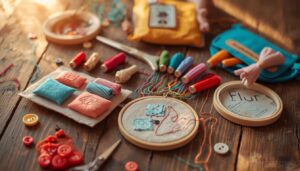
Not every sewing kit works for every kid — age and skill level matter more than you’d think. The right match keeps frustration low and excitement high.
Here’s how to find the kit that fits your child’s stage.
Sewing Kits for Ages 4–5
At 4 or 5, tiny hands need the right foundation. Look for kits with stiff felt or canvas and pre-punched holes — material selection really matters here. Color variety keeps young sewers engaged through short project durations.
Choose age-appropriate sewing kits with eco-friendly materials and blunt plastic needles. Prioritizing safety ensures a positive early experience.
Parent guidance is essential at this stage, especially during needle use. Prioritizing kits that teach real stitches facilitates real stitch learning.
Sewing Kits for Ages 6–8
Kids ages 6–8 are ready for their first real stitching wins. Pre-punched felt pieces keep things moving, while colorful floss palettes make every project feel personal. Choosing age-appropriate sewing kits for children at this stage means looking for eco-friendly materials and interactive instruction cards they can actually follow solo.
- Jumbo plastic needles sized for growing hands
- Theme-based designs like animals and bags
- Running stitch practice through pre-punched holes
- Adjustable hand guides for steady stitching
- Safety features in kids sewing kits built in throughout
Sewing Kits for Ages 9–11
Nine to eleven is where things get interesting. Kids at this stage can handle Pattern Complexity and real thread color matching—not just guessing. Kits for this age group introduce canvas work, backstitching, and Progressive Stitch Challenges that build genuine confidence.
Choosing age-appropriate sewing kits means prioritizing Thematic Design Sets with illustrated guides and safety features that support independent work. These elements ensure children develop skills effectively while fostering creativity and self-reliance.
Sewing Kits for Ages 10–13
Tweens are ready to level up. Kits for this age range introduce higher-level stitch techniques like blanket and whip stitch, plus pattern work for confident tweens who can follow multi-step instructions solo.
Expect fashion accessory projects — pouches, scrunchies, phone cases — with personalization options and fabric mix experimentation built-in.
DIY design challenges and skill progression from simple stitches to patterns keep things genuinely exciting.
Beginner Vs Independent Sewing Projects
There’s a real difference between a beginner project and an independent one — and it matters.
Beginner sewing projects for children use running stitch with simple 1/4-inch spacing, finishing in 15–20 minutes.
Independent DIY sewing kits increase stitch density, add pattern autonomy, and increase tool complexity.
Skill assessment by age range helps you match the right kit before frustration sets in.
Matching Kit Difficulty to Attention Span
Attention span shapes everything — even which sewing kit works best. Attention Tier Matching pairs kit complexity with how long your child can actually focus. A 5-year-old sustains attention for 8–12 minutes, while a 9-year-old manages 20–30 minutes. Use Session Length Alignment to guide your selection:
- Ages 4–5: Pre-punched kits finishing in 20–40 minutes
- Ages 6–8: Felt projects spanning 45–90 minutes with help
- Ages 9–10: Intermediate builds lasting 1–2 hours
- Ages 11–13: Multi-step patterns across 2–5 hours
- All ages: Break longer sessions into 20–25 minute Focus-Based Kit Selection bursts
Progressive Difficulty Scaling and Time-Bound Project Design ensure frustration stays low while confidence grows.
Safety Features to Look For
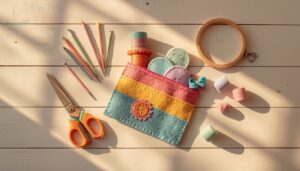
Safety matters more than most parents realize when picking a sewing kit. The right features can make all the difference between a frustrating experience and a confident first stitch.
Check before you buy what to verify before purchasing.
Plastic and Blunt-tipped Needles
Most kids’ sewing kits swap sharp metal for plastic needles — and that’s a smart trade. Rounded tip safety ensures fingers stay intact, even during clumsy first stitches. These child-safe tools feature a large eye design for easy threading and an ergonomic length of around 78 mm, tailored for small hands.
Material durability holds up through dozens of projects, making kid-safe needles a practical choice. Their robust construction supports repeated use, reinforcing skills without compromising safety. This reliability transforms them into a confidence-building choice, empowering young learners to explore creativity without frustration.
Pre-punched Holes for Safer Stitching
Pre-punched holes take the guesswork — and the risk out of early stitching. Each opening follows Hole Size Standards, measuring at least 4mm wide with Spacing Precision of 5mm apart. That’s just right for thick thread to pass through cleanly.
Here’s why Felt Compatibility and Design Efficiency matter:
- Acrylic felt sheets hold holes without tearing
- Aligned openings make running stitches straighter
- Pre-punched paths eliminate sharp piercing tools
- Consistent spacing builds muscle memory fast
- Structured channels reduce thread snags on young hands
Rounded Scissors and Child-safe Tools
Good scissors make a real difference. Child-safe tools feature Finger-friendly Blade Angles that cut felt cleanly without catching skin. Ergonomic Handle Design keeps small hands comfortable, with non-slip grips and symmetrical holes for lefties and righties alike. Spring-loaded Grip Benefits mean less hand strain per snip.
Pair those with blunt needles and child-safe needles, and you’ve got a genuinely safer setup.
Non-toxic Materials and Safety Standards
What goes into the fabric matters more than you’d think. Look for OEKO-TEX Certification and PFAS-Free Fabrics — they signal that felt and thread passed real lab testing.
Lead-Free Threads, Phthalate-Free Plastics, and ASTM D4236 compliance keep dyes and embellishments genuinely safe for skin contact.
GOTS Certified materials take it further, emphasizing non-toxic materials and rigorous safety standards.
These certifications and standards aren’t marketing fluff — they’re checkable facts.
Small Parts and Choking Hazard Checks
Even tiny sequins and buttons deserve a hard look. Manufacturers run choke tube testing to flag anything that fits a 31mm cylinder — that’s your CPSC size test in action.
Check for secure button attachment and proper age-grade warning labels. A solid regulatory compliance checklist covers small-parts labeling, ensuring safety features in kids’ sewing kits aren’t guesswork — they’re verified.
Storage Cases for Sewing Supplies
A good storage case does more than just hold supplies — it keeps little hands away from loose needles between sessions. Look for portable carry cases with secure latches, clear Compartment Layout sections, and Organization Icons that help kids sort thread from tools.
Material Durability matters too: wipe-clean linings handle craft chaos well.
Size Standards around 15–25 cm wide hit the sweet spot for Portability Features without swallowing a backpack.
Best Starter Projects for Kids
Starting simple is the secret to keeping kids excited about sewing. The right first project builds confidence fast — no frustration, just that proud "I made this" feeling.
Here are the best starter projects to look for in a kid’s sewing kit.
What is The Easiest Thing to Sew for Kids?
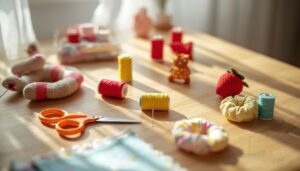
Start small — that’s the secret to early sewing wins. A running stitch band or simple bookmark teaches hand-sewing basics without feeling overwhelmed.
Fabric selection matters too: felt is forgiving, and thick embroidery floss boosts thread visibility so kids can actually see their stitches.
Simple shapes, pre-punched holes as hands-free guidance, and miniature accessories like buttons keep beginner sewing techniques fun and achievable.
Felt Animals and Plush Toy Projects
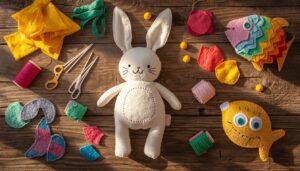
Felt animals might be the perfect gateway project — and there’s real science behind why. Pre-cut felt pieces align front-to-back for clean pattern design, while pre-punched holes guide every stitch. Kids practice stuffing techniques using non-allergenic polyester fill, then finish with embellishment ideas like adhesive eyes and nose details.
DIY plush toy sewing projects build color coordination skills and spark creative storytelling along the way.
Simple Running Stitch Practice
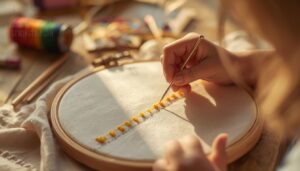
The running stitch is where everything clicks. Begin by drawing a guiding line with a disappearing-ink pen, then maintain consistent stitch spacing at about 1/8 inch—up, down, repeat.
Thread length is crucial here: Match it to your child’s arm span to avoid tangles. Plastic blunt needles simplify needle selection, making basics stress-free.
These small, steady stitches quietly build confidence and sharpen fine motor skills.
Pre-cut Projects for Fast Success
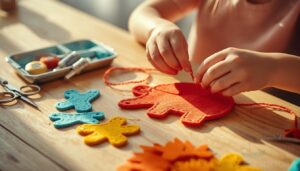
Once your child nails the running stitch, pre-cut projects are the natural next step — and they’re built for quick wins.
- Precut felt pieces mean no measuring, no cutting, just easy stitching
- Prepunched holes guide the needle for speedy project flow
- Most projects reach rapid completion in 15–20 minutes
- Instant gratification keeps kids motivated and returning for more
Quick assembly builds real confidence fast.
Multi-project Kits With Skill Progression
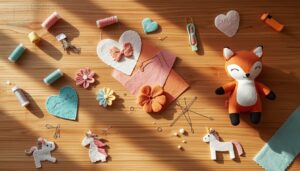
Once quick wins stack up, multi-project kits maintain momentum through Sequential Project Scaling. This method begins with simple tasks like a running stitch on felt shapes, gradually advancing to Graduated Stitch Challenges and culminating in complex creations like stuffed animals.
Skill Progress Marker Charts visually track children’s growth, offering clear milestones of achievement.
Themed Learning Paths, such as woodland creatures or unicorns, transform skill-building into an engaging adventure, replacing the feel of structured lessons with excitement.
Screen-free Learning Through Sewing
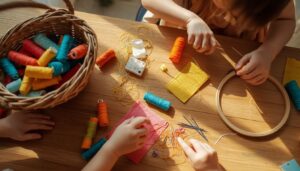
Sewing pulls kids away from screens naturally — no lectures needed. A quiet 20-minute stitching session builds Mindful Concentration, fine motor skills, and Patience Building all at once. It’s Screen-free creative play for children that actually sticks.
Sewing keeps kids off screens naturally, building focus, patience, and fine motor skills one quiet stitch at a time
Add a sibling or parent, and Family Collaboration turns craft time into real connection. That’s Creative Expression and Problem Solving wrapped in one needle pull.
Frequently Asked Questions (FAQs)
What is the easiest thing to sew for kids?
A simple felt circle is the easiest start. Two pieces, one running stitch, a little stuffing — done. Felt doesn’t fray, so mistakes don’t matter much. Perfect first win.
How do sewing kits support kids with disabilities?
Think of stitching as a workout for tiny hands. It builds Fine Motor Development, aids Sensory Regulation, and encourages Independence Building — making Sensory-Friendly Craft Kits for Kids genuinely powerful tools for children with disabilities.
Can boys benefit from kids sewing kits too?
Yes, absolutely. Boys gain just as much from sewing — developing fine motor skills, problem-solving confidence, and hand‑eye development while making something real.
Gender inclusive play means no craft is off-limits.
How long does a typical sewing project take?
It depends on the project. Quick felt shapes take 15 to 30 minutes. Bags or bears? Budget 2 to 3 hours. Complexity time scaling and your child’s stitching pace factors make every project different.
Are sewing kits good for classroom or group use?
Absolutely — sewing kits hit the ground running in group settings. Classroom sets like the Nasco Sew a Monster Kit supply 24 students at once, averaging just $33 per child.
How should parents store kits between sessions?
Keep the kit in a clear box on a high shelf. Use compartmentalized trays for needles and thread coil holders for floss.
A labeled checklist on the lid ensures cleanup quick and nothing gets lost.
Conclusion
The right sewing kits for kids are like a key that unlocks something lasting—patience, focus, and a quiet pride in making something real. Start where your child is, not where you hope they’ll be.
Match the kit to their age and attention span, and let early wins do the teaching. One finished project builds more confidence than ten half-done ones.
Hand them the right tools, and they’ll surprise you every time.
- https://ashpublications.org/blood/article/142/Supplement%201/808/504142/Clinical-Characteristics-Treatment-and-Outcomes-of
- https://www.infinitemodestydesigns.com/post/sewing-safety-for-kids-guidelines-and-tips
- https://sewingfromhome.com/best/kids-sewing-kits/
- https://www.goodhousekeeping.com/home/craft-ideas/g33956496/best-kids-sewing-kits/
- https://www.mamashappyhive.com/hand-sewing-kit-for-kids/