This site is supported by our readers. We may earn a commission, at no cost to you, if you purchase through links.
Most quilters discover the hard way that fabric choices for bed quilts can fall flat on a wall. Art quilts demand attention, requiring a different approach. They must stop viewers in their tracks, hold their gaze, and convey a message. This fundamental shift transforms how you shop for materials.
You’re no longer just seeking colorfast cotton that works well with a rotary cutter. Instead, the focus shifts to surface interest, light interaction, and layers that create depth. The goal is to turn a flat surface into something dynamic and alive.
These unique qualities—surface interest, light interaction, and layers that create depth—are essential for art quilt fabrics. They elevate a static piece into one that breathes and captivates.
These ten picks are a strong place to start.
Table Of Contents
- Key Takeaways
- 10 Best Quilting Fabrics for Art Quilts
- 1. HunnmingRe Vintage Butterfly Quilting Fabric
- 2. Pudapu Dark Floral Cotton Fabric
- 3. Orange Cotton Craft Fabric Squares
- 4. Cotton Floral Quilting Fabric Squares
- 5. HunnmingRe William Morris Quilting Fabric
- 6. Starry Sky Cotton Fat Quarter Fabric
- 7. HunnmingRe Watercolor Forest Quilting Fabric
- 8. Cotton Quilting Fabric Multi Color
- 9. Artebona Grey Swirl Cotton Fabric
- 10. MAYJOYDIY Japanese Blue Sakura Cotton Fabric
- What Defines Art Quilt Fabrics
- Best Fabric Types for Art Quilts
- How to Choose Colors and Prints
- Preparing Fabrics for Art Quilts
- Finishing Art Quilts for Display
- Frequently Asked Questions (FAQs)
- Conclusion
Key Takeaways
- Art quilts demand fabrics with surface interest, light interaction, and layered depth — qualities that flat, uniform quilting cotton simply can’t deliver.
- Prepping your fabric before you cut — cold washing, checking thread count, and testing colorfastness — saves you from a warped or faded finished piece down the road.
- Mixing fabric types like cotton sateen, voile, or silk organza with your base cotton is what separates a quilt that hangs flat from one that actually breathes and moves.
- How you finish and display your quilt matters as much as the fabric you choose — UV-protective glazing, acid-free backing, and a proper sleeve system keep your work looking sharp for decades.
10 Best Quilting Fabrics for Art Quilts
Choosing the right fabric can make or break your art quilt. Whether you’re piecing a bold landscape or building a layered collage, the fabric you pick sets the whole mood.
From textures to scale, every choice adds depth—just as the right finishing touch matters when you’re ready to bind your quilt with extra-wide fabric.
Here are ten quilting fabrics worth a close look.
1. HunnmingRe Vintage Butterfly Quilting Fabric
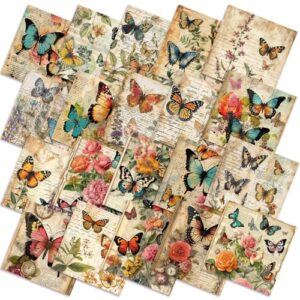
These 20 precut squares are a fussy cutter’s dream. Each 10×10-inch piece features a different vintage butterfly pattern, offering instant variety without the need to hunt for coordinating prints.
The polyester-cotton blend ensures the fabric remains lightweight and breathable, making it ideal for projects like wall hangings, pillows, or decorative patchwork. However, it runs slicker than pure quilting cotton, so handle edges carefully to avoid fraying.
For mixed-media art quilts where visual impact matters more than heavy-duty structure, this pack provides a ready-made palette you’ll actually use.
| Best For | Crafters and quilters who want a quick, coordinated set of decorative fabric squares for light projects like pillows, wall hangings, or patchwork without the hassle of sourcing matching prints. |
|---|---|
| Material | Polyester-cotton blend |
| Primary Use | Quilting & patchwork |
| Cut Format | Pre-cut squares |
| Piece Count | 20 squares |
| Print Style | Vintage butterfly |
| Craft Suitability | Lightweight crafts |
| Additional Features |
|
- 20 unique vintage butterfly patterns give you instant variety in one pack — no extra fabric hunting needed.
- Precut 10×10-inch squares save time and are ready to sew right out of the package.
- Lightweight and breathable fabric works great for decorative and low-wear projects.
- Higher polyester content makes the fabric thin and slick, which can be tricky to handle and sew cleanly.
- Squares tend to fray easily and may have uneven cuts, reducing the usable printed area.
- Not a good fit for traditional quilting or any project that needs sturdy, heavyweight fabric.
2. Pudapu Dark Floral Cotton Fabric
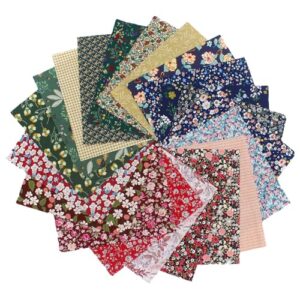
Where butterflies lean light and airy, the Pudapu Dark Floral Cotton goes in the opposite direction — bold, moody, and unapologetically rich.
You get 42 precut 10×10-inch squares across 21 vintage floral patterns, each one deep with reds, blues, greens, and browns on a near-black base.
The 100% cotton holds stitches cleanly and takes fusible web without becoming stiff.
Just note the occasional size variance — some squares are closer to 9.5 inches — so check before you cut.
| Best For | Quilters and crafters who love vintage aesthetics and want a ready-to-use collection of bold, moody floral prints without the hassle of cutting fabric themselves. |
|---|---|
| Material | 100% cotton |
| Primary Use | Quilting & patchwork |
| Cut Format | Pre-cut squares |
| Piece Count | 42 squares |
| Print Style | Dark floral vintage |
| Craft Suitability | Traditional quilting |
| Additional Features |
|
- 21 unique dark floral patterns mean plenty of variety without hunting for coordinating fabrics
- Precut squares save real time — just open the pack and start sewing
- 100% cotton takes stitches and fusible web well, staying soft and workable
- Fabric runs thin, so it’s not the best pick for anything that’ll see heavy wear
- Some squares come in closer to 9.5 inches, which can throw off your layout if you’re not checking first
- Occasional muted printing or pattern swaps mean what you see isn’t always what you get
3. Orange Cotton Craft Fabric Squares
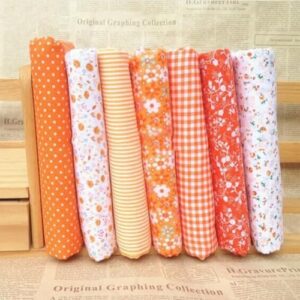
If the Pudapu’s dark florals feel a little intense, these Orange Cotton Craft Fabric Squares bring some breathing room — bright, warm, and ready to work.
You get 7 precut 10×10-inch squares in mixed floral and polka-dot patterns, all in complementary orange tones. The 100% cotton cuts cleanly and accepts fusible web without stiffening up.
Pair them against deep blues or greens and the contrast practically pops off the quilt. Just check your cut sizes — some squares run slightly small.
| Best For | Hobbyists and beginners who want affordable, ready-to-use fabric for low-stakes projects like scrapbooking, small quilts, or decorative pillows. |
|---|---|
| Material | 100% cotton |
| Primary Use | Quilting & patchwork |
| Cut Format | Pre-cut squares |
| Piece Count | 7 squares |
| Print Style | Floral & polka-dot |
| Craft Suitability | Hobby & prototyping |
| Additional Features |
|
- Precut squares save prep time and make it easy to jump straight into a project
- Mixed floral and polka-dot patterns give you variety without hunting for coordinating fabrics
- Bright orange tones pair beautifully with deeper colors for eye-catching contrast
- Fabric runs thin, so it’s not a great fit for heavy quilting or anything that needs structure
- Some squares come in slightly under 10 inches, which can throw off precision work
- Edges tend to fray, meaning you’ll want to finish them quickly or handle with care
4. Cotton Floral Quilting Fabric Squares
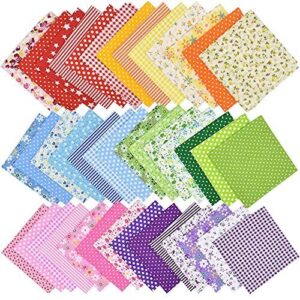
Want more variety without the commitment? These Cotton Floral Quilting Fabric Squares offer 42 precut 10×10-inch pieces across six color families—red, pink, yellow, green, blue, and purple—with seven squares each. Every square features a distinct floral print, ensuring no repetition.
The 100% cotton material is lightweight yet sews cleanly, while pre-finished edges prevent fraying. To avoid dye bleed, cold-wash before using, then mix colors freely for creative flexibility.
| Best For | Quilters and crafters who want a ready-to-use fabric bundle with plenty of color and pattern variety for patchwork, small quilts, or mixed-media projects. |
|---|---|
| Material | 100% cotton |
| Primary Use | Quilting & patchwork |
| Cut Format | Pre-cut squares |
| Piece Count | 42 squares |
| Print Style | Multicolor floral |
| Craft Suitability | Quilts & accessories |
| Additional Features |
|
- 42 unique floral prints across six colors — tons of variety in one pack
- Pre-finished edges save time and keep things clean right out of the bag
- 100% cotton means it’s breathable, easy to sew, and works for all kinds of projects
- Squares can run slightly smaller than the advertised 10×10 inches, so measure before cutting
- Dye bleed is possible — cold-washing before use is pretty much a must
- The fabric is on the lighter side, which makes it less ideal for anything that needs to hold up to heavy wear
5. HunnmingRe William Morris Quilting Fabric
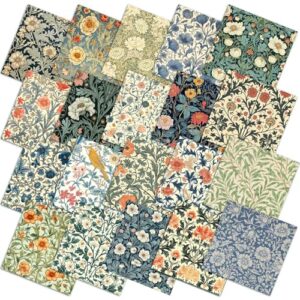
William Morris knew how to make a room stop and stare—and this fabric brings that same energy to your quilt. The Hummingbird William Morris Quilting Fabric comes as 20 precut 10×10-inch squares, each printed with a distinct vintage botanical or floral motif.
The polyester-cotton blend feels soft and breathable, though it runs a bit slick, so use a stabilizer if you’re doing detailed piecing.
Pair these bold, heritage-style prints with solid fabrics to let each square claim its moment.
| Best For | Crafters and quilters who want ready-to-use vintage botanical prints for small projects like pillows, bags, or patchwork without the hassle of cutting fabric themselves. |
|---|---|
| Material | Polyester-cotton blend |
| Primary Use | Quilting & patchwork |
| Cut Format | Pre-cut squares |
| Piece Count | 20 squares |
| Print Style | William Morris floral |
| Craft Suitability | Mixed-media projects |
| Additional Features |
|
- 20 precut squares mean you can jump straight into your project—no measuring, no cutting
- Each square has a different William Morris motif, so you get real variety in one pack
- The lightweight feel works great for doll clothes, apparel accents, and other delicate accessories
- The polyester-heavy blend feels slick and slippery, which can make precise sewing tricky
- Fabric frays easily with handling, so you’ll likely need interfacing or a stabilizer for sturdier projects
- Colors may look different in person than on screen, and square sizes can vary slightly due to manual cutting
6. Starry Sky Cotton Fat Quarter Fabric
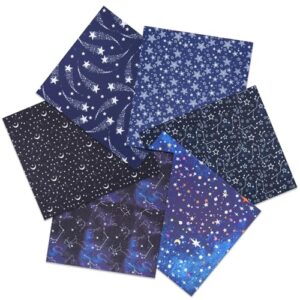
The Starry Sky Cotton Fat Quarter Fabric bundle includes six fat quarters of night sky, each measuring 18×20 inches. Crafted from 100% cotton, these pieces feature deep blue celestial motifs that retain their vibrant contrast even after washing.
These celestial prints really shine when you let them guide your stitching patterns — discover how free motion quilting works without a special machine and start tracing those deep blue motifs by hand.
The fabric’s midweight feel ensures easy cutting and piecing, while its smooth texture irons flat without hassle. Ideal for background panels or focal blocks, it shines in space-themed quilts and artistic projects.
Pre-wash first, as edges may fray slightly straight from the package.
| Best For | Quilters and crafters — beginners included — who want a ready-to-go bundle for space-themed projects like quilts, pillow covers, or tote bags. |
|---|---|
| Material | 100% cotton |
| Primary Use | Quilting & patchwork |
| Cut Format | Fat quarters |
| Piece Count | 6 fat quarters |
| Print Style | Galaxy/starry sky |
| Craft Suitability | Beginner-friendly |
| Additional Features |
|
- Six coordinated fat quarters for $9.99 makes it an easy grab for quick, themed projects.
- 100% cotton is simple to cut, sew, and iron flat — no fussing around.
- The deep blue galaxy print gives you a cohesive look without hunting for matching fabrics.
- Thinner and slipperier than standard quilting cotton, so it can be tricky to handle.
- Edges arrive with up to an inch of fraying right out of the package — pre-washing is a must.
- Cost per square inch runs higher than just buying a full yard of comparable fabric yourself.
7. HunnmingRe Watercolor Forest Quilting Fabric

The HunnmingRe Watercolor Forest Quilting Fabric brings the quiet of the woods right to your worktable. Each pack includes 20 precut 10×10-inch squares, with 20 different patterns featuring soft moss greens, teal blues, and amber washes that mimic real watercolor brushwork.
The painterly style makes it perfect for landscape art quilts — use it as a dreamy background or layer squares together for a forest-themed wall piece.
Easy to cut and sew by hand or machine.
| Best For | Crafters and quilters who love nature-inspired designs and want an easy, versatile fabric for lightweight projects like wall hangings, pouches, or patchwork. |
|---|---|
| Material | Polyester-cotton blend |
| Primary Use | Quilting & patchwork |
| Cut Format | Pre-cut squares |
| Piece Count | 20 squares |
| Print Style | Watercolor forest |
| Craft Suitability | Decorative quilting |
| Additional Features |
|
- 20 unique watercolor forest patterns in one pack — tons of variety without hunting for coordinating fabrics.
- Pre-cut 10×10-inch squares save prep time and make mixing and matching a breeze.
- Works with hand sewing and machine stitching, so it fits whatever your skill level or setup.
- The fabric is thin and slippery, which can make it tricky to handle — especially for beginners.
- Higher polyester content means less breathability and some edges may arrive already fraying.
- Patterns aren’t always centered on each square, so you might not get the full motif you were hoping for.
8. Cotton Quilting Fabric Multi Color
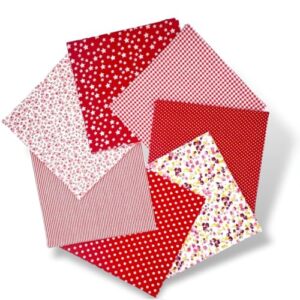
If you want a bundle that plays well with almost any project, Cotton Quilting Fabric Multi Color deserves a spot in your stash. Each 20×20-inch square is cut and ready to go — no measuring, no fuss.
The collection mixes polka dots, gingham checks, florals, and geometric prints across a full rainbow of colors, so you’ve got variety built right in.
It’s 100% cotton, machine washable, and colorfast through regular wash cycles.
At $9.99, it’s an easy yes.
| Best For | Quilters and crafters who want a ready-to-use, colorful fabric bundle for patchwork, pillows, or small DIY projects without spending a lot. |
|---|---|
| Material | 100% cotton |
| Primary Use | Quilting & patchwork |
| Cut Format | Pre-cut squares |
| Piece Count | Varies by bundle |
| Print Style | Floral & geometric |
| Craft Suitability | Home decor & quilts |
| Additional Features |
|
- Pre-cut 20×20-inch squares save time — just grab and sew
- Wide mix of patterns and colors means you rarely need to buy extras
- Machine washable and colorfast, so finished projects hold up well
- Fabric runs thinner than expected, which can be a problem for structured quilts
- A few buyers questioned whether it’s truly 100% cotton — some pieces showed slight stretch
- Fixed square size limits you if your project needs bigger cuts or odd shapes
9. Artebona Grey Swirl Cotton Fabric
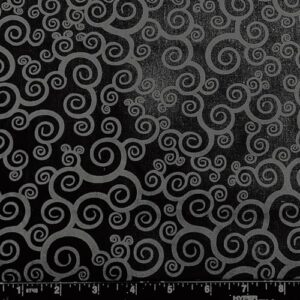
Sometimes the boldest move is going neutral. The Artebona Grey Swirl Cotton Fabric provides a calm, steady base that allows other elements in your art quilt to breathe and pop. Its swirling pattern introduces subtle movement without competing for attention, making it ideal for large focal panels or backings.
Crafted from 100% cotton and 42 inches wide, this fabric is sold by the yard at $4.99. Pre-wash it first to ensure stability, then layer, stitch, or thread-paint directly onto its stable, matte surface. This versatile material pairs effortlessly with almost any design, offering a reliable foundation for creative expression.
| Best For | Quilters, crafters, and DIY enthusiasts looking for an affordable, neutral cotton fabric that works as a versatile base for art quilts, home décor, and creative projects. |
|---|---|
| Material | 100% cotton |
| Primary Use | Quilting & patchwork |
| Cut Format | By the yard |
| Piece Count | 1+ yards |
| Print Style | Grey swirl on black |
| Craft Suitability | General quilting |
| Additional Features |
|
- Soft, breathable 100% cotton that holds its color well through multiple washes
- Great value at $4.99/yard with a generous 42-inch width — perfect for quilts and larger projects
- The subtle grey swirl pattern adds gentle visual interest without overpowering your overall design
- Tends to wrinkle after machine drying, so expect to iron it — especially for clothing use
- May shrink slightly after the first wash, so pre-washing before cutting is a smart move
- The 42-inch width is fixed, so if your project needs wider fabric, you’ll need to look elsewhere
10. MAYJOYDIY Japanese Blue Sakura Cotton Fabric
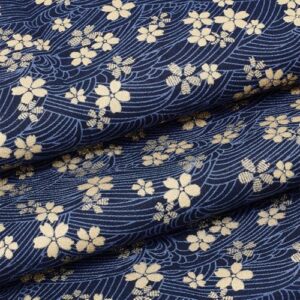
If your art quilt needs a focal fabric that stops people in their tracks, the MAYJOYDIY Japanese Blue Sakura Cotton is worth a long look. The gold cherry-blossom and wave print catches light beautifully, giving finished panels a warm bronzing effect.
It’s 100% cotton, 59 inches wide, and sturdy enough to cut clean without distortion. The colorfast dye holds through washing, so your colors stay true on the wall.
Use it as a statement block or decorative lining — it earns its place either way.
| Best For | Quilters and crafters who want a bold, eye-catching focal fabric with a rich print that holds its color and cuts cleanly. |
|---|---|
| Material | 100% cotton |
| Primary Use | Quilting & patchwork |
| Cut Format | By the yard |
| Piece Count | 1+ yards |
| Print Style | Gold cherry blossom |
| Craft Suitability | Apparel & quilts |
| Additional Features |
|
- The gold sakura and wave print has a genuine bronzing effect — it turns heads in finished panels and decorative pieces.
- Sturdy, non-stretch cotton means it cuts and shapes cleanly without distorting, which is a real win for precise quilt work.
- Colorfast dye keeps the blues and golds looking vivid wash after wash, so your finished piece stays sharp over time.
- No stretch at all, so it’s not the right pick for garments that need to move or drape softly.
- At 59 inches wide, bigger projects will need seams — something to plan around before you cut.
- Like most cottons, it can shrink if you’re not careful, so pre-washing before you cut is a must.
What Defines Art Quilt Fabrics
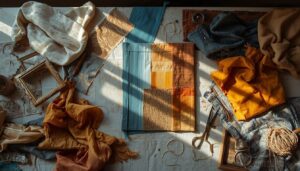
Art quilts play by different rules, and the fabrics you choose need to keep up. Unlike traditional bed quilts, these pieces demand materials that can carry visual weight, hold texture, and sometimes hang on a wall for years.
Here’s what separates the right fabric from the rest.
How Art Quilt Fabrics Differ From Traditional Quilt Fabrics
Traditional quilting cotton keeps things predictable — uniform prints, consistent color, and easy block matching. Art quilt materials break that mold entirely. Fabric texture, fiber content, and dye stability all shift when you’re building textile art meant to hang on a wall.
Think batik, hand-dyed cotton, and fabric collage layers that create depth and movement, not just repeating motifs. This approach to quilting as textile art forms allows artists to explore new creative avenues.
Why Texture, Drape, and Surface Interest Matter
Texture, drape, and surface interest transform a quilt from flat to dynamic. Smart fabric layering—such as voile over batik—creates instant visual depth, while fabric weight determines how the piece hangs and folds.
The tactile experience invites viewers to engage closely, drawing them into the quilt’s physical presence. Textile contrast and surface tension sustain visual interest, guiding the eye across every detail.
Textile contrast and surface tension guide the eye, while touch draws viewers into the quilt’s physical presence
When Archival Quality Matters for Wall Display
When your quilt becomes wall art, it transforms into a lasting creation. Archival framing and smart conservation methods are essential to ensure its longevity. These practices protect your work for decades, preserving it as more than just a project.
UV protection glazing blocks 99% of harmful light, while acid-free display materials prevent chemical damage. Together, these longevity factors maintain the quilt’s vibrancy and stability, long after the final stitch is secured.
Balancing Visual Impact With Stitch Stability
Fabric drape shapes every decision in art quilts. Fluid voile shows stitches boldly, so you’ll want looser stitch tension to avoid waviness. Heavier cotton withstands dense free-motion quilting without warping.
Layered fabric layering adds depth, but pair it with smart stability control.
Texture mixing and visual balance keep your thread painting sharp — stunning, without sacrificing structure.
Best Fabric Types for Art Quilts
Not every fabric belongs in an art quilt, and choosing the right one changes everything about how your finished piece looks and feels. Some fabrics give you structure, others add glow, softness, or depth that plain cotton just can’t pull off.
Here are the best fabric types to know before you start cutting.
Premium Quilting Cotton for Piecing and Appliqué
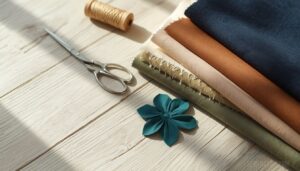
Premium quilting cotton is your foundation for art quilts that actually hold together. With a thread count between 108 and 140 per inch, its weave density ensures fabric stability for dense stitching and clean seam lines.
Colorfast dyes guarantee your colors remain vibrant, even after repeated washing.
Reach for Robert Kaufman Kona Cotton, Moda Fabrics Bella Solids, or Art Gallery Fabrics when stocking supplies—these solid quilting fabrics anchor every bold composition.
Cotton Sateen for Subtle Sheen and Highlights
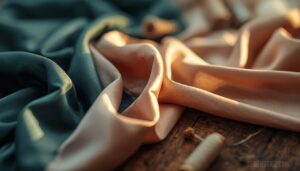
Cotton sateen breaks the rules in the best way—its satin weave pattern floats long fibers across the surface, catching light with a quiet, confident glow. That subtle sheen enhancement makes focal details pop without glare.
Choose long-staple cotton for premium fiber quality and drape effects that flow beautifully along curves.
Art Gallery Fabrics offers standout sateen options worth adding to your art quilt supplies collection.
Voile for Layering Softness and Transparency
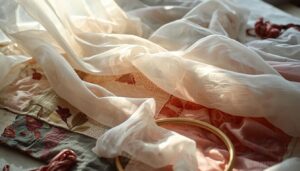
Layering with voile is where your art quilt starts breathing. This sheer, lightweight fabric—usually between 40 and 80 GSM—opens up Transparency Effects that let underlayers peek through, adding real Quilt Dimensionality.
Voile’s fluid drape enhances Fabric Blending and Layering Techniques, making it a natural choice during construction. Its manageable fabric weight ensures your work remains unburdened by bulk.
For exceptional voile options, explore Art Gallery Fabrics—their selections are worth discovering.
Silk Organza for Depth and Translucent Overlays
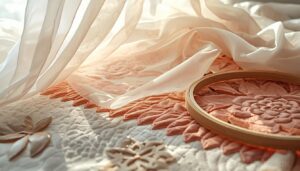
Silk organza is your secret weapon for Depth Creation in art quilts. Its crisp translucency makes Translucency Effects feel almost magical—light passes through, shifting hues and softening edges beautifully. Here’s what makes it worth adding to your quilt-making supplies:
- Stack 1–3 layers for visible dimensional shifts using smart Fabric Layering
- Use Organza Techniques to highlight appliqué edges with a soft halo
- Explore Overlay Textures that catch light at different viewing angles
- Let artistic quilting breathe through sheer, structured drape without bulk
Metallic Prints for Focal Accents and Contrast
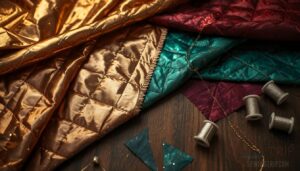
Metallic prints are the spark that makes a quilt impossible to ignore. They catch light from every angle, pulling your viewer’s eye straight to your Focal Points.
Free Spirit Fabrics carries gorgeous options from their latest fabric collection launches.
| Metallic Effect | Art Quilt Benefit |
|---|---|
| Contrast Enhancement | Deepens surrounding textures |
| Color Saturation | Keeps hues vivid across angles |
| Texture Interaction | Strengthens focal drama |
| Art Gallery Fabrics sheen | Anchors bold color palettes |
| Reflective surface | Elevates Art Gallery display |
Matte Prints for Clear Patterns and Low Glare
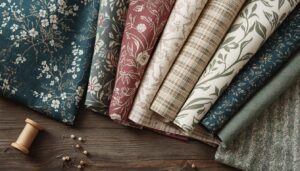
Matte prints don’t shout — they let your design do the talking. Where metallics dazzle, matte finishes hold steady, keeping every motif crisp and every line readable.
Art Gallery Fabrics and Moda Fabrics Bella Solids are great starting points, and Kona Cotton delivers reliable clarity every time.
- Matte Finish Benefits: absorbs light for non-reflective, glare-free surfaces
- Low Glare Performance: reduces harsh reflections under gallery and window lighting
- Surface Durability: resists fingerprints and smudges through regular handling
- Application Versatility: pairs beautifully with batik fabrics and appliqué overlays
- Clarity Enhancement: keeps small-scale motifs sharp and legible across your whole panel
How to Choose Colors and Prints
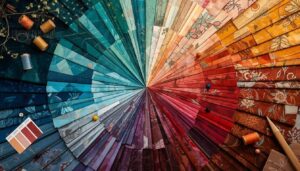
Color and print choices can make or break your art quilt. The right mix pulls everything together and gives your work real real visual power.
Here’s what to keep in mind as you build your palette.
Using Solids to Anchor Complex Compositions
Solids are your secret weapon in art quilts. Moda Fabrics Bella Solids, Robert Kaufman Kona Cotton, and Art Gallery Fabrics Pure Solids deliver the fabric anchoring and quilt’s stability needed for complex compositions.
A well-placed solid—whether neutral, mid-tone, or matte—creates visual balance and composition depth, allowing bold focal prints to breathe. This approach ensures your design remains dynamic without sacrificing harmony.
Solid color theory grounds your palette selection, preserving the energy of your composition while maintaining cohesion. It prevents visual flattening, ensuring every element works in unison.
Picking Small-scale Prints for Visual Clarity
Small-scale prints are where print scale meets purpose. Keep motif density tight—think quarter-inch to half-inch shapes—so your fabric design stays sharp when pieced.
Art Gallery Fabrics and Moda Fabrics Bella Solids offer small prints with strong color harmony and clean fabric texture.
Kona Cotton and batik fabrics work beautifully alongside them, maintaining visual balance without crowding your composition.
Mixing Florals, Swirls, and Scenic Motifs
Once you move beyond small-scale prints, mixing florals, swirls, and scenic motifs is where your quilt-making techniques truly expand. Think of Floral Balance as your anchor, Swirl Dynamics as your connector, and Scene Integration as your story. These principles form the foundation of layered designs.
Free Spirit Fabrics and Art Gallery Fabrics offer collections tailored for this kind of intricate layering. Meanwhile, Color Harmony and Texture Mixing refine the composition, ensuring cohesion and depth in your final piece.
Creating Contrast With Light, Medium, and Dark Values
After mixing those florals and swirls, value contrast is what makes everything pop. Think of the Value Scale as your map — light values push forward, dark values anchor deep, and mid-tones smooth the path between. Art Gallery Fabrics Pure Solids are perfect here, often outperforming Kona Cotton versus Art Gallery Fabrics Pure Solids comparisons for color clarity.
- Use Light Direction to decide where highlights land
- Let Shadow Depth define your focal point’s weight
- Apply Contrast Theory when pairing prints across fabric weight
- Check Color Harmony by squinting at your layout
Building Palettes for Landscape and Nature Quilts
Nature Inspired palettes start with one anchor—a sky blue or mountain gray—then layer in midtones like forest green and earth brown. Color Theory earns its keep: analogous hues keep landscapes calm, while a warm-cool contrast adds life.
For Fabric Selection, debates between Art Gallery Fabrics Pure Solids and Kona Cotton persist, particularly for Landscape Rendering and achieving clean Quilt Composition.
Combining Bold Focal Fabrics With Quiet Blenders
Bold focal fabrics anchor your design — but they need a quiet partner to shine. Think of it like a lead singer and a steady rhythm section: one demands attention, the other holds everything together.
- Fabric Contrast: Place saturated prints from Moda or Art Gallery Fabric collections next to cream or taupe blenders.
- Color Harmony: Repeat one color from your focal fabric inside the blenders for cohesion.
- Texture Mixing: Pair dense motifs with smooth, fine-weave cottons to keep focal areas readable.
- Scale Balance: Let blenders occupy more surface area — proportion control calms busy transitions.
- Visual Flow: Reserve metallic prints for focal points; matte blenders from solid-color fabric collections keep glare low.
This balance separates intentional use of quilt-making supplies from happy accidents.
Preparing Fabrics for Art Quilts
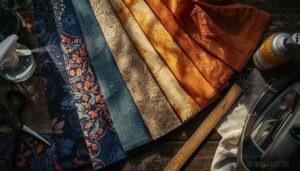
Before your fabric ever meets a needle, a little prep work makes all the difference. Getting this step right means fewer headaches later and a finished piece that actually holds up on the wall.
Here’s what to do before you start cutting and stitching.
Pre-washing to Reduce Shrinkage and Dye Bleed
Skipping pre-wash is how you end up with a warped finished quilt. Cold water plus mild detergent manages both shrinkage control and dye fixation in one step — your fabric preparation starts here.
| Pre Wash Method | What It Prevents |
|---|---|
| Cold soak, mild detergent | Dye bleed, color transfer |
| Gentle cycle, short spin | Excess fabric shrinkage |
| Color catcher sheet | Cross-color dye migration |
| Air dry, away from sun | Heat-induced colorfastness loss |
Test colorfastness before cutting your precut fabric kits.
Checking Thread Count for Stability and Hand Feel
Thread count is your fabric’s backbone — and it’s worth checking before you cut a single piece. For art quilts, the ideal count range sits between 200 and 600, where weave density keeps your work stable under dense stitch support without sacrificing hand feel.
Yarn ply impact matters too: single-ply gives softness balance, while tighter plies boost fabric durability for long-arm work.
Using Fusible Web for Collage and Appliqué
Fusible web is your secret weapon for collage quilts and appliqué methods that actually hold up. Bond shapes cleanly by controlling your ironing time — just 4 to 6 seconds per piece on the wrong side.
- Choosing Fusible Weights: Match weight to fabric thickness for clean results
- Paper Backing Tips: Keep the backing on during layered shape placement to prevent sticking
- Edge Trimming Techniques: Trim excess fusible to cut stiffness before stitching
Pairing Fabrics With Batting and Backing
Getting your quilt sandwich right changes everything.
Match batting loft to your display goals — thinner for crisp wall pieces, loftier for tactile drama. For layer stability, cut your fabric backing two inches larger on all sides.
Shadow control starts with backing color: ivory under pale tops, darker tones under saturated palettes.
Drape balance and backing oversize details make the difference between flat and alive.
Choosing Threads for Piecing and Thread Painting
Your quilt sandwich is ready — now the thread does the talking.
- Thread Weight Selection: 50wt cotton keeps piecing seams flat and clean.
- Cotton Versus Polyester: Cotton’s matte sheen affects help busy fabrics breathe; polyester grips dense quilting.
- Variegated Thread Accents: Add dimension without swapping fabrics.
- Needle Tension Matching: Balanced tension let thread painting sing.
Brands like Aurifil and Premium Bottom Line give you real control.
Preventing Puckering During Dense Quilting
Dense stitching pulls fabric tight if you’re not careful — and that’s where puckering sneaks in.
| Fix | Why It Works | When to Use It |
|---|---|---|
| Walking Foot Use | Prevents layer shifting | Dense straight-line quilting |
| Secure Layer Basting | Keeps sandwich flat | Before freemotion quilting |
| Balanced Thread Tension | Stops top fabric gathering | All quilt sandwich construction |
Match your Presser Foot Pressure to fabric thickness, maintain Even Stitch Length, and sew steady.
Finishing Art Quilts for Display
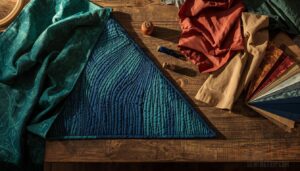
You’ve put in the work—now it’s time to make it ready for the wall.
Finishing an art quilt involves a few key steps that turn your pieced fabric into something display-worthy and built to last. Here’s what you need to know to get it done right.
Building The Quilt Sandwich for Wall Art
Think of your quilt sandwich construction process as the foundation on which everything else rests. Layer order basics are simple: top fabric, batting, then backing — always. Cut your backing with a backing size allowance of an inch or two extra on each side.
For basting method options, spray baste works fast.
Edge support strategies prevent sagging when you hang the quilt as wall art. Test placement on a design wall first.
Free-motion Stitching to Add Texture and Detail
Once your sandwich is basted, free-motion stitching is where your art quilt truly comes alive. You’re painting with thread now.
- Stitch Density Effects shift mood — tight stippling creates shadow, sparse passes let fabric breathe
- Echo Quilting Lines and Contour Shading follow shapes, adding dimension
- Embossed Stitch Effects lift texture through variable tension
Needle control keeps everything precise and intentional.
Thread Painting for Highlights and Outlines
Thread painting transforms your art quilt into a real statement. Employ Short Stitch Blending for smooth color transitions across shapes, Highlight Color Mapping to strategize natural light placement, and Outline Stitch Control to refine edges with precision.
Build Thread Layer Depth gradually, keeping Precision Thread Tension consistent so your quilting thread lies flat. The result? Pure, intentional dimension.
Facing Versus Binding for a Clean Edge
Choosing between facing and binding comes down to a single question: how do you want your edge to speak? Facing delivers an Invisible Edge Finish—ideal for wall art quilts seeking a sleek, frameless aesthetic. Binding, on the other hand, offers a Framed Edge Look with enhanced Durability-Versus-Sleekness.
Both techniques demand precision: corner-turn accuracy and curved edge control are essential for either method. Prioritize what aligns with your creative vision.
Adding Sleeves and Hanging Systems
Once your edge is finished, mounting and displaying quilts as wall art is the next move.
- Sleeve Placement: stitch 1–2 inches below the top edge
- Dowel Sizing: match quilt width plus 1–2 inches per side
- Weight Distribution: use double sleeves for thick quilts
- French Cleat Mounts: flush, strong, and adjustable
- Hardware Safety: exceed 25% beyond estimated quilt weight
Preserving Color and Structure for Long-term Display
Your art quilt deserves to last decades, not just seasons. Use UV protective framing with UV-filtering glass or acrylic to block up to 99% of light damage. Pair that with acid-free backing to stop yellowing.
Climate control matters too — keep humidity between 40–60% and temperatures steady.
Practice display rotation regularly, and always use careful textile handling to protect color and structure long-term.
Frequently Asked Questions (FAQs)
Is Art Gallery Fabrics quilting cotton?
Yes — Art Gallery Fabrics quilting cotton is like butter under your fingernails: impossibly smooth. AGF Cotton Content is 100% premium cotton, OEKO-TEX certified, roughly 205 thread count, and 44 inches wide.
What is now considered an art form quilt making?
Quilt making is now recognized as textile fine art.
Museums display art quilts alongside paintings, honoring conceptual quilt narratives, mixed media quilts, and artistic expression through fabric and thread as legitimate contemporary textile art.
Can fat quarters work well in art quilts?
Funny how something so small can do so much heavy lifting.
Fat quarters nail Fat Quarter Sizing, Bundle Variety Benefits, and Grain Stability all at once — making them surprisingly smart Art Quilt Supplies.
How do I store art quilt fabrics long-term?
Store your quilting fabric in a climate-controlled storage space at 40–50% humidity.
Roll pieces using fabric rolling methods, tuck in silica gel.
Do seasonal condition checks to catch moisture or pest issues early.
Do digital prints perform differently than traditional prints?
They do. Digital prints offer a wider Color Gamut and Small-Run Speed, but traditional prints win on Batch Consistency and Fade Resistance.
Your choice shapes Surface Texture, hand feel, and how Printed Quilting Fabrics age.
Conclusion
Choosing the right quilting fabrics for art quilts means trusting your instincts, honoring your vision, and letting the fabric do some of the talking. Every texture you reach for, every print you hold up to the light, moves your piece closer to something real and lasting.
You’ve got the list, you’ve got the knowledge—now the only thing left is to start cutting. Your next art quilt is already waiting to be made.