This site is supported by our readers. We may earn a commission, at no cost to you, if you purchase through links.
Thread choice rarely gets treated as a serious decision—until you’re mid-project, watching your metallic thread shred through the needle eye for the fourth time while your deadline closes in. That friction isn’t bad luck; it’s physics.
Metallic thread is fundamentally different in construction from polyester, rayon, or cotton spools, and those differences ripple into every stitch you make. Its unique structure demands specific adjustments: a 40% wider needle eye, cold-water washes, and slower machine speeds. Regular thread, by contrast, forgives almost everything.
The right choice hinges on your project’s purpose, its intended use, and how much you’re willing to work for that shine. Understanding these distinctions ensures your stitches—and sanity—stay intact.
Table Of Contents
- Key Takeaways
- Metallic Thread Vs Regular Thread Basics
- Appearance and Stitch Performance
- Durability, Care, and Washability
- Machine Settings and Sewing Tips
- Best Uses for Each Thread
- Metallic Thread for Embroidery, Accents, and Formalwear
- Regular Thread for Garments, Quilting, and Daily Sewing
- Choosing Thread by Fabric Type
- Choosing Thread by Project Purpose
- Cost Differences and Value for Beginners
- When Metallic Thread is Worth The Extra Effort
- How to Decide Between Metallic and Regular Thread
- Frequently Asked Questions (FAQs)
- Conclusion
Key Takeaways
- Metallic thread’s layered foil-over-core construction demands specific machine adjustments — an 40% wider needle eye, speeds below 650 SPM, and loosened upper tension — or you’ll spend more time troubleshooting than stitching.
- Regular thread (especially polyester) wins on durability and care simplicity, making it the smarter pick for anything that sees frequent washing, daily wear, or high-abrasion use.
- Your project’s purpose should drive the thread decision: reach for metallic when visual impact and luxury is the goal, and stick with regular thread when resilience and clean stitch definition matter more.
- Combining both threads in a single design — metallic for outlines, regular for fills — gives you the best of both worlds without the bulk or shine overload.
Metallic Thread Vs Regular Thread Basics
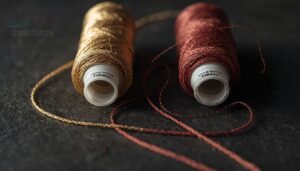
Before you pick a thread, it helps to understand what you’re actually working with.
A quick look at thin thread types and their best uses can save you a lot of frustration before you even thread the needle.
Metallic and regular threads differ in ways that go beyond just how they look — their structure shapes everything from how they feel to how they perform under a needle.
Here’s a breakdown of the key basics that separate them.
What Metallic Thread is Made Of
Metallic thread is an engineering achievement hiding in plain sight. Central to its structure — literally — one will find either a nylon core or polyester core, wrapped in a thin aluminum foil or Mylar film, then sealed with a polyester coating to reduce friction and shredding.
| Thread Type | Core Material | Surface Layer |
|---|---|---|
| M type film | Polyester/Nylon | Pure metallic film |
| Hybrid weave | Blended fibers | Metallic + regular mix |
| Synthetic metallic yarns | Nylon core | Foil-wrapped coating |
That layered construction defines how metallic thread manufacturing balances brilliance with durability.
What Regular Thread is Made Of
Regular thread keeps it straightforward — no foil, no film, just fiber. Depending on the material composition, you’re working with polyester, rayon, cotton, or clever fiber blends that each behave differently under the needle.
Metallic thread uses a foil-like metallic layer over a strong core, so a specialist needle is recommended.
| Standard Thread | Construction Method | Finish Quality |
|---|---|---|
| Polyester | Multifilament Construction | Slight trilobal sheen |
| Rayon | Spun filament | Lustrous, silk-like |
| Cotton | Staple-spun | Matte, natural |
| Waxed Thread | Resin Coating applied | Smooth, reduced fraying |
| Core-spun blend | Wrapped filament core | Balanced sheen and strength |
How Core Structure Affects Performance
Think of the core as a thread’s backbone — its structure fundamentally shapes stitch consistency, breakage resistance, and overall seam integrity. Core Twist Density directly enhances strength by optimizing load distribution, while Core Sheath Balance ensures tension distributes evenly across seams, minimizing material distortion.
Polyester-core metallic threads provide rigid dimensional stability, whereas rayon-core threads emphasize flexibility. Ply Configuration Impact and Core Alignment Uniformity collectively govern feeding smoothness during high-speed needle operation, preventing snags and ensuring consistent stitch formation.
| Core Property | Performance Effect |
|---|---|
| Core Twist Density | Increases load distribution and reduces breakage |
| Core Material Stiffness | Affects machine tension handling and stitch consistency |
| Ply Configuration Impact | Improves elasticity across high stitch counts |
| Core Sheath Balance | Reduces puckering on lightweight materials |
| Core Alignment Uniformity | Maintains even thread feeding through long seams |
Differences in Finish, Texture, and Flexibility
Beyond structure, finish and feel set these threads apart in practice. Surface Gloss Variation is immediately obvious — metallic thread’s coating delivers a high-shine reflective quality that standard thread simply can’t match. Hand Feel Contrast is equally telling: metallic thread feels smoother but stiffer, while regular thread offers a softer, loftier touch.
| Property | Metallic Thread | Standard Thread |
|---|---|---|
| Stiffness Impact | Holds shape, resists drape | Flexible, adapts naturally |
| Draping Behavior | Can stiffen lightweight fabrics | Moves fluidly with the cloth |
| Fabric Interaction | Catches light; needs stable weaves | Blends into prints and textures |
This texture variation and difference in thread elasticity matter most when working curved seams or stretch fabrics — regular thread settles in; metallic thread stands away.
Common Types of Regular Thread: Polyester, Rayon, Cotton
Each regular thread type brings its own personality to the table. Polyester wins on durability and dye retention — it won’t fade after a hundred washes. Rayon, with its cellulose fiber origins, gives you that silky hand feel and luminous sheen. Cotton suits natural fabrics beautifully, though it shrinks slightly.
For a deeper look at how each thread type performs on different fabrics, this guide to the best embroidery threads breaks down the tradeoffs in practical detail.
Spool availability is excellent across all three.
| Thread | Material Composition | Best Strength |
|---|---|---|
| Polyester | Synthetic fiber | Highest |
| Rayon | Plant-based cellulose | Moderate |
| Cotton | Natural eco sustainability | Gentle |
Appearance and Stitch Performance
Thread choice shapes how a finished design feels before anyone reads a single stitch. Metallic and regular threads behave differently in ways that go well beyond just shine — stitch definition, fabric contrast, and visual weight all come into play.
Here’s what to keep in mind when appearance and performance are both on the line.
Shine and Reflective Effect Vs Matte Finish
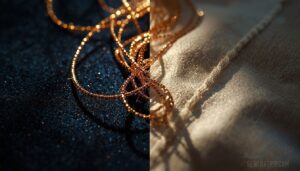
Metallic thread shine isn’t just sparkle — it’s a lighting instrument. That shimmer shifts with every viewing angle, creating visual impact that matte thread simply can’t replicate.
Consider what each finish brings to your work:
- Metallic thread’s shimmer boosts color saturation on dark fabrics, making designs flash brilliance under direct light
- Glare management matters — thread sheen can overexpose details in photography or studio settings
- Texture perception differs: matte threads soften shadows; metallic threads amplify contrast
Stitch Definition on Simple and Detailed Designs
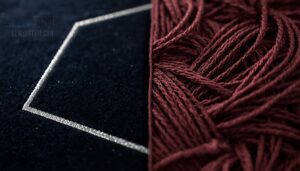
Line clarity shifts dramatically depending on thread choice. Simple outlines pop with metallic’s edge sharpness and contour contrast, while detailed designs demand regular thread’s consistent stitch density for true design precision.
Thread interaction with fabric weave determines everything about visual impact and stitch quality.
| Design Type | Thread Weight Impact | Best Thread |
|---|---|---|
| Bold outlines | High reflective contrast | Metallic |
| Intricate motifs | Flat, uniform coverage | Regular |
| Small text | Fine thread tension control | Regular |
| Accent highlights | Selective visual impact | Metallic |
| Dense fills | Stable thread interaction | Regular |
How Each Thread Looks on Light and Dark Fabrics
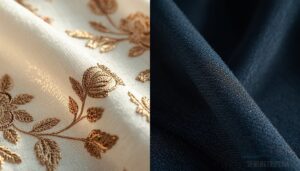
Fabric brightness changes everything about how your thread reads. On light fabrics, metallic thread creates pronounced highlights along each stitch line — effects of metallic sheen on embroidery design become unmistakable here, adding visual depth and gloss perception.
Shadow accents matter on dark fabrics, where thread hue interaction softens into a crisp, luminous edge.
Color matching in metallic embroidery and color retention depend entirely on fabric compatibility.
Thickness, Weight, and Design Visibility
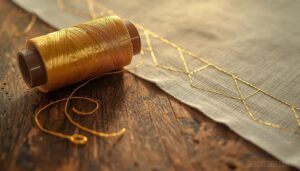
Thread weight shapes your final result more than most sewers expect. Metallic thread, ranging from 12 to 40 weight, directly affects thickness, visibility, contrast, edge crispness, and design bulk on your fabric.
Here’s how the impact of thread weight breaks down:
- Fine metallic preserves drape with minimal loss of bulk and flexibility.
- Thicker cores add weight and stiffness to structured pieces.
- Bold outlines gain prominence through metallic thread shimmer.
- Regular thread keeps edges soft for tonal designs.
- Heavier metallic demands tension adjustments to protect stitch quality.
When Sparkle Enhances a Project

Some projects practically beg for that reflective pop — and that’s exactly where metallic thread shimmer earns its place. Dark formalwear, bridal accessories, and seasonal sparkle trends on holiday pieces all benefit from layered sparkle and subtle accenting along edges or motifs.
Keep foil fragment control in mind by slowing your machine when adding sparkle to trims.
| Project Type | Sparkle Benefit |
|---|---|
| Bridal & formalwear | Adds opulence and visual depth |
| Holiday décor | Aligns with seasonal sparkle trends |
| Accessories & trims | Creates focal contrast on dark fabrics |
When Regular Thread Gives a Cleaner Result
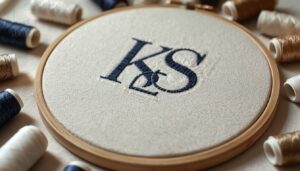
Not every design calls for the spotlight. When you’re working on corporate uniforms, quilting, or fine-detail patterns, standard embroidery thread earns its keep through subtle blend and precision linework that keeps the focus on form rather than flash.
Its matte texture advantage means smooth edge finish without reflective interference — cleaner stitch quality where restraint, not radiance, is the real goal.
Durability, Care, and Washability
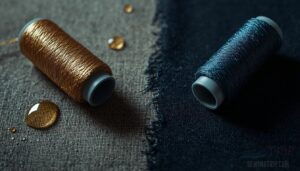
A thread that looks stunning on day one but falls apart after three washes isn’t doing you any favors.
Durability, care requirements, and washability are where metallic and regular threads truly part ways. Here’s what you need to know before committing to either.
Strength and Breakage Resistance
Polyester and rayon threads offer higher baseline tensile capacity, feeding smoothly without special handling and making thread breakage prevention nearly easy.
Metallic thread durability, however, hinges on its core‑wrap ratio: a tightly bonded core enhances stress distribution, reducing breakage, while quality abrasion coating and heat fatigue resistance ensure competitive longevity during extended embroidery runs.
Fraying, Abrasion, and Wear Over Time
Beyond breakage, long-term wear reveals distinct challenges. Metallic thread is genuinely more vulnerable to edge fraying, surface pilling, and micro tear formation as abrasion resistance weakens under repeated friction. Fiber fatigue accelerates in high-contact zones, prematurely dulling its signature luster.
Metallic thread’s brilliance fades fastest where fabric demands the most
Regular threads—polyester especially—excel in enduring wear cycles, maintaining integrity where metallic variants falter. This resilience positions thread durability as the deciding factor when functional demands outweigh aesthetic considerations.
How Washing Affects Metallic Thread
Washing metallic thread the wrong way can strip its shine faster than years of wear. Cold water washes are non-negotiable — heat accelerates oxidation of the metallic wrap, dulling that reflective finish quickly.
Follow these Care Instructions for Metallic Embroidery Threads:
- Use a mesh bag to prevent snagging
- Choose a pH-balanced detergent — Detergent pH matters more than most realize
- Keep spin speed low to reduce mechanical stress
- Finish with low heat ironing under a pressing cloth
How Washing Affects Polyester, Rayon, and Cotton
Polyester withstands standard wash cycles with confidence — fiber shrinkage stays within 1 percent, and color retention holds strong wash after wash.
Rayon, however, demands special care; tensile loss can hit 20 percent when wet, making cold water and gentle cycles non-negotiable.
Cotton swells slightly but responds well to detergent compatibility and heat sensitivity awareness — avoid warm cycles unless it’s pre-shrunk.
Best Thread Choice for Everyday Items
Polyester thread is your most practical pick for everyday workwear—think uniforms, casual garments, and home textiles. Its durability, maintenance simplicity, and machine compatibility make it a reliable workhorse, balancing resilience and ease of use for daily demands.
Thread availability is broad, and cost and budget considerations favor it strongly. Its color compatibility across fabric types is excellent, ensuring consistent aesthetic results regardless of material.
It manages frequent laundering without complaint, retaining integrity through repeated cycles. This blend of durability and aesthetic appeal meets the exacting needs of everyday items, where both function and appearance matter.
Best Thread Choice for Decorative Projects
For decorative stitching—think bridal sashes, gala table runners, or mixed-media embellishment on ceremonial pieces—metallic thread earns its place despite the extra care it demands.
Color harmony matters, so pairing gold or silver accents against rich fabric tones creates real visual depth.
Budget-friendly options like Madeira or Kreinik keep cost and budget considerations manageable without sacrificing that premium, trend-inspired palette you’re after.
Storage Tips to Protect Thread Lifespan
How you store your thread collection is just as important as how you use it. Poor conditions silently degrade both metallic and regular spools before they ever reach a project.
- Humidity Management — Maintain 50–60% humidity and 15–25°C to prevent fiber weakening.
- Light Protection — Use opaque, UV-resistant containers; avoid window-facing storage.
- Dust Prevention — Seal spools in lidded organizers and handle with clean hands.
- Secure Packaging & Rotation Schedule — Follow Thread Storage and Care Guidelines: store upright in acid-free containers, apply thread conditioner occasionally, and rotate stock every 12 months using Care Instructions for Metallic Embroidery Threads to extend Special Care items longest.
Machine Settings and Sewing Tips
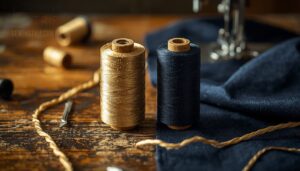
Getting metallic thread to behave on your machine isn’t complicated — it just requires deliberate adjustments. The right needle, speed, and tension setup can be the difference between clean, confident stitching and a frustrating tangle and shredded thread.
Here’s what you need to dial in before your next project.
Needle Sizes for Metallic and Regular Thread
The right needle is the unsung hero of clean, consistent stitching. Metallic needles feature optimized eye geometry — an opening at least 40% wider than the thread diameter — reducing friction that causes shredding.
Use this quick compatibility guide for needle size selection:
| Thread Type | Needle Size |
|---|---|
| Fine metallic | 75/11 – 80/12 |
| Thick metallic | 90/14 – 100/16 |
| Standard regular (40 wt) | 80/12 – 90/14 |
| Heavy regular thread | 100/16 – 110/18 |
Needle material and wear considerations matter too — replace metallic needles after each project run.
Recommended Machine Speed for Each
Speed is where metallic thread demands respect. Keep machine speed between 500 and 650 SPM for metallic threads—Fabric Speed Match matters more than efficiency here. Regular threads comfortably handle 800 to 1,200 SPM.
Adjusting machine speed for delicate threads prevents shredding and Heat Management issues. This protects both thread and fabric integrity. Think of it as dialing in Stitch Type Velocity to safeguard materials during operation.
Tension Settings and Feed Adjustments
Metallic thread needs loosened upper tension — around 80–100 gf — for smooth Top Tension Calibration without puckering. Regular threads run comfortably at default settings.
- Loosen upper tension for embroidery thread tension balance
- Apply Feed Dog Modulation on delicate layers
- Sync bobbin via Bobbin Tension Sync principles
- Fine-tune with Stitch Density Optimization on dense fabrics
- Use Layered Fabric Compensation when stacking materials
Bobbin Thread Choices That Improve Results
Once your thread tension is dialed in, your bobbin thread choice becomes the silent partner that makes or breaks the result. For metallic thread, a lightweight 60 wt polyester bobbin ensures winding balance without adding bulk. Fiber pairing matters here — matching synthetic to synthetic enhances machine compatibility and smooth feed.
Regular embroidery thread works comfortably with standard bobbin weights, keeping stitch quality consistent throughout.
Using Thread Nets, Spool Caps, and Lubricants
Beyond bobbin choices, a few small accessories make a real difference with metallic thread. A thread net over your spool prevents drift and tangling — fold it if it’s too long for your cone. Match your spool cap size to reduce friction and keep feed consistent.
For lubricant application methods, a light silicone touch near the needle entry minimizes shredding without dulling stitch quality.
How to Reduce Shredding and Skipped Stitches
Shredding usually comes down to friction, while skipped stitches often trace back to improper needle insertion depth or an eye that’s too small for the metallic core. Prioritize fabric pre-stabilizing and stitch length adjustment to reduce pull.
Machine cleanliness matters too; built-up lint disrupts feed. Balancing upper and bobbin thread tension, choosing the right needle for specialty threads, and using thread lubricants to reduce friction addresses most breakage issues.
Best Uses for Each Thread

Knowing which thread to reach for can save you time, money, and frustration. The right choice depends on what you’re making, the fabric you’re working with, and how much wear the finished piece will take.
Here’s how each thread holds up across the most common use cases.
Metallic Thread for Embroidery, Accents, and Formalwear
Metallic embroidery thread is where runway sparkle meets deliberate craft. For formalwear embellishment, bridal pieces, and luxury branding, its ability to catch light from every angle demands attention.
Seasonal colorways in gold, silver, and eco-friendly foils enable intentional contrast accents. These options allow designers to create depth and visual interest through layered metallics.
The comparison between metallic and ordinary embroidery threads isn’t close—metallic simply owns this space, delivering unmatched brilliance for high-impact applications.
Regular Thread for Garments, Quilting, and Daily Sewing
For busy sewers, regular thread is the workhorse you can’t do without. Polyester delivers colorfastness and resilience across countless washes, while rayon brings a subtle sheen to decorative work. Cotton blends naturally with natural fabrics, ideal for quilting, piecing, and everyday garments.
Key advantages include:
- Color Coordination: broad, consistent palettes for precise fabric compatibility
- Weight Selection: standard 40–50 wt options suit most constructions
- Longevity Tips: store away from heat to extend thread life
Choosing Thread by Fabric Type
Your fabric type drives everything.
For a lightweight fabric match, fine polyester keeps seams invisible without puckering. Denim thread selection calls for high-tenacity polyester to handle abrasion. Silk thread pairing demands smooth, satinized options to protect drape. Knit stretch compatibility requires polyester or nylon core-spun threads.
Linen durability pairing benefits from cotton-polyester blends—each fabric type has its ideal match.
Choosing Thread by Project Purpose
Your project’s purpose should drive every thread decision. Bridal accent selection and heirloom fabric focus call for metallic’s opulence — the sparkle carries the design. Workwear durability demands regular polyester’s resilience across countless wash cycles.
For quilt decorative spark, metallic topstitching adds dimension without overwhelming piecing seams.
Brand signature sparkle on corporate embroidery? Metallic earns its place — when the moment calls for it.
Cost Differences and Value for Beginners
Spool pricing for metallic thread runs 20–50% higher than regular polyester — and smaller spool sizes push the per-inch cost even further. Accessory expenses like specialty needles and thread nets add $1–3 per project.
That said, bulk discounts of 10–25% and starter kit value packages make a solid cost-benefit analysis worth running before committing.
When Metallic Thread is Worth The Extra Effort
Metallic thread earns its premium when visual storytelling is the goal, not durability. Think bridal embroidery, event embroidery centerpieces, or limited editions where high-contrast detailing signals luxury branding without apology.
It’s worth the extra effort for:
- Gala and ceremonial garments
- Monogram accents on formalwear
- Decorative accessories with minimal washing
- Brand signature pieces requiring opulent finish
- Seasonal or collector-edition items
How to Decide Between Metallic and Regular Thread
The decision really comes down to five factors: design complexity, skill level, project timeline, budget constraints, and how long the item needs to last.
If durability vs. aesthetic appeal matters—such as for company uniforms vs. a one-night gala piece—machine compatibility and thread performance should guide your choice. Opt for standard threads for resilience or metallic threads for visual impact.
Frequently Asked Questions (FAQs)
Is metallic thread good for sewing?
Yes, metallic thread is good for sewing when used on the right projects.
It adds shine and visual impact, but requires proper machine settings, careful tension adjustment, and gentle care to prevent breakage.
Can metallic thread be washed?
Ironically, the thread that makes your work shine is also the most fragile in the wash. Yes, metallic thread can be washed — but it demands respect:
Cold water wash, gentle cycle, garment bag use, and air drying only.
What is the best type of thread to use for embroidery?
For most embroidery projects, polyester thread is your most reliable choice — it balances thread smoothness, color matching, and durability beautifully.
That said, embroidery thread selection really comes down to your fabric drape compatibility and project purpose.
Can I embroider with metallic thread?
Absolutely, you can — metallic thread adds dazzling shine and dimension to embroidery projects. With the right needle, tension adjustments, and slower machine speed, it stitches beautifully on most stable fabrics.
Can metallic thread be used for hand embroidery?
Metallic thread works beautifully for hand embroidery.
Use short length handling—cut strands under 18 inches—and apply thread lubrication tips to minimize metallic thread breakage and prevent foil shedding throughout your stitching session.
Which thread brands offer the best metallic quality?
Madeira, Kreinik braided metallic threads, Lurex, and Gunold lead on brand shine consistency, coating technology, and color gamut — each passing rigorous durability testing while delivering solid price performance across beginner and professional budgets.
How does humidity affect metallic thread performance?
Humidity quietly sabotages metallic thread performance. Moisture triggers core swelling, condensation blur, and tarnish acceleration — especially in salt air environments — while increased needle friction raises shredding risk.
Store spools in airtight containers with silica gel to mitigate these effects.
Can metallic and regular thread be combined in one design?
Yes — combining both is a smart move.
Use metallic for outlines and regular thread for filled areas to create mixed material contrast and visual rhythm design without overwhelming shine or stitch bulk.
Is metallic thread safe for childrens clothing?
For children’s clothing, proceed with caution. Nickel exposure and microfiber shedding can irritate sensitive skin, and loose ends pose choking hazards. Reserve metallic thread for special-occasion accents, not everyday wear.
Conclusion
Studies show embroiderers spend up to 40% more time troubleshooting metallic thread than any other type—yet those who master it rarely go back to skipping it entirely. The difference between metallic thread vs regular thread isn’t really about sparkle versus simplicity; it’s about matching the right tool to the right moment.
Choose regular thread where resilience matters most, reach for metallic where the work deserves to shine, and your projects will reflect exactly that intention.