
This site is supported by our readers. We may earn a commission, at no cost to you, if you purchase through links.
That pair of jeans with the blown-out knee, sitting at the bottom of your closet? It’s not trash. It’s raw material.
Denim holds up like nothing else in your wardrobe, which is exactly why it’s worth a second look before you toss it. The weave, the weight, even the fade patterns, all of it can become something new: a skirt, a patched-up jacket, a tote bag that outlasts anything from a store.
Ready to transform worn jeans into pieces you’ll actually want to wear? Grab a seam ripper and let’s get started.
Table Of Contents
Key Takeaways
- Before cutting, test denim’s fabric strength, inspect for holes and stains in good light, sort by weight, and salvage hardware like YKK zippers and rivets for reuse.
- Prep work matters most: wash and dry new-to-you denim, carefully remove pockets, open seams with a ripper, press panels flat, and cut around weak spots to protect usable fabric.
- Old jeans can become wearable projects like frayed shorts, panel skirts, patchwork jackets, or pieces embellished with lace, leather, or embroidery over stains.
- Visible mending techniques—like inner patches, sashiko stitching, thigh reinforcement, strong denim thread, and neat edge finishing—repair jeans while turning wear and tear into intentional style.
Choose Jeans Worth Transforming
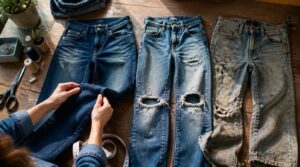
Not every pair of old jeans deserves a second life, and that’s okay. Before you cut a single thread, you need to know what you’re working with. Here’s what to check before picking your next project.
If the fabric still feels sturdy, this guide on how to sew a tear in jeans by hand walks you through testing thread tension so your stitches hold instead of skipping.
Check Fabric Strength
Why bother testing before you cut? Tug a scrap corner gently—if it resists and barely stretches, you’ve got good tensile strength. Weak, thin spots signal poor durability. Check tear resistance too: does a small snag spread easily?
Solid denim for upcycling should hold firm, giving your repurposing project sturdy bones worth building on. Professionals often use an electronic fabric strength tester to ensure material durability.
Inspect Holes and Stains
Grab those jeans in good light—natural daylight works best for detecting invisible stains hiding in dark denim. Look at knees, thighs, and pockets, where wear hotspots cluster from bending and friction. Note hole depth and edges (frayed means weaker fibers).
A UV flashlight reveals sneaky residue. This inspection shapes how you’ll repurpose your jeans later.
Sort by Denim Weight
Once you’ve noted the damage, feel the fabric itself. Denim weight (measured in ounces per square yard) tells you what a pair’s meant for.
Lighter weights under 12 oz drape softly, great for flowy skirts. Midweight 12–16 oz suits everyday DIY fashion. Heavier 16 oz+ denim brings serious durability, perfect for bags or patchwork where toughness matters most.
Save Usable Hardware
Before you cut anything apart, grab those pliers. Zipper salvage quality matters—YKK branded zippers are the best you can get, so save them.
Test rivets for snap closure strength (aim for 15 kg force); good ones retain 80% of their original strength. Wear eye protection during removal, then store hardware in labeled containers. Future-you’ll thank present-you.
Prepare Denim for Sewing
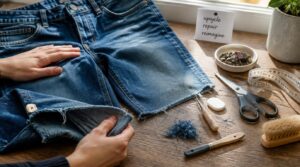
Got your jeans picked out? Good, now it’s time for a little prep work before any needle touches denim. These five steps set you up for smooth, frustration-free sewing later on.
Wash and Dry First
Skip this step and you’ll regret it later—sizing and residue on new-to-you denim can gum up your needle fast. Wash warm (around 40°C) with enzyme detergent to loosen soils gently.
Sort by color to avoid dye transfer between darks and lights. Air dry flat or hang by the waistband; this controls shrinkage before you upcycle old jeans into anything else.
Remove Pockets Carefully
Grab your seam ripper and good lighting before touching those back pockets—rushing this step is how snags happen. Seam ripping precision matters here.
- Work slowly, section by section
- Cut threads on the pocket side only
- Brush away loose threads often
- Press flat to smooth the area
This prevents fabric snags and sets up clean denim customization later, whether you’re upcycling jeans or repurposing scraps.
Choosing between spun and core-spun options makes a real difference in durability, so it’s worth comparing these industrial sewing thread types before starting your project.
Open Seams With Ripper
Now the real seam-opening begins. Slip the ripper’s hook under a stitch, rock gently, and let the blade glide—not the fabric.
| Do This | Not This |
|---|---|
| Short, controlled cuts | Long dragging snips |
| Blade under thread only | Blade against denim |
| Rock to start each cut | Force through knots |
| Pause near pockets | Rip straight through |
| Comb loose threads free | Leave frayed bits |
Precision cutting protects every fiber you’ll reuse.
Press Fabric Flat
Wrinkly denim lies to you about what’s actually underneath. Before cutting, hit every panel with a hot iron over a press fabric flat—it spreads heat evenly, stops scorching, and keeps threads from puckering.
This step improves seam crispness so your cut lines stay true. A few extra minutes here means your upcycled jeans project starts flat, accurate, and ready for the next transformation.
Cut Around Weak Areas
Ever notice how one thin spot can wreck an entire cutting plan? Not if you cut smart.
- Identify fiber thinning before scissors touch fabric
- Map cut lines beyond the fray
- Keep grain alignment intact
- Leave strategic seam allowances for stitching
- Stabilize frayed edges with topstitching
This is where upcycling jeans gets strategic—transform your old jeans without sacrificing wearable fabric.
Turn Jeans Into Wearables
Now that your denim is prepped and ready, it’s time for the fun part. This is where those old jeans get a real second life, turning into pieces you’ll actually want to wear. Here are five ways to make that happen.
Make Frayed Denim Shorts
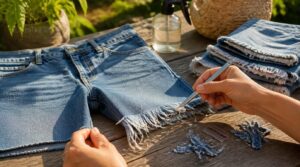
Nothing says summer like custom-cut denim shorts you made yourself. Cut your legs to the length you want, leaving extra fabric first. Then fray edges using the tweezers fraying technique—pull horizontal threads until you like the look.
| Step | Tool |
|---|---|
| Fray | Tweezers |
| Trim | Razor blade |
| Soften | Wash cycle |
Use razor blade trimming for control, then wash again for natural edge softening.
Sew a Panel Skirt
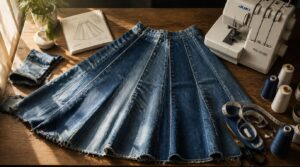
Got shorts down? Good, because a panel skirt takes that same denim confidence further.
Cut old jeans into five to eight flared panels, keeping grain alignment consistent so it hangs right. Join panels with a serger for seam finishing, then attach an elastic waistband.
Result: an A-line silhouette with real panel fullness—your own DIY upcycled clothing win.
Patchwork a Denim Jacket
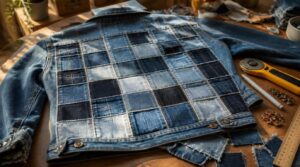
Skirts use flared panels. Jackets use scraps—smaller, scrappier, bolder.
Gather patches from jeans with different washes, light to dark, for contrast. Cut them into uniform 3×3 to 6×8 inch squares, then arrange in a checkerboard or patterned layout before stitching anything.
- Balance light and dark washes
- Press seams open to manage bulk
- Choose hardware that matches your aesthetic
- Add lining fabric for structure
This is garment reconstruction at its most creative.
Add Lace or Leather
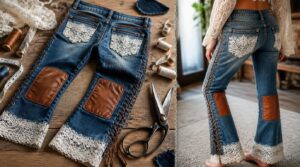
Once your patches are squared away, it’s time to add texture. Lace pocket trim softens raw denim edges beautifully—stitch it along hems or pockets using a zigzag stitch.
Want rugged instead? Sew leather knee patches for durability, or try corset lace detailing up the back seam with grommets. Contrast lace hems and leather piping techniques (3-5mm wide) finish things off with serious upcycling jeans style.
Embroider Over Stains

That grease splotch doesn’t have to end your jeans’ life. Grab embroidery floss and turn the stain into your motif—florals or leaf clusters work great. Use stabilizer underneath so denim won’t pucker.
- Chalk-sketch your design first
- Layer satin stitches for full coverage
- Pick harmonizing thread colors
- Backstitch outlines for definition
- Press gently, wait 24 hours before washing
Repair With Visible Mending
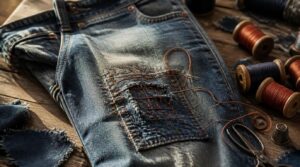
Not every hole needs to disappear, sometimes it just needs a little honesty stitched into it. Visible mending turns wear and tear into part of the story instead of hiding it. Here’s how to patch, stitch, and strengthen your jeans so they hold up (and look good doing it).
Sometimes a hole doesn’t need hiding, just a little honesty stitched into it
Add Inner Denim Patches
That threadbare knee doesn’t need a funeral; it needs a backing patch.
Cut heavyweight or upcycled denim 1-2 inches larger than the hole, tuck it inside, and stitch (skip iron-on adhesive near stress zones). Match the color, keep it thin to avoid bulk, and your jeans stay comfy, wearable, and ready for years more denim customization.
Sew Sashiko-Style Stitches
Grab white thread and turn that patch into art. Sashiko-style stitching started centuries ago in rural Japan, reinforcing worn fabric while creating beauty.
Keep stitches 1-2mm apart, running straight or curved lines. Try hemp leaf or wave motifs—thicker thread adds strength and contrast against indigo denim.
No knots needed; weave ends back in. Your jeans now show off intentional, hand-stitched character.
Reinforce Inner Thighs
Ever notice how your jeans always blow out at the inner thigh first? That’s your high-friction zone—where fabric rubs fabric with every step, wearing down fiber strength fast.
Fight back with preventative mending before holes appear. Reinforcement placement matters: patch inside the seam, extending 1-2 inches beyond thin spots. This boosts fabric durability, turning garment reconstruction into genuinely wearable, upcycling-worthy results.
Use Strong Denim Thread
Here’s a secret pro menders know: pretty stitches mean nothing if the thread snaps the first wash. Skip regular sewing thread—go with polyester or nylon in a 40-60 weight range for denim’s tough fibers.
Spun-core thread gives you flexibility plus tensile strength. Bonded thread resists breakage and heat during machine work. Test colorfastness before committing, so your DIY upcycled project survives wash after wash.
Finish Edges Neatly
A raw edge left alone will fray into oblivion, so give it a proper send-off. Either way, preventing fabric fraying keeps your denim customization looking sharp wash after wash.
For medium-weight denim, zigzag stitch durability beats a plain straight line every time. Thicker fabric? Try bias binding for a clean wrap. Lighter scraps do best with a narrow hem.
Repurpose Scraps Into Accessories
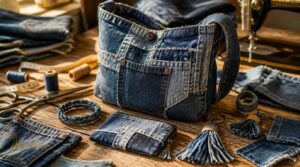
Don’t toss those leftover scraps just yet, they’re worth more than you think. Every cutoff piece, pocket, and zipper still has some life left in it. Here are five simple ways to turn those denim bits into things you’ll actually use.
Sew Denim Tote Bags
Those old jeans deserve better than a landfill. Turn them into a sturdy denim tote bag using leg panels for the body, choosing 12-14 oz weight for structure.
Line the interior with cotton fabric, strengthen corners with fusible interfacing, and craft straps from doubled strips or belt loops. Mix washes for color-block panels—instant style, zero waste.
Create Pocket Organizers
Got any denim scraps left over from that tote bag? A pocket organizer is the perfect next project.
Cut a sturdy panel, arrange pockets in columns, and topstitch each edge for stitching durability. Add fusible interfacing so pockets stand upright, then sew a hanging loop. Color-code by category, and you’ve got a wall-mounted system that keeps craft supplies or office gear right where you need them.
Braid Denim Headbands
Cut three thin strips, braid tight for sleek or loose for boho, and finish edges to stop fraying. Add cotton lining for comfort against your temples. Dark indigo may transfer slightly onto hair at first wash—that’s normal.
- Cut strips
- Braid pattern
- Secure ends
- Attach lining
- Style it
These upcycled headbands turn denim scraps into everyday statement pieces.
Make Patchwork Pillows
Once your headband scraps run low, grab the leftover squares for a patchwork denim quilt pillow.
Plan a simple grid layout, mix light and dark washes for a color story, then sew rows before joining them to manage seam bulk. Quilt lightly, add a zipper back, and slide in a 16×16 insert. Instant DIY home decor from scraps.
Reuse Zippers and Waistbands
Every pair of jeans hides two treasures people toss without thinking: zippers and waistbands.
Salvage before you scrap. Check teeth for gaps, test the slider, and confirm end stops hold—YKK zippers especially earn a second life. Shorten by resewing tape ends.
- Zipper pull keychains
- Pouch closures
- Waistband bag straps
- Belt loop trim
Store labeled by length. Nothing wasted, everything reused.
Frequently Asked Questions (FAQs)
How much water does denim recycling actually save?
Think of denim recycling like refilling a well instead of digging a new one.
It slashes virgin fiber cultivation, shrinks the blue water footprint, and cuts dyeing water use — often saving hundreds of liters per pair through smarter, closed loop systems.
What percentage of cotton is needed for recycling?
For cotton recycling, garments need at least 90 percent cotton content to meet fiber integrity standards. Blends complicate processing, so pre-consumer waste—like manufacturing scraps—is preferred.
Pure cotton ensures material purity and maximizes sustainable fashion impact in the circular economy.
Can bleach designs damage denim fiber over time?
Yes, bleach designs can damage denim fiber over time. Chemical oxidation weakens cotton, causing tensile strength loss, stiffness, and fraying.
Indigo dye removal exposes fragile fibers, so for DIY your jeans, limit bleach-dipped embellishment for long-term fabric durability.
What tools work best for beading denim cuffs?
Funny how denim’s tough reputation crumbles when you meet a bent needle, right? For beading cuffs, grab a nickel-plated beading needle, size 11 seed beads, Nymo thread, chalk for marking, and finish with clear fabric glue.
How does denim insulation get used in housing?
Denim insulation goes right into wall cavities and attics as batts or loose fill, offering thermal resistance and sound dampening. It grips moisture well, meets fire safety ratings, and uses recycled fibers—cutting textile waste and environmental impact.
Conclusion
Like turning stones into stepping paths, transform worn denim clothing into something uniquely yours. Don’t let old denim gather dust; each frayed edge is a chance to invent, not just repair.
Grab your tools, trust your vision, and enjoy the freedom that comes with creating what you need from what you have. The journey isn’t about getting everything just right—it’s about resourceful creativity and making your wardrobe tell a story. Your next favorite piece is waiting in that pile.
- https://scratchandstitch.com/30-denim-upcycling-ideas-using-old-jeans
- https://www.eileenfisher.com/a-sustainable-life/journal/repair-care/visible-mending-101-patching.html
- https://wrenbirdarts.com/blogs/embroidery-by-erin-eggenburg/jean-mending-project-repairing-large-holes-with-sashiko-denim-patches
- https://efaarvintage.com/blogs/news/upcycling-clothes-the-sustainable-fashion-trend-of-2025
- https://ucsdguardian.org/2026/01/05/upcycling-your-closet-lifestyles-2026-fashion-predictions