
This site is supported by our readers. We may earn a commission, at no cost to you, if you purchase through links.

Grab the wrong blade and thin chrome-tanned hide puckers instead of parting clean. Grab the right one, and a 45mm wheel glides through six layers like they’re paper. That gap between frustration and control comes down to one tool: rotary cutters for leatherwork.
Fixed blades still rule for skiving and deep carving, but for straight seams, curved panels, and multi-layer stacks, a rotary wheel beats a knife on speed and consistency every time. The trick is matching blade size and material to your leather, whether that’s 2oz garment hide or thick tooling leather that fights back.
Pick the right cutter, and cutting day stops feeling like guesswork.
Table Of Contents
- Key Takeaways
- Top 8 Rotary Cutters for Leatherwork
- 1. 45mm Rotary Cutter with Replacement Blades
- 2. VortecSys Dual Rotary Cutter Kit
- 3. Ergonomic 45mm Fabric Rotary Cutter
- 4. CGOLDENWALL Electric Rotary Fabric Carpet Cutter
- 5. Lothee rotary cutter and blade set
- 6. Rotary cutter kit with extra blades
- 7. Fiskars 45mm Premium Steel Rotary Cutter
- 8. Olfa ergonomic 45mm rotary cutter
- Leather Types Rotary Cutters Handle
- Best Blade Sizes for Leather
- Blade Materials and Edge Life
- Manual Versus Electric Cutters
- Ergonomics and Safety Features
- Cutting Mats and Accessories
- Choosing The Right Leather Cutter
- Frequently Asked Questions (FAQs)
- Conclusion
Key Takeaways
- A 45mm rotary cutter handles most everyday leatherwork, gliding through soft chrome-tanned hides and multiple layers, while fixed blades remain better for skiving, beveling, and deep carving on thick stock.
- Blade size should match the job: 18mm for detail trimming, 28mm for tight curves, 45mm for general cutting, and 60mm for thick tooling leather up to 4mm.
- Blade material determines edge life, ranging from stainless and high-carbon steel to titanium-coated, tungsten carbide, and ceramic options that can last up to ten times longer between sharpenings.
- Choosing between manual and electric cutters depends on project scale, since manual tools offer precision for small work while electric models (like 2400RPM options) power through thick, high-volume production cuts.
Top 8 Rotary Cutters for Leatherwork
You’ve got eight solid rotary cutters ahead, each built for a different kind of leatherwork. Some favor precision and control, while others push through thick hides with raw power. Here’s what makes each one worth your workbench space.
If you’re weighing options beyond leather work, this guide to choosing the best rotary cutter for dressmaking offers useful comparisons for fabric-focused projects too.
1. 45mm Rotary Cutter with Replacement Blades
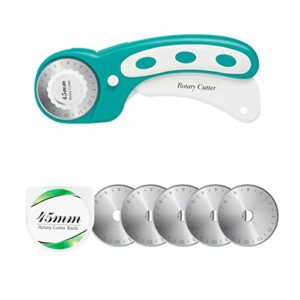
Six blades, one tool, zero excuses for dull cuts. This starter kit pairs SKS7 stainless steel blades with a soft-grip handle built for lefties and righties alike, so your grip stays comfortable through long sessions.
At 0.14kg, it won’t tire your wrist mid-project. The safety locking button folds the blade away when idle, and pink wavy blade compatibility adds versatility for decorative edges on vinyl, felt, and thin leather alike.
| Best For | This rotary cutter kit is best for quilters, sewers, and crafters who cut multiple layers of fabric, leather, vinyl, or paper and want cleaner, faster results than scissors provide. |
|---|---|
| Blade Diameter | 45mm |
| Blade Material | Stainless steel |
| Handle Type | Ergonomic soft-grip |
| Safety Lock | Yes |
| Ambidextrous Use | Yes |
| Primary Use | Quilting/sewing/crafts |
| Additional Features |
|
- SKS7 stainless steel blades stay sharp and durable, and six total blades mean you’re set with replacements for a long time
- Ergonomic soft-grip handle works for both left- and right-handed users, cutting down on joint fatigue during long projects
- Safety locking button folds the blade away for secure, worry-free storage between uses
- Blades need periodic replacement and installation, which adds an extra maintenance step
- The safety lock disables the trigger handle, so you’ll need to remember to unlock it before each use
- Kids should only use it with adult supervision, so it’s not fully hands-off for family craft projects
2. VortecSys Dual Rotary Cutter Kit
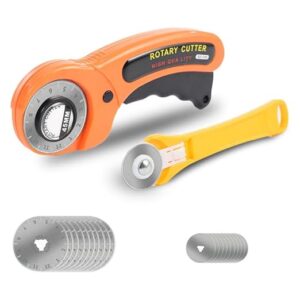
One blade good, two blades better. This kit runs dual interlocking heads for parallel or offset cuts, letting you slice matching strap pairs in a single pass.
Aircraft-grade aluminum bodies keep it light, while depth adjustment works with leather up to 3mm thick. Tool-free blade swaps take under 30 seconds, so you’re back to cutting fast.
Non-slip feet grip your mat, and the integrated safety lock keeps blades stowed when you set it down.
| Best For | This dual rotary cutter kit is best for crafters, quilters, and leatherworkers who want precise, ergonomic cutting tools for detailed fabric and material work. |
|---|---|
| Blade Diameter | 45mm |
| Blade Material | Stainless steel |
| Handle Type | Ergonomic soft-grip |
| Safety Lock | Yes |
| Ambidextrous Use | Yes |
| Primary Use | Quilting/sewing/crafts |
| Additional Features |
|
- Includes both 45mm and 28mm blades for versatile cutting on different project sizes
- Ergonomic, non-slip handles reduce hand and wrist fatigue during extended use
- Comes with 10 spare blades and a safety lock for added convenience and protection
- Some users report blade wobbling or instability in certain units
- The smaller 28mm cutter may struggle with thicker or multi-layered fabric
- Sharp blades and potential mechanical issues from drops raise safety concerns
3. Ergonomic 45mm Fabric Rotary Cutter
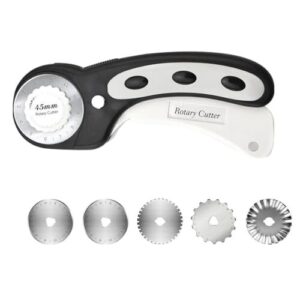
If dual heads aren’t your thing, this one strips things back to a curved loop handle that hugs your palm and spreads pressure across your whole hand, not just your fingers.
Long cutting sessions won’t wreck your wrist. The soft-grip surface holds steady even when your hands get sweaty from hours at the bench.
Ambidextrous by design, so lefties and righties share the same model. It cuts through fabric, vinyl, and thin leather layers with equal control.
| Best For | crafters and sewists who cut multiple layers of fabric, leather, felt, or vinyl and want a comfortable, ambidextrous rotary cutter for long quilting or DIY sessions. |
|---|---|
| Blade Diameter | 45mm/28mm |
| Blade Material | Stainless steel |
| Handle Type | Ergonomic non-slip rubber |
| Safety Lock | Yes |
| Ambidextrous Use | Not specified |
| Primary Use | Sewing/quilting/leatherwork |
| Additional Features |
|
- SKS7 stainless steel blade stays sharp through heavy use and cuts cleanly without fraying edges
- Soft-grip ergonomic handle reduces joint fatigue and stays secure even during long sessions
- Ambidextrous design and blade compatibility (standard, pink, wavy) make it flexible for different users and cutting styles
- Folding blade adds a step compared to simpler fixed-blade cutters
- Safety lock disables the trigger handle, which may slow you down if you forget to release it
- Not recommended for unsupervised use by children, so it’s not ideal for family craft projects with young kids involved
4. CGOLDENWALL Electric Rotary Fabric Carpet Cutter
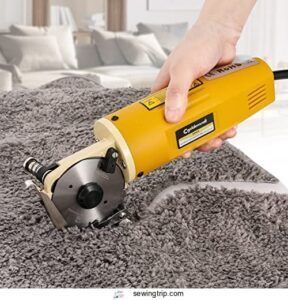
Manual cutters have their place, but sometimes your hand just can’t keep pace with the workload. That’s where the CGOLDENWALL earns its spot.
Its 2400 RPM motor powers through fabric, carpet, and multi-layer leather stacks up to 25mm thick. The octagonal high-carbon blade controls straight runs and curves alike.
A built-in sharpening stone keeps the edge fresh automatically. Just watch that trigger switch and clear cords from the blade path—this thing doesn’t slow down for mistakes.
| Best For | Businesses and serious hobbyists handling heavy-duty cutting jobs—think upholstery shops, carpet installers, and leather workers who need to slice through thick, multi-layer materials faster than scissors ever could. |
|---|---|
| Blade Diameter | 45mm |
| Blade Material | SKS7 stainless steel |
| Handle Type | Ergonomic soft-grip |
| Safety Lock | Yes |
| Ambidextrous Use | Yes |
| Primary Use | Quilting/sewing/crafts |
| Additional Features |
|
- Powerful 2400RPM motor cuts through fabric, carpet, and leather up to 25mm thick with ease
- Built-in sharpening stone keeps the blade sharp automatically, cutting down on maintenance
- Handles both straight and curved cuts smoothly, thanks to the octagonal high-carbon steel blade
- Not designed for cardboard, flannel, or fluffy fabrics, so it’s limited in material versatility
- Sensitive trigger switch means you need to stay alert to avoid accidental activation
- At 1.4kg, the tool’s weight may require hand-pushing for comfortable, extended use
5. Lothee rotary cutter and blade set
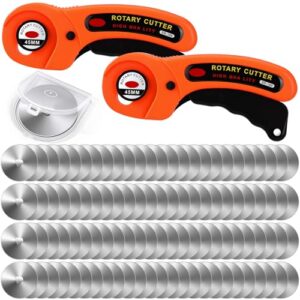
Five spare blades come standard with the Lothee set, so you won’t be scrambling mid-project when an edge dulls.
The 45mm head is perfect for precise leather trimming, and the high carbon steel construction holds rigidity through repeated cuts. A safety locking switch keeps the blade retracted during storage, while the guarded housing protects your fingers during swaps.
The ergonomic grip fits either hand comfortably, cutting fatigue during long sessions. Add the included storage case, and you’ve got a tidy, dependable setup for everyday leatherwork.
| Best For | This set is best for quilters, sewers, and crafters who need a reliable rotary cutter for slicing through multiple layers of fabric, paper, or leather. |
|---|---|
| Blade Diameter | 70mm |
| Blade Material | High carbon steel |
| Handle Type | N/A (power tool grip) |
| Safety Lock | No |
| Ambidextrous Use | Not specified |
| Primary Use | Industrial fabric cutting |
| Additional Features |
|
- Stainless steel blades resist bending and breaking, even with frequent use
- Cuts up to six layers of fabric at once, saving time on bigger projects
- Comes with 100 replacement blades, so you’re set for a long time before needing more
- Sharp, pointed blades require careful handling to avoid injury
- Must be stored well out of reach of children
- Manual measurements may lead to slight sizing inconsistencies
6. Rotary cutter kit with extra blades
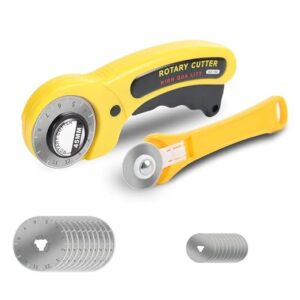
Twenty-two blades total—two pre-installed, twenty spares—means this kit outlasts most projects you’ll throw at it. The standard 45mm blades fit a wide range of brands, so you’re not locked into pricey proprietary replacements.
If you’re unsure which size fits your cutter, this guide on choosing the right rotary cutter blade size breaks down the differences before you buy.
Layered edge geometry keeps leather cuts clean, while corrosion-resistant coatings stretch blade life further. Swaps require no tools, and spares stay protected in a dedicated case until you need them.
For hobbyists cutting frequently, this setup saves both money and downtime.
| Best For | This kit is best for sewers, quilters, and crafters who need reliable, precise cutting across fabric, leather, and other materials. |
|---|---|
| Blade Diameter | 45mm |
| Blade Material | Stainless steel |
| Handle Type | Ergonomic ABS plastic |
| Safety Lock | Yes |
| Ambidextrous Use | Not specified |
| Primary Use | Quilting/sewing/crafts |
| Additional Features |
|
- Comes with 22 stainless steel blades (2 installed, 20 spares) in two sizes for long-lasting, versatile use
- Ergonomic curved handle with a soft rubber grip helps reduce hand and wrist fatigue during long projects
- Automatic blade retraction plus a safety lock button make storage and transport safer
- Plastic handle components may raise durability concerns over time
- The 28mm cutter has drawn some complaints about inconsistent performance
- Some units may require extra pressure to cut effectively, and build quality can vary
7. Fiskars 45mm Premium Steel Rotary Cutter
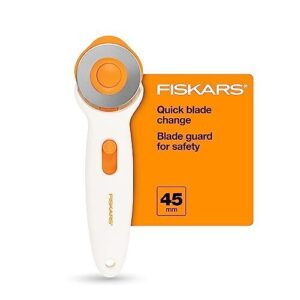
A precision-ground 45mm blade gives this Fiskars a reputation for clean, drift-free cuts through vinyl, faux leather, and layered fabric.
Its stainless interior resists corrosion, so straight lines and tight curves stay accurate cut after cut.
The automatic blade guard retracts on release, while a locking mechanism secures it for storage. A slim, balanced body reduces hand fatigue, and ambidextrous use means lefties get the same control as righties—no awkward workarounds needed.
| Best For | This rotary cutter is best for quilters, sewists, and crafters who need clean, precise cuts through fabric, felt, and vinyl on a regular basis. |
|---|---|
| Blade Diameter | 45mm/28mm |
| Blade Material | Stainless steel |
| Handle Type | Ergonomic curved rubber |
| Safety Lock | Yes |
| Ambidextrous Use | Not specified |
| Primary Use | Sewing/quilting/handicrafts |
| Additional Features |
|
- Precision-ground titanium carbide blade delivers clean, drift-free cuts through multiple layers of material
- Symmetrical handle design and sliding lock button make it comfortable and safe for both right- and left-handed users
- Durable stainless steel construction with a lightweight, ergonomic build for reduced hand fatigue during long projects
- Blade is excluded from the lifetime warranty, so replacement costs fall on the user
- Requires a separate cutting mat to protect surfaces, adding to the overall cost
- Blade dulls over time and must be replaced periodically to maintain cutting performance
8. Olfa ergonomic 45mm rotary cutter
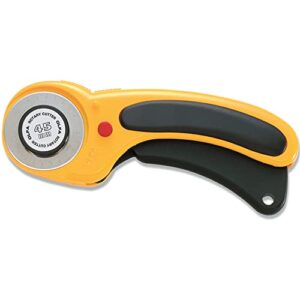
Grab the OLFA and your wrist will thank you—that curved handle cuts wrist rotation way down during long sessions. The soft elastomer grip and finger grooves keep your hold secure even on oily leather, and reversible blade assembly means lefties get equal footing.
A squeeze-trigger design activates the blade and retracts it the moment you let go, with a dual-action safety lock for open or closed storage. Pair it with a self-healing mat, and you’ll stretch blade life while keeping cuts clean.
| Best For | Quilters, sewists, and crafters who need precise, comfortable cutting through multiple layers of fabric, leather, or paper during extended work sessions. |
|---|---|
| Blade Diameter | 45mm |
| Blade Material | Titanium carbide |
| Handle Type | Symmetrical stick handle |
| Safety Lock | Yes (sliding button) |
| Ambidextrous Use | Yes |
| Primary Use | Sewing/quilting/crafts |
| Additional Features |
|
- Curved ergonomic handle with anti-slip grip reduces wrist strain and hand fatigue over long use
- Squeeze-trigger handle with self-retracting blade and dual-action safety lock adds convenience and safety
- Cuts up to six layers of cotton fabric cleanly, and works with specialty pinking, scallop, and wave blades
- Requires a rotary cutting mat to protect the blade and surface, adding to the overall cost
- Blade replacement involves specific safety steps that may be inconvenient for beginners
- At 2.4 ounces with a 45mm blade, it may feel less substantial for heavier-duty cutting tasks
Leather Types Rotary Cutters Handle
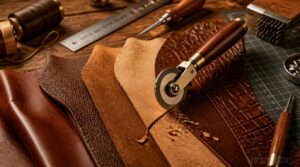
Not every hide behaves the same way under a rotary blade, so knowing what you’re working with saves you time and ruined material. Some leathers glide through like butter, while others fight you every inch of the way. Here’s how different leather types stack up against your cutter.
Soft Chrome-tanned Leather
Chrome-tanned hides are your rotary cutter’s best friend. The chromium tanning process leaves fibers uniformly soft and flexible, so a 45mm rotary cutter glides through without dragging. This material is widely used because it accounts for 90% of leather produced globally.
Expect:
- Strong color fastness
- Solid moisture resistance
- Reliable dimensional stability
- Flexible fiber structure
- Consistent thickness (0.9–3.0mm)
That consistency means fewer blade snags and cleaner precision cutting—ideal for handbags, belts, and other leatherworking tools projects demanding smooth edges.
Thin Leather Under 2mm
Thin hides (1.0–1.8mm) demand a light touch. Swap to a 28mm or 45mm rotary cutter for better control, and always check grain alignment—cutting against it causes waviness.
Use a slow, steady hand to avoid skipped fibers, then finish with edge burnishing to prevent fraying.
These thin cuts are perfect for lightweight wallets and pouches, but keep leather away from humidity to prevent warping.
Vinyl and Faux Leather
Real hide isn’t the only material your rotary cutter for leather works with. Vinyl cuts clean thanks to its non-porous, moisture-resistant surface, while faux leather’s textured, breathable backing mimics natural hide with better airflow.
A 45mm rotary cutter gives you sharp precision on both. Wipe blades after each session—vinyl’s PVC content and faux leather’s synthetic coatings raise disposal concerns, so recycle responsibly when scraps pile up.
Thick Tooling Leather Limits
Push a rotary cutter into 8-10 oz tooling leather and you’ll feel the difference fast. Material stiffness fights back, dulling blades quicker and limiting cutting thickness capacity well below what knives handle.
Deep carving depth needs firm pressure a rotary wheel can’t deliver. Grain structure on thick hides resists clean tracking, so detail suffers exactly where you need it most.
When Knives Work Better
Some jobs just call for a knife. When you’re skiving edges, beveling, or carving deep into thick hides, a fixed blade gives control a wheel can’t match.
Knives allow a precise bevel angle balance—around 18 degrees—for clean tooling work. So for detail carving or heavy stock, skip the rotary cutter for leather and grab your knife instead.
Best Blade Sizes for Leather
Blade size isn’t a minor spec—it decides whether your cuts stay clean or your patterns start fighting you.
Blade size isn’t a minor spec—it decides whether your cuts stay clean or your patterns fight you
Small blades handle detail, big blades handle muscle, and picking wrong means wasted leather.
Here’s how each size stacks up, from tight curves to thick hides.
18mm for Detail Trimming
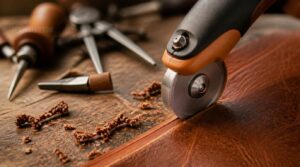
Grab the 18mm blade when the job calls for micro-cut precision, not brute speed. It carves 2–3mm channels and crisp bevels without overcutting your leather.
Pair it with a soft-grip handle, and you’ll get real tactile feedback control on every pass. That fine edge geometry also means less waste, so your scraps stay small and your cutting accuracy stays high.
28mm for Tight Curves
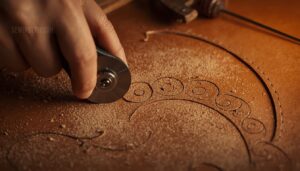
Ornate crescents and interior arcs need a blade that turns without wandering. The 28mm size delivers small radius stability, tracing tight curves while maintaining pattern edge accuracy.
- Reduced blade protrusion for snag-free corners
- Balanced weight for curved movement control
- Consistent contact for miniature detail trimming
This rotary cutter suits leather crafting projects demanding intricate arc precision without sacrificing cutting precision.
45mm for Everyday Cutting
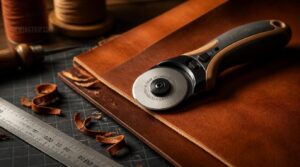
Nine times out of ten, your 45mm rotary cutter is the one you’ll reach for. It controls straight lines, gentle curves, and multi-layer leather or fabric stacks with steady control and less blade replacement than smaller sizes.
SKS7 stainless steel blades keep edges clean longer, while the lighter handle cuts down on hand fatigue during long leatherworking sessions.
60mm for Thick Leather
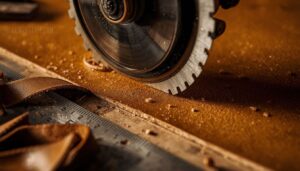
Reach for a 60mm Rotary Cutter when leather gets thick and stubborn. It works through veg tan and shoulder hides up to 4.0mm, cutting cleanly with fewer heavy hide passes.
- Wide blade reduces pass count
- Balanced tool weight fights fatigue
- Prevents blade glazing on dense hides
- Cuts straight with the grain
- Needs sharp, professional grade edges
Beyond that thickness, you’re pushing past its cutting power limits.
Size Versus Cutting Control
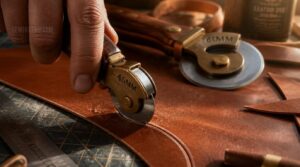
Bigger isn’t always better—blade diameter and drift go hand in hand, so a 60mm rotary cutter wanders more on tight curves. A 45mm rotary cutter balances weight and pivot resistance for everyday accuracy.
Weight affects fatigue too: heavier tools ease long sessions but slow detail work. Match diameter to your radius, and you’ll gain real precision cutting control alongside cutting efficiency.
Blade Materials and Edge Life
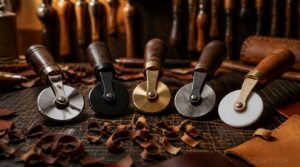
Blade size gets you the right shape, but the material decides how long that edge stays sharp. Some steels cut clean for months, while others dull fast on soft, oily leather. Here’s how the five main blade materials stack up against each other.
Stainless Steel Blades
Sweat, oil, and moisture are a blade’s worst enemies, and stainless steel blades fight back with a built-in chromium oxide layer that resists rust naturally.
SKS7 stainless steel blades balance edge retention with alloy carbide distribution, usually landing between HRC 52-65 hardness. You’ll get clean cuts session after session. A satin surface finish reduces snagging, so professional-grade stainless steel delivers real blade durability without constant babying.
High-carbon Steel Blades
Push edge retention further, and high-carbon steel takes the crown—hardness runs 58 to 66 HRC thanks to 0.6-1.0% carbon content, sharpening finer than SKS7 stainless steel blades ever will.
That hardness vs toughness trade means proper heat treatment matters. Without it, blades chip. Skip corrosion resistance, though: oil your blades after each session, or rust wins. Standard sharpening stones keep edges razor-ready.
Titanium-coated Blades
Want less babying between sharpenings? A titanium-coated blade adds a thin ceramic layer through vapor deposition—gold-tinted and tough. It cuts friction, so blades run cooler and resist thermal wear during long leatherworking sessions.
Corrosion resistance improves too, shrugging off tanning chemicals and moisture. Result: extended wear life, consistent blade sharpness, and better precision cutting on your rotary cutter for leather, session after session.
Tungsten Carbide Blades
Titanium coatings buy you time between sharpenings—tungsten carbide buys you years. These blades hit 90 to 92 HRA hardness, resisting micro-chipping through thousands of cuts. The sintering process fuses cobalt binders with carbide grains for tough, stable edges.
Low friction means smoother glides on your 45mm rotary cutter. Standard sharpening wheels won’t work; carbide needs specialized grinding for precision cutting and lasting blade sharpness.
Ceramic Blade Options
Zirconia ceramic outlasts tungsten carbide in one key way: edge retention up to ten times longer than steel, with 70% fewer sharpenings. It stays hard across temperature swings, resisting micro-chipping.
| Feature | Ceramic | Steel |
|---|---|---|
| Edge Life | 10x longer | Standard |
| Rust Risk | None | Possible |
| Best For | Precision leatherwork | General cutting |
Handle carefully—ceramic chips if dropped.
Manual Versus Electric Cutters
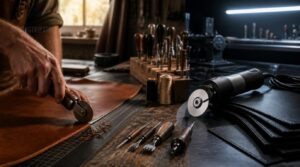
Manual and electric cutters each earn their place in a leather workshop, but they’re not interchangeable. Your choice comes down to project size, cutting volume, and how much noise your workspace can handle. Let’s break down where each tool actually shines.
Control for Small Projects
Small leather projects reward a steady hand over raw power. A handheld rotary cutter gives you direct feedback on pressure and angle, so tight pattern pieces stay accurate.
That control mirrors good planning: defining objectives and managing scope early keeps small cuts purposeful. A 45mm rotary cutter with a precision-ground blade suits wallets, straps, or pouches—crafting precision one deliberate pass at a time, without the momentum overshoot electric tools bring.
Speed for Production Cutting
Production runs reward horsepower, not finesse. An electric rotary fabric cutter spinning at 2400RPM slices through stacked hides fast, boosting throughput efficiency without babying each pass.
Feed rate optimization matters here—synchronized conveyor systems and inline sensor monitoring keep cuts consistent while managing heat buildup. That’s industrial cutting power built for volume, so batch orders finish quicker without sacrificing edge quality.
Corded Electric Cutters
Plug in, and you get consistent power. A corded electric rotary cutter draws 600W to 1500W, so motor torque performance stays strong even under thick leather stacks.
That steady industrial power feed prevents voltage drop, while thermal protection stops overheating during long runs. Continuous operation at 2400RPM means your professional-grade stainless steel blade keeps cutting cleanly, batch after batch.
Cordless Cutting Options
Ever need to cut leather without hunting for an outlet? A cordless electric rotary cutter delivers that freedom, running on Li-ion battery performance rated 1.5–5.0Ah at 18V–20V.
- Cordless portability benefits for booth work or job sites
- Charging speed comparison: quick-charge kits refill in under 30 minutes
- Motor torque influence stays strong even mid-project
Battery runtime optimization keeps professional results consistent across sessions.
Noise and Workspace Needs
That whine of an electric rotary fabric cutter carries across a shop fast, so workspace zoning matters as much as blade choice.
| Tool Type | Typical Noise |
|---|---|
| Manual cutting tools | Near silent |
| Electric rotary cutter | Moderate hum |
| CGOLDENWALL motor | 2,400 RPM |
| HVAC target | Below 45 dB |
Keep electric equipment noise maintenance current, and add sound masking near shared benches to protect concentration.
Ergonomics and Safety Features
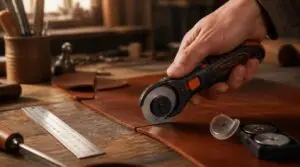
A cutter that fits your hand right won’t wear you down, even after hours of work. But comfort only matters if the tool also protects you when you set it down or reach for a blade change. Here’s what separates a safe, hand-friendly cutter from one that’s just asking for a nicked finger.
Soft-grip Handle Comfort
Your hand tells the truth by hour three: cheap plastic grips turn every cut into a chore.
Microcellular foam grips absorb impact so vibration never reaches your knuckles, while textured surfaces stop slippage when your palms sweat mid-project.
Look for cushioned zones at pressure points—that’s where fatigue actually starts. A proper ergonomic softgrip handle isn’t comfort for comfort’s sake; it’s control that lasts all afternoon.
Ambidextrous Cutter Designs
Left-handed leatherworkers know the frustration: most tools assume you’re right-handed.
Ambidextrous design fixes that with symmetric grip geometry and a reversible blade carriage—swap sides without tools.
- Balanced pivot alignment keeps cuts true
- Universal safety guards protect either hand equally
- Left-right friendly build suits shared workshops
A good rotary cutter for leather should feel natural for left and right-handed users alike, no compromises.
Automatic Blade Retraction
Automatic blade retraction pulls the edge back the instant you ease pressure, so your fingers stay clear between cuts.
A spring or cam return drives this, often triggered by surface contact, and reliable models react in milliseconds.
Debris jams can delay it, so wipe blades clean often.
That quick click you feel? That’s your tactile feedback confirming the blade’s safely tucked away.
Safety Lock Mechanisms
Retraction controls the moment between cuts, but a safety lock keeps the blade sealed during storage. Press the safety locking button, and mechanical latches or magnetic interlock systems confirm the guard’s seated before anything moves.
Bi-stable latch designs stay engaged until you deliberately release them. Redundant locking paths and solenoid safety interlocks add backup, while visual status indicators show locked versus unlocked at a glance—protecting user safety every time.
Guarded Blade Housings
Locks secure the blade, but the housing around it does the real daily work. A protective shield design wraps the edge in impact-resistant polymer or lightweight metal, absorbing bumps that would otherwise nick your blade or your knuckles.
Quick-release mounting swaps housings fast between projects. Keep internal lubrication light and regular—dry housings grind blades down and shorten every safety mechanism’s lifespan, locking button included.
Cutting Mats and Accessories
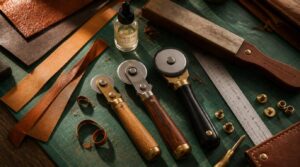
A great blade only performs as well as what’s backing it up. Your cutting surface, straight edges, and blade care habits all shape the quality of every cut you make. Here’s what belongs in your leatherworking kit alongside that rotary cutter.
Self-healing Cutting Mats
Skip the cardboard scraps — a self-healing cutting mat belongs in every leatherwork toolbox. Its layered polymer surface reseals itself after each pass, keeping your precise edges sharp and your blade happy.
Warmer rooms speed up that healing rate, so work somewhere comfortable. Wipe with a damp cloth, store flat, and skip solvents — simple habits that keep the surface performing for years.
Metal Rulers for Leather
A good ruler makes or breaks your line before the blade ever touches leather.
Look for stainless steel rigidity with non-slip cork backing — it won’t slide mid-cut. Dual scale (metric/imperial) markings help with pattern transfer.
- Precision machining for flat edges
- Corner alignment tools built into L-shaped designs
- 0.5mm tolerance accuracy
- Beveled edges resist snagging
- Corrosion-resistant coatings
Your rotary cutter for leather deserves a guide this reliable.
Pattern Weights and Clips
Pinning leather causes permanent holes, so pattern weights are your workaround. Steel or cast iron disks add serious hold on curled hides, while resin weights stay light for thin cutting tools work.
DIY it with washers wrapped in felt. Place weights at corners first, then edges, checking every few cuts — this keeps your rotary cutter for leather tracking straight without denting the material.
Spare Blade Storage
Loose blades in a drawer turn into a hazard fast. A magnetic strip keeps spares upright in vertical orientation, so edges stay sharp and fingers stay safe.
Prefer visibility? Try pegboard organization with labeled slots, or a compartmentalized storage box sized for 18mm, 28mm, and 45mm blades. Add a frosted cabinet for dust protection, and your blade maintenance routine stays easy.
Blade Disposal Containers
Where do dull blades go once they’ve done their job? Not the trash, unless you enjoy puncture risks.
A puncture resistant design with twist-lock lid makes safe disposal methods easy.
- Slot openings limit exposure
- Reinforced bases resist crushing
- Fill indicators flag capacity
- Locks deter tampering
- Industrial totes suit high-volume shops
Container durability and workshop safety compliance matter for daily blade maintenance and tool maintenance routines alike.
Choosing The Right Leather Cutter
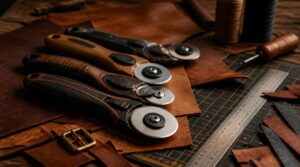
The right cutter depends on what you’re cutting and how often you’re cutting it. A weekend hobbyist and a full-time production shop need different tools, even if the leather looks the same. Match your budget, project type, and workload to the picks below, and you’ll skip the trial-and-error phase entirely.
Budget Versus Professional Use
Your project frequency decides your spend. A budget rotary cutter with a 45mm blade suits occasional hobbyist needs, running light and cheap on plastic housings.
But daily cutting demands professional grade tools—reinforced bodies, micro-adjustable alignment, and stronger steel that extends tool longevity. That 20-60% price jump pays off through professional efficiency and lower long-term value costs, making the investment comparison clear for serious leatherworking equipment.
Best for Sewing Projects
Sewing garments or mixed fabric-leather projects? Grab a 45mm rotary cutter with interchangeable blades. It delivers precise seam allowances and reliable fabric fraying prevention on woven materials, while ergonomic grips support long sessions.
Swap blades often to maintain sharpness—dull edges tear delicate fabric instead of slicing it. For speed and control together, this size grips most sewing crafting tools demand, saving thick hide cutting for dedicated leatherworking equipment.
Best for Thick Hides
Switch gears from garment work, and thick tooling leather demands raw power. A 60mm rotary cutter with carbide edge blades cuts through saddle leather and multilayer stacks without dulling.
- High-torque motors prevent stalling
- Slower feed rates manage cutting heat
- Hardened shanks resist bending
Electric rotary cutters meet blade torque requirements standard hand tools can’t match against dense material.
Best for Precision Cuts
Precision work rewards the best rotary cutter for leather with tight tolerances, not raw power. Choose a 45mm rotary cutter with a precisionground blade and minimal kerf—edge geometry keeps outlines from wandering on curves.
Micro-adjustable housings and locking mechanisms maintain blade perpendicularity, while vibration dampening grips steady your hand. Professionalgrade stainless steel holds edge quality through detailed trimming sessions.
Best for Frequent Cutting
Repetition changes what you need most: consistency over precision. Grab a 45mm cutter with an interchangeable blade system so swaps don’t interrupt your rhythm—this keeps blade replacement efficiency high during long runs.
Look for consistent cut depth settings and professionalgrade stainless steel that resists dulling. Non-slip grips reduce hand fatigue, letting you maintain pattern accuracy pass after pass without slowing down.
Frequently Asked Questions (FAQs)
Do rotary cutters work on leather?
Yes, but with limits. Leather thickness determines success — rotary cutter effectiveness peaks on soft, chrome-tanned hides under 2mm. Thick hides resist clean cuts due to material resistance, so match your blade choice to the project for the best leather compatibility.
What is the best tool for cutting leather?
Picture a blade gliding through hide like a knife through soft butter — that’s control. The best rotary cutter for leather is a sharp 45mm manual model for everyday cuts, paired with a 60mm for thick hides.
Will Fiskars rotary cutter cut leather?
Your 45mm rotary cutter works well on soft, chrome-tanned leather under 2mm with steady passes.
Blade thickness limits mean thicker hides need a 60mm blade instead—precision trimming stays sharp when material thickness stays thin and workable.
What are the different types of rotary cutters?
Cutting corners? Not with these tools.
Rotary cutters fall into two camps: manual vs electric, and blade diameter varies from 18mm to 60mm.
Manual cutters give hands-on control; electric rotary cutters, like corded or cordless models, speed up production cutting.
How often should you replace a rotary cutter blade?
Watch for jagged edges or dragging cuts — that’s your sign. Medium leather runs 20–40 hours between changes; thick hides demand swaps every 5–15 hours. Quality blades keep an edge longer, but skipped sharpening always beats forcing a dull one.
Can rotary cutters cut multiple leather layers at once?
Slicing through several hides simultaneously demands layer alignment and steady pressure.
A sharp 45mm blade can cut through 2–4 thin layers, while thick tooling leather limits stack height—an electric rotary cutter keeps cutting force consistent, preventing edge fraying across multiple layers.
Whats the average lifespan of a leather cutting mat?
Expect 12 to 18 months with moderate use, though heavy daily cutting drops that to 6-12 months. Blade sharpness, storage conditions, and mat thickness all affect durability—thicker 5mm mats simply outlast thin ones in any workshop.
Are rotary cutters safe for beginners to use?
Better safe than sorry: yes, with beginner safety habits in place. Choose a safety locking button, keep fingers clear, use a ruler guide, and always cut on a sturdy mat.
How do you sharpen a rotary cutter blade at home?
Lock the blade first, then use 400–600 grit sandpaper at a 20-degree angle, heel to tip. Strop on leather with polishing compound to remove burrs. High-carbon steel keeps an edge longer—wear gloves throughout for safety.
Conclusion
A thousand clean cuts live inside the right blade, waiting for you to tap into them. The best rotary cutters for leatherwork won’t just slice hide — they’ll change how you work, turning ragged edges into confident, repeatable seams.
Match blade size to material, keep spares on hand, and let the wheel do what knives can’t: glide. Buy smart once, and every project after feels easy.
- https://tandyleather.com/products/craftool-r-easy-grip-rotary-cutter
- https://www.westernsporting.com/FE5230/rotary-cutter-for-leather-vinyl-fabric-very-sharp-for-cutting-longer-cuts.html
- https://www.famcut.com/blogs/updates/rotary-cutter-for-leather
- https://www.weaverleathersupply.com/products/rotary-cutter-60-mm
- https://solidrockknives.com/beginners-guide-to-leather-cutting-tools-choosing-the-right-knife-for-every-project