This site is supported by our readers. We may earn a commission, at no cost to you, if you purchase through links.
The difference between a crochet project that looks homemade and one that looks handcrafted often comes down to one thing—the edge. A clean, thoughtful border transforms a good blanket into a great one. It’s the finishing touch that tells everyone you meant business.
Crochet edging does more than decorate; it reinforces, frames, and gives your work a sense of completion that no amount of perfect stitching in the middle can replace.
Whether you’re a beginner finishing your first dishcloth or a seasoned crocheter ready to level up your blankets, mastering borders opens up a whole new layer of creative control.
Table Of Contents
Key Takeaways
- A clean, intentional border is what separates a homemade-looking project from one that looks truly handcrafted.
- Your edge prep matters as much as the border itself — block your piece, weave in ends, and lay a single crochet foundation row before you start.
- Different edging styles serve different purposes, so match your border to your project: scallops for softness, crab stitch for structure, lace for anything airy.
- Most edging problems — wavy edges, curling, uneven corners — come down to tension or stitch count, and a simple fix like dropping hook size or blocking can solve them without starting over.
What is Crochet Edging?
Crochet edging is exactly what it sounds like — the border you add around the edges of a finished project to give it a clean, polished look.
It’s the same idea behind professional edge finishing techniques in sewing — a good border takes something functional and makes it feel intentional.
It can be purely decorative, purely practical, or honestly both at the same time.
Here’s what you need to know to get started.
Definition and Purpose of Edging
Crochet edging is the finishing touch your project has been waiting for. It’s a line of stitches worked around the outer edge of a completed piece — and honestly, it transforms everything.
Beyond the visual framing it gives your work, edging benefits include edge reinforcement that keeps blankets and garments from stretching out. Think of crochet finishing as your project’s final power move.
Decorative Vs. Functional Crochet Borders
Not all borders pull equal weight. Decorative crochet borders — think shells, fans, and lacy crochet edging patterns — create visual balance and bring tips to life, framing your work beautifully.
Functional border patterns keep edges firm and flat. Your crochet stitch choices and yarn weight considerations shape both edge texture effects and durability.
Pick border style options that match what your project actually needs.
Common Projects for Crochet Edging
Once you know what your border needs to do, it’s easier to match it to the right project. Baby blankets and nursery decor love soft, rounded crochet border designs.
Blanket edging and home decor pieces shine with bold crochet edging patterns.
Garment edging needs structure. Even crochet accessories like bags and pouches benefit from clean crochet borders and simple crochet edging techniques.
Essential Tools and Materials for Crochet Edging
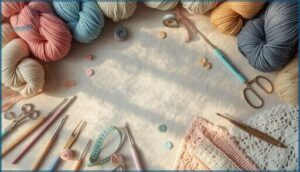
Before you crochet a single stitch of edging, you need the right stuff in your corner. Nothing’s more frustrating than starting a border and realizing halfway through that your hook is wrong or your yarn is fighting you.
Here’s exactly what you need to set yourself up for success.
Recommended Yarn Types and Weights
Your yarn selection sets the tone for everything. Yarn Fiber Choices matter more than most people realize — cotton keeps borders crisp, acrylic stays budget-friendly and washable, while wool gives natural stretch.
Once you’ve picked your fiber, use this stitch count formula for any project width to make sure your yarn choice and gauge actually translate into the right fit.
For Weight Selection, match your edging yarn to your project weight. Worsted weight works great for blankets.
Texture Mixing and smart Color Coordination turn a simple border into a statement. Own that edge.
Choosing The Right Crochet Hook
Your hook is the whole game. Get this wrong and even beautiful yarn falls flat. Here’s what actually matters:
- Hook Size Matters — worsted yarn loves a 5–6 mm hook; fingering yarn needs 2.25–3.5 mm.
- Hook Materials — metal glides fast; bamboo grips slippery yarn beautifully.
- Ergonomic Grips — long edging sessions demand comfort.
- Tapered Tips — easier entry into tight crochet stitches.
Notions and Accessories Needed
Small tools make a big difference. Stitch markers keep your corners honest and your repeats even. Yarn needles and a big needle handle weaving in those tails cleanly. Blocking tools open up lacy edges beautifully. Measuring tapes confirm both sides match. Scissors, of course. And storage bags keep everything together so your crochet hook and yarn are always ready to go.
How to Start Crochet Edging
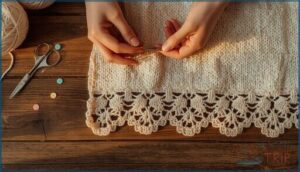
Starting your edging the right way makes everything else click into place. It’s less about flawlessness and more about knowing a few key moves before you pick up your hook.
Here’s what you need to get going.
Preparing Your Project for Edging
Before you stitch a single border, your project needs a little prep love. Start by blocking fabric so everything lies flat and behaves. Weave in every loose end — seriously, don’t skip this. Measuring edges and smoothing corners takes five minutes but saves major headaches later. Reinforce any delicate seams if needed.
These blanket-making tips aren’t busywork; they’re what separates a beautiful finish from a frustrating mess.
Establishing a Foundation Row
Think of a foundation row as your crochet border’s best friend — it gives every edging pattern a clean, solid place to land. Your stitch choice matters here. Single crochet is a go-to for border preparation because it keeps edge tension in check.
Without this base row, even beautiful crochet stitches can pucker, flare, or just look sloppy.
Evenly Spacing Stitches on Edges
Even spacing is what separates a polished crochet border from a wavy mess. Get this right and your edging pattern will lie flat every time.
- Start with Edge Measurement — measure each side in inches first
- Use Stitch Markers to divide edges into equal sections
- Apply consistent Row Ratios — two border stitches per double crochet row
- Watch your Hook Placement — always catch two strands cleanly
- Check Border Tension flat on a table every few inches
Tips for Neat Corners and Joins
Corners can make or break your crochet border. For clean corner stitch techniques, work three stitches into the same corner space so edges turn without pulling. Use a stitch marker to catch hidden corner stitches — miss one and a whole side distorts.
Invisible joins beat slip stitches on final rounds of scalloped edge or lacy crochet edging patterns.
For corner color changes, join new yarn right in the corner chain space and pull snug.
Popular Crochet Edging Patterns and Techniques
Now comes the fun part — picking your pattern. There are so many edging styles out there, and each one gives your project a totally different feel.
Here are some of the most popular ones worth knowing.
Scalloped Edge Step-by-Step
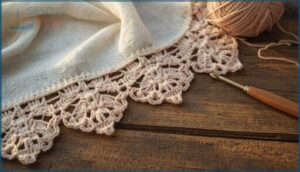
The scalloped edge is one of those crochet edging patterns that looks fancy but isn’t.
Start with a foundation round of single crochet along your edge. Then work your scallop stitch repeat: one single crochet, skip two stitches, five double crochets into the next. That fan shape? That’s your scallop edging forming right there.
Finish by weaving in your ends, and you’re done.
Rolling Fans and Shell Borders
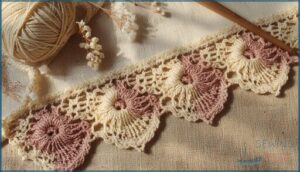
Rolling fans take that scallop energy up a notch. This rolling fans border works in overlapping shells — chain three, skip two stitches back, slip stitch, then work six double crochets into that chain space. Each fan leans into the next, creating gorgeous crochet wave designs.
Shell border tips: your stitch count needs to be a multiple of three. That’s your border stitch mathematics, keeping everything neat.
Crab Stitch (Reverse Single Crochet) Border
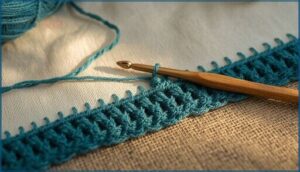
Now here’s where crochet borders get a little rebellious — the crab stitch border works backward. That’s right, reverse single crochet moves right to left, twisting each stitch into a firm, corded ridge. It’s an edging texture that means business.
Key crab stitch tips to nail it:
- Work one clean foundation round first
- Keep tension relaxed — the reverse crochet motion naturally tightens
- Add extra stitches at corners to prevent cupping
- Match yarn weight for consistent stitch density
- Use contrasting color for bold border variations
Pom Pom and Bobble Edging Methods
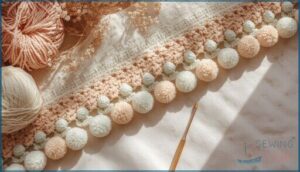
Want to add some serious personality to your project? Pom pom and bobble edging methods are where the fun really starts. Pom pom construction usually stacks two puff stitches, secured with a slip stitch, while bobble stitch clusters five partial double crochets into one satisfying bump.
Solid edge preparation and consistent stitch spacing keep both border variations lying flat and looking sharp.
Lacy, Picot, and 3D Flower Borders
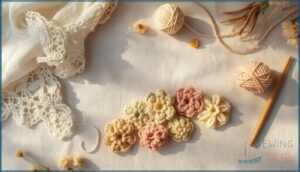
These three border designs each bring something different to the table — and knowing when to use them is half the battle.
- Lacy Edge – Open chain spaces keep it airy and light, perfect for shawls.
- Picot Stitch – Tiny knotted points add a delicate picot edge without bulk.
- 3D Flower Edging – Raised petals make flower borders truly pop.
Mix these crochet edging patterns boldly.
Troubleshooting and Customizing Crochet Edging
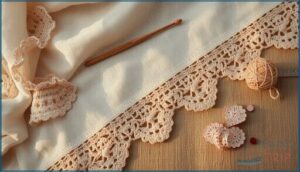
Even the prettiest edging can go sideways sometimes — and that’s totally normal. The good news is that most problems have a simple fix, and there’s always room to make a border feel more like you.
Here’s what you need to know to troubleshoot, tweak, and personalize your edging.
Fixing Uneven or Wavy Edges
Wavy crochet edging usually means one thing — too many stitches fighting for space. Start with a solid Foundation Border of single crochet all the way around to create an even base.
From there, Edge Tension Control matters: try dropping down a hook size. Blocking Techniques like wet blocking or light steam can also rescue a rippled crochet blanket edging without frogging a single stitch.
Adjusting Stitch Count for Different Projects
Not every project plays by the same rules — and that’s where your stitch count becomes your secret weapon. Master these four adjustments and your crochet edging will always land perfectly:
- Match your border multiples to the pattern repeat
- Dial in your stitch ratio for knit or woven fabric
- Add extra corner adjustments so edges lie flat
- Swatch first when switching yarn weight
Mixing Colors and Textures in Edging
Color is where your crochet edging stops being just a border and starts making a statement. Nail your color palette first — three to five shades repeated consistently wins every time. Then play with texture mixing and yarn weight for depth.
| Combo | Effect | Best For |
|---|---|---|
| Smooth + Mohair | Soft halo | Baby blankets |
| High contrast colors | Bold, defined edges | Geometric borders |
| Light-to-dark gradient | Fade/ombre effect | Decorative edges |
Swatching before you commit saves serious headaches.
Creative Ways to Personalize Borders
Your border is your signature — so own it. Stitch initials or a birth date using filet blocks for customized text that becomes a keepsake. Add beaded accents at corner spaces for subtle sparkle.
Your border is your signature — stitch your initials, dates, or beaded accents to make it unforgettable
Weave in fabric embellishments or themed edging motifs to match a nursery or holiday vibe. With the right crochet edging techniques, your crochet border patterns stop blending in and start standing out.
Frequently Asked Questions (FAQs)
What is a crochet border & edging?
A crochet border is a band of stitches worked around your finished piece to frame it neatly. Think of it as the final flourish — edge finishing that turns “almost done” into truly complete.
How to identify problems with crochet edges?
Your edge is basically tattling on your technique. Wavy borders scream too many stitches. Curling means tension’s too tight. Trust what you see — flat fabric never lies.
What is a simple crochet edging?
A simple crochet edging is a narrow border worked around your finished piece using basic stitches.
It frames blankets, shawls, and dishcloths with a clean, polished finish — no fuss, just results.
What crochet edgings can be used on a Afghan?
Afghans look stunning with Scallop Edges, Shell Borders, Bobble Trims, Lace Edgings, or Pom Pom Frames.
Each crochet edging style suits different blanket edging needs, so pick what fits your vibe.
How long does it take to crochet a border?
Border time is like a road trip — it depends on how far you’re going. A baby blanket border might take an hour. A throw? Expect two to four.
What types of stitches are used for crochet borders?
You’ve got plenty of crochet stitches to choose from — single crochet, shell borders, scallop stitches, picot edging, bobble stitch, and crab stitch are all popular crochet border options worth trying.
Can I use a different yarn for the border?
Yes, you can! Just keep yarn weight close to your main fabric.
Gauge matching matters — mismatched weights can cause pulling or rippling. Test a small swatch first to keep your crochet borders looking clean.
What is the best way to finish a crochet border?
Finishing clean comes down to smart yarn tail management and a solid invisible join. Slip stitch the last round shut, trim a 6-inch tail, then weave it in securely — done.
Can I adjust the size of the crochet border?
You have more control than you think. Tweak the border width by adjusting hook size, yarn selection, or stitch adjustment — simple crochet techniques that make edging resizing straightforward for any crochet blanket edging project.
How do you fix uneven crochet edges?
Count your stitches, check your edge tension, and block the finished piece. Simple border corrections — like a single crochet round — can mask minor stitch count issues without ripping everything out.
Conclusion
You spent hours perfecting every stitch, only to slap on a rushed edge and call it done. Clever strategy.
Here’s the truth: crochet edging isn’t the afterthought—it’s the announcement. It tells the world you finished with intention, not desperation. Pick your border, trust your hands, and stop treating the edge like a chore. That final row is where your project stops looking made and starts looking yours. Own it completely.
- https://www.marymaxim.com/blogs/crochet/how-to-fix-uneven-crochet-blankets
- https://knitterknotter.com/25-crochet-borders-for-blankets/
- https://crochetpedia.com/crochet-edging-patterns/
- https://mariasbluecrayon.com/2019/06/blanketborders.html
- https://www.jessieathome.com/how-to-crochet-along-edge-tutorial/