This site is supported by our readers. We may earn a commission, at no cost to you, if you purchase through links.
Every sewist has that one zipper that refuses to behave—wavering topstitch, little bubbles along the tape, a wobble you spot from across the room.
The fix isn’t another fancy foot, it’s the backstitch zipper installation method, done slowly, stitch by stitch, with a hand needle.
Backstitching lets you steer every millimeter, lock in the seam, and control how stress travels through the garment, so the zipper glides instead of fights.
Once you feel that solid, hand‑sewn line under your fingers, you’ll see why it becomes the go‑to technique for precise, clean zippers on your best projects.
Table Of Contents
Key Takeaways
- Hand-sewing a zipper with backstitch gives you stitch-by-stitch control that no machine foot can match, making it your best tool for clean, precise results on special projects.
- Prepping your fabric properly — pressing edges flat, marking seam allowances carefully, and basting before you commit — is what separates a smooth install from one you’ll want to unpick.
- The right tools matter: a sharp size 8–10 needle, 40–50‑wt polyester thread, and lightweight interfacing for your fabric type will carry you most of the way there.
- Locking down both zipper ends with short, tight anchor stitches isn’t optional — it’s what keeps your work holding strong through real‑world wear and washing.
What is The Backstitch Zipper Installation Method?
The backstitch zipper installation method is one of those hand‑sewing skills that quietly changes everything about how your finished pieces look and hold up. It gives you full control over every stitch, making it a go‑to technique for custom work, repairs, and garments that need a clean, precise result.
If you want to take it even further, hand stitching an invisible zipper is absolutely doable and can yield results just as polished as any machine finish.
Here’s what you need to know to understand it, use it well, and know exactly when it’s the right call.
Definition and Purpose
Precision defines the backstitch zipper installation method: you use a Hand Sewing Needle to work backward stitches along the tape, building quiet strength into your Garment Construction.
This Backstitch line shapes Seam Integrity, improves Load Distribution, and adds Durability Benefits and Stress Resistance.
Because of its broad Fabric Compatibility, it suits refined Sewing Techniques and custom Zipper Installation by hand.
Benefits of Backstitching for Zippers
Backstitching isn’t just a technique — it’s your zipper’s best defense. Each backward stitch creates durable seams that distribute stress evenly, so repeated opening and closing won’t wear your work down.
Backstitching is your zipper’s best defense, building durable seams that outlast every open and close
You’ll also get a professional finish that rivals ready-made garments, smooth glide for the slider, and repair ease later on. Your hand sewing needle is quietly doing serious work here.
When to Use The Backstitch Method
That strong, smooth finish is exactly why you reach for Backstitch during Zipper Installation in serious Garment Construction.
Use this Hand Sewing workhorse when:
- Heavy garment seams that endure daily strain and crotch stress
- Delicate fabric edges while repairing torn hems neatly
- crisp Embroidery outlines where visible sewing techniques must look intentional and stay beautiful wear after
The back stitch dates back to English Jacobean crewel work, a historic technique.
Tools and Materials Needed for Backstitch Zippers

Before you sew a single stitch, you need the right tools and materials on hand — skipping this step is how projects go sideways fast. Getting set up properly makes the whole process smoother, whether you’re a first‑timer or just trying a new technique.
A solid checklist — like this exposed zipper installation guide — saves you from mid-project scrambles when something’s missing.
Here’s exactly what you’ll need to get started.
Essential Hand-Sewing Tools
Good tools make the difference between a zipper you’re proud of and one you hide with a scarf.
Here’s what you’ll need for sewing a zipper by hand like a pro:
| Tool | Purpose | Pro Tip |
|---|---|---|
| Sharp hand needle | Pierces fabric cleanly | Use a size 8–10 sharp |
| Needle Threader | Guides thread through tiny eyes | Essential for fine thread |
| Thimble | Protects your pushing finger — Thimble selection matters | Choose snug-fitting metal |
| Seam Ripper | Seam Ripper techniques save misaligned work fast | Keep one always close |
| Pin Cushion | Pin cushion organization keeps pins reachable | Pins or sewing clips both work |
Think of these as your zipper installation guide toolkit — each one earning its place.
Remember to select a zipper at least 2 inches longer than the opening for smooth installation.
Choosing The Right Zipper Type
When you choose zipper types for backstitching, you’re deciding how the opening looks. Think in layers: Zipper Tooth Types, Zipper Size Selection, Visibility Considerations, Opening Style Match, and Material Compatibility.
- Coil suits curves; metal or molded resists stress.
- Closed‑end or separating depends on Opening Style Match.
- Invisible zippers vanish; exposed zippers highlight hardware.
- Centered zippers balance; lapped zippers cover teeth.
Recommended Fabrics and Notions
Think fabric choice first: Cotton Compatibility means cotton and linen need Linen Edge Finishing so they don’t fray into your backstitch line.
For slippery silks, Silk Stabilization with light interfacing protects the seam allowance.
Denim Reinforcement calls for heavy thread type and sturdy zippers, while Knit Interfacing keeps stretchy knits steady; pair these with a zipper foot for control everywhere.
Preparing Fabric and Zipper for Installation

Before you take a single stitch, you’ll want your fabric and zipper set up the right way.
This is where a few small prep steps—marking, pressing, and positioning—make the actual backstitching feel smooth and predictable.
Here’s what to do before you start sewing the zipper in.
Measuring and Marking The Seam Allowance
Precise seam allowance marking is where confident zipper installation begins. Start by deciding your Seam Allowance Width—3/8 inch for casual, 3/4 inch for custom—and use careful Precision Ruler Use along the opening.
Smart Marking Tools Selection plus Double Tracing Verification keep:
- knit Fabric Stretch Compensation in check
- Sewing Zipper by Hand predictable
- backstitch sewing techniques perfectly aligned
Pressing and Stabilizing Fabric Edges
Flat edges are your best friend before a single backstitch touches that zipper.
Start with Steam Press Techniques—hold your iron just above the seam line, letting the steam relax the fibers flat.
Then apply Edge Interfacing Choices suited to your fabric weight, fusing light stabilizer to prevent puckering.
Tape and Baste Methods lock everything in place, while Stay Stitch Placement along curved edges keeps the fabric honest throughout zipper installation.
Aligning and Securing The Zipper
Getting the zipper lined up right is honestly where the magic happens — or where things go sideways fast.
Center the zipper tape over your seam allowance, then use Seam Guide Marking with chalk to keep everything even. Secure fabric pieces with pins or sewing clips — never both together.
- Apply Edge Interfacing Application behind fragile zones
- Match thread using Thread Matching Strategies for invisible results
- Check Needle Tension Adjustment before your first backstitch
- Use Zipper Foot Technique to stitch close without catching teeth
Step-by-Step Backstitch Zipper Installation
Now it’s time to put needle and thread to work.
In this section, you’ll walk through each stage of installing your zipper by hand so you always know what comes next.
Use the steps below as your simple roadmap from first stitch to fully secure zipper.
Basting The Zipper Opening
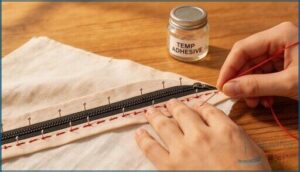
Before your first permanent stitch goes in, basting the zipper opening is your safety net. Use contrasting thread for easy removal later, with a basting stitch length of 3–4 mm to keep things stable but removable.
Not a fan of hand stitching? A temporary adhesive alternative works great too. Add a muslin stabilizer on delicate fabrics, and rely on basting pin placement to keep everything perfectly aligned.
Hand-Sewing The Zipper With Backstitch
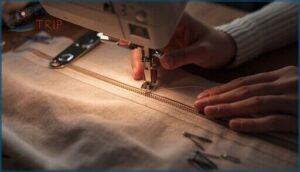
With your basting holding things steady, you’re ready for true Hand‑Sewing.
Use fine needles (Needle Selection around size 9–12) and polyester thread, then work a Backstitch along the tape, 1–2 mm in length with moderate Thread Tension for Seam Stabilization.
These Sewing Techniques mirror careful Zipper Foot Usage and support tidy Finish Detailing and long‑term Zipper Care during Zipper Installation.
Anchoring Stitches at Zipper Ends
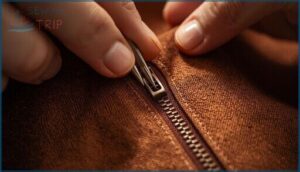
Once your Backstitch line feels steady, shift your focus to securing both ends of the Zipper.
Place anchors right where the tape meets the Seam allowance, using short Backstitch Knot Variations spaced 2–3 mm apart for End Stop Reinforcement. Moderate Thread Tension Settings, smart Stabilizer Placement Techniques, and mindful Anchor Stitch Spacing turn simple Sewing Techniques into reliable Zipper Installation.
Troubleshooting and Finishing Techniques
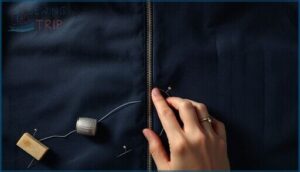
Even with careful hand‑sewing, your zipper can still pucker, shift, or feel a bit fragile at the ends.
In this next section, you’ll learn how to catch those issues and finish your backstitched zipper so it looks clean and feels secure. Think of the points below as a quick checklist to run through every time you install a zipper by hand.
Preventing Puckering and Misalignment
Even the tidiest backstitch can pucker if your tension or zipper alignment is off — but these fixes are simpler than you’d think. Here’s what to check:
- Tension Control – Loosen your hand tension slightly; tight stitches pull fabric.
- Seam Stabilization – Apply lightweight fabric interfacing near the seam allowance to prevent stretching.
- Zipper Alignment – Pin teeth parallel to your stitching line before sewing.
- Needle Selection – A finer needle reduces fabric distortion.
- Fabric Choice – Test stitching techniques on scraps first.
Reinforcing Zipper Ends for Durability
Once your stitches are looking clean, locking in the zipper ends is what separates a good project from a lasting one.
Use a tight backstitch end anchor — four to six small stitches just past the zipper stop — to resist pulling during wear and washing.
Threaded zipper tabs, tape reinforcement techniques, and interfacing stabilizers all add serious staying power where stress hits hardest.
Final Pressing and Seam Finishing
Finally, polish your zipper installation with pressing techniques and seam finishing so everything lies flat and looks intentional.
- Do seam allowance trimming so the seam allowance lies flat.
- Add Pressing Ham Usage plus steam or cloth on curves.
- Use Edge Stitching Techniques and invisible topstitching near the zipper teeth.
- Prioritize Finishing Thread Management; clip, tuck, and remove strays.
- Check each backstitch, then re‑press for smooth seam finishing.
Frequently Asked Questions (FAQs)
Can I backstitch a zipper on stretchy fabric?
Yes, you can! Hand-sewing a zipper on stretchy fabric works beautifully with the right needle selection, proper thread tension, and a stabilizer to prevent fabric distortion along the seam allowance.
How do I fix a broken zipper pull?
A broken zipper pull doesn’t have to end your project. Thread a key ring through the slider for Temporary Pull Fixes, or use Universal Pull Replacement kits.
Apply Graphite Lubrication for smoother zipper repair.
What thread weight works best for zippers?
For most zippers, 40–50 wt polyester thread hits the sweet spot — strong enough for Thread‑Zipper Matching, smooth enough for clean seams.
Match your thread weight to your fabric weight, and you’re already halfway there.
Can backstitch replace a machine-sewn zipper permanently?
Backstitch can hold its own in light to medium fabrics, but for high-stress closures, machine stitching wins on durability.
Think of it as a smart repair solution, not a permanent replacement.
How do I sew a zipper into curved seams?
Ease the curve first by clipping small notches into the seam allowance, then stabilize with interfacing selection before aligning the zipper tape.
Slow needle choice and careful tape tension keep everything smooth.
Conclusion
stubborn zipper that haunted your best projects? It just met its match.
The backstitch zipper installation method hands you something no machine foot ever can—absolute control, stitch by deliberate stitch.
You’ve learned to measure, stabilize, align, and anchor with intention.
Now that neat, solid line of hand‑sewn backstitches isn’t just holding your zipper in place; it’s holding your confidence there too.
Trust the process, trust your hands, and trust the finish.
- http://www.craftsy.com/ext/JoanHawley_5189_H1
- https://www.bernina.com/en-US/Machines-US/Series-Overview/NEW-BERNINA-5-Series/BERNINA-570-QE?utm_source=weallsew&utm_medium=blog&utm_campaign=zippers_3_ways
- https://blog.wawak.com/post/guide-to-zipper-types
- https://www.mh-chine.com/blog/products/how-to-size-a-zipper
- https://zipupzipper.net/blogs/news/separating-vs-closed-zippers-guide