This site is supported by our readers. We may earn a commission, at no cost to you, if you purchase through links.

A tangled cord mid-seam press is the kind of small frustration that quietly ruins your workflow. You lose your place, the fabric shifts, and suddenly that perfect quarter-inch seam needs fixing.
Cordless irons solve this specific problem—and quilters who’ve switched rarely go back.
Models like the Panasonic NI-QL1000A and OMAIGA now deliver 60 seconds of cordless heat, burst steam up to 0.8 g/press, and soleplates that glide in any direction without repositioning your fabric.
The right iron makes seams crisper and blocks flatter with noticeably less effort. These eight picks cover every budget and quilting style.
Table Of Contents
8 Best Cordless Irons for Quilting Sewing
Finding the right cordless iron can make a real difference in how smoothly your quilting sessions go. Each pick on this list was chosen for how it actually performs — not just what the spec sheet says.
If you’re looking to upgrade your entire setup, this guide to the best ironing boards for quilters breaks down which features really matter for perfect pressing.
eight solid options worth your attention.
1. Panasonic Cordless 360 Steam Iron
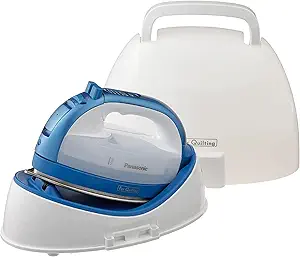
The Panasonic NI-QL1000A is the iron quilters keep talking about — and honestly, for good reason. Its curved, nickel-coated stainless steel soleplate glides effortlessly in any direction, so you’re not fighting the iron around tight seams.
The double-tipped design gets into corners where single-tip irons just won’t cut it.
Auto shut-off kicks in after 30 minutes, which is a nice safety net. At $119.99, it’s an investment, but the 360° freedom alone changes how you work at the pressing table.
| Best For | Quilters, sewers, and fabric crafters who want total freedom of movement without a cord getting in the way. |
|---|---|
| Cordless Operation | Yes |
| Automatic Shut-Off | Yes |
| Steam Function | Yes |
| Non-Stick Soleplate | Yes |
| Portable Design | Yes |
| Warranty | Limited |
| Additional Features |
|
- Glides in any direction — no repositioning, no fighting the cord mid-project
- Double-tipped soleplate nails tight corners, seams, and collars with real precision
- Anti-drip design plus auto shut-off make it safe and fabric-friendly for long sessions
- Has to stay plugged into the base while in use, so it’s not truly wireless on the go
- On the heavier side, which can wear on your wrist during extended pressing
- Some users have hit reliability issues around the 13-month mark, often just past warranty coverage
2. Bo-nash Iron Cleaning Sheets
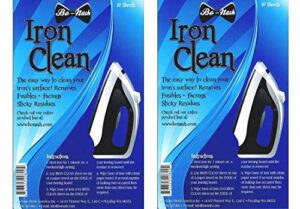
Keeping that Panasonic soleplate clean is half the battle. Bo-Nash Iron Cleaning Sheets make that job quick and painless.
Each pack includes 10 pre-moistened sheets — you get 20 total in a two-pack.
Just heat your iron to medium-high, set a sheet on a paper towel, and wipe away fusible residue in seconds. No sprays, no strong smells. They won’t tackle heavy baked-on buildup, but for regular maintenance after appliqué sessions, they’re hard to beat.
| Best For | Quilters, sewers, and anyone who irons regularly and wants a fast, no-fuss way to keep their soleplate clean between projects. |
|---|---|
| Cordless Operation | No (cleaning sheets) |
| Automatic Shut-Off | No |
| Steam Function | No |
| Non-Stick Soleplate | No |
| Portable Design | Yes |
| Warranty | None |
| Additional Features |
|
- Quick and easy — just heat your iron, wipe over the sheet, and you’re done
- No sprays or strong odors, so it’s clean and pleasant to use
- Comes with 20 sheets total, giving you plenty for routine maintenance
- Won’t cut through heavy, baked-on or burnt residue — you’ll need a paste for that
- The sheet can shift around, so you might need an extra hand to keep things steady
- Results can vary, and stubborn buildup may eat through more than one sheet
3. Steamfast Portable Cordless Steam Iron
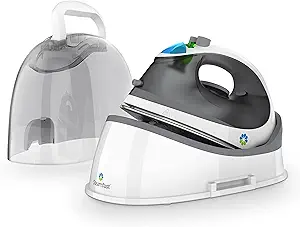
Once your soleplate is clean, you want an iron that moves freely — and the Steamfast SF-760 delivers exactly that. It reheats in about 7 seconds on its base, so your workflow barely skips a beat.
You get dry ironing, spray mist, burst steam, and vertical steam in one compact unit.
The 6-ounce tank covers a solid stretch of pressing before you need a refill.
Auto shut-off kicks in after 8 minutes, which is a nice safety net when you get absorbed in a project.
| Best For | Sewers, quilters, and travelers who need a lightweight, cord-free iron for quick pressing tasks and detail work. |
|---|---|
| Cordless Operation | Yes |
| Automatic Shut-Off | Yes |
| Steam Function | Yes |
| Non-Stick Soleplate | Yes |
| Portable Design | Yes |
| Warranty | None listed |
| Additional Features |
|
- Reheats in about 7 seconds, so you’re never waiting long to get back to work
- Four ironing modes (dry, spray mist, burst steam, vertical steam) in one compact iron
- Auto shut-off after 8 minutes gives you peace of mind when you’re deep in a project
- Heat only lasts 20–30 seconds per charge, so you’ll be returning to the base often on bigger jobs
- May struggle with heavy fabrics or stubborn wrinkles that need sustained high heat
- The temperature dial is easy to bump accidentally and the markings are hard to read
4. Panasonic Cordless Steam Dry Iron
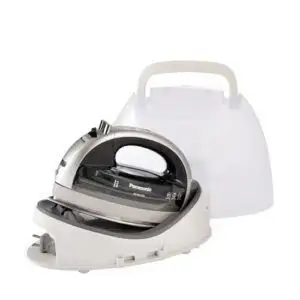
If you want more room to move, the Panasonic NI-WL600 takes cordless freedom seriously. Its 360° freestyle double-tipped stainless steel soleplate glides in any direction — no awkward repositioning mid-seam.
At 1500W, it heats across a wide range of 176°F to 392°F, so cotton, silk, and everything between stay in play.
The detachable tank refills without wrestling the whole unit to the sink. Anti-drip and anti-calcium systems do the quiet maintenance work for you.
| Best For | Anyone who irons frequently and wants the freedom to move around garments without a cord getting in the way — especially great for quilters, crafters, or anyone dealing with tricky collars and pleats. |
|---|---|
| Cordless Operation | Yes |
| Automatic Shut-Off | Yes |
| Steam Function | Yes |
| Non-Stick Soleplate | Yes |
| Portable Design | Yes |
| Warranty | 1-year |
| Additional Features |
|
- The 360° freestyle soleplate glides in every direction, so you’re never fighting the iron around buttons or seams
- Detachable water tank means you can refill at the sink without lugging the whole setup over
- Auto shut-off after 10 minutes gives you one less thing to worry about if you step away
- You have to return it to the charging base to keep it running, which can break your rhythm on bigger loads
- Slower than a traditional corded iron when tackling large piles of heavily wrinkled clothes
- It’s pricier than most corded options, so the cordless convenience comes at a cost
5. Panasonic Rose Gold Cordless Iron
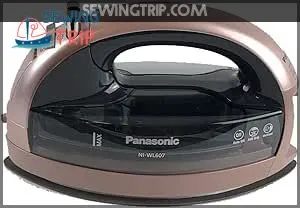
Sometimes, a tool earns its place in your kit by just being a pleasure to use. The Panasonic NI-WL607 Rose Gold cordless iron is exactly that.
For a side-by-side look at how it stacks up against other models, check out this comprehensive sewing machine and iron comparison chart.
At 1500W, it heats fast and stays ready. The double-pointed ceramic soleplate glides cleanly through tight seams without snagging.
You get steam, dry, and power-shot modes plus vertical steam for hanging pieces.
The retractable cord reel keeps your base tidy, and the detachable tank refills in seconds.
Auto shut-off kicks in after 10 minutes — smart and safe.
| Best For | Sewers, quilters, and anyone who wants a lightweight, maneuverable iron for garment touch-ups, collars, cuffs, and hanging fabrics. |
|---|---|
| Cordless Operation | Yes |
| Automatic Shut-Off | Yes |
| Steam Function | Yes |
| Non-Stick Soleplate | Yes |
| Portable Design | Yes |
| Warranty | None listed |
| Additional Features |
|
- Cordless design keeps your workspace clutter-free and makes it easy to move around freely while pressing
- Double-pointed ceramic soleplate glides smoothly and gets into tight spots like seams and collars with ease
- Vertical steam, power-shot, and detachable water tank make it genuinely versatile for both flat and hanging fabrics
- Has to sit on the cradle to heat up, so you’ll be walking back to the base more often than you’d like
- Too light for heavy fabrics like denim or thick linens — you just don’t get enough natural pressure
- Not really built for high-volume laundry; big loads of sheets and towels will take a while with that soleplate size
6. Panasonic Blue 360 Freestyle Cordless Iron
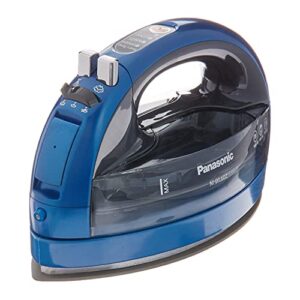
The Panasonic NI-WL602 in metallic blue is the one to grab if you hate fighting your iron for control. Its double-pointed ceramic soleplate moves in any direction — no repositioning, no wrestling fabric.
That 1500W base heats fast, and the anti-drip system keeps your light cottons spotless.
The detachable reservoir is small, so refills happen more often than you’d like.
But for precision quilting around tight seams and appliqué edges, this iron genuinely earns its place on your pressing table.
| Best For | Quilters, travelers, and anyone who wants full freedom of movement while ironing — especially around collars, cuffs, and tight seams. |
|---|---|
| Cordless Operation | Yes |
| Automatic Shut-Off | Yes |
| Steam Function | Yes |
| Non-Stick Soleplate | Yes |
| Portable Design | Yes |
| Warranty | 1-year |
| Additional Features |
|
- Double-pointed soleplate glides in any direction, so you’re not constantly repositioning fabric
- Cordless design is a game-changer for large items like curtains or hanging garments
- Auto shut-off adds peace of mind if you walk away and forget about it
- Small water tank means you’ll be refilling more than you’d expect during longer sessions
- Heat doesn’t last long off the base — you’ll need to redock every 30 seconds or so
- Getting it back on the cradle just right matters; a mis-dock and it starts cooling on you
7. OMAIGA Cordless Steam Iron
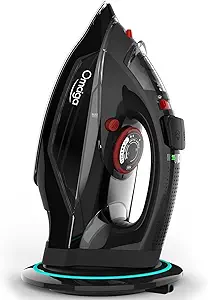
MAIGA Cordless Steam Iron gives you 60 full seconds of heat before you need to dock it again. That’s enough time to press an entire quilt block without stopping.
Its 1500W ceramic soleplate glides smoothly over cotton and blends, and the 350ml tank keeps steam flowing through a long sewing session.
Burst steam hits stubborn seams hard.
The 360° base docks from any angle — no fussing.
Just capable pressing power at a price that won’t hurt.
| Best For | Sewers, quilters, and anyone who wants to move freely around their workspace without a cord getting in the way. |
|---|---|
| Cordless Operation | Yes |
| Automatic Shut-Off | Yes |
| Steam Function | Yes |
| Non-Stick Soleplate | Yes |
| Portable Design | Yes |
| Warranty | 1-year |
| Additional Features |
|
- 60 seconds of cordless heat gives you plenty of time to press a full quilt block or garment piece without constantly returning to the base
- The ceramic soleplate and burst steam (0.8 g/press) handle everything from delicate silk to stubborn denim seams with ease
- A 350ml tank and 20 g/min continuous steam mean you can power through a full laundry basket before needing a refill
- Heat drops off fast once you’re off the base — frequent re-docking gets old quickly during longer ironing sessions
- Some users have reported water leaking from the tank or spout, which can be frustrating mid-session
- Durability is a question mark, with isolated reports of the unit failing after just a few months and only a one-year warranty to fall back on
8. Black Decker Light N Go Cordless Iron
The Black+Decker Light N Go ICL500C is the no-drama workhorse of this list. It hits 1500W and reaches the pressing temperature in about 10 seconds — faster than you can reposition your quilt block.
The ceramic non-stick soleplate glides cleanly, and vertical steam manages hanging garments between sewing sessions.
An 8-meter base cord gives you real reach. The green/red indicator light tells you exactly when it’s ready.
Simple, reliable, and backed by a 2-year warranty.
| Best For | Sewers, quilters, and anyone who needs a quick, cord-free iron for touch-ups, small batches, or hanging garments. |
|---|---|
| Cordless Operation | Yes |
| Automatic Shut-Off | Yes |
| Steam Function | Yes |
| Non-Stick Soleplate | Yes |
| Portable Design | Yes |
| Warranty | 1-year |
| Additional Features |
|
- Heats up in about 10 seconds, so you’re not standing around waiting
- Ceramic soleplate glides smoothly and the vertical steam is genuinely handy for hanging garments
- No cord to wrestle with, plus an 8-meter base cord gives you plenty of reach at the charging station
- Runtime is only a few minutes before it needs to go back on the base — frustrating for bigger ironing jobs
- Can feel heavy after a while, especially if your wrists give you trouble
- Battery performance tends to decline over time, meaning more frequent recharge breaks down the road
Cordless Iron Features That Matter
Not all cordless irons are built the same, and those differences really show up when you’re quilting.
A few key features separate the irons worth your money from the ones that’ll frustrate you mid-project.
Here’s what to look at before you buy.
How Cordless Irons Differ From Corded Irons
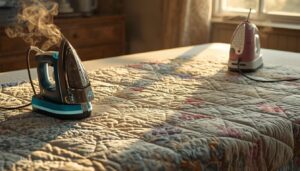
Think of a corded iron as a river — steady, endless power. A cordless iron is more like a well: incredibly convenient, but you’re drawing from a finite reserve.
A corded iron flows like a river; a cordless iron draws from a well — convenient, but finite
- Power Source: Cordless models use battery-charged bases; corded irons pull directly from the wall.
- Heat Stability: Corded irons hold temperature longer without frequent recharging interruptions.
- Steam Pressure: Corded units sustain higher, continuous steam pressure.
- Wireless Convenience: Cordless irons eliminate cord drag across large quilt tops entirely.
Corded irons provide continuous high heat for efficient ironing.
Soleplate Material
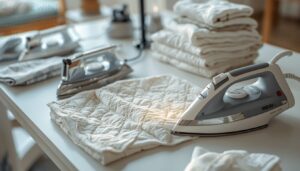
Your soleplate material shapes every press you make.
Stainless Steel Benefits include even heat distribution and smooth glide across cotton layers. Ceramic Glide protects delicate fabrics from scorching. Aluminum Lightness cuts fatigue during long sessions. Titanium Infusion resists scratching under heavy use.
A nonstick nickel-coated stainless steel soleplate — like on double-tipped Panasonic models — offers a solid Hybrid Coating balance between durability and glide.
Its high thermal conductivity allows rapid heat spread for consistent ironing.
Double-tipped Vs Single-tipped Design
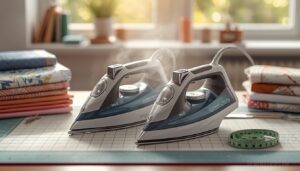
The soleplate material sets the stage — but the tip shape runs the show.
A doubletipped soleplate gives you a precision edge on both ends, so there’s no flipping or repositioning mid‑seam. Singletipped irons keep things simple and shed a bit of weight.
Here’s where each design wins:
- Tip Switching Speed — doubletipped irons eliminate tool swaps between wide and narrow seams
- Precision Edge — fine tips reach tight seam allowances without scorching surrounding fabric
- Balance Shift — dual tips redistribute weight slightly, but quality models stay controlled
- Fabric Compatibility — singletipped designs often suit delicate fabrics needing careful, focused heat
- Maintenance Complexity — doubletipped soleplates need regular cleaning on both grooves to prevent residue buildup
Reservoir Size and Steam Output
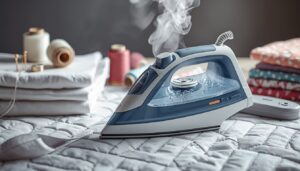
Once you’ve nailed your tip shape, the water reservoir becomes your next real decision. Larger tanks — think 180 to 350 ml — stretch your steam sessions without constant refill frequency interruptions.
Steam output normally runs 10 to 25 grams per minute, and the steam burst function delivers concentrated blasts for stubborn seams. Just watch your battery impact: heavy steam pressure drains charge noticeably faster.
Adjustable Temperature Control
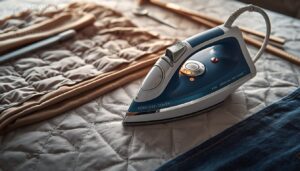
Your temperature dial selection matters more than most quilters realize. A range of 140°F to 400°F covers everything from silk to denim.
Sensor feedback and PID regulation keep heat within a few degrees of your target.
Memory presets save your favorite quilting temperature, while temperature lock prevents accidental changes mid-session.
Micro-stepping control makes fine-tuning heat settings for fabrics almost easy.
Anti-drip and Auto Shut-off Features
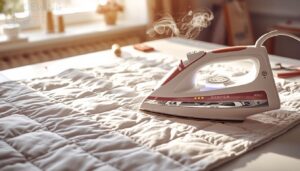
Once you’ve locked in your fabric temp, the last thing you want is a water spot ruining your seam. That’s where anti-drip and auto shutoff earn their keep.
A valve check system seals steam flow when heat dips too low.
Sensor-driven shutoff and auto shutoff timer kick in after 8–10 idle minutes.
Leak detection logic and the anti-drip seal protect your quilts automatically.
Heat Performance for Quilting

Heat performance can make or break your quilting session, especially when you’re working through a stack of blocks. Cordless irons handle this differently than corded ones, so the numbers actually matter here.
Here’s what to look at before you commit to a model.
Initial Heat-up Time
Every second you wait for your iron to heat up is a second you’re not quilting. Most cordless irons hit operating temperature in 45 to 75 seconds — faster with a warm room (Ambient Temperature Effect) and a full charge (Battery Charge Impact).
Preheat Cycle Optimization starts here:
- LED Readiness Indicator confirms when you’re actually ready
- Higher wattage cuts initial heatup time by 20–30 seconds
- Ceramic soleplates reach even heat within 30 seconds
- Thermal Mass Influence means heavier plates hold heat longer
- Warm ambient temps shave seconds off every preheat cycle
Reheat Speed on The Base
Once iron leaves the base, the clock starts.
Power Pulse Optimization kicks in the moment you dock it again — high-wattage models use short bursts to cut reheat time quickly.
Thermal Insulation Efficiency in the base traps residual warmth, while Sensor Feedback Latency determines how quickly controls respond.
Battery Charge Impact matters too — a low battery slows iron base heating noticeably.
Reheat Profile Tuning keeps heat retention for fabrics consistent.
How Long The Iron Stays Hot
Heat retention for fabrics depends on more than just wattage. Most cordless irons stay hot for 5 to 10 minutes, but Thermal Mass Effect and Ambient Temperature Impact both shorten that window quickly.
Steam Cooling Influence drops surface temp quickly, too — steam pulls heat away with every burst.
Heat Decay Rate stays slowest with 1500W models, giving you better heat consistency between seams.
Steam Consistency Between Reheats
Steam consistency between reheats is where most cordless irons quietly fail quilters. Uneven Nozzle Temperature Control and poor Steam Channel Balance create cold bursts that dampen seams unevenly.
Here’s what good Steam Valve Timing actually delivers:
- Thermal Sensor Feedback triggers the ready light within 2 seconds
- Pressure Stabilization holds output steady for up to 60 seconds
- Quick reheat time under 15 seconds maintains heat consistency
- Steam Channel Balance keeps steam output smooth across cycles
- Anti-drip valves prevent wet spots during reheat transitions
Dry Pressing for Crisp Seams
Dry pressing is your secret weapon for razor-sharp seams. Skip the steam, keep your temperature control dialed to medium, and let Seam Pressure Consistency do the heavy lifting. Fabric Grain Alignment matters here — press from the wrong side, let Cool Down Timing work, and always consider Pressing Cloth Choice to prevent shine.
| Technique | Tool Needed | Result |
|---|---|---|
| Wrong-side pressing | Cordless iron | No fabric shine |
| Grain alignment check | Straight edge | Square quilt blocks |
| Pressing cloth use | Lint-free cloth | Crisp, protected seams |
Heat Retention During Larger Quilt Sections
Working across a large quilt section? That’s where cordless irons really earn their keep — or expose their limits.
Your iron’s reheat time becomes critical here.
A large soleplate helps with Heat Distribution Uniformity, but Air Pocket Management and Loft Preservation Techniques matter too.
Dense seams trap heat; use temperature control at mid-range.
Layered Fabric Warmth and Seam Insulation Strategies improve when you keep heat retention considerations and consistent heat-up time in check.
Choosing The Right Quilting Iron
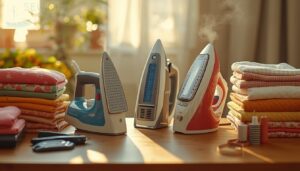
Picking the right iron isn’t just about wattage or price — it’s about how the iron actually fits your workflow.
A few key factors will make or break your experience at the pressing board. Here’s what to weigh before you buy.
Best Size for Quilt Blocks and Seams
Block grid planning starts with your finished block size. Most quilters work in 4, 6, 8, or 12-inch blocks — sizes that divide cleanly and minimize layout waste.
Seam allowance standards stay fixed at ¼ inch regardless of scale.
Wide stainless steel soleplate with 360 movement manages long seam pressing efficiently. For border block sizing and proportional block scaling, match your soleplate length to your most common block width.
Weight and Ergonomic Handling
Once you nail your block sizing, the iron in your hand matters just as much as the one on your table. A lightweight handheld iron in the 1.5–2.5 lb range makes a real difference over a long session.
- Balanced Weight Distribution keeps your wrist relaxed and guides motion steadily
- Contoured Grip Texture with vibration dampening material prevents slipping even with damp hands
- Stubby Handle Design with a slim neck improves seam visibility and control
Portability for Classes and Retreats
Taking your setup to a class or retreat is where portability really earns its place.
lightweight handheld iron with a compact carry case, travel sleeve protection, and a foldable charging base fits neatly into your travel bag.
USB‑C charging and quick battery swap options keep your battery life topped up between sessions.
Plus, low‑noise operation means you won’t disturb anyone mid‑demo.
Wattage and Voltage Considerations
Wattage and voltage aren’t glamorous topics — but they can make or break your cordless experience. Most quilting irons run between 1,000 and 1,800 watts. Get these five specs right:
- Wattage Impact: Higher wattage means faster heat-up
- Voltage Compatibility: US models use 110–120V; European irons need 220–240V
- Battery Power Management: Regulates current to prevent rapid drain
- Heat Efficiency Ratio: Balances wattage against battery life
- Power Supply Safety: verify voltage compatibility before plugging in
Base Design and Docking Convenience
The charging base does more than just recharge your iron — it keeps your whole workflow tight. Look for magnetic alignment so the iron seats perfectly every time, plus a thumb notch design for one‑handed docking.
An adjustable dock height and integrated water drain reduce mess.
The light on the base confirms readiness instantly. Fast charging time means less waiting, more pressing.
Budget Vs Premium Value
Budget-friendly cordless iron options can handle light quilting just fine — but they wear out faster.
Budget models generally last 1 to 3 years; premium irons stretch to 3 to 5 years.
Factor in total cost ownership, and premium often wins.
material longevity, performance consistency across reheats, longer warranty length, and stronger resale value make the upfront price easier to justify.
Care Tips for Longer Use
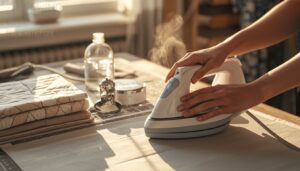
A good iron is an investment, and how you treat it between projects decides how long it lasts. A routine care goes a long way toward keeping your soleplate slick and your steam consistent.
Here’s what you need to know to protect your iron for the long haul.
Cleaning The Soleplate Safely
A dirty soleplate ruins fabric fast. After each session, do a quick microfiber dry wipe while the iron cools.
For stubborn spots on your nonstick soleplate or nickel-coated stainless steel surface, a baking soda paste works without scratching. Use vinegar dilution sparingly for mineral marks.
For steam hole care, a damp cotton swab keeps vents clear without forcing debris deeper.
Preventing Mineral Buildup
Mineral buildup is the silent killer of good steam. If your tap water is hard, consider Water Softener Use at the source — it keeps calcium out of your water reservoir before it ever touches your iron.
Distilled Water Benefits are real: refill your water tank with it, and your Descaling Routine gets much easier.
Regular Flushing after heavy sessions clears vents fast. Some models include a selfcleaning function or anticalc system built right in — use them.
Mineral Sensor Alerts on higher-end irons tell you when it’s time to act.
Reducing Leaks and Water Spotting
Water spots on dark fabric? That’s frustrating work undone.
Fill your water reservoir with distilled water only — it’s the simplest fix. A no-drip, anticalc system on models like the Panasonic NI-QL1000G manages the rest automatically. Keep water pressure between 40 and 60 psi at your source. Smart moisture sensors near your pressing area catch drips before they ruin your next quilt block.
Proper Storage for Iron and Base
Store your iron and its charging base like you’d treat a precision tool — because that’s exactly what it is.
- Keep humidity between 40–60% and use a dehumidifier if needed — rust-inhibiting coatings won’t save a soaking-wet docking station.
- Raise your iron base docking shelf at least 4 inches off the floor for ventilation strategies that actually work.
- Label your portable ironing solution storage spot with the date so you rotate stock properly.
How Long Cordless Irons Last
Good storage habits add months to your iron’s life — but how many years can you realistically expect? A well-maintained battery powered iron generally lasts two to three years before battery cycle life degrades noticeably.
Your soleplate wear, water tank seal condition, and control board longevity all factor in too.
Most brands offer a one to two year warranty period, so keep your receipt.
Signs It is Time to Replace Your Iron
Even a two-year-old iron can quietly turn on you. Watch for these red flags:
- Irregular heating or longer reheat time signals thermostat trouble
- Soleplate cracks damage fabric and compromise soleplate material, impact on fabric quality
- Auto shut-off failure, steam leakage, or battery degradation mean your heat control and auto shutoff safety mechanisms are gone
At that point, replace it.
Frequently Asked Questions (FAQs)
What iron does the Missouri Star quilt Company use?
Before you chase the latest trend, know this: Missouri Star Quilt Company uses the Oliso Pro Smart Iron in their studio—complete with Pro‑Press Flat Core, Self‑Cleaning Feature, Pivoting Cord Design, and that iconic Aqua Signature Color with Jenny’s Signature.
What kind of iron do I need for quilting?
For quilting, you need an iron with precise temperature control, strong steam burst power, and a smooth soleplate coating.
Prioritize battery capacity, heat retention, and ergonomic weight distribution—these key features of cordless irons make fabric handling and pressing much easier.
What iron do most quilters use?
Brand loyalty trends show quilters gravitate toward Panasonic NIWL600 and NIWL700A for ergonomic grip feedback and steam capacity preferences.
Steamfast SF760, OMAIGA cordless iron, and Black Decker ICL500 also fit quilter usage patterns and battery life expectations.
What is the best cordless iron?
If you’re after the best cordless iron, Panasonic’s NI-QL1000 stands out for battery longevity, fast charging time, and warranty length.
User reviews praise its value ratio, making it a top choice among best cordless irons for quilting.
Are corded or cordless irons better?
Choosing between corded and cordless irons is like picking your favorite tool—corded models win for Power Consistency and Temperature Accuracy, while cordless shine in Workspace Flexibility and User Fatigue.
Battery Longevity and charging shape portable iron decisions.
Is there such a thing as a wireless iron?
Yes, wireless irons exist—they use an Inductive Heating Base for Battery-Free Operation and Wireless Power Transfer.
While true battery-powered irons are rare, most cordless models offer wireless convenience, meet Safety Certification Standards, and see steady Market Adoption Rate among portable sewing enthusiasts.
How do I prevent my iron from leaking?
To prevent leaks, use distilled water and avoid overfilling the water tank. Keep a regular descaling routine, check valve seals, and store your iron upright after cooling.
Antidrip features and proper cooling storage help maintain no drip performance.
What is the best way to store the iron?
Stash your iron in a Dry Cabinet, upright and moisture-free, with a Heat Safe Barrier underneath. Loosely wrap the cord for easy Cord Management.
For Seasonal Stowage, use a breathable bag—this keeps your craft room organization sharp.
Can I use tap water in my iron?
You can use tap water in your iron, but hard water increases scale formation risks and impacts steam efficiency.
For better steam burst functionality and less maintenance, try a tap vs distilled mix, regular vinegar descaling, and water softening tips.
How often should I clean my iron?
Think of your iron as a trusty loom—monthly maintenance routine keeps steam performance smooth. For daily use, a weekly steam purge is smart.
With hard water, clean every two weeks. Starch residue cleaning after each session prevents sticky surprises.
Conclusion
Worried cordless irons sacrifice power? Think again. The best cordless irons for quilting sewing deliver unequaled precision—no cord tangles, just crisp seams and perfect blocks.
With rapid reheat, consistent steam, and soleplates gliding any direction, your workflow stays uninterrupted.
These tools aren’t luxuries; they’re game-changers for accuracy and speed. Invest in one, and you’ll wonder how you ever pieced without it.
Your quilts deserve this upgrade—say goodbye to frustration, hello to perfect finishes. Now go create something stunning.