This site is supported by our readers. We may earn a commission, at no cost to you, if you purchase through links.

You reach for your fabric scissors to cut a piece of cardboard, and someone in the room gasps like you’ve committed a cardinal sin. They’re not overreacting. Those sharp blades that glide through silk and denim aren’t built for anything beyond textile fibers, and using them on paper, plastic, or leather causes microscopic damage that compounds with every snip.
The edge you’ve honed for precision cutting rounds off, dulls, and loses the geometry that makes clean fabric cuts possible. Understanding what happens when you use fabric scissors on other materials—and why dedicated tools exist for each job—protects your investment and keeps your cuts sharp enough to slice through chiffon without a whisper.
Table Of Contents
Key Takeaways
- Fabric scissors use specialized blade geometry and high-carbon steel construction designed exclusively for textiles, and cutting paper, cardboard, or plastic causes microscopic edge damage that compounds with each use and permanently reduces cutting precision.
- Paper fibers act like sandpaper on blades while cardboard introduces abrasive particles that create micro-grooves, leading to up to 50% sharpness loss from routine misuse that regular maintenance can’t fully reverse.
- Designating separate scissors for each material type through color-coding or labeling, combined with monthly blade inspection and proper storage in dry environments, protects your investment and maintains cutting performance.
- Rotary cutters with safety locks and multi-purpose craft scissors with ergonomic grips provide effective alternatives for non-fabric materials without risking the specialized edges your fabric scissors need for clean textile cuts.
Can You Use Fabric Scissors on Other Materials?
You can technically use fabric scissors on other materials, but that doesn’t mean you should. Different materials react with your blades in different ways, and some cause damage faster than others.
Here’s what happens when you cut paper, cardboard, plastic, leather, metal, and adhesive materials with your fabric scissors.
What Happens When Cutting Paper, Cardboard, and Plastic
Why risk ruining your best tools? When you cut paper with fabric scissors, microscopic edge rounding occurs as abrasive fibers score the blade.
Cardboard accelerates this wear through embedded contaminants and corrugation layers. Plastic creates a different problem—soft polymers stick to surfaces while rigid types cause micro-deformation.
Each material interaction chips away at precision, turning sharp edges dull.
Effects of Cutting Leather, Metal, and Adhesive Materials
Leather cutting presents harder challenges—thick hides dull blades faster, while metal snaps embedded in seams nick edges and create rough cuts.
Metal itself? That’s asking for disaster. Your fabric scissors weren’t forged to slice aluminum or steel; forcing them through causes rapid chipping and blade corrosion.
Adhesive materials gum up surfaces, attracting lint that compromises future fabric work. Each material interaction compounds the damage.
Expert Opinions on Material Compatibility
Textile engineers and sewing professionals agree: using fabric scissors on anything but fabric breaks the first rule of cutting tool maintenance. Material testing confirms that scissor durability depends on material compatibility—matching cutting tools to their intended fabric selection.
Textile engineers confirm that using fabric scissors on anything but fabric violates the first rule of cutting tool maintenance
Blade sharpness degrades rapidly when you ignore proper cutting techniques. Material selection isn’t just preference; it’s science. Scissor care protects your investment, ensuring precise fabric cutting every time you work.
Why Fabric Scissors Are Designed for Fabric
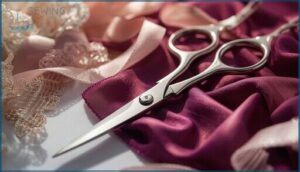
Fabric scissors aren’t just regular scissors with a fancy name—they’re built from the ground up with one job in mind.
The blade shape, material construction, and cutting edge all work together to handle delicate fabrics without snagging or tearing.
Here’s what sets them apart from the scissors you use for everything else.
Blade Shape and Material Differences
You’ll notice fabric scissors aren’t built like your everyday shears—and that’s deliberate. These cutting tools feature long, slender blades crafted from high-carbon stainless steel or Japanese steel composition for exceptional edge retention.
The blade geometry uses a convex grinding technique that keeps the edge sharp longer, while some designs incorporate micro serration to grip fabric without slipping. This precise material selection and construction directly combat blade dulling.
Specialized Edges for Precision Cutting
Your fabric scissors command precision because of their specialized edge geometry. Micro serrations grip fabric threads without pulling, while beveled edges let you trim tight seam allowances cleanly.
This isn’t guesswork—manufacturers engineer these cutting tools with stainless steel or high-carbon steel to maintain sharp angles under repeated use. Regular blade sharpening and proper scissor maintenance preserve that edge, keeping your precision cutting game strong where pinking shears can’t reach.
How Fabric Scissors Differ From Regular Scissors
You’ll spot the difference immediately—fabric scissors sport longer, hollow-ground blades with razor-thin geometry for gliding through delicate fabric types like silk and chiffon. Regular scissors use shorter, thicker blades built for tougher jobs.
Ergonomic grips on fabric cutting tools support extended cutting techniques without cramping your hand, while precise scissor care and maintenance keep those specialized edges performing. Different scissor materials mean different missions—don’t mix them.
How Using Fabric Scissors on Other Materials Causes Damage
You might think fabric scissors can handle anything sharp blades meet, but using them on the wrong materials actually destroys their precision.
Paper, cardboard, and similar materials create specific types of damage that aren’t immediately visible but add up fast.
Here’s what happens to your blades when you cut materials they weren’t built for.
Abrasive Effects of Paper and Cardboard
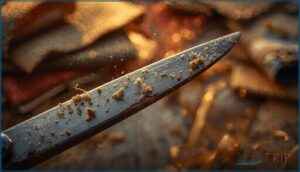
Paper’s rough fibers act like sandpaper on your fabric scissors, while cardboard accelerates the damage with embedded grit.
Here’s what happens when you cut these materials:
- Paper fibers create microscopic nicks along the blade edge
- Cardboard introduces abrasive particles that speed up dulling
- Repeated cuts form micro-grooves on the blade surface
- Edge retention drops faster than normal fabric use
- Blade wear increases required cutting force over time
Blade Dulling and Deformation Explained
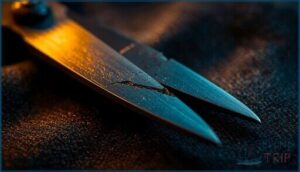
When you force your shears through harder materials, the high-carbon steel edge doesn’t just lose its bite—it actually changes shape. Each improper cut flattens the bevel and creates micro-chips that wreck edge retention.
Metal fatigue sets in as blades bend under uneven pressure, destroying cutting efficiency. This deformation means your once-precise cutting tools now pull and snag fabric instead of gliding through it cleanly.
Long-Term Impact on Sharpness and Performance
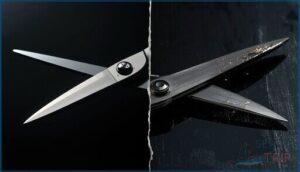
Over time, repeated misuse compounds into serious blade degradation that regular scissor maintenance can’t fully reverse. Here’s what you’re facing:
- Progressive edge roughness that demands more cutting force with each use
- Steady decline in scissor sharpness—up to 50% loss from routine paper cutting
- Diminished cutting efficiency as material resistance overwhelms your blades
- Residue buildup that accelerates dulling despite proper scissor care and maintenance
Sharp blades become a distant memory.
Best Practices for Preserving Fabric Scissors
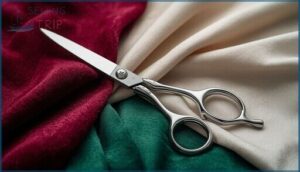
You wouldn’t use a race car to haul gravel, and the same logic applies to your fabric scissors. Protecting these precision tools requires a few simple habits that keep them sharp and ready for precise cuts.
Here’s how to make your fabric scissors last without turning maintenance into a second job.
Designating Scissors for Specific Materials
You can break free from dull blades by labeling your fabric scissors and keeping them separate from other tools.
Color-coding or tagging scissors by material prevents accidental cross-use and protects blade edges from incompatible substrates.
This simple tool organization strategy is your foundation for material safety and proper scissor selection, ensuring each pair stays sharp for its intended purpose without compromise.
Proper Cleaning, Oiling, and Storage
Once you’ve designated your scissors, scissor maintenance becomes your rebellion against blade degradation. Cleaning techniques are simple: wipe blades with a lint-free cloth after use, then apply light sewing machine oil every few uses for rust prevention. Storage solutions matter—keep them closed, flat, in a protective sheath, away from humidity. This tool care routine is your weapon for sustained scissor sharpness.
- Wipe blades with a dry cloth to remove residue and prevent corrosion.
- Oil blades with mineral or sewing machine oil to reduce rust.
- Store in a dry environment with blades closed or sheathed.
- Inspect pivot screws periodically and tighten as needed.
How to Inspect and Maintain Sharp Blades
Your scissors won’t tell you when they’re failing—you have to look. Blade inspection means checking for nicks, chips, or rounding monthly using a 10x loupe. Test sharpness by slicing printer paper; a clean cut confirms edge sharpening isn’t due yet.
Scissor maintenance includes professional blade geometry restoration every 6–12 months for heavy use. Sharp blades demand vigilance, not hope.
Safe and Effective Alternatives to Fabric Scissors
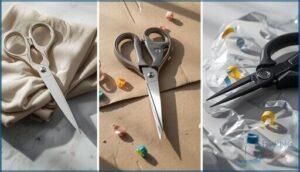
You don’t need to risk your fabric scissors on every cutting job that comes your way.
The right tool for paper, cardboard, or plastic won’t just protect your investment—it’ll give you cleaner cuts and save you time.
Here’s what actually works for each material without compromising performance.
Choosing The Right Tool for Each Material
You can’t afford to let the wrong tool wreck your work. Material selection guide principles demand precision—match your cutting instruments to what you’re actually slicing.
- Paper and cardboard: Craft or utility scissors deliver rigidity for clean cuts
- Leather: Heavy-duty shears designed for hides prevent fraying and edge wear
- Plastic: Hardened steel blades minimize heat buildup and scoring
- Foam composites: Electric or rotary cutters with safety guards handle thickness
Choosing the right scissors protects both your materials and your blades.
Benefits of Multi-Purpose and Craft Scissors
Multi-purpose craft scissors deliver real freedom—you’re not juggling five different blades for everyday projects. Ergonomic grips reduce hand fatigue during extended sessions, while interchangeable blade options boost craft versatility across paper, light fabric, and thin cardboard.
This scissor durability translates to cost savings, eliminating the need for separate fabric scissors or sewing scissors. One tool covers your crafting essentials without compromising performance or demanding constant scissor maintenance.
Rotary Cutters, Digital Machines, and Other Options
When precision matters, rotary cutters deliver clean, straight cuts on fabric and paper with 28–60 mm blades featuring built-in safety locks. Digital machines automate complex patterns across vinyl, cardstock, and leather through proper digital machine maintenance and blade material options.
Both tools demand attention to rotary cutter safety and cutting tool ergonomics. Regular fabric cutting techniques, paired with cutting tool sharpening routines, help your precision cutting techniques stay sharp without compromising sewing scissors or fabric cutting quality.
Frequently Asked Questions (FAQs)
How often should fabric scissors be sharpened?
You should sharpen fabric scissors every 6–12 months with regular use, or every 3–6 months for heavy workloads.
Watch for thread pulling or jagged cuts—these signal blade dulling and demand sharpness restoration.
Can fabric scissors cut through multiple fabric layers?
Can your fabric scissors slice through a stack? Yes, they’ll handle multiple fabric layers, though cutting efficiency drops with thickness.
Blade geometry and fabric type determine multi layer capacity—test your layered fabric cutting on scraps first.
What causes fabric scissors to develop rust?
Exposure to moisture accelerates rust formation on your blades, especially in humid environments.
Sweat, acidic residues, and inadequate drying after use promote oxidation process and blade corrosion, weakening scissor sharpness and performance over time.
Can you repair damaged fabric scissor blades?
Professional blade restoration services can revive dulled fabric shears through specialized sharpening techniques.
However, severe edge damage often makes replacement more practical than refurbishment. Regular scissor maintenance and care prevents costly blade dulling altogether.
Conclusion
That gasp you heard wasn’t melodrama—it was someone who’s learned the hard way that can you use fabric scissors on other materials is always the wrong question.
The right one: what do you sacrifice when you do? Every material you cut beyond fabric steals a bit of precision you can’t easily restore. Keep your textile blades sacred, assign different scissors to different jobs, and you’ll protect the tool that turns cutting from a chore into an art form.