This site is supported by our readers. We may earn a commission, at no cost to you, if you purchase through links.

A good pair of fabric scissors is a serious investment — and most sewists treat them like one, keeping them strictly off-limits for paper, tape, and anyone under the age of twelve. But the thing that quietly ruins more pairs than household misuse? Poor storage habits between uses.
Moisture, pressure, and friction do their damage slowly. You might not notice anything’s wrong until your next project, when those blades catch on the fabric instead of gliding through it.
Storing fabric scissors properly isn’t complicated, but it does require a little intention — the right conditions, the right spot, and a few small habits that protect both the edge and the pivot over time.
Table Of Contents
Key Takeaways
- Moisture and poor storage habits—not household misuse—are the leading causes of dull, damaged fabric scissors, so choosing a dry spot with humidity below 60% is non-negotiable.
- Before putting scissors away, wipe the blades clean, dry them completely, add a drop of sewing machine oil to the pivot, and close the blades to protect the edges.
- Silica gel packets tucked into your scissor pouch or drawer are a simple, low-cost defense against rust forming inside closed storage cases.
- Whether you use a fitted sheath, padded pouch, wall hook, or drawer divider, the goal is the same: keep scissors isolated, cushioned, and away from pins or other tools that can nick the blades.
Prepare Scissors Before Storage

Before you tuck your fabric scissors away, a little prep work goes a long way toward keeping them sharp and rust-free. Think of it as a quick wind-down routine — just a few simple steps that make a real difference over time. Here’s what to do before your scissors ever touch a storage case.
A quick wipe-down and proper storage — as covered in this guide to sewing scissors care and maintenance — can easily add years to your blades’ life.
Wipe Blades Clean
Wiping your blades clean before storage is a small habit that pays off big. Dirt and abrasive particles embed into the edge over time, causing snagging mid-cut — frustrating when you’re working with delicate fabric.
Use a soft microfiber cloth and wipe from tip to pivot on both surfaces. This matters because:
- Removes grime that dulls edges
- Prevents fabric-staining residue transfer
- Protects blade alignment at the pivot
Remove Lint and Residue
Once the blades are wiped down, don’t overlook the lint hiding along the pivot and inner edges — it’s surprisingly sticky. A microfiber cloth traps loose fibers through static attraction, so one gentle pass takes care of most of it.
For waxy residue or gummy buildup, a lightly dampened cloth lifts it cleanly without pushing fibers deeper into the blade seam, keeping your fabric scissors ready to cut crisp every time.
Dry Scissors Completely
After lifting that residue, any dampness left on the blades becomes the real problem. Carbon steel blades react fast — even a little moisture near the pivot triggers oxidation before you’ve put them away.
Open and close the scissors a few times so hidden moisture pockets in the hinge can escape, then wipe both sides with a lint-free cloth until completely dry. To make sure you have long-term protection, always store in dry environments to prevent damage.
Oil The Pivot Screw
Once your blades are bone dry, that’s the moment to oil the pivot screw. A single drop of sewing machine oil at the pivot point is all it takes — no more, or it’ll creep onto your fabric.
This lubricant reduces friction, prevents rust on the screw threads, and keeps rotation smooth:
- Apply oil every few months
- Use sewing machine or shear oil only
- Wipe away any excess immediately
- Re-tension the pivot screw after oiling
Close Blades Before Storing
Snap those scissors shut — it’s the simplest habit that protects your investment. Closed blades keep cutting edges tucked inward, so they won’t nick each other or snag on stray pins. The blade root stays shielded, which reduces jamming and catching on other tools. Closed position also guards any blade coating from scratches and makes drawer handling far safer for everyone.
| Blade Position | Storage Risk |
|---|---|
| Open blades | High nick and scratch risk |
| Closed blades | Protected edges and coating |
| Mixed in drawer | Jamming and misalignment risk |
Prevent Rust and Blade Damage

Rust is the silent enemy of good scissors, and it usually shows up because of where — not how — you store them. A little moisture in the wrong spot is all it takes to dull those blades for good. Here’s what you can do to keep that from happening.
Bathrooms and kitchen windowsills are especially risky spots — for a full breakdown of the best storage habits, proper fabric scissor care and storage tips can save you from replacing a good pair too soon.
Choose a Dry Storage Spot
Think of rust as a slow thief — and humidity is how it gets in. Your ideal spot keeps humidity below 60% and temperatures between 60 and 75°F, so metal oxidation never gets a foothold.
Good airflow matters too, since stagnant air traps condensation. A closed cabinet away from kitchen or bathroom walls keeps moisture migration from quietly wrecking your blades.
Avoid Damp Sewing Areas
Sewing rooms near bathrooms or kitchens are surprisingly risky for your scissors. Steam, splashes, and ambient moisture creep into metal faster than you’d expect, triggering oxidation before you even notice.
Keep relative humidity below 50% and position scissors away from walls where condensation collects. Even a small exhaust fan helps pull damp air out, so your blades stay dry between sessions.
Use Silica Gel Packets
Those tiny packets you toss aside from shoe boxes? They’re actually your scissors’ best defense against rust. Silica gel beads adsorb moisture from the surrounding air — trapping water molecules on their surface — so metal stays dry even in closed storage cases.
Silica gel beads silently adsorb moisture from the air, keeping your scissors rust-free inside any closed storage case
Tuck a few packets into your scissor pouch or drawer organizer. Once the color-changing indicator turns pink, recharge or replace them to keep humidity control working.
Keep Away From Steamers
Your steamer is sneaky. Steam reaches around 100°C, and that invisible humidity lingers long after you’ve finished pressing — coating nearby metal surfaces with just enough moisture to start rust forming.
Keep scissors well away from your steamer while it’s in use, and never store them on the same shelf. Good workspace ventilation clears that damp air fast.
Separate From Pins
Pins and scissors seem harmless together, but blade nicks happen fast when a pin head catches a cutting edge during retrieval. Keep them in dedicated pin containers — even a small labeled tray works — so you’re never fishing through a mixed drawer.
Separate storage also stops metal particulate contamination from pin residues reaching your blades and quietly starting rust.
Best Fabric Scissor Storage Methods
Once your scissors are clean, dry, and rust-free, the next step is figuring out where — and how — to actually keep them.
The right storage method can make a huge difference in how long your blades stay sharp and nick-free. Here are five options worth considering, from simple sheaths to smarter drawer solutions.
Use Protective Sheaths

Slipping your fabric scissors into a protective sheath before storing them is one of the simplest habits that pays off long-term. A well-fitted sheath — matched to your blade length — shields edges from accidental nicks and keeps metal oxidation at bay.
For humid sewing rooms, choose moisture-resistant sleeves specifically. Some crafters swear by heat-shrink options for a snug, lasting fit.
Try Padded Pouches

Sheaths work beautifully for solo blades, but when you’re hauling a full kit, a padded pouch does more heavy lifting.
The EVA foam lining cushions your scissors against impact and stops blades from rattling — that constant clinking is what quietly dulls edges over time. Many pouches also have a moisture-resistant outer shell, so travel days won’t invite rust.
Add Drawer Compartments

A dedicated drawer compartment keeps your scissors exactly where you left them. Look for modular, adjustable dividers — usually 2 to 3 inches wide — so each pair sits without bumping neighbors.
A non-slip liner underneath stops blades from sliding when you pull the drawer open. Lightweight plastic or powder-coated metal holds up well through years of daily use.
Hang by The Handles

Drawer compartments work brilliantly, but wall hooks take things a step further. Hang your scissors by the grips — never the blades — so the tips stay clear of surfaces entirely.
Mount hooks at elbow height for easy, no-fumble retrieval. Make sure each peg can hold twice the tool’s weight so nothing slips. Blades stay rust-free and nick-free, just hanging in open air.
Avoid Crowded Tool Drawers

Tossing scissors into a packed drawer is one of the fastest ways to nick a blade. When tools collide, edges dull quickly — and rust follows wherever metal scrapes metal.
Line your drawer with felt, separate scissors from pins, and keep only your most-used tools up front. A quick monthly audit clears the clutter before it becomes a problem.
Top 5 Scissor Care Items
Having the right tools on hand makes scissor care so much easier — and honestly, a lot more likely to actually happen.
I’ve pulled together five items that cover everything from cleaning to cutting, so your scissors stay sharp and rust-free longer. Here’s what I recommend keeping in your sewing kit.
1. iBayam Ultra Sharp Scissors
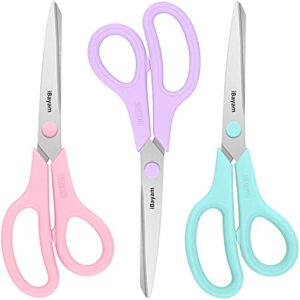
If you’re going to invest time in proper scissor care, start with a pair worth caring for. The iBayam 8-inch scissors feature 2.5mm carbon steel blades with a nano-coating that keeps cutting smooth through up to 100,000 uses — so friction and residue buildup aren’t constant battles.
The ergonomic, non-slip grips work for both right- and left-handed sewists, and the pastel color coding means no more grabbing the fabric pair by accident. That alone saves your edges.
| Best For | Sewists, crafters, and home users who want long-lasting, sharp scissors that work comfortably in either hand and hold up through heavy use. |
|---|---|
| Primary Use | Fabric cutting |
| Key Material | Carbon steel |
| Reusable | Yes |
| Maintenance Needs | Wiping and oiling |
| Best For | Sewists and crafters |
| Moisture Risk | Low |
| Additional Features |
|
- Carbon steel blades with nano-coating stay smooth and self-lubricating through up to 100,000 cuts — far less maintenance than standard scissors
- Ambidextrous ergonomic grips reduce hand fatigue, making them a great pick for seniors or anyone doing extended cutting sessions
- The 3-pack with pastel color coding makes it easy to keep fabric, paper, and kitchen scissors separate at a glance
- Not built for industrial tasks — cutting metal or other heavy materials is outside their intended use
- Children 8 and under need adult supervision, so they’re not a grab-and-go option in households with young kids
- At 8.4 inches, they lean on the larger side, which may feel bulky for users with smaller hands
2. Microfiber Glass Cleaning Cloths
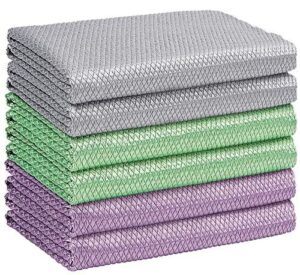
Keeping your blades clean is half the battle — and a microfiber glass cloth is your best weapon. The ultra-fine fibers, roughly 1/100th the diameter of a human hair, pull lint, oils, and grime off metal surfaces without scratching.
Run the cloth dry along each blade after every use. It takes ten seconds. No moisture, no residue, no rust risk. And because they’re machine washable, one cloth lasts through hundreds of cleanings — far better than grabbing a random rag from the pile.
| Best For | Anyone who wants a scratch-free, reusable way to keep glass, mirrors, and smooth surfaces spotless without reaching for paper towels. |
|---|---|
| Primary Use | Surface cleaning |
| Key Material | Microfiber polyester |
| Reusable | Yes |
| Maintenance Needs | Machine washable |
| Best For | Streak-free cleaning |
| Moisture Risk | None |
| Additional Features |
|
- Lint-free and non-abrasive, so you can clean mirrors, windows, and stainless steel without worrying about scratches
- Machine washable and built to last through hundreds of uses — a genuinely cost-effective swap from disposable towels
- Works dry or slightly damp, making it flexible enough for quick wipe-downs or streak-free polishing
- The cloth can feel rough and scratchy against skin when completely dry, which takes some getting used to
- Smearing can happen if you skip the right technique — best results usually mean using one damp cloth followed by a dry one
- The texture may feel thinner or less plush than the product photos imply
3. Wipex Isopropyl Alcohol Wipes

When lint and sticky residue build up on your blades, a dry cloth won’t always cut it. That’s where Wipex isopropyl alcohol wipes earn their place in your kit. The 70% IPA formula lifts stubborn gunk — adhesive residue, oils, old lubricant — without leaving fibers behind on the blade.
Each wipe is lint-free and quick-drying, so you’re not introducing moisture that could spark rust. Use one after a deep cleaning session, dry the blade immediately after, then oil the pivot.
| Best For | Anyone who needs a reliable, no-fuss way to clean electronics, blades, tools, or surfaces without leaving lint or moisture behind. |
|---|---|
| Primary Use | Blade & tool cleaning |
| Key Material | 70% isopropyl alcohol |
| Reusable | No |
| Maintenance Needs | None |
| Best For | Tool and blade care |
| Moisture Risk | Minimal |
| Additional Features |
|
- The 70% IPA formula cuts through adhesive residue, oils, and grime quickly and dries fast, so there’s no lingering moisture risk
- Individually wrapped wipes stay fresh and are easy to toss in a bag, toolbox, or travel kit
- Lint-free material means no fibers left behind on sensitive surfaces like screens, camera lenses, or blades
- The cardboard box dispenser tends to wear out after repeated use, which gets annoying fast
- The wipe fabric is on the soft side and can tear if you’re scrubbing anything stubborn
- Frequent skin contact may cause dryness, and the wipe starts evaporating quickly once unwrapped
4. PDI Alcohol Prep Pads
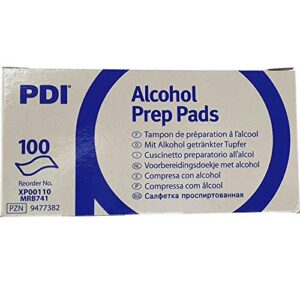
PDI Alcohol Prep Pads do the same job as alcohol wipes but come individually wrapped and pre-sterile — which matters when you want a fresh, uncontaminated pad every time. Each one is saturated with 70% isopropyl alcohol and sized for precision work, so wiping down pivot areas or tight blade edges feels controlled rather than sloppy.
The foil packets are easy to tear open one-handed, and the nonwoven gauze won’t shred or leave fibers behind on your blades.
| Best For | Anyone who needs a reliable, sterile option for prepping skin before injections, cleaning small wounds, or sanitizing personal items like phones and household surfaces. |
|---|---|
| Primary Use | Surface sanitizing |
| Key Material | 70% isopropyl alcohol |
| Reusable | No |
| Maintenance Needs | None |
| Best For | Sterile sanitizing |
| Moisture Risk | Minimal |
| Additional Features |
|
- Individually wrapped and pre-sterile, so every pad is fresh and uncontaminated right out of the packet
- Highly saturated with alcohol for effective disinfection without multiple swipes
- Nonwoven gauze construction means no shredding or fiber residue left behind
- High liquid content can cause dripping, which may be messy in certain applications
- Shelf life is limited, so bulk buyers should be mindful of expiration dates
- Some users have reported inconsistent pad counts per box
5. Kisswill Rotary Cutter Blades
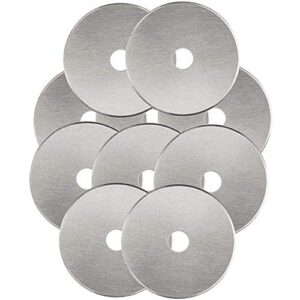
Rotary cutters are only as good as the blades inside them, and Kisswill’s 45mm blades make a strong case for themselves. Made from SKS-7 Japanese steel with tungsten alloy reinforcement, they hold an edge through up to ten layers of fabric without folding or skipping.
Each blade ships with a protective case, so storage is already handled. They fit Fiskars and Olfa cutters without adapters — no fiddling required.
| Best For | Quilters, sewists, and DIY crafters who want long-lasting replacement blades that work with their existing Fiskars or Olfa rotary cutters. |
|---|---|
| Primary Use | Fabric cutting |
| Key Material | SKS-7 tungsten steel |
| Reusable | Yes |
| Maintenance Needs | Periodic oiling |
| Best For | Quilters and sewists |
| Moisture Risk | Low |
| Additional Features |
|
- SKS-7 Japanese steel with tungsten alloy reinforcement holds a sharp edge through multiple layers of fabric
- Fits popular cutter brands like Fiskars and Olfa right out of the box — no adapters needed
- Comes with a protective storage case, making safe storage simple from day one
- Blade longevity varies depending on the materials you cut and how often you use them
- Requires periodic oiling during long storage periods to prevent degradation
- Extremely sharp edges demand careful handling, especially around children
Frequently Asked Questions (FAQs)
What ruins fabric scissors?
Moisture, dull blades, and misuse on paper or cardboard are the main culprits. Rust sneaks in through humidity, while fabric fibers leave tiny burrs that snag and tear rather than cut cleanly.
What is the best way to store scissors?
Store scissors blade-closed, in a dry spot with a silica gel packet nearby. A padded pouch or dedicated sheath keeps edges protected and rust-free longer than any crowded drawer ever will.
How often should fabric scissors be sharpened?
Sharpen every 6 to 12 months for regular use, or every 3 to 6 months if you’re cutting tough fabrics daily. When edges snag or fray instead of slicing clean, that’s your cue.
Can fabric scissors cut other materials safely?
Fabric scissors cut fabric only. Paper, cardboard, and tough materials quickly dull those precision blades, leaving ragged edges on your next sewing project. Protect them — dedicate separate scissors for everything else.
What oils work best for scissor maintenance?
Camellia oil is your best bet — a single small drop near the pivot keeps blades gliding smoothly without leaving residue on fabric. Sewing machine oil works well too.
How do you fix loose scissor joints?
A wobbly scissor joint is basically a broken scissor. Tighten the pivot screw clockwise, then oil the joint lightly. If blades still wiggle, the pivot is worn — replace it entirely.
How often should fabric scissors be professionally sharpened?
Most sewists do well with professional sharpening once or twice a year. Heavy daily use calls for every 3–6 months, while casual quilters can stretch to 12 months or beyond.
What causes fabric scissors to fold instead of cut?
Roughly three out of four cutting problems trace back to blade condition. When edges are dull, nicked, or misaligned, fabric folds instead of shearing — loose pivot tension and residue buildup only make things worse.
Should different scissors be used for batting and wadding?
Yes — dedicated batting scissors are worth it. Their long, straight blades glide through thick wadding layers cleanly, while general fabric scissors struggle and dull fast. Keeping them separate protects both tools.
How do you remove rust spots from scissor blades?
Soak the blades briefly in white vinegar to loosen rust, then scrub gently with a nylon brush. Rinse, dry thoroughly, and finish with a light coat of mineral oil to protect the metal.
Conclusion
Maybe you’re thinking this all sounds like a lot of effort for a pair of scissors. But here’s what I’ve learned: the two minutes you spend wiping, drying, and sheathing your blades after a project are the exact minutes that keep them cutting cleanly for years.
Knowing how to store fabric scissors to prevent damage isn’t expert craft knowledge — it’s just quiet respect for your tools. Treat them well, and they’ll never let you down mid-seam.