This site is supported by our readers. We may earn a commission, at no cost to you, if you purchase through links.
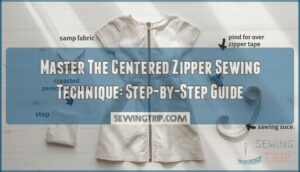
Imagine: you finish sewing a dress, but the back closure looks bumpy and uneven. The culprit? A wonky zipper.
Mastering the centered zipper sewing technique changes everything—suddenly, your seams lie flat, your topstitching lines up perfectly, and every garment feels polished from the inside out.
Whether you’re tackling a pencil skirt or a pillow cover, the centered zipper brings structure and symmetry to your projects.
With the right tools and a clear step-by-step approach, you’ll turn tricky closures into a skill you can rely on for professional results every time.
Table Of Contents
- Key Takeaways
- What is The Centered Zipper Sewing Technique?
- Choosing The Right Zipper for Centered Installation
- Essential Tools and Materials Needed
- Preparing Fabric for a Centered Zipper
- Step-by-Step Centered Zipper Installation
- Topstitching and Securing The Centered Zipper
- Troubleshooting and Finishing Tips
- Frequently Asked Questions (FAQs)
- Conclusion
Key Takeaways
- Centered zippers create a strong, symmetrical closure with visible topstitching, making garments and home projects look polished and professional.
- Choosing the right zipper type and size for your fabric is essential to ensure durability, smooth installation, and a clean finish.
- Careful fabric preparation, precise marking, and step-by-step sewing with the zipper foot are key to achieving flat seams and even plackets.
- Troubleshooting common issues like puckering or misalignment, plus proper pressing and finishing, guarantee a crisp, reliable zipper every time.
What is The Centered Zipper Sewing Technique?
The centered zipper technique is one of those foundational skills that quietly shows up everywhere in sewing. Once you understand how it works, you’ll start spotting it on cushions, dresses, and skirts all the time.
If you’re ready to tackle more advanced zipper methods, this guide on invisible zipper techniques for sewing projects offers clear tips to level up your skills.
Mastering the centered zipper technique reveals its versatility, turning up everywhere from cushions to dresses and skirts in your sewing projects
Here’s what you need to know to get started.
Definition and Features
A centered zipper is all about symmetry. The zipper tape sits perfectly in the middle of your seam, with balanced plackets on each side — each measuring about 1/4 inch wide. Here’s what defines this technique:
- Hidden teeth beneath flat fabric
- Centered alignment along the symmetrical seam
- Visible topstitch running parallel on both sides
- Consistent seam allowance throughout zipper installation
The technique benefits from a double placket design that ensures visual balance.
Common Uses in Sewing Projects
This technique shows up everywhere in garment sewing and home décor. Dress backs, pencil skirt vents, and fitted bodices all rely on a centered zipper for clean, flat closures.
Beyond clothing, it’s equally at home in pillow covers, table runners, and bag pouches. Wherever your sewing projects need a straight, balanced zipper installation, this is your go-to method.
Centered Vs. Invisible Zippers
Both options have a place in your sewing machine lineup, but they serve different goals. centered zipper shows parallel topstitching as a deliberate design detail — great for structured, medium-to-heavy fabrics.
invisible zipper disappears into the seam, prioritizing a clean silhouette. For aesthetic impact, fabric suitability, and durability comparison, centered zippers generally win on strength and installation difficulty stays beginner‑friendly with a basic zipper foot.
For more details, see the centered zipper application guide.
Choosing The Right Zipper for Centered Installation

Picking the right zipper isn’t just a small detail — it can make or break your whole project.
A few key factors will guide your choice and save you a lot of frustration down the line.
Here’s what to think about before you buy.
Zipper Size and Length Selection
Getting the size wrong here can unravel an otherwise perfect project. Use this quick Gauge Matching and Length Calculations reference before cutting anything:
- Lightweight fabrics need a #3 zipper (3mm teeth) for clean Fabric Weight Compatibility
- Medium-weight projects call for #5, ideal for skirts and pants
- Heavy fabrics need #7–#10 for durability
- Add 5/8" Seam Allowance when marking your opening
- Use Custom Length Cutting from Zipper Tape sold by the yard for unique seams
Types of Zippers Suitable for Centered Application
Not all zippers are created equal — and the type you choose shapes everything about your centered zipper result.
If you’re curious about how invisible zippers differ and what makes them unique, check out this guide to sewing invisible zippers for beginners.
Coil Zippers flex beautifully with lightweight fabrics, while Metal Tooth Zippers add structure to custom pieces.
Molded Plastic Zippers handle moisture well for outdoor wear.
Closed‑End Zippers suit skirts and dress backs perfectly.
Need a full‑open front? Separating Zippers are your answer.
Skip the Invisible Zipper here — it’s a different technique entirely.
Matching Zipper Style to Project Type
Your project type is the real compass here.
A heavyweight fabric zip — think wool coats or denim — manages daily stress beautifully, while a lightweight dress zip keeps delicate garments smooth and clean.
Choose an outdoor bag zipper for moisture resistance, a kids clothing zip for easy dressing, and save the formal dress zipper for custom pieces where centered zipper application demands perfect garment construction.
Essential Tools and Materials Needed

Before you sew a single stitch, having the right tools in front of you makes everything easier.
A centered zipper doesn’t ask for much, but what it does ask for actually matters.
Here’s what you’ll want to have on hand.
Sewing Machine and Zipper Foot
Your sewing machine and zipper foot are the backbone of a clean centered zipper installation.
For most machines, a snap-on or adjustable zipper foot works best — it lets you apply needle positioning tips easily, shifting left or right to hug the teeth closely.
Set your stitch length to 2.2–2.5mm for ideal stitch length optimization, and loosen presser foot pressure slightly for smooth, even feeding.
Fabric and Interfacing Choices
Your fabric choice drives everything. Weight‑matched interfacing is the real secret—fusible vs. sew‑in depends on your project: fusible interfacing works fast on cotton or linen, while sew‑in suits delicate silk reinforcement to avoid heat damage.
For knit stretch stabilization, use 1‑inch tricot strips.
Heavy canvas bulk control means skipping extra layers entirely.
Proper fabric preparation keeps your centered zipper seam allowance clean and flat.
Marking and Measuring Tools
Precision starts before you even thread your machine.
clear acrylic ruler — ideally 2 by 18 inches — helps you draw perfectly parallel topstitch lines exactly 1/4 inch from your seam. water soluble markers or air erasable pens provide clean, residue‑free guidelines.
Tailor chalk techniques work beautifully at zipper stops, while fabric measuring tape tips keep your placement symmetrical from center out.
Preparing Fabric for a Centered Zipper
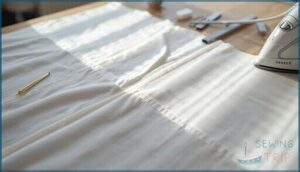
Before you even think about threading your machine, fabric needs a little groundwork first.
Getting this prep stage right is what separates a zipper that looks polished from one that puckers and shifts over time.
Here’s what you need to do before sewing a single stitch.
Finishing Raw Edges
Raw edges fray fast — and a frayed edge ruins even the most careful zipper installation.
Before you baste anything, finish both seam allowances using your preferred method. Always finish before basting.
The Zigzag Edge Finish works on most wovens at 2.5 mm width and length. Prefer speed? The Serging Overlock Technique trims and wraps edges in one clean pass. Pinking Shears Trim suits crisp, lightweight fabrics, while the Overcast Stitch Method is beginner‑friendly on denim.
Applying Interfacing to Zipper Area
Once your edges are finished, it’s time to stabilize the zipper area. Cut two 1‑inch‑wide strips of fusible interfacing — this is your Stitch Line Reinforcement secret.
For lightweight fabrics, lightweight fusible woven works best; heavier projects need medium weight.
Always use the Scrap Testing Method first.
Press firmly using the Heat Press Technique: iron down, lift, repeat.
Marking The Zipper Placement
With your interfacing pressed and ready, marking zipper placement is where precision really pays off. Use tailor’s chalk or a water‑soluble pen — your marking tool selection matters for clean results.
Transfer the bottom stop marking from the seam allowance to both fabric layers, then draw your centering alignment marks and topstitch line layout 1/4 inch from the seamline. Your centered zipper installation is set up for success.
Step-by-Step Centered Zipper Installation
Now that your fabric is prepped and your zipper is ready, it’s time to put it all together. The actual installation comes down to three key steps, and each one builds on the last.
Here’s exactly what to do.
Sewing The Seam and Leaving an Opening

Sewing the seam correctly sets your centered zipper up for success. Start below the zipper area using a 2.5mm stitch length, then backstitch firmly at your marked zipper bottom point — that’s your seam reinforcement point.
Switch to a long basting stitch (4–5mm) through the opening. Press seam open flat. Basting stitch removal comes later, once your zipper installation is complete.
Pinning and Positioning The Zipper
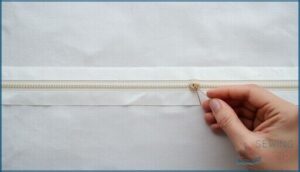
With your seam pressed open, it’s time to place your centered zipper.
Lay the zipper face-down over the basted seam, teeth centered directly on the seam line. Good seam allowance control here makes all the difference.
- Pin perpendicular to the teeth, with even pin spacing every inch
- Align your alignment markers at the zipper stop point
- Hand-baste each tape edge using a careful basting technique
- Keep fabric tension smooth — no bunching, no pulling
Attaching The Zipper Foot and Sewing Sides
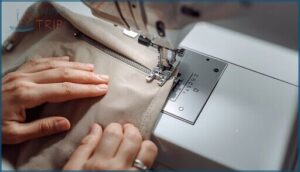
Snap your zipper foot onto the sewing machine, positioning it on the right side of the holder. Shift your needle to align close to the teeth — this is your needle positioning sweet spot. Set stitch length to 2.2–2.5mm.
Sew the first side top to bottom, managing bulk control by keeping extra layers clear. Reposition the foot, mirror your foot alignment, then sew the second side. Stop mid-seam to handle pull management smoothly.
Topstitching and Securing The Centered Zipper

You’re almost there — the zipper is in place, and now it’s time to make it look like it belongs.
Topstitching is what separates a polished finish from a "good enough" one, and a few careful steps make all the difference.
Here’s how to mark, stitch, and press your centered zipper to a clean, professional finish.
Marking and Basting Topstitch Lines
Precise lines make the difference between a zipper that looks handmade and one that looks custom. Mark topstitch placement 6 mm from the seam using measuring rulers and heat‑erasable pens on the right side after pressing.
- Draw two parallel lines up each side
- Add a horizontal bar at the zipper stop
- Use hand basting guides with contrasting thread
- Apply basting tape techniques along zipper tape edges
- Run alignment verification checks before committing to the machine
Sewing Even Topstitching on Both Sides
Now that your guidelines are marked, it’s time to stitch with confidence.
Set your sewing machine to a stitch length of 2.5–3mm for clean, consistent topstitching.
Check presser foot pressure so both fabric layers feed evenly — uneven pressure is the sneaky culprit behind drifting lines.
Maintain needle alignment over your marked guides, sew each side of the centered zipper from bottom to top, and use visual inspection methods to confirm your seam allowance stays perfectly mirrored.
Removing Basting and Final Pressing
The moment your topstitching is done, those basting stitches have served their purpose — now remove them cleanly.
- Use fine basting tools like a seam ripper or sharp snips for thread snipping every 2–3 inches
- Pull the bobbin thread opposite your stitching direction
- Lay the zipper flat, use a pressing cloth, then apply the steam press method from the wrong side first
- Let it cool completely — the cooling flat technique sets your crisp seam allowance permanently
Troubleshooting and Finishing Tips

Even the most careful sewists run into hiccups with centered zippers — and that’s completely normal.
The good news is that most issues have simple fixes once you know what to look for. Here’s what to check when something’s off, and how to get that clean, polished result you’re after.
Ensuring Even Plackets and Alignment
Ever wonder why your centered zipper looks crisp and balanced? It’s all about Placket Width Measurement and Interfacing Stabilization.
Mark your topstitch lines, pin the zipper in place, and use Basting Symmetry Techniques for perfect alignment. Press each placket fold and check seam allowance—these steps anchor your Zipper Installation Guide for a professional finish every time.
Fixing Common Centered Zipper Issues
Don’t let common zipper problems derail your project.
If puckering strikes, fuse lightweight interfacing for Puckering Prevention.
For a Wavy Tape Fix, ease excess fabric back and sew with the Zipper Foot.
Stuck Slider Repair means trimming threads and adding dry lubricant.
Misaligned Ends? Unpick and realign.
When Slider Replacement is needed, match gauge and follow your Zipper Installation Guide for smooth results.
Achieving a Professional-Looking Finish
Once you’ve tackled issues like misaligned ends or puckering, focus on Even topstitch spacing and Precise centering.
For a polished look, use the Zipper Foot to keep your lines straight.
Clean zipper ends matter—tuck or seal them neatly.
Proper pressing technique shapes the plackets, while thoughtful Thread and needle selection ensures your Centered Zipper blends seamlessly with your garment.
Frequently Asked Questions (FAQs)
Can centered zippers be shortened if too long?
Don’t let a zipper drag you down—a centered zipper can be shortened to fit your seam.
Use bottom stop creation for closed zippers, metal zipper trimming for sturdier types, and coil zipper cut for nylon.
Always follow length measurement tips and safety precautions.
How do you wash garments with centered zippers?
To protect a centered zipper, zip it fully, turn your garment inside out, and use a mesh laundry bag.
Choose a cold‑water wash, gentle cycle, and low‑heat drying. If teeth feel rough, apply zipper lubricant after drying.
What thread type works best for centered zippers?
It’s no accident that all purpose polyester thread stands out for centered zippers—its strength manages repeated use, matches most fabrics, and pairs well with a sewing machine’s zipper foot.
For heavier fabrics, nylon durability or cotton wrapped aesthetic shine.
Are centered zippers suitable for children’s clothing?
Centered zippers fit children’s clothing well when you prioritize safety standards and comfort protection.
With proper durability testing, soft teeth, and thoughtful design placement, they offer parent convenience and reliable closure.
Use a zipper foot for easy installation and repair.
How to repair a stuck centered zipper?
Don’t let a stuck zipper unravel your plans—start by turning the project inside out for Fabric Jam Removal.
Use tweezers, try Lubrication Methods like graphite or soap, check Slider Realignment, and inspect teeth for possible Teeth Replacement or Stop Reinstallation.
Conclusion
Think of the centered zipper sewing technique as the backbone of a garment—strong, straight, and reliable. When you master this skill, your creations stand tall and confident, with every closure smooth and every seam precise.
Step by step, you’ve learned how to turn a tricky zipper into a tool for symmetry and polish. Now, every project you tackle will reflect your attention to detail. Let your next stitch carry the assurance of a zipper perfectly centered.
- https://www.seamwork.com/sewing-tutorials/sewing-a-centered-zipper
- https://madamsew.com/blogs/sewing-blog/how-to-install-a-centered-zipper
- https://www.doinaalexei.com/413-how-to-sew-a-centered-zipper-application.html
- https://blog.megannielsen.com/2013/05/tutorial-centered-and-lapped-zippers/
- https://victorypatterns.com/blogs/victory-patterns-blog/how-to-sew-a-centered-zipper