This site is supported by our readers. We may earn a commission, at no cost to you, if you purchase through links.

Invisible zippers have a reputation for being fussy—the kind of technique that sends beginners straight to the regular zipper bin. That reputation is mostly undeserved.
The real problem isn’t the zipper itself; it’s that most people try to install one without the right foot, the right prep, or anyone walking them through it clearly.
A few small adjustments change everything. Once you nail the setup, the easiest way to sew an invisible zipper becomes less about skill and more about sequence.
Get the steps in the right order, and that smooth, pull-tab-only finish is completely within reach.
Table Of Contents
Key Takeaways
- The invisible zipper’s bad reputation comes from skipping three basics: the right foot, proper prep, and doing the steps in order — fix those, and the technique becomes surprisingly approachable.
- Pressing the zipper coil flat before sewing and using a dedicated invisible zipper foot are the two small moves that make the biggest difference in getting a clean, hidden finish.
- Lightweight fabrics need fusible interfacing along the seam allowance, or you’ll end up with puckering, snagging, and a zipper that refuses to behave.
- Most post-installation problems — stuck pulls, visible teeth, or wavy seams — trace back to one fixable cause: inconsistent seam allowance or thread tension that’s too tight.
What is an Invisible Zipper?
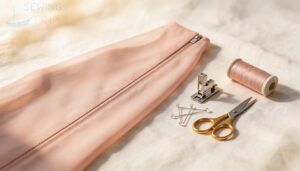
An invisible zipper is exactly what it sounds like — a zipper that hides inside the seam so nobody knows it’s there. It’s the go-to choice for dresses, skirts, and anything where you want a clean, smooth look.
That clean finish is especially worth mastering if you’re sewing a dress with an invisible zipper, where every seam detail shows.
Here’s what you need to know before you start sewing one in.
What Are Invisible Zippers Used For?
Invisible zippers shine wherever a clean, uninterrupted look matters most. Think bridal gowns, skirt back seams, and custom jackets — anywhere the closure should disappear completely into the fabric.
- Hide seams in duvet covers and upholstery cushions
- Essential for dressmaking and garment construction basics
- Perfect for achieving an invisible closure aesthetic in fashion garment construction
That’s the magic of hidden closure methods done right.
Invisible Zipper Vs. Regular Zipper: Key Differences
So what sets an invisible zipper apart from a regular one? With a regular zipper, the teeth sit front and center — visible, functional, sometimes even decorative. An invisible zipper hides its coil behind the seam allowance, so only the pull shows.
Aesthetic impact, fabric compatibility, and installation complexity all differ too.
You’ll need a special zipper foot, and lighter fabrics work best.
Top 3 Supplies for Sewing an Invisible Zipper
Before you sew a single stitch, getting the right supplies makes all the difference.
You don’t need a massive haul — just three key items that will carry you through the whole process. Here’s what to grab before you start.
1. Coats Clark Invisible Navy Zipper

One zipper worth keeping in your kit is the Coats & Clark Invisible Navy. It’s 14 inches long, made from 100% polyester, and built to lay flat in your seam without creating bulk. The tightly wound coil stays hidden once installed — only the pull tab shows.
Navy works beautifully with dark fabrics like formal dresses and fitted skirts. It’s machine washable too, so your finished garment holds up through real-world wear without the zipper giving you grief.
| Best For | Sewers and crafters who need a clean, hidden closure for dark or formal garments like dresses and fitted skirts. |
|---|---|
| Brand | Coats & Clark |
| Origin | USA |
| Material | Polyester |
| Primary Use | Sewing projects |
| Color | Navy |
| Weight | 0.03 pounds |
| Additional Features |
|
- Stays completely hidden once installed — only the pull tab shows
- Made in the USA by a trusted brand (Coats & Clark)
- Machine washable and holds up well through regular wear
- Can cost more than picking one up at a local fabric store
- Only available in this specific length and navy color, so it’s not versatile
- Not the most budget-friendly option if you have a sewing shop nearby
2. Singer Ball Head Straight Pins
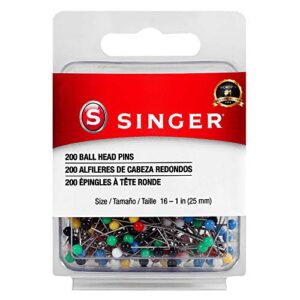
You’ve got your zipper sorted — now you need something to hold everything in place while you sew. Singer Ball Head Straight Pins (Model 07040) do that job well.
Once everything’s pinned securely, you’ll want the right presser foot for the job — this sewing machine presser feet guide breaks down which attachments work best for zippers, hems, and more.
The colorful plastic ball heads are easy to spot on patterned fabric, and the nickel-plated steel shafts glide through without snagging.
Each pack comes with 200 pins, so you won’t run out mid-project. They work with magnetic pincushions too, which makes grabbing and returning pins faster than you’d expect.
| Best For | Sewists, quilters, and crafters who need reliable pins that are easy to spot on busy or patterned fabrics. |
|---|---|
| Brand | SINGER |
| Origin | Not specified |
| Material | Alloy Steel |
| Primary Use | Sewing and quilting |
| Color | Assorted |
| Weight | 9.07 grams |
| Additional Features |
|
- Colorful ball heads make them easy to see and grab, even on patterned fabric
- Nickel-plated steel shafts glide in smoothly without snagging or rusting
- 200 pins per pack means you won’t be scrambling for more mid-project
- Some users got pins with broken shafts or dull, unsharpened tips right out of the box
- Ball heads can come loose or fall off, which gets frustrating fast
- At size 16, they might feel too short for thicker or heavier fabrics
3. Pellon Shape Flex Iron On Cotton Interfacing
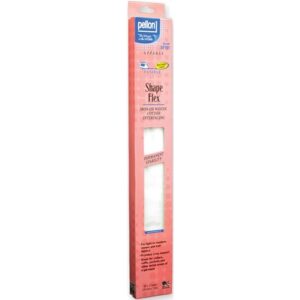
Thin fabric and invisible zippers don’t always play nice — that’s where Pellon Shape Flex comes in. This iron-on cotton interfacing fuses right to your fabric with a hot iron, giving lightweight material the backbone it needs to hold a clean zipper seam.
It’s 100% cotton, so it moves naturally with your fabric instead of stiffening it up like cardboard. Cut a strip, press it in place, and you’ve got a stable edge that sews smoothly every time.
| Best For | Sewers and crafters working with light to medium-weight fabrics who need clean, stable edges on collars, cuffs, and detail areas. |
|---|---|
| Brand | Pellon |
| Origin | United States |
| Material | 100% Cotton |
| Primary Use | Sewing and quilting |
| Color | White |
| Weight | 2.72 ounces |
| Additional Features |
|
- 100% cotton so it moves with your fabric instead of making it stiff or plasticky
- Fuses quickly with steam, giving you a stable edge that holds up through washing and wearing
- Works great for all kinds of projects — garments, bags, home décor, you name it
- The 15" width doesn’t go very far, so larger projects might leave you running out fast
- Only works on light to medium fabrics, so thicker materials are out of luck
- Requires an iron to apply, which isn’t always ideal depending on your setup
How to Sew an Invisible Zipper Step by Step
Now that you’ve got your supplies ready, it’s time to put them to work. Sewing an invisible zipper is more straightforward than it looks — you just need to follow the steps in the right order.
Here’s exactly how to do it.
Step 1 – Prepare The Fabric
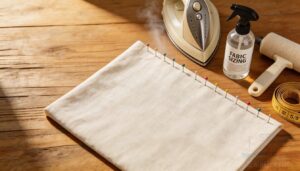
Good fabric preparation is the secret behind every invisible zipper that looks easy. Start by pre-washing your fabric to remove sizing and oils — residues make zipper teeth slip and stitching uneven.
Run a lint roller over the surface, then press fabric flat with your iron. Check your seam allowance (usually 5/8″) and apply fusible interfacing if you’re working with lightweight material.
Step 2 – Finish The Seam Edges
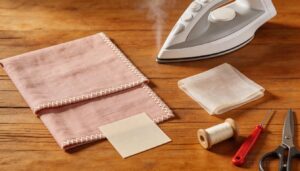
Before a single zipper tooth hits your fabric, your seam edges need to be ready.
Here’s what to do:
- Run an overlock or zigzag finish along both raw edges to stop fraying
- Apply interfacing before finishing to stabilize without stiff bulk
- Press each edge flat using a pressing cloth to protect delicate fabric
Clean seam allowances make everything click into place.
Step 3 – Mark The Invisible Zipper Position
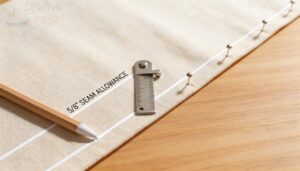
Marking and aligning zipper placement is where precision pays off. Use a fabric marking tool — tailor’s chalk works great — to mark your 5/8″ seam allowance along both edges.
Do a quick fabric grain check to keep everything straight. Alignment guides or a seam gauge help with marking accuracy.
Pin in place, then fold the fabric to verify your template use before moving on.
Step 4 – Prepare The Invisible Zipper
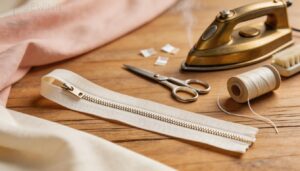
Before you sew a single stitch, your zipper needs a little prep work — and it makes all the difference.
- Start by pressing tape flat with a low-heat iron to straighten the coil
- Focus on cleaning zipper teeth of any lint or loose threads
- Do a quick snipping tape ends to prevent fraying
- Hand-stitch a basting zipper line to hold it steady
- Finish by testing slider smoothness so nothing snags mid-seam
Step 5 – Sew The First Edge of The Zipper

Now the real magic begins. Attach your invisible zipper foot and align the teeth with the foot’s outer groove — needle positioning is everything here.
Set your stitch length to 2.0–2.5 mm, baste the zipper tape along the seam allowance first, then stitch from top to bottom. Keep thread tension consistent and use a seam guide to stay parallel to the teeth.
Step 6 – Sew The Second Edge of The Zipper
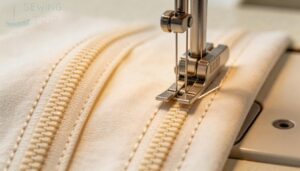
With one side done, flip your fabric and tackle the other side of the zipper. Edge alignment is everything here — keep the seam allowance consistent and your invisible zipper foot snug against the teeth.
- Match needle position to the opposite groove
- Use a 2.0–2.5 mm stitch length for clean results
- Backstitch reinforcement at both ends secures the seam
Watch your fabric tension — don’t pull.
Step 7 – Close and Finish The Seam
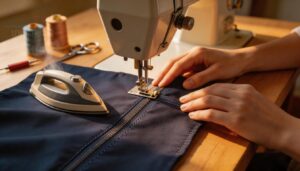
Both sides stitched? Now close the zipper and bring the fabric right sides together.
Stitch the back seam reinforcement from below the zipper stop to the hem — your standard presser foot manages this easily.
Use edge trimming methods to reduce bulk, then press the seam open for genuine seam flatness.
A final seam inspection ensures no puckers, loose threads, or tape misalignment survived.
Best Tips for a Clean Invisible Zipper Finish

Getting the zipper sewn in is a win, but the finish is where it all comes together. few small habits make the difference between a zipper that looks store-bought and one that just looks… off.
Here are tips that matter most.
Choosing The Right Zipper Foot
Choosing the right zipper foot can make or break your invisible zipper. Foot Compatibility matters — not every foot fits every machine, so check your shank type first. A dedicated invisible zipper foot manages Needle Clearance beautifully, guiding stitches right beside the teeth. Foot Maintenance keeps things running smoothly too — clean off lint regularly.
- Confirm Foot Compatibility with your machine’s shank before buying
- Use an invisible zipper foot for best Material Suitability on delicate fabrics
- Try a regular zipper foot with basting if that’s all you have
- Look for Foot Adjustability to shift needle position left or right
- Clean your foot often — Foot Maintenance prevents skipped stitches
Using Fusible Interfacing on Lightweight Fabrics
Lightweight fabric and invisible zippers can be a tricky combo — but fusible interfacing fixes that fast. Think of it as giving your fabric a backbone.
Follow a simple Weight Selection Guide: lighter fabrics need lighter interfacing. Always test with the Test Swatch Method first, since your Heat Settings Guide matters — too hot scorches silk.
Match interfacing color using Color Matching Tips to avoid show-through. Keep Stitching Tension balanced for clean results.
Pressing and Setting The Seam After Stitching
Once your stitching is done, pressing makes or breaks the finish. Use these four steps to set the seam cleanly:
- Steam vs. Dry – Use dry heat on silk; light steam on cotton blends
- Pressing Cloth Choice – Always protect delicate fabric from shine
- Tailors Ham Usage – Shape curved seams without distortion
- Cooling Before Handling – Let fabric rest before moving it
Press the seam from the wrong side first, then check alignment. Apply Pressure Control Tips — lift, don’t drag — to press the finished invisible zipper flat.
Common Invisible Zipper Mistakes and Easy Fixes
Even the most careful sewists run into a snag or two with invisible zippers — it’s just part of the learning curve. The good news is that most problems have a quick, easy fix once you know what to look for.
Here are the most common mistakes and exactly how to correct them.
Teeth Catching or Snagging The Fabric
Snagging usually comes down to two culprits: poor teeth alignment or coil burrs on a rough zipper edge. Keep your seam allowance generous slack — it gives the zipper room to move without dragging fabric into the coil path.
High fabric tension is another trap. A walking foot feeds everything evenly, stopping those tiny catches before they start.
Zipper Visible From The Outside After Sewing
If your invisible zipper is showing through, the fix usually starts with these four checks:
- Zipper alignment — teeth must sit exactly on the seam line
- Tape Concealment — press seam allowances flat using the Edge Folding Technique
- Color Matching — a mismatched zipper screams through lightweight fabric
- Seam Allowance Accuracy — 5/8″ keeps everything tucked and hidden
Puckering Along The Seam Line
Puckering is basically your seam throwing a tantrum — and it’s almost always preventable. Check your thread tension first; too tight pulls the fabric into tiny folds. Stitch length consistency and needle size matter too — mismatched settings on delicate fabric grain alignment cause rippling quickly.
Puckering is your seam throwing a tantrum — and tight thread tension is almost always to blame
Fusible interfacing weight stabilizes lightweight panels beautifully. Press the finished seam flat using your zipper foot as a guide for clean seam alignment.
Zipper Pull Getting Stuck After Installation
stuck zipper pull is usually telling you something specific.
Slider alignment issues — where the slider tilts slightly on the teeth — are the most common cause. Fabric bulk interference near the zipper stopper can trap the pull completely. Check for lint build-up inside the slider tracks, excess seam allowance crowding the path, or zipper foot wear that caused uneven stitching.
Gently ease the pull back, clear the obstruction, and re-press.
Frequently Asked Questions (FAQs)
Can you shorten an invisible zipper after installation?
Yes, you can shorten an invisible zipper after installation.
It takes stitch removal, stop replacement, tape trimming, and slider reattachment — but done carefully, your zipper length adjusts cleanly without losing that smooth finish.
How do you sew invisible zippers on stretch fabric?
Stretch fabric stabilization is your first move.
Stay-stitch or interface the seam allowance, use a ballpoint needle, match your thread color, align the zipper tape carefully, and a walking foot technique keeps everything flat.
What stitch length works best for invisible zippers?
Aim for a stitch length of 0 to 5 mm — your invisible zipper’s best friend. Lightweight fabrics need 0 mm; heavier ones handle 5 mm well. Always test on a scrap first.
Can a regular zipper foot replace an invisible foot?
A regular zipper foot can work in a pinch, but expect more hand guiding and visible stitching.
For best results, an invisible zipper foot manages alignment techniques and needle positioning far better.
How do you match zipper color to your fabric?
Hold your zipper against the fabric in natural daylight — lighting influence changes everything. Shade matching techniques and fabric swatch comparison beat guessing every time. When in doubt, blend, don’t contrast.
Conclusion
Nearly 70% of sewers avoid invisible zippers due to their reputation for being finicky. But with the right approach, you can join the 30% who conquer them with ease.
By following these steps and tips, you’ll master the easiest way to sew an invisible zipper.
Your garments will look professional, and you’ll wonder how you ever managed without this skill.
Give it a try, and you’ll be hooked on the smooth finish it provides every time.