This site is supported by our readers. We may earn a commission, at no cost to you, if you purchase through links.
Your first project sits in front of you—fabric, thread, needle—and suddenly you realize you don’t know where to start. Should you hand-sew or use the machine? Which stitch keeps a hem invisible, and which one actually holds under stress?
Most beginners jump in with enthusiasm, only to end up with puckered seams, loose threads, and fabric that won’t cooperate. The truth is, sewing isn’t about memorizing dozens of fancy techniques. You need just a handful of essential stitches for beginners—the reliable workhorses that professional sewers use for 90% of their projects.
Master these core stitches, and you’ll handle everything from hemming pants to constructing garments with confidence.
Table Of Contents
- Key Takeaways
- Essential Sewing Tools and Materials
- Basic Hand Stitches Every Beginner Needs
- Fundamental Machine Stitches for Beginners
- Choosing The Right Stitch for Your Project
- Step-by-Step Guide to Sewing Basic Stitches
- Tips for Mastering Beginner Sewing Stitches
- Frequently Asked Questions (FAQs)
- Conclusion
Key Takeaways
- You only need six hand stitches (running, backstitch, slip, basting, whipstitch, catch) and five machine stitches (straight, zigzag, overlock, blind hem, buttonhole) to handle 90% of sewing projects confidently.
- The backstitch creates machine-strength seams by hand through interlocking thread segments with 1.5-2mm spacing, while the slip stitch hides completely inside fabric folds for invisible hems that look professional.
- Matching your stitch to fabric behavior prevents failure—zigzag stitches stretch with knits to avoid popping threads, while tight backstitches stop linen from fraying along raw edges.
- Consistent stitch length and balanced thread tension separate amateur work from polished results, achieved through short focused practice sessions (20-30 minutes, 4-5 times weekly) rather than memorizing dozens of fancy techniques.
Essential Sewing Tools and Materials
Before you can master any sewing kit, you need the right tools. Think of your supplies as the foundation—without them, even the simplest project becomes frustrating.
Once you’ve gathered the essentials, you can explore beginner-friendly sewing patterns that help you put those tools to work.
Let’s look at the essentials that’ll set you up for success from day one.
Choosing The Right Needle
Your needle is the bridge between your vision and the finished piece. Hand sewing needles come in various sewing needle sizes—smaller numbers mean thicker needles for heavy fabrics, while larger numbers suit delicate work.
Consider needle point types (sharp for woven, ballpoint for knits) and needle material (usually stainless steel). Match your choice to your fabric, and you’ll master sewing techniques with confidence!
Selecting The Proper Thread
Once you’ve picked your needle, thread becomes your lifeline. Thread weight matters—40 to 50 weight works for most sewing basics, while heavier fabrics need 30 weight or thicker.
Fiber types like polyester offer strength, cotton suits natural fabrics, and nylon stretches beautifully for knits. Color matching hides your hand sewing, and proper thread tension prevents puckering. Material compatibility ensures smooth sewing techniques every time!
Must-Have Sewing Supplies for Beginners
Beyond needle and thread, you’ll need a basic sewing kit with sharp scissors for fabric and a seam ripper for fixing mistakes.
Stock up on universal needles (size 80/12), polyester thread in multiple colors, and 1-2 yards of cotton for practice. Add a tape measure, pins with a magnetic cushion, and fabric clips—these sewing tools transform your workspace!
Basic Hand Stitches Every Beginner Needs
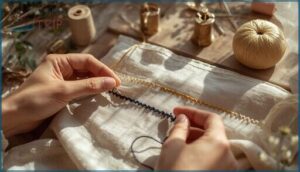
Hand sewing is where your stitching journey really begins. These foundational techniques don’t require fancy equipment—just a needle, thread, and a little practice to build your confidence.
Let’s walk through the six essential hand stitches that’ll carry you through most beginner projects and repairs.
Running Stitch and Its Uses
Think of the running stitch as your hand sewing foundation—quick, simple, and surprisingly adaptable! You’ll create evenly spaced stitches (about 2-3mm) by weaving your needle in and out of the fabric.
This basic stitch works beautifully for basting, gathering fabric, and temporary seams. Perfect stitch length control comes with practice, and fabric selection barely matters—it works on nearly everything!
Backstitch for Strong Seams
When you need seam reinforcement that rivals a machine, the backstitch is your go-to hand sewing powerhouse. This basic stitch creates interlocking thread segments by stitching backward slightly, then forward—mimicking machine strength perfectly.
Master consistent stitch tension and 1.5-2mm spacing for durability. Different backstitch variations work across fabric types, making this essential sewing technique incredibly adaptable for permanent seams and repairs!
For more details on tools and basics, see these backstitch hand sewing tips.
Slip Stitch for Invisible Hems
The slip stitch creates invisible hems by hiding thread inside fabric folds—perfect for finishing garments without visible stitches! Match your thread to fabric, work from hem fold to catch just a few main fabric threads, then travel through the fold again.
Practice this technique alongside mastering straight stitch basics to build the steady hand control that makes slip stitches truly disappear.
Proper hem preparation and light stitch tension keep your invisible seams flat and professional-looking on both sides. Essential tools for this technique include a hand sewing needle, matching thread, and thimble, as described in this helpful guide to supplies and equipment for slip stitching.
Basting Stitch for Temporary Seams
The basting stitch is your best friend for temporary seams. This long running stitch holds fabric layers together during fitting or tricky seam work without creating permanent marks.
You can sew it by hand or machine using larger stitch lengths for easy removal. Simply pull the thread to lift stitches once you’ve finished your final seam—no damage to your fabric!
Whipstitch for Finishing Edges
The whipstitch wraps thread diagonally over raw fabric edges to prevent fraying—perfect for felt, appliqués, and lightweight cottons.
This quick hand sewing technique creates clean edge finishing with minimal fabric distortion when you keep thread tension snug but not tight. Space your stitches 2-4mm apart for even coverage, and you’ll have professional-looking edges in no time!
Catch Stitch for Flexible Hems
The catch stitch creates a zigzag pattern that moves with your fabric—ideal for curved edges and stretch fabrics. This hand sewing technique secures your hem allowance with invisible stitches that won’t show on the front.
Perfect for beginner sewers tackling knits and heavy wovens, it forms flexible seams by taking small diagonal bites that cross over the fold. Your hemming just got stretchier!
Fundamental Machine Stitches for Beginners
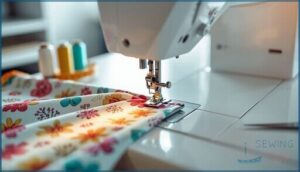
Once you’ve got the hang of hand stitches, it’s time to fire up your sewing machine. Machine stitches are faster and stronger than hand stitches, making them perfect for constructing garments and tackling bigger projects.
Let’s look at the five essential machine stitches that’ll become your go-to techniques for almost everything you sew.
Straight Stitch for Basic Seams
The straight stitch is your sewing machine’s workhorse—perfect for joining seams in most projects. You’ll want to set your stitch length control around 2.5 to 3.0 millimeters for everyday basic sewing stitches for beginners.
Watch your fabric tension and seam allowance alignment to prevent thread breakage and guarantee clean stitch alignment on woven fabrics every time!
Zigzag Stitch for Stretch and Edge Finishing
Your zigzag stitch is a lifesaver for stretch fabrics and edge finishing. Set your width to 3-4mm and length around 2mm to prevent fraying along raw edges.
This stitch lets seams stretch without popping threads—perfect for knits and jersey. Position the zigzag so your needle just catches the fabric edge, sealing loose fibers and stopping unraveling during washing.
Overlock Stitch for Seam Neatening
Your overlock stitch—often created with a serger—wraps raw edges in multiple threads while trimming excess fabric in one pass. This edge finishing technique prevents fraying on woven and knit fabrics beautifully.
Adjust thread tension and stitch settings carefully for clean results, and test fabric compatibility on scraps first. Regular serger maintenance keeps your seams professional-looking every time!
Blind Hem Stitch for Invisible Hems
Want professional-looking invisible hems on your favorite garments? The blind hem stitch creates nearly invisible finishes by catching just a few threads from the hem fold. Perfect for woven fabrics like cotton or linen, this invisible stitching technique elevates your sewing techniques instantly.
Blind Hem Tips for success:
- Match your thread to the fabric for minimal stitch visibility
- Use a blind hem foot to guide the fold evenly
- Test fabric compatibility on scraps before hemming your project
Buttonhole Stitch for Closures
Buttonhole stitch transforms a simple slit into a durable closure that won’t fray with use. This hand sewing technique creates tight loops around the cut edge, perfect for beginner sewing stitches on medium-weight cotton or linen.
Master buttonhole construction by maintaining even stitch tension and practicing edge reinforcement. Your fabric selection matters—stable wovens work best for reliable closure techniques and professional results.
Choosing The Right Stitch for Your Project
Picking the right stitch isn’t just about what looks good—it’s about what works. The fabric you’re sewing, the type of garment you’re creating, and whether you need function or flair all play a role in your decision.
Let’s break down how to match your stitch to your project so you can sew with confidence every time.
Matching Stitches to Fabric Types
Your fabric types dictate which sewing stitches work best. Silk needs fine hand sewing with shorter stitch density to prevent snags, while denim demands stronger stitch types with longer lengths.
Fabric stretch in knits requires zigzag stitches so threads won’t snap. Consider thread weight, seam allowance, and fabric grain when choosing stitches. Linen’s tendency to fray calls for tight backstitches and proper fabric edge finishing to keep seams intact!
Selecting Stitches for Garment Construction
Each garment construction project demands strategic stitch density and thread selection to guarantee seam stability. Straight stitches work for woven garments, while zigzag basic stitches accommodate knits.
Your sewing machine manages most construction, but hand sewing finishes delicate areas. Match sewing techniques to fabric behavior—lightweight silks need finer stitches, heavyweight denim requires reinforced seams. Understanding these connections builds garment durability!
Using Decorative Vs. Functional Stitches
Every stitch you choose has a purpose—some hold your project together, while others make it beautiful. Functional stitches like backstitch and straight stitch provide strength for seams, while decorative stitches add embellishment techniques and textile artistry.
You’ll use embroidery stitches for seam decoration and fabric manipulation to create visual interest. Master both sewing techniques and applications—they work together to transform ordinary projects into remarkable creations!
Step-by-Step Guide to Sewing Basic Stitches
Now it’s time to put your knowledge into action and actually sew these hand stitches yourself. Don’t worry—I’ll walk you through each one with clear, simple steps that anyone can follow.
By the end of this section, you’ll have the confidence to tackle both hand and machine stitches like a pro.
How to Sew a Running Stitch
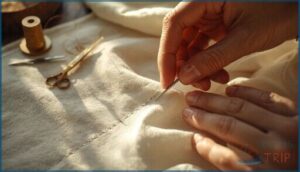
The running stitch is your gateway to hand sewing—simple, rhythmic, and surprisingly adaptable. Here’s how to nail it:
- Thread your needle and knot the end, securing your starting point
- Push the needle through fabric at 90 degrees for clean punctures
- Weave in and out in even 1/4-inch intervals, maintaining stitch consistency
- Pull gently to keep tension control without puckering
Practice on scrap fabric first!
How to Sew a Backstitch
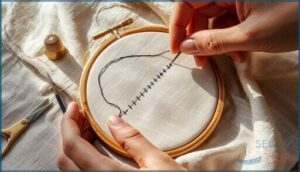
Backstitch is the workhorse of hand sewing—it’s the closest you’ll get to machine-strength seams without electricity. Thread your needle (12 to 18 inches works best for thread management), then bring it up through fabric.
Take a small stitch forward, then circle back to fill the gap. Keep those 2 to 4 mm intervals consistent, and you’ll build durable seams every time.
How to Sew a Slip Stitch
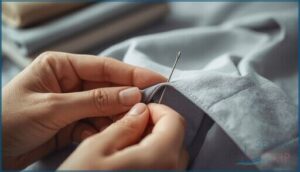
Slip stitch is your secret weapon for hems that disappear like magic—no visible stitches, just a clean, professional finish. Thread your needle and anchor inside the folded hem. Catch just a thread or two from the garment fabric, then slide through the fold about ¼ inch. This invisible hemming technique works beautifully on dress pants, skirts, and curtains.
Master slip stitch with these beginner-friendly tips:
- Match your thread to fabric – Invisible hemming only works when thread color blends seamlessly with your material
- Keep stitch tension loose – Tight stitches create puckering that ruins the hidden effect you’re working toward
- Practice on scraps first – Hand sewing techniques improve faster when you experiment with different sewing notions before tackling real projects
How to Sew a Zigzag Stitch on a Machine
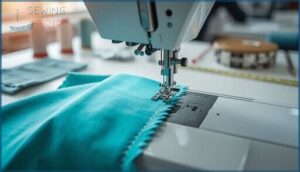
You’ve conquered invisible hand stitches—now let’s fire up that sewing machine for zigzag magic! Zigzag Stitch Basics start with your stitch selector. Set width between 1-6 mm and stitch length around 1.5-2.5 mm. Test on scrap fabric first.
| Machine Settings | Best Use |
|---|---|
| Narrow (1-2 mm) | Edge Finishing on wovens |
| Wide (3-6 mm) | Stretch Fabric seams |
| Medium length | Prevents fraying |
This adaptable powerhouse prevents fraying and manages Stitch Variations beautifully!
How to Sew a Blind Hem Stitch
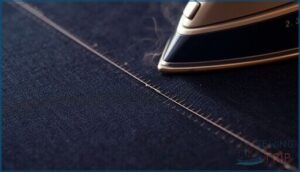
Ready for hems that practically vanish? Blind Hem Tips and Fabric Preparation make all the difference! Whether you’re hand sewing or adjusting Sewing Machine Settings, this technique keeps stitches hidden on the right side.
Here’s your roadmap for blind hemming stitch success:
- Press your hem flat before starting
- Match thread color closely to fabric
- Set Stitch Length Control to 2.0-2.5 mm on machines
- Catch only a few threads with each stitch
- Space Hand Hemming Techniques stitches 2-3 mm apart
Practice transforms invisible hems into second nature!
Tips for Mastering Beginner Sewing Stitches
You’ve learned the stitches—now it’s time to make them look professional.
The difference between sloppy seams and polished work comes down to a few key habits that every beginner needs to master.
Sloppy seams become polished work when you master a few key beginner habits
Let’s cover the essential tips that’ll transform your stitching from wobbly to wow-worthy.
Maintaining Consistent Stitch Length
Keeping your stitch length uniform separates okay work from polished sewing. Stitch Length Control comes down to steady Sewing Rhythm and smart Needle Alignment—align fabric edges with your throat plate guide to stay within 1–2 mm. Practice on scraps before tackling real projects, and you’ll train muscle memory fast.
| Element | What to Check | Quick Fix |
|---|---|---|
| Feed dogs | Are they moving smoothly? | Clean and oil regularly |
| Fabric guide | Is edge aligned with markings? | Reposition before each seam |
| Hand pace | Are you rushing or hesitating? | Count rhythm: one, two, steady |
| Test strip | Does a 20 cm sample show uniform spacing? | Adjust settings and re-test |
Fabric Tension matters too—keep material flat without bunching. A walking foot helps slippery fabrics feed evenly, boosting stitch durability across all your basic stitches and sewing techniques. Consistent Thread Tensioning prevents gaps that throw off spacing, so don’t skip those dial checks!
Adjusting Tension for Even Stitches
Once your stitch length is dialed in, Thread Tension keeps those stitches looking neat. Upper Tension and Bobbin Adjustment work together for perfect Stitch Balance—if loops show on top or bottom, tweak one dial at a time.
Run a quick Tension Testing scrap before each project. Balanced tension control locks your stitch size and stitch durability, making every seam stronger with solid sewing techniques.
Practicing for Skill Improvement
Short, focused drills build muscle memory faster than marathon sessions. Schedule 20 to 30 minutes of practice scheduling four to five times a week—morning sessions often boost hand control for beginners.
Keep a visible progress monitoring log to track your skill tracking wins and spot repeating trouble spots. Regular drills on hand sewing and basic stitches sharpen your sewing techniques, so mastering basic sewing stitches becomes second nature with consistent sewing basics repetition.
Common Mistakes and How to Fix Them
Three common sewing mistakes trip up beginners: Thread Tension problems create puckering, while Needle Damage causes skipped basic stitches.
Fabric Distortion happens when foot pressure’s wrong, and Bobbin Issues lead to Stitch Inconsistency.
Fix tension by testing scraps first, replace bent needles immediately, adjust presser foot pressure, and rethread your bobbin carefully.
These sewing tips prevent frustrating sewing mistakes in both hand sewing and machine sewing techniques.
Frequently Asked Questions (FAQs)
What are the easiest basic stitches?
Practice makes perfect, so start simple! The running stitch, basting, and whipstitch are easiest because they follow repeated motions, require no precise spacing, and let you build muscle memory fast.
What is the most important stitch to learn?
For hand sewing, the backstitch reigns dominant—it’s your go-to for strong, permanent seams.
On the machine, master the straight stitch first. These sewing basics form the foundation for all beginner techniques.
How do I fix a broken seam quickly?
About 60% of garment repairs involve broken seams. For a quick fix, trim frayed edges, align fabric with pins, backstitch along the break, knot securely, and press flat for fray prevention and edge reinforcement.
Whats the difference between topstitching and understitching?
Topstitching creates visible decorative or reinforcing rows on your garment’s outside, while understitching hides on the inside—stitching facings to seam allowances.
Both improve edge finishing and seam reinforcement, working together for professional results.
When should I use a double needle?
Think of it as killing two birds with one stone—a double needle creates parallel stitches for professional hems on knits and wovens.
You’ll get stretch friendly seams with even tension and bulk reduction effortlessly!
How do I prevent fabric from puckering?
You’ll prevent puckering with proper needle selection, balanced tension control, and appropriate stitch length for your fabric types.
Test seams first, use stabilizers on delicate materials, and press carefully for pucker prevention and perfect seam finishing.
Can I combine hand and machine stitches?
Hybrid sewing transforms everything. You’ll blend hand sewing with machine stitches throughout your sewing project construction.
Focus on thread compatibility and seam transitions for fabric flexibility. Practice stitch blending—it’s one of the most adaptable basic sewing stitches for beginners mastering sewing techniques and applications.
Conclusion
Think of these essential stitches for beginners as your sewing alphabet—once you know them, you can write any story in fabric. You don’t need a hundred techniques cluttering your mind.
Master the running stitch, backstitch, slip stitch, and straight stitch first. Practice until your hands move with confidence.
Then watch as hems stay invisible, seams hold strong, and projects that once intimidated you become completely achievable. Your needle is ready. Now show that fabric what you’ve learned.
- https://en.wikipedia.org/wiki/Straight_stitch
- https://sewguide.com/easy-hand-stitches/
- https://madamsew.com/blogs/sewing-blog/how-to-use-a-sewing-machine-beginner-exercises-madam-sew
- https://softlinebrandpartners.com/guide-to-basic-sewing-stitches/
- https://www.pixiefaire.com/blogs/sewing-tips-resources/14211157-how-to-do-four-basic-hand-stitches