This site is supported by our readers. We may earn a commission, at no cost to you, if you purchase through links.
You can’t conquer a fabric project with dull blades. Ask any fashion design student who’s butchered a pattern piece with kitchen scissors—the jagged edges and frayed seams tell the story. Fabric scissors for students aren’t just another school supply; they’re the difference between a garment that looks homemade and one that looks handcrafted.
The right pair delivers clean cuts through multiple layers, reduces hand fatigue during long studio sessions, and lasts through years of projects. With options ranging from $15 budget-friendly shears to $80 professional-grade tools, students face a crowded market of blade materials, handle designs, and specialized cuts.
Here’s how to identify scissors that match your skill level, project demands, and budget constraints.
Table Of Contents
- Key Takeaways
- Essential Features of Fabric Scissors for Students
- Types of Fabric Scissors Suitable for Students
- Top 10 Fabric Scissors for Students
- 1. Guggenhein Professional Tailor Shears
- 2. Karen Kay Buckley Scissors
- 3. Tula Pink Curved Sewing Snips
- 4. Embroidery Snip Eze Scissors
- 5. Kai Pinking Shears Scissors
- 6. Gingher Embroidery Scissors
- 7. Gingher Stainless Steel Dressmaker Scissors
- 8. Kai Sewing Scissors with Pink Handle
- 9. Handi Quilter Batting Scissors
- 10. Jistl Green Pinking Shears Scissors
- How to Choose The Right Scissors for School Projects
- Care and Maintenance Tips for Student Scissors
- Frequently Asked Questions (FAQs)
- Conclusion
Key Takeaways
- Fabric scissors demand specific features—high-carbon or stainless steel blades for durability, ergonomic grips that maintain neutral wrist posture, and blade lengths between 6-9 inches matched to your hand size and project complexity.
- Students should invest $30-50 in quality shears like Gingher or Kai that balance professional performance with budget constraints, since proper scissors last 2-5 years and directly impact cutting precision.
- Blade maintenance isn’t optional—wipe after each use, oil monthly at the pivot point, sharpen every 6-12 months, and never cut paper with fabric scissors since abrasive materials dull edges three times faster.
- Match scissor type to task: dressmaking shears for pattern pieces, pinking shears for seam finishing, embroidery scissors for thread trimming, and quilting scissors for multiple layers—using the wrong tool destroys both fabric and blades.
Essential Features of Fabric Scissors for Students
You can’t master fabric projects with scissors that fight you every step of the way. The right pair transforms cutting from a frustrating chore into precise, controlled work that sets up everything else for success.
Investing in professional-grade sewing scissors built specifically for fabric will save you hours of frustration and improve your cutting accuracy immediately.
The right fabric scissors transform cutting from a frustrating chore into precise, controlled work that sets up everything else for success
Let’s break down the four features that separate scissors worth your investment from ones that’ll end up in a drawer.
Before you buy, check out what makes professional-grade fabric scissors actually worth the price so you know exactly what to prioritize.
Blade Material and Durability
Blade sharpness starts with material selection. High-carbon steel delivers exceptional edge retention and takes a finer edge than stainless steel, though you’ll need to guard against corrosion resistance issues. Titanium bonded blades split the difference—they maintain sharp blades longer while resisting rust. For student use, stainless steel wins on durability testing because it survives neglect better, even if scissor maintenance and sharpening become less frequent. Be sure to read about essential for extending the lifespan of your tools.
Comparing trusted brands like Kai, Gingher, and Fiskars helps you decide which steel and edge geometry works best for your cutting needs.
Handle Ergonomics for Comfort
Sharp steel matters, but your hand holds the tool. Ergonomic grips transform marathon cutting sessions from torture into flow. Bent designs keep your wrist posture neutral—studies show up to 83 percent neutral positioning versus awkward angles that wreck your hand. Soft grips cushion pressure points while wide grips distribute force across multiple fingers.
Professional quilters often recommend specialized quilting scissors with these ergonomic features to prevent repetitive strain injuries during long cutting sessions.
Four ergonomic features that slash fatigue:
- Soft grip materials distribute contact pressure and reduce localized finger stress
- Wide grip loops let multiple fingers share the load during dense fabric cuts
- Bent or offset designs maintain neutral wrist posture throughout cutting tasks
- Symmetric grips accommodate both left and right handed users without strain
Ergonomic scissors with proper grip size reduce forearm muscle activity and maintain grip strength over eight hour days. For students wrestling through layers of denim or batting, fatigue reduction isn’t luxury—it’s the difference between clean cuts and mangled edges. Soft grip fabric scissors designed for extended use prevent that cramping sensation that forces you to stop mid-project.
Choose ergonomic grip designs that feel natural when you squeeze. Your wrist should stay straight, not twisted. Test before buying: if the grip digs into your palm or forces your thumb into an awkward angle, keep looking. Proper ergonomic grips boost usability scores and slash discomfort ratings compared to traditional straight designs.
Scissor maintenance extends to ergonomics too—worn pivot points create uneven resistance that strains your hand unnecessarily. For left-handed students, considering the between left- and right-handed scissors can further improve comfort and cutting precision.
Blade Length and Cutting Precision
Once your grip feels right, size dictates what you can conquer. Medium blades—8 to 9 inches—balance reach and control for most student projects. Longer shears enable continuous strokes on straight cuts like skirt panels, reducing deviations. Shorter blades, 6 to 8 inches, navigate tight curves and intricate patterns without overcutting. Match blade length to your hand size: subtract half an inch from wrist to fingertip for maximum comfort and precision cutting without strain.
| Blade Length | Best For |
|---|---|
| 6–8 inches | Curved edges, delicate fabrics, detailed patterns |
| 8–9 inches | General sewing, medium fabrics, student projects |
| 11+ inches | Long straight cuts, multiple layers, skirt panels |
| Short embroidery | Notches, corners, precision edges |
| Ergonomic sizing | Hand-measured fit prevents fatigue, improves control |
Safety Considerations for Students
Precision means nothing if you’re patching up cuts instead of fabric. Student supervision matters most with sharp blades—adults should stay within arm’s reach for beginners learning scissor safety rules.
Choose rounded-tip designs for younger sewers; they prevent punctures while maintaining clean cuts. Classroom protocols require blades pointed down during transport and closed storage after use.
Master accident prevention through deliberate grip control and proper ergonomic grips that reduce slips during extended cutting sessions.
Types of Fabric Scissors Suitable for Students
You can’t cut every fabric with the same scissors—each type fulfills a specific purpose in your sewing toolkit. Students need to understand which scissors work best for different tasks, from cutting long yardage to snipping intricate details.
Let’s break down the four essential types you’ll actually use in class and beyond.
If you’re looking to maximize versatility, a serger-sewing machine combination can handle both everyday projects and professional finishing in one setup.
Dressmaking Shears
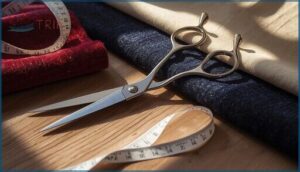
When you’re cutting pattern pieces for garments, fabric shears become your workhorse. These 8- to 10-inch tools give you long, smooth cuts through cotton, denim, and wool without snagging. Here’s what makes them essential:
- Bent handle design keeps blades flat on your cutting surface for accurate lines
- Stainless steel construction resists rust through classroom use
- Handle design reduces fatigue during extended cutting sessions
- Blade sharpness stays sharp when you reserve them strictly for fabric
Pinking Shears
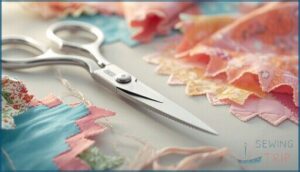
Zigzag cuts along seam allowances stop fabric fraying in its tracks. Pinking shears give you that sawtoothed edge with every snip, turning woven cotton and quilting fabric into fray-resistant pieces.
You’ll find these 7- to 8-inch tools essential for seam finishing—they clip curves and trim allowances in one motion. The bent handle keeps control steady even when you’re trimming through heavier materials.
Embroidery Scissors
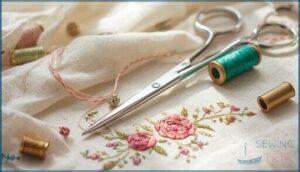
Thread trimming around delicate stitches demands a tool built for close quarters. Embroidery scissors deliver that precision with 3- to 4-inch blades and needle-sharp points that won’t disturb your finished work.
- Thread trimming happens millimeters from fabric without snagging surrounding stitches
- Fabric detailing becomes manageable when bent blades let you cut near embroidery hoops or machine plates
- Stitch accuracy improves because narrow points reach tight corners that standard fabric scissors can’t access
Quilting and Batting Scissors
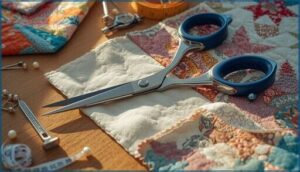
Layering three fabrics at once? You need tools that won’t buckle under pressure. Quilting and batting scissors manage multiple cotton layers and thick polyester batting without snagging or distorting your quilt sandwich.
Their long blades and offset grips keep cutting accuracy sharp across patchwork pieces and binding strips—quilting essentials that turn fabric layering chaos into clean, controlled fabric cutting techniques every time.
Top 10 Fabric Scissors for Students
You need scissors that won’t quit halfway through a project or leave your hand cramping after ten minutes. The right pair balances sharp blades with comfortable grips, all without destroying your student budget.
Here are ten fabric scissors that actually deliver on durability, precision, and value.
1. Guggenhein Professional Tailor Shears
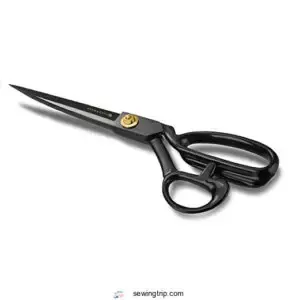
You need sewing tools that can handle the tough stuff without babying them. Guggenhein Professional Tailor Shears pack high-carbon steel blades at 58 HRC hardness—these heavy duty fabric scissors slice through denim, batting, and upholstery vinyl with less effort than budget alternatives.
The 9-inch IX model gives you blade sharpness that stays put through semester-long projects, while rubber-coated grips deliver scissor ergonomics that won’t cramp your style during marathon cutting sessions.
They’re built for fabric cutting that doesn’t quit, though proper scissor maintenance keeps that edge razor-sharp.
| Best For | Advanced sewing students and serious hobbyists who regularly cut heavy fabrics like denim, upholstery vinyl, and layered materials and need professional-grade shears that stay sharp through demanding projects. |
|---|---|
| Material | Alloy Steel |
| Color | Black |
| Brand | Guggenhein |
| Primary Use | Tailoring & Quilting |
| Blade Type | Sharpened |
| Handle Design | Ergonomic Comfort Grip |
| Additional Features |
|
- High-carbon steel blades with 58 HRC hardness cut through thick materials like batting, fleece, and vinyl with noticeably less hand effort than standard shears
- Heavier weight (around 9-10 ounces) provides cutting power for dense fabrics while rubber-coated handles reduce slippage during extended use
- Cost-effective alternative to premium brands like Gingher while delivering professional performance on heavy-duty tailoring and costume work
- Right-handed design only leaves left-handed users without options in this model line
- Heavier weight and professional-grade construction may cause faster fatigue for students with smaller hands or limited grip strength
- Some quality control issues reported, including loose adjustment nuts and occasional defective units, plus warranty shipping limited to USA customers only
2. Karen Kay Buckley Scissors
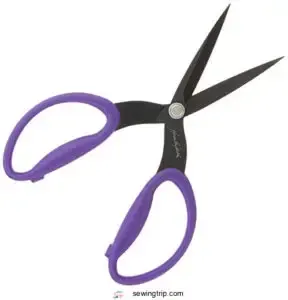
When precision work demands micro-control, Karen Kay Buckley scissors deliver a scissor blade design that actually grips fabric instead of shoving it around. The serrated edge pulls material into the blades—perfect for embroidery techniques and tight appliqué curves without fraying.
You’ll find these fabric scissors in five lengths, from 4 to 8.5 inches, all sporting cushioned grips that work for lefties and righties alike. They’re a quilting accessory favorite in student studios, and sewing tool reviews consistently praise their sharp-to-the-tip performance. Just don’t drop them—that’s where scissor maintenance starts.
| Best For | Quilters and sewists who need precision cutting for appliqué, detailed fabric work, and intricate shapes without fraying edges. |
|---|---|
| Material | Plastic |
| Color | Purple |
| Brand | Karen Kay Buckley |
| Primary Use | Sewing & Applique |
| Blade Type | Micro-serrated |
| Handle Design | Cushioned |
| Additional Features |
|
- Micro-serrated blades grip fabric instead of pushing it away, giving you clean cuts on curves and points without slipping
- Sharp all the way to the tip so you can trim tight spots and small pieces accurately
- Cushioned handles work for both lefties and righties, keeping your hand comfortable through long cutting sessions
- Blades can get dull over time and need careful handling to stay sharp
- Easy to damage if you drop them, so you need to be gentle
- Price point runs higher than basic fabric scissors, which some users find steep
3. Tula Pink Curved Sewing Snips
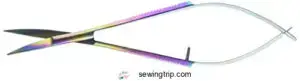
Curved blade design changes the game when you’re trimming threads right at the seam line. Tula Pink’s 5-inch snips use micro serration to grip thread without slipping, and the spring action reopens the blades automatically—your hand won’t cramp during marathon sewing sessions. The ergonomic grips angle upward so you can snip under your presser foot without wrestling fabric out of position.
Sewing tool reviews highlight these fabric scissors for their titanium coating and rainbow finish, though some students file down rough spots at the tip. Proper scissor maintenance keeps that curved edge sharp for cutting techniques that demand control.
| Best For | Quilters and sewists who need precise thread trimming close to fabric surfaces, especially while working under a sewing machine presser foot. |
|---|---|
| Material | Stainless Steel |
| Color | Pink |
| Brand | Tula Pink |
| Primary Use | Thread Cutting |
| Blade Type | Micro-serrated |
| Handle Design | Curved Spring Action |
| Additional Features |
|
- Spring-action handles reopen automatically after each cut, reducing hand fatigue during repetitive trimming tasks
- Curved blade design with micro serrations grips thread securely and angles tips away from fabric to prevent accidental cuts
- Compact 5-inch size with ergonomic grip positioning makes it easy to maneuver in tight spaces and trim threads without removing projects from the machine
- Some units arrive with rough burrs at the blade tip that require manual filing before use
- The opalescent rainbow coating adds slight bulk and weight compared to plain stainless steel snips
- Not designed for long continuous fabric cuts—best suited for quick localized snips rather than general-purpose cutting
4. Embroidery Snip Eze Scissors
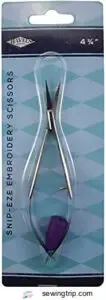
Havel’s 4.75-inch Snip Eze embroidery scissors deliver pinpoint thread trimming with stainless steel blades and an easy-squeeze spring grip—perfect when arthritis or hand fatigue makes ring-handled fabric scissors a battle. Blunt-tip versions reduce fabric puncturing while you learn embroidery tips. A safety cap protects those sharp points between sewing notions runs.
The curved tips slip under your presser foot without lifting fabric, and both right- and left-handed students can use them.
Regular scissor maintenance keeps these lightweight embroidery and needlework tools ready for crafting and sewing supplies projects that demand control over brute force.
| Best For | Students and crafters with arthritis or hand fatigue who need precise thread trimming during machine embroidery, quilting, or detailed sewing work. |
|---|---|
| Material | Stainless Steel |
| Color | Silver |
| Brand | Unknown |
| Primary Use | Embroidery |
| Blade Type | Sharp Curved |
| Handle Design | Easy Squeeze |
| Additional Features |
|
- Easy-squeeze spring grip requires minimal hand strength, making it accessible for users with arthritis or tired hands
- Curved, sharp tips slide under presser feet for clean thread cuts without removing fabric from the machine
- Ambidextrous design works for both right- and left-handed users, plus optional safety cap protects blades during storage
- Blades can dull over time with regular use, requiring replacement or sharpening
- No mention of ergonomic contouring for extended comfort during long sewing sessions
- Compact 4.75-inch size limits use to thread trimming—not suitable for cutting heavier fabrics or large pieces
5. Kai Pinking Shears Scissors
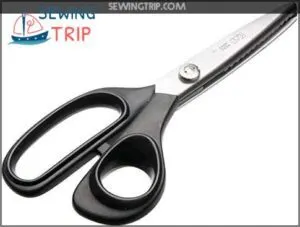
Zigzag edges aren’t just decorative—they’re your rebellion against fraying fabric that unravels mid-project. Kai’s N5350 professional pinking shears give you 9 inches of stainless steel defiance with serrated blades that cut clean zigzags on woven fabrics, stopping loose threads before they start.
The 3-inch cutting blade balances control with speed, while hand-polished blade sharpness slices through multiple layers without crushing fibers.
That extra-large comfort grip fits your entire hand, turning edge finishing and scissor maintenance into power moves instead of hand cramps during marathon cutting techniques across any fabric selection.
| Best For | Sewing students and hobbyists who work with woven fabrics and need a durable, comfortable tool to finish seam allowances and prevent fraying without a serger. |
|---|---|
| Material | Stainless Steel |
| Color | Stainless Steel |
| Brand | KAI |
| Primary Use | Sewing & Quilting |
| Blade Type | Saw-tooth |
| Handle Design | Ergonomic Comfort |
| Additional Features |
|
- Hand-polished stainless steel blades stay sharp through heavy use and cut cleanly all the way to the tip for consistent zigzag edges
- Extra-large comfort grip reduces hand fatigue during long cutting sessions and fits a range of hand sizes
- Strong enough to handle multiple fabric layers and tough projects while remaining lightweight and easy to control
- Some users report the scissors feel too tight or heavy, especially those with smaller hands
- Quality control inconsistencies noted in reviews, with occasional products not meeting expected professional standards
- Manufactured in China rather than Japan, which may disappoint buyers expecting Japanese-made Kai products
6. Gingher Embroidery Scissors
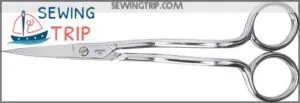
While pinking shears handle edge work, you need surgical control for close-up thread trimming. Gingher’s 4-inch embroidery scissors deliver that blade sharpening advantage with tempered stainless steel tips that slice individual threads without damaging surrounding fabric—your secret weapon for appliqué and buttonholes where sewing scissors can’t reach.
The double-plated chrome-over-nickel finish resists corrosion during years of embroidery techniques, while lightweight handle designs reduce fatigue when you’re executing cutting precision work. These crafting and sewing supplies outlast cheap alternatives by decades, making them worth the investment for serious fabric scissors performance.
| Best For | Embroiderers and detail-oriented crafters who need precision cutting for thread trimming, appliqué work, and tight-space snips where regular scissors can’t fit. |
|---|---|
| Material | Carbon Steel |
| Color | Original Version |
| Brand | Fiskars |
| Primary Use | Embroidery & Applique |
| Blade Type | Knife-edge |
| Handle Design | Double-loop Ergonomic |
| Additional Features |
|
- Razor-sharp tips cut individual threads cleanly without snagging fabric, thanks to tempered stainless steel blades that stay sharp for years
- Chrome-over-nickel plating resists rust and corrosion, plus Gingher backs them with a lifetime warranty and offers professional resharpening
- Lightweight design reduces hand fatigue during long projects while maintaining enough strength to cut through multiple thread layers
- Higher price point compared to basic craft scissors makes them a significant upfront investment
- Finger holes can feel slippery with dry hands, and the compact size may be uncomfortable for people with larger hands
- Some models don’t include the protective sheath mentioned in descriptions, leaving sharp points exposed during storage
7. Gingher Stainless Steel Dressmaker Scissors
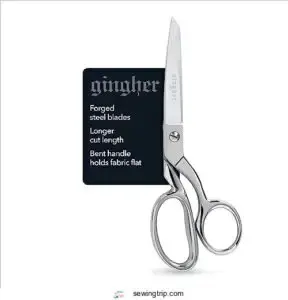
Your workroom deserves scissors that cut through four layers of denim like butter—Gingher’s 8-inch dressmaker shears bring that professional edge with forged steel blades and a bent handle design that keeps fabric flat against your cutting table.
The precision-ground knife edges maintain scissor sharpness through countless projects, while steel quality ensures blade durability that outlasts cheaper sewing scissors by years.
Handle comfort comes from the ergonomic grip that reduces fatigue during marathon cutting sessions. You’ll nail cutting accuracy on long pattern pieces thanks to stainless steel construction and a protective nylon sheath that guards these fabric scissors between uses.
| Best For | Serious sewers, quilters, and crafters who need professional-grade shears for cutting multiple fabric layers and want scissors that’ll last a lifetime. |
|---|---|
| Material | Stainless Steel |
| Color | Silver |
| Brand | Gingher |
| Primary Use | Dressmaking |
| Blade Type | Knife-edge |
| Handle Design | Bent Handle |
| Additional Features |
|
- Knife-edge blades slice through four layers of denim effortlessly and stay sharp through years of heavy use
- Bent handle design keeps fabric flat on your cutting surface for precise, accurate cuts on long pattern pieces
- Lifetime warranty backs up the forged steel construction that outlasts cheaper scissors by miles
- Price tag runs significantly higher than standard fabric scissors
- Finger holes can feel slippery if your hands are dry, affecting grip control
- Size may feel cramped for users with larger hands, especially men
8. Kai Sewing Scissors with Pink Handle
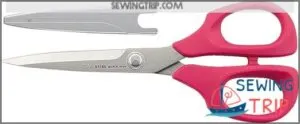
Kai’s pink-handled V5165P delivers 6.5 inches of student-friendly cutting power with stainless steel blades that handle multiple fabric layers without slippage. Blade sharpness stays consistent through repeated use thanks to hardened steel construction. Cutting performance meets student reviews praising clean edges on seam allowances and appliqué work.
The soft Santoprene handle materials provide an ergonomic design that prevents fatigue during extended cutting sessions, while the bright color makes these crafting scissors easy to spot in busy workspaces.
The included protective sheath adds classroom-safe storage for sewing and crafting supplies, and you’ll appreciate professional resharpening services that extend tool life.
| Best For | Students and hobbyists who need reliable fabric scissors for sewing classes, quilting projects, and detailed craft work. |
|---|---|
| Material | Stainless Steel |
| Color | Pink |
| Brand | KAI |
| Primary Use | Fabric Cutting |
| Blade Type | Sharp |
| Handle Design | Comfortable |
| Additional Features |
|
- Sharp hardened stainless steel blades cut cleanly through multiple fabric layers without fraying edges
- Soft ergonomic handle reduces hand fatigue during long cutting sessions
- Comes with a protective blade cover for safe storage in school bags and sewing kits
- 6.5-inch size may feel small for cutting large pattern pieces or yardage
- Pink color might not appeal to all users
- Not designed for heavy-duty industrial cutting tasks
9. Handi Quilter Batting Scissors
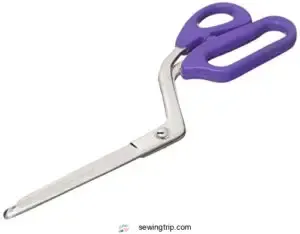
Handi Quilter’s HG00413 batting scissors cut through thick layers with a 5-inch straight blade and rounded tips that won’t snag your quilt sandwich. These batting shears handle quilting essentials like squaring finished projects and trimming bolt fabric with ergonomic purple grips that reduce hand strain.
At 9.6 ounces, they’re substantial fabric cutting tools that deliver clean cuts through multiple batting layers. You’ll find these crafting scissors essential for quilting supplies, though students with smaller hands might need extra grip strength. The alloy steel construction means you won’t need frequent scissor sharpening.
| Best For | Quilters who need heavy-duty scissors for cutting through thick batting layers and squaring finished projects. |
|---|---|
| Material | Alloy Steel |
| Color | Purple |
| Brand | Unknown |
| Primary Use | Batting Cutting |
| Blade Type | Straight-edge |
| Handle Design | Ergonomic |
| Additional Features |
|
- Rounded tips prevent snagging delicate quilt sandwiches and fabrics
- 5-inch straight blade cuts cleanly through multiple batting layers
- Ergonomic handles reduce hand strain during extended cutting sessions
- 9.6-ounce weight may feel heavy during prolonged use
- Larger size can be difficult for users with smaller hands to grip comfortably
- Requires more hand strength to operate effectively compared to standard scissors
10. Jistl Green Pinking Shears Scissors
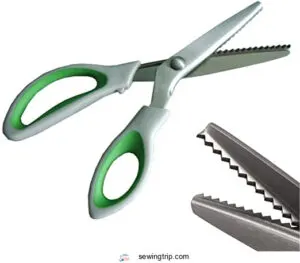
JISTL’s green pinking shears bring zigzag precision to fabric edges at a budget-friendly price that won’t drain your student supply fund.
These 9.5-inch fabric scissors pack hardened stainless steel blades with ABS grips that prevent hand fatigue during extended crafting and sewing sessions. You’ll cut through fabric, leather, and paper with blade durability that maintains scissor sharpness across multiple projects.
The ergonomic design delivers decorative edging on ribbons and linings, though you’ll need decent hand strength—these student sewing scissors run a bit stiff. Wipe off the anti-rust coating before your first cut.
| Best For | Students and crafters who need affordable pinking shears for fabric projects and decorative edges, and don’t mind using a bit of hand strength. |
|---|---|
| Material | Stainless Steel |
| Color | Green |
| Brand | JISTL |
| Primary Use | Pinking & Decorative |
| Blade Type | Zigzag |
| Handle Design | Ergonomic ABS |
| Additional Features |
|
- Hardened stainless steel blades stay sharp through multiple projects
- Ergonomic ABS handles reduce hand fatigue during long crafting sessions
- Cuts through fabric, leather, paper, and ribbon with clean zigzag edges
- Blades are stiff and require decent hand strength to use
- Anti-rust coating needs to be wiped off before first use
- Fixed screw tension can’t be adjusted if too tight
How to Choose The Right Scissors for School Projects

Picking the right scissors for your school projects isn’t about grabbing the most expensive pair on the shelf. You need to match your tools to the work you’re actually doing, whether that’s cutting delicate silks or heavy canvas.
Let’s break down the key factors that’ll help you make a smart choice without wasting your budget.
Matching Scissors to Fabric Types
Matching scissors to fabric types isn’t guesswork—it’s about pairing blade design with fabric density and texture.
Standard dressmaking shears with 8 to 9 inch stainless steel blades handle medium cotton beautifully, while heavy denim demands high-carbon blades for precision cutting.
Delicate silk requires micro-serrated edges to grip slippery surfaces during textile cutting. Knits need serrated scissors for edge finishing without stretching.
Match your fabric selection to proper scissor materials for impeccable fabric crafting.
Balancing Quality and Affordability
You don’t need premium shears to master fabric cutting—smart budget options deliver real value analysis when you understand quality metrics. Price comparison reveals stainless steel blades and ergonomic grips between $10 and $20 provide cost efficiency for students.
- Entry-level sewing accessories from trusted brands balance affordability with performance
- Crafting and sewing communities recommend mid-range scissors for beginners
- Fabric scissors with reinforced grips offer durability without premium pricing
- Multi-pack classroom sets lower per-pair costs notably
Considering Brand Reputation
Brand names matter because companies like Gingher, Fiskars, and Kai have spent decades earning their reputations through consistent performance and customer satisfaction. Brand loyalty exists for a reason: proven scissors work.
You’ll find Westcott scissors backed by product warranty protection and quality control that cheaper knockoffs can’t match.
Check customer reviews before buying—reputation research reveals which brands deliver on their promises.
Importance of Protective Storage
Quality scissors deserve protection. Toss them in a backpack or drawer, and you’ll find nicked blades and dull edges fast—blade protection isn’t optional for serious students.
Smart storage solutions for fabric shears include:
- Individual sheaths that shield cutting edges from impact damage
- Designated cases that prevent moisture exposure and rust
- Separate compartments in your sewing kit for tool preservation
Protective storage maintains scissor safety and extends lifespan for crafting and DIY projects.
Care and Maintenance Tips for Student Scissors
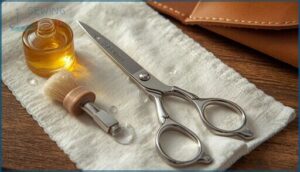
Your fabric scissors won’t stay sharp and precise without proper care—even the best blades dull when neglected. You need a maintenance routine that protects your investment and keeps cuts clean through every project.
Here’s how to handle cleaning, storage, sharpening, and safe usage so your scissors last through years of school assignments.
Cleaning and Oiling Blades
Wipe your blades after every cutting session with a soft cloth to prevent fiber buildup that dulls sharp blades. High-carbon steel and stainless steel both require rust prevention—dry them thoroughly if they come into contact with moisture. Monthly oil application ensures smooth precision cutting: place one drop at the pivot, work it through, then wipe off any excess to prevent fabric stains.
Titanium blades offer better corrosion resistance but still benefit from regular care.
| Scissor Maintenance Task | Frequency | Method |
|---|---|---|
| Blade Sanitizing | Daily/between users | Rubbing alcohol wipe |
| Rust Prevention | After wet cleaning | Dry completely, light oil film |
| Oil Application | Monthly or when stiff | One drop at pivot, distribute evenly |
| Blade Sharpening | As needed for dullness | Professional service or honing tool |
Proper Storage to Prevent Damage
Store your fabric scissors in a dry location away from humidity to stop rust before it starts. Slip them into protective scissor pouches or sheaths—this blade protection prevents nicks when they’re tossed in your bag.
Keep fabric shears separate from paper-cutting tools so nobody “borrows” them for the wrong job. Handle care matters too: a dedicated spot means your scissors stay sharp longer.
Sharpening and Blade Longevity
Sharpen your fabric shears every 6 to 12 months to keep precision cutting at its peak. Professional sharpening techniques preserve edge geometry—most dressmaker blades hold 50 to 55 degrees, while embroidery scissors sit around 60 to 65 degrees.
High-carbon steel and titanium bonded blades maintain their bite longer with proper blade maintenance, but paper dulls them fast, so dedicate your tool strictly to fabric for maximum tool longevity.
Safe Handling and Usage Practices
Always cut away from your body and fingers to prevent accidents—precision cutting demands respect for the blade. Keep fabric shears stored point-down in a dedicated caddy when you pause work, and pass them grip-first to classmates.
- Walk with closed blades pointed toward the floor
- Position fabric on a flat surface before cutting
- Use small, controlled strokes instead of forceful slashes
- Inspect ergonomic grips and blades for damage before each session
These handling tips transform fabric cutting from risky to reliable.
Frequently Asked Questions (FAQs)
What budget should students expect for quality scissors?
Students should anticipate spending thirty to fifty dollars for durable, dependable shears that deliver precision cutting and ergonomic grips. This investment balances budget planning with quality expectations while meeting fabric needs without sacrificing performance.
Are titanium bonded blades better for beginners?
Titanium bonded blades stay sharp three times longer than standard steel, resist adhesive buildup, and require less maintenance.
This makes them ideal for beginners who need consistent cutting performance without frequent sharpening.
How often should students replace their scissors?
When blades start pushing fabric instead of slicing clean, that’s your wake-up call.
Expect 2-5 years from quality fabric scissors with proper care, but replace immediately when persistent dullness or damage compromises student safety and precision.
Do fabric scissors work on paper materials?
Yes, fabric scissors cut paper—but don’t do it. Paper’s abrasive minerals like kaolin clay dull your precision cutting blades fast, compromising fabric damage prevention and cutting accuracy.
Dedicated cutting tools preserve fabric shears for fabric-only scissor maintenance.
Conclusion
The fabric scissors you choose today will shape every project you tackle tomorrow. Start with shears that match your current skill level, then expand your toolkit as techniques advance.
Your investment in sharp blades, ergonomic grips, and proper maintenance separates amateur work from professional results.
Clean your blades after each session. Store them properly. Treat quality scissors like the precision instruments they are—and they’ll cut flawlessly through years of creative work.
- https://zimsailing.com/scissors-micro-serrated/
- https://proshearus.com/blogs/news/how-do-you-care-for-and-maintain-sewing-scissors
- https://www.echefknife.com/products/yoshihiro-premium-carbon-steel-right-handed-tachibasami-fabric-scissors
- https://entertainingsafety.com/knowledge-base/safety-tips-for-cutting-tools-in-a-school/
- https://journals.sagepub.com/doi/abs/10.3233/WOR-172583