This site is supported by our readers. We may earn a commission, at no cost to you, if you purchase through links.
I ruined a yard of silk chiffon with a $12 pair of scissors that dragged instead of sliced. That’s when I learned blade steel matters as much as brand name. The kai vs gingher vs fiskars debate comes up constantly in sewing circles, and for good reason—each brand solves a different problem.
Kai delivers surgical precision for appliqué work. Gingher offers forged heft that shrugs off denim for decades. Fiskars keeps your budget intact without sacrificing everyday performance.
Your fabric stash, your hands, and your wallet all have opinions on which pair belongs in your sewing basket. Let’s sort out which one actually deserves a spot there.
Table Of Contents
- Key Takeaways
- Kai Vs Gingher Vs Fiskars Overview
- Top 10 Fabric Scissors Compared
- 1. Gingher Gold Handled Dressmaker Shears
- 2. Kai 5210 8-inch Dressmaking Shears (N5210)
- 3. Kai Very Berry Multi Purpose Scissors
- 4. Evergreen Heavy Duty High Carbon Steel Scissors
- 5. Professional Heavy Duty Sewing and Fabric Scissors
- 6. Karen Kay Buckley Perfect Scissors, Purple
- Tula Pink 5 Curved EZ Snip
- 7. P.LOTOR Scalloped Pinking Shears Stainless Steel Scissors
- 8. P.LOTOR Stainless Steel Pinking Shears
- 9. Havel’s Serrated Fabric Scissors Pink
- Blade Sharpness and Cutting Performance
- Materials and Build Quality
- Comfort and Handle Ergonomics
- Best Scissors by Fabric Type
- Price and Long-Term Value
- Maintenance, Sharpening, and Care
- Which Brand Should You Buy?
- Frequently Asked Questions (FAQs)
- Conclusion
Key Takeaways
- Kai’s vanadium stainless steel blades excel at precision trimming and appliqué work, making them ideal for delicate fabrics like silk and detailed dressmaking tasks.
- Gingher’s forged steel construction delivers decades of durability and heavy-duty cutting power, justifying its premium price for professionals working with denim and thick layers.
- Fiskars offers the best value for beginners and everyday sewing, with budget-friendly pairs ($8-$20) that handle cotton and light fabrics without breaking the bank.
- Proper maintenance—avoiding paper cutting, cleaning lint, oiling the pivot screw, and using protective sheaths—matters more than brand choice for extending any pair of scissors’ lifespan.
Kai Vs Gingher Vs Fiskars Overview
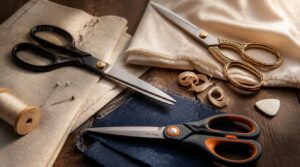
Picking between Kai, Gingher, and Fiskars comes down to knowing what each brand does best, not just which one has the prettiest design.
You’ll cut differently depending on your skill level, your budget, and whether you’re sewing every day or just a few times a month.
If you’re just starting out, checking a detailed sewing machine cost breakdown can help you avoid overspending before you know what features you’ll actually use.
Here’s how these three brands stack up against each other before we break down the top ten shears worth your money.
Best for Different Sewers
Six needle types, six different sewers, one honest question: which fabric shears actually fit your hands and your projects?
Cotton quilting needs precise dressmaker shears. Denim canvas demands rigid sewing scissors.
| Fabric | Best Scissors | Why |
|---|---|---|
| Cotton | Dressmaker shears | Clean hems |
| Denim | Heavy-duty | Slices layers |
| Silk | Fine-edge | No snagging |
Leather needs professional-grade scissors; thread snipping wants nimble blades.
Brand Strengths at a Glance
Once you’ve matched fabric to blade type, brand identity settles the rest. Each name signals a different promise:
| Brand | Main Strength |
|---|---|
| Kai | Cutting precision for detail work |
| Gingher | Forged durability, dressmaker heritage |
| Fiskars | Everyday value, broad appeal |
That’s the competitive advantage each sewing scissors brand leans on to earn consumer trust before you even test a blade. Building high brand equity allows these companies to maintain market relevance and consumer loyalty.
Budget Versus Premium Choices
Price tells only half the story. A $10 pair of budget scissors may dull within months, while Gingher’s $42 dressmaker shears reward you with years of clean cuts.
| Type | Upfront Cost | Longevity |
|---|---|---|
| Budget | Under $15 | 2-6 months |
| Midrange | $30-$80 | Years |
| Premium | $100+ | Decades |
Steel grade drives total ownership cost—cheaper springs loosen, forcing replacement sooner than quality fabric shears ever would.
Professional Versus Hobbyist Use
Longevity math only matters if the tool matches how hard you push it. Professionals run fabric shears through leather and thick denim daily, so they invest in sharpening schedules and spare blades to protect cutting accuracy and workflow efficiency.
| User | Priority | Maintenance |
|---|---|---|
| Pro | Edge retention | Frequent |
| Hobbyist | Versatility | Minimal |
Hobbyists tolerate general-purpose dressmaker shears; pros can’t afford fatigue or inconsistency.
Top 10 Fabric Scissors Compared
Now that you know what sets these three brands apart, let’s get specific about which pairs of scissors actually earn their spot in your sewing basket.
I’ve tested and researched options ranging from $10 budget picks to $60 professional shears, covering everything from dressmaking to pinking to appliqué work.
Here’s how ten standout pairs stack up against each other.
1. Gingher Gold Handled Dressmaker Shears
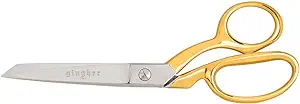
Gold-handled elegance meets serious cutting power in Gingher’s 8-inch dressmaker shears. Forged steel blades carry a double-plated chrome-over-nickel finish, so you get corrosion resistance without sacrificing sharpness retention.
The bent handle keeps fabric flat while you cut, and the knife-edge blade runs clean to the tip—no fraying, no dragging. You’ll pay a premium price, but that balanced, heavy feel through multiple layers makes it worth every dollar for serious dressmaking work.
| Best For | Professional dressmakers, tailors, and serious sewing enthusiasts who need a heavy-duty shear for cutting patterns, seams, and multiple fabric layers with precision. |
|---|---|
| Blade Material | Chrome-over-nickel |
| Blade Length | 8 inches |
| Handle Design | Gold-plated metal |
| Primary Use | Dressmaking, leather, batting |
| Protective Cover | Nylon sheath |
| Sharpness Retention | High edge retention |
| Additional Features |
|
- Knife-edge blades cut cleanly through fabric tips without fraying or dragging
- Chrome-over-nickel finish resists corrosion while maintaining a sharp edge
- Bent handle design keeps fabric flat for more controlled, accurate cuts
- Higher price point than standard utility scissors
- Not suitable for cutting metal wire, foil, or adhesive tape
- Requires careful maintenance and sheath storage to prevent rust or dulling
2. Kai 5210 8-inch Dressmaking Shears (N5210)
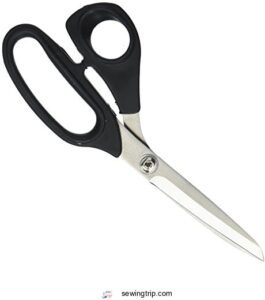
Eighty bucks buys you Kai’s N5210, an 8-inch shear built with hardened vanadium stainless steel that holds its edge through years of dressmaking work. The satin-finish blades slice cleanly through wool felt, sheer fabrics, and medium upholstery without binding, though extremely heavy layers can still slow you down.
The grips run soft and cushioned, which matters during long alteration sessions. Made in Japan or Vietnam depending on the batch, this model rewards sewers who want Gingher-level precision at a friendlier price point.
| Best For | These shears are best for dressmakers, quilters, and sewers who need reliable, precise cuts for garment construction and professional alterations. |
|---|---|
| Blade Material | Stainless steel |
| Blade Length | 8 inches |
| Handle Design | Black handle |
| Primary Use | Dressmaking, quilting, garment |
| Protective Cover | None specified |
| Sharpness Retention | Long-term retention |
| Additional Features |
|
- High-quality stainless steel blades keep a sharp edge for long-term use
- Handles a wide range of materials, from sheer fabrics to wool felt and medium-weight upholstery
- Precision cutting from handle to blade tip, with smooth, sturdy action
- Can bind when cutting extremely heavy or thick fabrics
- May not be as comfortable for all-day use compared to the Kai Professional series
- Manufacturing location varies between Japan and Vietnam, which may affect consistency
3. Kai Very Berry Multi Purpose Scissors
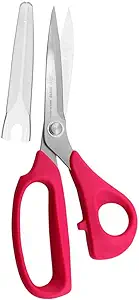
Twenty-five dollars gets you into Kai’s Very Berry line, part of their 5000 series and a noticeably lighter option than the N5210. The stainless steel blades hold a clean straight edge for cotton, felt, and light denim, with soft-grip grips that suit long crafting sessions.
It won’t rival premium shears on heavy layers, but for hobby sewists and everyday trimming, this pink-handled workhorse delivers dependable, fatigue-free cutting without draining your wallet.
| Best For | Hobby sewists and crafters who want a reliable, comfortable pair of scissors for everyday fabric and craft cutting tasks. |
|---|---|
| Blade Material | Stainless steel |
| Blade Length | 21 cm |
| Handle Design | Soft-touch ergonomic |
| Primary Use | Sewing, denim, quilting |
| Protective Cover | Snap-on tip cover |
| Sharpness Retention | Precision cutting edge |
| Additional Features |
|
- Stainless steel blades resist corrosion and deliver precise, clean cuts
- Ergonomic soft-touch handles reduce hand fatigue during long projects
- Snap-on tip cover allows safe, portable storage in bags or craft kits
- Heavier than standard scissors, which may tire some users over time
- Blades are extremely sharp, requiring careful handling and full attention
- The dedicated safety cap is exclusive to the V5210 model, not this line
4. Evergreen Heavy Duty High Carbon Steel Scissors
Rockwell hardness near 58 tells you everything about why Evergreen’s high carbon steel outperforms basic stainless in this price range. These blades hold their edge through thick fabric, leather, and multiple layers without begging for a sharpening trip every month.
When that edge finally does dull, this step-by-step guide to sharpening fabric scissors at home walks you through restoring it without a trip to the pros.
The reinforced heels and pivot resist bending under real cutting pressure, so denim and canvas stay clean, snag-free cuts pass after pass. For heavy-duty budget work, it’s a solid grinder that punches above its price.
| Best For | These scissors are best for artists, students, and workshop users who need a durable, heavy-duty tool for cutting paper, cardboard, leather, canvas, and other tough materials. |
|---|---|
| Blade Material | High carbon stainless steel |
| Blade Length | 4 inches |
| Handle Design | Rubberized angled |
| Primary Use | Multi-purpose crafting |
| Protective Cover | None specified |
| Sharpness Retention | Superior edge retention |
| Additional Features |
|
- High carbon stainless steel blades stay sharp longer and handle thick or multiple layers with ease
- Ergonomic, slip-resistant rubberized handles paired with balanced weight give better control and comfort during long tasks
- Versatile enough for everything from detailed craft work to heavy-duty upholstery and packaging jobs
- Not ideal for delicate fabrics or fine dressmaking work
- The hinge bolt may loosen over time and needs occasional tightening to keep cuts precise
- Extremely sharp blades and a protruding hinge bolt mean extra care is needed to avoid injury or surface scratches
5. Professional Heavy Duty Sewing and Fabric Scissors
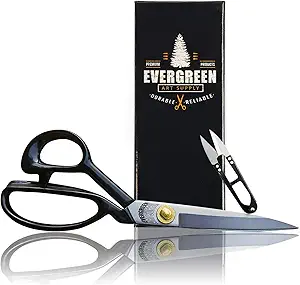
A 9-inch blade sounds like overkill until you’re slicing through upholstery fabric and suddenly appreciate every inch. High carbon steel construction gives these shears serious edge retention, cutting denim, leather, and multiple layers without dragging.
The rubberized comfort grip earns its keep during long tailoring sessions, and the slanted handle keeps blades flat against your table. Bonus thread snips add real value here—you’re basically getting two tools for one, which matters when you’re outfitting a workspace on a budget.
| Best For | professional tailors, dressmakers, quilters, and crafters tackling heavy-duty or long-duration cutting projects. |
|---|---|
| Blade Material | High carbon steel |
| Blade Length | 9 inches |
| Handle Design | Rubberized slanted |
| Primary Use | Fabric, leather, upholstery |
| Protective Cover | None included |
| Sharpness Retention | Superior edge retention |
| Additional Features |
|
- High carbon steel blades deliver superior edge retention and smooth, effortless cuts through multiple layers
- Ergonomic rubberized grips and a slanted handle design reduce hand fatigue and keep blades flat against surfaces
- Comes with bonus matching thread snips, adding extra value for trimming loose threads
- Blades arrive coated in protective oil that needs to be wiped off before first use
- No dedicated protective sheath included for safe storage
- Heavier than standard scissors, which may not suit everyone’s preference
6. Karen Kay Buckley Perfect Scissors, Purple
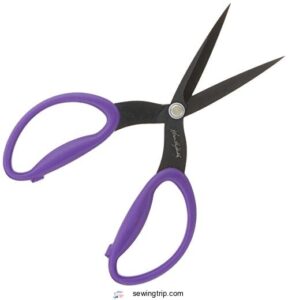
Grip fabric instead of pushing it away—that’s the trick behind Karen Kay Buckley’s micro-serrated blades, and it works beautifully for appliqué and multi-layer quilting cuts.
At 7.5 inches with sharpening straight to the tip, you get real control in tight corners without sacrificing power through thicker stacks.
The cushioned, ambidextrous grips genuinely help if you’ve got arthritis or just log long stitching sessions. Expect a short break-in period adjusting to the serration, but that plastic sheath keeps blades protected between projects.
| Best For | Quilters and sewists who work with appliqué, multi-layer fabric cuts, or arthritis-friendly tools will get the most out of these scissors. |
|---|---|
| Blade Material | Stainless steel |
| Blade Length | 7.5 inches |
| Handle Design | Cushioned ergonomic |
| Primary Use | Applique, quilting |
| Protective Cover | Plastic cover |
| Sharpness Retention | Precision to tip |
| Additional Features |
|
- Micro-serrated blades grip fabric for cleaner, more controlled cuts
- Tip-to-tip sharpening allows precise trimming in tight corners and around curves
- Cushioned, ambidextrous handles reduce hand fatigue and ease strain for arthritic hands
- Serrated blades may take some getting used to for first-time users
- Imported product, which may be a consideration for some buyers
- Blade length may feel long for very small or intricate detail work
Tula Pink 5 Curved EZ Snip
If Karen Kay Buckley combats multi-layer cuts, this five-inch snip controls the tiny stuff. Micro-serrated blades grip thread instead of pushing it, while the curved blade gets flush under presser feet without snagging.
Spring-action grips speed up repeated snips during embroidery or quilting, and that iridescent finish adds personality to your kit without sacrificing precision cutting near delicate seams.
7. P.LOTOR Scalloped Pinking Shears Stainless Steel Scissors
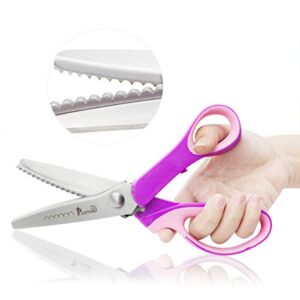
Switching gears from thread-snipping to trim work, the P.LOTOR Scalloped Pinking Shears bring a wave-edge finish instead of the classic zigzag. Stainless steel blades hold their bite through felt and leather, with roughly five scallops per inch for a decorative, fray-resistant edge on garments and craft projects.
At 9.3 inches, they’re hefty—great for control, tougher on arthritic hands. Lubricate the joint before your first cut, and expect a slight learning curve if you’re left-handed.
| Best For | Dressmakers and craft enthusiasts who want a durable, decorative finish for fabric, felt, leather, and paper projects. |
|---|---|
| Blade Material | Stainless steel, titanium, steel |
| Blade Length | 5 inches |
| Handle Design | Ergonomic spring-action |
| Primary Use | Embroidery, quilting, EPP |
| Protective Cover | Rubber tip cover |
| Sharpness Retention | Micro-serrated grip |
| Additional Features |
|
- Hardened stainless steel blades stay sharp through heavy materials like felt and leather
- Ball bearing joint delivers smooth, precise cutting action
- Scalloped wave edge adds a unique, fray-resistant finish to fabrics and crafts
- Heavy build may tire out hands during extended use
- Not ideal for those with arthritis or limited hand strength
- Left-handed users may find the scallop orientation awkward
8. P.LOTOR Stainless Steel Pinking Shears
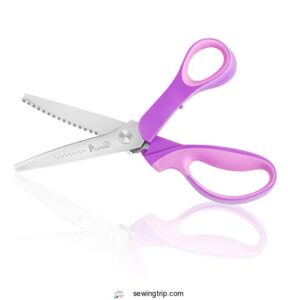
If the scalloped version felt like a specialty tool, this classic 8-inch P.LOTOR pinking shears is the workhorse cousin—true zigzag edge, roughly 5mm tooth spacing, built for everyday fraying prevention on cottons and linens.
Stainless steel blades resist rust, and the pivot screw stays true under regular use, so your cuts stay consistent cut after cut.
It won’t tackle heavy denim like the scalloped model does, but for light-to-medium fabrics, it’s a reliable, no-fuss daily pick.
| Best For | Sewists and crafters with larger hands who want a durable, comfortable pair of pinking shears for zigzag-cutting fabrics, leather, paper, and other craft materials at home or professionally. |
|---|---|
| Blade Material | Stainless steel |
| Blade Length | 9.3 inches |
| Handle Design | Soft-grip non-slip |
| Primary Use | Decorative edge dressmaking |
| Protective Cover | None specified |
| Sharpness Retention | Lasting sharpness |
| Additional Features |
|
- Hardened stainless steel blades stay sharp and hold up to regular use
- Ergonomic soft-grip handles with rubberized inserts make extended cutting comfortable, even for those with arthritis
- Smooth ball bearing joint delivers consistent, effortless cutting action
- Can feel bulky or heavy for people with smaller hands
- Cutting thick materials near the blade tips requires extra pressure
- The joint may need lubrication before it performs smoothly out of the box
9. Havel’s Serrated Fabric Scissors Pink
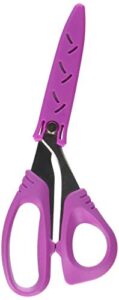
Rounding out the list, Havel’s serrated pair swaps the zigzag for fine grip teeth, holding silk and slippery cottons steady instead of trimming their edges.
At 8 inches with a stainless blade and ABS handle, it’s built for quilting, applique, and even paper tasks without crawling fabric.
The tradeoff: serrated edges resist resharpening, so treat this as a workhorse, not a precision blade for fussy corners.
| Best For | Quilters and sewers working with delicate or slippery fabrics like silk who want a comfortable grip, especially those with arthritis. |
|---|---|
| Blade Material | Stainless steel |
| Blade Length | 9.3 inches |
| Handle Design | Soft-grip rubberized |
| Primary Use | Decorative edge dressmaking |
| Protective Cover | None specified |
| Sharpness Retention | Lasting sharpness |
| Additional Features |
|
- Serrated teeth grip fabric firmly, preventing slipping or "crawling" during cuts
- Ergonomic ABS handle makes for effortless, comfortable use
- Versatile enough for quilting, applique, and paper cutting
- Serrated edges are harder to resharpen than smooth blades
- Not ideal for precise, detailed fussy cutting
- 8-inch size may feel bulky compared to smaller shears
Blade Sharpness and Cutting Performance
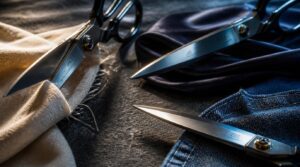
Sharpness isn’t just about how a blade feels fresh out of the box; it’s about how it performs cut after cut, fabric after fabric. Every brand approaches that differently, and you’ll notice it the moment you compare them side by side. Here’s how Gingher, Kai, and Fiskars stack up where it actually counts.
Gingher for Heavy Fabrics
Cutting six layers of denim shouldn’t feel like a workout, and with Gingher, it doesn’t.
Forged blade strength and knife-edge precision slice through canvas and upholstery-weight fabrics cleanly, no dragging, no bunching.
Their pivot tension stability keeps blades aligned during multi-layer cutting, so these fabric shears—really heavy-duty scissors built for real tailoring equipment work—hold their edge cut after cut.
Kai for Precise Trimming
Grab a pair of Kai dressmaking shears and you’ll notice the difference on the first snip—high-carbon steel holds a fine tip for corners and notches, while the micro-bevel edge glides through silk without snagging.
Nickel finishes resist rust from sweaty sewing-room hands. This is where precision appliqué snips and true sewing precision live, keeping fabric grain intact on every pattern piece.
Fiskars for Everyday Cutting
Pull out a pair of Fiskars and you get honest, no-drama performance built for daily household tasks rather than couture work.
Lightweight FibreComp grips hold up through years of use; the ambidextrous design works for lefties and righties alike, and spring-assisted cutting eases repetitive snips.
Stainless steel blades resist rust. It’s not haute couture—it’s the reliable workhorse of sewing scissors.
Clean Cuts Versus Dragging
Clean versus dragging cuts comes down to blade tension control and cutting angle precision—clean cuts need perpendicular contact, while dragging pulls fabric along the edge, raising heat transfer and fraying risk.
| Cut Type | Best Result |
|---|---|
| Clean | Minimal burr, straight edge |
| Drag | Beginner-friendly, more resistance |
| Clean | Preserves fiber alignment |
| Drag | Faster blade wear |
Edge Retention Comparison
Ask any tailor how long a blade stays sharp, and steel chemistry is where the answer starts. Steel carbide distribution determines wear resistance, while heat treatment builds the toughness behind lasting sharpness.
Gingher’s forged construction and Kai’s vanadium mix both deliver strong edge retention, but bevel angle durability and micro-edge stability decide which fabric shears actually hold their bite through years of daily cutting accuracy.
Materials and Build Quality
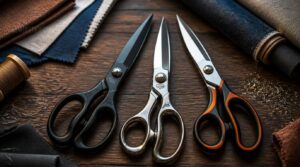
Sharpness fades, but what a pair of shears is actually made of decides whether it survives your sewing room for five years or fifteen. You’ll feel the difference in blade steel, handle material the moment you pick each brand up.
Let’s break down what’s really going on beneath the surface with Kai, Gingher, and Fiskars.
Kai Stainless Vanadium Blades
What makes Kai scissors slice through cotton like it’s warm butter? The high-carbon molybdenum vanadium steel. Vanadium carbides boost wear resistance; Rockwell hardness runs 58-60 HRC.
- Long edge retention
- Chip-resistant toughness
- Rust resistance in humid sewing rooms
That balance means fewer sharpening trips and consistently precise, clean cuts through fabric after fabric.
Gingher Forged Metal Construction
Gingher takes a different path entirely: forging vs stamping matters here, since forged high-carbon steel builds denser blade structure than cheaper stamped alternatives.
That density delivers real metal fatigue resistance during marathon sewing scissors sessions, while hand-ground edges and hand-tuned blade alignment precision keep every cut true. The all-metal build means no plastic to flex—just professional-grade scissors built for decades, not seasons.
Fiskars Composite Handle Design
Where Gingher goes all-metal, Fiskars swings the opposite direction with FiberComp composite grips—lighter than steel, dampened against vibration, and molded with textured, moisture-resistant grips that stay put during long quilting sessions. Rivets lock the head to the handle so it won’t loosen over time.
- Flared grip prevents slipping mid-swing
- Textured indents fight wet-hand fatigue
- FiberComp cuts weight without sacrificing strength
- Riveted joins resist loosening for years
Weight and Cutting Control
Weight isn’t just about heft—it’s about pivot weight distribution. A blade-heavy pair builds momentum for thick layers, while handle-heavy models favor maneuverability for tight curves.
Fiskars’ FiberComp strikes a middle ground: light enough to reduce fatigue during marathon quilting sessions, yet balanced enough for genuine precision trimming. That balance point directly affects cutting accuracy, especially when your hand’s been gripping fabric shears for an hour straight.
Durability Over Years
Steel alloy longevity matters more than initial sharpness. Forged Gingher blades and Kai’s vanadium-stainless mix resist edge fatigue for years, not months.
Pivot joint stability keeps blades aligned within 0.1mm after 1000 cycles—so cuts stay clean, not draggy.
Consider what lasts:
- Material wear resistance against corrosion
- Long-term repairability via replaceable pivots
- Edge retention through daily fabric shears use
- Tool durability worth your investment
Comfort and Handle Ergonomics
Sharp blades matter, but your hand is what actually finishes the project, and a poor grip will wear you out long before the fabric does. You’ll notice real differences once you compare how Kai, Gingher, and Fiskars each approach handle design and hand comfort. Let’s break down what each brand offers and who stands to benefit most.
Kai Soft Grip Comfort
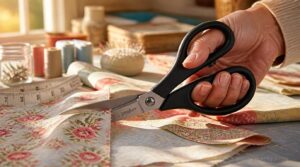
Ever cut through a pile of quilting cotton for three hours straight and felt that ache creep into your palm?
That’s exactly what Kai’s Soft Grip Comfort line fixes. The padded elastomer handle distributes pressure evenly, cuts hand vibration, and stays tacky even with sweaty fingers—so your precision trimming on delicate seams never wavers, session after session, project after project.
Gingher Traditional Metal Handles
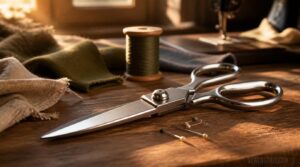
Pick up a pair of Gingher dressmaker shears and you’ll feel the difference immediately: solid, all-metal weight with zero flex.
That forged steel durability comes from chrome-plated grips built for professional-grade scissors, with an adjustable tension screw keeping cuts consistent for years.
- Classic ergonomic profile
- Metal versus composite trade-off
- Long-term fabric shears investment
For sewing scissors that outlast trends, this traditional design still wins.
Fiskars Easy-action Designs
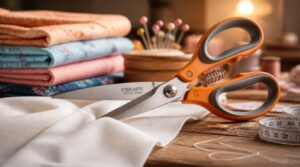
Fiskars flips the script with spring-loaded blades that pop back open after every snip, so you’re not fighting the tool to keep cutting fabric.
Add SoftGrip grips and precision edges, and you get genuinely comfortable sewing scissors for long sessions.
| Feature | Benefit | Best For |
|---|---|---|
| Spring action | Auto-opens blades | Long seams |
| SoftGrip | Comfort | Extended cutting |
| Precision edge | Clean lines | Detail work |
Hand Fatigue During Projects
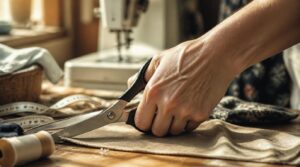
Your grip strength can drop 10–25% within an hour of steady cutting, which is exactly why ergonomic design matters more than looks. Poorly balanced scissors force your fingers to overcompensate, speeding up fatigue.
Fixing this means combining smart hand ergonomics with habits: take micro-breaks every 15–20 minutes, watch your wrist posture, and stretch between segments to keep muscle tension from building during precision cutting.
Left-handed Sewing Considerations
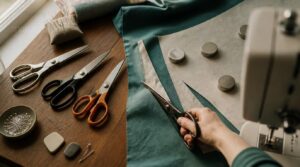
If you’re a lefty, right-handed fabric scissors fight you the whole way through a project.
Left-handed scissors flip blade orientation for true left-handed tool visibility, keeping your cutting line clear and reducing wrist strain.
Pair specialized lefty shears with a mirrored pattern layout and smart ergonomic workspace positioning—tools to your left, machine to your right—for smoother, more accurate cuts on any sewing scissors task.
Best Scissors by Fabric Type
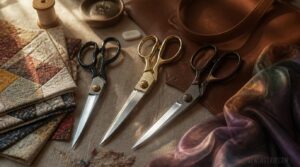
No single pair of shears works on every fabric with the same confidence, and picking the wrong one will show in your seams. Your cotton quilt top demands something different than a leather tote or a slippery silk blouse. Here’s how each brand stacks up once you match the blade to the material.
Cotton and Quilting Fabric
Quilting cotton feels forgiving to cut, but blade choice still matters more than most sewers assume.
Weave type changes everything: poplin’s tight weave glides cleanly, while muslin’s looser structure can snag. Fabric weight (3 to 6 oz/yard) affects blade drag too.
- Prewash to control shrinkage
- Test colorfastness first
- Match blade sharpness to weight
- Store shears separately from paper-cutting tools
Denim and Canvas Layers
Cotton’s forgiving nature disappears once you hit denim and canvas—now blade geometry actually matters. Twill’s diagonal weave in denim fights back with layered toughness, while canvas’s plain weave structure adds stiff abrasion resistance.
Heavyweight denim (12 oz+) demands heavy-duty scissors with real momentum. Gingher’s forged steel or Fiskars’ orange-handled models chew through both without dragging, keeping seams clean where lighter blades stall out.
Silk and Slippery Fabrics
Denim’s brute force gives way to a whole different challenge with silk—now it’s about control, not power. Satin and charmeuse weaves create long floats that make fabric slide right out from under your blades.
Serrated-edge scissors solve this with micro-teeth that grip chiffon and charmeuse without snagging. Kai’s fine-point designs excel here, delivering the precision that slippery, high-end fabric manipulation demands.
Leather and Upholstery Materials
Leather flips the script again—now you’re fighting thickness, not slip. Heavy-duty upholstery shears with reinforced blades handle vinyl, canvas, and full grain leather where regular fabric scissors buckle.
Grain type matters: nubuck’s velvety nap cuts differently than pigmented, coated hides. Look for 300-400g heavyduty scissors—that weight gives momentum through multiple layers without sawing or dragging.
Thread Snipping and Appliqué
Once you’re past the heavy stuff, it’s all about precision snip techniques. Thread snips with short, spring-loaded blades trim close without dragging fibers.
For appliqué edge cleanliness, snip fusible web cutting lines carefully, use tiny curve trimming notches on convex edges, and keep a finger loop grip for control—key ergonomics when working tight, delicate seams for hours.
Price and Long-Term Value
Price tells only part of the story when you’re deciding what belongs in your sewing basket. What you pay upfront matters less than how that pair performs cut after cut, year after year. Here’s how the three brands stack up when you weigh cost against what you actually get for your money.
Fiskars Budget-friendly Value
Fiskars remains the smartest starting point if you’re testing sewing as a hobby without draining your wallet. You’ll find entry-level pairs priced between $8 and $20, and warranties usually cover a full year.
For beginner sewing costs, that’s tough to beat—reinforced polymer grips and high-carbon blades handle cotton and light blends just fine, keeping entry-level tool longevity reasonable for casual crafting.
Kai Mid-range Precision
Kai’s mid-range shears sit right in that sweet spot between beginner tools and premium investment, usually running $30-$45.
Stainless vanadium blades deliver excellent edge retention for precision seam trimming, while the ergonomic grip stability keeps hand fatigue low during long projects.
For mid-weight fabric performance—cotton blends, light denim—these earn their reputation among the best sewing scissors without professional-grade pricing.
Gingher Premium Longevity
Paying $42 for Gingher’s 8-inch dressmaker shears feels steep until you realize they’ll outlast three cheaper pairs.
Forged steel construction gives these professional-grade scissors serious staying power—5 to 10 years of regular cutting with proper care.
High-carbon edge retention means less frequent sharpening, and that consistent geometry keeps performance steady year after year, not just fresh out of the box.
Replacement Versus Sharpening Costs
Ever wonder why some seamstresses replace scissors yearly while others sharpen the same pair for a decade? The math favors sharpening: a $10 service beats a $40+ replacement, especially for cotton and quilting work.
Kai and Fiskars respond well to this approach. Gingher’s premium edges justify occasional replacement only after serious heavy-use decline.
Cost-per-use drops fast when you sharpen instead of replacing.
Best Investment by Skill Level
Match the tool to your stage: beginners get more from a solid Fiskars pair than a pricey upgrade, while intermediate sewers see real skill ROI stepping up to Kai. Professionals chasing career growth justify Gingher’s cost through decades of precision.
That’s skill compounding in action—your scissors should grow with your professional advancement, not outpace it.
Maintenance, Sharpening, and Care
Even the best pair of shears won’t stay sharp forever if you don’t treat them right. I’ve seen $40 dressmaker shears ruined in a week and $10 pairs last for years, all based on habits. Here’s exactly what you need to do to keep your blades cutting clean for the long haul.
A blade’s lifespan depends less on its price tag than on the habits of the hands that care for it
Avoid Paper and Cardboard
Here’s a rule I learned the hard way: never let cardboard touch your good dressmaker shears. Paper fibers hide in the blade gap, causing fiber contamination that dulls even premium steel fast.
Skip cardboard boxes entirely. Use silicone sleeves or hard polymer cases instead—smart storage that keeps textile cutting tools sharp, helps with workshop dust management, and doubles as a sustainable, paper-free habit for your best sewing scissors.
Clean Lint After Cutting
Keeping cardboard away from your blades is only half the battle—what you do after each cut matters just as much. Lint builds up fast near the tips and hinge, especially with synthetic fabrics that generate static and cling to metal.
Sweep it away with a soft brush, then wipe with a microfiber cloth. For serrated edges, brush gently between teeth or use low-pressure compressed air to keep blade sharpness intact.
Oil The Pivot Screw
Once the lint’s gone, give the pivot screw a drop of shear oil—camellia oil works well on Japanese-style pivots, while alcohol-wax blends suit Gingher and Fiskars.
Open and close the blades several times to distribute lubricant evenly, cutting friction and keeping your blade alignment true.
Do this monthly, and wipe away excess oil so it doesn’t attract dust.
Store With Blade Protection
A well-oiled pivot means nothing if you toss your shears loose in a drawer afterward. Preventing blade nicks starts with a proper sheath—look for rigid guards with solid hinge locking mechanisms, not flimsy sleeves.
- Protective guard materials (BPA-free polymer)
- Snap-lock closures for travel safety
- Silica gel for hygiene and storage
- Separate slots for dressmaker shears
Whether you own Kai, Gingher, or Fiskars, this habit protects your investment in cutting fabric daily.
Schedule Professional Sharpening
Sheaths and oil keep your edges safe day to day, but even the best home care can’t replace a true regrind.
Send blades in yearly—turnaround runs 24-72 hours standard, 5-7 days for custom profiles. Costs land around $8-25 for generic pairs, more for Gingher or Kai.
Clean blades first, note your edge angle, and confirm they handle dressmaking geometry.
Which Brand Should You Buy?
After all that testing and comparing, the real question comes down to what you need in your own sewing room. Your budget, your skill level, and the fabrics you cut most often all point toward a clear winner. Here’s how to match your priorities to the right brand.
Choose Kai for Precision
Precision trimming accuracy is where Kai earns its keep. If your projects demand clean, snag-free seams, the vanadium steel blades and micro bevel edge on models like the 5210 dressmaker shears deliver it consistently.
- Reduced thread snag on delicate seams
- Optimized handle balance for control
- Sharp, lasting edges on medium fabrics
- Ideal for detailed appliqué work
- Comfortable grip during long sessions
That’s precision-focused performance worth trusting.
Choose Gingher for Durability
Buy Gingher when you want tools that outlast your sewing hobby itself. Forged steel construction with high carbon retention keeps edges sharp through decades, while corrosion resistant finishes and stable rivets prevent wobble.
| Feature | Benefit |
|---|---|
| Forged blades | Decade-long edge retention |
| Solid rivets | No pivot looseness |
| Chrome finish | Rust resistance |
These heavyduty dressmaker shears are a genuine long-term tool investment.
Choose Fiskars for Affordability
Grab a Fiskars when your wallet, not your legacy collection, drives the decision. Entry-level scissors under $25 handle everyday sewing tasks fine, and seasonal discounts trim another 10-30% off.
- Budget tool bundles pair scissors with pruners
- Replacement parts stay cheap and easy to find
- Corrosion-resistant blades mean low ownership costs
- PowerGear2 technology boosts cutting power
- Wide retail availability keeps prices competitive
Best Pick for Beginners
New sewers do best starting with the Kai 5210 8-inch dressmaking shears. The light weight and balanced pivot mean less hand fatigue while you’re still learning cutting precision, and that straight blade gives clean, confident cuts on cotton and quilting fabric.
Add a Fiskars for household duty, and you’ve got the two essential sewing tools every beginner kit needs.
Best Pick for Professionals
Your studio deserves tools that won’t quit mid-shift. For daily professional workloads, go with Gingher’s forged steel shears—that construction delivers astonishing blade retention through years of continuous textile cutting.
Why professionals trust Gingher:
- Forged steel resists bending under pressure
- Precision edge angles stay sharp longer
- Meets industrial alteration demands
- Justifies premium cost through longevity
- Outperforms cheaper dressmaker shears over time
Frequently Asked Questions (FAQs)
Who makes the best fabric scissors?
Honestly, it depends on your skill level and needs.
Gingher delivers astonishing sharpness for heavy fabrics, Kai excels at precision trimming, and Fiskars offers reliable, budget-friendly performance—each brand fits different sewing scissors demands and cutting material requirements perfectly.
Are Fiskars and Gingher the same?
Cousins under the same roof, not twins — Fiskars snipped up Gingher in Since that Fiskars Group acquisition, Gingher keeps its premium identity while Fiskars leans mass-market, so brand identity differences remain real despite shared corporate ownership.
What is the best brand of scissors in the world?
There’s no single "best" brand worldwide—it depends on your craft. For professional-grade scissors and fabric cutting performance, Gingher wins on longevity, Kai excels in precision, and Fiskars delivers unbeatable everyday value.
What are the best dressmakers scissors?
Funny how "best" dressmaking shears rarely mean the flashiest pair.
It’s really bent handle benefits, blade sharpness, and fabric flatness accuracy that matter—Gingher’s forged edges, Kai’s precision tips, or Fiskars’ budget balance all qualify as genuine professional-grade scissors.
Where are Kai Scissors manufactured?
Kai traces its roots to Seki City, Japan, an 800-year forging hub, with essential blade technology built there.
European models get regional support through Solingen, Germany, blending Japanese craftsmanship with integrated manufacturing across global supply chains for sewing scissors.
Which is better Fiskars or Gingher?
It depends on your skill level: Fiskars wins on price-to-performance for everyday sewing, while Gingher’s forged construction delivers professional-grade precision and long-term value for dedicated fabric cutting.
Which is better Fiskars or Gingher scissors?
For everyday sewing equipment, Fiskars wins on value with coated blades and comfort. For professional-grade scissors and cutting precision, Gingher’s uncoated high-carbon steel delivers better long-term investment—sharper, longer-lasting, pricier upfront near $
Is Gingher better than Kai?
Power versus precision, forged versus vanadium: Gingher wins on heavy fabrics like denim and canvas, while precision trimming favors lighter blades.
Neither’s "better" outright—your sewing equipment choice depends on whether you prioritize brute cutting power or balanced control.
Are Fiskars better than Kai scissors?
Not exactly better, just different priorities.
Fiskars wins on cost versus precision for hobbyists, everyday cutting, while Kai’s vanadium steel delivers sharper, more precise trimming on delicate fabrics—better long-term value for professionals wanting specialty accuracy over budget convenience.
How to clean scissor blades properly?
I once nicked a $40 blade cutting duct tape—lesson learned fast. Removing lint buildup and adhesive residue with a soft cloth, then oiling the pivot joint, keeps stainless steel blades corrosion-resistant and razor-sharp for years of reliable stitching.
Conclusion
A million cuts from now, your scissors will still tell the truth about that $12 mistake I made years ago. The kai vs gingher vs fiskars choice isn’t about brand loyalty; it’s about matching steel to your actual sewing life.
Grab Kai for appliqué precision, Gingher for denim that never quits, Fiskars for budget-friendly reliability.
Pick one, oil the pivot, and let your fabric finally meet a blade worthy of it.