This site is supported by our readers. We may earn a commission, at no cost to you, if you purchase through links.
You can fix a torn jacket, tailor pants that don’t quite fit, or rescue a favorite shirt from the donation pile—all without touching a sewing machine. Hand stitching gives you that power, and you don’t need years of experience to get started.
The basics come down to three things: picking the right needle and thread for your fabric, mastering a handful of foundational stitches, and avoiding the common pitfalls that make beginners want to quit.
Once you’ve got those elements working together, you’ll stitch cleaner seams, create invisible hems, and tackle repairs with the kind of confidence that comes from knowing your stitches will hold.
Table Of Contents
Key Takeaways
- You don’t need a sewing machine to repair clothes or create strong seams—hand stitching with the right needle, thread, and four basic stitches (running stitch, backstitch, whipstitch, and overcast stitch) gives you complete control over mending and alterations.
- Most beginner frustrations come from avoidable mistakes like using thread longer than 18 inches, skipping proper knots at seam ends, or mismatching needle size to fabric weight—fixing these issues before you start prevents tangled thread and unraveling stitches.
- Invisible hems and professional-looking edges require specific techniques like blind stitch for dress pants and blanket stitch for decorative borders, with proper pressing and thread tension making the difference between homemade and polished results.
- Practice on real projects like fixing split seams, sewing buttons, or making fabric coasters instead of aimless drills—you’ll build confidence faster when you’re creating something useful while mastering stitch control and fabric handling.
Essential Hand Stitching Tools for Beginners
You don’t need a mountain of supplies to start hand stitching. The right needle, thread, and a few simple tools will get you sewing with confidence right away.
If you’re just starting out, this hand sewing for beginners guide walks you through exactly what to buy and how to use it.
Here’s what actually matters when you’re just getting started.
Choosing The Right Needle and Thread
Needle selection and thread types set the foundation for every hand stitching project you’ll tackle. Match your fabric weight to the right needle sizing—delicate silks demand fine sizes 9 to 12, while denim needs thicker sizes 1 to 4.
Understanding the specific characteristics of each needle type helps you avoid frustrating thread breaks and uneven stitches during your projects.
Here’s your essential sewing tools and equipment checklist:
Start with quality scissors, sharp needles in various sizes, and pins—then explore our sewing machine upkeep advice to keep your equipment running smoothly.
- Sharps needles for general cotton and linen hand sewing
- All-purpose polyester thread for strength and stretch
- Thread thickness matched to needle eye size for smooth weaving
For more details on how to choose the correct option for your project, visit this guide on hand needle sizing conventions.
Using Needle Threaders and Thimbles
Once you’ve matched your needle and thread, grab two tools that’ll save your sanity: a threader and a thimble.
Threader techniques using that wire loop make quick work of stubborn needle eyes—just insert, hook your thread, and pull through smoothly. Thimble materials range from soft leather for grip to metal domes for push power.
Both deliver needle safety and hand protection, letting you master hand stitching techniques without sore fingertips or frayed patience. To learn more about the process, explore the details behind how a needle threader works.
Selecting Beginner-Friendly Fabrics
Your tools work best when paired with the right canvas. Fabric selection and preparation matter as much as thread choices—plain weave quilting cotton and muslin are your allies because they don’t stretch, fray, or fight back. Color selection helps too; light solids show your stitches clearly for practice. Master these sewing techniques for beginners on stable fabric types before tackling slippery silk or stretchy knits.
- Weave patterns: Plain weave fabrics stay flat and stable under your needle
- Texture considerations: Medium-weight cotton feels controlled without hand strain
- Fabric types: Natural fibers grip thread slightly, preventing slippery shifts
- Hand stitching techniques: Tight weaves let you place small, even stitches consistently
Preparing for Hand Stitching Success
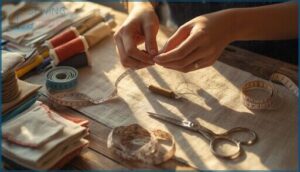
You’ve got your tools ready, and now it’s time to set yourself up for success before you make your first stitch.
Start by exploring different quilting stitch variations to find the technique that works best for your project and skill level.
The prep work might seem boring, but it’s what separates smooth sailing from frustrating tangles and wonky seams.
Let’s cover the three foundation skills that’ll give you control from the very first thread.
Cutting and Measuring Fabric Accurately
Accurate cutting is essential for avoiding crooked seams and twisted projects. Start by squaring your raw edge with fabric shears or a rotary cutter against a ruler.
To ensure precision, check grain alignment by measuring from the selvage to your pattern grainline at both ends—matching distances confirm parallelism.
For straight edges, use a clear acrylic ruler on a cutting mat, and always press fabric smooth before measuring.
If your machine has built-in stitches like the blind hem, you can achieve professional finishes without hand-sewing.
Threading The Needle Made Easy
You don’t need a miracle to get thread through a needle eye. Cut your thread at a 45-degree angle and hold it against a white background for better visibility.
A modern needle threader slips thread through in seconds if your fingers refuse to cooperate.
Leave a 10 to 15 millimeter tail to prevent slipping when you start stitching.
Tying Secure Knots to Start and Finish
A solid knot types foundation keeps your hand sewing from falling apart mid-project. Wrap an overhand knot at your thread end before starting basic stitches—it creates secure starts without slipping through fabric.
For finishing techniques, loop your last stitch, pass the needle through, and pull tight against the cloth. That simple stitch anchors your work and gives you real thread control from first pierce to final tug.
Must-Know Basic Hand Stitches
You don’t need a sewing machine to create strong, clean seams and finishes.
These four basic stitches give you everything you need to tackle most hand sewing projects with confidence. Master these now and you’ll have the foundation to handle repairs, alterations, and even brand-new creations entirely by hand.
Running Stitch Step-by-Step
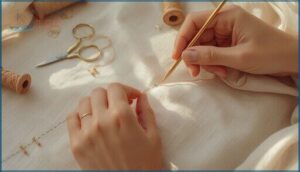
Think of the running stitch as your gateway to hand sewing freedom—it’s the foundation every beginner masters first.
Here’s how you’ll nail it:
- Bring your needle up from the fabric’s underside at your starting point
- Push it down about 1/8 inch away for your first stitch
- Come back up the same distance along your marked line
- Repeat this weaving motion, keeping stitch length and spacing consistent
- Pull thread snug without puckering the fabric
Control your fabric tension and needle movement, and you’ll create clean, even lines every time.
Backstitch for Strong Seams
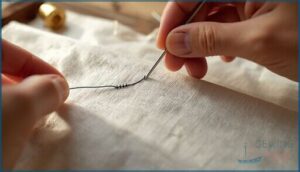
When your seam needs to hold strong, backstitch delivers machine-level durability with just needle and thread. You’ll create overlapping stitches that lock each thread into the last—making this hand stitch nearly impossible to unravel. Work backward after each forward stitch, keeping tension consistent and spacing around 1/8 inch.
Perfect for high-stress areas like shoulder seams, this sewing technique transforms fabric selection and thread choice into lasting seam reinforcement.
Whipstitch for Joining Edges
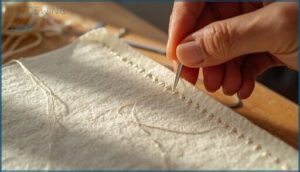
Your fastest path to edge joining starts with the whipstitch—a spiral motion that wraps thread over fabric edges and locks them together. Insert your needle 3-5 millimeters from the raw edge, pull through at an angle, then repeat along the seam.
This hand sewing technique excels at fabric closure on felt crafts and stuffed projects. Watch your stitch tension closely; pulling too tight creates puckering, while loose whipstitch variations leave gaps.
Overcast Stitch to Prevent Fraying
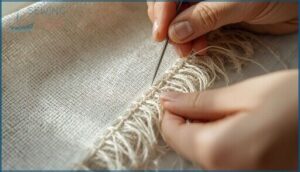
Raw fabric edges shed threads fast—overcast stitch stops that cold. Loop thread over the cut edge every 3-4 millimeters, working from the wrong side to the right. Your stitch tension should lie flat without puckering, creating a protective barrier against fraying.
This edge finishing technique works beautifully on seam allowances and curved edges where hems won’t fit. Match your thread choice and fabric selection for invisible protection.
Neat Hemming and Edge Finishing Techniques
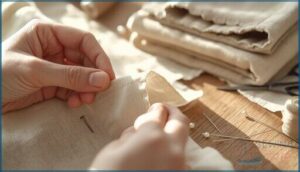
A hem that doesn’t show and edges that won’t fray—that’s the difference between work that looks homemade and work that looks professional.
Professional finishing means hems disappear and edges resist fraying
You don’t need fancy equipment to get clean results. Here are three finishing techniques that give your projects that polished look while keeping raw edges under control.
Blind Stitch for Invisible Hems
A blind hem stitch creates nearly invisible hems on dress pants and skirts by catching just one or two threads of your main fabric. Press your hem sharply, fold back the edge, then alternate tiny bites between garment and hem allowance.
Invisible Hem Techniques That Work:
- Match thread color closely to your fabric for true invisibility
- Use a size 9 or 10 needle on lightweight materials
- Space hand sewing stitches evenly 5 to 10 millimeters apart
- Keep tension snug but not tight to avoid puckering
- Press again after finishing to set your blind hem stitch
Medium weight wovens, like wool suiting, hide small bites best. Test your fabric preparation on scraps before hemming delicates—sheer materials show every stitch clearly. Wax your thread selection to reduce tangling and help stitches pull smoothly for hemming success.
Blanket Stitch for Decorative Edges
While blind hems hide your work, blanket stitch puts decorative borders front and center. This hand sewing technique wraps fabric edges with evenly spaced vertical legs linked by a horizontal thread—perfect for felt ornaments, tea towels, and appliqué outlines.
Space your hand stitches about 1/4 inch apart using contrasting thread selection like bright embroidery floss on dark wool for bold edge finishing that announces your sewing techniques with confidence.
Securing Raw Edges for Durability
Once you’ve mastered decorative blanket stitches, turn your attention to keeping fabric from falling apart.
Edge finishing prevents fraying through whip stitch wrapped tightly along raw seams, bias fabric binding that seals borders, or zigzag hand sewing that locks threads in place.
This seam reinforcement withstands durability testing through repeated washing and wear—your hem will outlast store-bought hems every time.
Common Hand Stitching Mistakes to Avoid
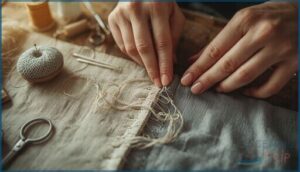
Even seasoned sewers will tell you that the most frustrating problems often come down to a handful of avoidable mistakes. You’ll save hours of rework when you understand what causes threads to tangle, stitches to look uneven, or seams to fall apart after all your effort.
Here’s what to watch for so your hand stitching stays clean and holds up over time.
Preventing Tangled and Knotted Thread
Nothing sinks hand sewing momentum faster than wrestling with twisted, knotted thread. Smart thread management keeps your stitches smooth and your sanity intact.
- Keep your thread 18 inches or shorter to prevent mid-stitch tangles
- Pull thread through beeswax or fabric softener for tangle-free glide
- Let your needle dangle freely every few stitches to untwist naturally
- Cut thread at a clean 45-degree angle to stop fraying near the eye
- Anchor your knot prevention with a backstitch instead of bulky knots
Maintaining Even Stitch Length
Uneven stitches announce amateur work before you finish the seam. Your fabric guidance matters more than you think—dragging or bunching material under your needle creates clustered small stitches and stretched-out long ones.
Mark equal intervals with chalk or use your thumb-width as a guide for consistent stitch length control. A sharp needle matched to your fabric weight prevents penetration drag that throws off even tension and rhythm.
Securing Stitches to Prevent Unraveling
Loose stitches unravel the moment you set down your work. Lock each seam properly to prevent hours of effort from falling apart:
- Backstitch twice at seam starts and ends for stitch reinforcement
- Tie secure knots close to fabric using doubled thread and needle control
- Maintain consistent thread tension throughout your hand sewing line
- Add a securing stitch after whip stitch or slip stitch for fabric stability
Easy Hand Stitching Projects for Practice
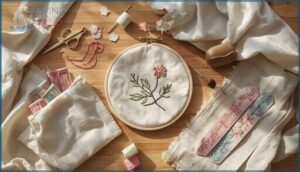
Now it’s time to put your skills to work on real projects that won’t intimidate you. These starter projects let you practice your stitches while making something useful instead of just sewing straight lines on scrap fabric.
You’ll build confidence with each finished piece and discover which techniques feel most natural to you.
Simple Fabric Repairs and Alterations
Your hand sewing skills offer real freedom when a seam splits or a hem drops. For fabric mending and seam repair, start with simple fixes like restitching split pockets using backstitch along the original line. Hem alteration works best with slip stitch for invisible finishes. Patching techniques and zipper fix projects build confidence fast.
| Repair Type | Best Stitch |
|---|---|
| Split seams | Backstitch |
| Fallen hems | Slip stitch |
| Small holes | Whipstitch patch |
| Frayed edges | Overcast stitch |
| Loose zippers | Running stitch |
Sewing on Buttons and Fasteners
Mastering button placement transforms a garment from floppy to finished. Start with flat buttons by bringing your needle up from the wrong side, making 3 to 5 passes through each hole. Create thread shanks by wrapping thread around stitches under the button, leaving space for the buttonhole layer.
Snap fasteners and sewing hooks follow similar overcast stitch patterns, while reinforcement buttons add durability to waistbands.
Crafting Fabric Coasters and Drawstring Pouches
Ready to put your stitches to work? Fabric coasters need quilting cotton cut around 5 inches square with batting sandwiched inside. Use backstitch along edges, leaving a gap for turning.
Drawstring pouches start from one fabric rectangle—fold for casing, whipstitch sides, then thread cord with a safety pin.
These projects build confidence while mastering edge finishing and hand sewing techniques.
Frequently Asked Questions (FAQs)
What is the strongest hand stitch technique?
Backstitch delivers superior seam security for fabric projects, overlapping each stitch to spread tension evenly. For leather, saddle stitch wins with dual-thread durability that outlasts machine stitching under stress.
Is hand stitching good for beginners?
Yes, it’s perfect for beginners. You’ll master stitch tension and thread selection at your own pace, build confidence with simple fabric choices, and develop foundational hand sewing basics without machine complexity.
How do I fix a broken stitch mid-project?
A broken stitch is like a weak link in a chain—catch it early before the entire seam unravels.
Secure loose thread ends through weaving, then overlap your repair stitching by two to three stitches for lasting seam restoration.
Can I hand stitch stretchy or knit fabrics?
You can hand stitch knits when you use a ballpoint needle and stretch-friendly stitches like herringbone or catch stitch.
These hand sewing techniques let elastic seams flex without snapping, making hand sewing knits totally doable.
Whats the difference between basting and permanent stitching?
Basting stitches hold layers temporarily with long, loose thread tension for easy removal.
Permanent stitching creates durable seams with tight, even tension and secure knots, designed to last through wear and washing.
How do I transfer pattern markings onto fabric?
Pattern markings transfer to fabric using tailor’s chalk, washable pens, tracing wheels with dressmaker’s carbon, or tailor tacks—contrasting thread loops marking darts, notches, and buttonholes directly onto your fabric layers.
When should I use a hoop or frame?
Use a hoop or frame when you need fabric tension for detailed embroidery or cross stitch. Hand sewing simple repairs rarely requires one, but frame types improve stitch visibility and help beginners maintain even tension across larger projects.
Conclusion
The moment you pull that last stitch tight and clip the thread, something shifts. You’re not guessing anymore. You’ve built a skill set that doesn’t depend on expensive machines or repair shops—just your hands, a needle, and the hand stitching techniques beginners can actually master.
Your clothes last longer. Your fixes hold. And the next time something tears or needs adjusting, you won’t hesitate. You’ll just thread the needle and get it done.