This site is supported by our readers. We may earn a commission, at no cost to you, if you purchase through links.
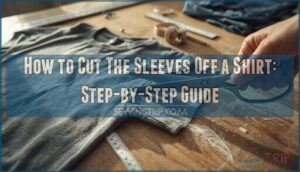
That old concert tee doesn’t fit like it used to, and those sleeves bunch up in ways that make you want to reach for the scissors. You’re not alone. Transforming a standard shirt into a sleeveless style ranks among the easiest DIY fashion moves you can make—no sewing machine required, no pattern needed, just a clean cut and ten minutes of your time.
The difference between a ratty hack job and a piece you’ll actually wear comes down to technique. Sharp scissors matter. Measuring twice saves you from lopsided regret. A quarter-inch seam allowance keeps your fabric from unraveling into a frayed mess by the third wash.
Table Of Contents
Key Takeaways
- Sharp fabric scissors, accurate measuring, and marking both sleeves identically prevent lopsided cuts and frayed edges that ruin the final look.
- Cut placement determines the style—muscle shirts need deep J-curves starting 3-5 inches from the neckline, while casual looks require cuts 3-5 inches below the underarm with raw edges left unhemmed.
- Finishing techniques like folded hems, fray check, or overlock stitching transform rough DIY cuts into durable pieces that survive repeated washing without unraveling.
- Pre-washing fabric before cutting prevents shrinkage surprises, and proper post-cut care—cold water, gentle cycles, air drying—keeps modified shirts looking sharp long-term.
Essential Tools for Cutting Shirt Sleeves
Before you make the first cut, you need the right gear. Sharp fabric scissors are non-negotiable—dull blades ruin fabric and waste your time.
You can restore dull blades at home using aluminum foil or a sharpening stone to get that clean edge back.
Grab your measuring tape, marking tools, and set up a clean workspace to keep this project tight and controlled.
If you’re new to adjusting patterns, check out where to learn pattern alteration to build confidence before you dive into marking and measuring your fabric.
Choosing Sharp Fabric Scissors
Grab fabric scissors with blade sharpness around 58–60 on the Rockwell C scale. You need that edge quality to slice through cotton or jersey without fraying. Micro serration grips fabric so it won’t slip during sleeve removal. Choose ergonomic grips with spring-loaded action to cut fatigue. Sharpen once a year for clean DIY shirt modification.
If you’re also removing stitches or deconstructing seams, pair your scissors with a quality seam ripper designed for precision fabric work to avoid accidental tears.
Skip regular scissors—they’ll wreck your cutting sleeves project and leave jagged edges. For best results, use scissors with heavy duty blades to guarantee precise cuts.
Measuring Tape and Marking Tools
Once you’ve got those scissors ready, you’ll need a flexible measuring tape and tailor’s chalk to map out exactly where each cut lands. Use tailor’s chalk or washable markers as chalk alternatives for precision cutting—they vanish after the first wash.
A ruler guides your seam lines straight. Mark both sleeves at identical points from the shoulder down. Accurate measuring techniques prevent lopsided sleeve removal disasters.
Preparing Your Work Area
Set up on a flat table at waist height to avoid back strain during garment alteration. Position task lighting directly overhead—sewing needs twice the light of casual reading.
Clear away clutter and organize your fabric scissors, measuring tape, and supplies within arm’s reach. A clean workspace with ergonomic setup prevents accidents.
Keep blade guards engaged on rotary cutters and store sharp tools safely between cuts.
A cutting mat with grid lines and a clear acrylic ruler will help you make precise, controlled cuts with your rotary cutter for crafts.
How to Mark The Perfect Cut Line
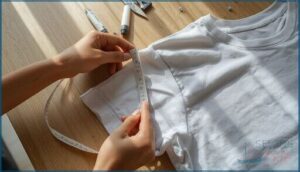
Getting the cut line right is where most people mess up—and it’s the one thing you can’t undo. You’ll need to measure, mark, and verify before you make that first cut.
Here’s how to nail your placement every time.
Measuring Desired Sleeve Length
Start by measuring from the shoulder seam down the outer arm to your target point—most short sleeves land between 7.5 and 9 inches for standard proportions. Use your measuring tape to mark where the fullest part of your bicep sits, a natural reference point for sleeve length calculation.
Check a favorite shirt for reference, then add half an inch fabric allowance if you’ll hem later. This sleeve proportion keeps armhole depth balanced during sleeve alteration techniques.
To guarantee a proper fit, consider making a full bicep adjustment based on your body measurements.
Using Chalk or Washable Markers
Grab tailor’s chalk or a fabric pen that disappears with water—these tools mark your cut line without leaving permanent damage on the shirt. Precision drawing matters when you’re transforming sleeves into a sleeveless style.
- Chalk application: Drag tailor’s chalk firmly along the seam for a visible line that brushes off later
- Marker selection: Choose erasable ink pens for detailed fabric marking on dark materials
- Cutting sleeves: Mark both armholes before any sleeve removal begins
Double-Checking for Symmetry
Nothing kills a DIY project faster than lopsided armholes staring back at you from the mirror. Fold your shirt in half lengthwise to match sleeve alignment before cutting sleeves off.
Once you’ve nailed the symmetry, treat your raw edges with care—proper finishing techniques for delicate fabrics will keep fraying at bay and your custom tee looking sharp through countless wears.
Measure twice from shoulder seam to marked armhole on both sides—accuracy here determines whether your sleeveless transformation looks intentional or rushed. Pin the fabric layers together during sleeve removal to lock in symmetry checks.
Step-by-Step Guide to Cutting Sleeves Off
Now comes the fun part—actually making the cut. You’ve got your marks in place, your scissors are sharp, and you’re ready to transform that shirt.
The method you choose depends on the style you’re after, so let’s break down three solid approaches.
Cutting Along The Seam
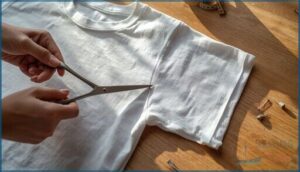
Lay your shirt flat and pull the fabric taut. Cut parallel to the seam, starting at the underarm and moving toward the shoulder in one smooth motion. Leave a quarter-inch seam allowance to prevent fabric fraying and maintain structural integrity.
This cutting precision ensures clean sleeve removal without compromising the armhole’s edge finishing. Flip and repeat on the inner stitching line for a professional sleeveless look.
Creating a Muscle Shirt Style
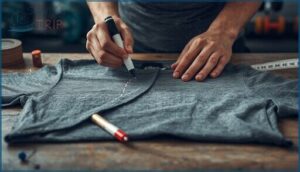
Muscle fit demands precision. Mark 3 inches from the neckline for a fitted cut or 5 inches for a boxy look. Cut a J-shaped curve that drops 14 inches, staying 1 inch inside the original seam.
- Fold the shirt in half for identical armhole depth on both sides
- Follow a smooth downward curve from shoulder to side seam
- Stretch the fabric outward after cutting to prevent curling
- Maintain your shoulder seam integrity by staying two fingers away
This sleeve removal method creates breathable, athletic armholes that define the muscle shirt aesthetic.
Achieving a Casual Oversized Look
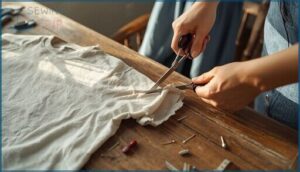
Oversized fit lives in the balance between deep armhole depth and fabric choice. Start by cutting 3 to 5 inches below the underarm, extending down to several inches above the hem.
Lightweight cotton jersey drapes softly, creating that casual style everyone’s after. Let the raw edges curl inward—hemming kills the relaxed vibe.
Pair your sleeveless DIY fashion with high-waisted bottoms for silhouette balance that actually works.
Creative Sleeve Removal Styles
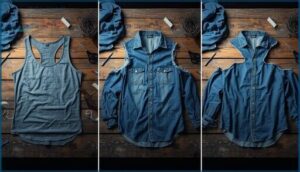
You’re not locked into one basic sleeve removal method. Different cuts create totally different vibes—from athletic tank tops to edgy open-side designs.
Here’s how to customize your look with three creative sleeve styles.
Turning a Shirt Into a Tank Top
Strip away your tee’s sleeves completely for a true sleeveless transformation. Armhole depth sets the tone—athletic tank top styles extend 5 cm to 10 cm below the original seam, while symmetrical DIY alterations leave 2 cm outside the seam for strength.
- Fold the shirt in half and cut one armhole first, then trace it onto the other side for perfect symmetry
- Lower the front neckline by 1.25 cm to 2.5 cm to prevent constriction at the throat
- Finish raw edges with a narrow zigzag stitch to stabilize knit fabric and reduce curling
Making a Cutoff Shirt With Open Sides
Take sleeveless one step further with open side cutoff designs that expose your torso from shoulder to waist. Mark a diagonal or curved line from the bottom hem upward to a point 5 cm below the shoulder seam, then cut smoothly.
Fold the shirt to trace your first armhole onto the opposite side—this keeps both openings symmetrical.
Layer over a sports bra for gym-ready edge finishing.
Cropping for Cap Sleeves or Cute Styles
Cap sleeves soften the sleeveless look—cut just 2 to 4 cm beyond the armhole seam to leave a short flap over your shoulder. Mark with chalk, then slice straight across to shorten the sleeve.
For cute shirt trends, pair cap sleeves with a cropped hem: remove 5 to 12 cm from the bottom. This garment alteration technique balances proportions and nails relaxed, DIY clothing modification style.
Finishing Techniques for Clean Edges
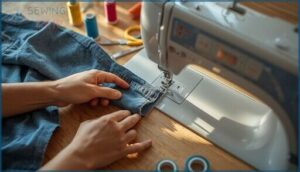
You’ve made the cut—now it’s time to lock in those edges so they don’t fray into oblivion. Raw armholes can look intentionally rugged, but finishing them properly gives you control over the final look and keeps your shirt wearable for the long haul.
Here are three solid techniques to clean up those cut edges and make your DIY job look deliberate.
Hemming The Armholes
A clean armhole finish transforms your sleeveless DIY from rough-cut rebellion to polished statement. Hemming techniques using bias tape binding or folded under edges give that pro look while fabric stabilization keeps your creation from falling apart mid-adventure.
- Fold raw edges under 0.6 to 1 centimeter and topstitch for minimal bulk armhole finishing
- Pin bias tape right sides together, stitch at 3⁄8 inch, then wrap and secure for clean curves
- Clip seam allowances along armholes so folded hems lie flat without puckering
- Press before and after sewing reinforcement—it’s the difference between homemade and handcrafted
Using Fray Check or Overlock Stitching
Beyond hems, real Fray Prevention comes down to sealants or stitches. Fray Check dries clear on cotton and denim, forming a flexible barrier after 1–2 hours. Overlock Machines trim and encase edges in one pass—your go-to for casual raw-edge vibes. Combine both on fray-prone fabrics: light sealant plus matching overcast stitch locks down your sleeveless shirt designs through every wash.
| Method | Best For |
|---|---|
| Fray Check liquid | Quick cotton edge sealing |
| Three-stitch zigzag | Home machine overlock mimic |
| Serger overlock | Durable knit finishes |
| Combo approach | High-fray wovens |
| Pre-wash prep | Clean sealant adhesion |
Adding Decorative Trim or Embroidery
Personality shows in trim choices. Satin ribbon or grosgrain tape gives you dimensionally stable edge finishing on curves; appliqué motifs with heat-fused backing cut fraying by half.
Match thread colors to your sleeveless shirt designs or go contrast-bold. Freehand machine embroidery and counted cross-stitch turn clothing modification into DIY fashion projects.
Center motifs at the shoulder seam, test on scrap fabric, then anchor every bead with invisible stitches for garment modification that lasts.
Caring for Your Modified Shirt

You just cut the sleeves off your shirt—now keep it looking sharp. Your modified piece needs the right care to hold up wash after wash.
Here’s how to maintain that fresh-cut edge and protect your work.
Washing and Drying Best Practices
Your modified shirt deserves gentle washing to protect those cut edges. Turn it inside out and wash in cold water on a gentle cycle—cold water benefits include preventing fabric stress and color fade. Skip the bleach and use mild detergent.
Air dry or tumble on low heat to preserve the fabric. Remove promptly to avoid wrinkles and keep that rebellious look sharp.
Storing to Maintain Shape
To protect those fresh armholes and cut seams, hang your shirt on a padded hanger. This simple hanging technique keeps shoulder shape intact and prevents distortion around the hem.
For proper garment preservation and closet organization:
- Use breathable garment bags to reduce dust without trapping moisture
- Avoid stacking heavy items that compress fabric storage
- Clip hanger ends to prevent shoulder bumps on knits
- Keep folded storage light and uncompressed for delicate cuts
- Rotate garments regularly to prevent pressure points
Ironing and Long-Term Maintenance
Press your modified shirt on low heat—iron directly over raw edges and they’ll seal slightly, making fraying less aggressive over time. Use steaming methods for knit fabrics to avoid heat damage. Apply garment preservation techniques by ironing inside out when hitting areas near decorative trim.
| Fabric Care Task | Ironing Tips | Storage Solutions |
|---|---|---|
| Cotton cuts | Medium heat, steam on | Hang to prevent creasing |
| Knit armholes | Low heat, press cloth | Fold gently, breathable bags |
| Delicate hems | Steam only, no direct iron | Padded hangers prevent stretch |
| Embellished edges | Avoid heat completely | Store flat, acid-free tissue |
Regular clothing care and maintenance keeps your sewing and alteration work sharp.
Frequently Asked Questions (FAQs)
What type of shirt can I use to cut the sleeves off of?
Cotton tees and jersey knits work best for sleeve removal. Lightweight blends handle cuts cleanly, while ribbed athletic shirts trim into sharp armholes. Avoid delicate fabrics that fray easily or need stabilizing.
Is there an easier way to cut the sleeves off a shirt?
Yes. Use a rotary cutter for quick, clean sleeve removal along the armhole. Lay your shirt flat and cut both sleeves simultaneously—this ensures symmetry. Finish with pinking shears to reduce fraying.
What should I do if the fabric starts to fray?
Stop fraying fast with fray check liquid applied along cut edges. Fold and sew a simple hem for seam reinforcement. Use overlock stitching for edge finishing.
Apply fabric stabilizer before cutting prevents future fray repair needs.
Is there a way to prevent the shirt from shrinking after cutting?
Pre-treat your fabric by soaking it in cool water before cutting for shrinkage control.
Wash inside out in cold water and air dry post-cut.
Finish edges with a hem or seam for fiber stabilization.
How can I make sure I’m cutting the sleeves evenly?
Think of sleeve alignment like mirror images—you want both sides to reflect each other perfectly.
Fold your shirt vertically, matching shoulder seams. Measure from the shoulder seam down, mark with chalk, then cut both sleeves simultaneously for exact symmetry.
Can you cut sleeves off stretchy fabric shirts?
You can absolutely cut sleeves off stretchy fabric shirts. Knit construction prevents catastrophic unraveling, though edges will curl. Use sharp scissors, cut along the seam, and stabilize with edge finishing to control distortion.
How do you fix uneven sleeve cuts?
Use a straight edge to compare both sleeves. Re-mark matching lengths, relax fabric tension, then trim edges in small increments. Check symmetry after each adjustment to achieve balanced cuts on your sleeveless tee.
What if the armhole is too large?
Take in the side seam from the armhole area to reduce width. Insert darts or add binding for a snug edge. Small pleats near the armhole also tighten the fit without re-cutting.
Should you pre-wash before cutting the sleeves?
Prewashing stops fabric shrinkage and color bleeding in their tracks. It’s your insurance policy for cutting accuracy.
Prepare fabric first—laundering reveals true behavior before sleeve removal, ensuring garment modification success without costly mistakes.
Can you reattach sleeves after cutting them off?
Sleeve reattachment is possible on knit shirts if you didn’t trim the armhole or reshape the shoulder.
Woven fabrics and repeated stitching cause fabric fraying and compromise seam integrity, making sleeve caps harder to align perfectly.
Conclusion
Imagine this: you grab that worn band tee from 2019, measure two inches past the shoulder seam, and make the cut. Twenty minutes later, you’re wearing a piece that fits your style instead of someone else’s template.
That’s the power of knowing how to cut the sleeves off a shirt. You controlled the scissors. You decided the look. Now every oversized mistake in your closet becomes raw material for something better.
- https://www.seidensticker.com/eu/en/shirt-guide-tips-care-washing-a-shirt
- https://pinterest.com/pin/create/button/?url=https%3A%2F%2Foutfitlovers.com%2Fhow-to-cut-sleeves-on-a-shirt%2F&media=&description=How+to+Cut+Sleeves+on+a+Shirt%3A+A+Step-by-Step+Guide+for+a+Trendy+Transformation
- https://www.longancraft.com/blogs/sewing-tips/fabric-scissors-vs-normal-scissors
- https://scissortec.com/blogs/news/hair-shears-steel-hardness-steel-types-comparison
- https://hobbyhouseneedleworks.com/products/kai-8-micro-serrated-patchwork-scissors