This site is supported by our readers. We may earn a commission, at no cost to you, if you purchase through links.
You’re halfway through sewing a perfect garment when you realize the zipper’s on backwards. Or maybe you’ve spent an hour stitching a delicate seam, only to discover it’s puckered beyond repair. Every sewist has been there—staring at hours of work that needs to come undone.
The difference between abandoning the project and salvaging it often comes down to one small tool: your seam ripper. Learning how to fix sewing mistakes with a seam ripper transforms those frustrating moments from disasters into minor detours. The right technique means you can remove stitches cleanly, preserve your fabric, and resew with confidence—turning what felt like a failure into a finished piece you’re proud to wear.
Table Of Contents
Key Takeaways
- A seam ripper‘s curved blade and protective red ball let you safely remove stitches from crooked seams, misaligned fabric pieces, zipper errors, and tension problems without damaging your material.
- Safe seam ripping requires holding the tool at a 20-40 degree angle with light pressure, cutting every third stitch on delicate fabrics, and working in short sections to prevent tears or fabric distortion.
- After removing stitches, inspect for damage by touch and light, then press with steam to restore fabric shape before reinforcing the area with interfacing or stay tape for stronger reseaming.
- Ergonomic seam rippers with cushioned grips reduce hand fatigue during extended use, and you should replace your tool every 6-12 months when the blade dulls or the safety ball chips.
What is a Seam Ripper Used For?
A seam ripper is your best friend when sewing goes sideways. This small but mighty tool cuts through stitches without wrecking your fabric, giving you a clean slate to fix mistakes.
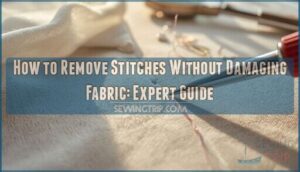
If you’re new to using one, check out what a seam ripper is used for to learn the proper techniques that protect your fabric while removing stitches.
Let’s break down what makes this tool essential, how it’s designed to protect your work, and which type might work best for your projects.
If you want tools built to last through heavy use, check out these durable sewing tools online to see what holds up best.
Purpose in Sewing Projects
Before you grab that seam ripper to fix sewing mistakes, understand your project goals. Every sewing project starts with a creative vision that shapes everything from fabric selection to your final design intent.
Having the right sewing tools in your kit makes it easier to execute your vision without unnecessary frustration or rework.
Your sewing objectives determine:
- Which sewing tools you’ll need throughout construction
- How much precision your seams require
- What finishing techniques serve your design intent
- Where a stitch remover becomes your best friend when reality doesn’t match your vision
Key Components and Design Features
You’ll recognize a seam ripper by its distinctive U-shaped blade—that curved metal edge is hardened steel designed to slice through threads without shredding your fabric. The handle gives you control during precise stitch removal, while that little red ball at the tip? It’s your safety guard, gliding over fabric to prevent accidental snags.
If you’re new to using one, this guide to unseaming safely walks you through proper technique to avoid fabric damage.
Some ergonomic seam rippers include cushioned grips that reduce hand fatigue during longer unpicking sessions.
Types of Seam Rippers Available
Now that you know what makes a seam ripper work, let’s explore the different Seam Ripper Types you can grab. Each one approaches stitch removal differently:
- Basic Fork Head Ripper – V-shaped blade with a short plastic handle for everyday unpicking
- Curved Blade Ripper – Follows thread lines to prevent fraying on woven fabrics
- Double Sided Ripper – Two blade edges for switching between small and large seam ripping jobs
- Folding Rippers – Retractable blade folds into the handle for safe storage
- Electric Rippers – Battery-powered motor automates cutting through heavy denim seams
You can learn more about seam ripper features and parts by exploring these. Ergonomic seam ripper models with cushioned Handle Designs reduce hand fatigue during marathon unpicking sessions.
Common Sewing Mistakes Fixed With a Seam Ripper
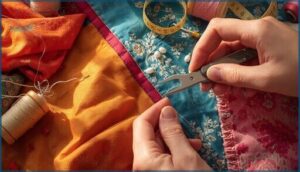
Even experienced sewers mess up—it’s just part of the process.
The good news? Your seam ripper can fix almost any sewing mistake you throw at it. Let’s look at the most common problems you’ll encounter and how to tackle each one with confidence.
Crooked or Misaligned Seams
A crooked seam happens when your stitching drifts off course, leaving fabric pieces misaligned or skewed. You’ll spot fabric drift early by checking your work against a straight edge as you sew.
Use your seam ripper to remove the crooked stitches in small sections, then realign the grainline and resew with pins or guides for perfect seam alignment and clean stitch correction.
Before you begin, check out when to use a seam ripper in sewing to pick a quality tool that won’t damage your fabric during stitch removal.
For more tips on achieving straight seams in upholstery, check out expert advice on proper alignment and fabric measurement.
Incorrect Fabric Piece Attachments
Mismatched fabric pieces throw off your entire garment—edges extend past seam allowances, notches fail to align, and drape goes sideways.
Careful seam ripping lets you fix piece reattachment errors before they ruin your project. Remove the incorrect seam, realign all notches for proper fabric alignment, then pin and resew with the correct seam allowance. Edge finishing stays clean when seam correction happens early.
Zipper or Topstitching Errors
Zipper alignment headaches and wavy topstitching reveal themselves after you’ve committed—the slider catches, teeth bunch, or your decorative stitching wanders off course.
Your seam ripper becomes essential here: carefully lift threads near the zipper tape edge or remove irregular topstitching in small sections. Thread tension problems and fabric distortion demand precise thread removal without adding new damage to already stressed seams.
Tension and Stitch Length Issues
Frustration builds when your stitches loop, pucker, or pull—thread tension and stitch length gone rogue. You’ll spot tight upper tension creating knots on top, or loose bobbin tension leaving loops that wreak havoc on seam stability.
Grab your seam ripper and remove those unbalanced stitches in small sections. Adjust your sewing machine’s tension dial by 1-2 units, check needle selection for your fabric type, then re-stitch for proper stitch balance without fabric puckering.
How to Use a Seam Ripper Step by Step
Using a seam ripper isn’t complicated, but doing it the right way saves you from torn fabric and extra headaches. You need to know where to start, how to break the stitches without force, and how to protect your project while you work.
Here’s the exact process that’ll have you ripping seams like a pro.
Identifying Stitches to Remove
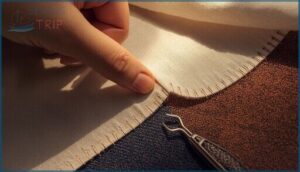
Before you grab your seam ripper, pause and scan the seam for the right starting point. Look for visible stitch series on the fabric surface—those are your targets.
Check both sides to spot bobbin threads versus top threads, and identify any basting stitches you can pull out quickly. Thread identification saves you from accidentally ripping into structural seams or decorative details that should stay put.
Breaking Stitches Safely
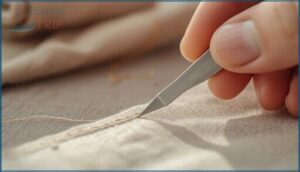
Start by gently rocking the seam ripper’s point into a single stitch to create a small opening. Apply minimal downward pressure—your blade should slide between threads, not through the fabric itself. If the tool catches, stop immediately and adjust your angle.
Use short cuts rather than long rips to maintain thread control and prevent damage. Work slowly on delicate fabrics to avoid runs or tears.
Removing Threads Without Damaging Fabric
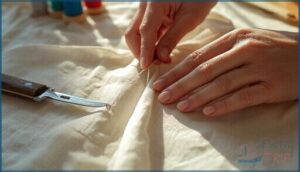
Once you’ve broken a stitch, pull threads out in small sections—no more than a few inches at a time. This keeps fabric tension steady and prevents distortion.
Smooth the area with your fingers after each pull to reset the weave. If you feel resistance, snip another stitch instead of yanking. Gentle thread removal is your insurance against accidental tears and stretched fibers.
Using The Red Ball for Fabric Protection
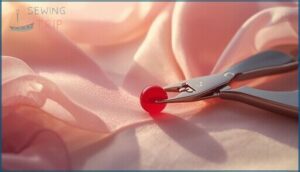
That red ball isn’t just decoration—it’s your fabric’s bodyguard. Slide it along the seam as you rip, and it acts as a cushion between layers, preventing snags on delicate handling spots.
The red ball on your seam ripper isn’t decoration—it’s a protective cushion that glides between fabric layers to prevent snags
The ball distributes pressure evenly, protecting silk and chiffon from tears. Use it on every long seam for smart fabric protection and fewer sewing mistakes.
Essential Tips for Safe Seam Ripping
You’ve got the basics down, but using your seam ripper the wrong way can turn a simple fix into a fabric disaster.
The difference between clean stitch removal and torn material comes down to a few key safety habits.
Here’s what you need to know to protect your projects every single time.
Correct Tool Angle and Pressure
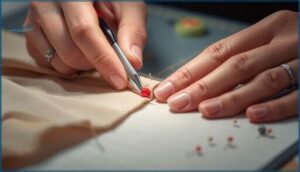
Hold your seam ripper at a shallow 20 to 40-degree angle for safe stitch removal—Tool Alignment prevents fabric damage. Apply light Pressure Control; only your hand’s weight plus a gentle press is needed.
Keep the blade parallel to the seam and use short, controlled strokes. Monitor Fabric Tension with your finger just ahead of the blade, adjusting your seam ripping techniques as resistance changes for effective sewing tool usage.
Working With Delicate or Stretch Fabrics
Delicate fabrics and knit fabrics demand a lighter touch and smarter Fabric Stabilization. Place tissue paper or tear-away stabilizer under silk to prevent shifting, and work flat on a hard surface for maximum Fabric Protection.
For safe Seam Repair on these materials:
- Cut every third stitch on satin, then pull the top thread gently for Delicate Stitching control.
- Use embroidery scissors alongside your seam ripper for precise thread removal on sheer weaves.
- Apply Stretch Fabric Tips: unpick zigzag stitches one by one to avoid slicing knit loops.
Lighting and Workspace Setup
Good sewing techniques start with seeing what you’re doing. Position your Task Lighting at an angle that eliminates shadows on your work surface—overhead Ambient Illumination alone won’t cut it. Aim for 4000K to 5000K Color Temperature bulbs that mimic daylight and keep your eyes sharp.
Pair that with smart Desk Organization: clear space, seam ripper within reach, and ergonomic chair height so you’re not hunching over delicate stitches.
| Light Layer | Placement | Purpose |
|---|---|---|
| Ambient overhead | Above workspace | Reduces harsh shadows across room |
| Adjustable desk lamp | Angled toward fabric | Illuminates stitches without screen glare |
| Bias strip behind monitor | Rear edge of screen | Improves contrast, cuts eye strain |
| Under-shelf accent | Shelving or cabinet edge | Fills shadowed corners for detail work |
Preventing Fabric Tears and Holes
Vigilance is your best defense against fabric tears when you’re wielding that seam ripper. Work slowly, feel tension with your fingertips, and never force the blade through stubborn stitches.
Fabric Protection essentials for Tear Prevention:
- Edge Binding raw seams with zigzag stitches stops unraveling before it starts
- Apply fusible interfacing along stress points for instant Seam Reinforcement
- Press with a nonstick cloth to protect fibers during Hole Repair
- Use fabric clips instead of pins to avoid snags
- Match your needle size to fabric weight for clean textile repair
Repairing Fabric After Seam Ripping

You’ve freed the stitches—now it’s time to make sure your fabric didn’t pay the price. Even careful seam ripping can leave behind tiny holes, stretched threads, or puckered areas that need attention before you resew.
Let’s walk through how to inspect, restore, and reinforce your fabric so your next seam looks immaculate.
Inspecting for Damage or Holes
Once you’ve removed those stitches, it’s time for fabric inspection and damage assessment. Run your fingers along the seam to feel for snags or puckering—your touch catches what your eyes miss.
Hold the fabric up to bright light and look for tiny holes within an inch of the stitching line. Check for shiny spots or color changes that signal fiber wear from your seam ripper work.
Pressing and Restoring Fabric Shape
After your seam ripper work, restore calm with strategic heat control. Set your iron to the fabric’s recommended temperature and apply steam pressing to lift fibers and encourage fabric relaxation.
For shape retention, try fabric blocking—pin your material to exact dimensions on a pressing board. This fabric care step prevents warping before you restitch, giving your garment repair a professional finish.
Reinforcing and Reseaming Correctly
Your seam repair isn’t finished until you lock in strength. Choose thread that matches your fabric’s fiber content and weight—this is essential for Seam Reinforcement.
Apply interfacing or fusible stay tape along the original line for Fabric Stabilizing, then restitch with a backstitch at each end.
For Reinforced Stitching on knits, use a narrow stretch stitch to maintain elasticity and prevent future failure.
Choosing The Best Seam Ripper for Your Needs
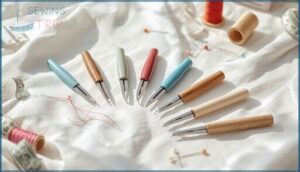
Not all seam rippers are created equal, and the right one can make your work faster and less frustrating.
You’ll find options that range from basic plastic-handled versions to ergonomic designs that feel like an extension of your hand. Let’s break down what’s out there so you can pick the tool that matches your sewing style and needs.
Classic Vs. Ergonomic Seam Rippers
You’ll see classic seam rippers everywhere—slim, plastic grips that cost just a few bucks. Ergonomic models have wider, contoured grips that seriously reduce hand fatigue during marathon unpicking sessions.
Here’s what sets them apart:
- Grip Comfort: Ergonomic grips feature rubber or silicone sections that won’t slip, while classic styles stay smooth and can twist unexpectedly.
- Blade Sharpness: Some ergonomic unpickers use hardened steel that stays sharper longer than standard stainless blades.
- Tool Materials: Classic tools use thin hard plastic; ergonomic versions offer molded, palm-fitting designs that spread pressure across your hand.
Choose ergonomic if you’re tackling long seams regularly or dealing with arthritis.
Seam Ripper and Thread Remover Combos
Combo tools give you two weapons in one hand—a standard unpicker blade plus a dedicated thread remover that yanks loose threads before you cut. These dual-headed rippers save you from switching between scissors and your seam ripper mid-project, especially when clearing tangled polyester or cotton blends.
| Feature | Standard Seam Ripper | Combo Tool |
|---|---|---|
| Thread removal capability | Manual pulling only | Built-in thread extractor |
| Ergonomic grips | Basic plastic grip | Contoured, fatigue-reducing design |
| Safety features | Red ball protection | Red ball + blade cover |
| Versatility | Single-function stitching removal | Two-stage: lift threads then cut |
The thread remover isolates stubborn threads without pulling fabric fibers, while stainless steel blades resist rust. Ergonomic grips reduce hand strain during aggressive ripping sessions, and protective caps keep blades sharp between uses.
Maintaining and Replacing Your Seam Ripper
Even the toughest sewing tool needs attention, so don’t wait until your ripper drags across threads instead of slicing them. Follow these practices to keep it performing:
- Wipe the blade with alcohol-dampened cotton after heavy use to clear sticky residue
- Store it capped in a dry notions box away from humidity
- Replace it every six to twelve months if you sew frequently
- Test on scrap seams after sharpening attempts
- Retire immediately when the tip bends or safety ball chips
Quality maintenance prevents fabric damage and frustration.
Frequently Asked Questions (FAQs)
How to get rid of stitching marks?
Ever notice those annoying needle holes after unpicking? Steam your fabric from the wrong side, then gently scratch along the old seam with your fingernail to realign fibers and hide stitch marks completely.
What tool takes out sewing mistakes?
A seam ripper is your go-to sewing tool for correcting mistakes.
This small, sharp instrument cuts and removes unwanted stitches cleanly, letting you undo crooked seams, misaligned pieces, or tension errors without damaging your fabric.
Can you use a seam ripper on knit fabrics?
Yes, but tread carefully—knit fabrics demand a gentler touch than their woven cousins.
Cut individual stitches slowly using the sharp point, never slide the blade along stretched seams to prevent runs or holes.
How do you remove serger stitches with a seam ripper?
Start by trimming loose thread tails, then slide your seam ripper under the needle threads—those straight lines closest to the seam.
Lift and pull them out to release the looper threads effortlessly.
What do you do with threads after ripping seams?
Once you’ve ripped out those stitches, what’s your next move? Trim short thread bits and toss them—natural fibers can compost.
Save longer strands for stuffing pin cushions or craft projects, keeping your workspace organized.
Can seam rippers be used on embroidery or decorative stitching?
You can absolutely remove embroidery and decorative stitching with a seam ripper, but work slowly from the back side.
Dense satin-stitch fills risk fabric damage, while outline lettering comes out cleaner with careful thread cutting.
How do you fix puckered seams after removing stitches?
Puckered seams vanish when you steam the fabric with your iron, gently tug the grain straight, then press flat.
Adjust your tension and stitch length before resewing to prevent fresh puckers from forming.
Conclusion
Your seam ripper isn’t a badge of failure—it’s your permission slip to be fearless. Every stitch you remove is a lesson learned, every mistake undone brings you closer to mastery.
Now that you know how to fix sewing mistakes with a seam ripper, those backward zippers and crooked seams won’t derail your projects. They’re just pit stops on your creative journey. Pick up that little red tool with confidence. Your next finished garment is waiting on the other side of that brave rip.