This site is supported by our readers. We may earn a commission, at no cost to you, if you purchase through links.
Velvet wrinkles the moment you look at it wrong. The fabric’s raised pile—those thousands of tiny fibers standing upright—crushes under the slightest pressure, leaving creases that seem impossible to erase. Fold a velvet dress for travel, and you’ll unpack what looks like a crumpled disaster.
The same luxurious texture that catches light so beautifully also traps every fold, every compressed fiber, into visible damage. Traditional ironing methods that work on cotton or linen will flatten velvet’s pile permanently, destroying the fabric’s signature depth.
You need techniques that relax the fibers without crushing them, methods that coax the pile back to its original position. Steam becomes your primary tool, but only when you apply it correctly—too close, and you’ll scorch the surface; too far, and nothing happens.
Table Of Contents
Key Takeaways
- Steam velvet from 6-12 inches away to relax crushed fibers without flattening the pile, never letting the steamer linger in one spot long enough to create water damage or permanent shine.
- Store velvet flat or on wide padded hangers inside breathable garment bags with 2-3 inches of space between items to prevent the pile from crushing and losing 60% of its texture within months.
- Iron velvet only on the wrong side with low heat and a pressing cloth as your shield, because direct heat against the pile creates permanent flattening and irreversible damage to the fabric’s signature depth.
- Brush the pile gently with a soft-bristle brush after any heat treatment to realign crushed fibers and restore the nap direction that gives velvet its light-catching luxury.
Why Velvet Gets Wrinkles
Velvet isn’t just another fabric—it demands respect because of how it’s made. Those soft, luxurious fibers that feel so good against your skin are also magnets for wrinkles if you don’t handle them right.
That’s why mastering a few key sewing techniques for velvet can save you from frustration and help you create pieces that look professionally made.
Velvet’s luxurious pile demands careful handling—those soft fibers wrinkle easily if you’re not treating them with respect
Understanding what causes those creases in the first place puts you in control of keeping your velvet looking sharp.
Velvet’s Unique Pile and Texture
Velvet’s delicate texture comes from its pile—short fibers standing upright at 0.4 to 1.5 millimeters. This pile height and fiber density create that signature softness, but they also trap wrinkles easily.
For projects involving velvet and other seasonal textiles, these fabric tips for seasonal sewing can help you choose the right materials for your timeline.
The velvet weave and nap direction determine how light reflects off the fabric. When you compress the pile, you’ll see creases form.
If you’re worried about damaging the fabric, check out safe methods for ironing velvet that protect the pile’s integrity.
Understanding this texture analysis helps you choose the right wrinkle removal approach with your steamer.
Common Causes of Wrinkles in Velvet
Now that you understand velvet’s delicate texture, let’s look at what causes those frustrating creases. Pile compression from folding or packing crushes the fibers into visible wrinkles. Fiber relaxation during wear or storage creates uneven settling. Moisture effects from improper laundering contract the fabric structure unevenly. Four main culprits drive wrinkle formation:
- Improper storage without padded support
- Heavy items crushing the pile
- High-heat drying methods
- Compressed packing during travel
How Fabric Type Affects Wrinkling
Your velvet fabric’s base fibers determine how easily wrinkles form and release. Cotton velvet shows deeper creases than silk due to lower fiber elasticity and slower wrinkle recovery. Synthetic blends resist crushing but may show surface distortion.
Pile height and fabric density interact with textile finishes to affect crease persistence—heavier velvets with longer pile hold wrinkles longer, making this delicate fabric’s type critical for wrinkle removal success.
Preparing Velvet for Wrinkle Removal
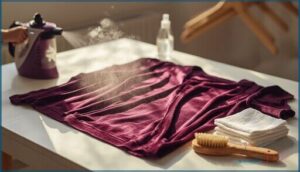
Before you start removing wrinkles, you need to handle your velvet the right way. Rushed or careless prep can crush the pile and make things worse instead of better.
One gentle method is hanging velvet in a steamy bathroom, similar to how silk responds to careful steam treatment, letting moisture naturally relax the fibers.
Set yourself up for success by treating the fabric gently and creating a workspace that won’t damage it.
Proper Handling Before Treatment
Before you tackle those wrinkles, stop and prep your velvet properly. Gently brush the surface with a soft garment brush to clear debris—dust and lint interfere with effective velvet fabric care.
Check the fabric care label for heat limits and moisture warnings. Test your chosen method on a hidden seam to confirm the delicate texture won’t lose sheen or shift color during treatment.
Setting Up a Safe Work Area
At waist height, clear a stable, clean work surface before you start. Good workspace lighting reveals nap direction and pile texture—details you’ll miss in dim conditions.
- Cover the surface with a soft mat to prevent dirt transfer during steamer or ironing prep
- Keep heat sources and moisture away from your velvet handling zone
- Wear clean gloves to avoid transferring skin oils to delicate fabric
- Check your fabric care label one more time for low heat limits
Safe Steaming Methods for Velvet
Steaming is your best weapon against velvet wrinkles because it refreshes the pile without crushing those delicate fibers. The trick is keeping enough distance between the steam source and the fabric—too close, and you’ll flatten what you’re trying to save.
Here are three proven methods that work without risking damage.
Using a Handheld Garment Steamer
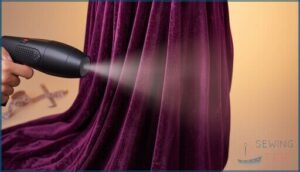
Steam does the heavy lifting without crushing velvet’s luxurious pile. Hold your steamer 6–12 inches away from the fabric and move in smooth vertical strokes. Don’t linger—light, continuous passes relax fibers without water spotting.
| Distance | Motion | Key Tip |
|---|---|---|
| 6–12 inches | Vertical strokes | Keep moving |
| Too close | Creates water spots | Avoid prolonged steam |
| Test first | Inconspicuous area | Check reaction |
Test on a hidden seam before tackling visible wrinkles.
Steaming in a Bathroom
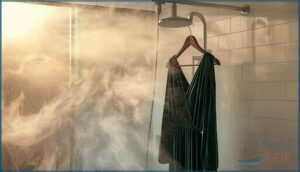
Turn your shower into a gentle wrinkle-releasing chamber. Run hot water until the bathroom fills with mist, then hang your velvet garment on a sturdy hanger several feet from the direct spray.
- Position the fabric away from pooling moisture to prevent water damage
- Keep humidity high but controlled—steam presence without saturation
- Allow 10–15 minutes for fibers to naturally relax and release creases
This hands-off approach works wonders for stubborn wrinkles.
Air Drying After Steaming

Once you’ve finished steaming, let your velvet fabric rest flat or hang freely on a padded hanger. This drying technique allows the pile to settle naturally while preserving its texture.
Keep the garment in a well-ventilated spot away from direct heat—proper fabric recovery takes 15 to 60 minutes depending on weight. Don’t rush wrinkle removal; patience protects delicate fabric handling and ensures lasting velvet maintenance.
Ironing and Alternative Smoothing Techniques
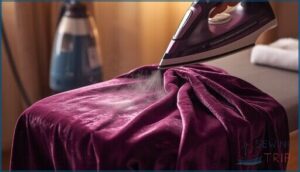
Steaming isn’t your only option when velvet needs serious help. Ironing can work if you take the right precautions, and a few simple techniques will restore that smooth, luxurious surface without crushing the pile.
Here’s how to flatten stubborn wrinkles and bring the fabric back to life.
Ironing Velvet With a Pressing Cloth
When steaming alternatives fall short, ironing velvet fabric demands precision and fabric protection. Set your iron to low heat—high temperatures crush the pile permanently. Place a clean pressing cloth between the iron and velvet to shield the delicate fibers. Work in smooth, steady strokes along the grain.
Lightly mist the fabric first if wrinkles run deep, and always test an inconspicuous spot before committing.
Using a Steam Iron on The Wrong Side
Flipping velvet inside-out seems clever, but heat transfer risks crushing your pile from within. When you apply a steam iron on the wrong side, even at low heat, interior fibers flatten unevenly and create permanent texture changes.
Manufacturers warn against this technique—it distorts the nap and backing. If you must try, use minimal steam, test first, then brush gently to restore appearance.
Brushing and Fluffing The Pile
After heat treatment, your velvet fabric needs gentle pile restoration to recover its signature texture. Brushing realigns crushed fibers and restores uniform nap alignment—essential velvet care for delicate fabrics:
- Choose a soft-bristle or specialized velvet brush with natural fibers.
- Brush in the direction of the nap using short, even strokes.
- Work across the entire surface for consistent fabric smoothing.
- Never brush damp velvet—wait until completely dry.
This fiber care step revives flattened areas and maintains fabric texture beautifully.
Preventing Future Wrinkles in Velvet
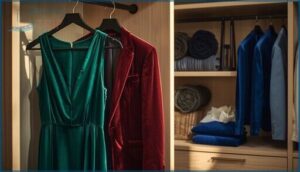
You’ve smoothed out the wrinkles, but keeping them gone takes the right storage habits. How you hang, fold, and handle velvet determines whether it stays flawless or develops new creases.
Here’s how to protect your velvet from future wrinkles.
Proper Storage and Hanging
Velvet demands respect in your closet organization. Store garments flat or on wide, padded hangers to prevent shoulder creases. Keep them in breathable garment bags away from direct sunlight, which crushes the pile. Maintain stable temperatures between 60–70°F and humidity around 40–50%. Don’t overcrowd your space—velvet needs room to breathe.
| Storage Techniques | Why It Matters |
|---|---|
| Flat or hung storage | Prevents permanent creases |
| Breathable fabric storage bags | Allows air circulation while protecting from dust |
| Climate control (60–70°F) | Preserves pile texture and prevents fiber damage |
Using Padded Hangers and Garment Bags
Choose wide, padded hangers to distribute weight evenly across velvet’s shoulders. Felt or velour-covered surfaces prevent slippage that creates new crease lines.
Slip your garments into breathable cotton or non-woven garment bags—these block dust while allowing air circulation. Avoid plastic bags that trap moisture and flatten pile.
This hanger selection and fabric protection system keeps your velvet smooth between wears.
Handling and Maintenance Tips
Beyond proper velvet storage with padded hangers and garment bags, your daily habits matter most. Inspect each piece for crushed pile or damp spots before hanging—moisture breeds wrinkles. Brush gently with a soft nylon brush after wearing to restore nap direction. Skip rough handling that flattens fibers:
- Store flat or hung to preserve pile orientation
- Keep garments away from direct sunlight
- Allow air circulation around stored velvet fabric
Delicate handling beats aggressive wrinkle removal every time.
Frequently Asked Questions (FAQs)
What is the best way to remove wrinkles from velvet?
Steaming delivers the safest wrinkle removal for velvet fabric. Hold your steamer six to eight inches away from the garment, letting gentle heat relax fibers without crushing the pile or creating shine.
Can I iron velvet fabric?
You can iron velvet fabric, but only with extreme caution. Use low heat, always place a pressing cloth between the iron and fabric, and work on the wrong side to protect the delicate pile.
How do I store velvet clothes?
Velvet clothing stored incorrectly loses 60% of its original pile texture within months.
Hang garments on wide, padded hangers inside breathable garment bags. Allow 2–3 inches of closet space between items to prevent crushing and maintain fabric integrity.
How do I remove odors from velvet fabrics?
Air your velvet in a well-ventilated space for several hours to dissipate trapped odors.
For persistent smells, consult your fabric care label and consider professional dry cleaning to protect delicate fibers during scent neutralizing.
Can I wash velvet fabric?
Check your fabric care label first. Synthetic velvets often tolerate gentle machine washing, but silk or rayon varieties need dry cleaning.
Always test colorfastness on hidden seams to prevent water damage and preserve color.
Can you use a dry iron on velvet?
Don’t reach for a dry iron on velvet fabric—direct heat crushes the pile and creates permanent shine.
Instead, use a steamer or iron the wrong side with low heat and a pressing cloth.
How do you remove old set-in wrinkles?
Stubborn creases won’t budge? Test your fabric restoration method on a hidden spot first.
Apply low heat with a steamer held 6–8 inches away, then use a velvet brush after ironing safety protocols restore the pile.
Is professional dry cleaning safe for velvet?
Professional dry cleaning is safe for velvet when you choose experienced cleaners. The gentle solvents preserve the pile and prevent water damage, but always request a spot test first for delicate synthetic blends.
What if steaming doesnt remove the wrinkles?
If your steamer didn’t smooth the wrinkles, try low heat ironing on the wrong side with a pressing cloth, or gently brush the pile after fabric relaxation to restore velvet’s natural texture.
Can you use wrinkle release spray on velvet?
Using wrinkle release spray on velvet is like rolling dice—some formulas leave stains or flatten the pile. Test any water-based product on a hidden spot first, and skip alcohol-based versions entirely.
Conclusion
You bought velvet because it transforms ordinary moments into something exceptional. Now you know how to get wrinkles out of velvet without destroying what makes it special.
Steam lifts crushed fibers back to life. The wrong side protects the pile during ironing. Proper storage prevents damage before it starts.
Your velvet pieces will maintain their depth and luster through every wear, every journey, every careful restoration—ready to catch light exactly as they should.