This site is supported by our readers. We may earn a commission, at no cost to you, if you purchase through links.
Your favorite pants slide down every time you reach for something on the top shelf. The waist gaps when you sit, and you spend half your day tugging them back up. You’ve got a belt cinched tight, but the bunched fabric looks bulky and uncomfortable.
Here’s the truth: you don’t need a needle, thread, or a trip to the tailor to fix loose pants. Simple tools you already own—safety pins, rubber bands, even fabric tape—can shrink that waistband in minutes.
These no-sew fixes protect your garment’s original finish, save you money, and adapt when your body changes. You’ll discover practical methods that work on jeans, dress pants, and everything in between, plus the tricks that keep your adjustments invisible under any outfit.
Table Of Contents
- Key Takeaways
- Why Make Pants Waist Smaller Without Sewing?
- Essential Tools for No-Sew Waist Adjustments
- Quick No-Sew Hacks for Tightening Waist
- Step-by-Step Guide: No-Sew Waist Adjustment Methods
- Tips for a Comfortable and Discreet Fit
- Troubleshooting and Long-Term Solutions
- Frequently Asked Questions (FAQs)
- Conclusion
Key Takeaways
- Safety pins, rubber bands, fabric tape, and waistband cinchers let you tighten loose pants in minutes without needles, thread, or tailor visits.
- No-sew fixes protect your garment’s resale value and reverse instantly when your waist size fluctuates from weight changes or bloating.
- Temporary adjustments work best on natural fibers like cotton and denim, while delicate fabrics like silk risk damage from pins and clips.
- Combine multiple methods—like pairing safety pins with fabric tape—to lock down stubborn waistbands that won’t stay put with a single technique.
Why Make Pants Waist Smaller Without Sewing?
Your favorite pants don’t fit like they used to, and you need a fix that works right now. Maybe you’ve dropped a few pounds, or the fabric stretched out after too many wears.
A portable sewing machine for hemming pants can handle quick adjustments without needing a trip to the tailor.
Let’s break down why skipping the needle and thread might be your best move.
If you’re dealing with constant frustration, check out common causes of skipped stitches and how to fix them before you spend money on new supplies.
Common Reasons for Waist Adjustments
Weight fluctuation hits most of us—your pants waist can feel loose one month and snug the next. You don’t need a needle to adjust pants waist when nonsew fixes get the job done fast. Here’s why you’ll reach for a waist adjustment:
If you’re also dealing with tight calves, check out tips for fitting pants with large calves to solve both issues at once.
- Body proportions shift as hips or thighs change independently from your waist
- Fabric stretch relaxes over time, leaving excess room at the waistband
- Style preferences or waist comfort demands a snugger fit without permanent alteration
Additionally, professional alteration services can provide a tailored solution for a perfect fit.
Benefits of No-Sew Solutions
No-sew fixes protect your garment’s original finish—clips and extenders remove without a trace, keeping resale value intact. You’ll save hours skipping the tailor while spending less on reusable adjusters that work across multiple pants.
No-sew fixes preserve your garment’s original finish while saving time and money on reusable adjusters that work across multiple pants
Temporary solutions adapt when your waist fluctuates from bloating or weight shifts, extending each garment’s life and cutting waste. Comfort improves too—elastic bands ease pressure better than rigid alterations.
Using simple no sew methods can also improve the overall fit and appearance of your pants.
When to Choose Temporary Vs. Permanent Fixes
Body changes from bloating or a few dropped pounds call for temporary pants waist fix options—clips and pins reverse instantly when your size shifts back. Cost analysis shows permanent alterations eat up budget on trend pieces you’ll rotate out soon, while no-sew fixes avoid fabric damage on delicate materials. Style flexibility matters when you’re still experimenting with fit or wear varies by occasion.
- Short-term waist fluctuation – Reversible adjusters work best when measurements change weekly.
- Low garment value – Skip costly tailoring on inexpensive or seasonal pants.
- Delicate fabrics – Removable devices prevent needle holes and adhesive residue.
Essential Tools for No-Sew Waist Adjustments

You don’t need a sewing machine to fix a loose waistband. A few simple tools can tighten your pants in minutes.
Here’s what you’ll need to make quick adjustments that actually hold.
(https://sewingtrip.com/how-to-sharpen-fabric-scissors-at-home/) takes just a few minutes and instantly restores that clean-cutting edge your projects depend on.
Safety Pins and Clips
You don’t need a needle and thread when you’ve got safety pins in your corner. These sharp little allies let you pinch excess fabric at the side seams or along the inside waistband, creating instant waist security without permanent changes.
Fabric clips work just as well—snap them on discreetly to hold material in place. Both offer quick no-sew fixes that keep your pants snug and your style intact.
Rubber Bands and Fabric Tape
Rubber bands threaten conformity—loop one through your buttonhole, hook it around the button, and you’ve engineered instant band tensioning without tools. This temporary pants waist fix works fast.
Fabric tape offers another rebellion: press it along your interior waistband for a nonsew pant waist alteration. Both fabric adhesives and elastic adjusters deliver nosew fixes that keep you moving freely, no tailors required.
If you ever need to reverse a design or clean up stitching, knowing how to remove embroidery safely protects your fabric while you experiment with different quick-fix techniques.
Adjustable Waistband Tighteners
Waistband tighteners clamp your fabric and deliver instant control—no needles, no waiting. These devices use metal or plastic designs with elastic inserts to cinch denim, stretch fabrics, and heavy textiles.
You’ll find adjustment techniques that reduce waist circumference by one to four inches, making them ideal for temporary pants waist fix projects.
Device durability depends on waistband materials and fabric compatibility, so choose low-profile no-sew fixes that won’t dig in or shift during movement.
Measuring Tape and Scissors
Accurate measurements start with a flexible measuring tape wrapped snugly around your natural waist—no compression, just contact.
Sharp scissors handle fabric cutting and tape application with clean edges, preventing frays that undermine no sew techniques. You’ll need precise trimming skills for DIY pant waist adjustment projects, so keep blades dedicated to fabric work.
This temporary pants waist fix depends on tools that deliver millimeter-level control.
Quick No-Sew Hacks for Tightening Waist

You don’t need a needle and thread to take control of a loose waistband. A few simple tricks can tighten your pants in seconds using items you already have at home.
Here’s how to make your waist fit better without any sewing required.
Safety Pin and Rubber Band Methods
When your pants feel loose, you’re in charge of the fix. Two simple DIY pant waist adjustment tools—safety pins and rubber bands—let you cinch fabric fast. Here’s how to master these no-sew techniques for a temporary pants waist fix:
- Pin Placement Tips: Position safety pins along the interior waistband seam where shirts hide them.
- Rubber Band Hacks: Thread bands through buttonholes, then loop around buttons for instant waist cinching.
- Fabric Compatibility: Denim tolerates clips better; knits need gentler pins to avoid snags.
- Temporary Fixes: Remove all hardware before washing to protect fabric.
- Comfort Check: Keep pins away from skin contact zones.
Using Belts and Waist Cinchers
When fabric stretches past comfort, belts and waist cinchers become your allies against ill-fitting pants. Leather and reinforced fabric belt materials grip waistbands without permanent changes—your go-to temporary pants waist fix.
Position adjustable belts higher on your natural waistline for maximum control. Waist cinchers gather excess fabric invisibly under shirts, combining DIY pant waist adjustment freedom with sleek lines.
Wide belts distribute pressure evenly across stubborn waists.
Folding and Tucking Waistbands
Your waistband holds hidden potential when you fold fabric inward along the top edge. This fold and tuck approach reduces your pants waist by 1–2 inches without tools. Lightweight fabrics create cleaner, less bulky results than heavy denim.
Tuck the folded seams under your shirt for a discreet temporary pants waist fix. Belt loop adjust techniques keep everything secure throughout your day—no sew techniques required.
Step-by-Step Guide: No-Sew Waist Adjustment Methods
You’ve got several no-sew methods at your fingertips, and each one works a little differently depending on your pants and how much adjustment you need.
Some techniques give you quick fixes you can undo in seconds, while others create a more polished look that lasts all day.
Here’s how to put each method into action with clear, step-by-step instructions.
How to Use Safety Pins for a Snug Fit

You can slip a safety pin horizontally through the inside waistband near each side seam—that’s your no-sew shortcut to a snug fit.
For DIY pant waist adjustment, pinch about half an inch of fabric and secure it flat so you don’t create bulges.
These fabric pinning tricks and waistband adjustments let you adjust pants waist instantly, shaving off that extra inch without thread or hassle.
Creating a Temporary Buttonhole Fix
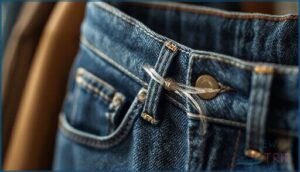
When your waistband won’t cooperate, loop a hair elastic through the buttonhole and stretch it around the button—this button hack instantly snugs your waist by one to two sizes. You can also slide a commercial waist extender between your existing button and hole for reversible waist adjustment methods.
These no-sew techniques beat fabric slits for speed and zero risk.
- Elastic Loops add 2.5 to 5 cm without tools or permanent changes
- Temporary Fasteners transfer between multiple pants for reusable fixes
- Buttonhole Elastic removes instantly when you need the original fit back
Applying Fabric Tape for a Cleaner Look
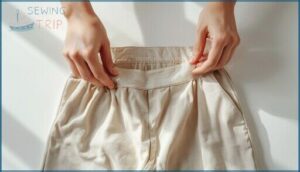
For a polished fix without sewing, reach for reusable fabric tape that sticks to itself along your waistband’s inner seam. Cotton and linen accept light-tack tape best, while stretchy polyester blends need flexible versions to avoid creasing.
Press the tape firmly from center outward, matching your fabric color for invisibility.
This DIY pant waist adjustment survives cold hand-washing better than high-heat cycles, so inspect edges after each wear and reapply when adhesive lifts.
Using Waistband Cinch Devices
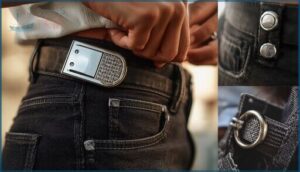
Clip a metal cinch device onto your waistband for instant waist reduction without needles or thread. Choose your style based on garment weight:
- Buckle clasps lock woven denim and twill with one-handed pressure.
- Elastic bands stretch around buttons on lighter cotton blends.
- Adjustable straps dial in precise fits on trousers and chinos.
Check fabric compatibility before clamping—heavy materials need reinforced hardware, while stretch weaves work best with flexible waistband cinchers that move with you.
Tips for a Comfortable and Discreet Fit

You’ve adjusted the waist, but the real trick is making sure no one notices. A good fix should feel comfortable and look like your pants fit perfectly all along.
Here’s how to smooth out the details and keep your adjustments hidden throughout the day.
Smoothing and Securing Excess Fabric
Too much bunching around your midsection ruins the whole look. Fabric smoothing starts with redistributing bulk toward your sides or back, where it’s less visible. Safety pin small horizontal folds inside the waistband, then run your hands firmly along the entire waist to create consistent tension. Clips and fabric tape lock everything down without stitching.
| Technique | Purpose | Best For |
|---|---|---|
| Horizontal folds | Tuck excess material | Heavy fabrics |
| Non-slip linings | Prevent shifting | Active wear |
| Distributed gathers | Even tension | Elastic waistbands |
Hiding Adjustments With Clothing
A blazer or cardigan masks your waist adjustment completely. Structured tops refine your silhouette while concealing clips. High-waisted bottoms paired with tucked shirts hide no-sew techniques seamlessly.
You can layer textures—denim over cotton, knit over silk—to create visual depth that draws eyes upward. Color coordination keeps the focus on your outfit, not your safety pin or belt trick.
Checking Fit and Avoiding Damage
Before you pin or clip, run your hands along the waistband to check fabric integrity. Fit checks prevent seam stress that leads to pants fitting issues down the line. Don’t pull so tight that the material puckers—damage prevention means leaving enough give.
Test the waist adjustment by sitting and bending. If the no-sew techniques cause strain, loosen your fix immediately.
Troubleshooting and Long-Term Solutions

Sometimes one fix isn’t enough to get the fit you need. You might face tricky fabrics that resist your efforts or realize your pants need more than a quick hack.
Here’s how to handle those situations and know when it’s time to call in the pros.
Combining Multiple No-Sew Methods
You can stack no sew techniques to lock down a better fit. Try the safety pin hack first, then add a waist cincher or fabric tape to reduce slippage. Fabric layering with clips creates extra hold without bulk.
Tests show combining methods beats using just one for temporary fixes. Just check comfort after each step—you don’t want to adjust pants waist so tight you can’t breathe.
These no sew hacks work together when fabric adhesion alone won’t cut it.
Dealing With Stubborn Fabrics
Heavy denim and twill fabrics fight back when you try no-sew techniques. These fibers stretch only 9–15% before damage shows, so safety pin waist adjustments demand careful tension. Test fabric stretch at the seam before forcing a pants alteration.
Knits like jersey give you 20–30% flexibility—a win for clothing alteration techniques.
Pre-wash changes dimensions by 1–3%, affecting your fit game. Textile science backs gentler methods for stubborn weaves.
When to Consider Professional Alterations
When your no-sew tricks can’t deliver the precision you need, professional fitting saves your best pieces from fabric damage. Clothing customization through expert alterations resolves complex waist geometry issues your safety pins can’t touch.
Consider a tailor when:
- High-value garments need garment preservation through certified alteration costs
- Delicate fibers risk tearing from repeated pants alteration attempts
- Major waist adjustment requires reshaping beyond temporary clothing alteration fixes
Frequently Asked Questions (FAQs)
Can I use a safety pin on any type of pants?
You can use a safety pin on cotton, denim, and polyester blends without worry.
Skip delicate fabrics like silk or stretch knits—they’ll snag or run.
Avoid leather and coated materials to prevent permanent damage.
How long will the safety pin adjustment last?
Think of safety pin fixes like a VHS tape—they work great in the moment but weren’t built to last.
Your adjustment usually holds for one wear before fabric shifts, especially on stretchy materials during movement.
Are there any risks to using a safety pin?
Pin safety risks include fabric damage from repeated pinning, skin irritation if the clasp presses inward, and pin failure under movement.
This no-sew pants waist hack works temporarily, but safety pin adjustments aren’t foolproof.
Can I adjust the waist of pants that are too small?
Pant alterations for too-small waists won’t work with no-sew techniques. Fabric shrinkage or elastic adjustments can’t add room.
You need professional waist reduction done properly, or accept temporary fixes aren’t suitable here.
How can I prevent the safety pin from being visible?
Worried your fix will show? Choose flat-back safety pins in matching colors, then position them parallel along the waistband’s inner edge.
Smooth fabric smoothing conceals hardware, while belts offer discreet adjustments over no-sew waist fixes.
Can these methods work on stretchy athletic pants?
Yes, but stretch fabrics relax faster than rigid materials. Elastic waist solutions need frequent re-tightening after movement to prevent fabric fatigue.
Waistband cinchers and adjustable clips work better than pins on athletic wear modifications.
How long do no-sew adjustments typically last?
Most temporary fixes hold for hours to a few days, while waistband stability devices last weeks.
Adjustment durability depends on your activity level and fabric type—safety pins shift faster than adjustable clips.
Will washing affect temporary waist adjustment methods?
Most temporary fixes won’t survive the wash cycle. Safety pins, rubber bands, and clips should be removed before laundering to prevent fabric damage or loss.
Fabric tape may withstand gentle washing, but reapplication ensures reliable waist adjustments.
What fabrics are safest for no-sew techniques?
Natural fibers like cotton and linen work best for no-sew techniques. They’re breathable and grip safety pins or fabric tape securely.
Stretch recovery fabrics also hold adjustments well without slipping during wear.
Can I adjust pants waist while wearing them?
You can adjust pants waist while wearing them using on-body adjustments like safety pins or waistband cinchers for instant tightening.
Stand straight, pinch excess fabric at the back, and secure it with temporary fasteners for a snug fit.
Conclusion
Think of these fixes like a Swiss Army knife for your wardrobe. Each method solves a different problem, and you can switch between them as your needs change.
You’ve learned how to make pants waist smaller without sewing using tools you already own. Safety pins, rubber bands, and fabric tape give you instant results.
Pick the technique that matches your pants and lifestyle. Your perfectly fitted waistband is minutes away, not days.
- https://www.extrapetite.com/2023/02/no-sew-diy-fix-for-too-loose-pants-make-waist-smaller.html
- https://www.oreateai.com/blog/how-to-tighten-pants-waist-without-sewing/f6f59df98502589acb3cb5f4c28cc061
- https://pinterest.com/pin/create/button/?url=https%3A%2F%2Foutfitlovers.com%2Fhow-to-take-in-waist-of-pants-without-sewing-machine%2F&media=&description=How+to+Take+in+Waist+of+Pants+Without+Sewing+Machine%3A+Simple+Techniques+for+a+Perfect+Fit
- https://tidd.ly/3Sq0MYL
- https://rstyle.me/+_hgrFKrFiXUk-fPmTsP45g