This site is supported by our readers. We may earn a commission, at no cost to you, if you purchase through links.

One misplaced pair of fabric scissors can mean the difference between clean cuts through delicate silk and frustrating snags that ruin your project. Most sewists learn this lesson the hard way—after discovering their once-pristine blades nicked, dulled, or rusted from careless storage.
The truth is, premium fabric scissors demand the same respect you’d give any precision tool. Left in a cluttered drawer with pins and rotary cutters, exposed to humidity, or tossed on a cutting table, even the sharpest blades deteriorate faster than you’d expect.
Proper storage protects your investment and maintains that smooth glide through fabric that makes sewing a pleasure instead of a chore.
Table Of Contents
Key Takeaways
- Clean and dry your fabric scissors completely before storage to prevent rust and blade deterioration, then store them in a low-humidity environment with desiccant packets for maximum protection.
- Keep scissors isolated from other tools using protective cases, magnetic strips, or dedicated compartments to avoid nicks and maintain sharp edges between uses.
- Control environmental factors by maintaining 40-60% humidity and 60-75°F temperature in your storage area, while avoiding direct sunlight that degrades blade quality over time.
- Establish a consistent maintenance routine that includes wiping blades with microfiber cloths after each use and sanitizing with isopropyl alcohol to remove adhesive residue and preserve cutting precision.
Essential Steps for Storing Fabric Scissors
Storing your fabric scissors properly isn’t complicated, but it does require a few deliberate steps to keep those blades in top shape. The right approach protects your investment and ensures every cut stays crisp and clean. Here’s what you need to do before putting your scissors away.
If you skipped the cleaning step, check out how to clean fabric scissors properly before storing them to avoid buildup that dulls the blades.
Cleaning Blades Before Storage
Blade preservation starts with one simple truth: cleanliness protects your investment. Before you tuck your scissors away, take a moment for proper blade sanitizing and edge protection to prevent corrosion and maintain peak performance.
Knowing which side of scissors to sharpen makes all the difference between restoring precision and damaging the blade permanently.
- Wipe blades with a lint-free cloth to remove residue and debris
- Sanitize using 70–90% isopropyl alcohol wipes to reduce staining
- Allow blades to air-dry completely before scissor storage
- Keep oils from your hands off the edges during cleaning
These storage precautions guarantee your scissor care routine extends blade life without complicating your workflow.
If you’re just starting out, check out this guide on choosing the right sewing scissors for beginners to find quality tools that hold their edge with proper care.
Keeping Scissors Dry to Prevent Rust
Moisture is your scissors’ worst enemy for rust prevention and blade maintenance. After you’ve cleaned your shears, dry each blade thoroughly with a lint-free cloth—don’t skip this step.
Dry your scissors completely with a lint-free cloth after cleaning—moisture causes rust and ruins blades
Store them in a dry environment where humidity stays below 50%, and tuck a desiccant packet nearby for extra moisture control.
This simple scissor hygiene practice keeps your tools sharp and ready.
After each use, wipe down your blades with a soft cloth to remove fabric fibers—proper sewing scissors care prevents buildup that dulls edges over time.
Storing Away From Other Tools to Avoid Nicks
Beyond keeping blades dry, Tool Separation is your next line of defense for Nick Prevention. Isolate your fabric scissors in a dedicated container—never toss them in with utility knives or other cutting tools.
Here’s how to protect those edges:
- Use a rigid Scissor Guards or sleeve on each blade
- Store blades closed with grips pointing up
- Keep a labeled compartment free from other sharp objects
This Storage protocol shields your investment from accidental contact.
Best Storage Solutions to Prevent Damage
The right storage solution does more than keep your scissors out of the way—it protects the blades from nicks, dust, and everyday wear.
You have several practical options to choose from, each offering different levels of protection and accessibility.
Here’s a breakdown of the most effective storage methods to keep your fabric scissors in top shape.
Using Protective Pouches or Cases

A dedicated protective case acts like armor for your blades, shielding them from nicks and dust. Choose pouches with soft microfiber linings or hard cases with EVA foam inserts that cradle your scissors snugly. Look for zippered closures and water-resistant materials to keep moisture at bay.
These scissor storage solutions offer blade protection that extends the life of your tools considerably.
Keeping blades properly stored prevents the damage and dullness explained in why fabric scissors get dull quickly.
Magnetic and Foam Inserts for Secure Placement
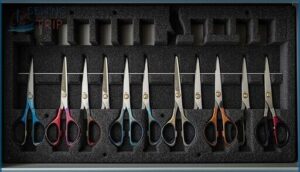
Secure storage starts with the right foundation—magnetic inserts and foam cushioning work together to cradle your blades without stress. These tool storage and organization solutions deliver blade protection that keeps edges spotless between cuts, giving you custom fit scissor care tips that pros rely on.
- Magnetic inserts hold blades firmly in place, preventing movement that causes dulling and nicks during storage
- Foam cushioning absorbs impact and separates metal from hard surfaces, extending your scissors’ sharpness dramatically
- Custom-cut templates match your scissor’s exact shape, ensuring secure storage that protects both grips and cutting edges
Dedicated Compartments and Organizers

A well-organized sewing space gives each tool its own home, and your fabric scissors deserve a compartment that shields them from the chaos of clutter.
Invest in organizer boxes with custom storage dividers that separate blades from other tools, preventing accidental nicks. Scissor holders with protective wraps or blade guards offer reliable tool organization while keeping edges razor-sharp.
These tool storage and organization systems deliver the scissor care tips professionals trust.
Hanging Scissors by Handles
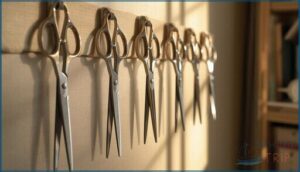
Hanging scissors by their grips keeps blades suspended safely above hard surfaces, protecting sharp edges from dulling contact. This hanging technique offers a space-saving scissor storage solution that promotes proper blade alignment and scissor maintenance.
Here’s how to hang your scissors correctly:
- Choose proper scissor hooks made from smooth grip materials like fabric-covered pegs to prevent corrosion at pivot points.
- Position blades downward with points aligned and closed to maintain storage safety.
- Mount hooks securely to wall studs using hardware rated for metal tools.
- Keep blades fully closed during hanging to minimize exposure without a protective case.
- Verify hook smoothness regularly as part of your scissor care routine to avoid grip scratches.
Environmental Factors That Affect Scissor Longevity

You’ve invested in quality fabric scissors and stored them properly, but the environment around them matters just as much. Humidity, temperature swings, and even sunlight can quietly damage your blades over time.
Let’s look at the environmental factors you need to control to keep your scissors performing at their best.
Controlling Humidity and Temperature
Your scissors deserve a stable home—think of environmental factors as the invisible guardians of your blades. Keeping relative humidity between 40% and 60% drastically cuts corrosion risk on steel components, while steady temperatures around 60–75°F prevent warping. Use a hygrometer to monitor storage conditions regularly.
| Factor | Ideal Range | Why It Matters |
|---|---|---|
| Humidity | 40–60% | Rust prevention and metal corrosion control |
| Temperature | 60–75°F | Prevents blade warping and material degradation |
| Monitoring | Weekly checks | Maintains ideal storage conditions |
| Heat Exposure | Below 80°F | Stops accelerated staining on metal surfaces |
Protective sheathings paired with temperature monitoring guarantee your scissor maintenance routine delivers lasting sharpness.
Using Desiccants to Reduce Moisture
Desiccants work like silent bodyguards in your storage solutions, pulling moisture from closed containers and keeping humidity levels below 40%. Silica gel packets absorb roughly 20–40% of their weight in water, which translates directly to rust prevention and metal corrosion control.
- Place packets in your scissor case or drawer to maintain dry storage conditions
- Replace them every 3–12 months or when color indicators show saturation
- Choose food-grade or silicate-based options rated for steel tools in your scissor maintenance routine
This simple step supercharges your scissor care and maintenance program without breaking the bank.
Avoiding Direct Sunlight and Dust Exposure
Sunlight might seem harmless, but UV rays gradually weaken metal bonds and fade handle materials, while airborne dust particles settle into pivot points and dull your blades over time.
Keep your scissors in UV-resistant cases with protective sheathings, and store them in closed drawers away from windows. Dust-free storage paired with scissor covers prevents debris buildup and maintains cutting precision—simple tool storage methods that boost your scissor care and maintenance efforts without extra hassle.
Top Products for Fabric Scissor Storage
You don’t need fancy equipment to keep your fabric scissors in great shape, but a few key products make storage and maintenance much easier.
The right tools help you clean blades properly, protect them from damage, and create an organized system that works.
Here are some reliable options that seamstresses and sewers actually use in their workspaces.
1. iBayam Ultra Sharp Scissors
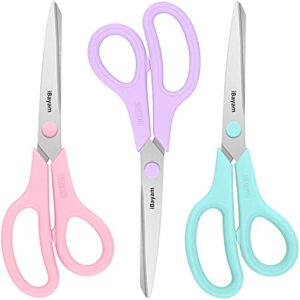
A sturdy pair of scissors designed for durability can simplify your scissor care routine. The iBayam Ultra Sharp Scissors feature high-density stainless steel blades that maintain scissor sharpness through more than 100,000 cuts, reducing how often you’ll need to sharpen them. Their blade material resists corrosion better than standard steel, and the handle ergonomics support both right and left-handed users.
With proven cutting performance on fabric, burlap, and cardboard, these multipurpose fabric scissors deserve proper storage solutions like a protective case to preserve their edge and extend their working life.
| Best For | Home sewers, crafters, and families who need reliable everyday scissors for fabric cutting, school projects, and general household tasks without frequent sharpening. |
|---|---|
| Primary Material | Stainless Steel |
| Pack Size | 3 scissors |
| Use Case | Cutting fabric & crafts |
| Durability | Durable blades |
| Versatility | Multi-purpose cutting |
| Value | Affordable 3-pack |
| Additional Features |
|
- High-density stainless steel blades stay sharp through 100,000 cuts, so you won’t need to sharpen or replace them as often as standard scissors.
- Comfortable soft-grip handles work for both righties and lefties, making extended cutting sessions easier on your hands.
- Three-pack gives you great value and lets you keep scissors in different rooms—one for the craft area, one for the office, one for the kitchen.
- Some users report inconsistent quality and brittle plastic components that don’t hold up to the “heavy-duty” marketing claims.
- Not designed for professional tailoring or cutting thick materials like heavy upholstery fabric or multiple fabric layers.
- Long-term durability is still unclear since not all users have tested them extensively over time.
2. Microfiber Glass Cleaning Cloths
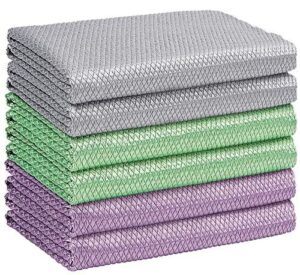
Keeping your fabric scissors sharp starts with the right cleaning tools. Microfiber glass cleaning cloths offer lint-free surface safety that won’t scratch blades during routine scissor maintenance. Their fiber composition—usually a polyester-polyamide blend—delivers outstanding cleaning performance on metal without leaving residue.
Use these cloths to wipe away fabric dust and oils after each cutting session, then store your scissors in a protective case. This simple microfiber care routine prevents buildup that dulls edges and extends the time between professional sharpenings, protecting your investment in quality cutting tools.
| Best For | People who clean their fabric scissors regularly and want a lint-free way to remove fabric dust and oils without risking scratches on the blades. |
|---|---|
| Primary Material | Microfiber |
| Pack Size | 6 cloths |
| Use Case | Cleaning surfaces |
| Durability | Long-lasting & washable |
| Versatility | Multi-surface cleaning |
| Value | Great value set |
| Additional Features |
|
- Non-abrasive polyester-polyamide blend safely cleans metal surfaces without scratching sharp edges
- Removes oils and fine particles more effectively than cotton cloths, keeping blades cleaner between professional sharpenings
- Machine washable and reusable for many cleaning cycles, making them a cost-effective long-term maintenance tool
- Some users report the cloths are thin and less absorbent than expected, which may require more passes to clean thoroughly
- Must be kept clean and free of embedded grit, since contaminated microfiber can actually scratch surfaces
- Not ideal for heavy-duty cleaning tasks, so they work best for light routine maintenance rather than removing stubborn residue
3. Wipex Isopropyl Alcohol Wipes

When your microfiber cloth handles surface dust but you need something stronger to cut through adhesive residue or sticky buildup on your blades, Wipex Isopropyl Alcohol Wipes step in with 70% alcohol content that dissolves stubborn grime without leaving moisture behind.
Each 6.8″ x 5.1″ wipe delivers effective surface cleaning and sanitizing tips for fabric scissors—just wipe both sides of the blade after cutting through stabilizers or fusibles.
The quick-drying formula protects sharpness by preventing rust during storage, and the 100-count dispensing box keeps wipes fresh for ongoing scissor maintenance without compromising wipe durability.
| Best For | Sewists and crafters who need to remove sticky residue from scissor blades after cutting through adhesives, stabilizers, or fusibles while preventing rust between uses. |
|---|---|
| Primary Material | Isopropyl Alcohol |
| Pack Size | 100 wipes |
| Use Case | Disinfecting electronics |
| Durability | Quick drying |
| Versatility | Multi-use sanitizing |
| Value | Bulk quantity |
| Additional Features |
|
- 70% alcohol content effectively dissolves adhesive buildup and sanitizes blades without leaving moisture that could cause rust
- Quick-drying formula makes them safe for immediate use on fabric scissors and electronics
- Individually wrapped sachets in a 100-count dispensing box keep wipes fresh for long-term scissor maintenance
- Dispenser box mechanism tends to fall apart with regular use
- Wipes can rip easily due to their soft texture, making them less durable during cleaning
- Higher price point compared to other sanitizing wipe options on the market
4. PDI Alcohol Prep Pads
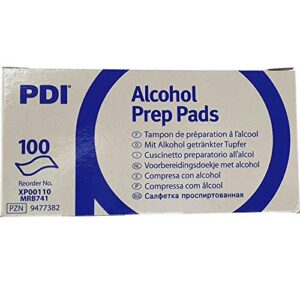
For precision cleaning around pivot points and tight crevices, PDI Alcohol Prep Pads bring clinical-grade antiseptic properties in a compact 1.7″ x 3.5″ format. Each sterile pad delivers 70% alcohol content that sanitizes scissor joints before you tuck them into a protective case, and the individually wrapped packaging ensures sterility maintenance between uses.
Follow storage guidelines by keeping the box sealed in cool conditions—these prep pad uses extend beyond blade care to maintaining your entire workspace for proper scissor maintenance.
| Best For | People who need quick, reliable disinfection for medical tasks like injections or blood draws, as well as everyday cleaning of small surfaces, phones, or first aid supplies. |
|---|---|
| Primary Material | Alcohol |
| Pack Size | 100 pads |
| Use Case | Sanitizing skin & surfaces |
| Durability | Sterile single-use |
| Versatility | Medical & general cleaning |
| Value | Large box |
| Additional Features |
|
- 70% isopropyl alcohol provides effective antiseptic action that’s FDA-compliant for medical use and kills transient bacteria quickly
- Individually wrapped sterile packets maintain freshness and prevent drying, making them convenient for purses, first aid kits, or on-the-go situations
- Large 1.7″ x 3.5″ size works well for prepping bigger areas or cleaning surfaces beyond just small injection sites
- Some users report the pads are overly saturated and drippy, which can make precise applications messy
- Flammable alcohol content requires careful storage away from heat sources and has a limited shelf life in hot conditions
- Quality control issues reported by some buyers, including unsealed boxes or incorrect pad counts
5. Kisswill Rotary Cutter Blades
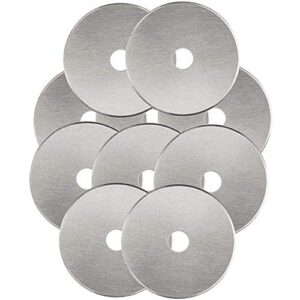
You’ll protect your cutting tools investment with Kisswill Rotary Cutter Blades crafted from SKS-7 tungsten alloy steel that delivers outstanding edge retention through multiple fabric layers. These 45mm blades fit Fiskars and Olfa grips while maintaining blade sharpening standards across quilting projects, and their 0.3mm thickness ensures clean rotary cutting without fraying.
Store them in the included plastic case to prevent nicks, then apply the same blade maintenance principles you use for scissor care—keep them dry, separated from other cutting tools, and ready for precision blade care when your next project demands it.
| Best For | Quilters, sewers, and crafters who need sharp, durable blades that work with most major rotary cutter brands and can handle multiple layers of fabric or other materials. |
|---|---|
| Primary Material | High Carbon Steel |
| Pack Size | 10 blades |
| Use Case | Cutting fabric & materials |
| Durability | Wear-resistant steel |
| Versatility | Multi-material cutting |
| Value | Cost-effective 10-pack |
| Additional Features |
|
- Made from SKS-7 tungsten alloy steel that stays sharp longer than standard blades and cuts cleanly through up to 10 layers of fabric
- Compatible with popular brands like Fiskars, Olfa, Martelli, Dremel, and TrueCut, so you don’t need to buy brand-specific replacements
- Comes in a 10-pack with a storage case, giving you plenty of backup blades at a good value
- Some users report inconsistent quality, with certain blades not being as sharp as expected or failing to cut cleanly
- Packaging issues have been mentioned, including cuts or unsealed perforated edges that could affect blade protection
- No clear warranty or return policy is mentioned, which might be a concern if you receive defective blades
Frequently Asked Questions (FAQs)
How often should fabric scissors be sharpened?
You don’t need to sharpen constantly—watch for frayed edges or resistance instead.
Most home sewers sharpen every six to twelve months, while professionals sharpen every three months for consistent cutting performance and blade longevity.
Regular scissor sharpening methods can help maintain the quality of fabric scissors.
Can fabric scissors cut other materials safely?
You shouldn’t cut paper, cardboard, adhesive materials, or synthetic fibers with fabric scissors. These materials contain abrasive fillers and particles that dull blades quickly, causing nicks and reducing sharpness for clean fabric cutting.
Regular maintenance is vital to prevent damage, including understanding the effects of scissor care tips on blade sharpness.
What oils work best for scissor maintenance?
A stitch in time saves nine, so mineral oil and silicone lubricant stand out for blade protection.
Apply oil sparingly to pivot points during scissor maintenance—this simple oiling prevents corrosion and keeps your blade care routine effective.
How do you fix loose scissor joints?
Tighten the pivot screw incrementally, checking tension after each turn until blades stay partially open.
For riveted pivots, gently peen the rivet head.
Apply thread locking compound and light scissor lubrication for lasting joint adjustment.
Conclusion
Proper protection preserves precision. Your fabric scissors will slice smoothly through silk and satin for years when you store them correctly—clean, dry, and separated from other tools.
Whether you choose padded pouches, magnetic strips, or dedicated compartments, the key is consistency. Make storage a habit, not an afterthought.
Understanding how to store fabric scissors to prevent damage transforms them from disposable tools into lifelong companions. Treat your blades with intention, and they’ll reward you with seamless cuts every single time.