This site is supported by our readers. We may earn a commission, at no cost to you, if you purchase through links.
Most sewing problems trace back to one moment before the needle ever touches fabric. A skipped stitch, a knotted underside, thread snapping mid-seam—these frustrations almost always point to threading done wrong, or done in the wrong order.
The machine isn’t broken. The tension isn’t faulty. The thread path just got skipped somewhere along the way.
Once understand how to thread a sewing machine correctly, those problems stop feeling mysterious.
Each step builds on the last, from bobbin to needle, and when the sequence clicks into place, your machine runs the way it was designed to.
Table Of Contents
- Key Takeaways
- Always Unplug and Prepare Your Machine First
- Choosing The Right Thread, Needle, and Bobbin
- How to Wind and Load The Bobbin Correctly
- Threading The Upper Path of Your Sewing Machine
- How to Thread The Needle Step by Step
- Bringing Up The Bobbin Thread to Start Sewing
- Troubleshooting Common Threading Problems and Fixes
- Frequently Asked Questions (FAQs)
- Conclusion
Key Takeaways
- Threading problems like skipped stitches or knotted undersides almost always come from missing a step in the thread path, not from a broken machine or faulty tension.
- Before you thread anything, raise the presser foot and set the needle to its highest position—skipping either step makes clean threading nearly impossible.
- Your bobbin has to be wound evenly and loaded in the right direction before the upper thread path works correctly, so get that right first.
- Always run a test stitch on scrap fabric after threading to catch tension issues before they follow you into your actual project.
Always Unplug and Prepare Your Machine First

Before you touch a single thread, your machine needs to be ready to work with you, not against you. A few quick prep steps make the difference between smooth threading and a frustrating tangle before you even begin.
Taking a moment to properly thread your machine and manage tension before your first stitch saves you from unpicking a mess later.
Here’s what to do first.
Positioning The Machine on a Stable Surface
Before anything else, find a solid, clutter-free table that puts the needle at or slightly above your elbow — proper worksurface height makes a real difference over a long session.
Use anti-slip pads under the machine feet for vibration dampening, check leveling evenness with a spirit level, and position the machine away from table edges for edge protection.
Good lighting completes your sewing machine setup checklist.
Raising The Presser Foot to Release Tension
With your machine on a stable surface, locate the presser foot lever at the back of the machine and lift it upward until you hear a click. This manual lift control triggers automatic tension release, pulling the tension discs apart so thread slides through freely.
Without raising the presser foot first, those discs grip the thread and make proper thread path visibility — and clean threading — nearly impossible.
Setting The Needle to Its Highest Position
With the presser foot raised, turn the handwheel slowly toward you to raise the needle to its highest position — this completes your Needle Height Adjustment before threading begins. Here’s what to confirm:
- Watch the needle bar stop at its peak for Needle Bar Calibration.
- Check the Needle Position Indicator if your model has one.
- Verify Needle Clearance Check — the tip should clear the fabric plate.
- Confirm Needle Clamp Tightening so the needle doesn’t shift.
- Use the handwheel again to test smooth movement.
Gathering The Right Tools and Materials
Now that your needle is set, gather everything before you thread your machine — stopping mid-task to hunt for tools breaks your focus.
| Tool | Purpose | When You’ll Use It |
|---|---|---|
| Sharp Scissors | Clean thread cuts | Throughout threading |
| Measuring Tape | Check thread tail length | After needle threading |
| Press Cloth | Protect fabric during ironing | Before stitching |
| Seam Ripper | Remove threading mistakes | Troubleshooting |
| Fabric Marking Chalk | Mark test stitch lines | Final checks |
Keep a needle threader nearby for the needle eye, and confirm your bobbin case, spool pin, and thread guide are clear before starting.
Choosing The Right Thread, Needle, and Bobbin
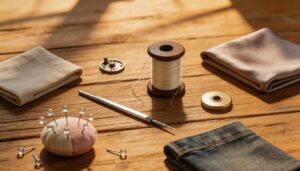
Before you thread a single inch of your machine, it’s worth making sure you’re working with the right materials. Using the wrong thread or needle for your fabric is one of the most common reasons stitches go wrong.
what to check before you get started.
Matching Thread Weight to Fabric Type
Thread weight makes or breaks your seams. For silk thread weight, choose 60–70 to keep delicate fabric from puckering.
Denim thread choice calls for 40 or lower, with strong polyester threads that handle tough weaves.
Satin thread shine looks best with high-sheen thread, while linen seam strength improves with 40–50 weight cotton threads.
For knit fabric weight, stay between 30–40 so seams stretch without snapping.
Selecting The Correct Needle Size
Picking the right needle size is half the battle before you even start sewing. The EU system runs from 60 to 120, while US vs EU Sizing gives you 8 to 22 on the American scale.
Once you’ve matched your needle to the fabric, do a quick test run and check that tension is dialed in using these sewing machine tension adjustment tips.
Use this Needle Size Chart as your guide:
- Lightweight fabrics (silk, satin): size 60–70
- Medium wovens (cotton, linen): size 70–90
- Heavyweight Fabric Needle for denim or canvas: size 90–110
- Knits: Ballpoint vs Sharp matters here — choose ballpoint, sizes 75–90
Always do a Test Stitch Evaluation on scrap fabric before committing.
Using Quality Thread to Prevent Breakage
If you’ve ever wondered why thread breaks mid-seam, poor quality thread is often the culprit. Choosing proper thread means paying attention to spool quality indicators and Thread Fiber Choice.
Coated Thread Benefits, like silicon or wax, help maintain Consistent Tension.
For best results, follow good Thread Storage Practices—keep spools dry and dust-free.
With these steps, How to thread a sewing machine for beginners becomes much smoother.
How to Wind and Load The Bobbin Correctly
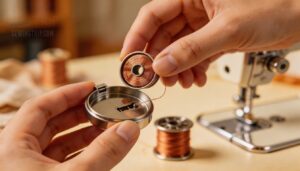
Getting the bobbin right is where a lot of beginners hit their first wall — and it’s usually something small that’s easy to fix once you know what to look for.
Before you thread the upper path, you need your bobbin wound evenly and loaded correctly, because everything else depends on it. Here’s exactly how to do each part of that process.
Placing The Spool and Guiding Thread to The Bobbin
Start with a Spool Orientation Check — place your spool on the spool pin so thread unwinds from the top, rotating clockwise. This single step controls everything downstream.
For smooth Thread Path Clearance, follow these three checks:
- Confirm Guide Channel Cleanliness — no lint or burrs
- Verify Spool Friction Reduction with a felt pad underneath
- Trace thread through each guide channel without crossovers
This sets correct Bobbin Rotation Direction from the start.
Winding The Bobbin Evenly on The Spindle
Even winding makes or breaks your bobbin winding and loading process. Press the bobbin firmly onto the bobbin winder shaft, engage the bobbin winding button, and keep a Consistent Winding Speed throughout.
Watch for a Uniform Fill Level — stop just before the marked line.
| What to Check | Why It Matters |
|---|---|
| Spindle Alignment Check | Prevents sideways tilt and uneven layers |
| Thread Tension Monitoring | Keeps wraps snug through the bobbin winding tension disc |
| Fill Level | Avoids binding or loose stitches |
| Final Tight Turns | Locks thread so it won’t unravel |
Installing The Bobbin in Top-Load Vs. Front-Load Cases
Your machine’s bobbin case design determines everything about how you load it. With a top-loading bobbin, lift the bobbin case cover and drop the bobbin straight in — no tools needed.
Front-loading bobbin machines open from the front, where the case pulls out completely. Either way, confirm case orientation matches your manual’s diagram, and feel for the snap-in click or tighten the screw before moving on.
Confirming Correct Bobbin Rotation Direction
Once the bobbin case cover clicks shut, check that your bobbin spins the right way. A simple Handwheel Test confirms this — turn it slowly toward you and watch the thread pull smoothly from the bobbin case.
Use these quick checks:
- Look for Bobbin Direction Markings near the bobbin housing
- Match them against your Rotation Indicator Diagram in the manual
- Watch thread tension during the Visual Rotation Check
- Note Electronic Sensor Confirmation on newer machines
- Verify vertical bobbin rotation directions differ between top-loading and front-loading bobbin methods
Threading The Upper Path of Your Sewing Machine
With the bobbin in place, you’re ready to tackle the upper thread path — and this part’s easier than it looks once you know the order.
Every step builds on the last, so skipping one can throw off your whole tension.
Here’s exactly what to do, from the spool pin to the take-up lever.
Placing Thread on The Spool Pin Securely
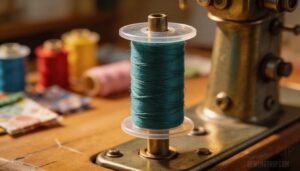
Before you thread the top of your machine, the spool pin needs to do its job right. Slide your thread spool onto the pin, then check the fit — a pin diameter match matters more than most beginners realize.
Add a spool cap or washer to hold it steady. If your machine has a horizontal guide placement, route the thread through that curved guide first. Keep the spool level stability consistent so thread feeds evenly every time. A light touch of pin lubrication (where your manual allows) keeps rotation smooth.
| Spool Setup Issue | What Causes It | Quick Fix |
|---|---|---|
| Spool wobbles during sewing | Wrong pin diameter | Use correct spool cap or washer |
| Thread snags at the pin | No horizontal guide placement | Route through curved thread guide |
| Uneven thread tension | Spool tilting on pin | Make sure spool level stability before sewing |
Guiding Thread Through The Upper Thread Guides
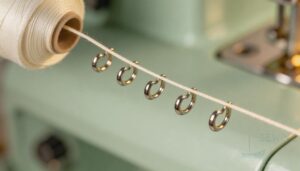
With your spool seated, follow the thread path through each upper guide in sequence. Guide Material Choice matters here — metal guides stay smooth longer, while worn plastic ones develop edges that fray thread.
Run a quick Alignment Check Procedure by feel: the thread should slope gently downward with no crossing. This Friction Minimization Technique keeps your upper thread system feeding cleanly toward the tension discs.
Routing Thread Through The Tension Discs
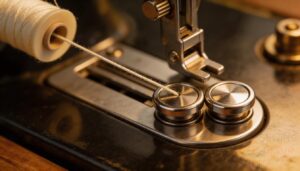
Once your thread clears the upper guides, the tension discs are next — and this step makes or breaks your stitch quality.
- Hidden Slit Access: Slide the thread into the narrow front channel so it reaches the discs at the correct Disc Entry Angle.
- Thread Path Alignment: Confirm the thread sits between the discs, not resting above them.
- Disc Pressure Adjustment: Raise the presser foot first — that opens the tension disks so the upper thread tension seats correctly.
Engaging The Take-Up Lever Properly
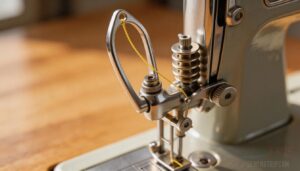
Raising the takeup lever to its highest point before threading is non‑negotiable. This Lever Height Adjustment opens the upper thread system so your thread seats cleanly through the entire thread path through a sewing machine.
The Cam Mechanism Alignment drives the lever’s up‑and‑down rhythm — that’s your Lever Tension Sync at work.
A quick Lever Travel Inspection confirms it moves freely; stiffness signals dust buildup or a need for Lubrication Maintenance.
How to Thread The Needle Step by Step
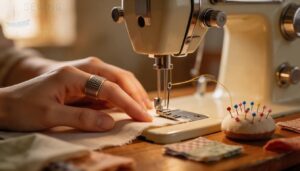
Threading the needle is where all that careful prep finally pays off. It sounds simple, but getting this part right makes the difference between clean stitches and a tangled mess.
Here’s exactly how to do it, one step at a time.
Passing Thread Through The Needle Bar Guide
The needle bar thread guide is a small but critical part of your upper thread system — skip it, and your thread path through a sewing machine falls apart. Pass the thread carefully through this guide, following the directional arrows.
Watch for wear indicators like grooves or burrs, which signal it’s time to clean or replace it. Even a micro adjustment here can restore perfect guide alignment and smooth machine threading.
Using a Built-in Needle Threader Effectively
Most machines with a built-in automatic needle threader make this step surprisingly simple.
Lower the small threader hook into position, align it with the needle eye using the Threader Light Aid, and guide your thread through the hook slot.
Watch for the Threader Auto Return once it clicks — that’s your signal that it worked.
Check Threader Hook Alignment and Needle Eye Compatibility before each use to avoid misfires.
Manual Needle Threading Techniques for Tight Eyes
Sometimes the built-in threader just won’t cooperate — that’s when manual needle threading becomes your best skill to have.
- Warm Eye Breath the needle eye briefly, then use a Magnifier Illumination tool for a clear view of the entrance.
- Apply Emery Edge Smoothing if you spot burrs, or use a Microthreader Tool as a needle threader alternative.
- Pre‑tension Pull the thread slightly, then guide it through the eye of the needle using one clean, steady motion.
Leaving The Right Thread Tail Length
That thread tail hanging from your needle isn’t an afterthought — it’s doing real work before your first stitch even forms.
| Fabric Type | Recommended Tail Length |
|---|---|
| Woven cotton | 2–3 inches |
| Satin or slippery fabric | 3–4 inches |
| Knits | 3–4 inches |
| Denim or heavy fabric | 4–5 inches |
| General default | 2–4 inches |
Fabric-specific tails matter because tail tension balance directly affects your first few stitches. For backstitch anchoring, a short tail under one inch causes bunching. Use visual tail cues — the tail should lie flat, not loop over the presser foot.
Bringing Up The Bobbin Thread to Start Sewing
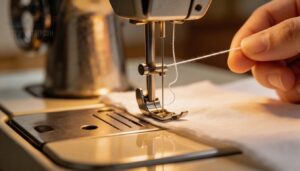
You’ve threaded the needle — now it’s time to bring the bobbin thread up so both threads work together. This part trips up a lot of beginners, but once you see how it works, it clicks fast.
Here’s exactly what to do.
Using The Handwheel to Lower and Raise The Needle
The handwheel is your manual control dial — think of it as a slow-motion preview button for every stitch.
Before catching the bobbin thread, you need to lower and raise the needle deliberately.
- Always turn the handwheel toward you (counterclockwise) for proper Needle Timing Calibration.
- Use slow, controlled handwheel operation to feel needle engagement — this is your Manual Stitch Preview.
- Watch the Tension Lever Coordination: the take-up lever rises as the needle lifts.
- Practice Safety Handwheel Operation — machine unplugged, no rushing.
Raise the needle fully until the take-up lever reaches its peak.
Catching and Pulling Up The Bobbin Thread Loop
Once the needle rises fully, hold the upper thread lightly and watch for a small loop pulling up through the needle plate — that’s your bobbin thread path completing its Upper Thread Capture.
| What to Watch | What It Means |
|---|---|
| Small loop appears | Correct Thread Interlock Timing |
| No loop forms | Recheck bobbin case orientation |
| Loop stays large | Adjust Loop Size Control via tension |
| Take-up lever fully raised | Take-Up Spring Adjustment working correctly |
| Both threads visible | Successful handwheel usage to catch bobbin thread |
Gently pull the upper thread to draw the bobbin thread loop upward, then tug both tails free from the bobbin case cover area.
Positioning Both Threads Under The Presser Foot
Both Both threads are now yours to position. Lay them flat behind the presser foot using the Back Placement Technique — never in front. This sets up proper Thread Tension Balance before your first stitch.
- Pull both top thread and bottom thread 4–6 inches toward the back.
- Complete a Thread Flatness Check: threads should lie straight, no crossing.
- Lower the presser foot for correct Foot Position Timing and Pre‑Stitch Thread Pull.
Follow the proper thread tension balance guidelines to guarantee smooth stitching.
Running a Test Stitch on Scrap Fabric
With both threads trailing back, grab a scrap of similar fabric and sew a short line. This Scrap Selection step protects your real project while you run a quick Stitch Evaluation — checking both sides for flat, even stitches.
Apply Tension Checks and tweak Length Width settings gradually.
Final Readiness means the stitch looks clean, with no puckering or loops.
Troubleshooting Common Threading Problems and Fixes
Even with careful threading, things can go wrong — and that’s completely normal. Most problems come down to a few common causes that are easy to fix once you know what to look for.
Most threading problems share a few common causes that are simple to fix once you know what to look for
Here’s what to check when your machine isn’t cooperating.
Fixing Thread Loops and Tension Imbalances
Loops under your fabric almost always mean the upper thread isn’t seated properly in the tension discs.
Start with these three fixes:
- Tension Disc Cleaning — Remove lint buildup between the discs using a soft brush.
- Take-Up Lever Alignment — Rethread with the presser foot raised to open the tension path.
- Bobbin Tension Adjustment — Test bobbin resistance; slight drag means correct calibration.
Run a Stitch Test Calibration on scrap fabric to confirm balance.
Resolving Skipped Stitches and Thread Breakage
Skipped stitches and broken threads usually come down to a few fixable culprits. A dull or bent needle throws off your Needle Angle Adjustment, so swap it first.
Check your Lint-Free Thread Path and run Machine Timing Checks if breaks persist.
Fabric Stabilization Techniques — like backing stabilizer on slippery material — reduce needle deflection. Finish with Tension Balance Calibration on scrap fabric to confirm everything’s working together.
Correcting Bobbin Jams and Incorrect Thread Direction
bobbin jam often traces back to something simple. Start with Lint Accumulation Removal — clear out debris around the feed dogs and bobbin area.
Then do a Bobbin Spring Inspection; a worn spring loses tension and lets thread slip.
Recheck your bobbin winding and loading process, confirm Thread Direction Confirmation is correct, and reseat the bobbin case for proper Bobbin Case Alignment.
That’s Jam Prevention Maintenance in action.
Keeping The Machine Clean for Consistent Performance
clean machine is a reliable machine.
After each project, run a lint brush routine through the bobbin area and use a small vacuum attachment for any stubborn debris — that’s your bobbin area vacuum step done.
Wipe the needle plate clean with a damp cloth for proper needle plate wipe care.
dust-free storage and regular oil spot maintenance keep your machine running smoothly every time.
Frequently Asked Questions (FAQs)
How to thread a sewing machine step by step?
Threading a sewing machine starts with unplugging it, then winding and loading the bobbin, following the upper thread path visualization, and finishing by passing thread through the needle eye.
What’s the easiest way to thread a sewing machine needle?
Like slipping a key into a lock, needle eye alignment is everything.
Use your machine’s built-in needle threader, raise the presser foot, and choose a bright thread color for a clear, smooth pass.
How do I get my sewing machine to pick up the bottom thread?
Hold the top thread, then slowly rotate the handwheel toward you. The needle dips down, catches the bobbin thread, and pulls a loop up through the needle plate.
Grab that loop and pull both threads under the presser foot.
How do you thread a self threading sewing machine?
A self-threading sewing machine manages the hardest part for you.
Follow the built-in thread path guides, engage the One-Touch Thread Loading lever, and your machine’s Self-Threader Mechanism does the rest in seconds.
How often should I change my sewing machine needle?
Change your needle every 8 hours of sewing or after each project. Needle Wear Indicators like skipped stitches, thread breakage, or dullness signal it’s time.
Fabric Impact and Project Frequency both affect Needle Lifespan.
Can I use different thread types for bobbin and top?
Yes, you can use different thread types for bobbin and top.
Just run a test stitch on scrap fabric first, then adjust tension one side at a time until stitches look balanced on both sides.
Does thread direction on the spool matter when threading?
Thread direction does matter. Spool rotation impact affects how thread unwinds consistently through the thread guide and tension disc synergy.
Check your model guidance — wrong spool cap alignment causes uneven thread tension along the thread path through a sewing machine.
How do I thread a double needle sewing machine?
double needle is like running two lanes on one track. Each needle gets its own upper thread, but they share one bobbin.
Route split guides through split guides to each needle, keeping paths parallel for balanced twin needle alignment.
Whats the best way to store thread between projects?
thread spool collection on a spool rack, sorted by a color coding system.
clear containers with silica packets for humidity control, and rotate your inventory so older threads get used first.
Can I use hand-sewing thread in my machine?
It’s not ideal.
Hand sewing thread lacks the strength, smooth coating, and fiber compatibility machines need, leading to tension balance issues, needle damage, and lint buildup that disrupts your stitch quality fast.
Conclusion
Mastering the art of threading your sewing machine is akin to unlocking a secret door to smooth, efficient sewing. With practice, you’ll find that understanding how to thread a sewing machine becomes second nature.
As you work through each step, your confidence grows, and soon you’ll be creating beautiful projects with ease.
Your machine will hum along, producing consistent stitches, and you’ll wonder how you ever managed without this essential skill.