This site is supported by our readers. We may earn a commission, at no cost to you, if you purchase through links.

You’ve just found the perfect table runner online, but the sizing chart reads like a foreign language. Standard widths usually range from 12 to 18 inches, while lengths can stretch anywhere from 72 to 180 inches depending on your table.
Getting these measurements right isn’t just about fitting the runner on your table—it’s about creating visual balance that makes your dining space feel intentional rather than thrown together. The wrong proportions can make a generous table look cramped or leave a narrow surface swimming in fabric.
Understanding how runner dimensions relate to your specific table size, shape, and style helps you avoid the most common sizing mistakes and ensures your table looks polished for every occasion.
Table Of Contents
- Key Takeaways
- What is The Average Table Runner Width?
- What is The Standard Table Runner Length?
- How to Measure Your Table for a Runner
- Choosing The Right Width for Your Table
- Determining Ideal Runner Length by Table Size
- Standard Table Runner Sizes by Table Type
- Should a Table Runner Hang Over The Edge?
- Can a Table Runner Be Shorter Than The Table?
- Common Mistakes in Table Runner Sizing
- Practical Tips for Selecting Table Runner Size
- Frequently Asked Questions (FAQs)
- Conclusion
Key Takeaways
- Standard table runners measure 12-18 inches wide and 72-180 inches long, with your specific dimensions determined by your table’s width (runners should be one-quarter to one-third of table width) and length (adding 12-24 inches total for 6-12 inch overhang on each end).
- Getting the overhang right—that 6-12 inch drape beyond each table edge—transforms your runner from forgettable to intentional, creating visual balance without blocking chairs or disrupting your place settings.
- Your table’s shape dictates different sizing rules: rectangular tables need straightforward length calculations, while round tables require 72-108 inch runners that drape diagonally, and square tables measure best corner-to-corner.
- The most common sizing mistakes stem from choosing runners too narrow (under 12 inches looks lost) or too wide (over 18 inches crowds plates), and ignoring how your table’s specific shape affects proportions and placement.
What is The Average Table Runner Width?
Most table runners fall within a standard width range that works across different table sizes and dining setups. The width you choose depends on your table’s dimensions and the look you’re going for.
For inspiration on fabric choices and creative design ideas, explore these home decor sewing projects that complement any table runner style.
Let’s break down the typical measurements and what affects your final choice.
Typical Width Range (12–18 Inches)
The standard table runner width falls between 12 and 18 inches (30 to 46 cm), giving you flexibility to match your table proportions and dining aesthetics.
If you’re new to quilting, easy quilting projects offer beginner-friendly table runner patterns that work beautifully within this standard width range.
Narrower runners around 12 inches create a refined, formal look, while wider 18-inch options make a bolder statement and accommodate larger centerpiece styles.
This table runner size range works beautifully across most dining tables, balancing fabric selection with visual impact.
If you’re ready to create one yourself, explore these fun sewing machine projects for adults to get started with a custom design.
Factors Influencing Runner Width
Your choice of runner width depends on several practical and aesthetic factors beyond those standard measurements. Table edge finishes and leg configurations shape how much width you’ll need—ornate edges or prominent table legs might call for adjustments to maintain visual balance.
Consider these key influences:
- Fabric thickness affects drape behavior and how your runner falls
- Table width determines proportional runner width for harmony
- Dining style (formal versus casual) guides your aesthetic choices
Measure carefully to find what works for your space.
What is The Standard Table Runner Length?

While width gets you started, length is where table runner sizing really comes together. The right length depends on your table’s dimensions and how much overhang you want on each end.
Let’s look at the standard lengths that work for most dining tables and the overhang rules that’ll give you that polished, designer look.
Common Lengths for Dining Tables
Most dining tables between 60 and 72 inches need runners measuring 72 to 120 inches in length. For larger tables spanning 84 to 96 inches, you’ll want runners from 108 to 120 inches long.
Round dining tables with 48 to 60-inch diameters pair well with runners between 72 and 108 inches, while banquet-style tables may require runners up to 180 inches.
Overhang Recommendations
Your runner proportions matter most when planning the overhang. Here’s how to measure table runner size for visual harmony:
- Let 6 to 12 inches hang beyond each table end for standard symmetry guidelines
- Use 8 to 10 inches on longer tables for better table balance
- Keep smaller table overhangs between 4 to 8 inches
- Never exceed one-third of total table size
- Match both ends for perfect symmetry
How to Measure Your Table for a Runner
Getting the right table runner starts with knowing your table’s actual dimensions. You’ll need to measure both the length and width, then factor in how much overhang you want on each end.
If you’re working with fabric for custom runners or quilted table toppers, a quilting machine designed for large projects can handle wider materials without bunching or shifting during stitching.
These two measurements give you everything you need to find a runner that fits perfectly.
Measuring Table Length and Width
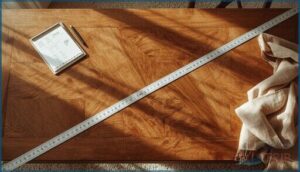
Getting accurate dining table dimensions is the foundation of proper runner sizing. You’ll measure table length along the longest side from edge to edge, then capture table width across the narrower perpendicular side.
Use a tape measure with the surface clear, recording in consistent units—inches or centimeters. These measurements guide your length calculation and width proportions for ideal runner size.
Calculating Proper Overhang

How much should your runner drape beyond the table’s edge? Standard overhang guidelines recommend 6 to 12 inches per side, creating visual balance without disrupting edge clearance for chairs.
You’ll measure your table size, then add 12 to 24 inches to the total length—6 inches overhang on each end. This approach ensures proper table proportions while maximizing the aesthetic impact of your table runner.
Choosing The Right Width for Your Table

Your table’s width should guide your runner choice—not the other way around. A runner that’s too wide overwhelms the table, while one that’s too narrow gets lost in the visual landscape.
Here’s how to find that sweet spot where proportion and practicality meet.
Proportional Runner Width Guidelines
Your table runner width should follow a simple formula: aim for one-quarter to one-third of your table’s width to achieve visual balance. For a standard 36–42 inch dining table, that means selecting a runner size between 12 and 14 inches wide.
This proportion ensures your runner materials and fabric selection complement your table shapes without overwhelming place settings or appearing lost in the space. Measure carefully before choosing your runner width.
Adjusting Width for Table Shape
Shape considerations matter more than you’d think when selecting table runner width. Narrow tables under 30 inches require proportionally thinner runners—around 10–12 inches—to maintain visual balance without crowding edges. Wider tables accommodate 14–18 inch runners comfortably.
For curved or oval table shapes, custom sizing ensures your runner materials follow the contour naturally, creating harmonious table proportions that elevate your entire tablescape.
Determining Ideal Runner Length by Table Size

Getting the length right means matching your runner to your table’s shape and size. Rectangular tables follow different rules than round or square ones, and each setup has its own sweet spot for that polished look.
Let’s break down the ideal lengths based on what type of table you’re working with.
Rectangular Table Runner Lengths
Your rectangular table determines the runner size you’ll need. For standard 6–8 seat dining tables measuring 60–72 inches long, choose a runner length between 72–90 inches to achieve balanced table decor with a 6–12 inch overhang on each end.
Larger rectangular shapes around 84–96 inches pair best with 96–108 inch runners, creating harmonious table setting proportions that elevate your dining style regardless of runner material.
Round and Square Table Runner Lengths
Circular tables need runners that work differently than their rectangular cousins. For round table measurements, you’ll want lengths between 72–108 inches depending on your table’s diameter, letting the runner drape gracefully across the center.
Square table runner sizes follow similar logic—measure diagonally and add 12–24 inches total overhang. These dining table accents serve as elegant tablecloth alternatives when sized right.
Standard Table Runner Sizes by Table Type

Choosing the right table runner size becomes easier when you match it to your specific table type. Different seating capacities call for different runner dimensions to maintain that perfect balance between coverage and overhang.
Here’s a breakdown of standard sizes based on how many people your table seats.
Two-Seater Table Runner Dimensions
For most two-person tables, you’ll measure a runner between 48 and 60 inches long and 14 to 18 inches wide. Your fabric selection guide should factor in a 6-to-8-inch overhang on each end for proper runner placement.
Dining table styles vary, so measure your specific table first. Formal table setting ideas often use wider runners around 18 inches, while casual table runner materials work well at 12 to 14 inches.
Four-Seater and Six-Seater Sizes
When table size expands to accommodate four guests, you’ll want a runner between 14 and 18 inches wide—usually 16 inches for balanced table proportions.
Six-seater dining aesthetics shift toward 16 to 22 inches, with 18 to 20 inches most common.
Measure your table runner size against seating capacity and table shapes to verify runner materials don’t overwhelm your space or disappear beneath place settings.
Large Dining Table Runner Standards
For tables seating eight or more, your table runner sizes need to scale up—expect widths between 20 and 24 inches to maintain visual balance across that broader surface. Length standards hit 90, 108, or even 120 inches, with the familiar 6 to 12 inch overhang on each end.
Match runner material options and formal table settings to your dining table shapes, and you’ll nail runner placement tips every time.
Should a Table Runner Hang Over The Edge?

Yes, table runners should hang over the edge of your table—but the amount matters more than you might think. The standard overhang usually ranges from 6 to 12 inches on each end, striking that sweet spot between polished and practical.
Getting this detail right transforms your runner from an afterthought into a purposeful design element that pulls your whole table together.
Best Practices for Runner Overhang
Your runner should extend 6 to 12 inches past each table edge for proper visual harmony and table balance. Lighter fabrics support slightly longer overhang styles without appearing bulky, while heavier materials work best at 6 to 8 inches.
When you measure your table runner size and shape, remember that excessive overhang beyond 12 inches can obstruct chairs and disrupt runner placement at formal settings.
Visual Impact of Overhang
How does overhang change your table’s entire look? The visual balance you achieve depends on precise measurements and proportional thinking.
- 6–12 inch overhang creates harmonious aesthetic proportions for most rectangular tables
- 12–18 inch length adds dramatic formality and enhanced table harmony
- Symmetrical overhang ensures decorative symmetry that pleases the eye
- Excessive drop beyond 18 inches disrupts visual balance and seating comfort
Measure your table runner size carefully to optimize overhang effects.
Can a Table Runner Be Shorter Than The Table?

Yes, a table runner can be shorter than your table, and it’s not always a design mistake. Sometimes a shorter runner fulfills a specific purpose or creates a look you’re after.
Let’s look at when this approach makes sense and what you need to keep in mind before choosing a runner that doesn’t reach the table’s ends.
Aesthetic and Functional Considerations
Choosing a shorter table runner involves balancing visual appeal with practical use. You’ll want to think about how the reduced table runner length affects table harmony and spatial awareness.
A runner that doesn’t reach the edges can highlight decorative accents like centerpieces while maintaining functional impact.
The key is ensuring your table runner size creates visual balance without compromising the overall aesthetic or making your table runner sizing guide decisions feel incomplete.
When Shorter Runners Work
Compact spaces demand smart choices—shorter runners excel on small tables where full-length options overwhelm the surface.
You’ll find runner sizes of 12-14 inches work beautifully in casual settings, letting you measure visual balance against your centerpiece focus.
This table runner length approach prevents crowding around chair legs while highlighting decorative arrangements, making table runner sizes feel intentional rather than insufficient.
Common Mistakes in Table Runner Sizing

Even with all the measurements and guidelines at your fingertips, it’s surprisingly easy to pick a runner that just doesn’t work for your table. The most common sizing mistakes usually come down to two key areas: getting the width wrong or ignoring how your table’s shape affects the overall look.
Let’s walk through what to watch out for so you can avoid these pitfalls and find a runner that fits perfectly.
Choosing Runners Too Narrow or Wide
A table runner that’s too narrow—say, under 12 inches—can look lost on your table, undermining visual balance and dining aesthetics. On the flip side, widths exceeding 18 inches crowd place settings and disrupt table proportions.
When you measure your table runner sizes, aim for one-third to one-half of your table’s width. This runner size creates harmony in formal settings and everyday meals, ensuring runner materials drape beautifully without overwhelming your space.
Overlooking Table Shape or Overhang
Ignoring your table’s shape or skipping the overhang calculation is like buying shoes without checking the size—you’ll end up with a mismatched fit that throws off the entire look. When you measure your table runner, consider these critical factors:
- Table geometry dictates runner proportions—rectangular tables need different sizing than round or square surfaces
- Overhang effects shape visual balance—6 to 12 inches creates proper drape
- Shape considerations prevent awkward gaps—match runner size to your table’s dimensions
Practical Tips for Selecting Table Runner Size

Getting the right table runner size doesn’t have to feel like guesswork. Once you know your table’s dimensions, a few practical strategies can help you nail down the perfect fit every time. Here’s how to make your selection with confidence.
Using Size Charts and Guides
A reliable table runner size guide takes the guesswork out of shopping. Most charts break down recommended dimensions by table width and length, giving you clear targets for runner size. Look for sizing templates that list standard widths—12, 14, 16, and 18 inches—paired with fabric choices and runner materials to measure confidently.
| Table Width | Recommended Runner Width |
|---|---|
| 30–36 inches | 10–12 inches |
| 40–48 inches | 12–14 inches |
| 50–60 inches | 14–16 inches |
| 62–72 inches | 16–18 inches |
| 72+ inches | 18–20 inches |
Matching Runner Size to Table Purpose
Once you’ve consulted a table runner size guide and locked in your table dimensions, pair those measurements with how you actually use your table. Everyday dining calls for narrower runners—around 12 to 14 inches—so plates and glassware sit comfortably.
Formal events shine with wider, longer options that drape elegantly, while casual gatherings and decorative themes often work best with compact, easy-to-clean choices.
Frequently Asked Questions (FAQs)
What materials are best for table runners?
Linen offers durability and natural texture that forgives minor stains, while cotton provides affordability with easy machine-washing.
Polyester blends resist wrinkles beautifully, and burlap delivers rustic charm—though it needs protective backing underneath.
How do you clean different table runner fabrics?
Check your table runner’s care label first—cotton and linen handle machine washing well, while silk and beaded designs need gentle hand-washing or dry cleaning.
Stain removal works best when you act quickly using appropriate fabric care products.
Can you layer runners over tablecloths effectively?
Want depth without clutter? Yes, you can layer runners over tablecloths effectively by choosing contrasting textures, keeping the top runner shorter, and using lightweight fabrics to maintain visual balance in your table setting.
What colors complement various dining room styles?
Your dining room style shapes the color schemes that work best. Traditional spaces shine with warm neutrals and navy-blue table runners, while modern rooms embrace charcoal gray or bold jewel tones in your table settings and decor.
Do seasonal table runners require different sizing?
Seasonal table runners follow standard table runner sizes but benefit from flexible sizing to achieve visual harmony with holiday themes.
You can adjust width and measure overhang for decorative balance without strict dimensional changes.
Conclusion
The theory that table runners are one-size-fits-all falls apart the moment you place one on your dining surface. Your runner’s success hinges on precise proportions—width that complements without overwhelming, length that balances your table’s dimensions.
Now that you understand how wide is a table runner average length and the principles behind proper sizing, you can confidently select dimensions that transform your table from functional furniture into a thoughtfully styled focal point.
- https://www.cuemath.com/geometry/diameter/
- https://en.wikipedia.org/wiki/Tableware
- https://www.labottegadicasa.com/guide-to-using-table-runners-sizes-and-practical-advice/
- https://www.couleurnature.com/pages/sizing-chart
- https://mymindseye.com/blogs/news/how-long-should-a-table-runner-be-essential-sizing-tips