This site is supported by our readers. We may earn a commission, at no cost to you, if you purchase through links.
Most beginners expect machine embroidery to feel like wrangling a wild beast—complicated, expensive, and best left to seasoned crafters. In truth, you don’t need a background in sewing or a hefty budget to get started.
Today’s entry-level machines come with touchscreen controls and built-in designs, making the process far less intimidating than it once was. If you can thread a needle and follow step-by-step instructions, you’re already halfway there.
With a bit of guidance and practical know-how, you’ll discover that learning machine embroidery isn’t as hard as it seems—and the path forward is full of possibilities.
Table Of Contents
Key Takeaways
- Modern embroidery machines with touchscreen controls and built-in designs make learning accessible even if you have no sewing background.
- Mastering four basic skills—machine setup, hooping, thread management, and design literacy—lets you progress quickly and confidently.
- Consistent practice and support from online tutorials and community groups help you overcome common challenges like thread breakage and software navigation.
- Starting with simple projects and a beginner-friendly machine under $500 builds your skills and makes embroidery feel manageable from the start.
Is Machine Embroidery Hard to Learn?
Machine embroidery looks complicated from the outside, but most beginners find it far more manageable than they expect once they actually sit down with the machine.
If you want a clear guide to mastering those basics, this step-by-step embroidery machine tutorial walks you through each part of the process.
A few key skills and the right mindset go a long way toward getting you started with confidence.
Here’s what you really need to know before your first stitch.
Common Misconceptions About Difficulty
Most beginners assume the learning curve for machine embroidery is steep — but that’s rarely true. You don’t need prior sewing experience, and embroidery machine setup is far more straightforward than it looks. Simple 4×4 designs finish in under 20 minutes.
Cost factors won’t break the bank either, with starter machines under 0. Machine embroidery for beginners is genuinely more accessible than most expect.
With the right resources, anyone can explore machine embroidery and create unique projects.
Skills Needed to Get Started
Getting started with machine embroidery for beginners comes down to four core skills:
- Machine Basics & Embroidery Machine Setup — threading the top path and bobbin correctly
- Hooping Techniques & Fabric Handling — keeping fabric drum-tight with the right stabilizer
- Thread Management & Thread and Tension Issues — adjusting tension in small increments on scrap fabric first
- Design Literacy — reading file formats and stitch specifications before you commit to a project
To achieve good embroidery results, understanding stabiliser materials is essential for preventing fabric distortion.
How Quickly Beginners Can Progress
Once you’ve got those four core skills in hand, progress typically happens faster than most people expect. With three focused 30–45 minute sessions weekly, your stitches clean up noticeably by week four. Most people hit real confidence after just a weekend of practice pieces.
Tracking small wins — tighter hooping, steadier tension — keeps your skill building on pace and your motivation strong.
Key Factors That Affect Learning Curve
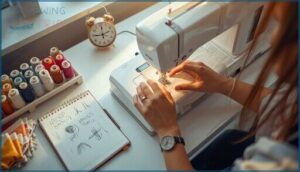
How fast you pick up machine embroidery isn’t just about talent — a few key factors shape your progress more than anything else. Some work in your favor from day one, while others are easy to improve with a little intention.
If you’re curious about why speed matters, this guide to embroidery as a hobby breaks down how machine work can save you hours.
Here’s what actually moves the needle.
Prior Sewing or Crafting Experience
Your crafting background matters more than you might think. Sewing skills transfer surprisingly well — if you already know how to adjust thread control or swap bobbins, you’re well-prepared. Fabric knowledge from garment sewing also sharpens your stabilizer instincts fast.
For embroidery beginners, even basic tips for beginners in other crafts carry over, making embroidery machine operation and learning embroidery software feel less like starting from scratch.
Machine Features and User-Friendliness
Your embroidery machine selection directly shapes your learning curve. Machines with touchscreen controls and user-friendly interfaces — like the Brother PE535 — let you preview designs before a single stitch drops.
Automatic threaders cut setup frustration fast, and smart hoop systems keep fabric secure and aligned.
With built-in design editing on-screen, embroidery machine operation feels manageable from day one.
Access to Tutorials and Community Support
Learning doesn’t have to feel lonely. The embroidery community is genuinely one of the most welcoming spaces online, and that makes a real difference when you’re stuck.
The embroidery community is welcoming and supportive, making it easy to find help whenever you feel stuck
Here’s where to start:
- Online tutorials and video lessons on YouTube cover everything from machine embroidery basics to embroidery software walkthroughs.
- Social media groups and community forums let you post photos of problem stitches and get honest feedback fast.
- Structured courses bundle embroidery tips and tricks with guided learning and practice so nothing feels random.
Choosing Beginner-Friendly Embroidery Machines
Picking the right machine as a beginner can feel overwhelming, but it doesn’t have to be. The good news is that a few key features make a real difference in how quickly you get comfortable.
Here’s what to look for when you’re just starting out.
Essential Features for New Users
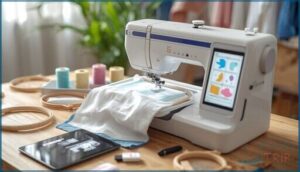
The right embroidery machine can flatten the learning curve before you even thread your first needle. For beginners, these features matter most:
| Feature | Why It Helps | Example |
|---|---|---|
| Easy Threading | Cuts early frustration fast | Auto needle threader |
| On Screen Controls | Simplifies design editing | Color LCD touchscreen |
| Built Designs | Ready to stitch immediately | 150+ preloaded designs |
| Design Transfer | Easy file loading via USB or Wi-Fi | Wireless app connectivity |
| Hoop Sizes | Matches project to machine | Extra-large embroidery area |
Getting started with machine embroidery is smoother when your machine works with you, not against you.
Budget and Starter Kit Recommendations
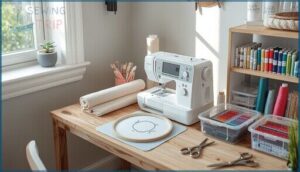
Most beginners do well starting with a machine in the $300–$600 range. Budget planning upfront saves headaches later. When getting started with machine embroidery, a starter kit bundling thread, stabilizers, and needles cuts early supply costs considerably.
Here’s what a solid beginner setup usually includes:
- A reliable embroidery machine under $500
- 24 spools of polyester embroidery thread
- Multiple stabilizer types in sample rolls
- Spare needles and bobbin thread
- Basic embroidery supplies like scissors and marking tools
Built-in Designs and Software Compatibility
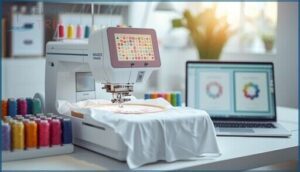
Most beginner machines ship with 80 to 200 built-in designs, so you can start stitching real projects from day one — no digitizing software required.
When you’re ready to expand, check that your machine reads your software’s export format. Brother uses PES, Janome uses JEF, and mixing them up causes headaches.
Solid embroidery software with design libraries and digitizing tools makes machine compatibility straightforward.
Typical Challenges and How to Overcome Them
Every beginner hits a few bumps along the way, and that’s completely normal. The good news is that most of these hurdles follow a predictable pattern, so you can tackle them head-on once you know what to expect.
Here are the most common challenges you’ll likely run into, along with straightforward ways to work through them.
Thread Breakage and Tension Issues
Thread breakage is one of those problems that stops you mid-stitch and leaves you second-guessing everything. Most of the time, the fix is simpler than you think.
- Check needle condition every 8 hours of stitching
- Set upper thread tension between 2–6 for most embroidery threads
- Retrace your threading path daily to catch hidden snags
- Use 100% polyester embroidery threads over old rayon
- Target bobbin tension at 18–22 grams for balanced stitches
Hooping Fabric and Stabilizer Selection
Once you’ve sorted out thread selection and tension, fabric tension and hooping can still throw you off. Hoop sizes matter—too small, and your design won’t fit; too loose, and stitches skew.
Stabilizer types are key: tearaway for stable wovens, cutaway for knits. Test embroidery materials together, adjusting stabilizer selection until your fabric and thread selection stitch smoothly.
Learning Embroidery Software Basics
Once your fabric and stabilizer are squared away, embroidery software becomes your next puzzle. Exploring menus, importing designs, and editing stitches feels like learning a new language. For instance, computerized embroidery lets you preview, resize, and merge files in seconds. Mastering these basics unlocks creative control, especially when you want to experiment with digitizing techniques or manage multiple embroidery design creations.
- Software Navigation
- Design Import
- Stitch Editing
- File Management
- Digitizing Basics
Tips for Making Machine Embroidery Easier
If you’re looking for ways to make machine embroidery feel less overwhelming, a few practical strategies can make all the difference. You don’t need to reinvent the wheel to get started smoothly.
Here’s what can help you build confidence and skill right from the beginning.
Starting With Simple Projects
Project selection shapes your first steps in machine embroidery. For beginners, start with monograms or simple silhouette designs—these use basic embroidery stitches and single thread colors, making setup easy. Choose woven cotton or canvas fabric for stable hooping, and scale designs to fit 4×4 or 5×7 hoops.
Exploring embroidery techniques through small projects builds confidence and control.
Practicing Consistently for Steady Progress
Once you’ve tackled simple projects, daily practice shifts the learning curve in your favor. Even fifteen minutes builds muscle memory and steadies thread tension.
For embroidery beginners, routine habits anchor skill building, and warm up exercises keep your hands sharp. Try:
- Weekly progress tracking with photos
- Setting a timer for short sessions
- Pairing machine embroidery with coffee breaks
Frequently Asked Questions (FAQs)
What if you don’t have an embroidery machine?
You don’t need to own a machine to get started. Makerspaces, libraries, and rental studios offer access to embroidery machines for beginners exploring machine embroidery before committing to buying one.
Do embroidery machines use thread?
Yes, embroidery machines use thread — two threads, actually. The upper thread runs through the needle, while the bobbin thread locks it from below, forming every stitch together.
Do you need a multi-needle embroidery machine?
For most beginners, a single-needle embroidery machine is all you need. Multi-needle machines offer real thread efficiency and speed, but their machine cost and space requirements make them better suited for production work, not learning the basics.
Which type of embroidery thread is best?
Polyester thread wins for most projects — it’s durable, colorfast, and manages frequent washing easily.
Rayon thread offers a luxurious sheen for delicate pieces, while cotton thread suits natural fabrics with a soft, matte finish.
Why is embroidery dying out?
Embroidery isn’t disappearing — it’s shifting. Demand Shifts, Cost Pressure, Labor Shortage, Technology Shift, and Cultural Change are reshaping the craft, pushing it toward Machine Embroidery while traditional handwork fades from mainstream production.
What fabrics work best for machine embroidery beginners?
Quilting cotton is your best starting point — its tight, even weave holds stitches cleanly and pairs well with tear-away stabilizers. This makes fabric stabilization and hooping techniques straightforward for embroidery for beginners.
Can machine embroidery designs be sold commercially?
You can sell machine embroidery designs commercially, but Copyright Laws and Commercial Licensing shape what’s allowed. Design Ownership stays with the creator, so Digital Sales, Design Selection and Digitizing, and Embroidery Rights must match your license for Embroidery Projects for Beginners.
How do you transfer custom artwork into embroidery files?
To transfer custom artwork into embroidery files, start with Artwork Simplification and Vector Conversion, use Digitizing Tools for Stitch Assignment, then File Exporting via Embroidery Software.
Computer-aided design and weaving digital patterns guarantee clarity and compatibility for embroidery digitizing.
What thread brands are most reliable for beginners?
Did you know Madeira polyester survives 400,000 stitches without breaking?
For reliable embroidery threads, beginners often choose Isacord, Madeira, Floriani, or New Brothread—each offers strong thread quality, broad color options, and positive user reviews after durability tests.
How do you care for machine-embroidered garments after washing?
After washing, lay your embroidered garment flat on a towel, reshape while damp, and air dry in shade.
Iron from the reverse side using a pressing cloth, then store flat in a cool, dry space with proper inspection steps.
Conclusion
If you’re worried you’ll never master the controls or that mistakes will ruin your projects, remember—every expert started with tangled threads and uneven stitches. Is machine embroidery hard to learn? Not when you break it down into manageable steps, use the right tools, and give yourself permission to practice.
Each project builds your confidence, and before long, the process feels less like guesswork and more like skill. With steady effort, you’ll transform uncertainty into creative control, one stitch at a time.
- https://coursehorse.com/blog/learn/embroidery/how-difficult-is-it-to-learn-embroidery
- https://www.hooptalent.com/it/blogs/news/how-to-learn-machine-embroidery-a-beginners-roadmap-to-success
- https://www.skillshare.com/en/blog/machine-embroidery-for-beginners/
- https://www.digitsmith.com/how-tough-it-learn-embroidery-29222
- https://kimberbell.com/blogs/thekimberbellablog/7-misconceptions-about-machine-embroidery