This site is supported by our readers. We may earn a commission, at no cost to you, if you purchase through links.
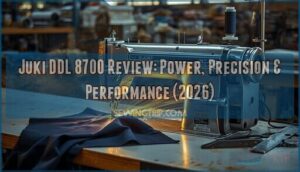
Five thousand stitches per minute sounds like overkill until you’re racing a deadline with fifty yards of fabric staring you down. The Juki DDL-8700 manages that pressure without breaking a sweat, stitching straight seams at industrial speed while your old domestic machine would still be warming up.
This workhorse combines a rock-solid metal frame with an automatic lubrication system that keeps maintenance simple, even when you’re pushing it hard day after day.
Whether you’re outfitting a small production shop or upgrading from a home machine that can’t keep pace, understanding what this lockstitch powerhouse delivers—and where it hits its limits—helps you decide if it’s the right fit for your workspace and your workload.
Table Of Contents
- Key Takeaways
- Juki DDL 8700 Overview
- Build Quality and Durability
- Performance and Stitch Quality
- Motor Options and Operation
- Fabric Handling Capabilities
- User-Friendly Features
- Included Accessories and Setup
- Maintenance and Care Tips
- Ideal Users and Practical Applications
- User Reviews and Value Analysis
- Frequently Asked Questions (FAQs)
- Conclusion
Key Takeaways
- The Juki DDL-8700 delivers blazing-fast straight stitching at up to 5,500 stitches per minute, making it ideal for high-volume production and tight deadlines.
- Its all-metal construction and automatic lubrication system keep maintenance simple and ensure the machine lasts for decades, even with daily use.
- You’ll get smooth, consistent seams on light to medium fabrics, but this workhorse isn’t built for heavy leather or thick upholstery.
- Choosing a servo motor upgrade gives you quieter operation, better speed control, and lower energy costs compared to the standard clutch motor.
Juki DDL 8700 Overview
The Juki DDL-8700 isn’t just another industrial machine collecting dust in factories—it’s your ticket to sewing freedom, whether you’re launching a home business or leveling up from that clunky domestic model.
This powerhouse delivers speed, durability, and precision that puts you in control of every stitch. Let’s break down what makes this machine tick and whether it’s built for your sewing revolution.
Key Features at a Glance
The Juki DDL8700 is built to break the mold of home machines. This industrial sewing machine delivers straight stitching at speeds up to 5,500 stitches per minute—that’s stitch speed you can count on when deadlines hit. Its sturdy metal frame ensures industrial durability you won’t find in plastic consumer models.
The automatic lubrication system keeps gears running smooth with less fuss. You can add a servo option for quieter operation and precise control. Reliable performance meets serious sewing speed, giving you the power to tackle demanding projects without backing down. Before you push your machine to full speed, make sure you’ve handled fabric shrinkage prevention tips so your project dimensions stay true through every high-powered seam.
For complex projects, consider using methodological rigor to guarantee accuracy and precision in your work.
Industrial Vs. Domestic Use Cases
Your workspace and goals determine where the DDL8700 shines. Industrial settings demand non-stop cycles and heavy-duty sewing efficiency through thick canvas or delicate chiffon. This industrial sewing machine thrives on production floors where fabric limits rarely slow you down and production costs stay lean across shifts.
At home, you’ll appreciate the same heavy-duty frame for personal projects—though noise and footprint matter more. Key differences include:
- Industrial scale operations need clutch motors for torque and endurance
- Domestic needs favor servo upgrades for quieter, variable-speed control
- Workspace size shifts from factory tables to compact home setups
Build Quality and Durability
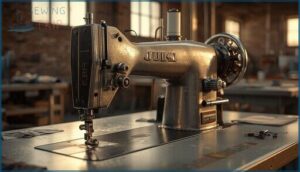
You don’t buy an industrial machine hoping it’ll last a few years—you invest in one to outlive cheap alternatives by decades. The DDL-8700 delivers that kind of staying power, built from the frame up to handle daily punishment without breaking a sweat. For those weighing budget against build quality, it consistently ranks among the best sewing machines under five hundred dollars for serious home sewers.
The DDL-8700 is built to outlast cheap alternatives by decades, handling daily punishment without breaking a sweat
Here’s what makes this machine a workhorse you can count on for the long haul. Real users share their mechanical sewing machine testimonials about durability, stitch quality, and years of trouble-free performance.
All-Metal Construction
The Juki DDL 8700 boasts an all-metal construction, combining steel and aluminum alloys to ensure sturdy design and machine durability. Unlike competitors with plastic parts, this machine is built to withstand intense pressure without cracking or flexing, even at 5,500 stitches per minute. This robust build makes it ideal for heavy-duty leather projects that demand precision and power under continuous use.
Die-cast components secure critical mounting points in perfect alignment, while the heavy-duty bed resists warping during demanding projects. This industrial build translates to metal frame durability and metal alloy benefits, providing consistent stability across every operational load.
Longevity With Regular Maintenance
Heavy-duty hardware means nothing without smart upkeep. That’s where maintenance schedules separate short-lived machines from decades of reliable performance. Oil change tips are simple: every 8–12 hours of runtime, lubricate the needle bar and hook to cut friction and extend part replacement intervals. Annual professional service—timing checks, tension tweaks, belt inspections—keeps stitch quality razor-sharp and machine durability rock-solid. Follow this routine and you’ll slash downtime:
- Oil critical points every 8–12 operating hours
- Schedule annual professional calibration
- Check drive belt tension monthly
- Replace worn parts before failure
Consistent sewing machine maintenance and repair transforms your DDL 8700 into a workhorse that refuses to quit.
Performance and Stitch Quality
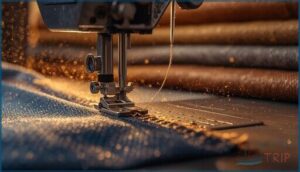
This machine doesn’t mess around regarding raw sewing power. You’re looking at industrial speed paired with the kind of stitch precision that keeps seams straight, even when you’re pushing the limits.
Here’s what sets the DDL 8700 apart when the needle hits fabric.
High-Speed Sewing at 5,500 SPM
When you’re cranking through long seams, 5,500 stitches per minute puts this Industrial Sewing Machine in the fast lane. That sewing speed isn’t just marketing talk—you’ll finish straight stitching jobs in half the time compared to domestic models. High-speed stitching depends on your motor efficiency and speed control systems working together.
Here’s what affects your stitches per minute:
| Factor | Impact on Speed | Your Control |
|---|---|---|
| Motor type | Servo runs smoother at top RPM | Choose before purchase |
| Fabric feed rates | Heavier materials slow you down | Adjust presser foot pressure |
| Stitch length variance | Longer stitches = faster completion | Set dial to project needs |
Proper setup keeps this sewing machine review honest—you’ll hit peak performance when needle timing and belt tension are dialed in.
Consistency on Straight Seams
With every straight stitch, you’ll notice how needle stability and fabric tension work together to keep your seam accuracy locked in. When your industrial sewing machine maintains proper timing, those seams stay true even at high sewing speed.
Here’s what drives stitch consistency on straight stitching:
- Feed dog timing controls stitch alignment without fabric drift
- Even presser foot pressure prevents material from shifting mid-seam
- Balanced thread management keeps tension uniform across long runs
- Stable needle position eliminates wobble during fast straight stitch work
- Quality spools reduce breaks that throw off your rhythm
Motor Options and Operation
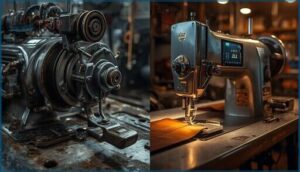
The motor you choose changes everything about how this machine feels in your hands. Clutch motors deliver raw power but come with trade-offs, while servo motors give you surgical control at the pedal.
Let’s break down what each option brings to your workspace and which one fits the way you actually sew.
Clutch Motor Vs. Servo Motor
Your motor choice shapes everything about how this industrial sewing machine behaves under your hands. A clutch motor delivers raw torque control but runs constantly, eating power whether you’re stitching or not.
Switch to a servo motor and you’ll gain instant speed variance—tap the pedal lightly for crawling precision or floor it for production runs. Servo motors boost motor efficiency dramatically, cutting energy consumption by half while improving sewing performance through smoother starts.
That’s why most Juki DDL 8700 buyers today skip the clutch and go straight for industrial automation benefits.
Noise Levels and Energy Efficiency
Noise reduction starts with your motor choice—servo setups usually clock in around 70–85 dB, quieter than most clutch-driven industrial sewing machines at full throttle. When you’re hitting 5,500 SPM, expect sound levels to creep toward the mid-80s, but that’s still classroom-friendly.
Energy savings with servo motors are real. They draw power only during needle movement, slashing power consumption compared to clutch motors idling all day. Regular maintenance—belt tension, fresh oil—keeps your machine humming smoothly and prevents grinding noises that kill manufacturing efficiency.
Fabric Handling Capabilities
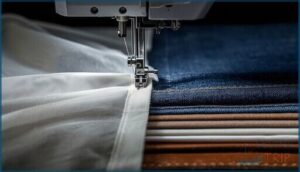
You need to know what fabrics this machine can actually handle before you commit. The DDL-8700 delivers solid performance on everyday materials, but it has clear boundaries when you push into heavier territory.
Let’s break down where it excels and where it hits its limits.
Light to Medium Fabric Performance
You’ll nail consistent straight stitch results on cotton, poplin, and polyester blends with the Juki DDL 8700 industrial sewing machine. Fabric feed stays smooth at standard speeds, and you can dial in fabric tension to prevent puckering on delicate textiles. Thread selection matters—fine needles paired with quality thread keep stitch balance tight.
Here’s what you can expect:
| Fabric Type | Sewing Performance and Quality |
|---|---|
| Cotton | Even stitches, no skipped lines |
| Silk | Clean seams with proper needle control |
| Lightweight blends | Stable fabric handling at 5,500 SPM |
| Chiffon | Minimal gathering with pressure adjustments |
Proper maintenance keeps your fabric handling sharp across all weights.
Handling Thicker Materials and Limitations
You’ll hit a wall when layering denim or trying leather sewing—the DDL 8700 isn’t built for heavy-duty work beyond medium-weight fabrics. Material thickness maxes out around 4–5 mm, and anything bulkier causes needle deflection or skipped stitches.
Heavy-duty needles help penetrate thicker layers, but you’ll need to slow your straight stitch speed and tweak stitch tension control. Feed dog adjustment and presser foot pressure matter here—crank them up to prevent slipping.
For serious thick fabric tips: test scraps first, or invest in a true industrial sewing machine designed for bulk fabric handling.
User-Friendly Features
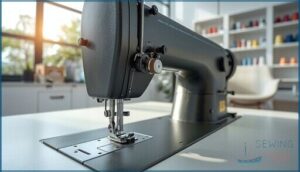
You want a machine that works with you, not against you. The DDL-8700 packs in practical features that make long sewing sessions less exhausting and give you better control over your work.
Here’s what makes this machine easier to operate than you’d expect from an industrial workhorse.
Knee Lifter and Presser Foot Control
The knee lifter on the Juki DDL 8700 gives you hands-free control—press with your knee, and the presser foot rises several millimeters so you can pivot fabric without breaking rhythm. Here’s what sets it apart:
- Ergonomic placement along the front knee area keeps your hands on the fabric while you maneuver corners or thick seams.
- Adjustable lift height settings let you clear bulky materials and maintain consistent presser foot pressure when you lower it.
- Metal linkage in the control integration ensures durability, though you’ll want to check for debris during routine cleaning.
Work Area, Throat Space, and LED Lighting
The Juki DDL 8700 offers generous throat space, measured in inches, so you can pivot medium to large projects without constant repositioning. That workspace optimization directly improves fabric maneuverability at 5,500 SPM.
Bright LED lighting sits right over the needle plate, boosting sewing visibility and cutting eye strain during long sessions. The cool-white beam reduces shadows on dense materials, though very dark fabrics may need a secondary lamp.
Together, these features improve workstation ergonomics and help you nail straight seams with less effort—key advantages in industrial sewing machines and sewing equipment comparisons.
Included Accessories and Setup
You don’t just get the machine when you order a DDL-8700—you get the complete setup to hit the ground running. Juki includes the essentials you need to turn a corner of your workshop into a professional sewing station.
Here’s what comes in the box and what you need to know about setting it up.
Standard Table and Workspace Requirements
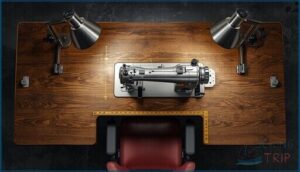
Your workspace can make or break your sewing experience with the Juki DDL 8700. This Industrial Sewing Equipment needs a sturdy foundation to deliver those impeccable straight seams.
Here’s what you’ll want to nail down:
- Table Dimensions: You need at least 48 x 36 inches to accommodate the Sewing Machine footprint comfortably, with clearance for the Knee Lift mechanism underneath.
- Workspace Ergonomics: Position your chair so your eyes align with the needle plane—this prevents neck strain during marathon projects.
- Lighting Options: LED task lights eliminate shadows around your needle area without creating glare on metal surfaces.
- Cable Management: Route power cords away from your Sewing Table edge to prevent accidental snags or Safety Features concerns.
Bobbin Winder and Additional Attachments
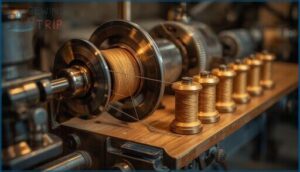
Out of the box, the JUKI DDL8700 includes a dedicated bobbin winder that runs off a separate drive pulley—smart Bobbin Management for uninterrupted workflow. Thread Tension stays consistent when you prep bobbins ahead of your production runs.
Most bundles also ship with basic Attachment Kits: a servo motor option, assorted presser feet, and sometimes an auxiliary table extension.
Check your serial number before ordering Sewing Accessories and Supplies, though—Winder Mechanics and Sewing Machine Accessories and Parts compatibility varies by production year. Verify what’s included before you commit.
Maintenance and Care Tips
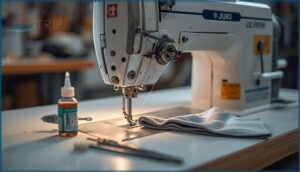
You won’t master this machine by running it hard and hoping for the best. The DDL-8700 needs consistent care to keep delivering those tight, fast stitches year after year.
Here’s what you need to stay on top of to avoid downtime and expensive repairs.
Automatic Lubrication System
Your DDL-8700’s automatic lubrication system is a breakthrough—it delivers oil straight to the hook race and feed dogs without constant manual intervention. This industrial sewing machine uses a built-in oil reservoir with metered delivery, so you’re not stopping every few hours to oil by hand. Just remember that lubricant viscosity matters; stick with manufacturer-approved sewing machine oil to prevent residue buildup.
Keep these maintenance scheduling essentials in mind:
- Refill the reservoir monthly and check for leaks
- Clean nozzles to maintain proper lubrication timing
- Inspect filters to guarantee consistent flow
- Verify system calibration for your fabric weight
Proper upkeep means fewer breakdowns and smoother stitches.
Daily and Monthly Maintenance Checklist
Regularly, you’ll want to stick to a maintenance rhythm that keeps your Heavy Duty industrial sewing machine running smooth. Daily machine cleaning means wiping down the needle bar, removing lint from feed dogs, and checking thread tension for consistent stitches.
Monthly, dive deeper: inspect the belt for cracks, perform a full oil change on all lube points, test stitch quality on scrap fabric, and verify lubricant types match manufacturer specs. This sewing machine maintenance and repair routine prevents breakdowns and extends service life—smart habits backed by solid sewing technology.
Ideal Users and Practical Applications
You don’t buy a machine like the DDL-8700 just because it looks good on paper. You grab it because you’ve got real work to do, and you need a workhorse that won’t quit when the pressure’s on.
Let’s break down who actually benefits from this machine and where it earns its keep.
Professional Tailors and Small Businesses
If you’re running a shop or tailoring gowns solo, the DDL 8700 can drive business growth like few industrial sewing machines can. Its heavy-duty straight-stitch lockstitch reliability shines during high-volume runs, boosting sewing efficiency without compromising stitch consistency. Here’s why pros trust it:
- Fabric selection flexibility: manages mid-weight materials common in couture and alterations
- Production costs stay low: durable build cuts downtime and repair expenses
- Staff training simplified: standard presser feet and straightforward operation speed onboarding
- Sewing technology you can trust: proven performance across small-batch orders and rush jobs
Sewing machine reviews confirm it delivers.
Educational and Home-Based Use
Students and home sewers often wonder if industrial power fits their space—this machine proves it can. Educational resources highlight the DDL 8700’s role in sewing curriculum, where skill development accelerates through consistent straight-stitch practice on beginner projects.
Your home workspace gains professional-grade sewing technology without the learning curve of complex machines. Sewing education and training programs value its reliability, while home sewing projects benefit from speed you control.
Though quilting and crafting demand versatility this single-needle can’t offer, sewing machine reviews confirm it’s ideal for mastering fundamentals before exploring sophisticated techniques.
User Reviews and Value Analysis
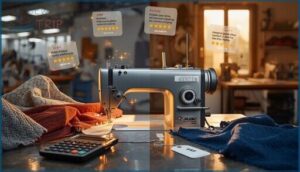
You’ve seen what the DDL-8700 can do on paper, but what about real-world performance? Owners across workshops and home studios have strong opinions on whether this machine delivers on its promises.
Let’s break down the feedback and figure out if the price tag matches the payoff.
Customer Satisfaction and Common Feedback
You’ll find most owners rate their experience sky-high—satisfaction ratings cluster around smooth high-speed sewing and reliable performance on straight seams. Feedback analysis reveals consistent stitch quality as the biggest win, with users praising low vibration during marathon sessions. Some mention tension tweaks on certain fabrics, but that’s standard for heavy-duty sewing machines.
Review trends show the knee lift and quiet operation boost user experience markedly. Industrial sewing machine review forums confirm this model delivers on customer expectations, especially when you stick to regular maintenance.
Price Comparison and Investment Value
Most new units land between $1,200 and $1,600, depending on bundles and accessories—price benchmarking shows you’re investing in industrial construction that delivers solid returns. Total ownership costs stay modest when you factor energy-efficient servo motors and minimal maintenance.
Budget planning for professional sewing solutions should account for 60–70% upfront expense, with routine upkeep running just 2–4% annually. Used heavy-duty sewing machines retain 40–60% value after five years, proving this industrial sewing machine review favorite pays dividends through durability and consistent investment returns.
Frequently Asked Questions (FAQs)
Is the Juki DDL 8700 a reliable sewing machine?
Like a workhorse that never quits, the Juki DDL 8700 delivers serious reliability. Consistent straight stitch quality, all-metal durability factors, and proven industrial sewing performance make it a trusted heavy-duty sewing machine for demanding work.
What is a Juki ddl-8700?
The Juki DDL 8700 is a single-needle industrial sewing machine built for high-speed straight stitching. Its heavy-duty metal frame and direct-drive feed deliver consistent seams at up to 5,500 stitches per minute.
What is the sewing speed of the Juki ddl-8700?
At maximum throttle, you’re looking at 5,500 stitches per minute on straight seams—enough speed to power through production runs while maintaining solid stitch quality on medium-weight fabrics with proper setup.
How fast is a Juki DDL 8700?
This workhorse hits peak operational speed at 5,500 stitches per minute—a performance metric that puts straight stitching into overdrive.
Motor efficiency and stitch rate consistency make it a heavy-duty sewing champion in industrial sewing technology advances.
What is a Juki DDL 8700 Machine Head?
The 8700 machine head is a high-speed straight stitch sewing head built for commercial garment production. Its heavy-duty metal frame and drop-in bobbin system deliver reliable, continuous stitching in demanding industrial applications.
What is the difference between Juki DDL 5550 and 8700?
When you’re weighing motor comparison for straight stitching, the 5550 often runs on clutch power while the 8700 uses servo technology—offering noise reduction, energy savings, and smoother speed variance on industrial construction machines.
Is Juki DDL 8700 a walking foot?
No, the DDL 8700 isn’t a walking foot machine—it uses standard feed dogs for straight stitch sewing.
If you need walking foot capabilities for quilting or heavy-duty layered fabrics, you’ll want compatible foot attachments or explore industrial sewing feet alternatives.
What can you sew with Juki DDL 8700?
You can tackle garment construction, topstitching, and quilting on cotton, linen, and lightweight denim.
It manages straight-stitch projects beautifully but hits textile limits with heavy upholstery or thick leather beyond standard weight.
What is a Juki DDL 8700 used for?
Think of your go-to workhorse for professional straight seams. The DDL 8700 handles industrial straight stitch applications—garment production, upholstery, leather goods—delivering consistent lockstitches on woven fabrics in textile manufacturing environments.
Which is better Jack or Juki?
Your choice hinges on user preferences and cost analysis. Juki delivers proven durability and industrial-grade sewing speed, while Jack offers budget-friendly entry into heavy-duty sewing machines. Both brands advance sewing technology, so match your workload to investment.
Conclusion
Most machines promise speed but crumble under real workload pressure. The Juki DDL-8700 flips that script—it thrives where others fail, delivering 5,500 stitches per minute with bulletproof reliability.
This Juki DDL 8700 review confirms it’s built for professionals who refuse to let equipment dictate their output. You’ll outpace deadlines, not chase them.
If you’re ready to command your production schedule instead of scrambling behind it, this lockstitch machine answers that call.
- https://elsevier.blog/sub-points-outlining-organization/
- https://www.sciencedirect.com/science/article/pii/S0749208123000268
- https://academichelpexpress.blog/2024/08/please-use-the-bulleted-points-and-the-rubric-below-to-guide-your-work-your-pa/
- https://x.com/godofprompt/status/1990526288063324577
- https://www.scribd.com/document/356795007/Research-Methods-Knowledge-Base