This site is supported by our readers. We may earn a commission, at no cost to you, if you purchase through links.
Most beginner sewers burn through two or three cheap machines before they realize what they actually needed from the start was something reliable and mechanical.
The Janome 2212 keeps showing up in that conversation—not because of flashy features, but because it does the fundamentals without drama. It’s a no-frills workhorse built on a metal frame, and that matters more than most people expect when they’re learning.
Twelve built-in stitches, honest dial controls, and a 25-year warranty tell you something about how Janome designed this machine—for the long haul, not the checkout impulse.
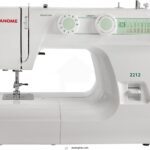
I picked up the Janome 2212 after years of using a beefier machine, and honestly, it felt like a breath of fresh air. The front-loading bobbin makes threading so much easier, no more fumbling with side compartments. I tested it on cotton, knits, and even some light denim, and it handled all of them without skipping a beat. The 12 built-in stitches cover the basics nicely, and the 4-step buttonhole is straightforward once you get the hang of it. It’s lightweight too, so moving it between rooms or to a sewing class is no hassle at all. The reverse stitch does require holding the switch down the whole time, which takes some getting used to. And if you’re hoping for fancy decorative stitches or embroidery, you won’t find them here. But for everyday mending and simple projects, it gets the job done.
Best For: Beginners and casual sewers who want a reliable, portable machine for basic garments, mending, and simple quilting projects.
- Front-loading bobbin makes threading quick and beginner-friendly
- Lightweight design makes it easy to carry between rooms or to classes
- Handles a good range of fabrics, from cotton to light denim, without trouble
- Reverse stitch requires holding the switch the entire time, which gets tiring
- No decorative stitches or embroidery options for those wanting more creative variety
- Not built for heavy-duty fabrics like multiple layers of thick denim
Table Of Contents
Key Takeaways
- The Janome 2212’s metal frame and mechanical build make it genuinely more durable than cheaper plastic machines, and that difference shows up quickly when you’re learning.
- Its 12 stitches, adjustable length and width dials, and numbered threading path keep the learning curve short without cutting corners on quality.
- It handles cotton, linen, and light denim well, but leather, heavy canvas, and delicate chiffon are a hard no—knowing that upfront saves a lot of frustration.
- A 25-year mechanical warranty and a simple maintenance routine (oiling every 8–10 hours, annual servicing) mean this machine can realistically grow with you for years.
Janome 2212 Key Features and Specifications
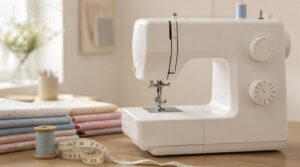
The Janome 2212 keeps things refreshingly simple — no touchscreens, no complicated menus, just solid mechanical features that actually make sense for someone just starting out. Before you decide if it’s the right machine for you, it helps to know exactly what you’re working with. Here’s a closer look at what this machine brings to the table.
At $217, it’s already an easy buy, but if you can wait, checking the best times of year for sewing machine deals might save you even more.
12 Built-in Stitches and Four-Step Buttonhole
The Janome 2212 comes loaded with 12 built-in stitches that cover everything a beginner genuinely needs. You get straight, zigzag, blind-hem, and decorative options, all selectable via a simple numbered dial. Here’s what those stitches actually give you:
- Straight stitch for clean, strong seams on everyday garments
- Zigzag stitch for edge finishing and stretch fabrics
- Blind-hem stitch for invisible hemlines on trousers and skirts
- Decorative stitches for adding personality to borders and appliqué
- Four-step buttonhole for secure, professionally finished button openings
The straight stitch is often highlighted as the strongest machine stitch for excellent durability.
That last one deserves a mention. The four-step buttonhole walks you through each stage manually, so you’re always in control. It’s beginner-friendly without cutting corners on quality.
Adjustable Stitch Length and Width Controls
[ORIGINAL TEXT]
Once you’ve picked your stitch, the next step is dialing in the right size for the job. The 2212 gives you stitch length adjustment from 0.5 mm to 4 mm and stitch width adjustment up to 5 mm — both controlled through two clearly marked dials.
| Setting | Practical Use |
|---|---|
| Short length (0.5–1 mm) | Delicate fabrics like silk or satin |
| Mid length (2–2.5 mm) | Everyday cotton and polyester seams |
| Long length (4 mm) | Basting for easy removal later |
| Narrow width (0–1 mm) | Tight woven seams |
| Wide width (4–5 mm) | Zigzag width optimization on knits |
The stitch selection dial operates both pattern choice and width control for applicable stitches. That dual function keeps things simple without sacrificing flexibility. Longer stitches generally need slightly lower tension — that’s precision tension balancing in practice. Always test on a scrap first for fabric-specific settings that actually hold.
[/ORIGINAL TEXT]
Free Arm and Drop Feed Functionality
Two features on the Janome 2212 quietly expand what a beginner sewing machine can do.
The free arm exposes a slim cylindrical bed extension, making it straightforward to sew tubular sleeves, cuff construction, and narrow hems without fabric bunching.
The drop feed lowers the feed dogs entirely, freeing you for darning fabric repairs or free‑motion quilting techniques in any direction.
Mechanical Design, Weight, and Build Quality
What you’re really buying with the Janome 2212 is a metal skeleton inside, not just a plastic shell. That rigid internal frame keeps the needle bar and bobbin aligned stitch after stitch.
At 13 pounds, it’s light enough to carry to class yet stable enough to stay put. Vibration stays remarkably low, even near its 860 SPM ceiling.
If you’re weighing this against other budget-friendly options, this guide to affordable sewing machine brands worth considering breaks down what else fits a tight student budget.
Included Accessories and Storage Compartment
Every machine ships with more than you might expect. The on-board accessories storage compartment slides open from the front, revealing four snap-on presser feet — multi-purpose, zipper, sliding buttonhole, and blind hem — plus extra bobbins and spare needles.
- Presser foot variety for common tasks
- Organized bobbin storage built in
- Magnetic lid keeps contents secure
- Snap-on changes, no screwdriver needed
- Compatible with additional Janome feet
How Does The Janome 2212 Perform?
[ORIGINAL TEXT]
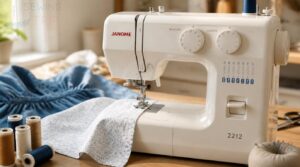
Performance is really where a sewing machine earns its keep, and the Janome 2212 has some clear strengths worth knowing before you commit. It accommodates a solid range of everyday fabrics, but it’s not built for everything. Here’s what you can realistically expect across four key performance areas.
[/ORIGINAL TEXT]
Stitch Quality and Speed at 860 SPM
The Janome 2212 holds its own at 860 SPM. For a mechanical sewing machine at this price, that’s genuinely impressive.
Stitches stay even, tension holds steady, and the motor runs cool without noticeable vibration. You won’t feel the machine fighting itself at full speed.
For sewing speed novices, that kind of high-speed consistency builds real confidence fast.
Handling Lightweight to Medium-Weight Fabrics
Working with lightweight to medium-weight fabrics is where the Janome 2212 genuinely shines. Cotton, linen, satin, and even silk respond well here.
Grab a size 60/8 or 70/10 needle for delicate weaves, and keep tension near mid-range, adjusting gradually. A fabric stabilizer under slippery materials prevents frustrating shifts.
For lightweight denim beginner sewing projects, the stitch quality stays clean and consistent.
Sewing Multiple Layers and Basic Quilting
Quilting on a mechanical sewing machine might surprise you. The Janome 2212 processes basic quilting cotton reasonably well when you set it up right:
- Baste your layers with spray or pins first
- Use a size 90/10 needle for the quilt sandwich
- Set stitch length to 3.0–3.5 mm
- Add a walking foot to feed layers evenly
Fabrics to Avoid With This Machine
Not every fabric is a good match for the 2212. Leather and heavy canvas are a hard no — the machine lacks the motor strength to push through without jamming. Delicate chiffon slips and skips stitches. Pile fabrics like velvet crush under the foot. For knits, use a ballpoint needle or you’ll get puckering.
| Fabric | Issue |
|---|---|
| Leather | Motor strain, skipped holes |
| Chiffon | Feed slippage, fraying |
| Heavy denim | Thread breakage, stalling |
Is The Janome 2212 Easy to Use?
If you’re new to sewing, the last thing you want is a machine that feels like it needs a manual just to turn on. The Janome 2212 keeps things refreshingly simple, with a layout that most beginners can get comfortable with in a single afternoon. Here’s a closer look at the features that make it so easy to pick up and use.
Beginner-Friendly Dials and Setup
Setting up the Janome 2212 feels refreshingly straightforward. Two clearly marked dials handle simple stitch selection and length, so you’re not hunting through digital menus.
The numbered threading path guides you step by step, and a stitch chart on the panel translates numbers into real tasks.
Snap-on presser feet click into place in seconds — no tools, no fuss, no guesswork.
Manual Thread Tension Adjustment
Once the dials are set, manual tension adjustment is your next real skill to build. The numbered tension knob compresses discs to control how tightly thread feeds through — small increments make a big difference.
Here are five tension balancing tips to keep handy:
- Test on scrap fabric before touching your final material
- Loops underneath mean your upper tension is too loose — tighten slightly
- Puckering along seams usually signals tension is too high — back it off
- Bobbin spring calibration affects lower thread resistance; tweak carefully
- Re-thread completely if tension feels off — misaligned paths mimic real tension problems
Numbered Threading Path and Stitch Chart
Threading a sewing machine correctly is half the battle won. The Janome 2212 makes this straightforward with numbered guides printed directly on the machine body, walking you through each step from spool to needle.
Follow the sequence exactly — skipping even one guide can cause thread jams or skipped stitches.
The side-panel stitch chart pairs with those guides, mapping each stitch symbol to the right length and width settings.
Snap-on Presser Feet and Quick Changes
Once you’ve nailed threading, swapping presser feet is the next skill to master. The Janome 2212 uses a snap-on foot system — press down, hear the click, you’re done.
No screwdrivers, no tiny screws. The included zipper foot and blind foot each lock into the low-shank holder in seconds, keeping your momentum going between tasks.
Maintenance, Warranty, and Long-Term Reliability
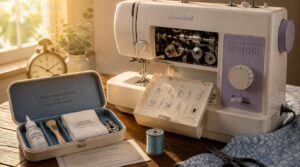
A good sewing machine is only as reliable as the care you give it. The Janome 2212 keeps things simple on that front, which is great news if you’re not into complicated upkeep routines. Here’s what you need to know about keeping it running strong for years to come.
Cleaning and Oiling Schedule
Think of your Janome 2212 like a car — skip the oil changes and it’ll let you down mid-project.
Keep this schedule close:
- Daily lint removal from the bobbin area after each session
- Every 8–10 hours of sewing, oil the presser foot rod and clean the feed dogs
- Monthly, clean the hook race and under the needle plate
- Every 6 months, inspect the bobbin case and moving joints thoroughly
Use only machine-grade oil — one drop per point is plenty. After oiling, turn the handwheel by hand to spread the lubricant evenly. A simple maintenance log tracking dates and tasks keeps your machine running smoothly for years.
Troubleshooting Common Sewing Issues
Even reliable machines hit a snag sometimes. Re-thread with the presser foot up whenever tension feels off — it resets the tension discs instantly. Wrong needle type causes more skipped stitches than most beginners realize, so match your needle to your fabric weight and change your needle after every big project. The table below covers the most common issues at a glance.
| Problem | Likely Cause | Quick Fix |
|---|---|---|
| Skipped stitches | Loose upper tension or wrong needle | Re-thread; swap to correct needle type |
| Puckering fabric | Upper tension too tight | Lower tension; test on scrap fabric |
| Bottom thread loops | Bobbin winding error or wrong insertion | Rewind bobbin; reseat it correctly |
| Fabric not advancing | Feed dogs lowered or foot pressure too light | Engage feed dogs; increase presser foot pressure |
| Thread breaking | Poor thread quality or tension imbalance | Switch thread brand; balance upper and lower tension |
25. Year Limited Warranty Explained
Twenty-five years sounds impressive, but read the fine print. The 25-year limited warranty covers mechanical parts; electrical components get five years, labor just one.
- Sewing machine warranty terms require proof of purchase
- Maintenance proof may be requested for claims
- Excluded wear items: belts, bulbs, needles
- Transferring warranty coverage often needs registration
- Claims go through Janome’s authorized service centers
Professional Servicing Recommendations
Once a year, take your 2212 to a certified technician for a full check-up. They’ll verify tension, inspect the timing belt, and confirm bobbin seating. Certified service preserves your warranty and catches small issues—jams, skipping stitches—before they grow. Keep a simple service log noting dates and parts swapped.
| Service Item | Frequency | Why It Matters |
|---|---|---|
| Timing belt check | 24-36 months | Prevents skipping |
| Oiling | Annual | Smooth operation |
| Tension calibration | Each visit | Even stitches |
Janome 2212 Vs. Other Entry-Level Machines
So how does the 2212 stack up against other machines in its class? It helps to see it next to a close cousin, plus weigh its overall pros and cons. Here’s a closer look at where it shines, where it falls short, and who it’s really meant for.
Janome 2212 Vs. Janome Sewist 721
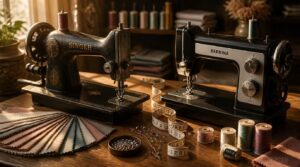
Picture two cousins from the same family, one a bit more old-school.
| Feature | Janome 2212 | Sewist 721 |
|---|---|---|
| Stitches | 12 | 19, plus stretch |
| Threading | Manual | Built-in threader |
| Speed | 860 SPM | 830 SPM |
The 2212 wins on build durability, while the Sewist 721 adds stitch variety and easier tension control for newer sewists.
Strengths and Limitations for Home Sewers
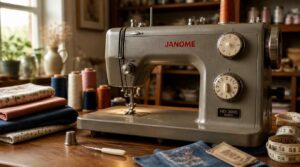
The Janome 2212 has a clear mechanical staying power that cheaper plastic machines simply can’t match. Its metal frame supports consistent daily use without flexing or rattling, and the straightforward dial controls mean fewer things that can break or confuse you.
| Aspect | Strength | Limitation |
|---|---|---|
| Stitch variety | Reliable core 12 stitches | No stretch stitch built-in |
| Speed | 860 SPM, smooth delivery | Slower than computerized models |
| Fabric range | Cotton to light denim | Avoid leather and heavy canvas |
| Threading | Numbered path on machine | No automatic needle threader |
| Long-term use | 25-year mechanical warranty | Annual oiling required |
That said, no automatic threader is a genuine daily annoyance, and manual tension adjustments take practice on tricky fabrics.
Best Buyer Profile for The Janome 2212
Not everyone needs a machine that does everything — you need one that does your things well. The Janome 2212 is built for first-time sewists, students juggling dorm life, and casual hobbyists who want reliable, no-fuss stitching without overspending.
The Janome 2212 is built for beginners, students, and hobbyists who want reliable stitching without the complexity
| Buyer Type | Best Use | Key Benefit |
|---|---|---|
| First-time sewist | Basic garments, repairs | Simple dials, numbered threading |
| Student/class goer | Portable classroom projects | Lightweight, compact build |
| Budget-conscious hobbyist | Hems, zippers, light quilting | Entry-level price, solid warranty |
If that sounds like you, this beginner-friendly sewing machine earns its place.
Frequently Asked Questions (FAQs)
Is the Janome 2212 a good sewing machine?
Short answer: yes, hands down. The Janome 2212 is a sturdy, beginner-friendly mechanical sewing machine with 12 stitches, solid value for money, long-term durability, and great project versatility for an entry-level sewing machine for beginners with an easy learning curve.
Is Janome a good sewing machine?
Yes, Janome has built a global sewing reliability reputation, known for sturdy mechanical sewing machines that last for decades.
The Janome 2212 reflects this entry-level machine value perfectly, giving beginners a beginner-friendly, dependable start without a steep learning curve.
What is Janome 2212 return policy?
Buying blind is the leap every beginner takes. Most retailers offer a 30-day return window. Keep packaging unopened, save your receipt, and report any damage within 24 hours of delivery for a trouble-free refund.
Can a Janome Mod 15 stitch sleeves and cuffs?
Absolutely. The MOD 15’s free arm performs cylinder sewing for sleeves and cuffs, with straight and zigzag stitches managing fabric bulk well. Like the beginner-friendly, entry-level Janome 2212, it’s great for basic garment making and precise cuff hem techniques.
Does a Janome 2212 ship early?
Shipping timelines can make or break your excitement. For this entry-level beginner machine, most retailers process orders within 1–3 business days, with standard delivery usually arriving in 3–7 business days continental US.
What is included in a Janome 2212?
The Janome 2212 comes loaded out of the box. You get four snap-on presser feet, three extra bobbins, spare needles, a screwdriver, seam ripper, and a handy on-board accessories storage compartment.
What is a Janome sewist 721?
The Sewist 721 is another beginner-friendly mechanical sewing machine, offering 19 stitch patterns, automatic needle threading, and a top-loading bobbin. Compared to the Janome 2212, it’s a more modern entry-level option with extra conveniences built right in.
Do I need a soft cover for my Janome?
Think of it like a raincoat for your machine. Yes, a soft cover is worth it. It blocks dust, guards against moisture, and the included vinyl dust cover already gives basic protection between sewing sessions.
Is Brother better than Janome?
Neither brand wins outright — it depends on what you need. Brother offers more features per dollar, while Janome delivers smoother stitches and longer-lasting builds. Your best machine is whichever matches your actual sewing habits.
What thread does Janome recommend?
Like choosing the right fuel for a car, thread choice matters. All-purpose polyester thread works best — start with mid-range tension, pair needle size to thread weight, and store spools upright away from sunlight.
Conclusion
Think of the Janome 2212 as the sturdy foundation every serious beginner needs before they can raise anything truly worth keeping.
It won’t dazzle you with flashy features, but it will teach you to sew with real confidence—on a machine that holds its shape, keeps its tension, and quietly outlasts the learning curve.
If you want something honest, dependably mechanical, and built to grow alongside you, this is exactly where your sewing story starts.