This site is supported by our readers. We may earn a commission, at no cost to you, if you purchase through links.
Screw-tightened hoops have ended more embroidery sessions in frustration than a broken needle ever could—fabric slipping mid-stitch, uneven tension warping your design, your wrist aching after the fifth re-hoop of the day.
Magnetic embroidery hoops solve all of that in one snap.
Strong neodymium magnets grip your fabric with consistent, even pressure across the entire frame, no torque required.
The difference shows up immediately in your finished work—cleaner edges, no hoop burn, and designs that land exactly where you placed them.
Whether you embroider on denim, fleece, or delicate knits, the right magnetic hoop changes everything about how you work.
Table Of Contents
- Key Takeaways
- 8 Best Magnetic Embroidery Hoops
- 1. Sew Tech 4×4 Magnetic Embroidery Hoop
- 2. Sew Tech Five by Seven Magnetic Embroidery Hoop
- 3. Maggiehoop Magnetic Embroidery Hoop
- 4. Sew Tech Magnetic Embroidery Hoop
- 5. DOSTITCH Magnetic Embroidery Hoop
- 6. Sew Tech 6×10 Magnetic Embroidery Hoop
- 7. Sew Tech Five Inch Magnetic Embroidery Hoop
- 8. Brewland Magnetic Embroidery Hoops for Brother
- How Magnetic Embroidery Hoops Work
- Magnetic Hoop Benefits
- Compatibility, Sizes, and Fit
- Buying and Using Magnetic Hoops
- Frequently Asked Questions (FAQs)
- Conclusion
Key Takeaways
- Magnetic embroidery hoops use strong neodymium magnets to snap fabric flat instantly, replacing the screw-tightening method that causes uneven tension, hoop burn, and wrist strain.
- The two-piece frame design distributes clamping pressure evenly across the entire surface, which means cleaner stitch edges and less puckering — even on thick fabrics like denim, fleece, and towels.
- Compatibility isn’t universal, so you need to verify your machine’s bracket style and arm spacing before buying, since fit varies even within the same brand family.
- Strong magnets pose real risks near pacemakers and implanted medical devices, so anyone with such devices should consult a doctor and maintain at least six inches of distance during use.
8 Best Magnetic Embroidery Hoops
Not all magnetic embroidery hoops are built the same, and picking the wrong one can slow you down fast. The good news is there are some standout options worth your attention.
If you’re using a Brother machine, checking out the best embroidery hoops for Brother sewing machines can save you a lot of trial and error.
Here are eight of the best magnetic embroidery hoops to review.
1. Sew Tech 4×4 Magnetic Embroidery Hoop
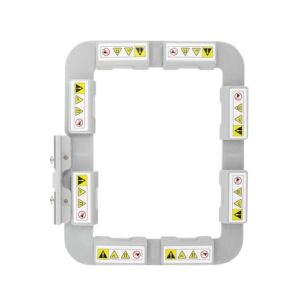
Sew Tech 4×4 Magnetic Embroidery Hoop is built for small, precise work — pockets, cuffs, logos, and anything that needs tight placement.
It uses eight strong magnets in a two-piece metal frame, so fabric snaps flat without screws or fuss.
You can shift individual magnets mid-project instead of re-hooping from scratch. That alone saves real time.
The included grid template helps you nail alignment on every single pass.
It fits a wide range of Brother and Babylock machines right out of the box.
| Best For | Embroiderers who do a lot of small, detailed work — think monograms, logos, pockets, and cuffs — especially on Brother or Babylock machines. |
|---|---|
| Hoop Size | 4″ x 4″ |
| Frame Material | Metal |
| Magnet Count | 8 |
| Grid Template | Yes |
| Machine Compatibility | Brother/Babylock |
| Price | Not specified |
| Additional Features |
|
- Eight strong magnets hold fabric flat and even, which means fewer hoop marks and cleaner stitches.
- You can nudge individual magnets mid-project instead of re-hooping everything from scratch — big time saver.
- The built-in grid template makes it easy to line up designs the same way every time.
- The fit can be a little loose on some Brother models (like the SE700) unless you swap out the mounting brackets.
- You’re limited to 4×4 in. designs — anything bigger needs to be split up or resized.
- Compatibility is wide but not guaranteed for every machine, so it’s worth double-checking before you buy.
2. Sew Tech Five by Seven Magnetic Embroidery Hoop
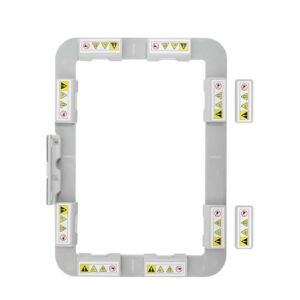
If the 4×4 feels a little snug for your projects, the Five by Seven opens things up nicely. At 5 by 7 inches, you get room for chest logos, sleeve patches, and mid-size designs without fighting the frame.
Ten strong magnets hold fabric flat across the full field, and the metal frame stays true under repeated use.
The included grid template keeps your placement consistent every time. It fits a solid range of Brother and Babylock machines right out of the box.
| Best For | Embroiderers working on mid-size projects like chest logos or sleeve patches who want a faster, lower-effort hooping experience on compatible Brother or Babylock machines. |
|---|---|
| Hoop Size | 5″ x 7″ |
| Frame Material | Metal |
| Magnet Count | 10 |
| Grid Template | Yes |
| Machine Compatibility | Brother/Babylock |
| Price | $59.99 |
| Additional Features |
|
- Ten strong magnets hold fabric flat and firm, even through thicker layers or multiple stabilizers
- Mid-project adjustments are easy — just reposition a magnet instead of re-hooping everything
- Great for anyone with limited hand strength or arthritis, since there’s no heavy clamping involved
- Only comes in 5×7, so bigger projects will need a different hoop
- Some users feel they need extra magnets for full confidence in the hold
- Only works with select Brother and Babylock models, so compatibility is worth double-checking before buying
3. Maggiehoop Magnetic Embroidery Hoop
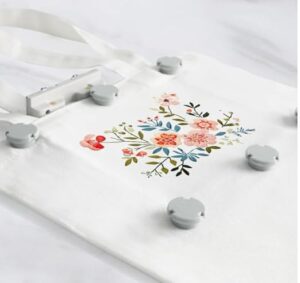
Want more room to work with thicker fabrics? The Maggiehoop takes that challenge seriously. Its two-piece neodymium magnetic frame snaps together fast and holds heavy materials — denim, fleece, jackets — without forcing the hoop into the garment.
That matters when you’re working with bulky seams. Alignment reference points on the frame edges keep your placement repeatable. The quick-release design cuts downtime between pieces.
It fits multiple machine brands through interchangeable brackets, making it a flexible pick for busy embroiderers.
| Best For | Embroiderers who regularly work with bulky or layered fabrics and want to spend less time fussing with hoop setup between projects. |
|---|---|
| Hoop Size | 4″ x 4″ |
| Frame Material | Metal |
| Magnet Count | Not specified |
| Grid Template | No |
| Machine Compatibility | Brother/Babylock |
| Price | $33.59 |
| Additional Features |
|
- Snaps on and off fast — no screwdriver, no fiddling, just a clean magnetic hold
- Applies even pressure across the fabric, so you get cleaner stitches with less puckering
- Works across a solid range of Brother and Baby Lock machines, so it’s not a one-machine investment
- Compatibility isn’t guaranteed by size alone — you’ll need to double-check your machine’s bracket style before buying
- Magnets can weaken over time if they’re exposed to heat, moisture, or rough handling
- Really thick or high-pile fabrics may still need extra backing to get the best stitch results
4. Sew Tech Magnetic Embroidery Hoop
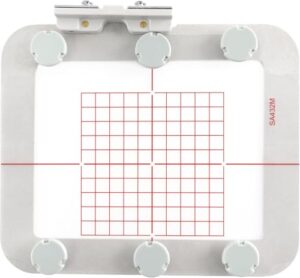
Switching from the Maggiehoop’s heavy-duty focus, the Sew Tech Magnetic Embroidery Hoop keeps things clean and practical for everyday projects. It comes in 4×4, 5×7, and 6×10 sizes, so you can match it to your actual stitch field.
The two-piece magnetic frame snaps shut fast and holds fabric flat without the squeeze that causes hoop burn. It works especially well on hoodies, towels, and denim.
Compatibility is model-specific, so double-check your machine before ordering.
| Best For | Embroiderers working on quilting blocks, pockets, and layered projects who need reliable fabric hold and precise placement within a 4×4 stitch field. |
|---|---|
| Hoop Size | 4″ x 4″ |
| Frame Material | Metal |
| Magnet Count | 6 |
| Grid Template | Yes |
| Machine Compatibility | Brother/Babylock |
| Price | $33.59 |
| Additional Features |
|
- Six strong magnets keep fabric flat and steady, even on thicker materials, so your stitches stay clean and consistent.
- The included grid template makes centering and alignment quick — great for repeating designs across multiple pieces.
- Metal construction means it holds up over time and cleans up easily.
- The fixed 4×4 area is the only size available, so anything bigger won’t fit without splitting your design.
- Fit can be a little loose on some Brother models like the SE700 unless you swap mounting brackets.
- The strong magnets can be rough on delicate fabrics if you’re not careful with placement.
5. DOSTITCH Magnetic Embroidery Hoop
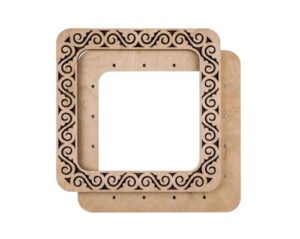
If you’ve ever fumbled with a screw tightener mid-project, the DOSTITCH Magnetic Embroidery Hoop will feel like a revelation. Its two-frame design uses strong opposing magnets to snap fabric flat in one motion.
With your fabric secured so precisely, it’s the perfect time to double-check you’re using the right sewing machine needle for your fabric type—a fresh, well-matched needle pairs beautifully with that kind of clean, taut hold.
No clamps, no tightening — just lower the top frame and you’re ready to stitch. A built-in safety shield protects your fingers from the magnetic pull.
It accommodates multiple fabric thicknesses automatically and allows repeated placements with consistent tension throughout long production runs.
| Best For | Crafters who work with stiff, non-stretch materials like perforated paper, plastic canvas, felt, or thin leather and want a faster, fuss-free hooping experience. |
|---|---|
| Hoop Size | 5.5″ x 5.5″ |
| Frame Material | Plywood |
| Magnet Count | Not specified |
| Grid Template | No |
| Machine Compatibility | Universal/manual |
| Price | $35.17 |
| Additional Features |
|
- Snaps together instantly with no screwing or clamping — just drop the top frame down and stitch
- Keeps perforated paper and plastic canvas flat and wrinkle-free throughout your project
- Doubles as a wall-mountable display frame when you’re done
- Not a great fit for soft fabrics like Aida or linen, which can sag between the magnets
- The strong magnetic hold can be tough to separate — you’ll need to slide the frames apart rather than pull
- At $35.17, it’s a noticeable step up in price from standard plastic or wooden hoops
6. Sew Tech 6×10 Magnetic Embroidery Hoop
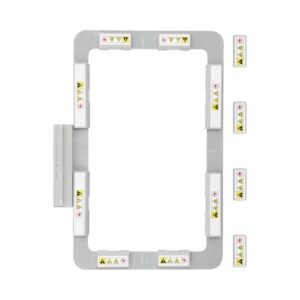
The Sew Tech 6×10 Magnetic Embroidery Hoop gives you a full 6 by 10 inch stitching area — plenty of room for bag panels, quilt blocks, and border designs. Eight high-strength magnets hold your fabric with even pressure across the whole surface.
No tension adjustments needed, even on thicker layers. The metal frame resists warping and cleans up easily.
A built-in grid template helps you center designs fast. It’s a solid pick when you need a bigger field without the fuss.
| Best For | Embroiderers working on larger projects like quilts, bag panels, and continuous borders who want a reliable magnetic hoop that skips the fuss of traditional tensioning. |
|---|---|
| Hoop Size | 6″ x 10″ |
| Frame Material | Metal |
| Magnet Count | 8 |
| Grid Template | Yes |
| Machine Compatibility | Brother/Babylock |
| Price | $59.99 |
| Additional Features |
|
- Eight strong magnets distribute even pressure across the whole surface, so thick or layered fabric stays put without constant readjusting.
- The built-in grid template makes centering and aligning designs quick and accurate — no guesswork needed.
- Metal construction is durable and easy to wipe clean, holding up better than plastic over time.
- Some users have reported loose bolts right out of the box, so you may need to do a quick tighten before your first project.
- The tension screw can be finicky — fabric sometimes springs back, and getting the right hold takes a little practice.
- Strong magnets mean delicate fabrics can be tricky to release without applying a bit of extra force.
7. Sew Tech Five Inch Magnetic Embroidery Hoop
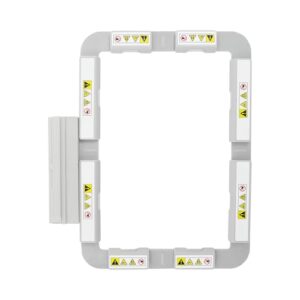
The five-inch magnetic hoop from Sew Tech hits a sweet spot for home embroidery. Its 5 × 7 inch field accommodates larger names, small chest designs, and patches without jumping to a bulky frame.
Eight magnets clamp your fabric flat with even pressure — no forcing thick layers through stiff plastic rings.
A grid template keeps your placement accurate every time.
Metal construction means it’ll last.
At $59.99, it delivers real value for the space it covers.
| Best For | Home embroiderers who work with thicker fabrics, multi-layer projects, or detailed placement work on Brother and Babylock machines. |
|---|---|
| Hoop Size | 5″ x 7″ |
| Frame Material | Metal |
| Magnet Count | 8 |
| Grid Template | Yes |
| Machine Compatibility | Brother/Babylock |
| Price | $59.99 |
| Additional Features |
|
- Eight magnets hold fabric flat with even pressure — no fighting stiff plastic rings, even on thick or layered materials.
- The included grid template takes the guesswork out of centering designs for quilts, pockets, and bag panels.
- Metal build and broad machine compatibility make it a practical, lower-cost alternative to OEM hoops.
- Build quality has some rough edges — loose bolts and stiff adjustment screws are a common complaint.
- Magnets can weaken over time, so you’ll want to check them periodically.
- Only comes in one size (5 × 7 in), so you’ll need a different hoop for anything bigger or smaller.
8. Brewland Magnetic Embroidery Hoops for Brother
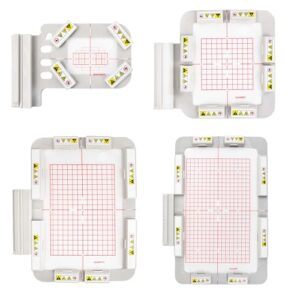
Brewland keeps it simple — and that’s exactly the point.
These magnetic hoops are built specifically for Brother machines, so you don’t have to guess about fit. The two-piece frame snaps together in seconds, holds firm through dense stitching, and releases just as fast when you’re done.
Curved magnets spread pressure evenly, which means less hoop burn on delicate fabrics like satin.
Available in 4×4 and 5×7 sizes, Brewland is a solid pick for home embroiderers who want reliable results without the fuss.
| Best For | Home embroiderers using compatible Brother, Baby Lock, or related machines who want a secure, low-pressure hoop setup for lightweight to medium-weight fabrics and detailed work. |
|---|---|
| Hoop Size | 2.5″, 4″, 5″, 6″ |
| Frame Material | Metal |
| Magnet Count | 24 |
| Grid Template | Yes |
| Machine Compatibility | Brother/Babylock |
| Price | $139.99 |
| Additional Features |
|
- Four hoop sizes (2.5", 4", 5", 6") cover a solid range of projects, from small patches to larger panels
- Magnetic design reduces fabric puckering and hoop marks — great for delicate materials
- Grid templates make centering and alignment quick and repeatable
- Only works with specific Brother and Baby Lock models, so compatibility is a real thing to check before buying
- Heavy or thick fabrics may not get a strong enough hold from the magnets
- Four sizes is a decent spread, but larger project dimensions will need extra accessories
How Magnetic Embroidery Hoops Work
Magnetic hoops swap the old screw-tightening method for something smarter — two magnetized frames that snap together and hold your fabric in place.
Understanding how that works helps you use them with confidence and get cleaner results.
Here’s a closer look at the key mechanics behind the magic.
Magnetic Force and Fabric Stability
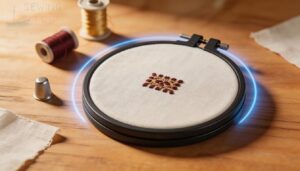
Magnetic force does something screw hoops simply can’t—it spreads pressure evenly across your fabric the moment you close the hoop. That uniform magnetic field addresses edge lift prevention head‑on, so your designs stay crisp from center to corner.
- Tension consistency holds without loosening mid-project
- Magnetic Field Uniformity reduces puckering along dense design edges
- Thermal Stability and Demagnetization Resistance keep grip reliable all sessions
- Even fabric stabilization means fewer hoop burn prevention techniques needed
Using soft magnetic materials enhances the hoop’s magnetic field stability.
Two-piece Frame Design
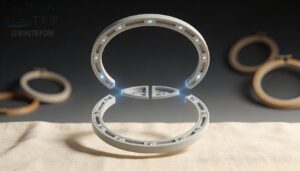
Think of it as a top-and-bottom sandwich.
Two frame halves — built from durable, rigid hoop materials — snap together around your fabric using a precisely engineered magnet configuration. Frame alignment features like molded grooves guarantee both pieces seat perfectly every time.
Magnet placement is fixed around the perimeter, so the magnetic fastening mechanism delivers consistent clamp geometry and even grip across the entire frame.
Quick-release Hooping Process
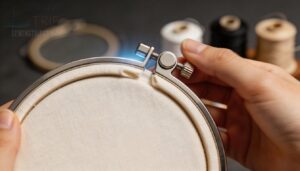
Once both halves snap together, the quick‑release hoop takes over.
A Thumb-Activated Release lets you detach fabric without shifting your grip.
The One-Press Snap re‑engages the magnetic fastening mechanism instantly.
A Foldable Fabric Clamp secures edges while you reposition.
For fine‑tuning thick materials, the Micro‑Adjust Ring opens the gap precisely.
That means your Rapid Rehooping Cycle stays fast, clean, and repeatable every single time.
Even Pressure Across Thick Fabrics
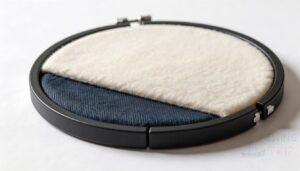
Even quick-release speed means nothing if your thick denim or fleece ends up puckered. That’s where magnetic embroidery hoop technology really earns its place.
Magnet Gap Calibration lets the two pieces self-adjust across different thicknesses. Edge Magnet Alignment keeps corners flat. Stabilizer Weight Distribution smooths out bulky layers.
With Layered Fabric Compression and Pressure Sensor Feedback working together, easy, accurate hooping on thick fabrics isn’t a guess — it’s guaranteed.
Reduced Shifting During Embroidery
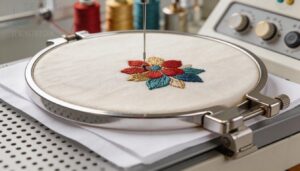
Fabric shift ruins good embroidery fast. That’s why magnetic force matters beyond just grip — it keeps consistent tension as your machine moves.
Proper Placement Marking, Fabric Grain Alignment, and Stabilizer Selection all reduce drift before the first stitch drops.
Pair those with smart Digitizing Techniques and controlled Machine Speed Control, and your design lands exactly where you planned it.
Differences From Screw-tightened Hoops
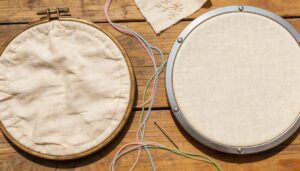
Screw-tightened hoops create uneven tension and leave marks — that’s the old way. magnetic embroidery hoop changes the whole setup.
Magnet Screw Comparison is simple: no twisting, no guessing. Tension adjustment simplicity means you just snap and go.
Magnetic force also improves weight and portability, noise and vibration, and long‑term durability and fatigue resistance.
Quickrelease technology makes easy, accurate hooping real and reduces hoop burn naturally.
Magnetic Hoop Benefits
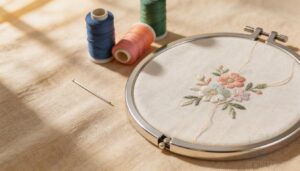
Magnetic hoops don’t just make embroidery easier — they change how you work from the first snap. benefits go beyond speed, touching everything from fabric health to your body’s comfort at the end of a long day.
Here’s what you can expect when you make the switch.
Faster Hooping and Less Downtime
Magnetic hooping technology turns a tedious chore into a quick snap. No more cranking screws or losing rhythm mid-run.
Here’s what speeds things up:
- Quick-change latch design locks and releases fabric in seconds
- Pre-aligned brackets keep every hoop centered without guesswork
- Non-skid magnet surfaces prevent slippage during idle time
- Lightweight frame materials support operator fatigue reduction across long shifts
That’s real production efficiency.
Reduced Hoop Burn and Puckering
Hoop burn is one of those frustrating problems that quietly ruins finished pieces. Magnetic hoops spread clamping force evenly across the frame, which makes tension mapping strategies more effective and reduces compression rings on delicate fabrics.
Magnetic hoops spread clamping force evenly, eliminating the compression rings that quietly ruin finished pieces
Combined with layered stabilizer use and design density optimization, you get cleaner results. The fabric recovery process is faster, too — and a moisture relaxation technique helps fibers bounce back beautifully.
Lower Arm and Wrist Strain
Your arms will thank you after a long embroidery run. The ergonomic grip design keeps your wrist’s neutral posture intact, while the anti-pinch edge reduces hand fatigue between pieces.
These ergonomic solutions for embroidery hooping cut stress on arms and wrists by eliminating the constant screw-tightening grip.
Muscle memory aid kicks in fast — reduced arm fatigue becomes noticeable within your first session.
Better Placement Accuracy
Precise placement starts before the first stitch drops. Grid Alignment Marks and Tacking Guide Centering let you nail Design Center Calibration every single time.
The Notch Lock Positioning system locks your hoop in the same spot repeatedly — accuracy and repeatability built right in. Stabilizer Edge Contact keeps fabric flat, while the magnetic hoop integrated ruler feature makes hoop alignment genuinely smooth with magnetic hoop technology for embroidery.
Easier Hooping for Denim, Fleece, and Towels
Thick garments don’t have to feel like a wrestling match. Denim Stabilizer Selection gets easier when your Magnetic Embroidery Hoop adjusts for uneven seams without cranking down a screw.
Fleece Water-Soluble Topping stays put with gentle fabric tension control, and Towel Loop Prevention improves when even clamping stops shifting. Bulk Fabric Alignment, Smooth Pocket Positioning, and hard-to-hoop areas all get simpler — less hoop burn, less arm strain.
Improved Workflow for Commercial Embroidery
In a busy shop, every second counts. Magnetic hoops cut alignment time by up to 60 percent, making commercial embroidery workflow improvements feel immediate.
Features like Multi-Head Sync and Automated Design Loading keep production moving. Real-time Tension Monitoring and Integrated Stitch Preview reduce errors before they cost you.
Data-driven Production Scheduling becomes easier when your industrial embroidery accessories actually work as fast as you do.
Compatibility, Sizes, and Fit
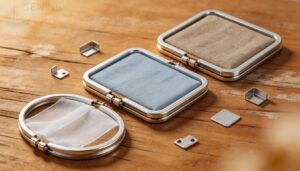
Getting the right magnetic hoop starts with knowing what works with your machine. Brands, sizes, and bracket fit all play a role in whether a hoop performs the way it should.
what you need to know before choosing yours.
Supported Embroidery Machine Brands
Magnetic embroidery hoop compatibility across brands is broader than most people expect. Cross-brand support covers Brother, Tajima, Janome, Bernina, Baby Lock, Melco, Ricoma, and over 200 others.
Brand adapters and OEM bracket standards make machine mounting straightforward on most setups. Whether you’re running a Brother at home or a multi-head industrial system, there’s likely a compatible option waiting for you.
Commercial and Industrial Machine Compatibility
Running a commercial or industrial machine adds one more layer to magnetic embroidery hoop compatibility across brands — getting the bracket right. Model-specific bracket kits are built for platforms like Barudan, SWF, and Brother PR.
Industrial fit calibration means checking arm spacing, field size constraints, and magnetic clearance checks before your first stitch. A bracket compatibility matrix helps you match your exact machine model, not just the brand.
Matching Hoop Size to Embroidery Field
Once you’ve sorted bracket fit, hoop size selection becomes your next decision. Measure your design area first — a 4.5×4.5-inch motif needs a 5×7 hoop, not a 4×4.
Edge clearance guidelines call for at least ⅛ inch between your design and the inner frame. Factor in stabilizer space allocation and fabric thickness considerations too.
The magnetic hoop integrated ruler feature makes this sizing process straightforward.
Choosing The Right Bracket and Arm Spacing
Bracket Material Choice matters more than most people expect. Aluminum arms resist bending and keep things lightweight — good news for your stress on arms and wrists during long runs.
Spacing Optimization Guidelines suggest 1.5 to 3 inches between bracket centers for small hoops, wider for thick fabrics. Nail your Alignment Tolerance Settings and Load Distribution Strategy, and your magnetic hoop attachment holds steady through every stitch.
Small Hoops for Logos and Detail Work
Small logo work is where a well-chosen hoop pays off fast. Logo Alignment gets much tighter when you use a 5.1 × 5.1 (51×51 Magnetic Hoop) or 6×8 Magnetic Hoop — both focus pressure on a compact sewing field.
Here’s what makes them work:
- Stabilizer Efficiency — smaller frames waste less stabilizer per piece
- Thread Tension Control — even magnetic clamping reduces puckering on fine detail runs
- Design Scaling Tips — size your artwork to the actual sewing field, not the hoop label
Your Fabric Sensitivity Guide matters here too — delicate knits stay safer with focused magnetic pressure than aggressive screw tightening. Magnetic embroidery hoop benefits really shine on repeat logo production.
Large Hoops for Jackets, Blankets, and Bulky Items
Big projects need big hoops. For jacket back coverage, a 77×125 magnetic hoop manages shoulder seams without slipping.
Blanket edge compression stays controlled with heavy-duty magnet calibration across dense layers.
The 39×128 magnetic hoop works great for long border designs. Even the 51×51 magnetic hoop addresses bulky fabric stabilization on smaller panels.
These industrial embroidery accessories and frame adjustment strategies make hooping solutions for thick fabrics genuinely easy.
Buying and Using Magnetic Hoops
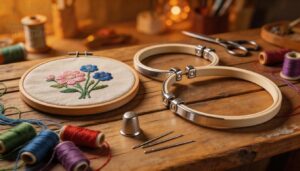
Picking the right magnetic hoop takes a little know-how — but once you understand what to look for, the decision gets a lot easier.
From magnet strength to safe handling, a few key factors separate a smart buy from a frustrating one.
Here’s what you need to know before you hoop your first stitch.
What to Check Before Buying
Not all magnetic hoops are created equal.
Before you buy, compare prices across sellers and read user reviews carefully. Check brand reputation and confirm compatibility with your machine. Look into shipping duration and always verify the return policy before checkout.
Strong magnetic holding power and durability matter most for thick garments.
Cost-effective solutions exist — but only when you shop smart.
Build Quality and Magnet Strength
The hoop you pick is only as good as what it’s made of.
- Magnet Grade Selection — N50 beats N42 for grip on thick layers
- Reinforced Plastic Body — resists cracking through heavy daily use
- Hybrid Steel Reinforcement — adds rigidity for even magnetic frame technology for fabric tension
- Surface Finish Quality — smooth edges prevent snagging delicate fabrics
- Durability and Wear — dry storage protects magnets long-term
Fabric Positioning and Stabilizer Setup
Good positioning starts before the needle moves. Align fabric grain with your center reference mark to keep stitches true.
Use temporary spray on your stabilizer so nothing shifts during hooping. Smooth out wrinkles with a finger glide along the hoop edge.
Stabilizer selection matters too — match weight to fabric type for clean tension and accurate results every time.
Hooping Thick or Hard-to-reach Areas
Thick denim, bulky jackets, and deep sleeves are the hard-to-hoop areas where magnetic embroidery hoop technology earns its keep. Use arm length optimization to extend your reach into tight spots.
Edge magnet alignment keeps curved edge hooping clean and tension even. For dense layers, magnet saturation management prevents air gaps. Easy hooping for thick garments means less bulk fabric tension — and real relief from arm strain.
Maintenance and Dry Storage Practices
Once your hoops are doing their job, keeping them ready is simple. Store them in a cool, dry space — ideally between 50°F and 70°F — with good airflow for proper Temperature Control and Humidity Management.
Follow assembly and storage guidelines for hoops: keep original Packaging Integrity intact, rotate stock using first-in-first-out, and use Shelf Organization that keeps frames accessible and protected.
Safety Precautions Around Strong Magnets
Strong magnets deserve real respect.
Keep them away from pacemakers, insulin pumps, and hearing aids — Medical Device Proximity is a genuine concern.
Wear gloves to cut hand fatigue from pinch risks, and post Magnetic Field Signage where you work.
Use Storage Containers with nonmagnetic spacers, and always follow safe Handling Large Magnets techniques.
Personal Protective Equipment isn’t optional here.
Frequently Asked Questions (FAQs)
Do magnetic embroidery hoops work?
Yes, they do.
Real world testing shows stitch consistency improves, hoop burn drops, and arm strain decreases.
User satisfaction is high across brands, with magnetic hoop strength and holding power delivering reliable results every time.
Do you use stabilizer with magnetic hoops?
You still need stabilizer with a magnetic hoop. The magnets hold your fabric, but the stabilizer reinforces your stitches. Match your stabilizer type — cut-away, tear-away, or water-soluble — to your fabric.
What is Magna Hoop?
Magna Hoop is a magnetic hooping system that secures fabric using strong magnets instead of screws. It snaps onto your fabric quickly, holds it flat, and cuts setup time considerably.
How do you store magnetic hoops?
Keep hoops in protective cases with impact padding, away from moisture. A solid labeling system saves time.
Follow assembly and storage guidelines, store in a dry climate, and use a hooping station for organization.
Are magnetic hoops compatible with commercial embroidery machines?
Most commercial embroidery machines accept magnetic hoops, but compatibility depends on your exact model. Arm mount alignment, hoop field clearance, and adapter availability all matter before you buy.
Will magnetic hoops affect my pacemaker or medical device?
Yes, strong magnets can affect pacemakers and ICDs. Follow safe distance guidelines — keep hoops at least 6 inches from your implant site. If you’re pacemaker-dependent, consult your cardiologist before regular use.
Do I need to own a HoopMaster to use magnetic hoops?
HoopMaster is optional. Standalone hooping works fine on most machines without it.
Third-party fixtures handle setup simplicity well. HoopMaster just adds integration for precise placement when you need that extra accuracy.
What materials are magnetic embroidery hoops made from?
Most frames use reinforced plastic paired with rare-earth magnets in corrosion-resistant steel metal magnet housings. A smooth molded finish protects delicate fabrics.
This durable magnetic material combination delivers reliable magnetic clasp technology and consistent holding power.
Can magnetic hoops be used for thick layered fabrics?
Thick layered fabrics work fine, but you’ll need smart Stabilizer Strategies and respect Layer Thickness Limits.
Always run a Test Sample Procedure first to confirm fabric tension holds before committing to your full design.
Are magnetic hoops safe for delicate or sheer materials?
Magnetic hoops are gentle enough for delicate fabrics. Even clamping pressure protects sheer layers, and non-marring magnet surfaces prevent glossy marks. Always pre-test on a scrap first.
Conclusion
You might think magnetic embroidery hoops are just a luxury, but they’re actually a breakthrough for anyone serious about their craft. With a magnetic embroidery hoop, you’ll save time, reduce frustration, and achieve professional-looking results.
Say goodbye to tedious re-hooping and hello to smooth creativity. Whether you’re a hobbyist or pro, these hoops will transform your workflow.
Make the switch and discover a more efficient, enjoyable embroidery experience that yields stunning designs every time.
- https://www.machineembroiderygeek.com/what-is-a-magnetic-hoop-for-an-embroidery-machine/
- https://www.hooptalent.com/blogs/news/magnetic-embroidery-hoops-ultimate-guide-to-benefits-usage-and-top-choices
- https://www.bernina.com/en-US/Accessories-US/Embroidery-Accessories/Embroidery-Hoops-and-Adapters/Medium-Magnetic-Embroidery-Hoop
- https://www.magnetichoop.com/blogs/news/complete-guide-to-bernina-hoop-sizes-find-the-right-fit-for-your-machine
- https://www.sewingmachinefun.com/magnetic-embroidery-hoops/