This site is supported by our readers. We may earn a commission, at no cost to you, if you purchase through links.
single embroidered logo can raise a customer’s perceived value of a shirt by up to 84%—not because embroidery is flashier than a screen print, but because it signals permanence. Thread woven into fabric doesn’t crack, peel, or fade after a dozen washes.
That staying power is exactly why sports teams, restaurants, and small brands keep coming back to it.
But custom embroidery on clothing rewards preparation: the right fabric, a well-digitized design, and a few setup decisions that happen long before the needle moves.
Get those right, and the results speak for themselves.
Table Of Contents
Key Takeaways
- Fabric choice is the foundation of great embroidery—midweight, stable materials like cotton and denim hold stitches cleanly, while stretchy or loosely woven fabrics need extra stabilizer support to prevent puckering.
- A well-digitized design with simple shapes, minimal colors, and properly sized text is what separates sharp, professional results from blurry, distorted ones.
- Thread type and backing go hand in hand—polyester thread lasts through heavy washing, and cut-away stabilizer is your best friend on knits, while tear-away works fine on woven fabrics.
- Cold-water washing, air drying flat, and ironing only from the reverse side are the three habits that keep embroidered clothing looking sharp wash after wash.
Choose Clothing for Embroidery
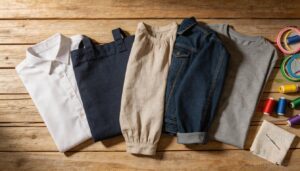
Not every garment takes embroidery the same way, and picking the right one makes a real difference in how your finished design looks. The fabric you start with shapes everything — stitch quality, durability, even how sharp your logo appears.
Fabrics that hold their shape under a needle tend to deliver cleaner results, which is why reviewing machine embroidery fabric choices before you start can save you a lot of frustration.
Here’s what you need to know before you grab a shirt and get started.
Best Garments for Custom Embroidery
Not every garment manages embroidery the same way. Your best starting points are stable, structured pieces that hold stitches without distorting:
- Polos and dress shirts — tightly woven surfaces deliver crisp, clean results
- Hoodies, t-shirts, and jackets — great for bold logos and layered designs
- Technical workwear and structured blazers — reinforced seams handle high stitch counts beautifully
Avoid luxury silk, recycled fabrics with loose weaves, or heavyweight canvas until you’re confident in your setup.
Cotton, Denim, Fleece, and Performance Fabrics
Once you’ve picked your garment style, fabric type becomes your next decision.
Cotton is forgiving and easy to stitch, making it a solid starting point. Denim’s tight weave manages dense stitching well, thanks to its selvedge edge structure. Fleece offers thermal insulation, but needs a stabilizer underneath.
Performance fabrics bring fiber stretch and moisture wicking, though thread color matching and material compatibility require extra attention for strong embroidery quality control.
How Fabric Weight Affects Stitch Quality
Fabric weight quietly controls everything about your final result. Heavier fabrics offer better stitch density tolerance, so dense logos land clean and sharp. Lighter ones compress under the needle, widening stitch gaps. Midweight fabrics hit the sweet spot for most designs.
Fabric weight quietly controls everything — heavier materials anchor dense logos cleanly, while lighter ones let stitch gaps widen under the needle
- Material for the base shapes stitch count limits
- Fabric compression effects cause uneven thread spacing on thin garments
- Stabilizer overlap protects edge stitching on heavy cotton or denim
- Needle size matching prevents skipped stitches across different weights
Nail fabric selection first — everything else follows.
Stretchy Fabrics and Puckering Risks
Stretchy fabrics are where things get tricky. When the material for the base has high elastane content, the embroidery process fights the fabric’s natural pull — leading to puckering prevention becoming your top priority.
Floating stabilizer keeps everything flat, while proper needle size (try a 75/11 ballpoint) and balanced thread tension let the fabric relax without distorting your design.
Fabric pre-stretch before hooping? Worth every second.
Matching Apparel Style to The Design
Think of your garment and design as a team — they need to complement each other.
Bold graphic logos shine on structured polos or denim, where Stitch Density Balance stays controlled. Delicate script works better on smooth cotton than textured fleece.
Fabric Texture Pairing, Color Contrast Alignment, and Seasonal Style Coordination all shape how your finished piece looks — so let the design guide your apparel selection, not the other way around.
Create an Embroidery-Ready Design
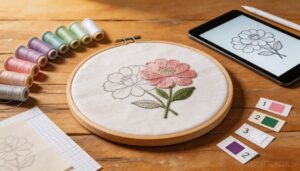
A great embroidery result starts long before the machine ever runs — it starts with a well-prepared design. Getting your artwork ready for stitching takes a little planning, but it’s easier than you might think.
Here’s what to focus on before you send anything to production.
Simple Artwork That Stitches Cleanly
Less is more for embroidery design.
Clean outline stitches, minimal line width, and single color silhouettes translate beautifully through the digitization and embroidery design process.
Pairing clean silhouette designs with high-quality machine embroidery thread keeps those crisp outlines intact from digital file to finished stitch.
Avoid dense textures — they cause puckering on knit fabrics.
Simple shape sizing with basic outline stitches consistently at 12–14 stitches per millimeter, giving you perfect embroidery and precise color thread matching every time.
Logo Sizing for Shirts, Hoodies, and Jackets
Getting logo sizing right is the difference between sharp branding and a design that looks off.
For custom shirt embroidery services, left chest logos work best at 3–4 inches wide. Hoodies call for 10–12 inches up front. Jackets sit comfortably between 8–12 inches.
Always apply fabric stretch adjustments on performance wear, scaling down 5–10 percent.
Proportional widths and a solid height-to-width ratio keep your embroidery design and digitization process visually balanced.
Following the guidelines helps you maintain visual balance across all placements.
Choosing Embroidery-friendly Fonts
Font choice can make or break your custom embroidery. The wrong pick turns sharp lettering into a blurry mess once it’s stitched out.
Here’s what to prioritize in your embroidery design and digitization process:
- Stroke Width – Keep strokes at least 2.0 points thick to prevent thread blurring.
- Letter Spacing – Moderate spacing stops letters from merging on curved surfaces.
- Serif vs Sans – Sans-serif fonts stitch cleaner and more consistently.
- Glyph Simplicity – Simple curves improve digitizing compatibility and reduce thread breaks.
- The 14 Best Fonts for Embroidery – Stick to proven options when mapping embroidery fonts and imprint areas within your design and customization workflow for embroidery.
Color Planning for Multi-color Designs
Color is where multicolor designs either sing or fall flat. Stick to a three to five thread colors — palette limiting keeps stitching clean and separation sharp.
Use a thread color ladder, building light to dark, so each shade reads clearly. Match thread to fabric tone, because dark fabrics shift hues. Good stitch color sequencing and smart contrast ratio guidelines make expert color matching look smooth.
Digitizing Artwork for Embroidery Machines
Digitizing is the bridge between your artwork and the embroidery machine — it converts your design into stitch-by-stitch instructions that the machine actually understands.
Good design digitizing starts with Vector Path Cleanup, so edges stitch crisply. Then comes Underlay Stitch Planning to stabilize fabric, Thread Color Mapping to sequence colors efficiently, and Stitch Order Optimization to reduce thread changes.
Always export using the correct File Format Conversion for your machine.
Common Design Mistakes to Avoid
Even with solid design digitizing behind you, small missteps can throw off your logo embroidery. Watch for these four pitfalls:
- Too Many Colors – extra hues spike stitch density and risk misalignment.
- Small Text Legibility – anything under 3/16" blurs into noise.
- Complex Gradient Simplification – gradients must become solid blocks; machines can’t blend.
- High Stitch Density – over-packed areas stiffen fabric and distort your design proof process.
Pick Thread, Backing, and Placement
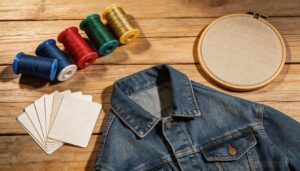
Once your design is ready, the next step is making smart choices about thread, backing, and where the design actually lives on the garment. Each decision shapes how the final piece looks, holds up, and feels.
Here’s what you need to know before you stitch a single thread.
Polyester, Rayon, Cotton, and Metallic Thread Options
Thread choice shapes everything — the sheen, the durability, how well colors hold after twenty washes.
| Thread Type | Best For |
|---|---|
| Polyester | High-volume, multicolor stitching |
| Rayon | Decorative, low-wash pieces |
| Cotton | Natural fabrics, matte finish |
| Metallic | Accent threadwork on fabric |
Polyester wins on thread colorfastness and stitch durability, handling repeated washing without fading. Rayon looks gorgeous but needs gentle care. Metallic adds drama — just expect higher thread cost and stabilizer compatibility planning upfront.
When to Use Cut-away or Tear-away Stabilizer
Backing choice matters just as much as thread. Fabric Stabilizer Matching starts with one question: does your fabric stretch? For knits and athletic wear, cut-away stabilizer is your answer — it stays embedded, preventing distortion through every wash. Tear-away works better on woven fabrics like twill or denim.
- Cut-away: knits, lycra, baby garments
- Tear-away: woven cottons, cap embroidery
- Multi-layer Stabilizer Use: complex, dense designs
- Curved Surface Stabilizing: tear-away for flatter cap finishes
Satin Stitch, Fill Stitch, and Appliqué Basics
Once stabilizer is sorted, stitch type becomes your next call.
Satin stitch delivers Satin Edge Crispness for borders and lettering — thread lays parallel, tight, and clean. Fill Stitch Overlays cover wider areas through Underlay Stabilization and Stitch Path Planning, keeping tension balanced.
Layered Appliqué Effects add real dimension.
Smart digitization and multicolor stitching technology tie the whole embroidery process together beautifully.
Left Chest, Sleeve, Back, and Hat Placement
Placement makes or breaks the final look.
For Chest Alignment on custom embroidered shirts, position your logo on the left chest about 2–3 inches below the collarbone. Sleeve Cap Position starts 0.5–1 inch below the seam. Back Center Height sits 3–4 inches below the neckline.
Custom embroidered hats need Hat Front Placement 0.75–1.25 inches above the bill.
Keep Placement Tolerance within 0.25 inches throughout.
Hoop Selection and Fabric Support
Getting the hoop right sets the tone for everything else in your embroidery workflow. Your material compatibility and quality control start here.
- Hoop Material Choice — Steel hoops stay flat; aluminum reduces fatigue during long runs.
- Stabilizer Types — Cut-away stabilizer holds dense fills; tear-away suits lighter fabrics.
- Basting Techniques — Basting knits keep them taut without leaving pressure marks.
Tension adjustment seals the deal.
Embroider Clothing Step by Step
Now comes the part where everything clicks into place.
Walking through each step — from hooping your fabric to trimming the last thread — keeps you in control of the result.
Here’s exactly how the process works, start to finish.
Prepping and Hooping The Garment Correctly
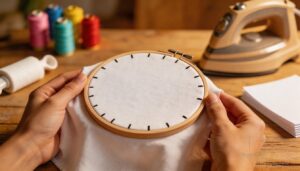
Think of hooping like framing a painting — get it crooked, and everything’s off.
Start with lint removal techniques: a quick roll removes fibers that shift under stitching. Press out wrinkles, then run a stabilizer pretest on a scrap to confirm material compatibility and quality control.
Use hoop alignment marks for consistent placement, and keep fabric tension balance relaxed to prevent edge distortion.
Loading The Design and Thread Colors
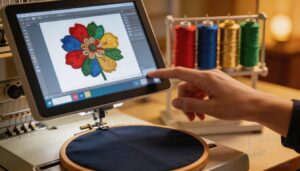
Loading your design is where the vision finally meets the machine. Pull up your digitized file in a compatible format — .DST is the industry standard — and use the design studio interface to confirm placement and thread color selection before a single stitch drops.
- File Format Prep: Verify your file is stitch-ready with correct density settings
- Thread Color Mapping: Match each color zone to physical thread spools precisely
- Design Alignment Checks: Use the digital design tools to center and level your mockup
- Color Contrast Testing: Preview your design against the garment color to catch visibility issues early
Running a Sample Stitch-out First
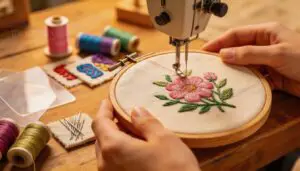
Before you commit that design to your best jacket, run a sample stitch-out first — it’s your quality assurance in embroidery, plain and simple.
Start with Test Fabric Prep on scrap material, verify your Stitch Density Check, and confirm Color Order Verification, so nothing surprises you mid-run.
A quick Stabilizer Evaluation and Needle Tension Test here keep your production workflow smooth and your turnaround time on track.
Adjusting Tension and Stitch Settings
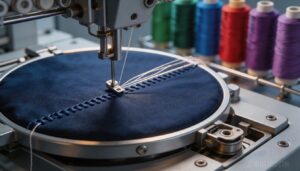
Tension is the invisible hand behind perfect embroidery — get it wrong, and even a great design falls apart.
On Tajima machines, small adjustments make a real difference:
- Needle Tension Calibration prevents loose stitches on dense fabrics
- Bobbin Tension Adjustment stops underthread showing through on dark garments
- Stabilizer Tension Balance keeps knits and wovens pucker-free
- Stitch Density Optimization ensures solid, gap-free coverage
Thread Path Alignment keeps everything running smoothly at speed.
Finishing, Trimming, and Backing Cleanup
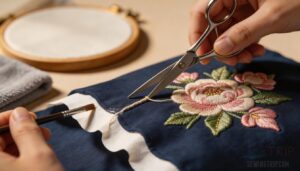
Once tension is dialed in, finishing is where exquisite embroidery really shows.
Peel the backing at the right moment — backing removal timing matters more than most people expect.
Trim yarn tails close without nicking fibers, apply edge sealant application along raw edges, and use microfiber dust removal to clear any fuzz.
Good finishing, clean edges, and stitch jump prevention practices complete your quality assurance process beautifully.
Hand Embroidery Vs Machine Embroidery
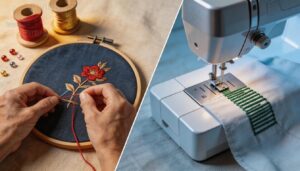
Clean finishing sets the stage for a bigger choice: do you pick up a needle yourself, or let a machine do the work?
- Speed Comparison — machines hit 1,000 stitches per minute; hand work averages 1–4k per hour
- Texture Differences — hand stitching adds artisanal character; machine gives smooth, uniform coverage
- Cost Efficiency — machines win on bulk orders
- Design Flexibility — hand embroidery art incorporates beads and freeform stitching techniques
- Durability Factors — machine hooping keeps custom embroidered clothing stable wash after wash
When to Use a Custom Embroidery Service
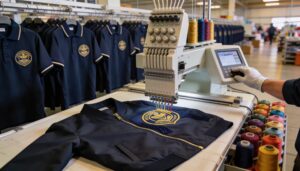
Sometimes, doing it yourself just isn’t the right call.
If you’re managing bulk order consistency for a team or corporate event, a custom embroidery service manages branding durability and complex logo digitizing without the guesswork. Specialized equipment needs — think structured caps or thick jackets — are covered.
You also get turnaround time reliability, rush orders included, and cost-effective embroidery solutions built right into the pricing.
Care for Embroidered Clothing
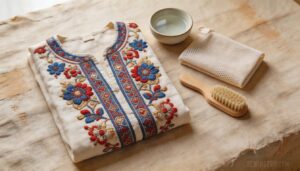
You put real effort into that embroidery — the last thing you want is to ruin it in the wash.
Taking care of embroidered clothing isn’t complicated, but a few simple habits make a big difference in how long it stays sharp.
Here’s what you need to know to keep your pieces looking their best.
Washing Embroidered Garments Without Damage
Your embroidery deserves better than a rough spin cycle. Always use a Cold Water Wash — around 30°C — to protect thread colors and prevent puckering.
Drop items into a Mesh Laundry Bag, choose Gentle Cycle Settings, and stick with a Mild Detergent Choice, free of bleach or fabric softener. Turn garments inside out first.
After washing, do a quick Post-Wash Inspection for any loose threads.
Drying Methods That Protect Stitching
Once the wash cycle ends, how you dry your piece matters just as much as how you clean it. Skip the dryer entirely when you can — Flat Drying or Airflow Drying keep your custom embroidered apparel looking sharp.
- Pat Drying with a towel removes excess moisture without stretching threads
- Hang Drying away from sunlight prevents color fade in your embroidery material
- Low-Heat Tumble is a last resort — high heat warps fabric quality and weakens high-quality stitching
Ironing Embroidered Areas Safely
When it’s time to press your custom embroidered clothing, a little caution goes a long way. Always turn the garment inside out and use the Backside Pressing Technique — it shields your high-quality stitching from direct heat. A Press Cloth Usage tip: lay a cotton cloth over any exposed area.
| Step | Why It Matters |
|---|---|
| Set iron to 150–170°C | Protects embroidery material from scorching |
| Turn off steam | Steam Avoidance Tips prevent thread moisture damage |
| Use a press cloth | Guards perfect embroidery from direct contact |
| Support with stabilizer | Stabilizer Support keeps fabric quality intact |
Preventing Fading, Fraying, and Distortion
Keeping your spotless embroidery looking sharp comes down to a few smart habits. Pre-wash fabric before stitching to prevent shrinkage that distorts designs later.
Polyester thread’s premium thread abrasion resistance outlasts rayon after dozens of washes — a real edge for quality assurance in custom apparel.
Proper stabilizer weight and tight satin stitch density lock threads in place, protecting your high-quality embroidery craftsmanship for the long haul.
Storing Custom Embroidered Clothing Properly
Good storage is honestly where most people drop the ball — and it quietly undoes all that spotless embroidery work you put in.
Keep things simple with these fundamentals:
- Store garments between 60–75°F with 40–50% humidity for Temperature Control and Humidity Management
- Use breathable cotton bags for Protective Packaging — never plastic
- Apply smart Folding Techniques: fold along seams, never over embroidery
- Track pieces with basic Inventory Tracking labels noting fabric type and wash date
Sustainable fashion starts with caring for what you already own.
Extending The Life of Branded Apparel
Branded apparel works hardest when you treat it like an investment. Pre-shrink fabrics before stitching to lock in dimensions, and use quality interlining techniques on heavier pieces so embroidery sits firm, not sunken.
After each wash cycle, a quick post-embroidery inspection catches loose threads early. That’s how high-quality stitching stays spotless — and how branding through custom embroidered clothing keeps representing you at its best.
Frequently Asked Questions (FAQs)
How can I choose the embroidery technique?
Your fabric calls the shot.
Match stitch density and design complexity to what the cloth can hold — then let thread sheen, color contrast, and budget constraints guide your final technique choice.
What’s digitization, and do I have to pay for it?
Digitization turns your artwork into a stitch-ready file that an embroidery machine can read.
Many services include it for free, folding it into the product price so you’re not hit with surprise fees at checkout.
Do I get discounts for bulk orders?
Yes — the more you order, the more you save. Most suppliers use tiered pricing, so quantity discounts kick in automatically as your order grows, with no complicated negotiations required.
How long will it take to receive my custom embroidery order?
Most orders ship within 7–10 business days after proof approval, though production lead time, stock availability, and shipping options all play a role. Rush orders can cut that down to 1–2 days.
What custom embroidery products can I design?
Think of it as a blank canvas — you can design custom embroidered t‑shirts, hoodies, Pet Portrait Sweatshirts, Car Logo Hoodies, Baby Bodysuits, Corporate Logo Jackets, Sports Team Caps, Richardson Adjustable Snapback Trucker Cap, Custom Embroidered Baby Bodysuit Onesie, and Custom Pet Portrait Embroidered Sweatshirt.
Can I get product samples?
Absolutely — most shops offer samples before you commit.
Expect a small fee, digital mockups within 24 hours, and turnaround times of 3–10 days, so you can evaluate stitch quality and fabric options confidently.
How do I care for embroidered clothing?
Care starts with cold water, a gentle cycle, and turning the garment inside out.
Air dry flat, away from UV exposure, and iron only from the reverse side using low heat.
Can embroidery be removed or altered later?
Yes, embroidery can be removed using a seam ripper, though fabric damage risks are real. Delicate fabrics especially benefit from professional alteration services to avoid permanent distortion or visible holes.
Whats the difference between embroidery and screen printing?
Embroidery weaves thread we fabric, creating raised, textured designs built to last. Screen printing lays ink flat on the surface.
For durability, embroidery wins. For bold color fidelity across large areas, printing leads.
How much does custom embroidery typically cost?
Costs vary by garment, stitch count pricing, and complexity. A basic hat runs $6–$12, while hoodies reach $20–$
Flat-rate pricing and bulk order discounts make professional-quality embroidery more accessible than most people expect.
Conclusion
What makes custom embroidery on clothing truly special? It’s the perfect blend of artistry and durability.
By mastering the techniques outlined in this guide, you’ll discover the secrets to creating stunning, long-lasting designs that enhance your brand or personal style.
With custom embroidery on clothing, you can achieve professional-looking results that withstand the test of time.
Your embroidered garments will be treasured for years to come, a proof of your attention to detail and craftsmanship.
- https://www.linkedin.com/pulse/embroidery-market-report-opportunities-growth-o29hf
- https://www.cognitivemarketresearch.com/embroidery-market-report
- https://www.ibisworld.com/united-states/industry/commercial-embroidery-services/5325/
- https://www.maggieframes.com/blogs/embroidery-blogs/custom-apparel-market-analysis-growth-drivers-trends-and-strategic-opportunities
- https://finance.yahoo.com/news/custom-apparel-market-grow-usd-030100795.html