This site is supported by our readers. We may earn a commission, at no cost to you, if you purchase through links.
Your regular sewing machine creates clean, straight seams—but those raw fabric edges still fray, unravel, and look unfinished. That’s where an overlock sewing machine transforms your work, trimming and encasing edges in one smooth pass while you sew.
Whether you’re tackling stretchy knits that refuse to cooperate or woven fabrics that need professional-grade finishing, mastering your overlocker unlocks garment construction that rivals ready-to-wear quality. Threading might feel intimidating at first, and tension adjustments can seem mysterious, but once you understand how loopers, differential feed, and cutting blades work together, you’ll wonder how you ever managed without one.
Table Of Contents
- Key Takeaways
- What is an Overlock Sewing Machine?
- Essential Features of Overlock Machines
- Choosing The Right Overlock Machine
- Setting Up Your Overlock Machine
- Mastering Overlock Stitch Techniques
- Troubleshooting and Maintaining Your Overlocker
- Overlock Sewing Project Ideas and Tips
- Frequently Asked Questions (FAQs)
- Conclusion
Key Takeaways
- An overlock machine trims and encases fabric edges simultaneously using multiple threads and loopers, delivering professional stretch-friendly seams that prevent fraying—functionality that standard sewing machines can’t replicate.
- Mastering differential feed settings (ranging from 0.7 to 2.0) and understanding how 3-thread versus 4-thread configurations work transforms your ability to handle both knit and woven fabrics without puckering or distortion.
- Regular maintenance rituals—cleaning lint after each project, oiling every 8-10 hours of use, and replacing dull blades when cuts start fraying—keep your overlocker producing clean, professional results.
- Starting with beginner-friendly projects like cotton tees and tote bags builds real confidence with threading, tension adjustment, and fabric alignment before tackling complex garment construction.
What is an Overlock Sewing Machine?
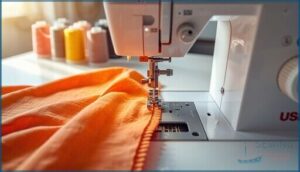
An overlock sewing machine transforms raw fabric edges into the clean, professional seams you see in store-bought clothes.
This technique, known as an overlock stitch sewing machine finish, prevents fraying while giving garments a polished, ready-to-wear appearance.
If you’ve ever wondered how to stop fabric from fraying while creating stretchy, durable seams, this machine is your answer. Let’s break down what makes an overlocker essential for your sewing toolkit.
Definition and Key Functions
An overlock machine is a specialized sewing machine that trims fabric edges and sews simultaneously, creating professional edge finishing in one pass. It uses loopers and blades to form overlock stitches that encase raw edges, preventing fraying during seam construction.
An overlock machine trims and stitches fabric edges in one pass, encasing raw edges to prevent fraying with professional results
You’ll find multiple thread configurations—usually three-thread or four-thread setups—that deliver durable, stretch-friendly seams on both knit and woven fabrics at impressive speeds.
Overlock Vs. Serger Machines
The terms serger and overlocker describe the same machine—regional terminology separates them, not function. In the United States, you’ll hear “serger machines,” while European sewists say “overlocker.” Both trim, stitch, and finish edges in one operation, delivering identical edge finishing and sewing efficiency.
Some brands market sergers with cover-stitch options, but the core overlock stitch capability remains consistent. Thread management and the overlock foot work identically across both names.
For a deeper look at how these machines differ from and complement coverstitch models, see this explanation of serger versus coverstitch machine roles.
Benefits for Home Sewists
Now that you know what to call your machine, let’s talk about why it deserves a spot in your sewing room. An overlock machine delivers time savings by finishing edges in one pass—no more zigzag stitching followed by trimming.
You’ll gain sewing precision on knits and wovens alike, boosting crafting productivity whether you’re tackling garments or home decor projects with professional-level fabric efficiency.
Essential Features of Overlock Machines
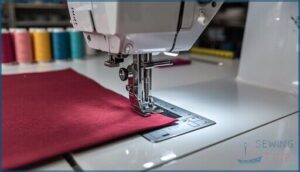
Understanding what makes an overlock machine tick means knowing which features actually matter when you’re working on a project.
The right combination of threads, feed settings, and cutting capabilities can transform how your seams look and how smoothly your fabric moves through the machine. Let’s break down the three essential features that give overlockers their edge over standard sewing machines.
Number of Threads Explained
Your overlock machine‘s thread count unlocks different stitch variations and sewing techniques. A 3-thread setup uses two needle threads and one looper for lightweight fabric choices, while 4-thread configurations add stability for heavier materials.
Threading these paths correctly with all-purpose thread ensures your overlock stitch forms properly. More threads mean stronger seams and adaptable machine settings, giving you control over your serging results.
Differential Feed and Stitch Width
With two independent feed systems working in tandem, differential feed controls fabric stretch and prevents edge distortion during serging. Your differential settings range from 0.7 to 2.0, allowing you to master seam stability across any material.
To understand more about how the feed system operates, you can review the details in this feed dog system overview. Test these sewing machine operation features on scraps before working with your overlock foot on project seams.
- Higher settings (above 1.0) prevent knit fabrics from rippling and maintain consistent stitch tension
- Lower settings create intentional gathers on lightweight materials
- Stitch width determines edge finishing coverage and seam bulk
- Combined adjustments of differential settings and width perfect your overlock stitch results
Built-in Cutting Blades
Precision matters when your built-in cutting blades trim fabric as the overlock stitch forms. These stainless steel knives sit next to the thread path, shearing edges in a single pass for professional seam finishing on your overlock machine.
Start with beginner-friendly sewing patterns like drawstring bags to practice clean edges before tackling more complex projects with your serger.
| Feature | Function | Maintenance |
|---|---|---|
| Knife Alignment | Controls seam width accuracy | Test on scraps periodically |
| Cutting Depth | Determines fabric removal | Adjust for fabric weight |
| Safety Features | Retractable guards protect fingers | Unplug before blade maintenance |
Regular blade maintenance—cleaning lint buildup and checking edge sharpness—ensures consistent edge finishing when you’re serging and finishing knits or wovens with your overlock foot.
Choosing The Right Overlock Machine
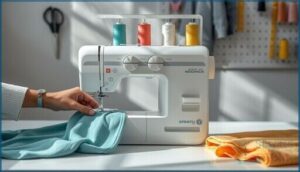
Finding the right overlock machine doesn’t have to feel overwhelming when you know what to look for. Whether you’re just starting out or ready to upgrade, the key is matching the machine’s capabilities to your actual sewing goals.
Let’s break down the brands, beginner essentials, and budget considerations that’ll help you make a confident choice.
Evaluating Popular Brands and Models
Choosing an overlock machine means exploring a landscape where Brand Comparison and Model Reviews reveal clear winners. User Feedback consistently highlights these standout options for sewing performance:
- Brother 734DS: Entry-level favorite with color-coded threading and reliable differential feed
- Janome 9200D: Mid-range powerhouse delivering 1300 stitches per minute with automatic tension
- Singer ProFinish: Budget-friendly 2-3-4 thread versatility
- Juki MO-654DE: Professional-grade speed and precision for experienced sewists
- Baby Lock Imagine: Beginner-friendly with jet-air threading technology
Market Trends show these overlocker sewing machines dominating home studios, balancing features against price points you’ll actually appreciate.
Key Considerations for Beginners
Your first overlock machine shouldn’t overwhelm you with features you won’t use yet. Focus on models with clear threading guides, accessible tension dials, and straightforward maintenance routines.
| Feature | Why It Matters | Beginner-Friendly Options |
|---|---|---|
| Thread Tension | Controls stitch quality and prevents loops | Color-coded dials, numbered settings |
| Threading System | Affects setup time and frustration levels | Jet-air threading, visual diagrams |
| Stitch Variety | Determines project versatility | 3-4 thread capability, rolled hem option |
| Safety Features | Prevents finger injuries during blade changes | Blade guards, lockout mechanisms |
| Maintenance Access | Simplifies cleaning and oiling procedures | Easy-open panels, clear oil points |
Start with machines offering instructional DVDs or online tutorials—these transform confusing procedures into manageable steps you’ll master quickly.
Budget and Feature Comparison
When you shop for an overlocker sewing machine, price comparison reveals what you’re actually paying for. Budget options starting around $150 offer basic 3-thread capability, while mid-range models ($300-$600) add differential feed and better machine durability.
Here’s what different price tiers deliver:
- Entry-level sergers provide essential overlock functions with manual threading systems
- Mid-range units include automatic tension adjustments and multiple stitch widths
- Premium overlocks ($700-$1,200) feature color-coded threading and high-quality build
- Feature sets expand substantially as cost analysis moves upward through price brackets
- Sewing machine maintenance costs add $20-$60 yearly for blade and needle replacement
Your budget determines whether you get plastic frames that vibrate or metal construction that supports high-speed stitching without flexing—choose based on how often you’ll sew and which fabrics you’ll tackle most.
Setting Up Your Overlock Machine
Getting your overlock machine ready doesn’t have to feel like solving a puzzle. The setup process involves three main steps that’ll transform your machine from a quiet desk ornament into a powerful sewing tool.
Let’s walk through threading, adjusting your settings, and handling needles so you can start finishing seams like a pro.
Threading Step-by-Step
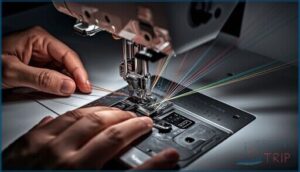
Threading an overlocker feels like threading a maze—but you’ll master it with patience. Start by raising the presser foot to release tension discs, then follow your machine’s color-coded guides.
Thread the upper looper first, then the lower looper, ensuring each passes through hooks and tension settings. Finally, thread needles from front to back, confirming proper thread path management through all guides.
Adjusting Tension, Stitch Length, and Width
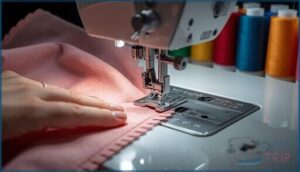
Once you’ve got the threading down, fine-tuning your overlock machine transforms raw edges into professional finishes. Tension control, stitch optimization, and thread management work together to deliver sewing precision across any fabric.
Master these adjustments for flawless stitch quality:
- Start tension dials mid-range and test on scrap fabric
- Adjust stitch length between 0.0-4.0mm based on fabric weight
- Set stitch width to match your fabric handling needs
- Balance differential feed to prevent stretch or puckering
- Document your settings for repeatable results
Installing and Changing Needles
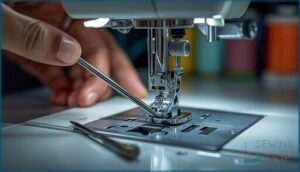
Your tension settings mean nothing if you’re working with a bent or dull needle.
Power off your sewing machine completely before loosening the clamp screw to remove the old needle—proper needle orientation matters for stitch formation.
Insert the replacement with the flat side positioned correctly, push it up fully, then tighten securely.
Match needle type to your fabric weight, and practice safe disposal in a puncture-resistant container.
Mastering Overlock Stitch Techniques
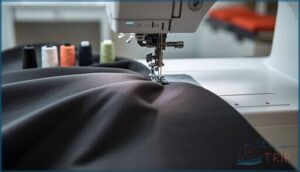
Once your machine is set up and ready to go, it’s time to build confidence with actual stitching techniques. Getting comfortable with how your overlocker deals with different situations will make every project smoother and more professional.
Let’s break down the core techniques you’ll use most often.
Aligning and Feeding Fabric
Precise fabric alignment is your foundation for professional results—misaligned edges create uneven seams and wasted fabric. The overlock foot includes built-in edge guidance to help you maintain consistent seam allowances, while the feed dogs grip both layers evenly beneath the presser foot.
Master these fabric handling tips for perfect seam accuracy:
- Position fabric edges flush against the overlock foot’s guide bar to guarantee straight, parallel feed control
- Maintain gentle forward pressure without pulling or stretching to prevent puckering during the overlock stitch
- Slow your speed through curves, using your non-sewing hand to guide fabric smoothly for curved stitching
- Test feed control on scrap fabric first to verify your settings before working on actual seams
Stitch Types (3-Thread, 4-Thread, Rolled Hem)
Your overlock machine delivers three core stitch types, each suited to different seam finishing techniques. Three-thread overlock wraps the fabric edge with one needle and two loopers, perfect for lightweight materials requiring moderate seam strength.
Four-thread overlock adds a second needle for durability on medium-weight fabrics, while rolled hem settings (narrow or wide) curl the edge under for delicate finishes—adjust stitch width and thread tension through your overlock settings to control each look.
Handling Curves and Corners
Curve control separates clean edge finishing from bunched, awkward seams. When you approach curves, slow your pedal pressure and guide fabric edges along the overlock foot’s alignment bar—gentle fabric manipulation keeps serging alternatives smooth. Sharp corners demand a lifted presser foot and fabric pivot at the turn point.
- Line up fabric edges with the guide bar on your overlock foot for consistent seam finishing techniques
- Pause every few stitches on curved seams to pivot slightly and maintain control over sewing turns
- Lift the presser foot at corner points, pivot your fabric, then lower and continue your overlock stitch
- Pull fabric toward the back of the machine when finishing to release the chain without cornering tips disasters
Troubleshooting and Maintaining Your Overlocker
Even the smoothest-running overlocker will hit a snag now and then—it’s just part of working with these powerful machines.
Knowing how to spot problems early and keep your equipment in top shape means you’ll spend less time frustrated and more time actually sewing. Let’s walk through the most common issues you’ll face and the simple maintenance habits that’ll keep your overlocker running like new.
Fixing Common Stitch Issues
When your stitches don’t look right, don’t panic—most problems trace back to a handful of fixable issues. Loopy stitches and thread breakage often signal improper tension, so re-thread your machine with the presser foot down to engage the discs.
Fabric puckering may indicate your stitch is too tight or your differential feed needs tweaking. Stitch skipping? Check your needle condition and thread management practices.
Cleaning and Oiling Procedures
Your overlocker sewing machine thrives on regular attention—think of it as a simple ritual that keeps your stitches sharp.
Follow these key maintenance schedules for your Overlocker Sewing Machine:
- Remove lint from the thread path and feed dogs after each project
- Apply approved oil types to bearing points every 8-10 hours of use
- Wipe exterior surfaces with a dry cloth between sessions
- Perform deeper machine lubrication and cleaning every six months
- Unplug before starting any machine maintenance work
Replacing Blades and Needles
Sharp blades and fresh needles are non-negotiable for clean edge trimming and reliable overlock stitch formation. Test sharpness by running a scrap through your machine—dull cuts signal it’s time for blade replacement.
Always follow safety precautions: unplug before handling, store blades in protective sheaths, and match needle selection to your fabric type. Proper overlocker setup and maintenance, including these sewing machine accessories, keeps your projects looking professional.
Overlock Sewing Project Ideas and Tips
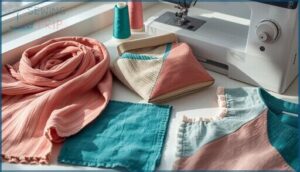
Once you’ve mastered the basics of threading and tension, it’s time to put your overlocker to work on real projects.
The best way to build confidence is by starting with simple items that let you practice essential techniques without feeling overwhelmed. Below, you’ll find beginner-friendly project ideas, fabric-specific tips, and creative ways to make your seams stand out.
Starter Projects for Practice
You’ll gain real confidence when you jump into hands-on practice with beginner-friendly sewing projects. These starter exercises build your overlock machine usage skills while teaching essential sewing techniques and tips for edge finishing and project planning.
- Simple woven cotton tee shirt – practice 3-thread overlock and rolled hem on lightweight fabric selection
- Utility scarf – master fabric feed control and seam allowance basics
- Tote bag – learn seam finishing on medium-weight materials
- Pillow cover – develop alignment skills across multiple seam types
Working With Different Fabrics
Different fabrics demand different approaches—you’ll achieve professional seam finishing when you match thread choices and stitch settings to your fabric types. Jersey fabrics and other stretchy fabrics need a 4-thread stitch to preserve fabric stretch, while woven cotton benefits from a narrow 3-thread finish to prevent fraying at fabric edges.
| Fabric Selection | Best Stitch & Thread Choices |
|---|---|
| Knit fabrics (jersey, interlock) | 4-thread overlock with polyester thread for edge binding and flexibility |
| Lightweight wovens (cotton, linen) | 3-thread narrow stitch with fine thread to minimize bulk |
| Heavy fabrics (denim, canvas) | Longer stitch length with topstitching thread for strong seam finishing |
Creative Uses for Decorative Threads
Thread embellishments transform basic seams into textile art—you can layer metallic threads with all-purpose thread in your overlock stitch to create embroidery designs that rival store-bought garments.
Decorative stitching along hems and edges adds dimension without fabric painting, while proper fabric and thread management prevents tangling. These sewing tips and tricks turn functional seams into expressive details.
Frequently Asked Questions (FAQs)
Can you use an overlocker as a normal sewing machine?
No, an overlocker can’t replace a sewing machine. While it excels at edge finishing and seams on knits, it lacks the versatility for zippers, buttonholes, or precise topstitching that standard machines handle.
Do you overlock before or after sewing?
You’ll usually overlock after sewing to finish seams once pieces are joined, ensuring accurate alignment and consistent edge finishing.
For rapidly fraying fabrics, overlocking before assembly prevents edges from unraveling during handling.
What is an overlocker sewing machine?
A serger uses multiple threads and loopers to trim fabric edges while wrapping them in interlocking stitches, preventing fraying and creating professional seam finishes that stretch with knit fabrics.
How do I choose the best overlock sewing machine?
Choosing the right serger feels like finding the perfect tool for your creative workshop.
Start by evaluating your sewing needs, comparing budget options across brand reviews, and prioritizing user experience with threading systems and differential feed controls.
What is the difference between a regular and overlock sewing machine?
Regular sewing machines use one or two threads for straight stitches, while an overlock machine trims and encases fabric edges with three or four threads in one pass, creating stretch-friendly seams.
Why do you need an overlock sewing machine?
If you’re serious about garment construction techniques, an overlock sewing machine delivers professional finishes that protect fabric edges while boosting sewing efficiency—transforming home decorations and everyday projects with the clean, durable overlock stitch store-bought items showcase.
How do you use an overlock stitch on a sewing machine?
Thread your overlocker in the correct sequence, align fabric edges with the guide, adjust tension settings, then sew at moderate speed while the blade trims and threads wrap simultaneously.
Should you buy an overlocker or a sewing machine?
Your sewing needs determine the best choice. A sewing machine accommodates varied construction and topstitching, while an overlocker excels at edge finishing and stretch fabrics.
Most sewists benefit from owning both machines eventually.
Can I use an overlock machine for quilting?
You can use an overlock machine for quilting edge finishing and binding, but it won’t replace your sewing machine for piecing.
Overlock machine limits include handling thick fabric layering and maintaining precise quarter-inch seams.
How do I maintain my overlock machine?
Keep your overlock machine running smoothly with regular servicing: clean lint from feed dogs weekly, oil moving parts monthly, check thread tension after rethreading, replace sewing needles every dozen hours, and sharpen blades when cuts fray.
Conclusion
Think of your overlock machine as a Swiss Army knife for fabric edges—each function sharpens your skills once you discover its potential.
This overlock sewing machine guide has equipped you with threading techniques, tension adjustments, and troubleshooting strategies that transform frustration into confidence.
Now it’s time to practice those rolled hems, experiment with decorative threads, and tackle projects that previously seemed out of reach. Your finished seams will speak for themselves.