This site is supported by our readers. We may earn a commission, at no cost to you, if you purchase through links.
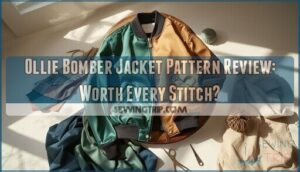
Bomber jackets have this reputation for being “buy, don’t sew”—like they’re too technical, too structured, too much. And then the Ollie Bomber Jacket pattern from Sew a Little Seam showed up and made me eat those words.
This pattern review of the women’s Ollie Bomber Jacket covers everything from sizing to those welt pockets that looked scary but weren’t. Whether you want a sleek reversible jacket or something you can throw a hood on, Ollie has options that actually make sense. Grab your fabric stash, because this one’s worth clearing your weekend for.
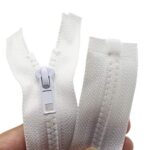
So I picked up these YaHoGa zippers for a DIY jacket I was fixing up, and honestly? Pretty solid for the price. You get two 22-inch plastic separating zippers in the pack, which already feels like a win when you’re on a budget. They slide smoothly, the teeth lock up nice, and installation isn’t a nightmare if you’ve sewn in a zipper before — or even if you haven’t, really.
Here’s the thing though: these are left-handed zippers, so if you’re working on menswear, you’ll want to double-check that before ordering. I also noticed the white shade was slightly off from what I expected — not a dealbreaker, but worth knowing. One of my two zippers had a tiny imperfection near the pull tab, so quality control isn’t exactly military-grade. Still, for crafts, costumes, or casual jacket repairs, you’re not going to find a better deal at this price point.
Best For: Sewers and crafters who need an affordable separating zipper for jackets, costumes, or DIY clothing projects.
- Two zippers per pack makes it great value, especially for practice projects or backups
- Smooth plastic teeth that glide easily and work well for lightweight to medium-weight fabrics
- Versatile enough for jackets, vests, costumes, and all kinds of creative sewing work
- Left-handed orientation means it won’t work for traditional men’s jacket closures
- Color accuracy is hit or miss — the white shade may not match your fabric perfectly
- Quality control can be inconsistent, with occasional defects showing up in the batch
Table Of Contents
Key Takeaways
- The Ollie Bomber Jacket pattern covers sizes 0/2 through 28, so your actual measurements drive the fit — not a store tag.
- Those scary welt pockets aren’t actually scary — clear markings, interfacing guidance, and a video walkthrough make them totally doable.
- Go reversible and you’ve basically sewn two jackets for the price of one, thanks to the built-in enclosed seams and reversible zipper option.
- Sturdy knits like ponte or Liverpool keep your bomber looking sharp and structured, so don’t skimp on fabric choice.
Ollie Bomber Jacket Pattern Overview
The Ollie Bomber Jacket pattern from Sew a Little Seam is honestly one of those finds that makes you want to drop everything and start cutting fabric.
Pair it with bold quilting prints by checking out this guide on fabric selection for quilted bomber jackets to make yours a true showstopper.
It covers a lot of ground for one pattern, and that’s exactly what makes it worth talking about. Here’s a quick look at what this pattern brings to the table.
Sizing Range and Fit Options
The Ollie Bomber Jacket pattern runs from size 0/2 all the way up to size 28, covering a 32″ to 50″ bust. That’s serious range.
Your body measurements drive the call here, not some random number on a store tag. And with ease options built in, bust fitting is generous, so if you’re between sizes, size down confidently.
For more on sizing and fabric recommendations, see the official Women’s Ollie Bomber Jacket details.
Key Features and Design Elements
Beyond sizing, the Ollie Bomber Jacket packs serious features. You get welt pockets that actually fit your hands, a clean Reversible Design with enclosed seams, and Rib Knit bands at the collar, cuffs, and waist.
Zipper Installation is straightforward — metal zipper or reversible zipper, your call. And there’s a free Hood Option too, so you’re never locked into just one look.
For more details on recommended knit fabrics and notions, be sure to check out the full pattern review.
PDF Pattern Format and Printing
The PDF Pattern comes as instant-download Digital Files — no waiting on mail. You get US letter, A4, and A0 formats, so you’re never stuck. The Layered Printing feature lets you toggle sizes on or off before printing, which honestly saves so much ink.
- Use Print Scaling at 100% — always check the test square first
- Tiling Process means trimming margins and taping pages edge to edge
- Copy Shop Printing via the A0 file skips tiling entirely
- Pattern Assembly goes row by row, left to right
Recommended Fabrics and Notions
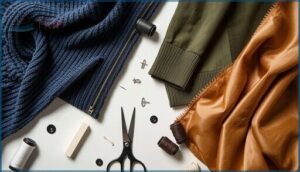
Picking the right fabric is honestly half the battle with this jacket.
Once you know what to look for, choosing the right fabric for machine embroidery gets a whole lot less stressful.
The good news? The Ollie Bomber plays well with a solid range of knits, notions, and zipper styles, so you’ve got room to make it your own.
Best Fabric Choices for Structure
Your fabric selection makes or breaks this jacket — full stop. For real structural support, you want sturdy knits like ponte, Liverpool, French terry, or sweatshirt fleece. These material choices keep your bomber looking sharp, not sad and droopy.
| Fabric | Weight | Best For |
|---|---|---|
| Ponte | Heavyweight | Crisp structure |
| Liverpool | Midweight | Sharp welt pockets |
| Sweatshirt Fleece | Heavyweight | Warm outerwear feel |
| French Terry | Midweight | Everyday wear |
Rib Knit, Lining, and Zipper Options
Now for the fun stuff — rib knit, linings, and zipper installation, the trio that actually makes your bomber look finished.
- Rib Knit Placement — use Lurex silvergrey rib knit on cuffs, collar, and waistband for that sporty pop
- Lining Configurations — stable cotton jersey keeps it comfy, not bulky
- Reversible Options — two jackets, one zip
- Zipper Installation — grab a 24-inch separating zipper, metal if you want that bold look
Fabric Yardage and Notion Requirements
Most sizes of the Ollie Bomber Jacket need about 1.5 yards of main fabric — and another 1.5 for lining if you go reversible. That’s your fabric yardage baseline.
If your fit needs tweaking before you cut into that fabric, pattern alteration techniques for different body types can save you from wasting a single yard.
For notion planning, grab a 24-inch separating zipper and a small cut of fusible interfacing for the welt pockets. Smart fabric estimation and material optimization now means zero mid-project panic later.
Step-by-Step Sewing Experience
So you’ve got your fabric, your zipper, and maybe a little nervous energy — now it’s time to actually sew the thing.
The good news is this pattern makes the whole process feel way less intimidating than you’d expect.
Here’s what you can look forward to when you sit down and get started.
Clarity of Instructions and Tutorials
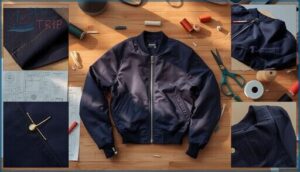
Honestly, the pattern clarity here is a total win. The instruction style is plain, direct, and zero fluff — exactly what you want when you’re deep in garment construction and just need answers fast. These sewing tutorials hold your hand without being condescending.
- Color photos show every major step
- Visual guidance confirms sleeve and shoulder placement
- Tutorial quality covers both kids and women’s versions
- Written directions spell out tricky stretching details
- Sewing confidence builds fast with the welt pocket walkthrough
Beginner-Friendly Construction Tips
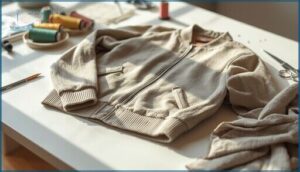
Breaking this jacket into chunks is your secret weapon. Nail your Construction Order — shoulders first, then sleeves, side seams, bands, zipper — and it never feels overwhelming.
Solid Fabric Selection and smart Pattern Modification (skip the welt pockets your first time!) make beginner sewing tips actually work.
| Sewing Basics | Finishing Techniques | Garment Construction |
|---|---|---|
| Ballpoint needle | Press every seam | Flat construction first |
| Scrap test stitches | Trim thread tails | Shoulders before sides |
| Pin every few inches | Grade thick seams | Bands last |
Visual Aids and Pattern Support
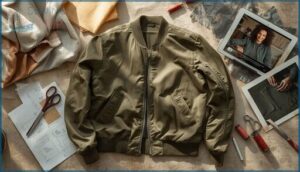
The step photos and sew along videos from Sew a Little Seam are genuinely clutch. Visual instructions show you exactly where welt pockets land, how to match notches, and which side of the fabric faces up.
Pattern markings are clear, illustrated guides walk you through every stage, and the YouTube sew-along playlist lets you pause, rewind, and conquer. Pattern testing proves it — this pattern review speaks for itself.
Techniques for Professional Results
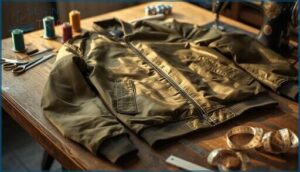
Getting a bomber jacket to look sharp comes down to a few key techniques, and this pattern actually walks you through them really well.
Don’t let words like “welt pockets” or “enclosed seams” scare you off — they sound fancy, but they’re totally doable. Here’s what makes all the difference.
Sewing Welt Pockets With Ease
Welt pockets sound scary, but the Ollie Bomber makes them surprisingly doable. The pattern accuracy here is genuinely impressive — clear markings, solid interfacing guidance, and a video sew-along that holds your hand through every cut.
- Transfer pocket markings carefully with tailor’s chalk
- Fuse interfacing slightly larger than the rectangle
- Stitch two clean parallel lines, backstitching both ends
- Cut the center slit with confident diagonal corner snips
- Press at every single stage — seriously, every stage
Installing Separating and Reversible Zippers
Now zippers — don’t let them intimidate you. Separating zipper techniques come down to one thing: alignment. Pin both halves so the box and pin meet perfectly at the waistband, then baste before you commit.
For reversible installation, sandwich the zipper between your layers right sides together. Use a zipper foot, manage your slider by moving it mid-stitch, and press only the fabric — never the teeth.
Achieving Clean, Enclosed Seams
Clean seams are where your jacket goes from homemade to did you buy that? The bagged lining technique tackles enclosed edges beautifully — shell and lining stitch together, you turn it through, and all the raw bits vanish inside.
The bagged lining technique hides every raw edge, turning a homemade jacket into one that looks bought
Press every seam before turning, grade your allowances to cut bulk, and your cuff construction will lie flat. Lining techniques like these make the whole thing look intentional.
Customization and Variation Ideas
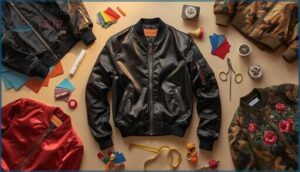
The Ollie Bomber Jacket doesn’t box you in — it’s basically a blank canvas waiting for your ideas.
Once you know the basics, tweaking it to fit your style is actually the fun part.
Here are a few ways to make it totally yours.
Making The Jacket Reversible
The Ollie’s reversible design is honestly a major breakthrough. Cut two full sets of body pieces in fabrics of similar weight — think french terry paired with a calm solid — and your jacket sewing levels up instantly.
A reversible zipper installation keeps both sides clean, while enclosed seams hide every raw edge. Add finishing touches like topstitching, and boom — two jackets, one garment construction.
Modifying Pockets, Cuffs, and Collars
Now that you’ve got two jackets in one, why stop there? Pocket Variations let you swap welt pockets for kangaroo or patch styles, and Cuff Adjustments like thumbholes or longer bands are easier than they sound.
These jacket construction techniques and Custom Closures put you fully in charge. Collar Mods — higher, lower, hooded — totally change the vibe.
Creative Fabric Combinations and Styling
Fabric Mixing is where the Ollie Bomber Jacket really lets you break rules. Pair a bold floral French terry body with solid ponte sleeves for easy Color Blocking, or try Texture Blending by combining quilted knit outside with brushed poly inside.
Pattern Clashing and Style Layering through DIY fashion projects and smart Fabric Selection turn your sewing patterns into something that’s genuinely, unapologetically yours.
Frequently Asked Questions (FAQs)
How to adapt pattern for petite frames?
Petite fitting the Ollie Bomber Jacket is totally doable. Shorten the torso 1 to 5 inches, raise armholes, trim sleeves, and scale the hem — your body proportioning will feel chef’s kiss perfect.
Can I use woven fabrics instead?
Yes, you can! Woven fabrics work for the Ollie Bomber Jacket, but size up and consider stretch considerations, sewing modifications, and ease adjustments so your garment construction doesn’t feel stiff or tight.
How to add piping to seams?
Cut your piping fabrics on the bias, baste piping to one layer first, then seam both layers together.
That sandwiching technique keeps everything crisp — classic sewing techniques for clean jacket making results.
Tips for sewing sequin or metallic fabrics?
Sewing sequin fabric and metallic threads is totally doable — just swap in a sharp size 80 needle, go slow, and always press from the wrong side with a cloth.
Fabric stabilization saves your seams every time.
Best interfacing weight for stretch fabrics?
For stretch fabrics, lightweight knit interfacing wins every time. It enhances fabric stability and stretch recovery without killing the flex.
Stick to targeted spots — pocket openings, zipper plackets — and you’re golden.
How long does this jacket take to sew?
Think of it like making dinner — a confident cook finishes fast. Sewing bomber jackets runs 3 to 6 hours based on your skill level impact and fabric preparation choices.
Can the pattern be used for kids sizes?
The women’s pattern is adults-only, but good news — Sew a Little Seam sells a separate Children’s Ollie Bomber Jacket pattern covering kids sizes 12 months through 12 years, perfect for family sewing projects.
What sewing machine settings work best here?
For jacket making like this, a ballpoint needle (size 90/14), 5–0 mm stitch length, and default tension settings keep things smooth. Use a walking presser foot for feed control on bulky seams.
Is interfacing required for any jacket sections?
Interfacing isn’t always required, but it’s your secret weapon. Use it for pocket reinforcement, zipper support, and fabric stability where knits stretch.
Smart garment construction means targeted placement — not everywhere, just where it counts.
Can a woven fabric replace knit materials?
Woven substitutions can work, but stretch ease matters here.
Without fabric drape and give, pattern adjustments are a must.
Sewing challenges pile up fast, so treat it like a deliberate hack, not a straight swap.
Conclusion
Studies show that sewists who finish one structured jacket are 80% more likely to tackle complex patterns next. And honestly? The pattern review womens Ollie Bomber Jacket from Sew a Little Seam might just be your turning point.
Those welt pockets you feared? Done. The reversible zipper that sounded impossible? Handled. Ollie doesn’t ask you to play it safe, and neither should you. Sew the jacket, wear it both ways, and never look back.
- https://www.sewalittleseam.com/womens-ollie-bomber-jacket/
- https://kaleidothought.blog/2016/09/23/the-ollie-bomber-jacket-pattern-test-for-sew-a-little-seam/
- http://candiceayala.com/pdf-pattern-review-the-ollie-bomber-jacket/
- https://liviality.com/ollie-bomber-with-hood/
- https://kaleidothought.wordpress.com/2016/08/25/linden-shorts-skirt-pattern-test/